Tag

island

Browsing

Introduction

Koh Samui is the second-largest island in Thailand, which evolved from a quiet fishing community into a tourism-targeted destination while still retaining its natural charm. It’s definitely not as quiet and peaceful as some other Thai islands but it offers a good balance for those looking for a combination of vibrant nightlife, serene temple visits, and jungle adventures.

How to get to Koh Samui?

Koh Samui can be reached on a ferry from Donsak Pier near Surat Thani. Raja Ferry is slow, cheap, uncomfortable, and takes about 1,5 hours while Lomprayah is exactly the opposite but about twice the price and takes 45 minutes. Time is money, they say. The choice is yours 🙂

Another option would be to fly to Koh Samui. There are regular flights from Bangkok and other major cities in Thailand, as well as some foreign destinations. Check your connections at 12Go.Asia.

How long to stay?

I spend 3 nights on the island and I would recommend it as a minimum. It will give you enough time to explore nature and chill on the beach. That time could be easily extended to one week or even longer. There are beautiful beaches, waterfalls, a nice standard of accommodation for online work, good food, and an option for a day trip to Ang Thong National Marine Park. Sounds like a perfect place for holidays? It could be, but keep in mind that there are also two other islands: Koh Phangan and Koh Tao which are well worth checking as well.

When to go to Koh Samui?

The best period to visit Koh Samui is between December and August.

The dry season lasts from December to April and it’s the peak tourist season. Pleasant weather with lower humidity and cooler temperatures. Accommodation and flights can be more expensive, and popular tourist spots can be crowded.

From May to August, there is a hot season with higher temperatures and humidity. Occasional rain showers are possible but they are usually brief. May and June can be particularly hot.

Rainy season months, so September to November, are better to be avoided. The prices are more budget-friendly but you may expect frequent rainfall and boat tours will most likely be closed.
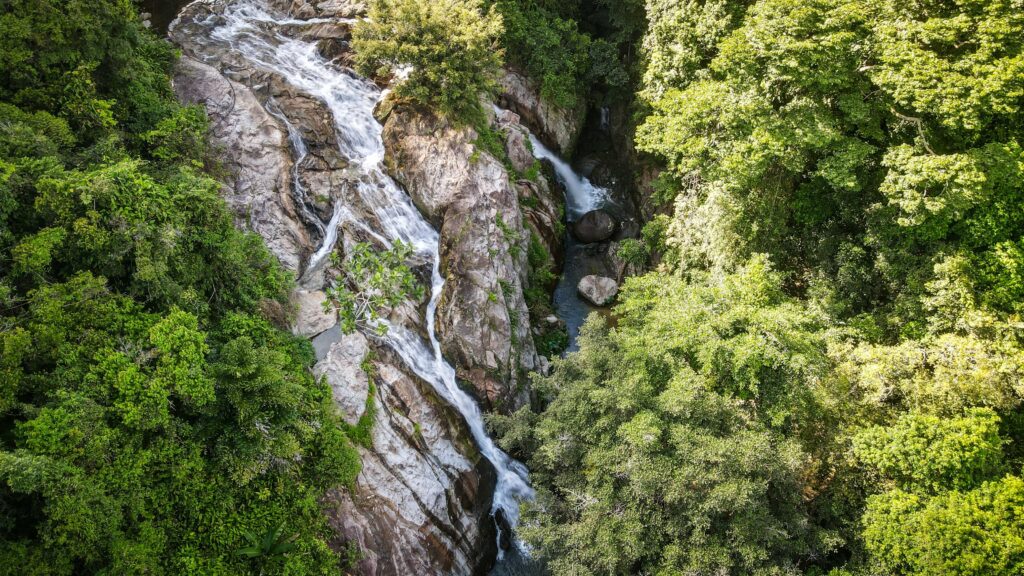
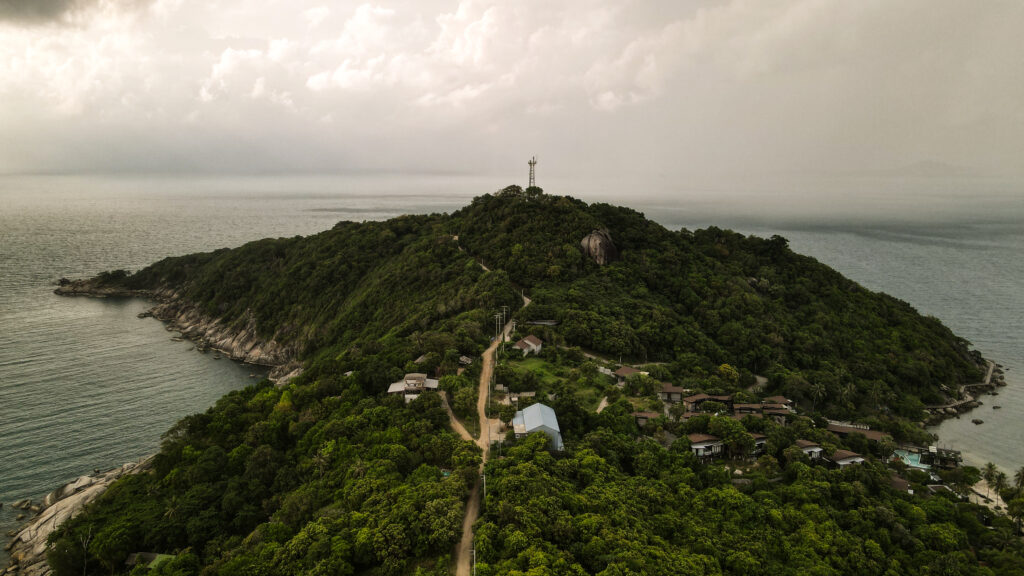
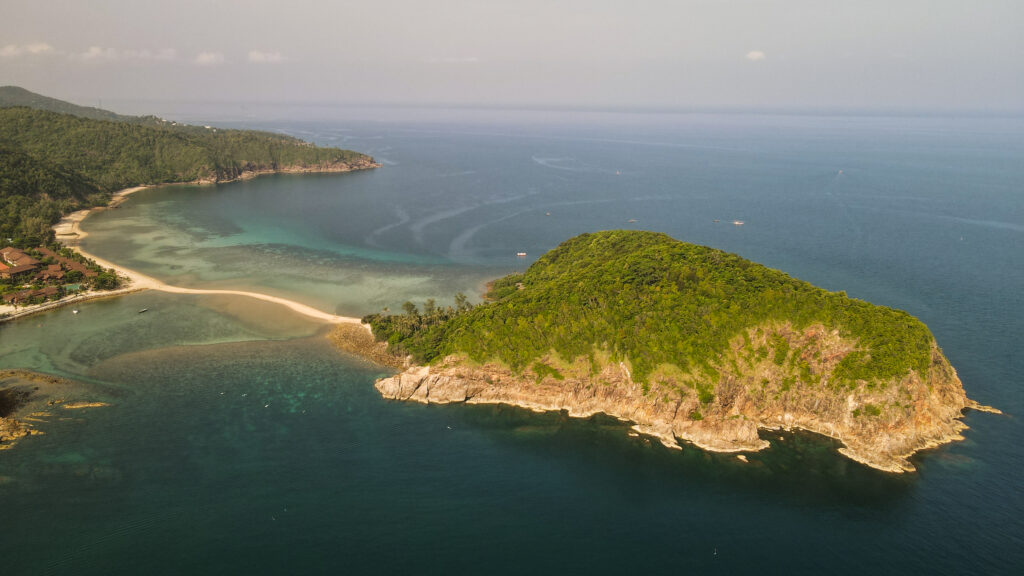
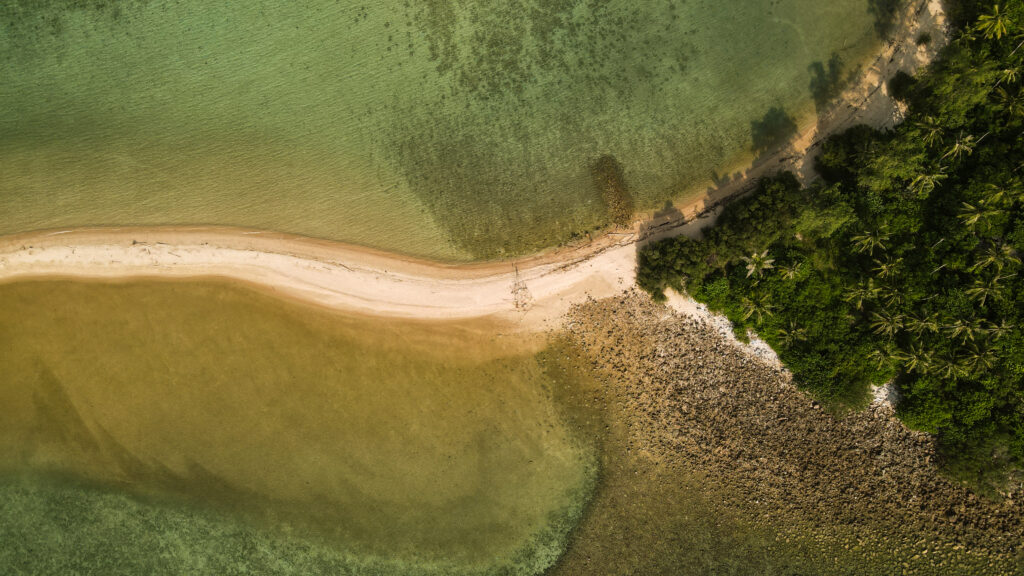
Koh Samui, Thailand
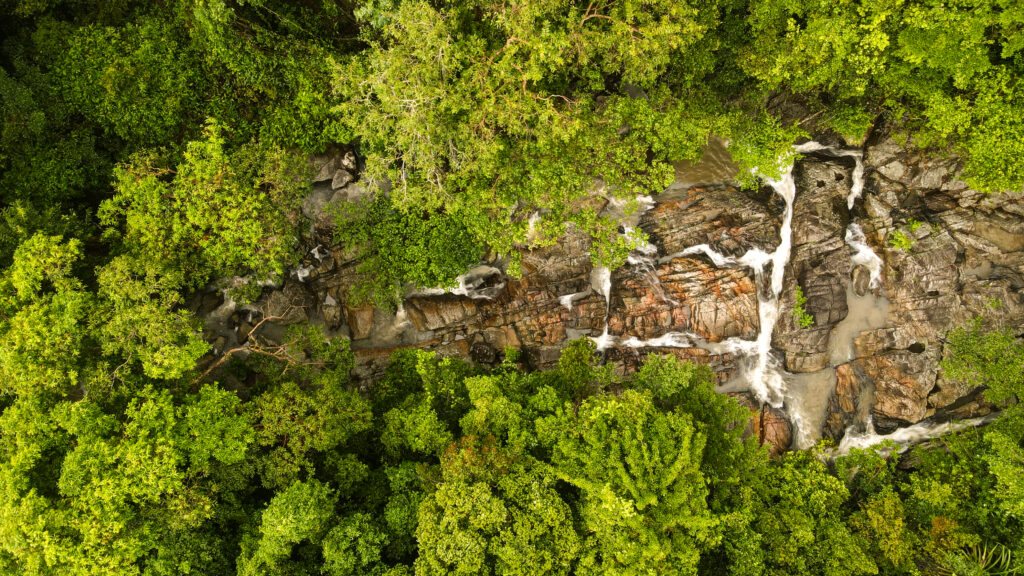
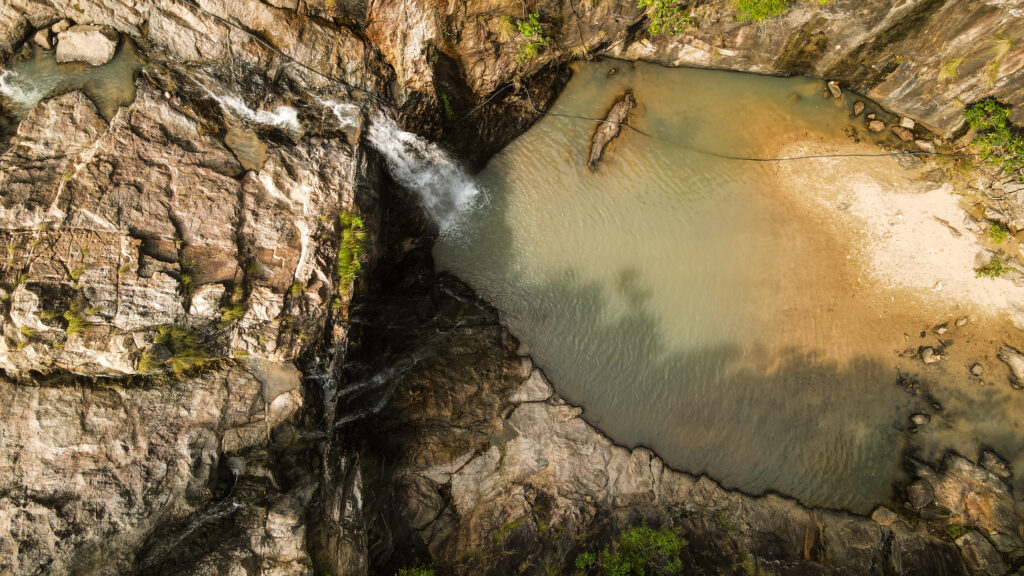
Waterfall on Koh Samui

Where to stay?

I stayed for three nights at the Pamoni Hotel in Chaweng for about 19 EUR per night. It was basically a small apartment, with a living room and a kitchen, a bedroom, a private bathroom and there was a swimming pool for guests too. A very good price-to-quality ratio and the location was excellent too.

How to get around Koh Samui?

Without a doubt, the best option is to rent a motorbike. Ask for one at your accommodation. They will either have one or get in touch with someone who can deliver it to you within minutes. You will also find some rental agencies near Chaweng Beach. I rented mine at Idan Rent Motorbikes & Cars. At first, I wasn’t too happy with the bike’s quality but they quickly reacted and changed it for a better model.

The network of roads is really good with most of them sealed. There are still some dirt roads, often quite steep so pay special attention there or simply park your bike on the side of the road and walk.

What to do on Koh Samui?

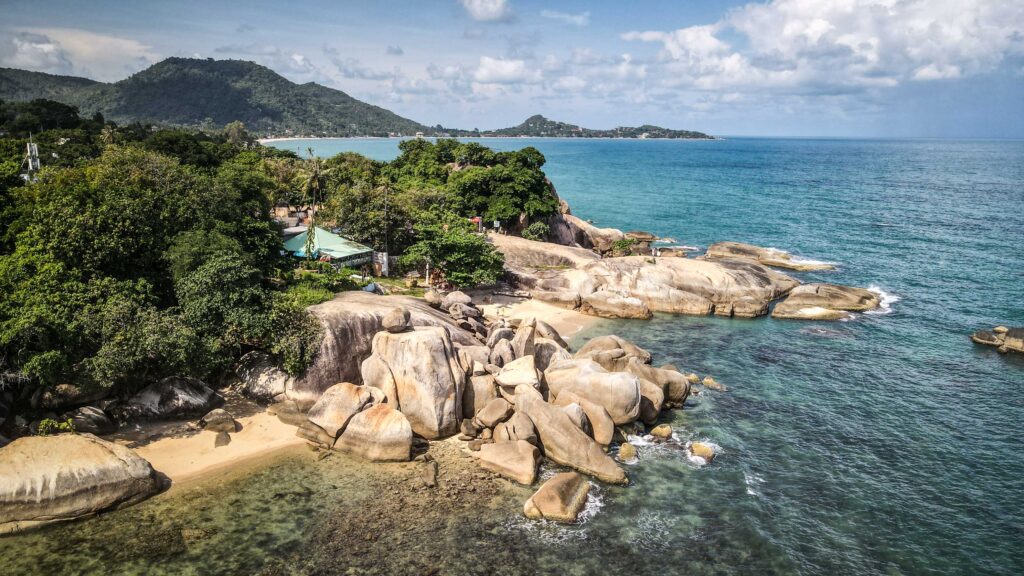
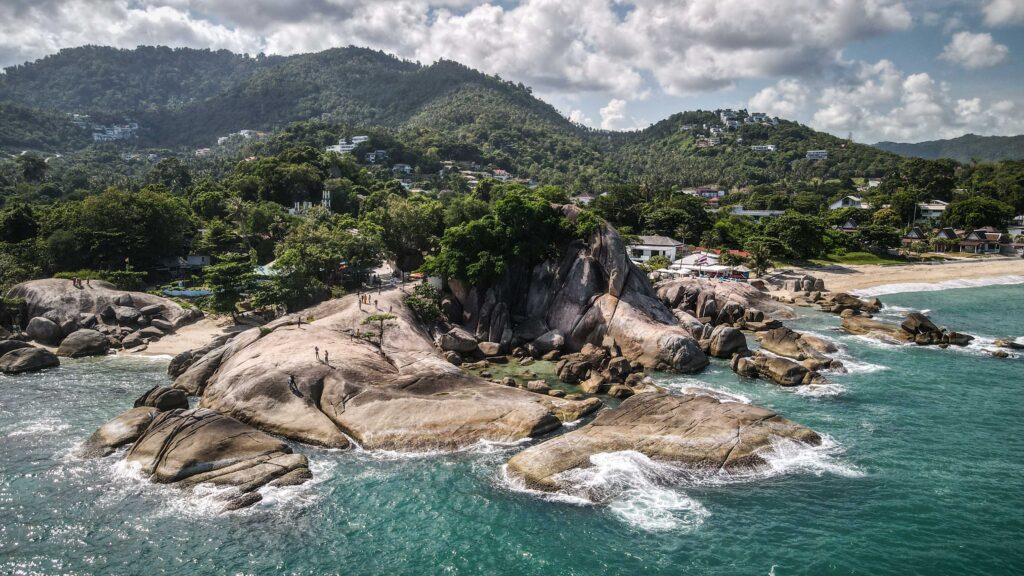
Grandfather and Grandmother Rocks (Hin Ta Hin Yai)

Beautiful view of the ocean with nice rock formations. Especially famous are the ones shaped like…. male and female genitalia. The legend says that an elderly couple living in Nakhon Sri Thammarat were discussing the marriage of their son. It wasn’t too easy to find a wife for him but they knew someone in the province of Prachuap Kiri Khan who had a beautiful daughter. They decided to use their small wooden boat to make the trip.

It wasn’t a good idea though. Their vessel was tossed around like a small toy, and both of them got terribly seasick. In the distance, they saw an island and decided to try to get there. Unfortunately, the waves were big and the winds were strong. Just as they were about to give up, a huge wave washed them both out of the boat and into the sea. Their bodies were washed ashore and instantly turned into rocks on the beach.

There are plenty of vendors selling food, snacks, drinks, and souvenirs just in case you need to cheer yourself up after discovering that sad story.

The rocks are just next to Lamai Beach, which is the island’s second largest.
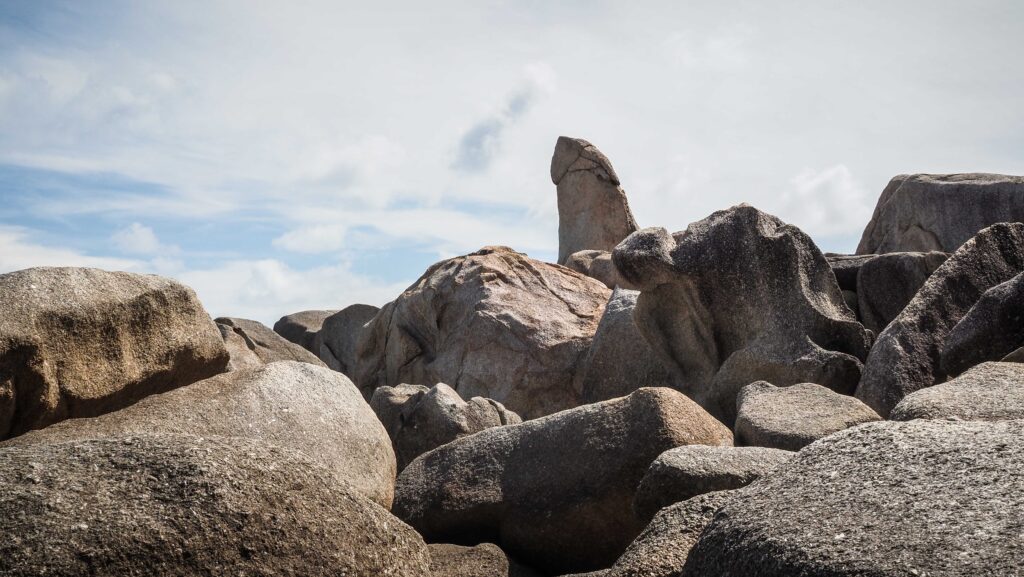
Koh Samui, Thailand
Grandfather Rock
Koh Samui, Thailand
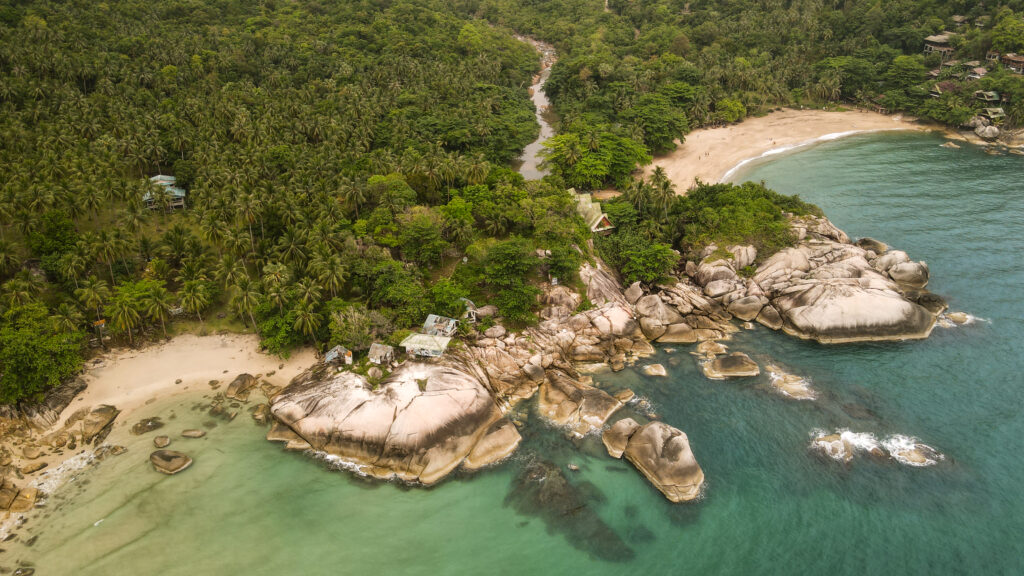
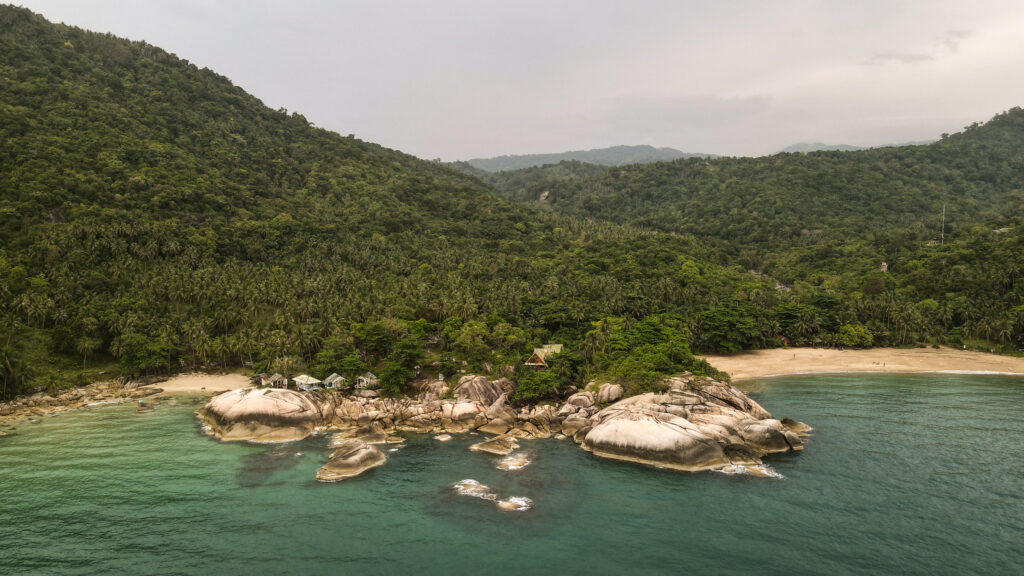
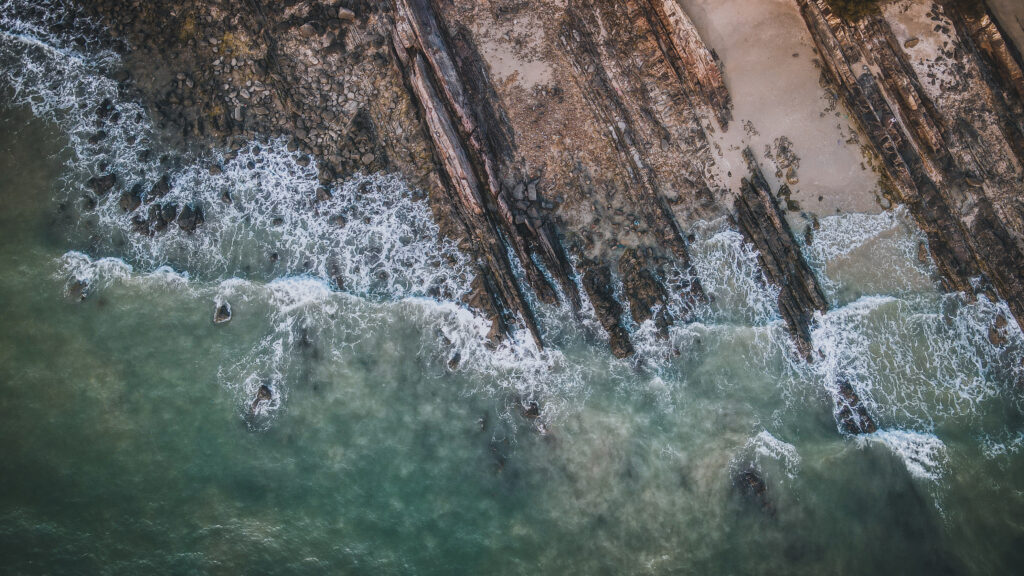
The aerial view of the rocky coast of Koh Samui
Koh Samui, Thailand
The aerial view of the rocky coast of Koh Samui

Lamai Viewpoint & Valentine Stone

There is the Valentine Stone at the bottom and some fish ponds but the main attraction is the viewpoint. You can either walk up or pay extra to get a ride up. As it’s only 10 10-minute walk, the choice was easy. The path goes through the forest so don’t forget to use mosquito spray before you start. They also have an option to do ziplining, which is about 800 THB, including the entrance fee.

Lanlandaw Viewpoint

Beautiful place with an amazing view of the sea and the island. You can just get a beer or fresh coconut and soak the atmosphere. The owners are very friendly and chatty people. The dirt road leading there is quite steep so be careful when riding a motorbike.
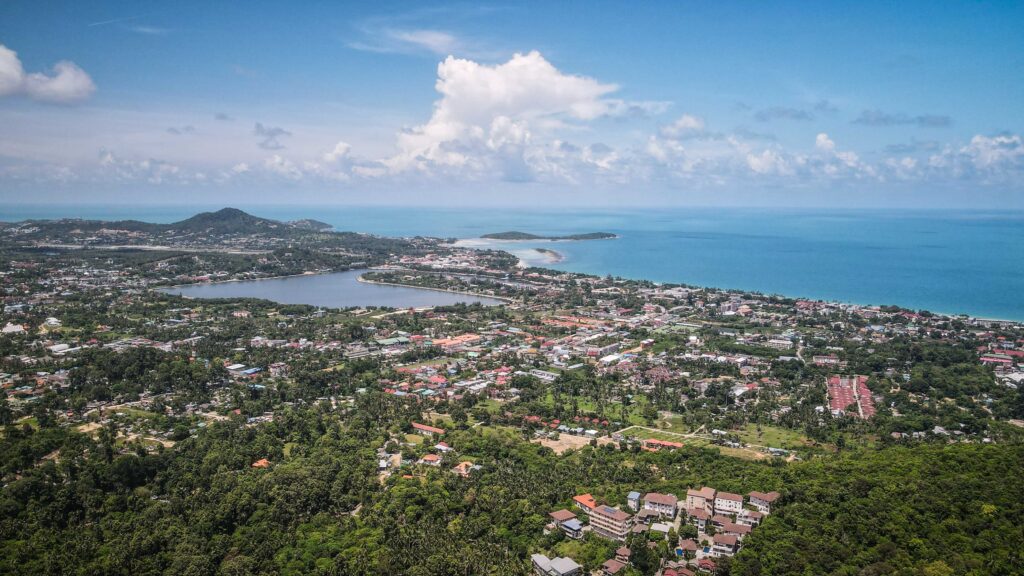
Koh Samui in Thailand
Lanlandaw Viewpoint

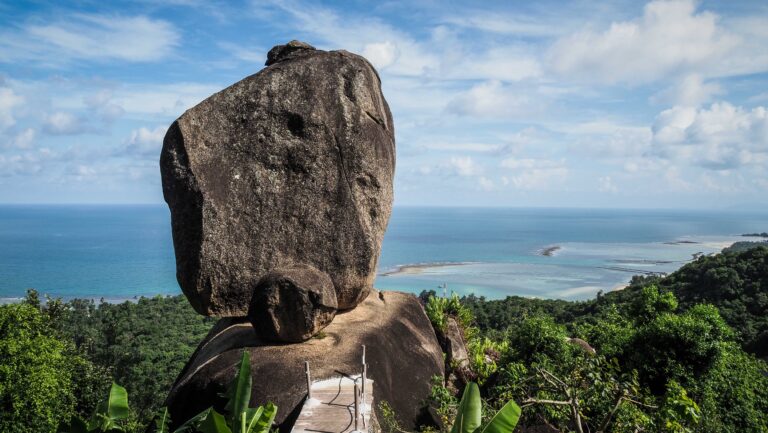
Overlap Stone

There are two similar places, called Overlap Stone 1 and Overlap Stone 2. I recommend you to choose the second option. Carry on following the road past the big signs for Overlap Stone 1 and the lady waving enthusiastically asking for a ridiculous 200 THB. The road gets steeper until you see a welcome sign and a little spot saying motorbike parking. Walk up among the trees and the view will open up on both sides. The entrance costs 20 THB and you can buy some drinks too. The views over the island are simply stunning! Take a rickety bamboo walkway to get closer to the stone.
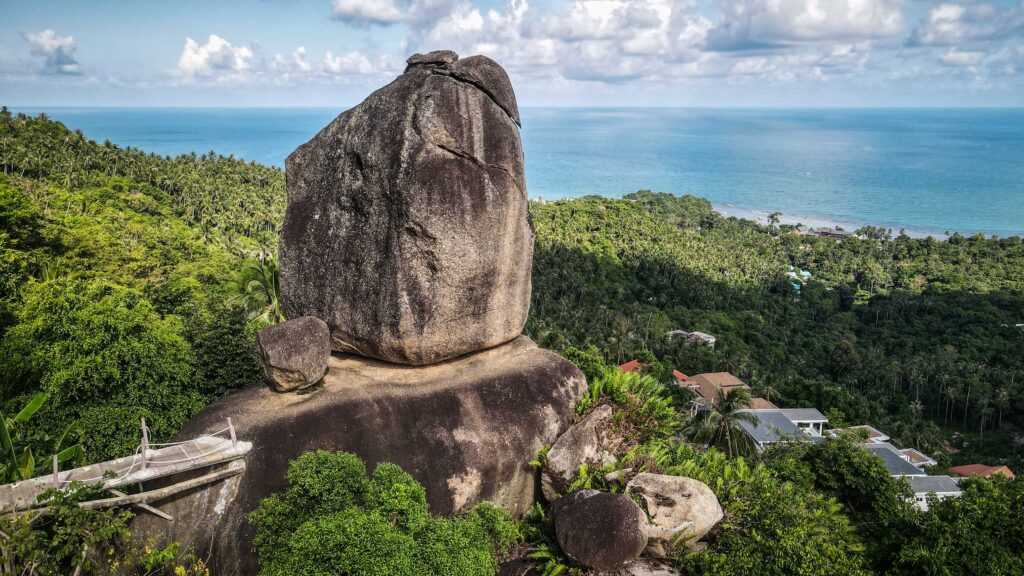
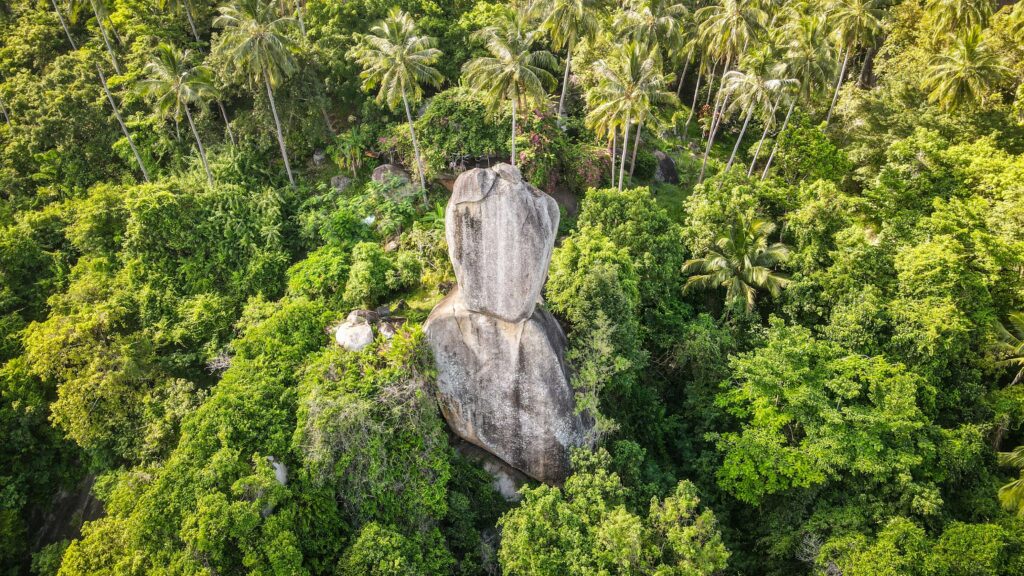
Koh Samui in Thailand
Overlap Stone
Koh Samui in Thailand
Overlap Stone

Wat Ratchathammaram

A beautifully laid-out temple decorated with red terracotta. It overlooks the sea, which makes it a particularly calm and scenic place, perfect for meditation and reflection. Moreover, it houses the relics of Buddha brought in from Sri Lanka.

Ban Hua Thanon

Home to the Muslim community, with a local fish market and Koh Samui Central Mosque that can be seen from afar because of its vibrant gold, green, and white colors.

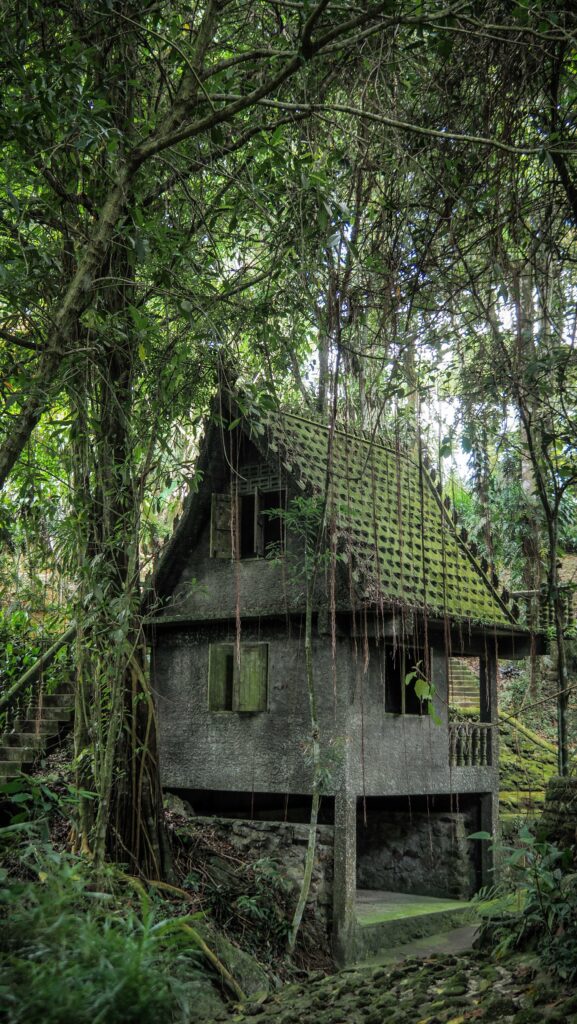
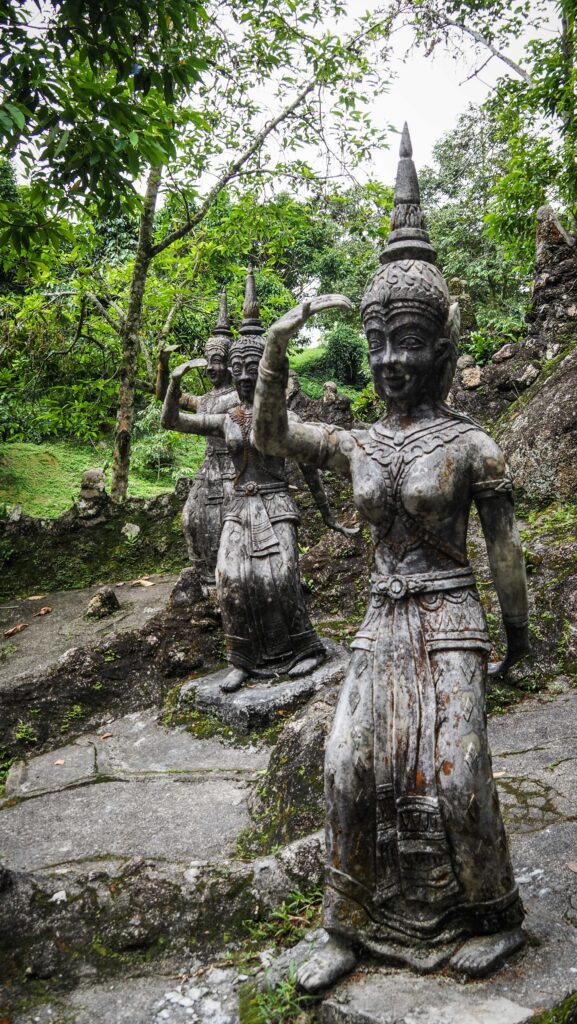
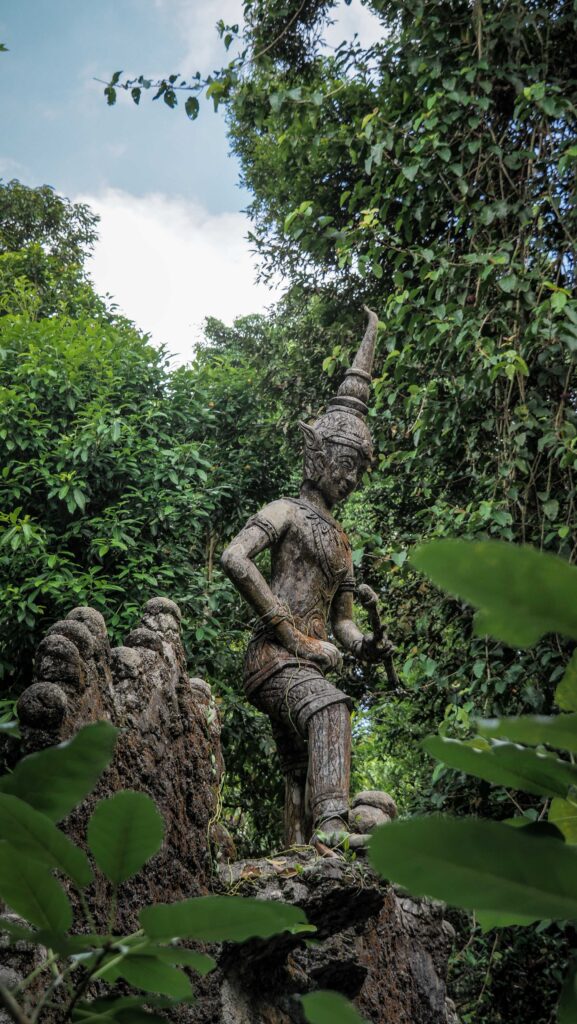
Tarnim Magic Garden

Peaceful place to rest and appreciate the surrounding nature and different statues whilst hearing very calming trickling water. It’s quite small though and you can get around in about 30 minutes. The entry ticket costs 80 THB so I really wished it had more to offer. Insect repellent is essential!
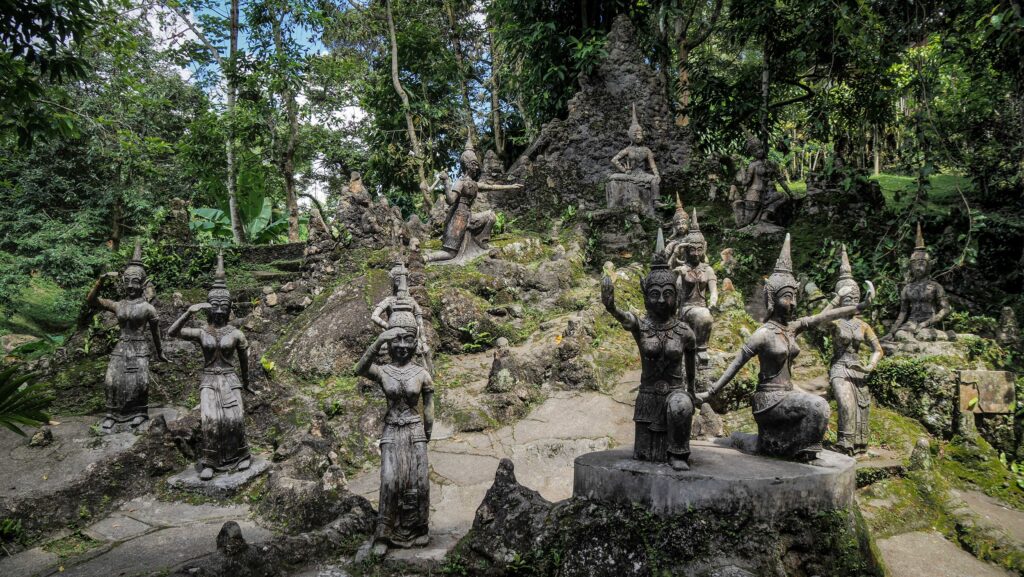
Koh Samui, Thailand
Tarnim Magic Garden
Koh Samui, Thailand
Tarnim Magic Garden

Paradise Park​ Farm

A well-maintained place with a lot of animals and an enormous garden. The most popular activity is feeding and observing the pigeons that come in shades of pink, blue, yellow, and orange. There are also some deer, goats, rabbits, parrots, and ducks. They also offer a viewpoint where you can enjoy a swing and capture nice pictures. Tickets are on the expensive side: 400 THB per person, but if you travel with kids, it may be a good idea to visit.

Na Muang Waterfalls

The tallest waterfall in Samui (30 meters) with a great pool for swimming at the base. It is set in lush jungle surroundings, easily accessible just off the main ring road. There are several stalls selling snacks, drinks, and souvenirs. Keep in mind that during the dry season, the water level could be extremely small so you may be disappointed. Unfortunately, near the entrance to the waterfall, I saw an elephant which was clearly used for riding. I strongly discourage you from participating in such an “attraction”. If you want to get closer to these magnificent animals, visit Samui Elephant Kingdom Sanctuary or Samui Elephant Home described below.
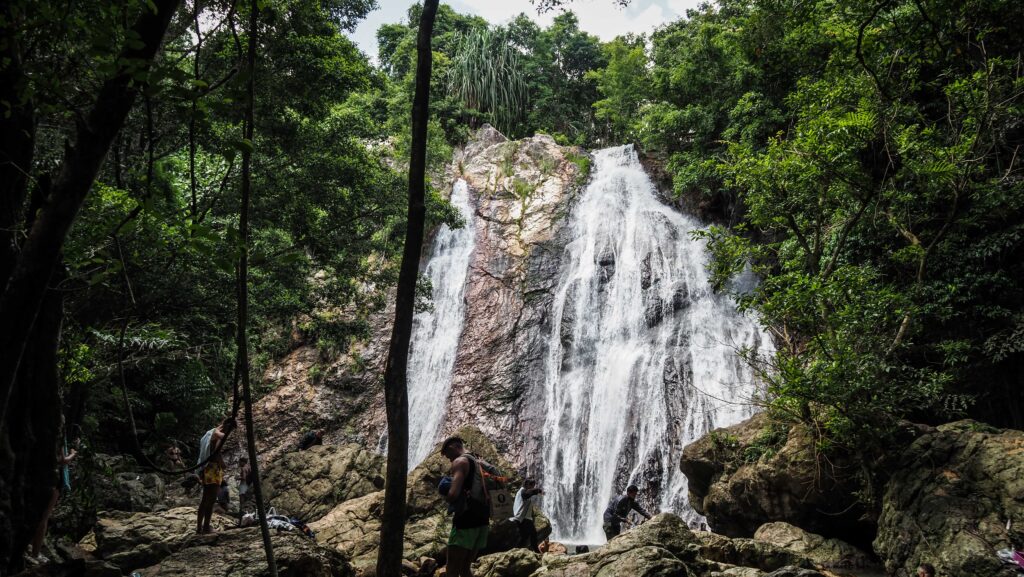
Koh Samui, Thailand
Na Muang Waterfall

Samui Elephant Kingdom Sanctuary & Samui Elephant Home

If you have the need to get closer to elephants, these two places have a good reputation. The staff look after the rescued elephants and have a great relationship with them. The tours normally include a briefing about the history of each elephant and where they’ve been rescued from, feeding, a walk around the large open grounds with them, bathing, and of course plenty of photo opportunities.

Cobra Show

I haven’t visited the place as I am not a fan of entertainment including animals, but they have positive reviews on Google Maps. Apparently, the owner and staff are very friendly and the animals look comfortable in their enclosures and are well-kept. Let me know in the comments if you were there and what were your impressions!

Khao Yai Waterfall

A short hike through some bush leads you to an unimpressive waterfall. Not really worth the time and effort.

Wang Sao Thong Waterfall

After a 10-minute walk through the jungle, you‘ll be able to cool down in a small lagoon at the base of the waterfall. Don’t expect anything big though and you may totally skip the place in the dry season.

Wat Khunaram

The home to Koh Samui’s mummified monk, Luong Pordaeng, who died in 1973. It was his will to be put on display as a visual reminder of the Buddha’s teachings. The body is presented in a seated meditative position in a glass case and the only noticeable change to the body has been the disintegration of the eyes, which have now been respectfully covered by sunglasses. I really like that place because it also shows you that Thais approach death as the natural order of things and they view it as an opportunity to be reborn into a better place, one step closer to nirvana. So much different from the European point of view.

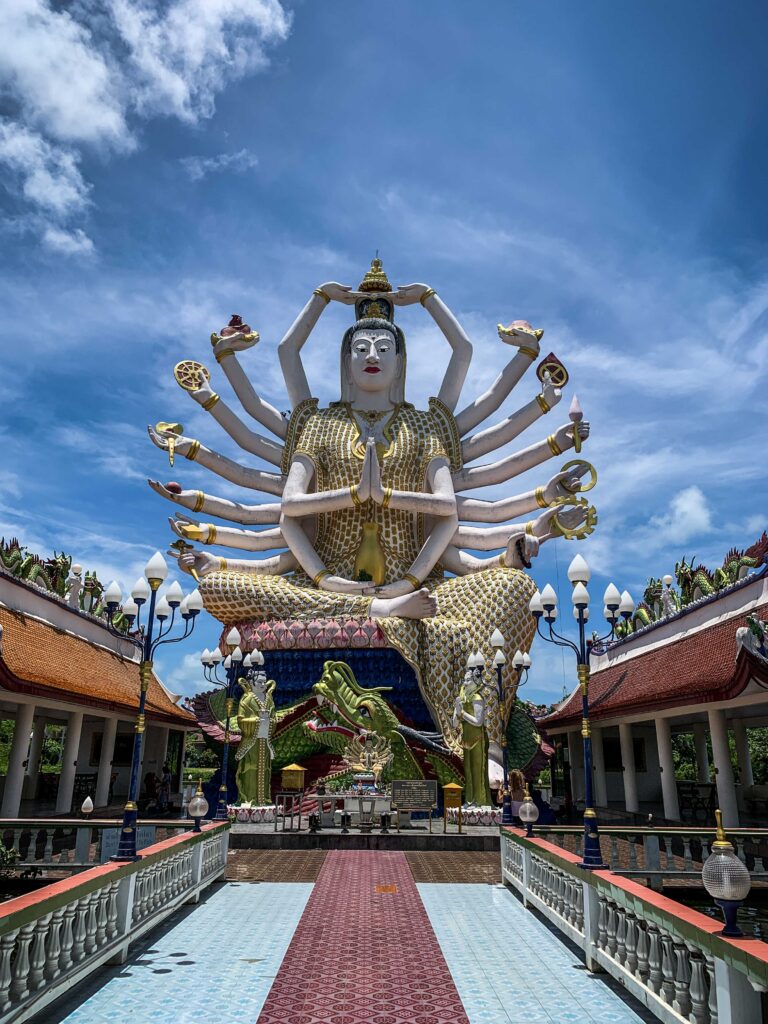
Wat Plai Laem

This unique temple was completed in 2004 and most of the complex was built in Thai-Chinese style. The two giant, colorful statues dominate the landscape. The first is the huge image of Guanyin, the Chinese Goddess of Mercy and Compassion who has 18 arms. Guanyin is very highly revered by Chinese people and is known as the protector of women and children, the sick, and the poor. She is said to have so many arms, so she can help many people at one time.

Another statue is that of the fat, laughing Chinese Buddha. In Chinese culture, a fat Buddha represents wealth and prosperity. This very impressive statue is 30 meters high and was painted in expressive colors like red, white, and gold.
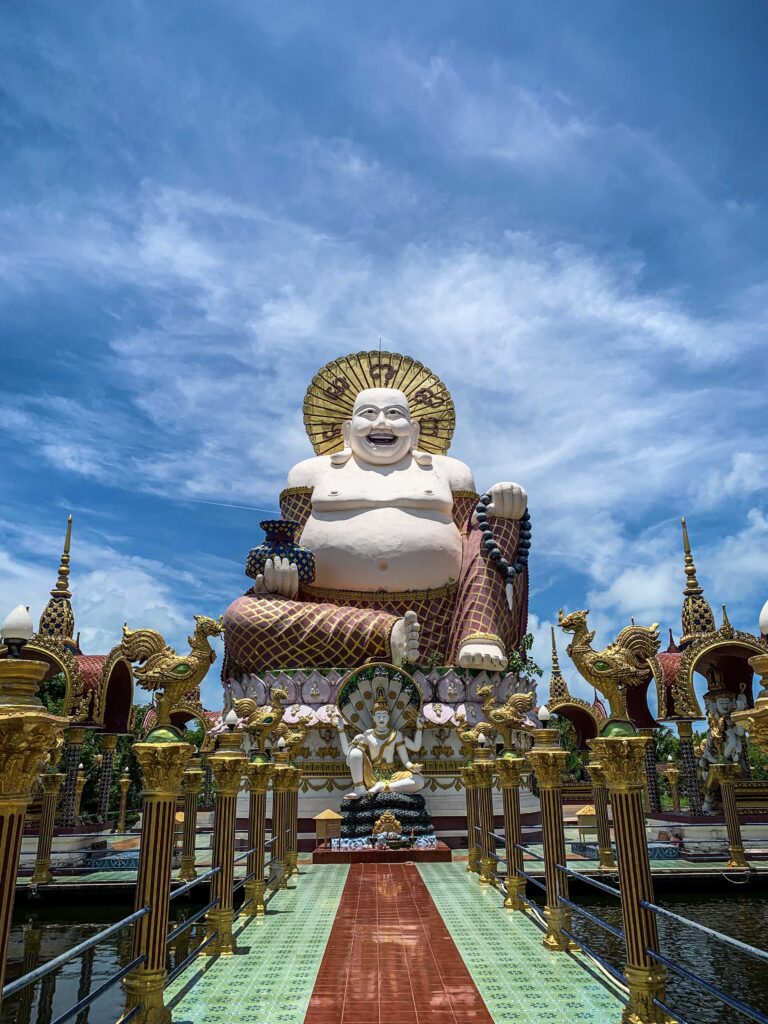
Wat Phra Yai

The temple complex is built on a small island named Koh Farn, connected to mainland Koh Samui with a causeway. The highlight is a 12-meter-long Buddha image that was built in 1972. The Buddha is in the subduing Mara posture, which symbolizes the Buddha not giving in to the demon Mara, temping the Buddha with beautiful women. There are also some great views of the surrounding beaches and the island of Koh Phangan to the north.

Thongson Beach

Fine beach but you will most likely need to order something in the restaurant or otherwise they will charge you for parking. You may notice pigs cooling off there on a hot day, not joking. The naturist beach is located further on the right, just follow the path and then go over the rocks. If you are in that part of the island, it’s worth stopping by but it’s not worth a special trip.

Choengmon Beach

It’s one of the most beautiful beaches in Koh Samui with clean water and nice sand. You can get a sun bed for about 200 THB. Plenty of spots offer massage, drinks, and food. It’s also a perfect place for a beach walk during low tide to have a closer look at nearby Ko Fan Yai and Ko Fan Noi.

Chaweng Beach

Probably the most crowded and popular beach on the island. Hotels and resorts are all along the beachfront, bars and restaurants play loud music till late night hours, and jet ski as well as other water attractions are available for adrenaline seekers. It’s typical beach madness but sometimes this is exactly what you are looking for. Sunrises are beautiful there and probably that is the only quiet time for peace lovers.

Khao Hua Jook Pagoda

Worth visiting around the sunset for great views over the island and the airport. Entrance fee: 20 THB.

Lad Koh View Point

Lovely viewpoint just off the road. You can take a nice walkway down to the rocks below.

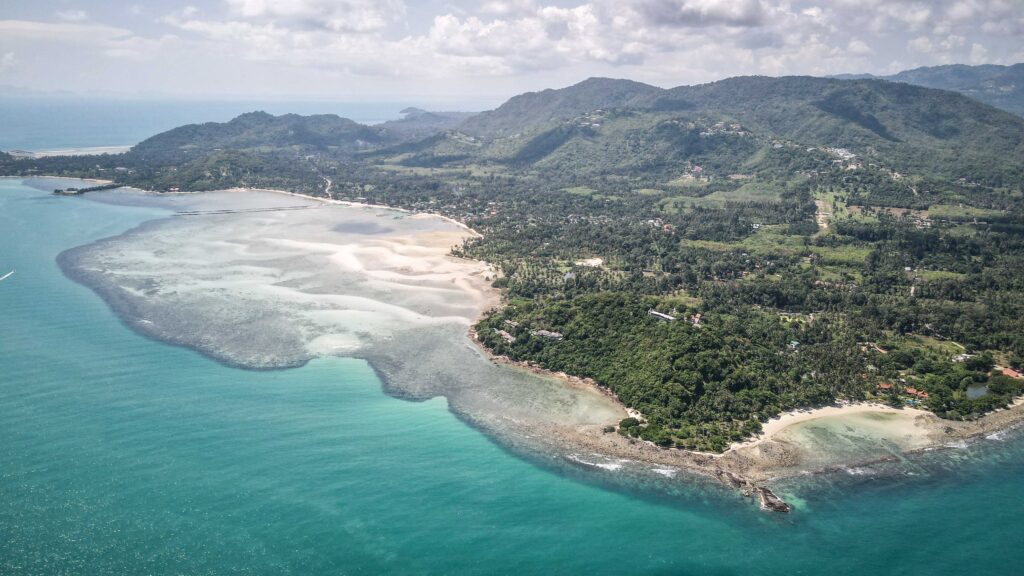
Wat Phra Chedi Laem So

Beautiful, serene, and quiet temple by the sea. It’s not worth a special trip, but if in the southwestern area of Samui, check it out.
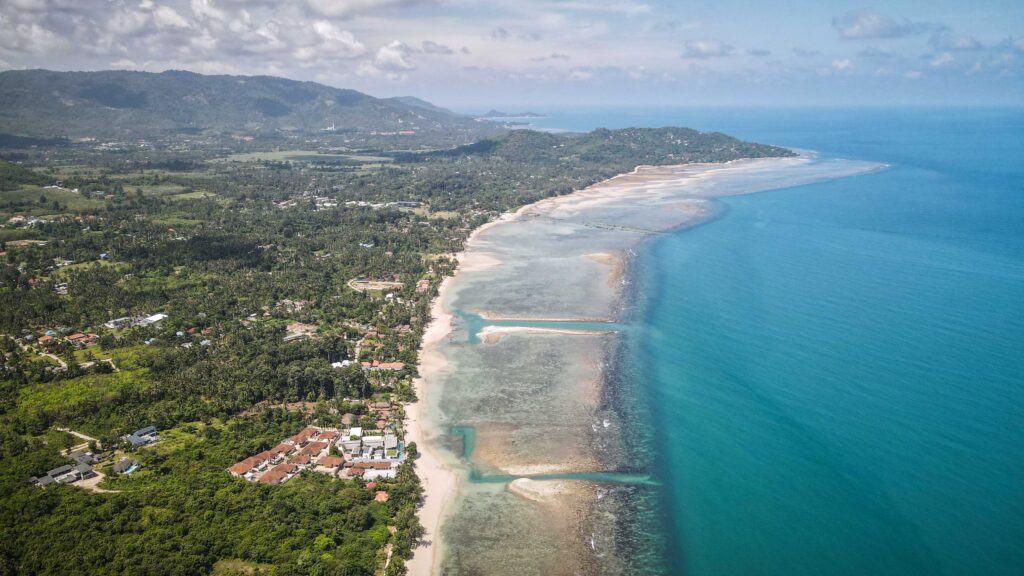
Koh Samui, Thailand
The aerial view of the area around Wat Phra Chedi Laem So
Koh Samui, Thailand
The aerial view of the area around Wat Phra Chedi Laem So

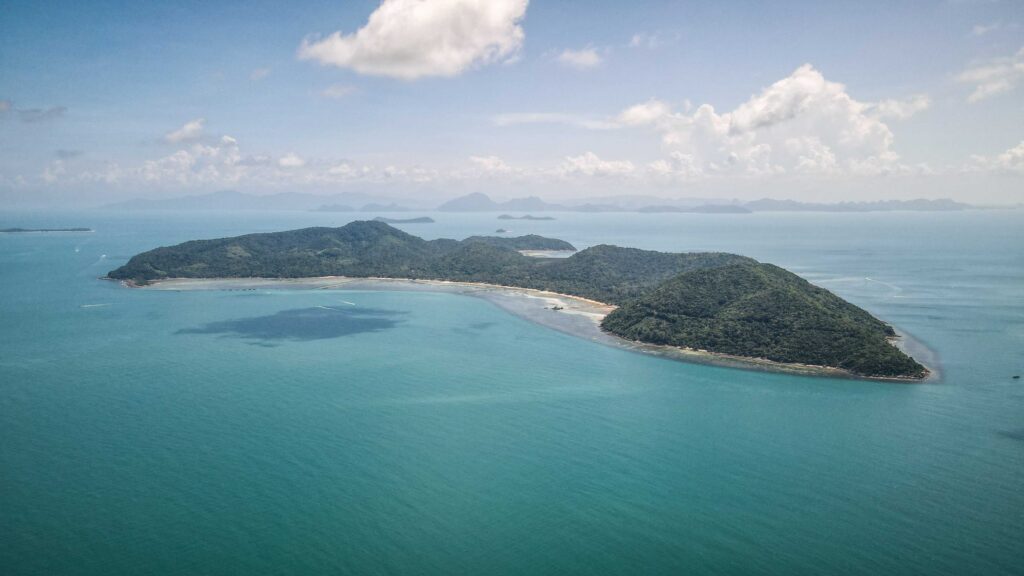
Koh Taen and Ko Mat Sum

Both islands are located only a few minutes away by longtail boat from Thong Krut Pier. Koh Taen isn’t too impressive and the beach is rocky so don’t waste too much time. On the other hand, snorkeling around the island is decent. Koh Madsum is way better for relaxing on the beach with fine sand and fantastic clear water. It can get crowded as it’s popular for… pigs on the beach. The price for a boat, depending on your plan should vary between 1000 – 1400 THB.
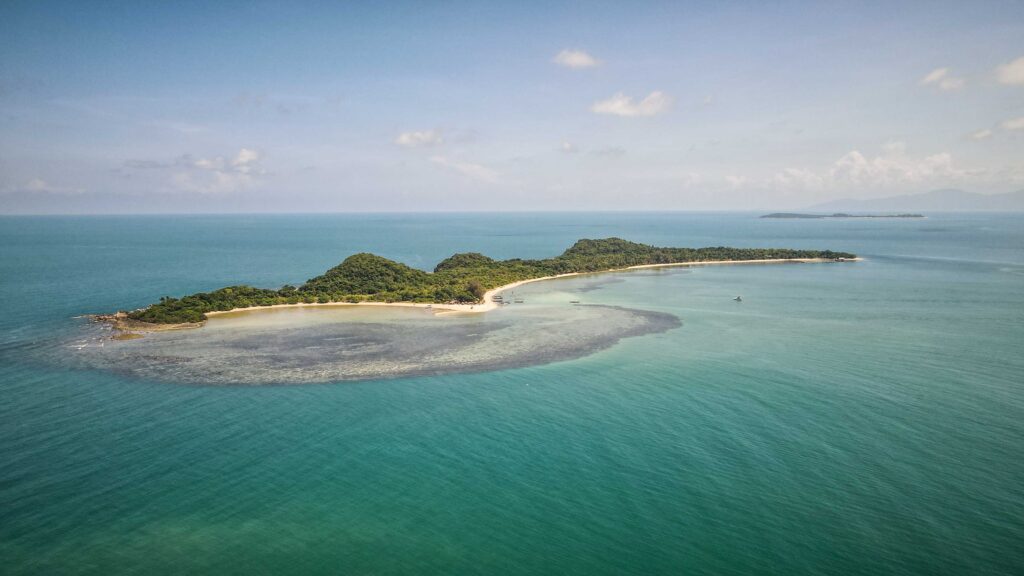
Koh Samui, Thailand
Koh Taen
Koh Samui, Thailand
Ko Mat Sum

Lipa Noi Beach

A very long and narrow sandy beach. The big plus is that there are hardly any people. Both the water and the beach are clean and it’s a good spot to enjoy the sunset in peace.

Hin Lat Waterfall

Another nice waterfall on Koh Samui and a great 30-40-minute hike through the jungle to reach it. Insect repellent and proper shoes are recommended. If the water level allows, you may swim in the cooling pools at the base of the waterfall.
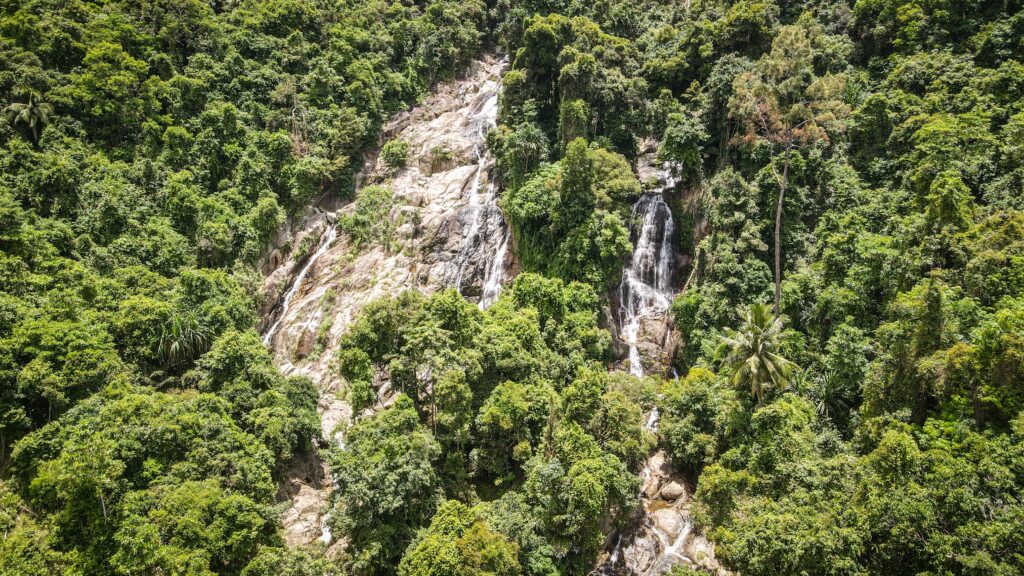
Hin Lat Waterfall
There are a few waterfalls worth seeing on Koh Samui

Khun Si Waterfall & Viewpoint

The waterfall wasn’t too impressive at the time of my visit but the road to get there was leading through the wilder part of Samui, even though it was a bit tricky. At some point, I started doubting if I was heading in the right direction but then a small wooden sign told me that I arrived. Khun Si View Point is just on the other side of the parking, don’t miss it! 

Nathon Sunset Viewpoint

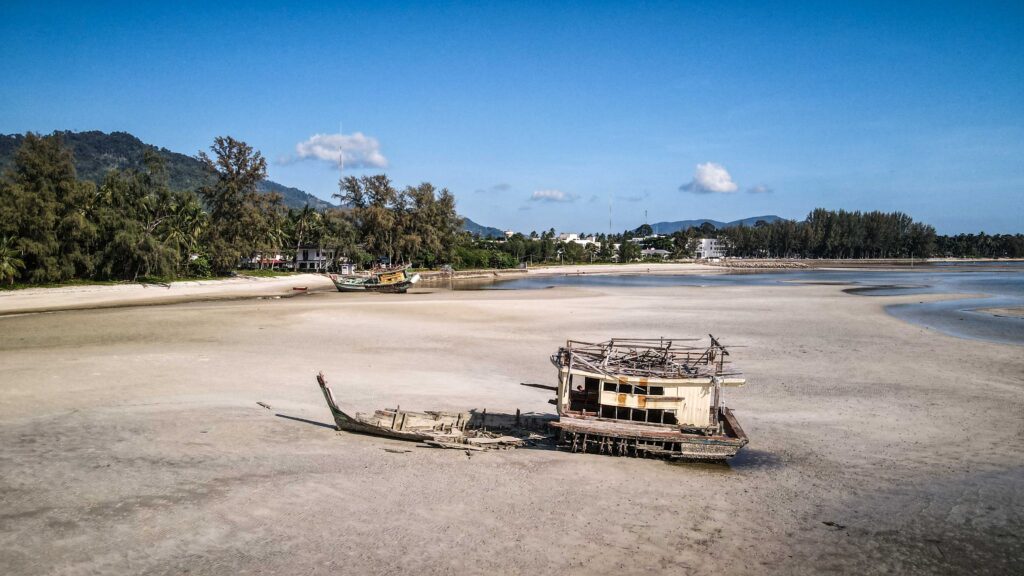
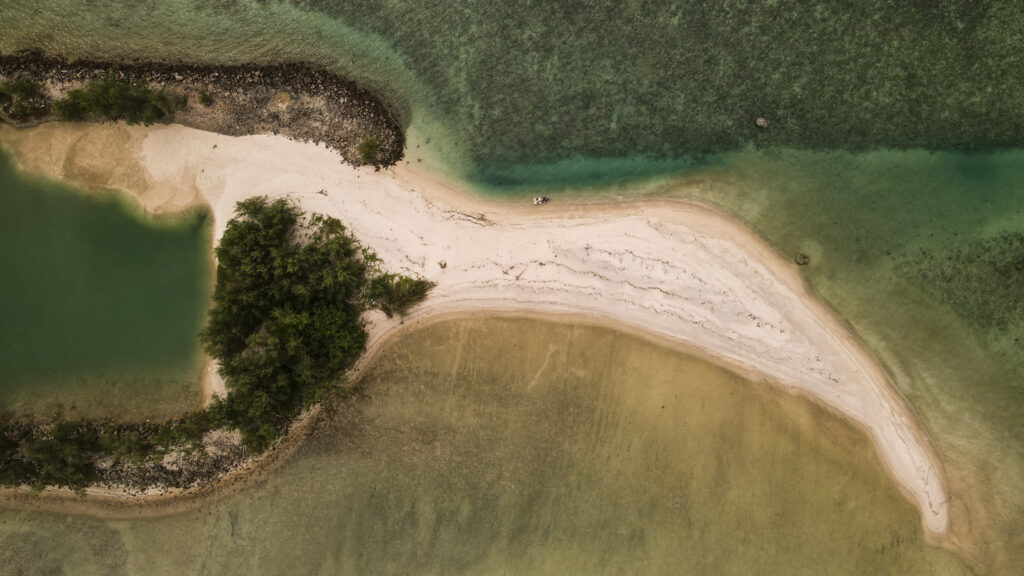
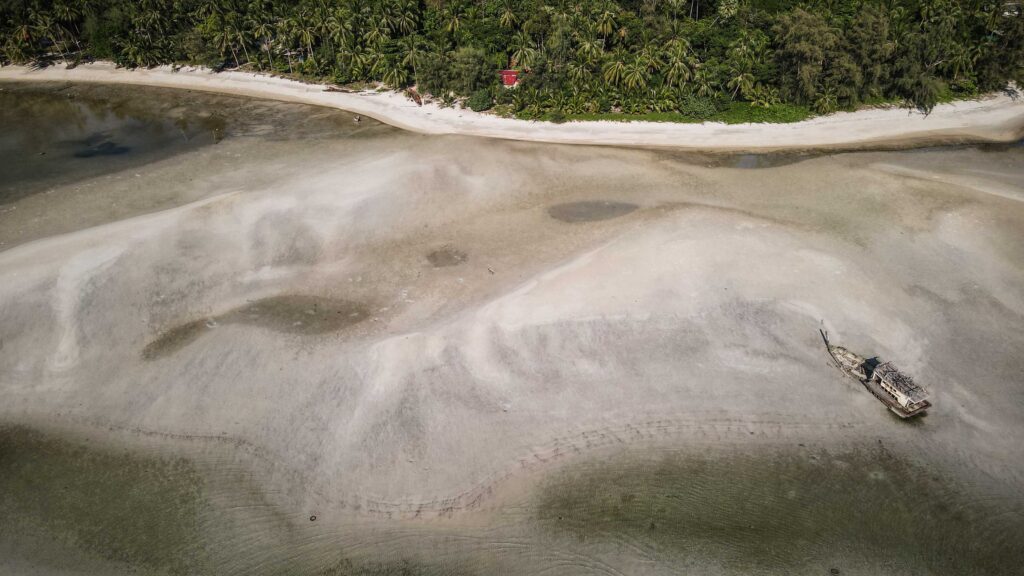
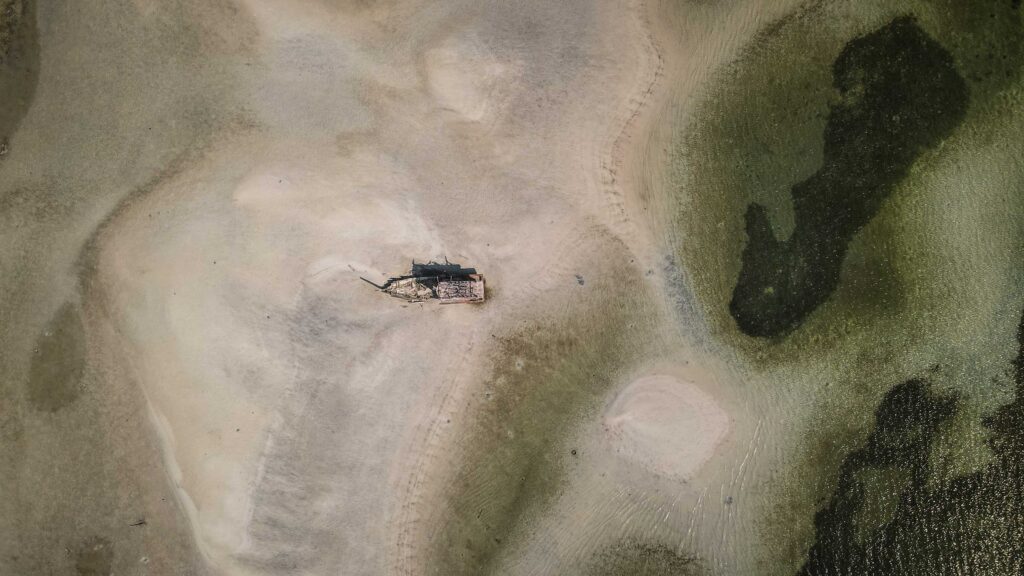
A popular location for sunset. There are benches along the road or you can get closer to the water for a different perspective. During low tide, there is also a nice sandbar to walk on. Bang Makham Beach and Laem Yai Beach further north are other good alternatives for watching the sunset.
Koh Samui, Thailand
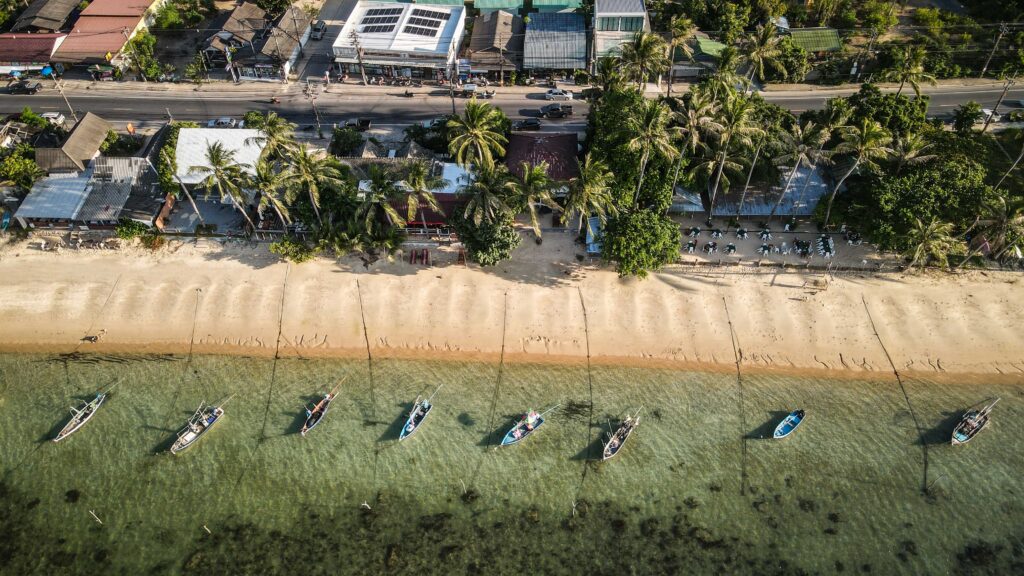
Beach on the west coast of Koh Samui
Koh Samui, Thailand
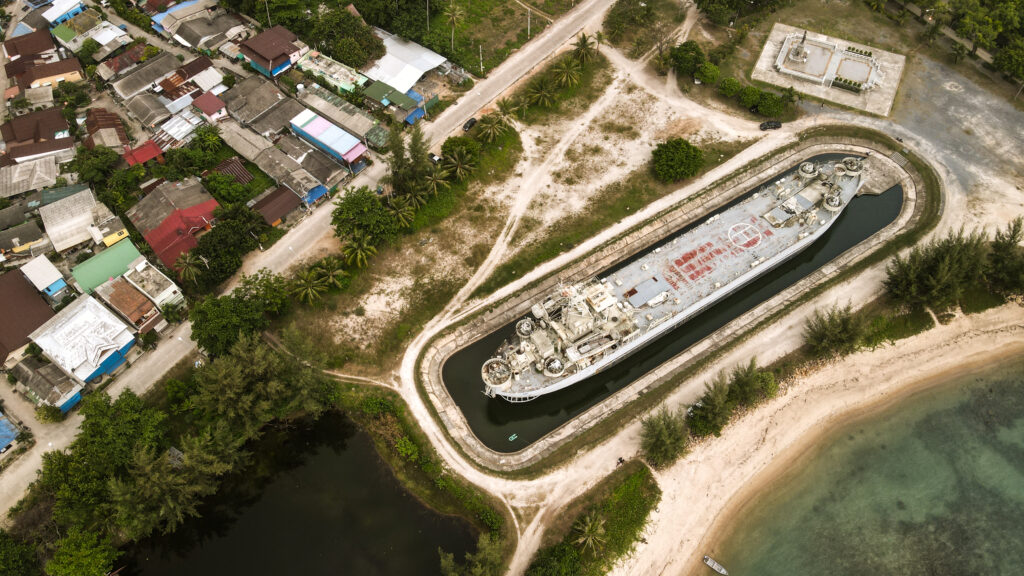
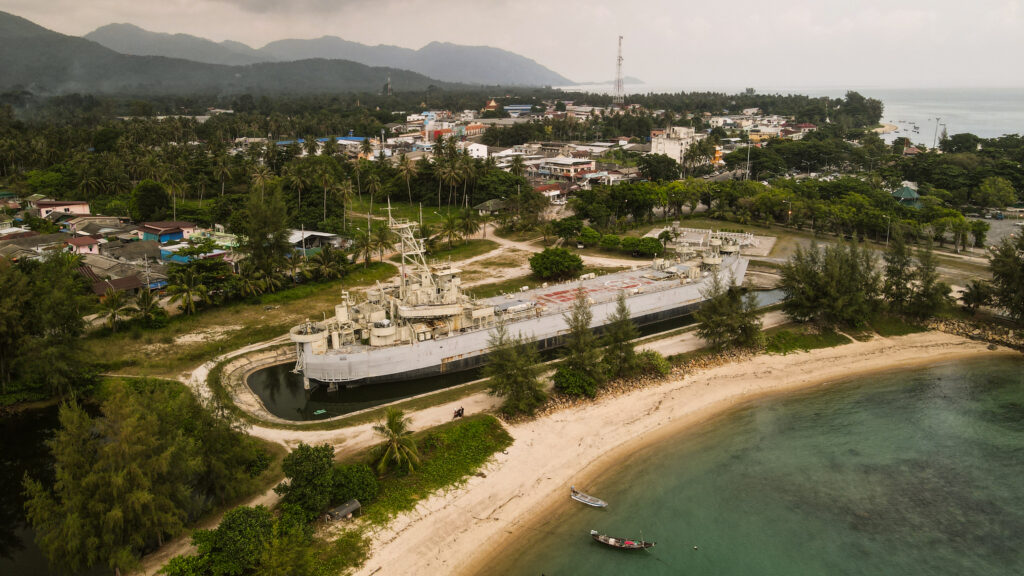
At low tide, you can walk around the shipwreck
Koh Samui, Thailand
Shipwreck
Koh Samui, Thailand
Beach on the west coast of Koh Samui

North Coast Beaches and Fisherman’s Village

There are a lot of good beaches on the north coast with restaurants, bars, kayaks, paddle boards, jet skis, and other attractions. The best is to just follow the main road on a motorbike and stop wherever you want. The nicest places are Bang Por Beach, Baan Tai Beach, Maenam Beach, W Beach, and Bo Phut Beach. The center of all entertainment is Fisherman’s Village and there is a big night market too.
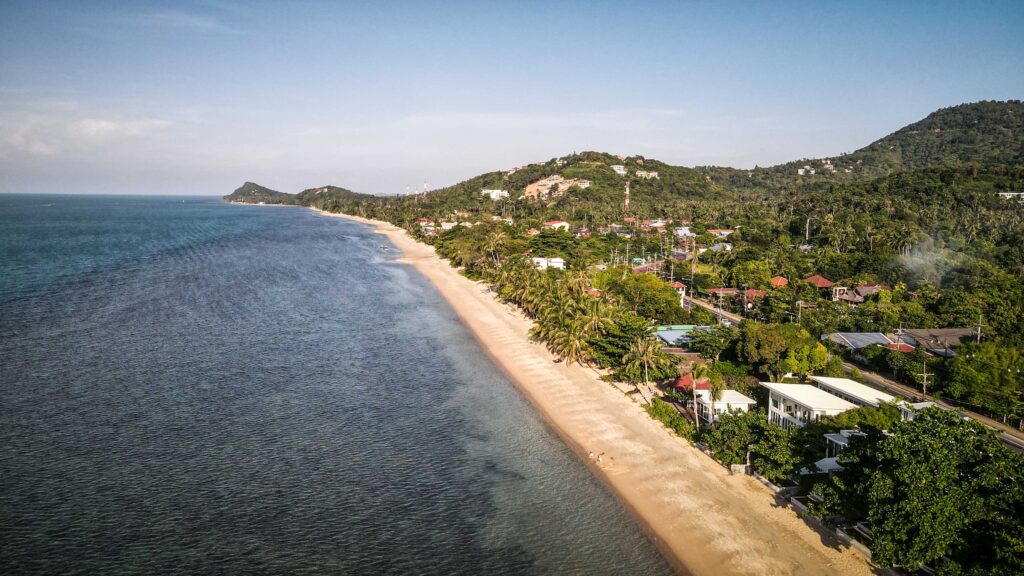
Koh Samui, Thailand
The beach on the north coast of Koh Samui
Koh Samui, Thailand
Scenic coast of Koh Samui
Koh Samui, Thailand
The beach on the north coast of Koh Samui


Nestled in the Gulf of Thailand, Koh Phangan is a captivating tropical paradise, known for its pristine beaches, vibrant culture, and unique blend of tranquillity and excitement. Whether you’re seeking the thrill of the world-famous Full Moon Party, a serene escape to crystal-clear waters, or a taste of authentic Thai culture, this island has something for every kind of traveller. For me, it’s also one of the top places for online work in the whole of Thailand.

How to get there?

Koh Phangan can be reached on a ferry from Donsak Pier near Surat Thani. Raja Ferry is slow, cheap, uncomfortable, and takes about 2,5 hours while Lomprayah is exactly the opposite but about twice the price and takes 1,5 hours. Time is money, they say. The choice is yours 🙂

Another option would be to fly to Koh Samui and hop on a boat from there. There are regular flights from Bangkok and other major cities in Thailand, as well as some foreign destinations. Check your connections at 12Go.Asia

How long to stay?

The island is a very pleasant place to stay, regardless if you are a party type or not. I would count a minimum 3 days which could be easily extended to one week or even longer. Beautiful beaches, waterfalls, and forest, nice standard of accommodation for online work, good food, and an option for a day trip to Ang Thong National Marine Park. What else would you need for a perfect tropical holiday?

When to go?

The best period to visit Koh Phangan is between December and August.

The dry season lasts from December to April and it’s the peak tourist season. Pleasant weather with lower humidity and cooler temperatures. Accommodation and flights can be more expensive, and popular tourist spots can be crowded.

From May to August, there is a hot season with higher temperatures and humidity. Occasional rain showers are possible but they are usually brief. May and June can be particularly hot.

Rainy season months, so September to November, are better to be avoided. The prices are more budget-friendly but you may expect frequent rainfall and boat tours will most likely be closed.

Koh Phangan, Thailand
Ko Tae Nai
Koh Phangan, Thailand
Ko Tae Nai

Where to stay?

The night in Mae Haad Garden Inn cost me about 12 EUR per night and I chose that location only because other options were not available because of the Full Moon Festival. I ended up very satisfied with it and the area was super calm. With a scooter, it was easy to reach any part of the island anyway. Chaloklum Beach was only a 10-minute ride away.

Later, I moved to the Shanti Boutique Hotel which was a bit more expensive but absolutely brilliant. The rooms are simple but very cozy and clean, and it’s nice that they come with a balcony. The location is great as well, near Srithanu Beach and Zen Beach. There are also many cafés and restaurants that offer super tasty food with a lot of variety.

How to get around the island?

Without a doubt, the best option is to rent a motorbike. Ask for one at your accommodation. They will either have one or get in touch with someone who can deliver it to you within minutes. You will also find some rental agencies near Thongsala Pier.

The network of roads is really good with most of them sealed. There are still some dirt roads, often steep so pay special attention there or simply park your bike on the side of the road and walk.

Koh Phangan, Thailand
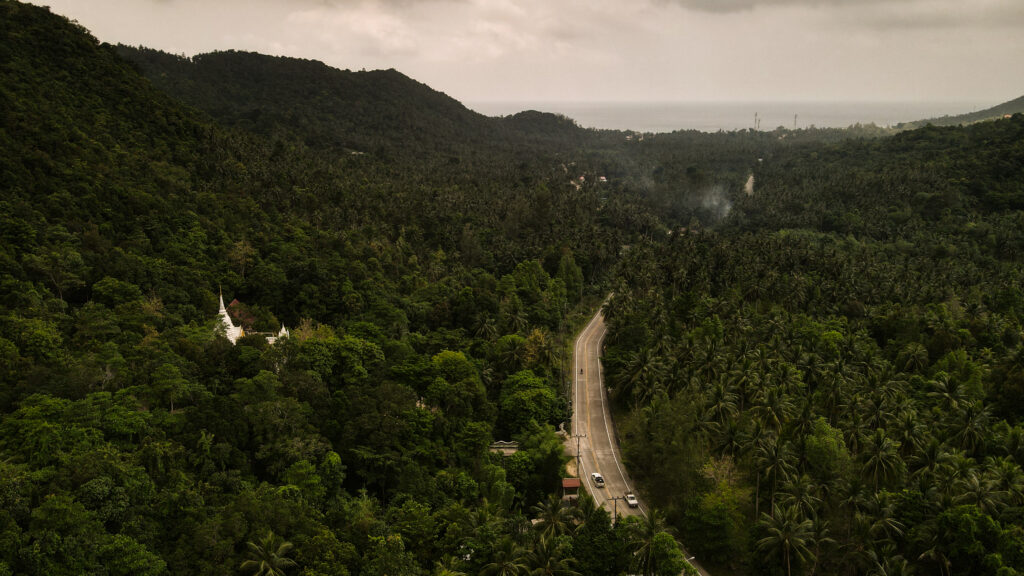
The road across Koh Phangan

What to do in Koh Phangan?

Wat Phu Khao Noi

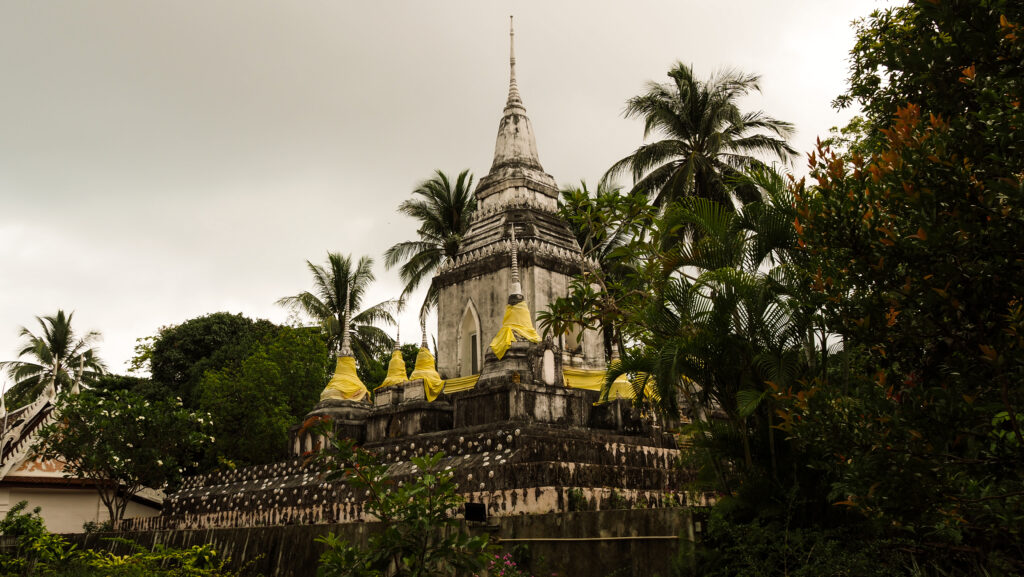
The oldest temple on the island is a very tranquil place to walk around and enjoy the peace. It has a very nice vibe and the buildings are beautiful to look at. As it is located on a small hill, there are some good views too.

Koh Phangan, Thailand
Wat Phu Khao Noi

Phaeng Noi Waterfall

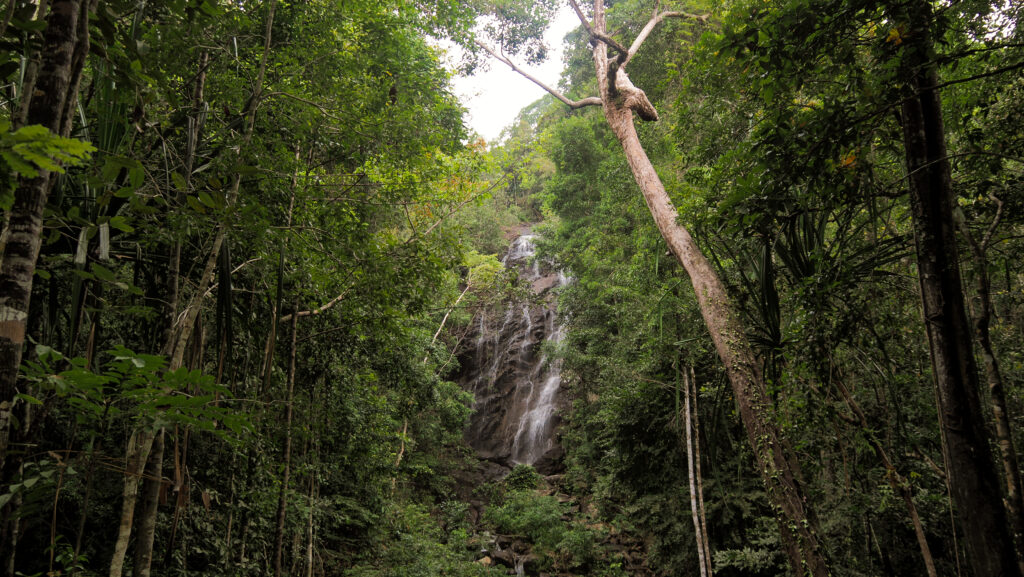
Wonderful waterfalls with lots of places to stop for a quick dip. The circular trail is challenging and adventurous but absolutely worth it. The full version takes about 2 hours but you may also choose a shorter variation. Hiking shoes are recommended as the trail is sometimes difficult and can be slippery. The entrance fee for foreigners is 100 THB.

Koh Phangan, Thailand
Phaeng Noi Waterfall

Than Sadet Waterfall

The scenic road from the south of the island to Haad Sadet Beach crosses Namtok Than Sadet National Park. Don’t expect an impressive waterfall as it’s more like a stream with a lot of small waterfalls where you can walk up or downstream. The level of water depends on the season. The entrance fee for foreigners is 100 THB.

En route, you will notice two other access points to the same stream: Pho Darng Waterfall and Deang Waterfall.

Koh Phangan, Thailand
Than Sadet Waterfall
Koh Phangan, Thailand
A very scenic road in Koh Phangan

Haad Sadet Beach

An okayish place but nothing too special. The highlight for me was taking a walk through We took a walk through the rickety bridge to the abandoned resort on the nearby beach: Haad Thong Reng. The entrance to Haad Sadet Beach costs 100 THB.

Koh Phangan, Thailand
Haad Sadet and Haad Thong Reng
Koh Phangan, Thailand
Haad Sadet and Haad Thong Reng
Koh Phangan, Thailand
Haad Sadet

Haad Yao (East) and Haad Yang

Two remote and quiet beaches that can be reached by boat from Haad Rin, 4WD, or on foot. Haad Yao (East) is popular for its weekly parties at Lost Paradise.

Haad Wai Nam

Another nice and cozy beach, with a very chilled vibe and free atmosphere. Beautiful rocks and good water for snorkeling! The restaurants serve delicious food and there is a beach party every Saturday. The easiest way to get here is by boat from Haad Rin.

Haad Yuan Beach

I really enjoyed the jungle hike from Haad Rin to get to this place, with a wonderful viewpoint on the way. It takes about 1,5 hours. If you don’t feel like hiking all the way back, you can just take a boat taxi for approximately 200 THB per person. There are parties on Saturday night at Eden Bar.

Haad Rin

This is the epicenter of the island’s nightlife, most famous for its Full Moon Party, a massive monthly beach party that draws thousands of visitors from all over the world. The event typically takes place on the night of the full moon, hence the name. It’s known for its vibrant atmosphere, music, dancing, and colorful decorations.

Haad Rin is divided into two main beaches: Haad Rin Nok (Sunrise Beach) and Haad Rin Nai (Sunset Beach). Sunrise Beach is where most of the Full Moon Party action happens, while Sunset Beach is generally quieter and more relaxed. Both beaches offer stunning views and plenty of water sports activities.

For good panoramic views, hike to Haad Rin Rock Viewpoint. It’s a good spot for sunset, although take the flashlight with you as the route is bushy. Follow the road to the antenna and about 20 meters before the road ends, there is a small, overgrown path toward the rock from which you can see the best view.

Koh Phangan, Thailand
Haad Rin
Koh Phangan, Thailand
Haad Rin
Koh Phangan, Thailand
Haad Rin
Haad Rin

Yang Na Yai Tree and Wat Pho

Dipterocarpus alatus also known colloquially as the resin tree, is a tropical forest tree. The tallest one on the island is truly colossal and impressive. It’s located near Wat Pho, which is a quiet temple with an herbal sauna on the opposite side of the street.

Wat Khao Tham

It’s a very quiet and calm place on the hills of Koh Phangan, with a wonderful viewpoint over Koh Phangan. Koh Samui can be seen as well. They have a Vipassana meditation retreat so ask for more details if you are interested.

Koh Ma and Koh Ma Beach

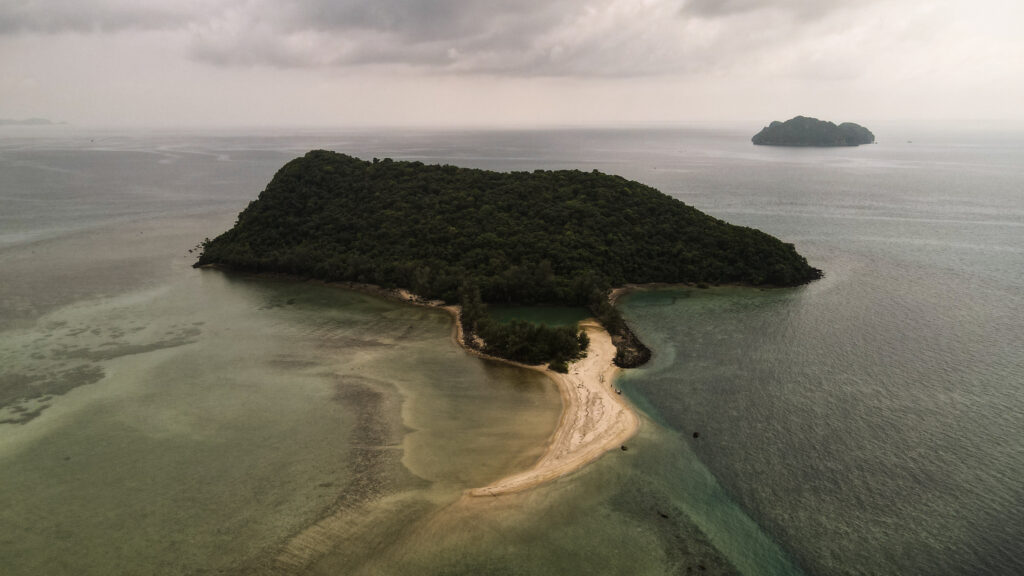
Koh Ma is a small island in the northwest connected to Koh Phangan by a tiny but very picturesque sandbar. It’s a very popular snorkeling spot with some rock reefs on the east side of the island. The beach is very nice too, with hotel rooms located right on it but go a bit further and you will find a much quieter part.

Koh Phangan, Thailand
Koh Ma
Koh Phangan, Thailand
Koh Ma

Wang Sai

Very disappointing place. The entrance fee was 50 THB per person but the place is neglected and it isn’t worth the time and money. The bar was closed and the waterfall was very tiny. Not recommended!

Koh Phangan, Thailand
Wang Sai

Guanyuin Temple

Beautiful temple located on the hill by the main road from Thongsal to Chaloklum. It is dedicated to the bodhisattva Guanyin, the Buddhist Goddess of Mercy. The price for entering is 40 THB per person.

Koh Phangan, Thailand
Guanyuin Temple

West Coast Beaches

There are several pleasant beaches on that section of the island. Especially worth mentioning are: Salad Beach, Haad Yao Beach, Secret Beach, Zen Beach, Srithanu Beach, and Hin Kong Beach.

Koh Phangan, Thailand
Zen Beach
Koh Phangan, Thailand
Hin Kong Sandbank
Koh Phangan, Thailand
Hin Kong Sandbank
Koh Phangan, Thailand
Haad Yao Beach
Haad Yao Beach
Haad Yao Beach

Phangan Royal Navy Ship

HTMS Phangan was donated to the Thai government by the United States back in 1957 as a symbol of good relations. It was in service during the Vietnam War and was officially retired on June 5, 2008. During my visit in April 2022, the interior was not available for sightseeing.

Koh Phangan, Thailand
HTMS Phangan
Koh Phangan, Thailand
HTMS Phangan
Koh Phangan, Thailand
Panorama of Koh Phangan

Chalok Lam Beach and Malibu Beach

A nice beach stretching mainly by Chaloklum, a small fishing village. There are a lot of food options around. To the west of the village is the very picturesque Malibu Beach.

Koh Phangan, Thailand
Chalok Lam Beach
Koh Phangan, Thailand
Malibu Beach

Khao Ko Viewpoint

A hidden little viewpoint over Chaloklum Bay! You can spend the entire afternoon there enjoying the view from the hammocks. The road is short but very steep so if you are an inexperienced motorbike rider, just park it on the side and continue on foot. Refreshments like beer, coke, and water are available.

Bottle Beach

Nice, wide, and relatively clean beach with a bar and some bungalows for rent. The road to get there is recommended for 4WD only, so unless you are a skilled rider, it’s better to park your motorbike and continue on foot. It’s a pleasant downhill walk and on the way back I was lucky enough to get a ride in a pickup truck. From here, you can also access the track through the jungle leading to the most amazing viewpoint on the island.

If you don’t drive a car or ride a motorbike, you can find boat taxis waiting for clients on the beach or ask about them in a bar.

Koh Phangan, Thailand
Bottle Beach

Bottle Beach Viewpoint

Probably my favorite point in Koh Phangan. The journey through the jungle path was nothing short of amazing, and some moderate climbing near the end added to the sense of adventure and connection with nature. It’s not for someone who is scared of heights though.

The viewpoint can be reached either from Bottle Beach (about 25 minutes) or from the road on the other side. Just look for “Bottle Beach Scooter Parking” on Google Maps. From there the walk is even shorter. Flip-flops are not recommended.

Koh Phangan, Thailand
Bottle Beach Viewpoint

Haad Khom Beach

A quiet and beautiful beach. Sometimes you can see monkeys around this area. You can take a boat taxi to Bottle Beach from here or simply take a trail which is well-signed with blue marks. It should take about 1 – 1.5 hours one way.

Thong Nai Pan Beach

Beautiful beach and area with clean soft sand and water. The village has a quiet vibe and feels small and calm. Wat Thong Nai Pan with an unusual stupa has a nice viewpoint and is located nearby.

You may also check Than Prawet Waterfall or Thong Nai Pan Waterfall if you are tired of beaches.

Day trip to Ang Thong National Marine Park

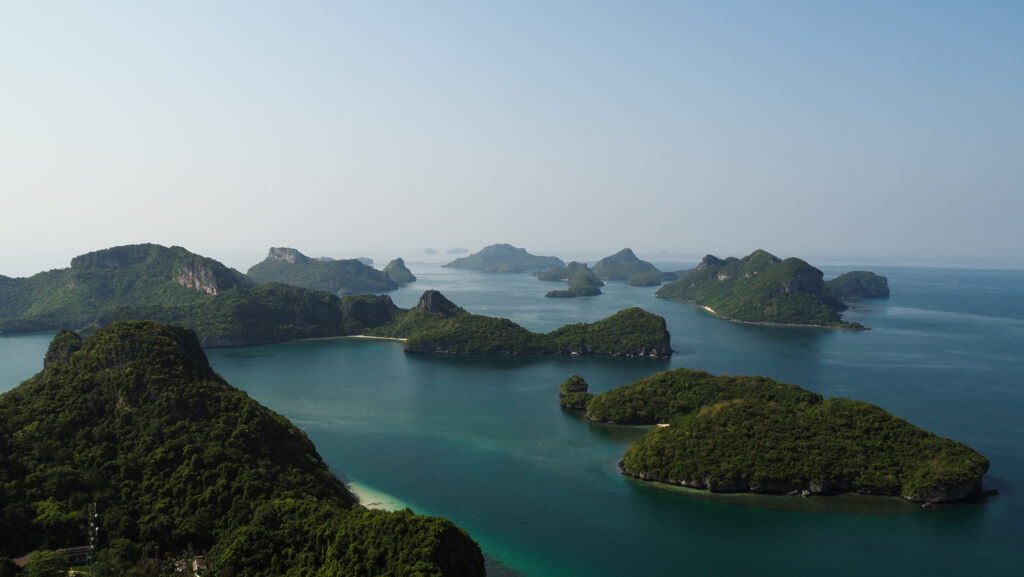
Ang Thong National Marine Park is a stunning archipelago located in the Gulf of Thailand, not far from Koh Phangan. The park was established on 12th November 1980. and consists of 42 small, limestone islands, characterized by lush greenery, towering cliffs, and hidden coves. All of the islands are uninhabited and undeveloped except for one: Koh Wua Talap, where the visitor center, campsite, and bungalows are located.

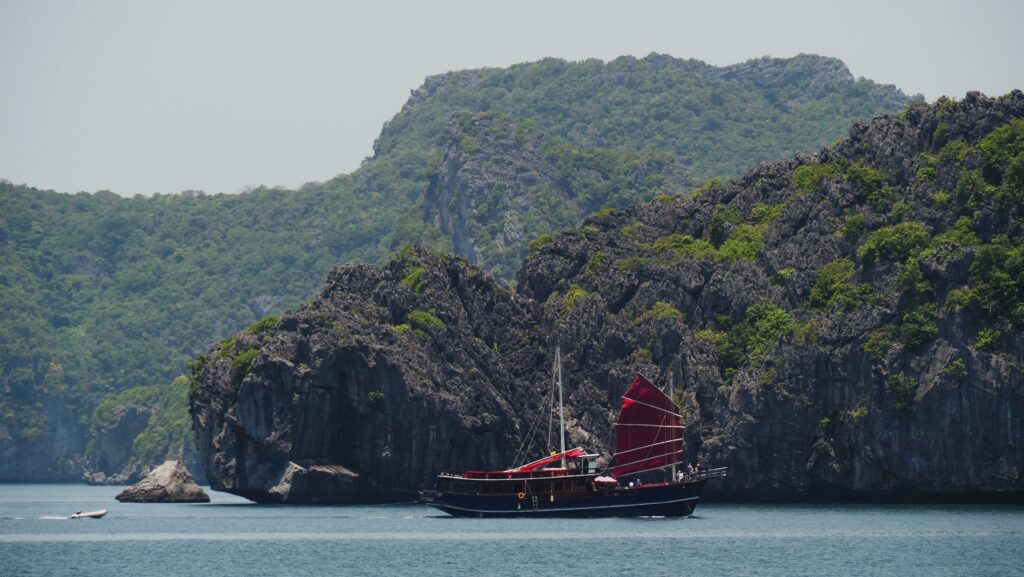
There are numerous companies running daily trips from Koh Phangan and Koh Samui and first, you will need to decide if you prefer to take a speedboat or a slow boat. It takes about an hour to reach the islands by speedboat and about 2-3 hours by slow boat. You can save a lot of time choosing the first option but the ride can be bumpy and less enjoyable. The slow boat usually has a nice deck where you can sunbathe and take a lot of nice pictures.

Ang Thong National Marine Park in Thailand
Ang Thong National Marine Park
Ang Thong National Marine Park in Thailand
Ang Thong National Marine Park

I decided to choose a tour operated by the Orion Cruise, starting from Koh Phangan. It was a bigger and slower boat. As of April 2022, the cost was about 2.000 THB. Included in the price is pick-up from the hotel, lunch, snacks, soft drinks, and snorkeling equipment. You may pay an extra 200 THB if you go for an option with a kayak. The price included the Ang Thong National Marine Park entrance fee.

A full description of the tour can be found in a separate post HERE. You may also ask at your accommodation for alternative options.

Introduction

Northern Vietnam is famous for its capital Hanoi, mountainous areas, and incredible Ha Long Bay. However, if you are looking for a place with sandy beaches and relatively clean seawater to relax far away from tourism madness, Co To Island in Quang Ninh province could be a smart choice. You can be sure, that there won’t be many other foreigners besides you, if any!

When to go to Co To?

Even though the island is reachable for the whole year, I strongly recommend going during the summer and autumn months, meaning from April to August. The temperature is about 30oC and the visibility should be fine. It’s also the best time to enjoy beaches and swim in the sea.

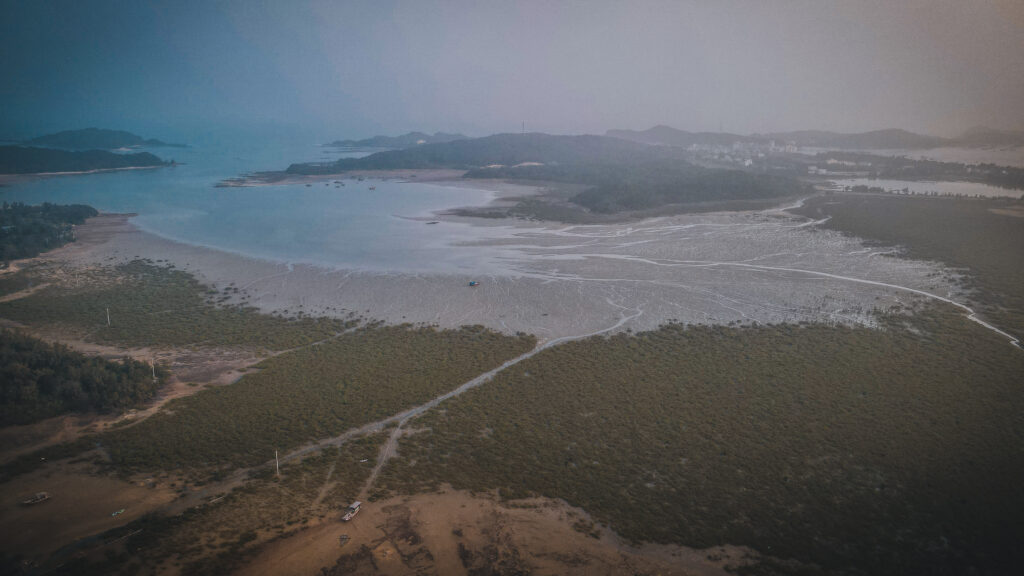
I was on Co To Island in late March. The temperature was pleasant but the sky was constantly cloudy so even nearby islands weren’t perfectly visible.

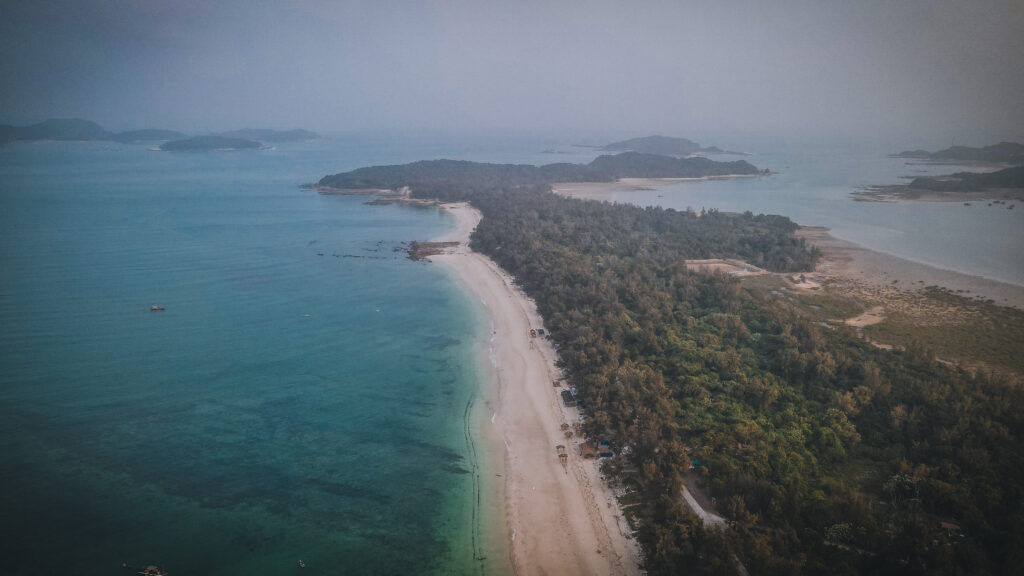
Co To Island, Vietnam
Morning hours are the best for photography!

How to get to Co To?

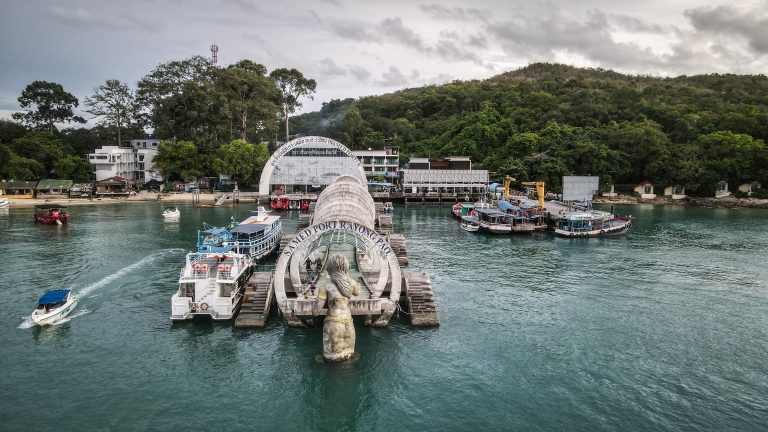
Slow boats and speed boats depart from Cai Rong Port. The slow boat costs 100.000 VND and takes between 3 – 4 hours. Speed boat costs 250.000 VND and takes between 1,5 – 2 hours. The schedule may vary depending on the month that you will be traveling.

I arrived at Cai Rong Port around 11:30 AM and was lucky to get into the slow boat at 12:00 PM. The boat was packed with people and packages and wooden benches were super uncomfortable to sit on but it was still quite doable. I mean, it’s 100.000 VND, so don’t expect luxury. At least I had the possibility to stand at the back of the boat, taking in the magnificent scenery en route. The trip was mostly smooth but the waves got bigger in the open sea section between Quan Lan Island and Co To Island. The ticket fee is collected when arriving at Co To Island.

Co To Island, Vietnam
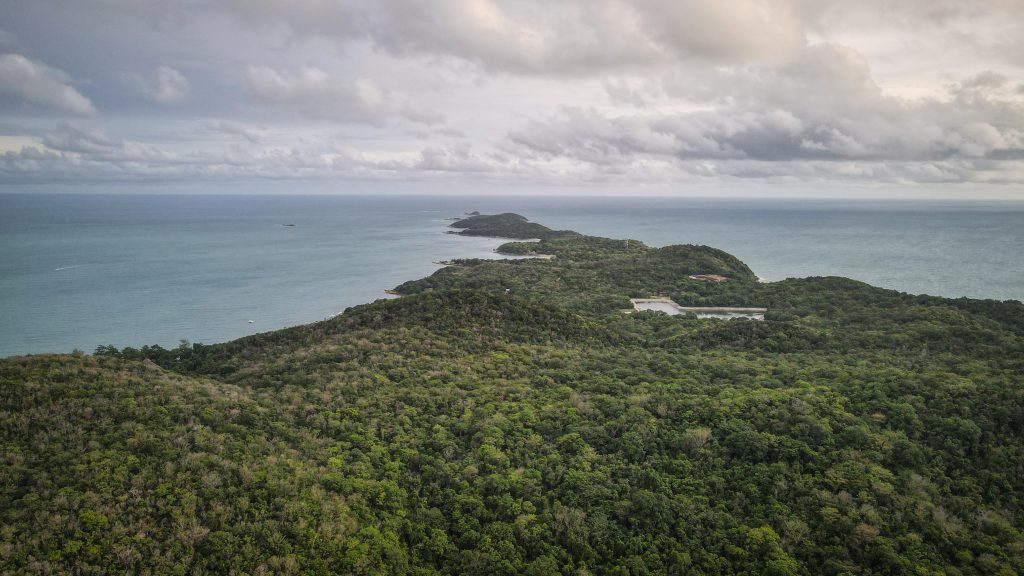
Flying over Co To Island

I took the speed boat back to the mainland and it involved some drama. There were two boats on that day: 8:00 AM and 4:00 PM. I really wanted to get the morning one to have enough time to ride the bike to Lang Son. I thought that similar to a slow boat, the tickets can be purchased on board. Instead, I was told to go to the ticket office which was at the entrance to the pier. I had only 15 minutes left before the departure and then it came up that all the tickets were sold out. The sales lady was really fighting hard with the captain to push me in the boat but she failed, and I had to stay on the island for a few more hours, leaving at 4:00 PM.

The speed boat was comfortable but it didn’t give the chance to get out on the deck and the scenery could be enjoyed only through the window.

Co To Island, Vietnam
Unfortunately, the skies weren’t clear
Co To Island, Vietnam
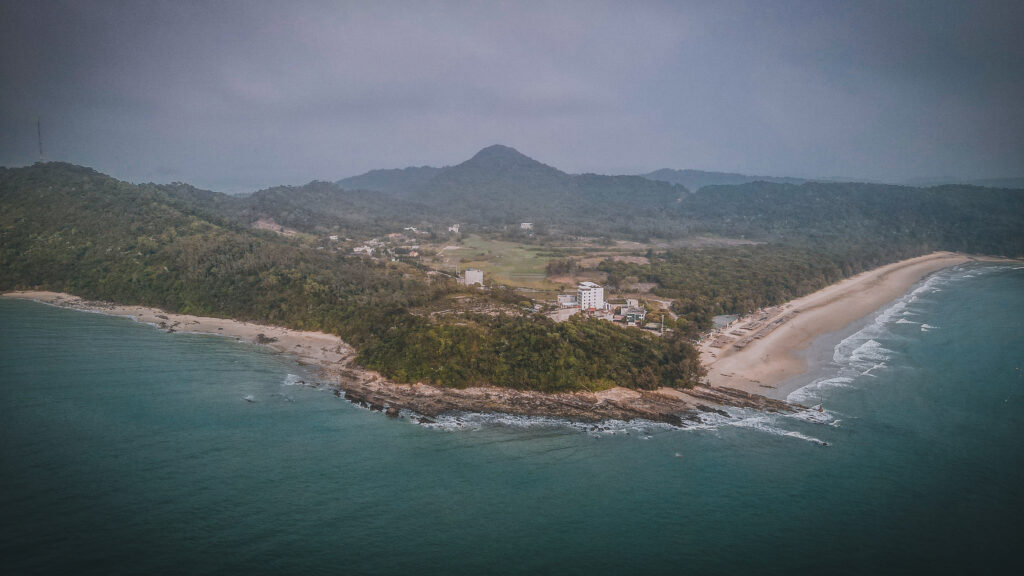
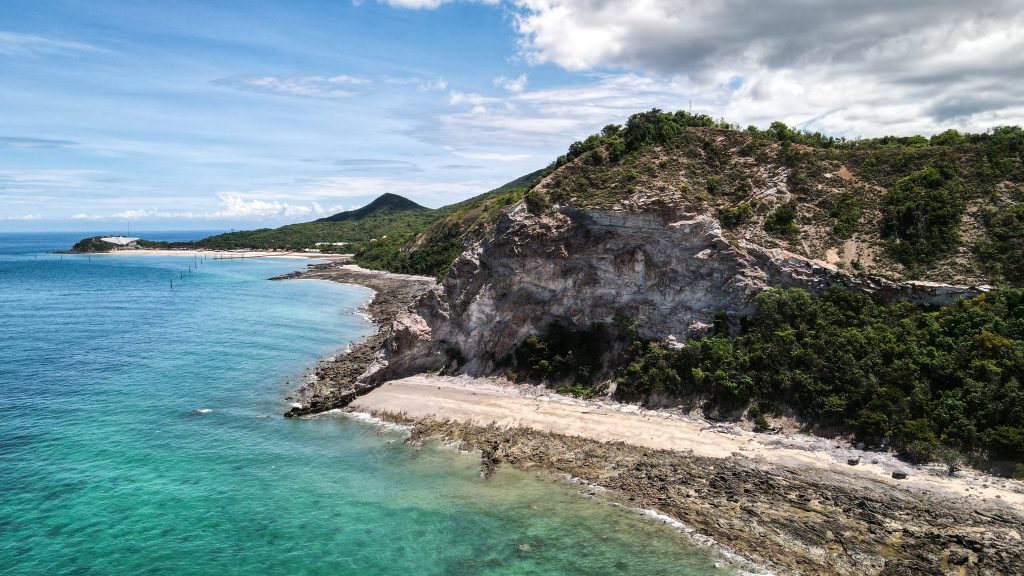
Rocks around Van Chai Beach

Where to stay?

I arrived without a reservation at Hung Phoung Hotel and took a private room for 350.000 VND after some negotiating. They also organized a motorbike for another 150.000 VND. The room was clean, WiFi was good and the view from the window was pleasant, but the bed was one of the hardest I experienced during the trip to Vietnam.

How long to stay on Co To?

One full day should be enough to ride a bike around the island and chill here and there. You may want to stay one more night in summer when the weather is perfect and the skies are clear. Then, you will get the chance to discover nearby islands too.

Co To Island, Vietnam
Tinh Yeu Beach

How to get around Co To?

The best is to rent a motorbike from your hotel. It cost me 150.000 VND per day. If you travel in a bigger group, most of the hotels have or can arrange electric vehicles with a driver.

Interesting sights on Co To Island

Cau May Cliffs

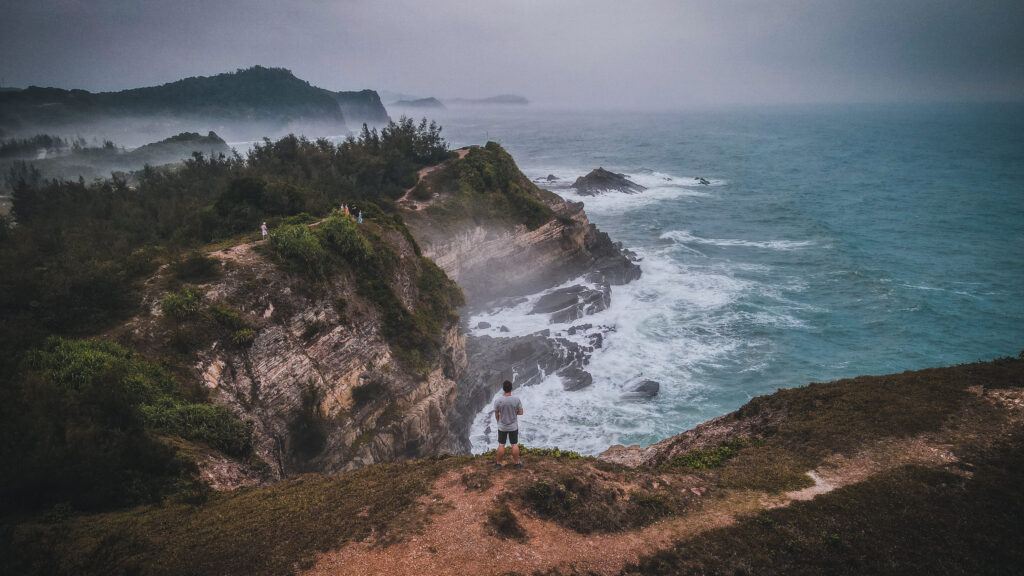
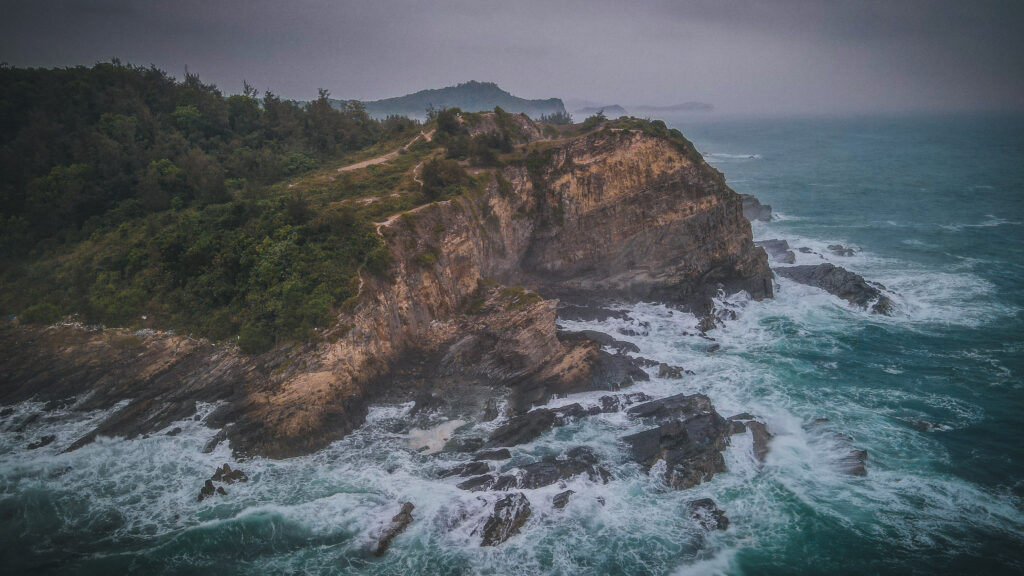
Definitely the most beautiful place on the island, especially during sunrise or sunset hours. There are small paths around the edges of the cliffs. Very photogenic place and a lot of people come here dressed nicely for photo sessions.

Co To Island, Vietnam
What a cliffs!
Co To Island, Vietnam
The most beautiful place on Co To Island

Beaches

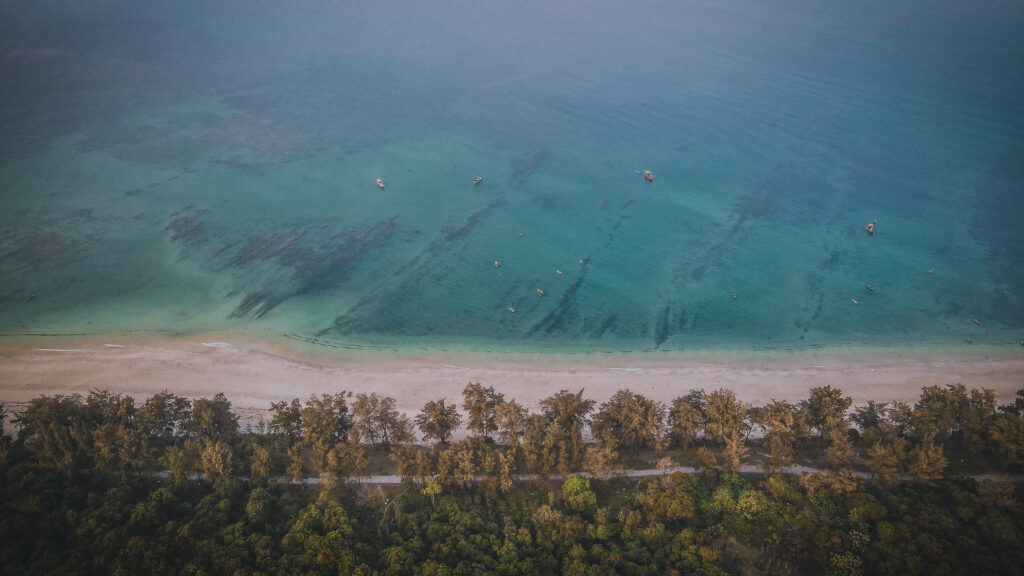
There are 3 main beaches: Tinh Yeu Beach, Hong Van Beach, and Van Chai Beach. Unfortunately, all of them have problems with rubbish, especially plastic. Van Chai Beach seemed to be the cleanest one, while Hong Ban Beach provides nice views of the opposite islands.

Co To Island, Vietnam
Hong Van Beach
Co To Island, Vietnam
Aerial view to Van Chai Beach
Co To Island, Vietnam
Van Chai Beach

Lighthouse

The lighthouse was built in the late 19th century and is located on top of a mountain, 100 m above sea level. It can be reached on a motorbike, following a narrow road that climbs through dense forest. The lighthouse tower itself can’t be climbed, but there is an observation deck on the top of the nearby building. The panorama is magnificent! Entrance fee: 10.00 VND.

Truong Xuan Lagoon

It’s not easy to get a proper look at the lagoon but if you follow the road along Hong Van Beach until the end, there will be a small resort. It was empty when I arrived, so I could freely walk around to enjoy the view. Alternatively, you may check out the view from Thanh Lan Pier or the Lighthouse Viewpoint.

Co To Island, Vietnam
Truong Xuan Lagoon

Nearby Islands

You can also arrange a boat at your hotel and go for a trip to other islands around, such as Co To Con Island or Thanh Lan Island. There is not much more to do than relax on the beach and swim but that’s the point.

Co To Island, Vietnam
Hon Dong Nam, a small island next to Co To

Introduction

Koh Samet is located in the Rayong province, about 200 km from Bangkok. It’s definitely off the main tourist track but in my opinion, it gives the island even more charm. Especially on the weekdays, the atmosphere is rather quiet and you will have no problems with finding a piece of beach just for yourself.

Upon arrival, you will have to pay a 200 THB entry fee as the whole island is declared a national park. Road traffic is limited to pick-up trucks taxis and motorbikes only. Therefore, you will certainly feel the specific island vibe here!

Besides relaxing on beaches or enjoying water activities, there is not much more to do on Koh Samet. But if those beaches are extremely picturesque with a truly paradise atmosphere, aren’t they enough?

How to get to Koh Samet?

The island can be reached only by sea and you will need to get to Ban Phe Pier or Nuanthip Pier. The public ferry costs about 120 THB for a return trip and it takes about 30 minutes of travel time. More expensive speedboats are available as well but even though they are faster, I wouldn’t say it’s worth spending extra money unless you are travelling in a bigger group.

If you travel from Bangkok, Nuanthip Pier can be reached from the Ekkamai bus terminal and the trip there takes about 3 hours. You can also start a trip in Pattaya or Rayong as both of these cities are on the way from Bangkok.

The area around the piers is full of shady sellers and scammers so stay focused and don’t let them trick you into an expensive boat ride.

Koh Samet, Thailand
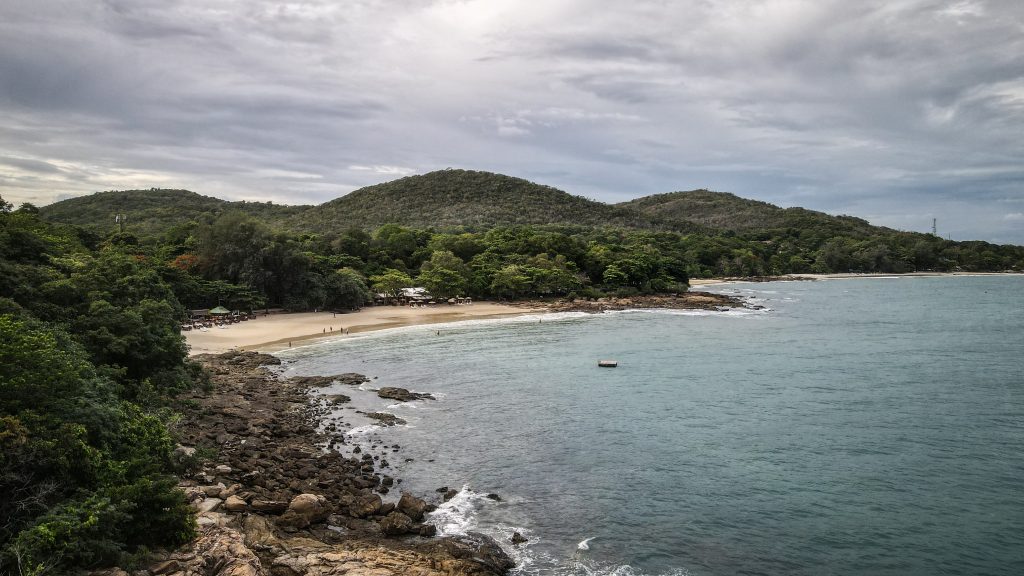
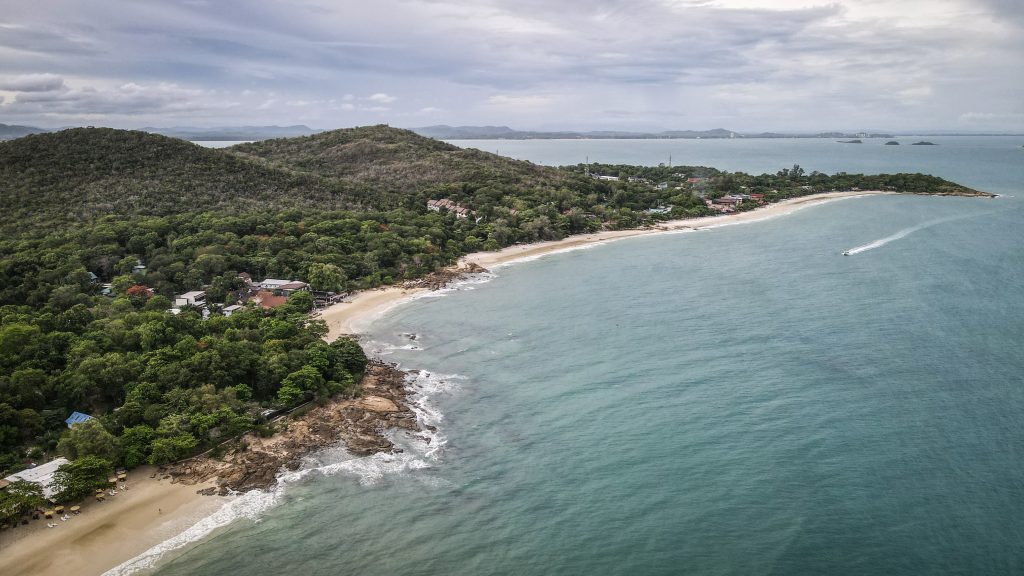
Panorama of the southern part of Koh Samet

When to go?

The best time to visit Koh Samet is the same as for all the other islands in that area, so from November to May, outside of the rainy season. The weather is stable and showers are rather occasional. In other months, it’s better to check the boat schedule and availability of accommodation well in advance.

Due to its location not far from Bangkok, try to avoid coming here on the weekend as it can get crowded.

How long to stay?

It’s a small island so I would say that 2 full days should be enough to visit all the exciting places and enjoy beach time. If you are short on time, it’s doable in 1 day too but in my opinion, Koh Samet deserves an overnight stay.

Koh Samet, Thailand
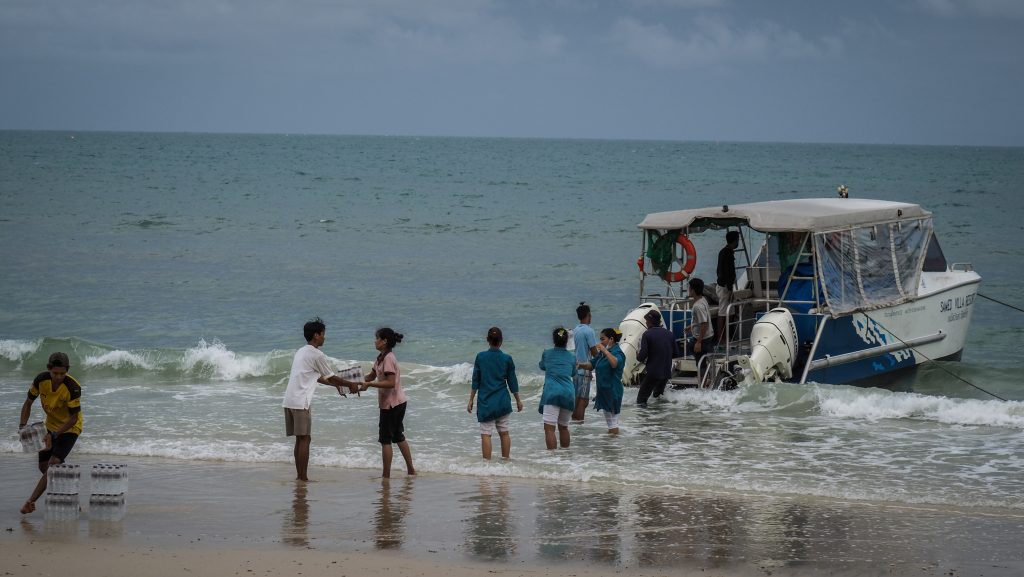
Teamwork when unloading supplies

Where to stay?

Hotels, bungalows and resorts, all of these are available on the island at various prices. I stayed in Runa Runa The Best Guesthouse which was affordable and clean, but not as close to the beach as popular resorts. You can easily make a reservation on booking.com or agoda.com.

Getting around Koh Samet

Options are limited to pick-up trucks or rental motorbikes. I always opt for my own wheels and that time was no different. I got an orange Honda Click, one of the most popular motorbike models in Thailand, and it was in excellent condition. When you leave the ferry terminal, just walk straight to the other side of the small square until you see the shop renting scooters. The cost for 24 hours is 300 THB, including fuel.

Beaches

Most of the beaches are located on the east coast of the island with Sai Kaew Beach being the most popular one. You may want to look for a more quiet alternative during the day but anyway it’s a good place to come back and chill while watching a fire show in the evening in one of the bars or restaurants there. Other beaches on the east coast are:

  • Ao Hin Khok
  • Ao Phai
  • Ao Nuan
  • Ao Chor
  • Ao Wong Duean
  • Ao Thian
  • Ao Wai
  • Ao Kiew

On the west coast, Prao Beach is an awesome place to spend a few hours and I honestly think that it might even be my favourite spot on Koh Samet. White sandy beach, clear water, palm trees, and the possibility to do some snorkelling or paddling on a kayak or SUP board that can be rented from the nearby hotel. And on top of that – amazing sunsets! What else would you need?

On the north coast, you may visit Noi Na Beach. It’s a good place for sunrise and there are restaurants around but other than that, it’s a rather ordinary beach.

Koh Samet, Thailand
Panorama of east coast beaches
Koh Samet, Thailand
Small beach on the east coast of Koh Samet
Koh Samet, Thailand
Panorama of east coast beaches
Koh Samet, Thailand
Ao Chor Beach
Koh Samet, Thailand
Panorama of east coast beaches
Koh Samet, Thailand
Prao Beach

Other places to visit

The Mermaid at the Na Dan Pier

Tourists arriving on the island are greeted by an interesting but also a bit weird statue coming straight up from the sea. It is Phi Suea Samut, a mystical mermaid made of bronze. It relates to one of the most famous epic poems of the Thai past, Phra Aphai Mani by Sunthorn Phu.

Koh Samet, Thailand
Mermaid welcoming tourists at the Nan Dan Pier

Cape Laem Toei

A beautiful place at the southern tip of the island, to just stay and look out into the sea. It has two great viewpoints (one of them with a swing) and a rugged rocky coastline. Probably the best place to watch a sunset on Koh Samet.

Koh Samet, Thailand
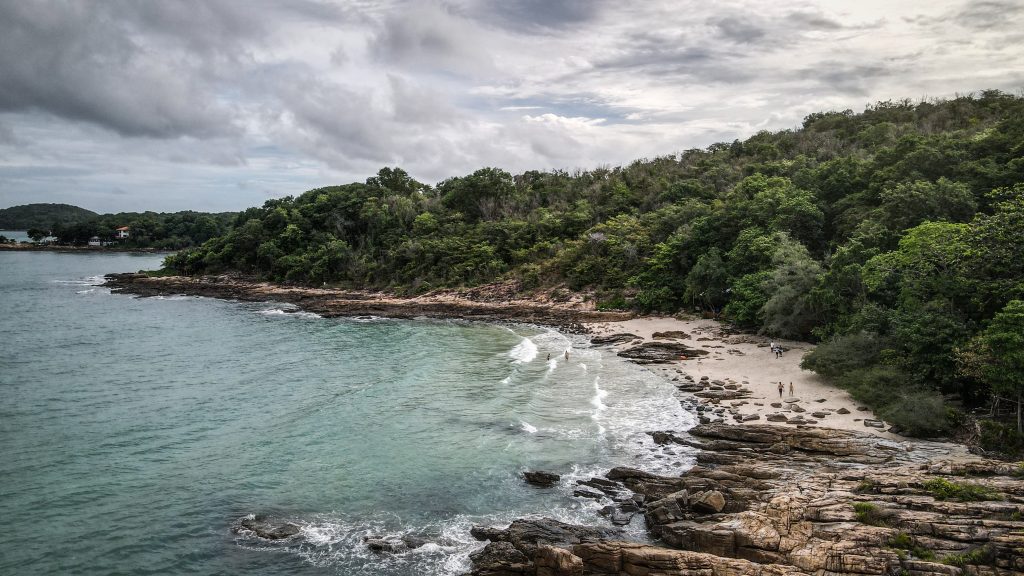
Rugged coastline at Cape Laem Toei
Koh Samet, Thailand
Small island off the coast of Koh Samet
Koh Samet, Thailand
Rocky coast around Cape Laem Toei
Koh Samet, Thailand
Rocky beach and incoming storm

Wat Koh Samet

The main temple of the island is a bit hidden from the main road and I got there by accident by taking a detour on a random road. Having seen hundreds of other temples in Thailand, that one isn’t really that special but it’s worth a quick stop to check out the large smiling Buddha statue in its centre.

Diving and snorkelling trips

Popular and inexpensive snorkelling trips go around other small islands in the area where you can get to know the richness of the underwater world. Of course, more serious diving trips are also on offer.

Introduction

If you are wandering around Pattaya Beach, you may wonder what those small islands visible on the horizon are. One of them, called Koh Larn or Coral Island, is a perfect place for beach and water enthusiasts. And just to be honest, who wouldn’t like to escape Pattaya for a day or two?

Don’t get me wrong, it can still get super crowded. Being one of the closest islands to Bangkok makes it a very popular destination, especially on the weekends. But if you are looking for a nice beach and island vibe, don’t hesitate and come to visit.

How to get to Koh Larn?

Frequent public ferries go from Bali Hai Pier in Pattaya and arrive either at Na Baan Pier or Tawaen beach. The first location is around the busy village, full of restaurants and local life and the second one could be better for those willing to stay at the beach for the whole day. But after all, it doesn’t make a big difference. Transportation options can be found in either place and can take you further if you wish.

The cost of the ferry is 30 THB each way per person and the travel takes about 45 minutes. There are also plenty of much more expensive speedboats (200 – 300 THB for the return trip) and the sellers are very aggressive. Just ignore them. From my point of view, using that kind of service doesn’t make too much sense, unless you are really in a hurry or you travel in a bigger group and share the cost.

If you travel from Bangkok, Pattaya can be easily reached from the Ekkamai bus terminal.

Koh Larn, Thailand
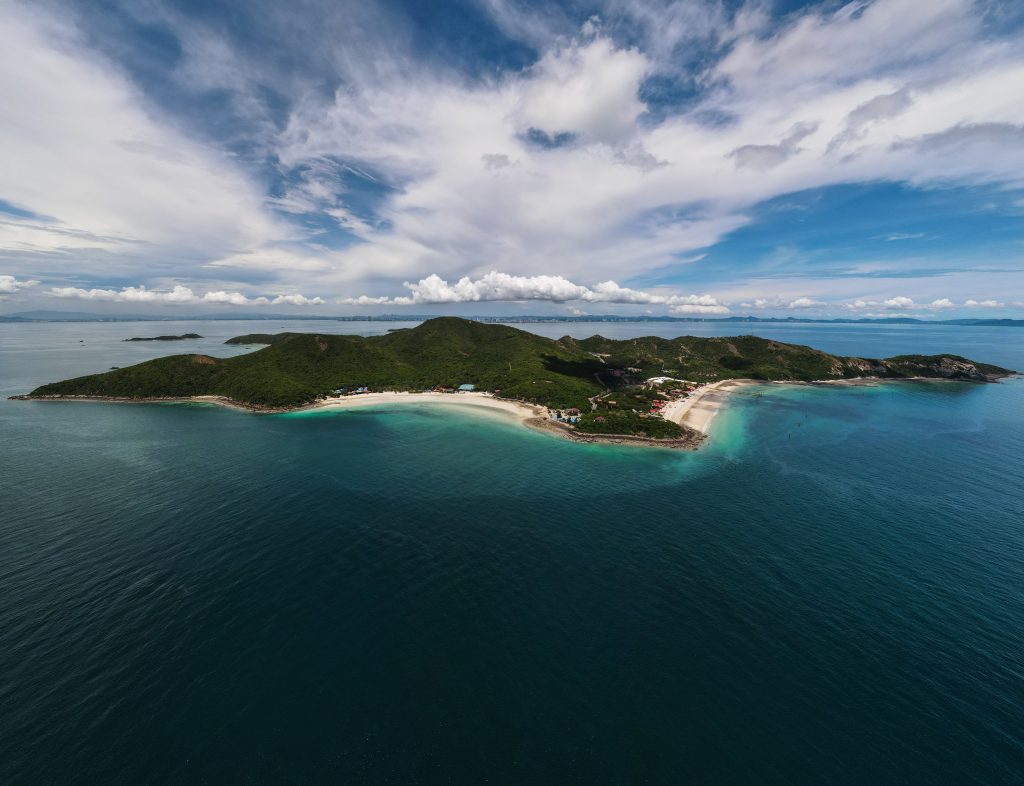
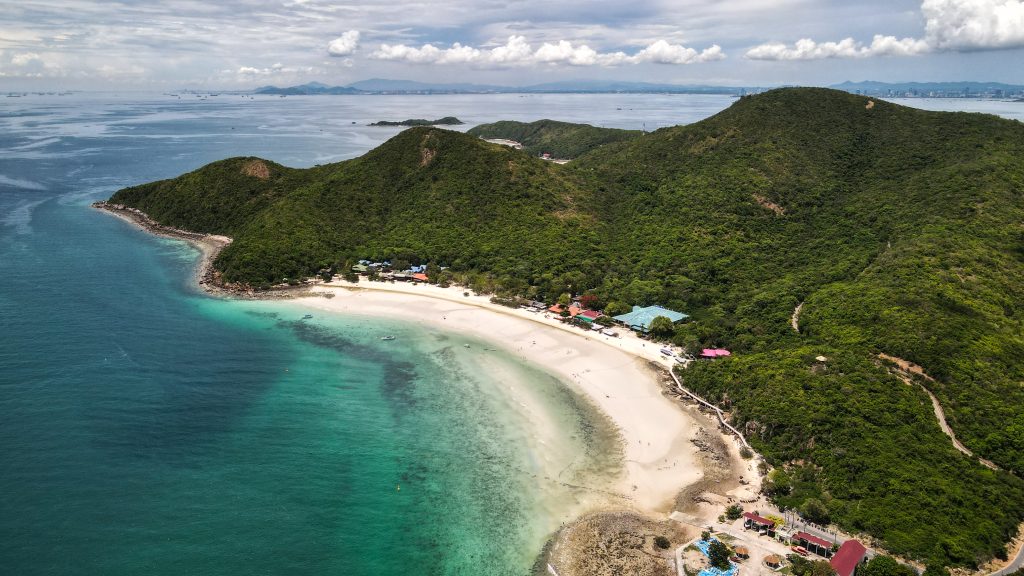
Aerial view of Koh Larn

When to go?

The best time to visit Koh Larn is the same as for all the other islands in that area, so from November to May, outside of the rainy season. The weather is stable and showers are rather occasional. In other months, it’s better to check the boat schedule and availability of accommodation well in advance.

How long to stay?

It’s a small island so I would say that 1 full day should be enough to visit all the exciting places and enjoy beach time. However, if you want to really rest from big city life, staying overnight is definitely a better idea than coming back to Pattaya or Bangkok. Certainly, you won’t regret it.

Koh Larn, Thailand
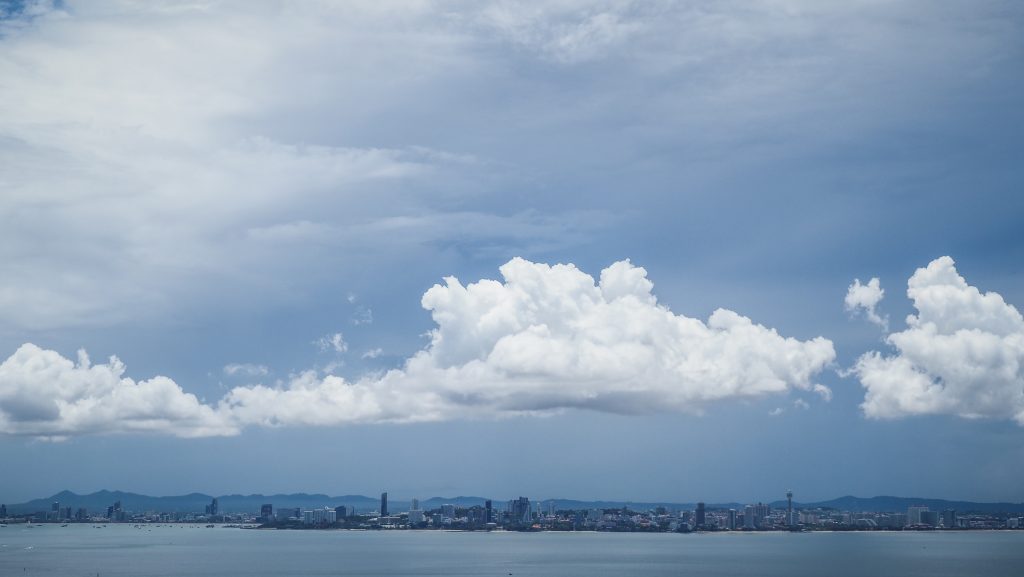
Panorama of Pattaya City seen from Koh Larn

Where to stay?

Hotels, bungalows and resorts, all of these are available on the island at decent prices. Most of the options are located around Na Baan Pier. I won’t recommend any because I didn’t stay overnight on the island, but you shouldn’t have problems with finding what you are looking for on booking.com or agoda.com.

Getting around Koh Larn

Rent a motorbike at one of the places around the pier. It costs between 200 – 300 THB per day, including fuel. For me, it’s always the best way to explore the place at your own pace. I recommend taking a few pictures of the bike, especially if it has scratched places, just to stay on the safe side. Ahh and don’t forget that besides watching the breathtaking scenery of Koh Larn, you should also look at the road 🙂

Baht buses/songthaews can be easily found not far from the main pier. Once you leave the ferry and come to the crossroads, turn left and head towards the temple until you see bus parking. Then, simply ask which bus goes to the beach you want and how much is the ride. You may need to wait a bit until the bus fills up with other passengers but it usually doesn’t take long, especially on the weekends. At the beaches, there are usually a few buses waiting too, and if not, just ask local sellers or at the resort.

Motorbike taxi drivers wait for tourists at the main pier. They have maps and fixed prices for different locations. If you need a tailored fit excursion, this is when negotiations begin. 

Koh Larn, Thailand
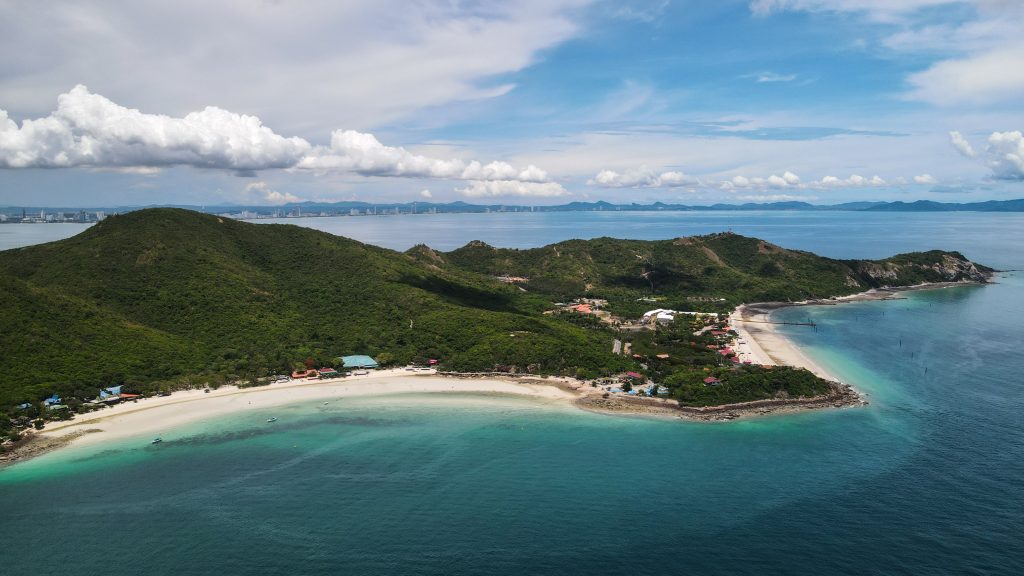
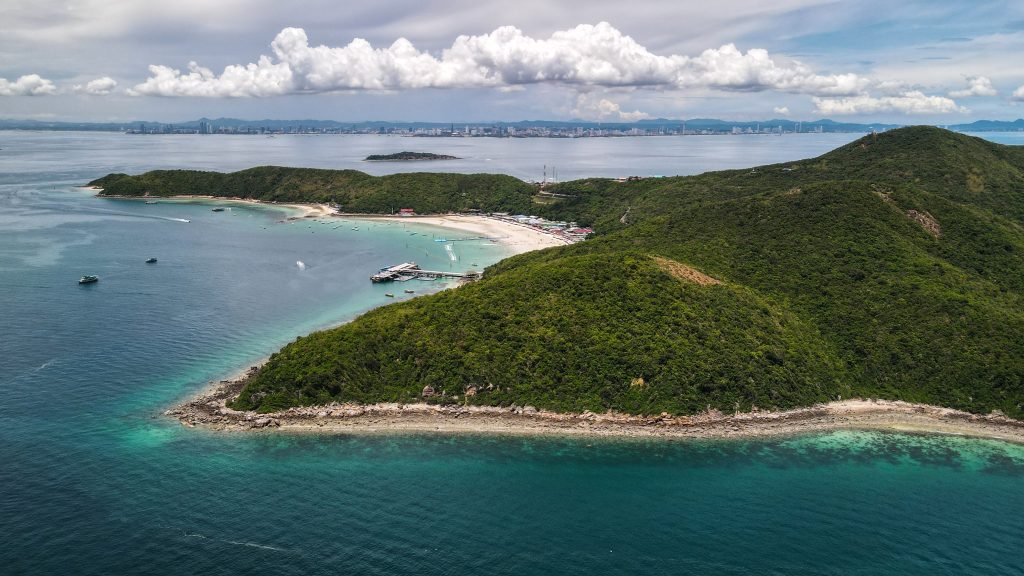
Aerial view over Tien Beach and Samae Beach

Beaches

Tawaen Beach

The longest (700 metres) and the busiest beach on the island, with plenty of restaurants but also speedboats and jetskis making noise.

Koh Larn, Thailand
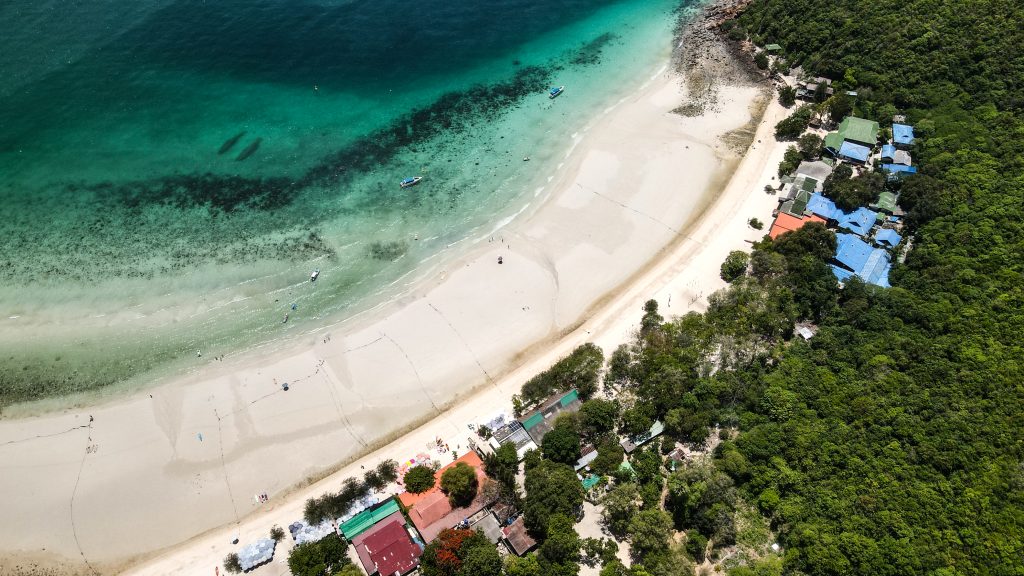
Aerial view over Tawaen Beach

Sang Wan Beach

Within walking distance from Tawaen Beach. From the 7-11 store, turn left and keep walking straight to the pier and the across a small bridge. The beach is nice and quiet, especially in the morning. Good place for snorkelling with crystal clear water and colourful fish.

Tonglang Beach

Another beach that is very close to Tawaen Beach. You can easily walk there or drive the motorbike. Water sports are available and some good local restaurants can be found just at the beach.

Samae Beach and Tien Beach

Both are located on the west of the island, very close to each other. Samae Beach is 500 metres long and similar to Tawaen Beach, it can get very very busy. Tien Beach is within walking distance from Samae (around 10  – 15 minutes). It’s a bit quieter as there is no direct road access and a short walk from the main road is required.  The further you go towards the end of the beach, the more privacy you will have.

Koh Larn, Thailand
Aerial view of Tien Beach
Koh Larn, Thailand
Tien Beach

Nual Beach

Located in the south of the island and nicknamed “Monkey Beach”, it’s actually much less crowded in comparison to the beaches mentioned above. If you are adventurous, follow the narrow path on the right side of the Nual Beach and then hop over a few stones to reach Laem Thong Bay and Hat Kruat Beach. Please be aware that this way is passable probably only during low tide. There is an alternative path higher in the hills but it isn’t marked and the best is to use online maps (e.g. MapsMe) for navigation.

Koh Larn, Thailand
Nual Beach
Koh Larn, Thailand
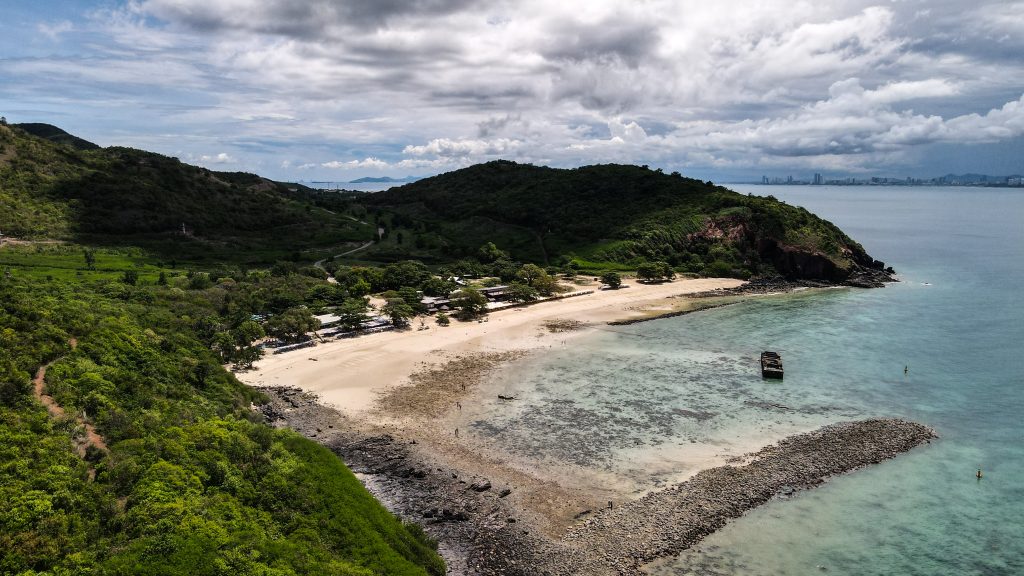
Laem Thong Bay and Hat Kruat Beach

Ta Yai Beach

Located at the far northern end of the island.  It’s about 100 metres long stretch of white sand which is more difficult to get to, therefore significantly less crowded and commercial. There are also good snorkelling opportunities at both ends of the beach. You will need to get a motorbike taxi or rent your own two wheels to get here.

Other places to visit

Windmills Viewpoint

The highest viewpoint at Koh Larn provides a 360° panorama of the island and the Pattaya area. You will need a motorbike to go here and be careful because the road is narrow and winding.

Big Buddha and Kuan Yin Viewpoint

Definitely a must-see place on Koh Larn. On the way up, you will come across a big Buddha statue with breathtaking views down to Tawaen Beach. You can continue climbing 250 steps up to the small pagoda, but it will be rather for pure satisfaction rather than for views, which are covered by the trees.

Wat Yai Samraan and Wat Mai Samraam

Small temples near the Naban pier, which is convenient for quick sightseeing and taking some rest before boarding the ferry back to the mainland.

Introduction

With its high cliffs and typical fajãs extending into the ocean, the landscape of São Jorge is truly unique. The island is 54 km long and 6.9 km at its widest point. It belongs to the Central Group and forms the so-called “triangle” of the islands, together with Faial and Pico.

But what are fajãs and why are they so special? Those are small plains created by lava or landslides. More than 40 of them are on São Jorge, some of them accessible only on foot after a hard hike. You should definitely take the challenge and visit at least a few!

I visited São Jorge on my long-term trip in pandemic times, when I took the advantage of remote work and lived “on the road”. I stayed in the archipelago for two months, between April – May, which isn’t a high season. Graciosa is the only island I haven’t visited yet, but isn’t it a good reason to be back one day?

How long to stay?

I would say that 3-4 full days should be enough to visit all the interesting places on the island and do a couple of hikes. Of course, it depends on the weather which is very unpredictable in this region. If you are unlucky, the interior of the island may be covered by clouds for the entire duration of your stay. Check the weather frequently and always have a backup plan. It’s usually less cloudy closer to the coast.

The mobile app SpotAzores is a great tool for monitoring weather situations in the Azores archipelago. I used it every day when I was there and I seriously can’t imagine travelling without it!

Where to stay?

Due to my remote work, I always look for a private room with a fast internet connection. The best quality to price ratio offered Azores Dream, which is located in the centre of Velas. It’s a big house with a huge living room, well-equipped kitchen, and terrace on the roof with a magnificent view of Pico. The room was simple but nice with two shared bathrooms at the end of a hallway. Parking is available on the streets nearby. Fully recommended!

Getting around Sao Jorge

As on all the other Azores islands, renting a car is essential to reach all places. I used the services of Autatlantis several times and I can fully recommend that company. The price was always around 16-20 EUR per day (without any extra insurance) and the cars I had were Toyota Yaris, Citroen C1, or Smart. Bigger ones are available too, of course at a higher price. Pick up and return were smooth and quite fast.

Another popular rental company in the Azores region is Ilha Verde, however, customers’ opinions are mixed and I have never used them.

If you don’t have a driving license, you can try hitchhiking but you need to be patient and quite lucky.

Tips

  • The weather is unpredictable and you have to be prepared for anything. Always have with you a waterproof jacket and umbrella. Install mobile app SpotAzores and don’t go to places that are totally covered in clouds. You will lose time and won’t see anything anyway.
  • Book your car in advance in the high season. I was travelling in the Azores between April – May so it wasn’t a problem to get a car from one day to another, however, I can imagine that in high season it could be a problem, especially on the smaller islands.
  • Drive carefully, especially in the fog. It’s pretty normal that cows, sheep or goats stand very close to the road or simply walk on it.
  • If you go hiking, download GPS files and maps from the official website Visit Azores and have them on your phone just in case. In general, trails are well marked but in a dense fog, it’s not that difficult to get lost.
  • Don’t be afraid of hitchhiking. Many trails are linear, which means that you need to get back to the starting point. You can walk the same way or try to save your legs. On some islands, the traffic is minimal but once the car comes, it is almost certain that the driver will stop and help you out.

Velas

Island’s main town is located on the south coast and it is an entry point for those arriving in São Jorge by ferry. There are a few sights worth seeing, all within walking distance. Plan around 4-6 hours to discover the area.

Start at Jardim da República which is a nice tiny park and don’t forget to have a look at the 18th-century Baroque building of Town Hall. Then continue towards the port, passing by Igreja Matriz de Velas (church) and Portão do Mar which is a part of the old defence wall.

Casa Museu Cunha da Silveira (museum) presents the history of the region in the form of thematic rooms. You will learn about agriculture, sea, carpentry, weaving, weights and measures as well as the history of the Cunha da Silveira family, which played an important role in the political and social life of the São Jorge island.

Velas, Sao Jorge, Azores
Velas

Walk along the coast until you reach Arco Natural de Velas. Besides the wonderful natural volcanic structure, your eye will be certainly caught by the panorama of Pico.

Lastly, walk behind the Chapel of Senhora Do Livramento and then continue uphill to the caldera of Morro Grande. Good panoramic views of Velas and the Atlantic Ocean are guaranteed. Instead of walking back the same way, I recommend descent inside the caldera and cross it to the other side in the ridge direction. Breathtaking views of Entre Morros Bay from there!

Velas, Sao Jorge, Azores
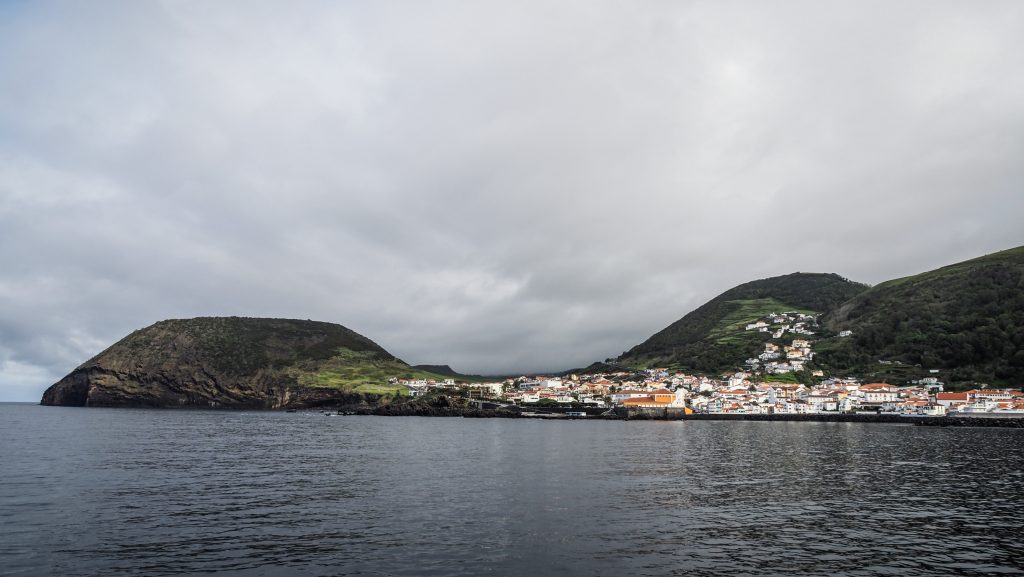
View to Pico Island from Velas Harbour

Other sights on Sao Jorge

Fajã dos Cubres and Fajã da Caldeira Santo Cristo – Both places are definitive must-sees that can be spotted in any tourist magazine promoting São Jorge. These are the only fajãs on the island with coastal lagoons, separated from the ocean by beach strands. Fajã da Caldeira Santo Cristo is especially famous for the cultivation of clams as well as good surfing conditions. It can be reached on foot from Fajã dos Cubres, where you can leave your car. Both places can be also approached following the challenging PR01 SJO hiking trail starting at Serra do Topo.

Sao Jorge Island in the Azores
Fajã da Caldeira Santo Cristo

Fajã de São João – small but very picturesque fajã with typical homes built in black stone. PR03 trail starts here but at the moment of writing this article, it was closed.

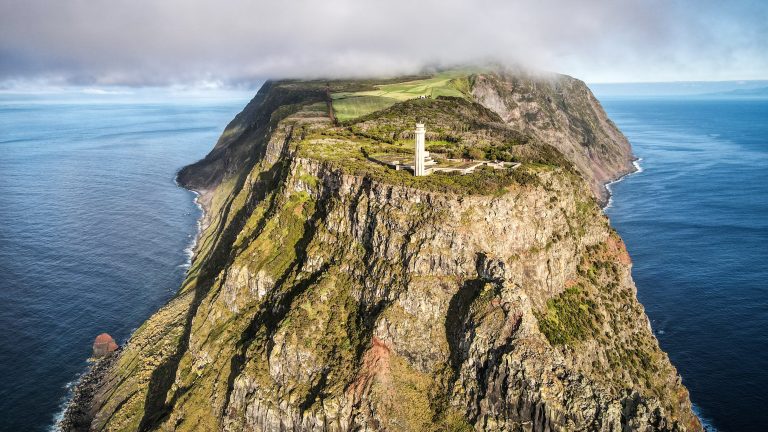
Topo – interestingly, it is a historical city, which was probably the first settlement on the island, founded in 1480 by the Flemish Willem Van der Haegen. Topo Islet, which is a popular nesting area for many birds species and the lighthouse, which provides decent views over that area, are major tourist sights.

Sao Jorge Island in the Azores
Topo Islet
Sao Jorge Island in the Azores
Topo Lighthouse

Fajã da Ribeira da Areia – the highlight here is the beautiful arch known as Arco da Fajã da Ribeira d’Areia.

Fajã das Pontas – Small place filled with beautiful rural houses that can be reached following the PRC06 SJO hiking trail. The area is primarily used for the cultivation of vineyards, cornfields, and other vegetables.

Fajã da Penedia – Just next to Fajã das Pontas. It’s worth to check out the Chapel of Santa Filomena.

Fajã do Ouvidor – The place is thought to be created by lava flows from Pico Areeiro, which is located 3 km away. What attracts tourists, besides magnificent views, are many natural pools, the largest and most popular being the Poça de Simão Dias.

Sao Jorge, the Azores
Poça de Simão Dias
Sao Jorge, the Azores
Fajã do Ouvidor

Farol dos Rosais – Inaugurated on 1 May 1958, but abandoned shortly after (in 1964), due to the seismic crisis of Rosais and the submarine eruption. Cliffs’ landslides that followed the earthquake of 1980, made it impossible to resume the operation.

Farol dos Rosais

Parque Florestal das Sete Fontes – Many trees, ponds, trails, and picnic areas. I highly recommend following the wide red gravel track leading up to a Pico da Velha, a hill at 493 metres above sea level with fabulous views of Mount Pico and Pico island, especially at sunset.

Sao Jorge Island in the Azores
Sunset at Pico da Velha

Moinho da Urzelina – One of two typical, colourful windmills, remaining in the parish of Urzelina, on the south coast of São Jorge island.

Sao Jorge Island in the Azores
Windmill of Urzelina

Pocas de Vicente Dias – Other natural pools created by natural lava flows, located about 2 kilometres from Calheta. The background of Pico and Faial Island is particularly appealing.

Viewpoints (Miradouro) on Sao Jorge

As on every island in the Azores archipelago, there are plenty of viewpoints and usually, they are easily accessible by car. Just look for the sign ‘Miradouro’ which in the Portuguese language means viewpoint. Here is the list of the most popular ones but of course nice views are nearly everywhere and it’s easy to find a stunning ‘no-name’ spot.

  • Miradouro da Faja Das Almas
  • Miradouro da Fajã dos Cubres
  • Miradouro da Fajã do Ouvidor
  • Miradouro do Pico da Velha
  • Miradouro Ferra Afonso
  • Vigia da Baleia
  • Miradouro do Canavial
  • Miradouro do Terreiro da Macela
  • Miradouro da Transversal

Hiking trails on Sao Jorge

PR01 SJO – Serra do Topo – Caldeira do Santo Cristo – Fajã dos Cubres

The trailhead in Serra do Topo is often covered by clouds but don’t let it discourage you. After an initial a few hundred meters, it goes all the way down to sea level and the further you go, the better the views should be. Be careful as it can be slippery when wet. At some point, there is the first viewpoint to Caldeira de Santo Cristo. Continue descent towards the fajã with the lake known for the presence of clams and different species of birds. The remaining distance to Fajã dos Cubres is mostly flat and it takes about 30-40 minutes to reach the church of Nossa Senhora de Lourdes at the end of the trail.

The problem with this hike is logistics. You can either arrange a taxi that will take you back to your car in Serra do Topo or simply walk back. The first option is expensive and the second one is physically brutal. Alternatively, I would recommend leaving your car at the parking in Fajã dos Cubres, walking from there to Caldeira de Santo Cristo and then continuing beyond as far as you want and can before turning back. In this way, you see the main sights and have more control over the total distance that you want to hike.

Sao Jorge Island in the Azores
Caldeira do Santo Cristo
Sao Jorge Island in the Azores
Fajã dos Cubres
Sao Jorge Island in the Azores
Fajã dos Cubres

PR02 SJO – Serra do Topo – Fajã dos Vimes

The trail is nothing else but a big descent, so prepare your knees and don’t go when the ground is wet as it gets really slippery. If you leave your car at Serra do Topo, keep in mind that the way back won’t be easy. Alternatively, you can ask around and organize a taxi or try to hitchhike.

After initial descent, the trail crosses asphalt road and continues towards a water spring called Fonte de Agua Azeda. At the Fajã dos Vimes, there is a small coffee shop where you can treat yourself and have a rest.

PR03 SJO – Fajã de São João – Lourais – Fajã dos Vimes

This trail connects Fajã de São João with Fajã dos Vimes on the south coast of the island. There is quite a long ascent and descent involved with Lourais being the highest point. I departed from Fajã dos Vimes where I saw the notice saying that the track is temporarily closed. I decided to continue and turn back in case there is any sign of danger.

First, there was quite a long section of hiking on a dirt road among local houses but finally, I made it to the forest. Here, in some parts, the track started to be overgrown and quite messy with branches blocking the path (which could be the result of the storm). After approximately 4 kilometres, I decided to turn back. From a technical point of view, there wasn’t anything dangerous. However, my pace was quite slow and it was getting late. I wasn’t prepared to walk in the darkness plus it’s also not something that I like to do 🙂 In general, there are other much better hikes on the island, so I would recommend skipping this one until it officially reopens.

PR04 SJO – Pico do Pedro – Pico da Esperança – Fajã do Ouvidor

Even though it’s a hiking trail, it follows a wide gravel road and most people simply drive on it. As it runs along the central and highest terrain on the island, good weather and visibility are essential to fully enjoy it.

Start your adventure near Pico do Pedro and follow the road until Pico de Esperança (1053m). The detour to the highest point of Sao Jorge is a must and on a clear day, the views will leave you speechless. Lakes and panoramic views over the whole island and the neighbouring Pico. Doesn’t sound too bad, does it?

Return to the main road and pass by Pico do Areiro and Pico Pinheiro as well as Espigao, which is a bit further on. Soon, the trail turns right and descent to Fajã do Ouvidor. Here the quality of the road gets worse and some parts of it were extremely difficult to cross with such a small car like Smart. The suspension was way too low! Drive very slowly or instead of taking the right turn, continue straight towards road EN3 and head to Fajã do Ouvidor from there.

If you complete the drive following the original track, you will enter the village of Norte Grande right next to the church. From there it’s an easy drive on an asphalt road to the endpoint.

Is it better to hike or drive on this trail?

I would say that driving is just fine unless you are a big hiking enthusiast. I can imagine that following a long gravel road on foot for over 15 km can be tiring and slightly boring in some parts. The road descending to Norte Grande is bumpy but drivable and if you decide to do so, the driving and hiking tracks will be 100% the same, so you won’t miss any views. However you do it, it’s going to be a wonderful time in nature.

Sao Jorge, the Azores

PRC05 SJO – Fajã de Além

It’s a less than 5 km long loop but better don’t underestimate it! Like most of the other hikes to fajãs, it involves a steep descent (500 meters elevation difference) and then a steep ascent back to the main road (obviously the same elevation difference). There is not much to see in the fajã itself, just rural houses and small agricultural fields with traditional crops. It’s all about the views that you can get on the way there. Tough but worth it.

PRC06 SJO – Norte Pequeno

The trail begins in Norte Pequeno and the best is to leave your car next to the church. From there, follow the asphalt road until the turnoff to the dirt one. Soon, the difficult descent starts, with nearly 500 metres of elevation difference. I did the trail in bad weather, with occasional showers and wet ground. It wasn’t the best idea as it was really slippery on the way down plus my shoes got totally soaked because of wet grass. But when the clouds are low, it creates a unique moody feeling which is beautiful in its own way. After the descent, the first buildings that you will see are Fajã do Mero. The wide gravel road continues until Fajã da Penedia where it’s worth having a short break to visit the Chapel of Santa Filomena. Continue on the main road until it splits. Here you should continue straight towards Fajã das Pontas. It’s a dead-end road so soon you will need to come back the same way. It’s a small fishing village which like all the fajãs that I visited on the trail on that day, was totally abandoned. But who would like to walk the area on a rainy day? Just me 🙂 It’s worth continuing for a while beyond the fajã as the views to the cliff from there are really magnificent. In the end, return the same way until the crossroad, turn left and follow the zigzag road ascending to the point where you started, nearby the church.

Chapel of Santa Filomena in Fajã da Penedia
Moody views beyond Fajã das Pontas

PR09 SJO – Fajã dos Vimes – Fragueira – Portal

The hike can be started either in Fajã dos Vimes or in Portal. I chose the latter option to have a downhill part first. After the initial flat section, the trail started descending through the forest with some occasional views towards the ocean. At Fajã da Fragueira there was already a beautiful and clear panorama of a harsh landscape with vineyard terraces. From here the trail continues for the remaining distance to Fajã dos Vimes, where you can have a rest before returning uphill walk back to your car.

GR01 SJO – Great Route of São Jorge 01 

The first part of the trail which crosses the entire island. It starts near the lighthouse of Ponta do Topo and goes through several highlights such as Fajã of São João, Fajã dos Vimes, Lagoa da Caldeira do Santo Cristo and Fajã dos Cubres. Unless you are a tough player, the distance of 40 km should be split into 2 days. Definitely a great option for hiking enthusiasts that are not afraid of hard uphill walks followed by equally hard descends.

GR01 SJO – Great Route of São Jorge 02 

The second part of the ultimate trail across São Jorge, from Fajã dos Cubres to Ponta dos Rosais. Highlights include Pico da Esperança and the Central Plateau.

Introduction

Faial Island has 21 km in length and 14 km at the maximum width and is the third most populous island of the Azores Archipelago with about 15.000 inhabitants. The island is part of the Central Group and also the so-called “Triangle” including two other islands: São Jorge and Pico. The power of nature reminded of itself on the 27th of September 1957, when a volcanic eruption in the Capelinhos kicked off and lasted for 13 months. As of today, it is the last event of this kind in the Azores.

I visited Faial Island on my 4 months trip in pandemic times, when I took the advantage of remote work, spending 2 months in Madeira and 2 months in the Azores. Graciosa is the only island I haven’t visited yet, but isn’t it a good reason to be back one day?

How long to stay?

I would say that 3 full days should be enough to visit all the interesting places on the island and do a couple of hikes. Remember that the weather in the Azores can be unpredictable and if you are unlucky, Caldeira may be covered by clouds for the entire duration of your stay. Check the weather frequently and time your visit there in the best moment. If this is the case, try to stay close to the coast where it’s usually less cloudy.

The mobile app SpotAzores is a great tool for monitoring weather situation in the Azores islands. I used it every day when I was there and I seriously can’t imagine travelling without it!

Where to stay?

Due to my remote work, I always look for a private room with a fast internet connection. The best quality to price ratio offered Banana Manor located in the centre of Horta. It’s a really big house with a huge living room and kitchen available for all guests. There is also a garden with chickens walking around which is a great place for breakfast or evening chill. The room was nice and spacious with two shared bathrooms at the end of a hallway. Parking is available on the streets nearby. Fully recommended!

Getting around Faial

As on all the other Azores islands, renting a car is essential to reach all places. I used the services of Autatlantis several times and I can fully recommend that company. The price was always around 16-20 EUR per day (without any extra insurance) and the cars I had were Toyota Yaris, Citroen C1 or Smart. Bigger ones are available too, of course for the higher price. Pick up and return were smooth and quite fast.

Another popular rental company in the Azores region is Ilha Verde, however, customers’ opinions are mixed and I have never used them.

If you don’t have a driving licence, you can try hitchhiking but you need to be patient and quite lucky. Alternatively, there are public buses but these are infrequent.

Tips

  • The weather is unpredictable and you have to be prepared for anything. Always have with you a waterproof jacket and umbrella. Install mobile app SpotAzores and don’t go to places that are totally covered in clouds. You will lose time and won’t see anything anyway.
  • Book your car in advance in the high season. I was travelling in the Azores between April – May so it wasn’t a problem to get a car from one day to another, however, I can imagine that in high season it could be a problem, especially on the smaller islands.
  • Drive carefully, especially in the fog. It’s pretty normal that cows, sheep or goats stand very close to the road or simply walk on it.
  • If you go hiking, download GPS files and maps from the official website Visit Azores and have them on your phone just in case. In general, trails are well marked but in a dense fog, it’s not that difficult to get lost.
  • Don’t be afraid of hitchhiking. Many trails are linear, which means that you need to get back to the starting point. You can walk the same way or try to save your legs. On some islands, the traffic is minimal but once the car comes, it is almost certain that the driver will stop and help you out.

Horta

Horta is the biggest city on Faial Island and a regular meeting point for yachts and other vessels crossing the Atlantic Ocean. The buildings are full of charm, there are plenty of restaurants and bars but also great nature is accessible within walking distance. It’s my second favourite town in the Azores, just after Angra do Heroismo on Terceira Island. Here are a couple of places worth seeing:

Igreja da Nossa Senhora das Angústias (church) – it dates back to a hermitage founded by the island’s first settler, Joss van Hurtere and his wife, Beatriz de Macedo.

Convento de São Francisco & Horta Museum – housed in the old Jesuitical College, an imposing big-dimensioned building that remained unfinished, because the Jesuits were expelled from Portugal in 1760. There are several collections related to Faial history. Igreja de Nossa Senhora do Rosário (church) is next door and can be visited as well.

Horta on Faial Island, the Azores
Convento de São Francisco & Horta Museum

Casa Memória Manuel de Arriaga – former residence of the 1st President of the Portuguese Republic, elected on August 24, 1911. Today, the place hosts the exhibition of photographs, documents and objects as well as the projection of films which give an insight into the history of the country.

Torre do Relógio – this clock tower was built between 1700 and 1720 together with the original Igreja Matriz, later destroyed by lightning. The initial mechanism of this only public clock dates from 1747.

Horta on Faial Island, the Azores
Aerial view to Torre do Relogio

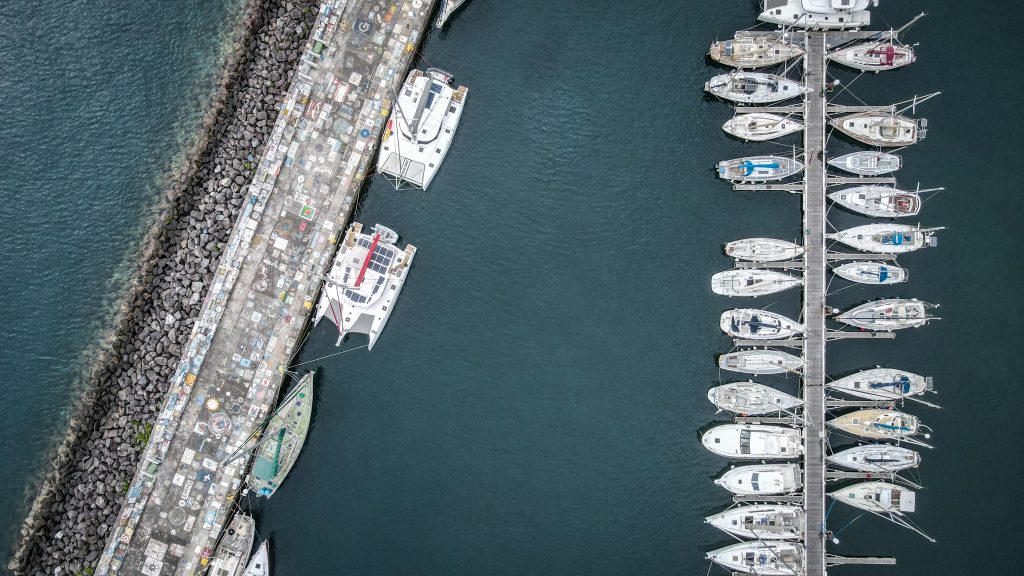
Horta Harbour – important stop for yachts crossing the Atlantic Ocean. The walls and pavements are covered with colourful paintings created by visitors including the names of their vessels, crew members, nationality and the years they visited.

Horta on Faial Island, the Azores
Horta Marina

Other sights

Capelinhos – the volcanic eruption between 1957 and 1958 began in the sea and as a result, a small island was created that is now connected to Faial Island. In fact, as a result of the eruption, the total area of the island increased by about 2.4 km2. Many houses were buried under ashes and more than half of Faial’s population emigrated to USA and Canada to escape the catastrophe. To learn more about the volcanic activity in the Azores, visit Capelinhos Volcano Interpretation Centre (entrance fee: 9 EUR). I recommend you to climb the ridge on the right side of the lighthouse for an amazing panoramic view.

Morro de Castelo Branco – is a 10,000-year-old rock formation, and a protected area due to the number of bird species that use it as a rookery. The PRC05 hiking trail passes by that area but you can also drive down and park very close to the rock.

Praia da Faja – Small village located on a fajã, which is the term used to define a small extension of land, located along the ocean, formed from rock debris or a volcanic delta from lava meeting the ocean. There is a small beach with dark sand and stones, quite popular with surfers. It can be reached with a car or following hiking trail PRC02.

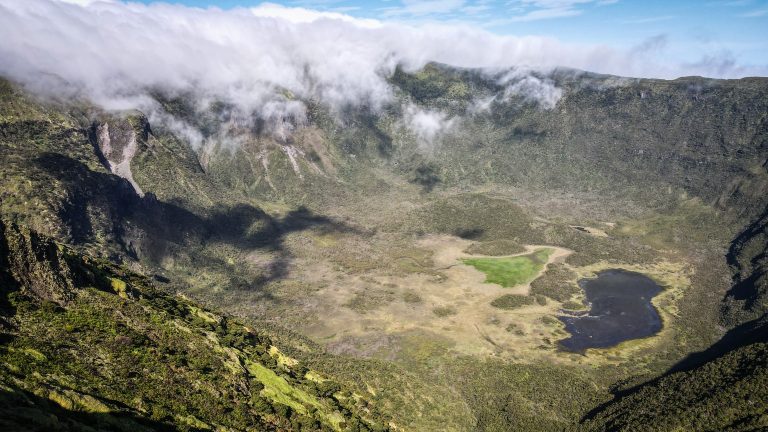
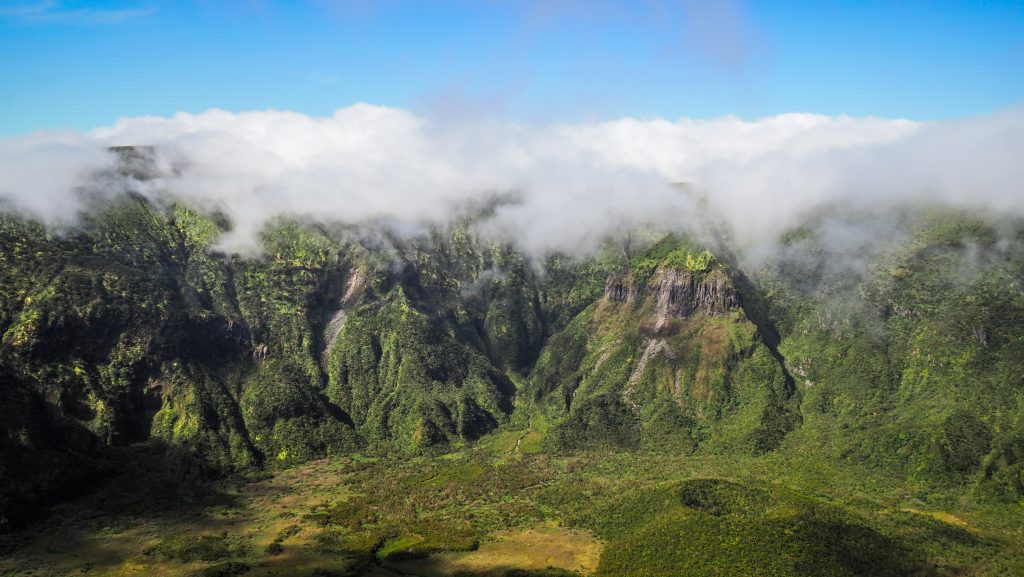
Caldeira – this natural feature is definitely the highlight of Faial Island. It has a diameter of 1450 meters and a depth of 400 meters. The PRC04 hiking trail starts at the parking and goes around it. Highly recommended in good weather!

Praia Do Almoxarife –  long stretch of black sand with bathing area, only 5km from the city of Horta. Great views over Pico Island guaranteed!

Ribeirinha – the name comes from the small river and valley that was occupied during the period of settlement. in Portuguese, Riberinha means small “ribeira”, or small river. A popular landmark is a lighthouse, which following the earthquake of 1998, was left in ruins. PRC09 is a great hike in the area, passing by the village, coast, lighthouse and several viewpoints. It is 8.3 km long and takes 2.5 hours to complete.

Viewpoints (Miradouro)

As on every island in the Azores archipelago, there are plenty of viewpoints and usually, they are easily accessible by car. Just look for the sign ‘Miradouro’ which in the Portuguese language means viewpoint. Here is the list of the most popular ones but of course nice views are nearly everywhere and it’s easy to find a stunning ‘no-name’ spot.

  • Miradouro do Cabeço das Pedras Negras
  • Miradouro da Ribeira Funda
  • Miradouro da Ribeira das Cabras
  • Miradouro de Nossa Senhora da Conceição
  • Miradouro Ponta Furada
  • Miradouro do Monte Carneiro

Hiking trails on Faial

PRC01 FAI – Cabeco do Canto

Short route with the start point on the road leading to Cabeco Verde. I left my car next to the information board and shortly I reached a lava cave which is apparently 55 meters deep, but views are quite limited due to trees. After passing on the left side of Algar do Caldeirao, soon I started climbing the stairs towards Cabeco do Canto. Quite a steep one! Once on top, I went around the volcanic cone (no big views here) and then went back following the same way.

Faial, the Azores
Aerial view to Algar do Caldeirao
Faial, the Azores
Aerial view to Cabeco do Canto

PRC02 FAI – Rocha da Faja

The best is to park the car on the main road near the church and from there descent through the fields and forest towards Praia do Norte beach, checking out a very nice viewpoint on the way. The beach itself is a great place for a break to chill and watch the waves. The trail continues through the centre of the village on the asphalt road before it starts to climb up first following a dirt road and then through the forest, back to the starting point.

Faial Island, the Azores
Praia do Norte seen from the viewpoint
Faial Island, the Azores
Beach in Praia do Norte

PRC04 FAI – Caldeira

The best and the most popular trail, going around the highlight of the island – Caldeira. From the parking, it’s just a few minutes to get the first glimpse of its interior. Caldeira is located in the central part of the island, therefore to fully enjoy the hike, make sure you go there in good weather. Otherwise, when the clouds roll in, there won’t be any views whatsoever.

Faial Island, the Azores
Interior of the Caldeira
Faial Island, the Azores
Caldeira is often covered by clouds, check the weather before you go!
Faial Island, the Azores
The summit of Pico seen from the Caldeira viewpoint

PRC05 FAI – Rumo ao Morro de Castelo Branco

The natural reserve and geosite of Morro do Castelo Branco is a highlight of this short hike and at the same moment, one of the most beautiful places on the island. It is an effect of the volcanic eruption that happened thousands of years ago. Due to the number of bird species nesting there, climbing is forbidden. The rest of the trail is rather average and follows partly asphalt road and partly pastures.

Faial, the Azores
Aerial view of Castelo Branco

PR03 FAI – Levada

After spending 2 months on Madeira Island, I knew very well what levada was. The memories of endless trails following water channels that transport water from one side of the island to the other was back immediately 🙂

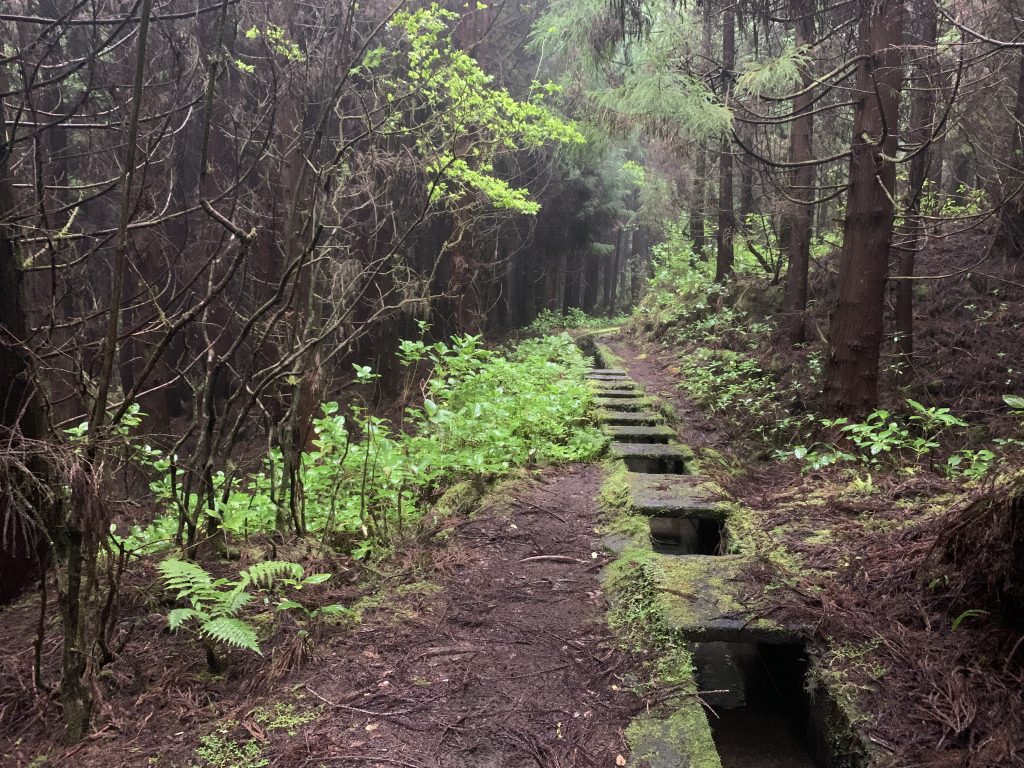
If you start near Cabeco dos Trinta, there is an option for a short detour to its interior, which I highly recommend. Come back the same way and turn right. After a few minutes, you will see the levada. Its construction was finished in 1964 with the main purpose of supplying water for the production of hydroelectric energy. The end of the trail is at Alto do Chao and you would rather need to come back the same way to reach your car.

Faial Island, the Azores
Levada – water channel running in the middle of the forest
Faial Island, the Azores
The trail passes through short tunnel

PR06 FAI – Dez Vulcoes

Long and demanding hike starting at the viewpoint of Caldeira. It follows PRC04 for around half of its distance when you need to turn right and head towards PR03 Levada and Cabeco dos Trinta. Further spots of the way are Cabeco do Fogo, Algar do Caldeirao and Cabeco do Canto. Finally, after crossing the road, there is a grand finale walking through the landscape formed by the volcanic ashes of Capelinhos. The eruption took place in 1957/1958. Close to the parking, there is the underground Interpretative Centre of the Vulcao dos Capelinhos, where you can learn about the volcanic nature of all the Azores islands as well as get to where the other famous volcanoes in the world are located. Entrance fee: 9 EUR.

Faial Island, the Azores
The lighthouse around Capelinhos area

PR07 FAI – Caminhos Velhos

Similar to PR06, it starts (or ends) at the parking next to Caldeira viewpoint. I would recommend starting here because then most of the walk will be downhill. Cross the tunnel, have a look at the interior of Caldeira and then continue on the zig-zag dirt road. When it merges with asphalt road, on the left side there will be Old Cabouco the Recreational Forest Reserve, a great place for a short break. Next, the trail goes towards Miradouro do Cabeço das Pedras Negras from where it joins PRC09 until arrival to Ribeirinha. Check out the ruing of the church of Sao Mateus and the ruins of the Lighthouse of Ribeirinha. Both places were destroyed by the earthquake that hit the area in 1998.

Faial Island, the Azores
The ruins of the Lighthouse of Ribeirinha

PRC08 FAI – Entre Montes

Easy circular hike close to Horta, with historical importance. The first underwater telegraphic cable was installed here in 1893 which played an important role during the war. The whole route provides great views all around the city as well as the fortress of Sao Sebastiao. At the top of Monte da Guia, there is a viewpoint and the chapel of Nossa Senhora da Guia. On the way back, you may want to visit the informative Museum of Whaling Industry (Museo da Baleia) or make a short detour to the remains of Forte da Greta. Finish the hike at Praia do Porto Pim.

Faial Island, the Azores
Aerial view over Horta

PRC09 FAI – Ribeirinha

Start the trail in the centre of Ribeirinha village and then head towards the coast. Follow it until Porto da Boca da Ribeira and then start the ascent through the forest to the ruins of the Lighthouse of Ribeirinha. Continue through the forest to the viewpoint of Ribeirinha. When you reach an asphalt road, turn left and make a short detour to the ruins of the church of Sao Mateus. Both places, the church and the lighthouse were destroyed in the earthquake of 1998. From there, it’s time for a tiring ascent to Miradouro do Cabeço das Pedras Negras. Make a short break there and then start the descent back to Ribeirinha. The trail is highly overgrown in some parts but no worries, it’s still doable.

Faial Island, the Azores
The ruins of the Lighthouse of Ribeirinha
Faial Island, the Azores
The trail through the forest

Coast to Coast

The ultimate hike through the island, starting at Ribeirinha and finishing in Capelinhos (or the other way around). It’s the combination of PR06 and PR07 and most probably the distance needs to be split into 2 days unless you are very fit and don’t mind taking a challenge to complete it in one very long day.

Introduction

Corvo is the smallest island in the Azores archipelago (17.1 km2) and together with Flores, it forms the Western Group. Due to its isolation, it is probably the least visited one. Both islands were discovered around 1452 by the Portuguese explorer Diogo Teive on his return from Newfoundland.

Vila do Corvo is the only settlement on the island, located in a lava fajã which forms the island’s main level surface. It is a pretty little village with narrow streets, a port and an airport. The population is at the level of about 460 inhabitants, so yeah, everyone knows everyone!

How to get to Corvo?

Most of the travellers head to Corvo with organized boat tours, departing in the morning from Santa Cruz das Flores, spending around 4 hours on the island and then coming back. Boats usually pass next to the north coast of Flores Island giving an extra opportunity to see waterfalls and caves. The cost of such a trip, including a boat and taxi transfer to Caldeirao, is about 50 EUR.

If you are short on time, it is a good option but for me, 4 hours on Corvo didn’t seem to be enough. I asked for the possibility to go on one day and come back on the next, but unfortunately, May is still outside of the high season and there was simply no boat on the following day.

Therefore, I decided to choose a small ferry operated by Atlantico Line and organize it all by myself. The ferry departed at 9:30 from Santa Cruz das Flores and it took about 40-50 minutes to disembark in Vila do Corvo. The cost of a one-way ticket is 10 EUR.

It’s also possible to fly to Corvo with SATA Azores, however it’s more expensive and flights are infrequent.

Ferry, or rather a small boat heading to Corvo Island

How long to stay on the island?

I stayed on the island for 2 nights and it was great. I wasn’t in the hurry, had more than enough time to feel the island, do all hiking trails and simply wander around Vila do Corvo without any reason, enjoying beautiful weather and taking lots of pictures.

In the summer months (June-August), certainly, there are more connections between Flores and Corvo, so it should be much easier to tailor the trip to your needs from the timing perspective. For the most optimal experience, I recommend spending at least one night on the island.

Corvo, Azores
Vila do Corvo, Azores

Getting around Corvo

The only transportation that you need is the taxi up to the Caldeirao. Other than that, it is best just to walk around, both in Caldeirao itself as well as the way back to Vila do Corvo. To get a driver, ask in your accommodation or any small shop and friendly folks will certainly help you out and share the phone number.

Where to stay?

There are not too many options to choose from. The most popular seems to be Guest House Comodoro. This is exactly where I stayed, and I can fully recommend it. They have a decent breakfast included in the room rate, rooms are spacious, and the terrace is a nice place to have a rest observing slow village life. Internet connection is great too. Cost: 65 EUR / night.
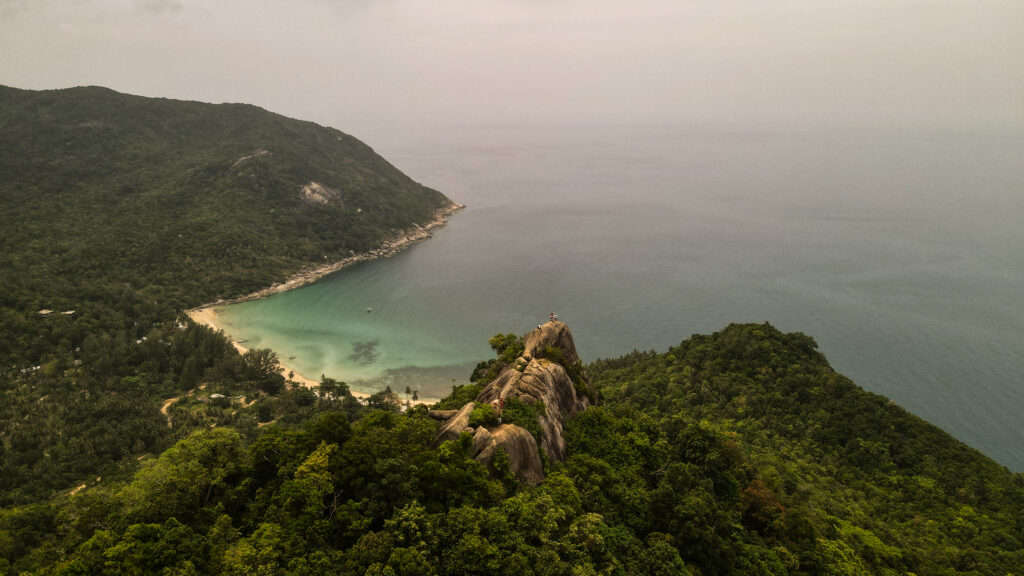
Alternatives are Joe & Vera’s Vintage Place and The Pirates’ Nest. Both places have excellent reviews so they must be good too.
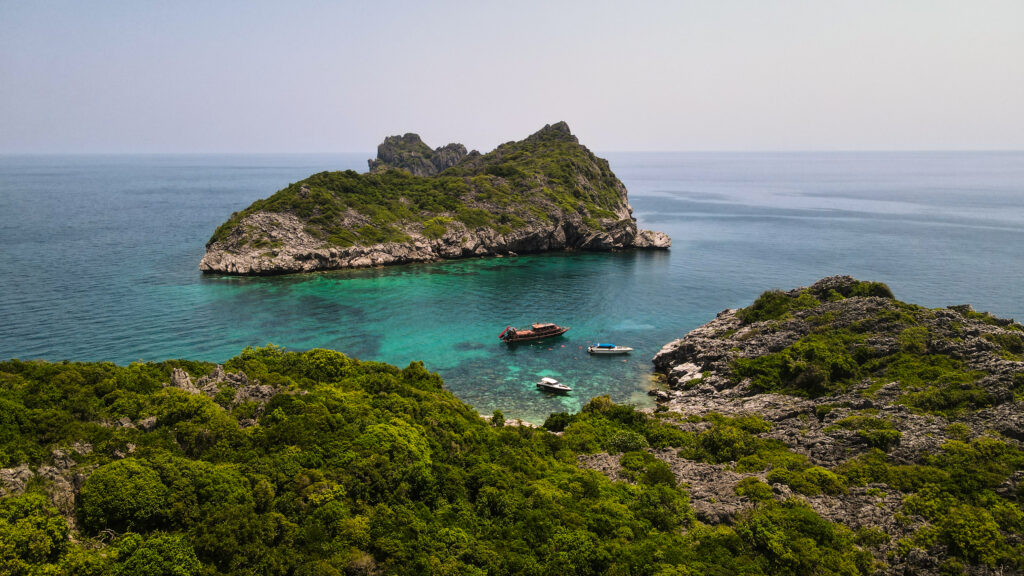
Tips

  • The weather is unpredictable and you have to be prepared for anything. Always have with you a waterproof jacket and umbrella. Install mobile app SpotAzores and don’t go to places that are totally covered in clouds. You will lose time and won’t see anything anyway.
  • Book your car in advance in the high season. I travelled in the Azores between April – May so it wasn’t a problem to get a car from one day to another, however, I can imagine that in high season it could be a problem, especially on the smaller islands.
  • Drive carefully, especially in the fog. It’s pretty normal that cows, sheep or goats stand very close to the road or simply walk on it.
  • If you go hiking, download GPS files and maps from the official website Visit Azores and have them on your phone just in case. In general, trails are well marked but in a dense fog, it’s not that difficult to get lost.
  • Don’t be afraid of hitchhiking. Many trails are linear, which means that you need to get back to the starting point. You can walk the same way or try to save your legs. On some islands, the traffic is minimal but once the car comes, it is almost certain that the driver will stop and help you out.

Hiking trails on Corvo

There are only two official hiking trails on the island but both are great and can be done in one long day.

PRC02 – Caldeirao

It begins at the end of the road leading to Caldeira and from there you descent to the bottom of it. Follow counterclockwise direction looking out for next signalling pole (which in my opinion are quite poorly visible even in good weather). Your walk around the lake will be certainly observed by the rangers of this place – cows. But don’t worry, they aren’t dangerous as long as you don’t disturb them too much. Once the round is completed, you have to climb back up to the point where you started.

Corvo, the Azores
Corvo, the Azores
Corvo, the Azores
Corvo, the Azores
Corvo, the Azores
Corvo, the Azores
Corvo, the Azores

PR01 – Cara do Indio

This great trail connects Caldeirao with Vila do Corvo and I took it to come back to the village. The beginning is quite boring, as it follows asphalt road but after a while, it turns right and the landscape starts to look better and better. The trail passes next to water tanks, through pasture lands and stone walls, which are typical in the landscape of the Azores. Later, the view opens to Flores Island, well visible on the horizon. Once you reach the cliffs, watch out for Cara do Indio – a rock formation that resembles “the face of the Indian”.

Corvo, the Azores
Rock formation Cara do Indio

Further on, there is a viewpoint overlooking Vila do Corvo with a nice bench to sit down and have a rest before the final phase. After passing through the historic centre of Vila do Corvo, you will get the chance to admire traditional windmills before the hike ends at Praia da Areia.

Corvo, the Azores
Corvo, the Azores
Corvo, the Azores
Corvo, the Azores
Corvo, the Azores

GPS, maps and leaflets of both hikes can be downloaded from the great website: https://trails.visitazores.com/

Other places to see

It is worth visiting the Church of Nossa Senhora dos Milagres (the island’s patron saint) as well as the Corvo Visitors’ Centre. Casa do Tempo Ecomuseu do Corvo is a great place to learn about the history of the island and watch interviews with local people (free of charge). A bit further up the road, there is also Corvo’s Wild Bird Interpretation Center but the entrance fee is 3 EUR and it’s a total waste of money.

Introduction

Madeira is an autonomous region of Portugal since 1976. In fact, it’s the name not only for the island but also for an entire archipelago which is formed by the Madeira Island (741 km²), Porto Santo (42.5 km²), the Desertas Islands (14.2 km²) and by the Selvagens Islands (3.6 km²).

The initial plan was to stay here for one month but now I already know that it will be rather two months. Because why not? After all, nothing is waiting for me in Poland and my remote work gives me great flexibility.

Why Madeira?

I was thinking about visiting this island for quite some time. The first attempt was during the long weekend in May 2018 but damn, I’m so happy I ended up in Croatia instead! And I don’t mean that Split blew my ass out but now I know that the idea of spending 4 days in a place like Madeira was ridiculous. It’s just way too short.

The temperatures here are about 20C all year long which makes it a very pleasant place to be, especially during the Polish winter. It seems that I left my country perfectly on time because a few days later, there was heavy snowfall for several days. My friends kept posting photos enjoying such conditions but seriously, I haven’t regretted my decision for even 1 second. Winter is not for me.  

Of course, in pandemic times, the beauty of the place and weather are not the only relevant aspects when choosing your destination. Madeira has one of the easiest entry procedures in Europe which I will describe in the second part of the article.

Funchal, Madeira, Portugal
Funchal is the capital city of Madeira

Small complications…

With current flexibility to do my work from any place I can, the choice was simple. I bought my flights around 2 weeks prior to departure hoping for the restrictions to stay the same. Unfortunately, the news coming from Portugal were not optimistic and on Friday afternoon I got the message from my brother “I think you won’t fly to Madeira”. My flight was on Monday morning so yeah, I got pissed.

Some websites informed about total borders closure, some only about the land border with Spain. There was also information about the closure of the airport in Lisbon (where I had my transit). And another one about mandatory PCR tests even if you only transit in Lisbon.

In short – one big information chaos.

It is so easy to panic reading all those dramatic headlines. On the next day, I called the hotline of TAP Portugal airlines asking about flights status. It was planned as scheduled and apparently there was no need for a PCR test. Somehow the guy on the phone didn’t sound too convincing so I decided to keep digging on the official website and there it appeared – the info that all passengers with transit in Lisbon have to present negative PCR result BEFORE boarding the plane. The result shouldn’t be older than 48 hours and it had to be translated into English.

It was Saturday evening and my flight was on Monday morning from a different city. I had no choice but to take the 5 AM train to Warsaw on Sunday morning to do my test there. The results were supposed to be in less than 24 hours “in most of the cases”. After 4 PM I started checking the system every half an hour and at midnight I fell asleep. Woke up at 5 AM. No result. Took an Uber to the airport. No result. Luckily my connection was quite complicated: Warsaw – Geneva – Lisbon – Funchal and I only had to show the result in Geneva which gave me some extra time.

The result came 5 minutes before boarding the plane in Warsaw. Negative.

Funchal, Madeira, Portugal
The archipelago is situated in the North Atlantic Ocean

Flights

The simplest way to get to Madeira from Poland is to take a direct charter flight. Usually, it costs around 1000 – 1500 PLN for a return ticket. The flight is operated by Enter Air. I didn’t use that option which hadn’t been wise because it could have saved me a lot of trouble and money (PCR can be done for free upon arrival at the airport in Madeira). I have never used services provided by tour operators and also that time I searched my connections on old good SkyScanner.com.

There were two options available with transit either in Germany or in Switzerland and because of the lower price, I chose the latter one.

Regardless of where you are travelling from, the best is to limit transit to the absolute minimum. The rules and restrictions change way too often, so check the information on a regular basis. Some time ago, I heard about problems with transit through Germany. Non-German passengers flying on EasyJet from Madeira to Berlin were refused to board the plane.

Following the increase in infections in Poland during the Easter period, mainland Portugal imposed a compulsory quarantine on travellers, even those in transit. It means, that until the rules change, connection in Lisbon is no longer an option. This is why a charter flight seems to be the safest way of getting to Madeira.

Madeira, Portugal
Madeira is home to the highest cliff in Europe – Cabo Girao

Free COVID-19 tests

As on most of the isolated islands, also in Madeira COVID-19 is under control. To keep it that way, the local government invests in PCR tests that are provided for free to all arriving passengers (if they haven’t already done the test prior to departure in their home countries). PCR tests aren’t cheap, so it’s a really significant advantage for your travel budget.

After reclaiming my luggage, I was greeted by the staff in protective clothing asking if I had my test already done or not. Based on your answer, you will be either directed to the right, or to the left line. I followed the right one as I had my test done and I also uploaded it already to the website www.madeirasafe.com. Every tourist has to register there to obtain a QR code which will be scanned at the exit from the terminal. The procedures went extremely smooth, I was given a free bottle of water and there I was. Officially in Madeira.

If you don’t have your tests results, simply follow the left blue line and you will end up in a testing station. The samples are taken both from your nose and throat. The results are supposed to be available in 12 hours but usually, it’s shorter than that. Of course, you can proceed to your accommodation but other than that you are officially on quarantine and you mustn’t leave your room.

Road leading to Pico do Areiro
Road leading to Pico do Arieiro

Restrictions

Rules with masks are exactly the same as in most of the other places in the world. They have to be worn in all public areas. In general, the rule is followed, especially in Funchal. In other, smaller cities it’s rather more relaxed. There is no need to wear a mask on hiking trails or on the beaches.

Hand sanitizers are widely available and I have never came across one that was empty.

Curfew is in place from 7 PM until 5 AM in the weekdays and from 6 PM until 5 AM on the weekends. Be aware that most of the places close 1 hour before that. If you get hungry after that, your only option would be takeaway delivered by BringEat, Uber Eats or Glovo. It’s not allowed to be outside during curfew hours and the only exception is the way to and from the airport. The streets in Funchal really get empty so it’s not a joke and you should also take is seriously.
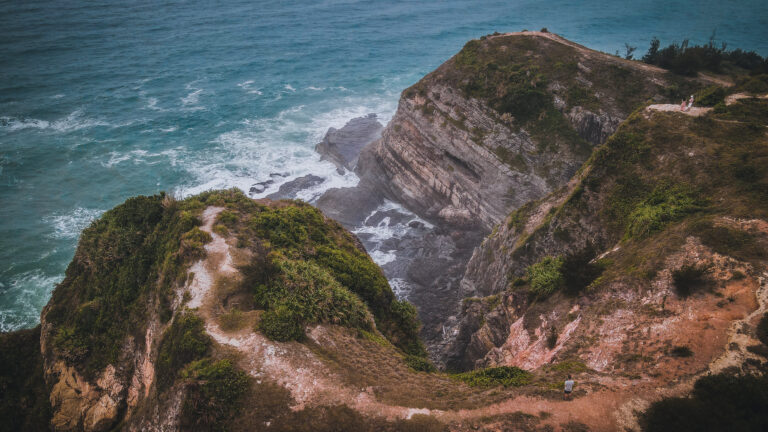
Described restrictions were in place during my stay on the island between February and March 2021.

Funchal, Madeira, Portugal
View over the biggest city In Madeira and surrounding hills

Accommodation

I found my place to stay on Airbnb and it seems to be the best way. Staying for a longer period of time gives you an additional argument at hand to negotiate a good price. I went to a centrally located room hosted by Residencial. There is really fast internet which was especially important to me due to remote work. All the sights around city centre are within walking distance. The only negatives are quite thin walls and terrace which tends to be occupied by loud guests.

After all the mess with COVID-19 and depressing winter weather in Poland, Madeira turned out to be a really nice place to spend a couple of weeks sightseeing and working remotely. If you have any questions about the island, feel free to ask in the comments!

Introduction

New day, new adventure! I woke up early and took my bags down to the reception. I was going to Great Barrier Island for 2 days only, so it didn’t make sense to take the whole luggage. Probably due to early hour, no one was there though, so I just left the note and 3 NZD fee hoping that my luggage will still be there when I arrive back the next day.

After doing some research about Great Barrier Island, I felt like I am going on an adventure. No ATM, no supermarket, solar energy or power generators, unsealed roads, no streetlights, limited mobile coverage. Sounds cool, doesn’t it? 

Great Barrier Island got its name from James Cook, as it lays like a barrier between the Pacific Ocean and Hauraki Gulf. Indigenous Maori people called it Aotea, meaning ‘Cloud’. It’s New Zealand’s fourth-largest island, after North, South, and Stewart.

How to get there: ferry or plane?

From Auckland, there are 2 options: either by plane or by ferry. 

The ferry is operated by SeaLink and in high season goes once per day, departing Auckland at around 8:00 AM and arriving at Tryphena 4.5 hour later or to Port Fitzroy 5 hours later. The cost is around 115 NZD for the return trip. It is quite a long travel if you just plan to drop by for 2 days as I did. 

Therefore, I decided on 30 min flight with Barrier Air. Yes, you will spend more money as the flight will cost you around 200 NZD. But people say that time is money. Taking a flight is also a more scenic way of arriving on the island. The plane is small, you have great views through the window being able to admire other islands from Hauraki Gulf such as Waiheke, Rangitoto, Little Barrier as well as the Coromandel Peninsula. The airport is at Claris, 12 km away from Tryphena where you can find accommodation, shop, pharmacy, and (as everywhere on the island) expensive fuel.

The hassle-free way to get to the airport in Auckland is with SkyBus. I bought the ticket online and enjoyed a 1-hour ride using free WiFi and reading about my next destination. Buses depart very frequently from Auckland CBD.

How to get around Great Barrier Island?

As the name suggests, Great Barrier Island is pretty big, so walking is not exactly the best idea. There is some bus going around but you will rely on the schedule and many of the scenic bays will be out of your reach. That’s why the best idea is to rent a car. I booked the one with Aotea Rentals – Nissan AD for 70 NZD per day. Never heard about a model like that but its youth time definitely passed a long time ago. It had so many scratches already that I knew that even if I make another one, that wouldn’t make a difference. It was still a decent and economical car that took me without an issue to all the places that I wanted to go to. Additionally, it has a big truck so it’s an extra advantage for people travelling in groups. The guy from Aotea Rentals was waiting for me at the airport and when I asked how should I return the car, he said: ‘just park it here and leave the keys inside’. Fair enough!

Driving on the island was quite an experience. Roads are narrow, sometimes sealed sometimes not. And it was the first time in my life that I had to drive on the left side of the road! Luckily even in high season, the traffic on the island is light, so after a while, I started to feel comfortable.

On the way to Port Fitzroy, I saw some shady bare foot hitchhiker and I felt the impulse to stop. He happened to be retired Kiwi fella that was going back to his boat parked in a bay down the road. Well, you can say – that’s life. We had a nice chat even though the Kiwi accent is sometimes beyond my understanding. And he thought all the time that I am from Holland, not Poland. Quite a common misunderstanding here, which I learned in the following months.

Top things to do and see

Dark Sky Sanctuary

Beautiful beaches and nature were not the only things that encouraged me to visit the Great Barrier Island. Another one was the fact that it’s one of 10 places recognized as International Dark Sky Sanctuaries (others being in Australia, US, Chile, South Africa, and the Pitcairn Islands). Remember when I said there is no electricity? This and the fact that the island is nearly 100 km away from Auckland make the night pitch black. It is an amazing spectacle in the sky. The best way to admire the Milky Way and other interesting constellations that can be seen in Southern Hemisphere is to spend the night camping.

Kaitoke Hot Springs

My first destination was 45 minutes track leading to forest hot springs. The track was completely empty and at some point, I started to doubt that I’m going the right way, but when I finally reached the spring, 3 folks were already enjoying their time there. I continued the short way up to the lookout and then came back meeting many more people heading the opposite direction. I guess not everyone is going for the hike straight after arrival at 9 am. The track starts and ends at Whangaparapara Road.

Great Barrier Island

Windy Canyon & Mount Hobson

The most scenic short hike on the island and, according to me, the best thing to do in general. You reach Windy Canyon around 10 minutes after departing from Aotea Road, and then continue for another ca. 2 hours to the highest point of the island – Mt Hobson (621m). Views from the top are simply magnificent and no picture can do this place justice. Go and see by yourself!

Track to Mount Hobson
Great Barrier Island

Ruahine Lookout

Even though there was a sign ‘4WD only’ I took the risk and drove down to Cape Carrier. From there I followed the track down to Johnson’s Bay and then up the mountain. Bloody hell, I had the feeling that I was the first hiker on this trail for several weeks. Not meeting a single soul on the way up and down and having my face literally covered with spiderwebs seemed to confirm that. Close to the summit, there is Ruahine Lookout proving decent but not the best ocean views. It’s quite a steep climb taking anything between 3-4 hours return, depending on your shape. Luckily my car got out of the parking without any issue so if dry, I would say 4WD is not essential.

Great Barrier Island

Whalers Lookout

You can make it a destination on its own or just a stop on the way to Ruahine Lookout. Reachable from Johnson’s Bay, it’s the southernmost point of Great Barrier Island. There is a nice bench to have a rest and wait for the whales to make a splash, however, you have to be very lucky to actually see one.

Great Barrier Island

Other hiking trails

Track to Mt Hobson is obviously not the only one on the island. There are amazing alternatives available, ranging from being just a couple of hours warm-ups, such as:

  • Tramline Track (6 h) following old tramline used by the Kauri Timber Company during the 1920s and 1930s.
  • Harataonga Coastal Walk (4-5 h one way) which is an easy and flat track with superb views of the coast.

… to some being multiple-day adventures:

  • Aotea Track (2-3 days) – the father of all hikes on the island, 25 km long loop encircling central mountain area. There are two huts on the way available for overnight stay.

Check the website of the Department of Conservation and select the hikes you like the most! In all cases be well prepared: take plenty of water, snacks, sun cream, hat and tell someone about your plans and expected return time.

Beaches and bays

If you like chilling on the sand (and I mean really white sand), you will have a blast here. The population of the island is around 600, increasing with tourists flow especially on summer weekends, but it’s still possible to find a perfect spot on the beach just to yourself, without anyone in the sight. There is more white sand beaches with fine surfing opportunities on the East Coast: Whangapoua Beach, Haratonga Beach, Awana Beach, Kaitoke Beach or Medlands Beach. You can feel the power of the ocean here! On the other hand, West Coast is dotted with calm bays giving even wilder and more remote feeling: Karaka Bay, Katherine Bay, Whangaparapara or Okupu Bay.

Port Fitzroy and Glenfern Sanctuary

Port Fitzroy is the arrival point of the ferry from Auckland CBD. There is a general store, a boat club, an information desk and fuel station.  Old Lady Track (45min – 1h) is a great way to straighten your legs and it has a steep side trip (30 min) up to Lookout Rock with stunning views over the harbour. Another point worth checking is Glenfern Sanctuary Regional Park located nearby. They offer self-guided or guided walks in the huge predator-proof area where endangered species of birds can recover. The loop walk is the most popular one.

Make a splash!

There are heaps of water activities to choose from: surfing, kayaking, fishing or diving. Numerous bays are also a heaven for all yachts lovers. You can also go the cheap way  – just relax at Kaitoke Hot Spring or at one of many scenic white sand beaches.

Was it worth it?

Yes, it was! Going to Great Barrier Island isn’t particularly cheap, but experience even half of what the island has to offer and you will certainly not regret it!

Questions? Please write a comment 🙂