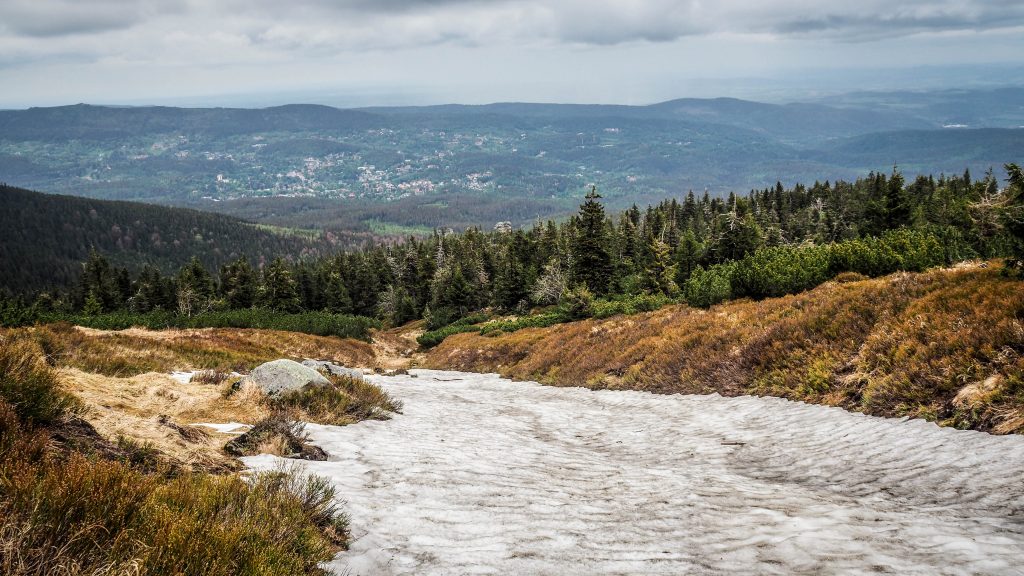
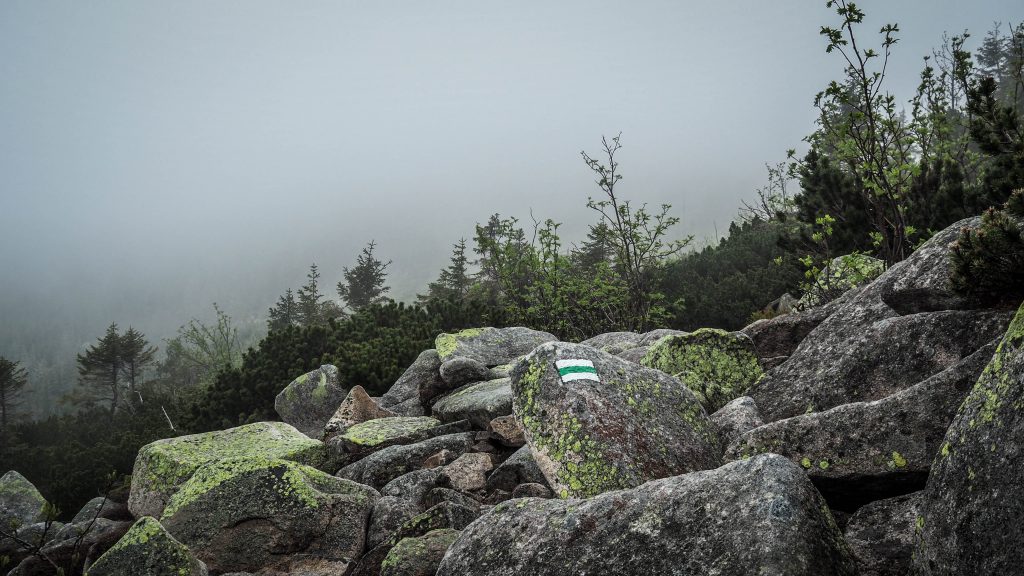
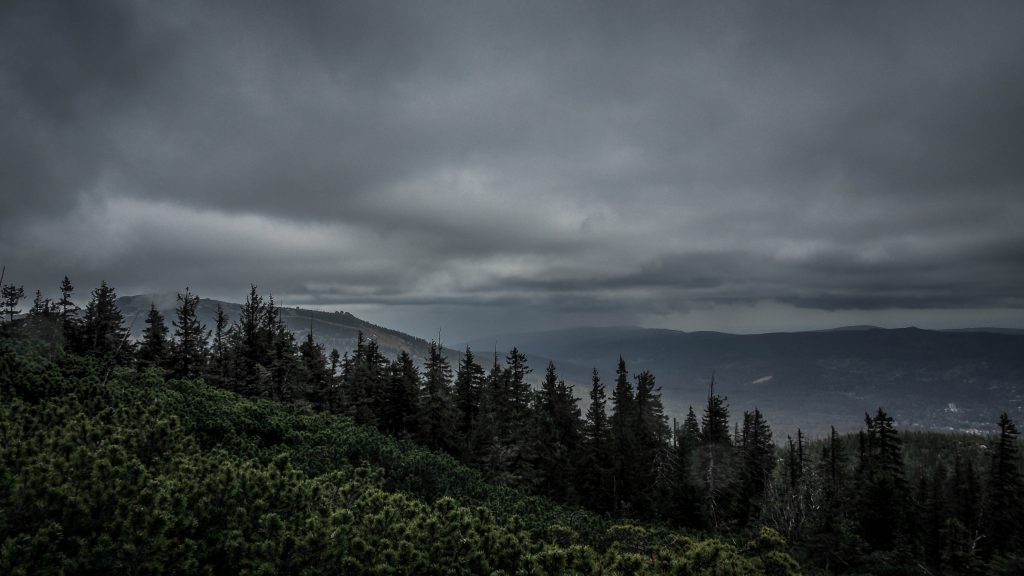
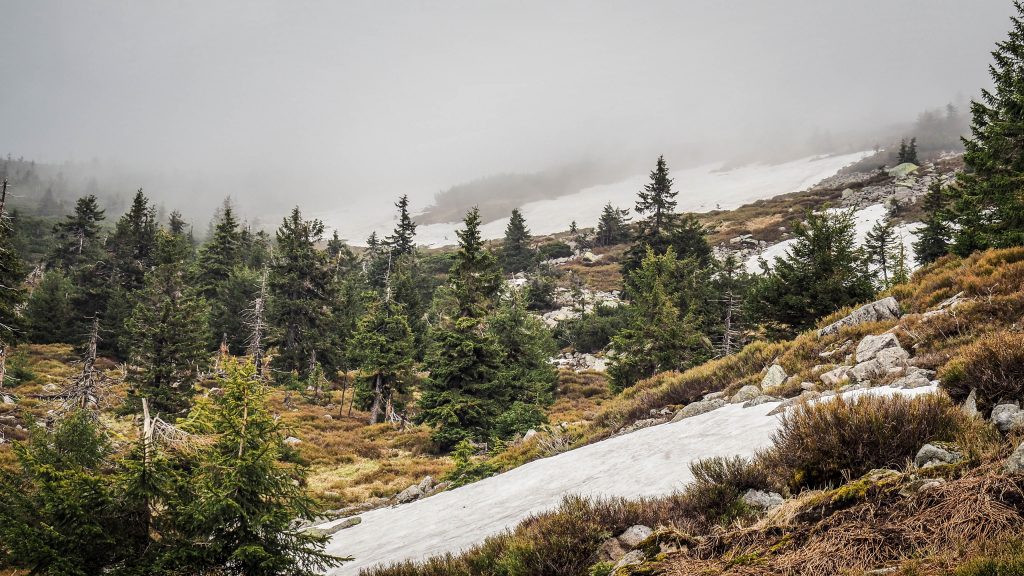
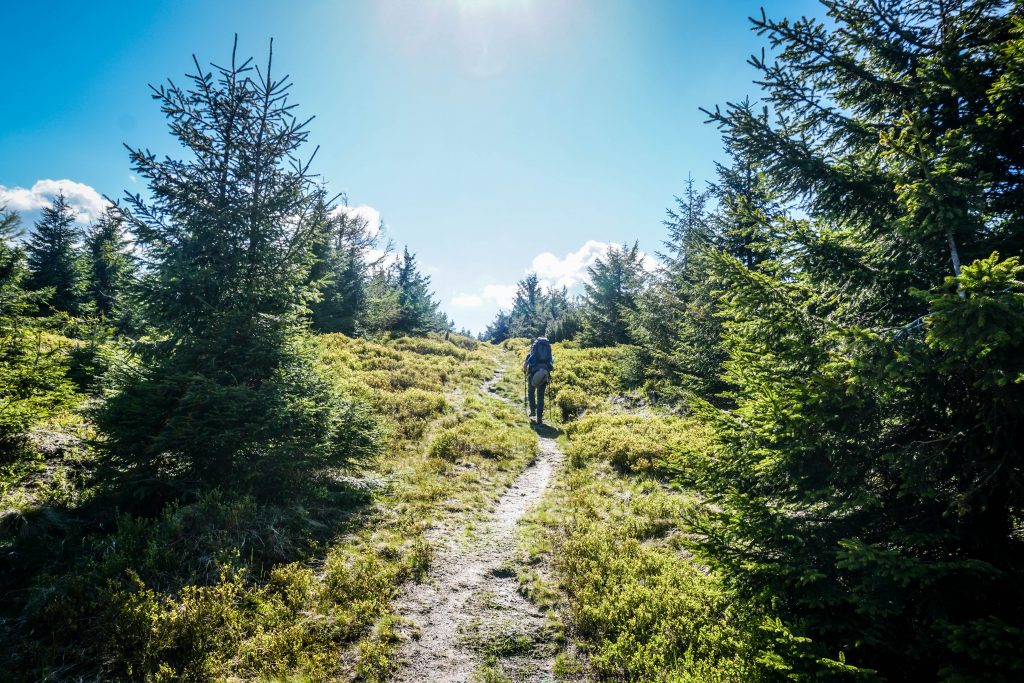
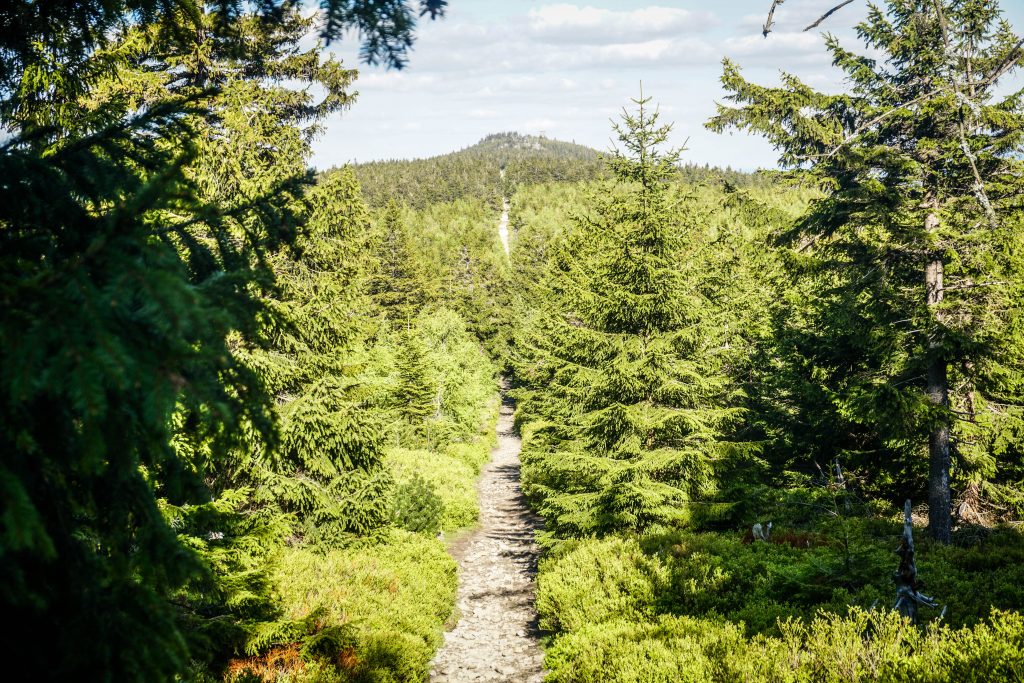
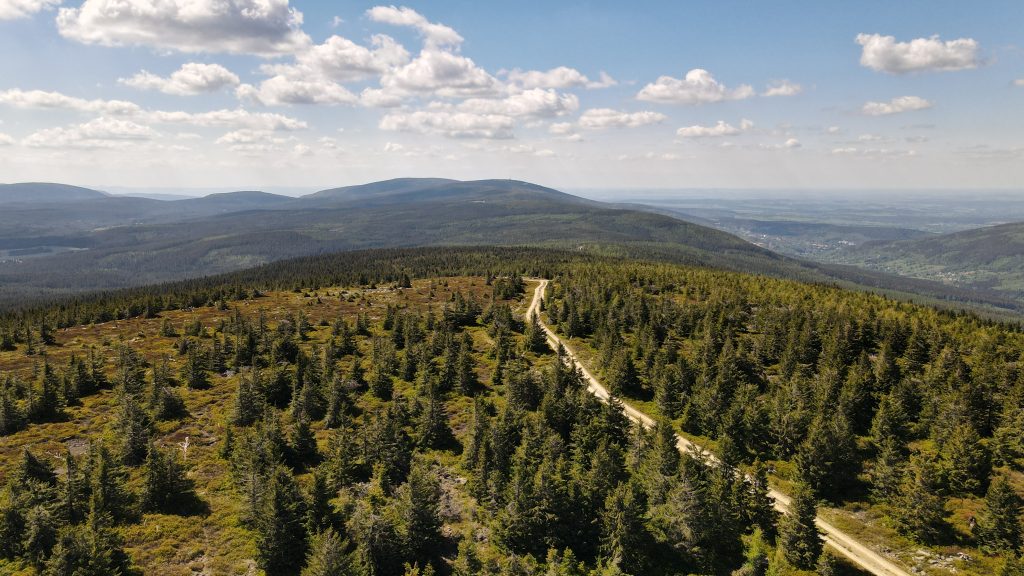
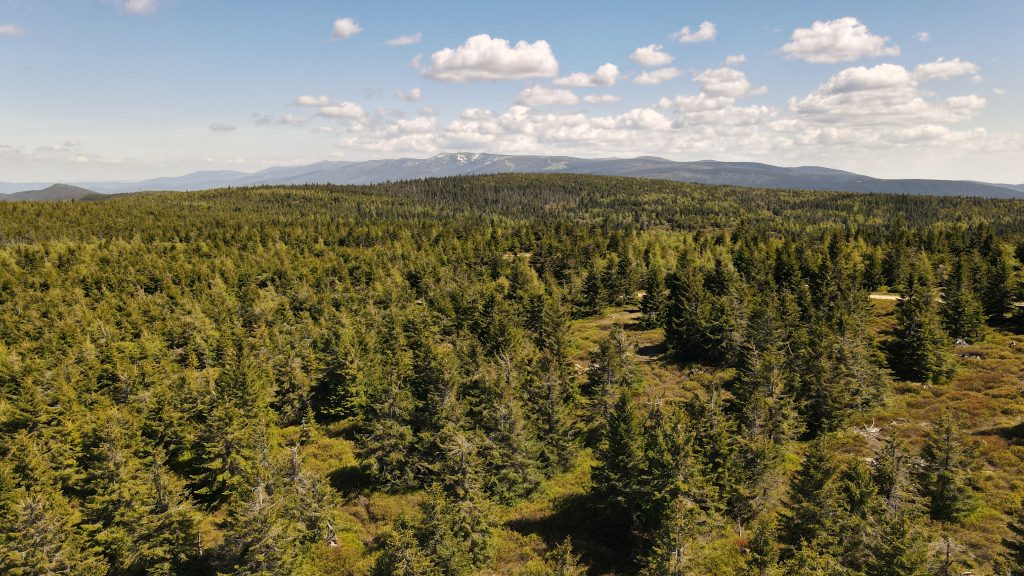
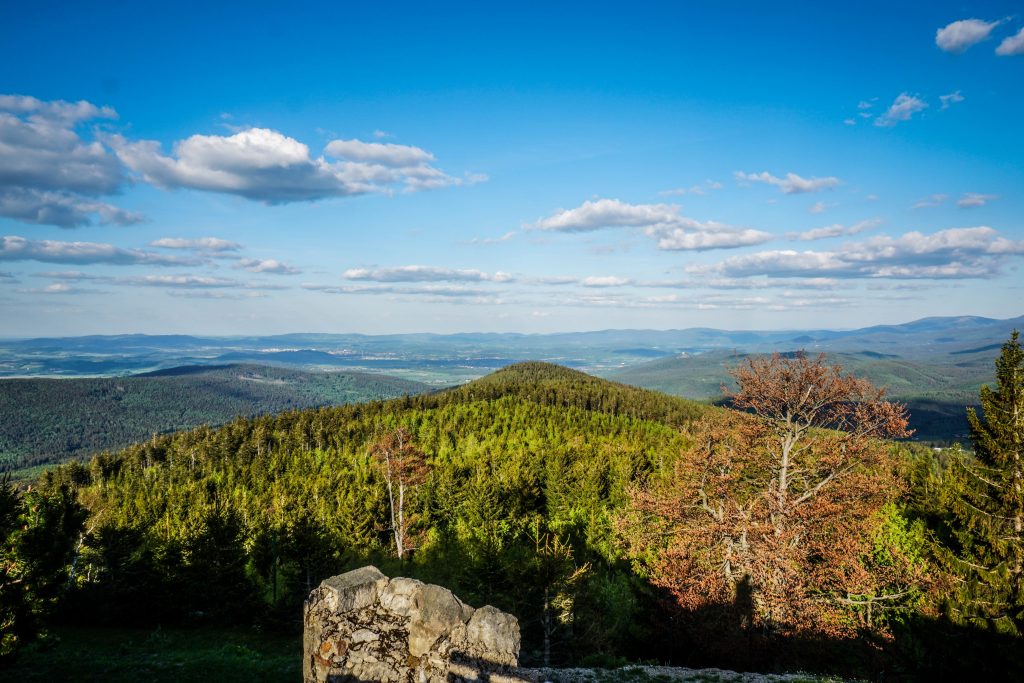
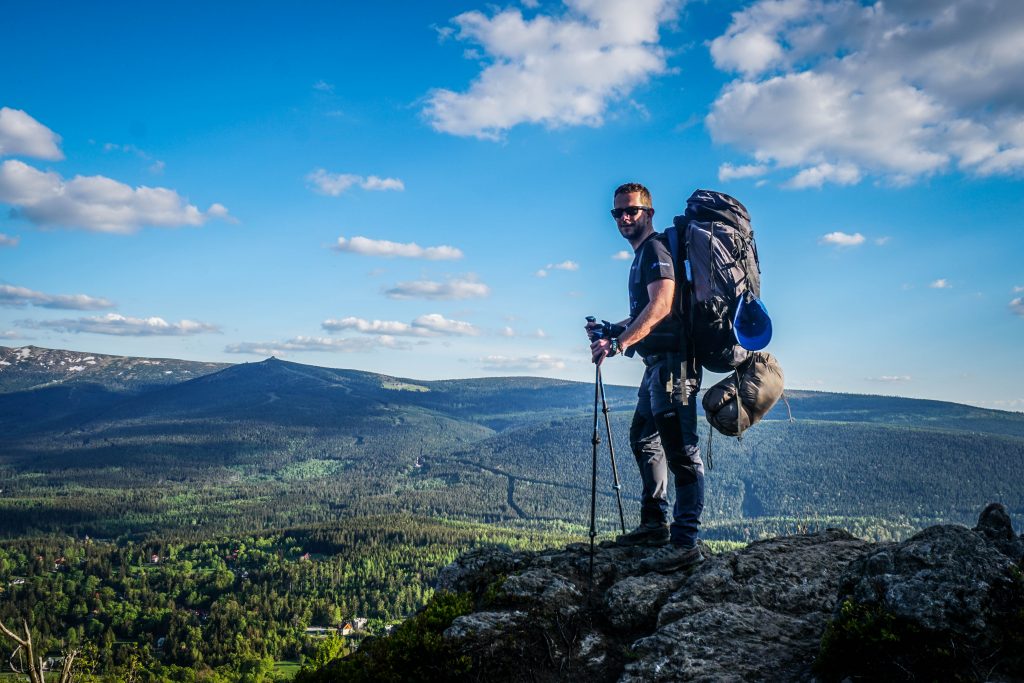
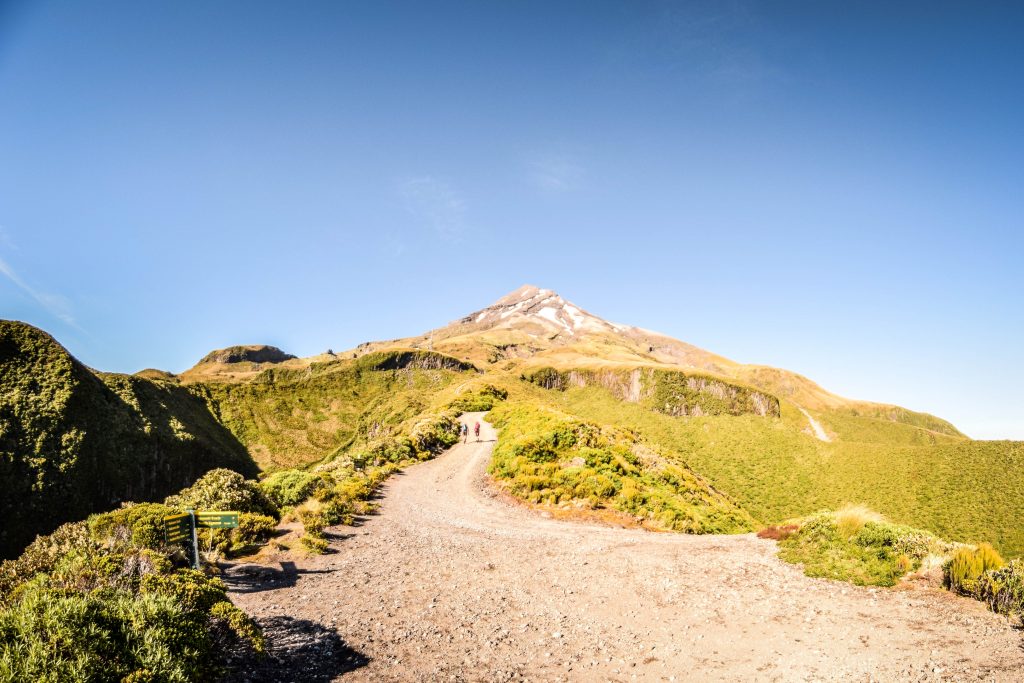
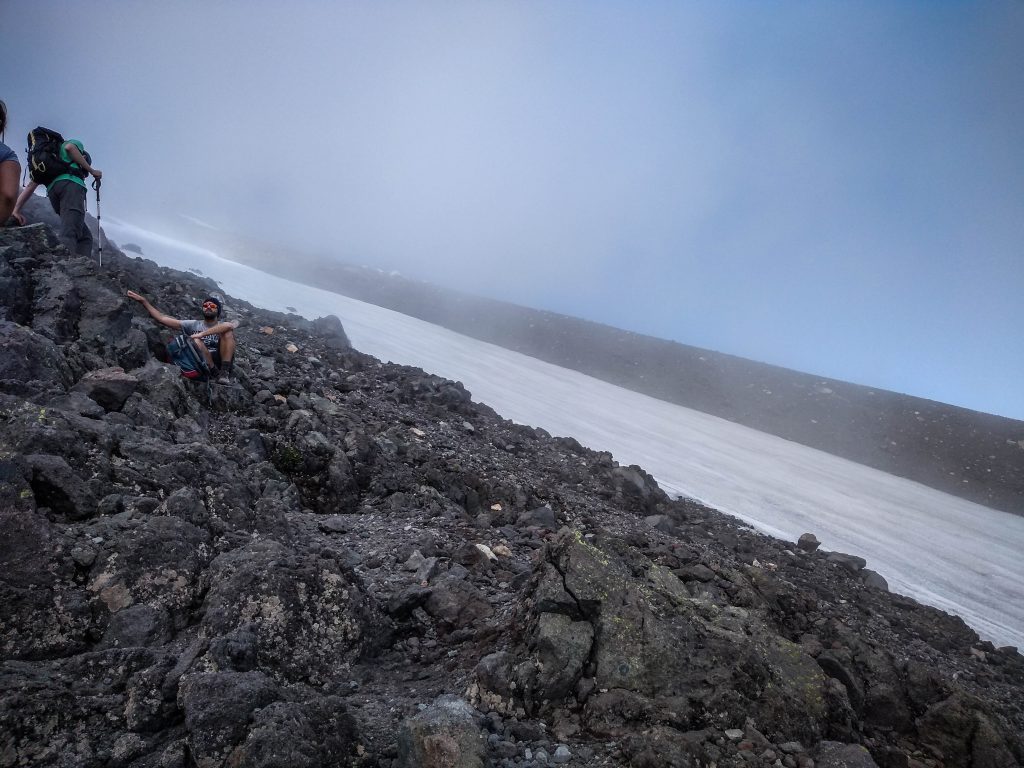
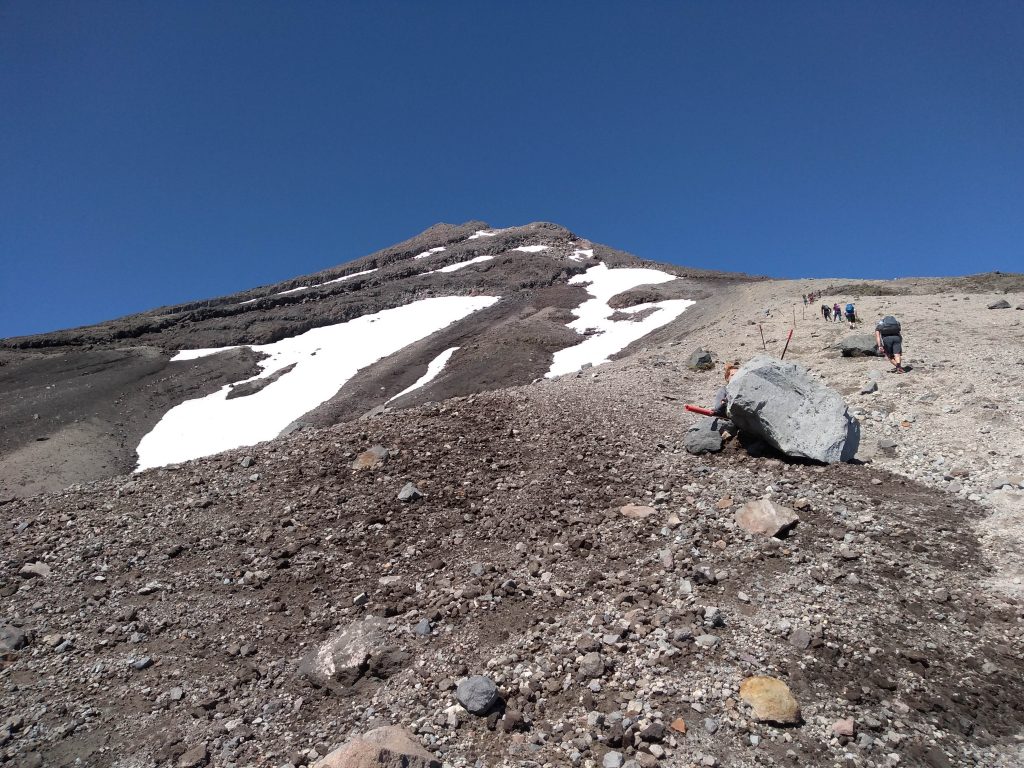
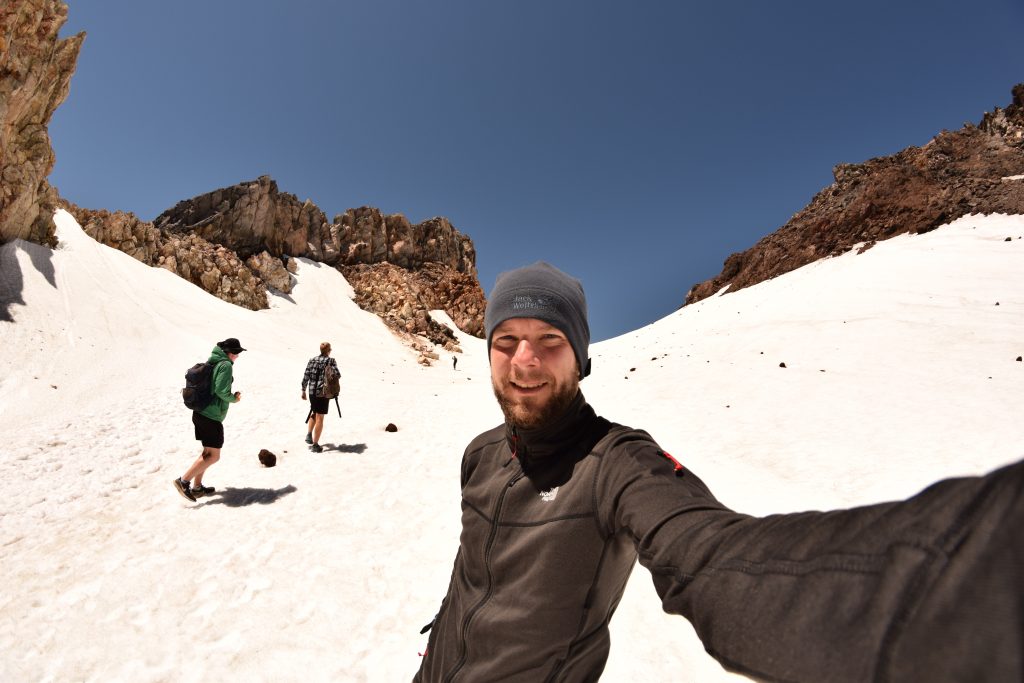
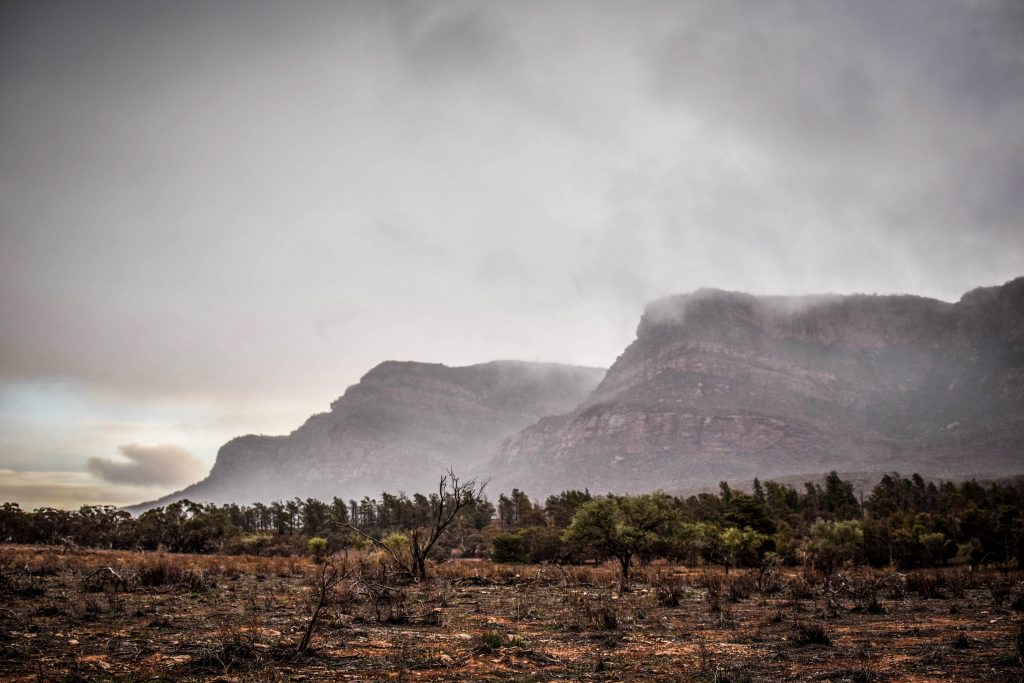
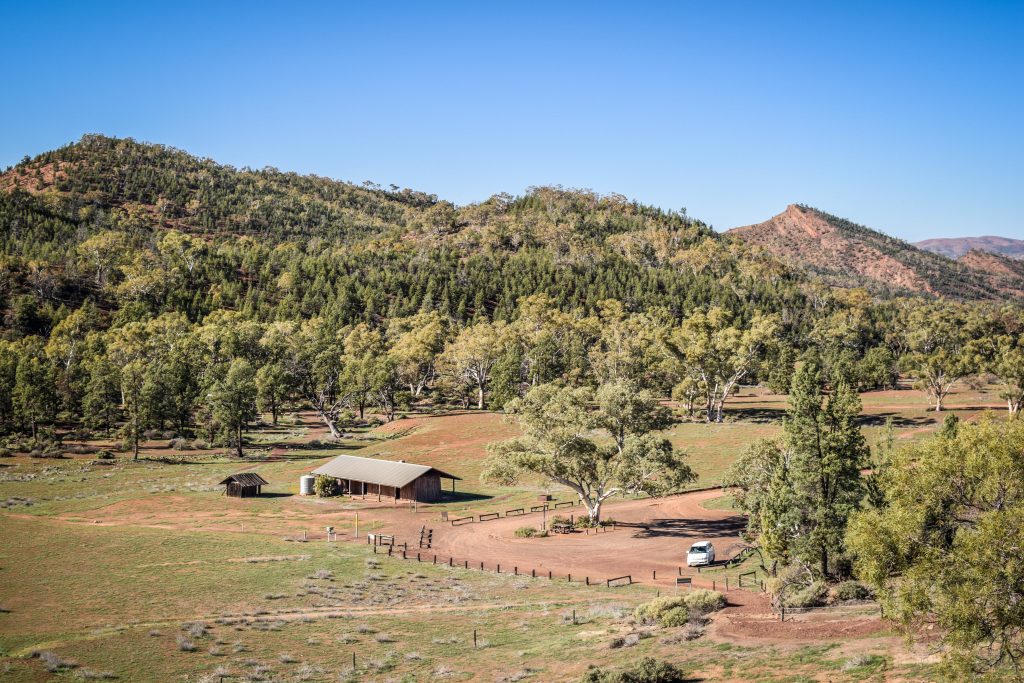
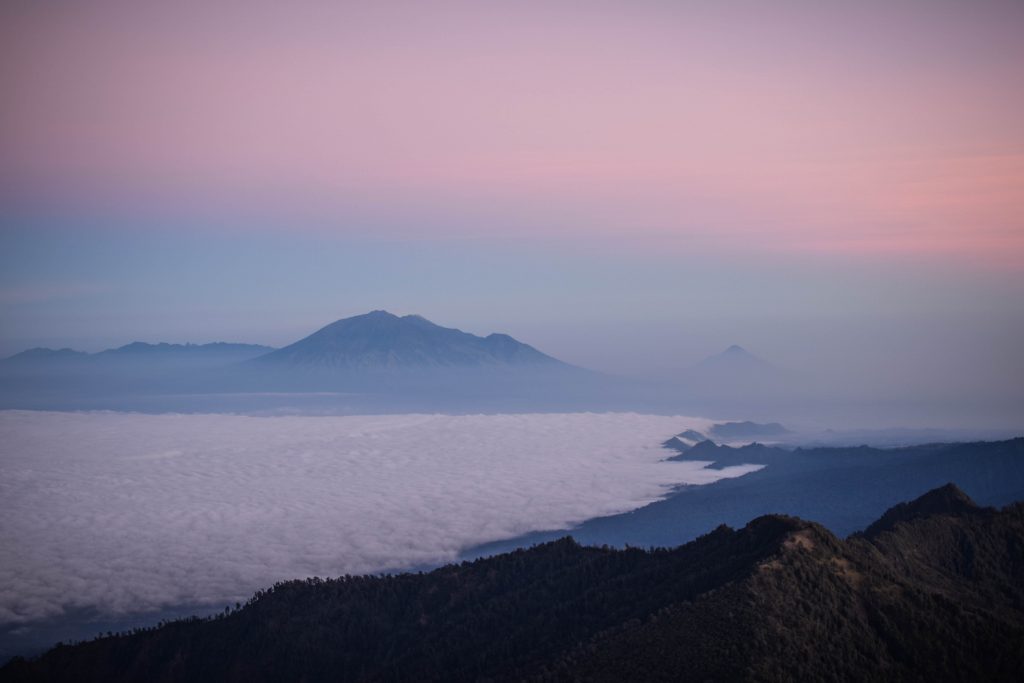
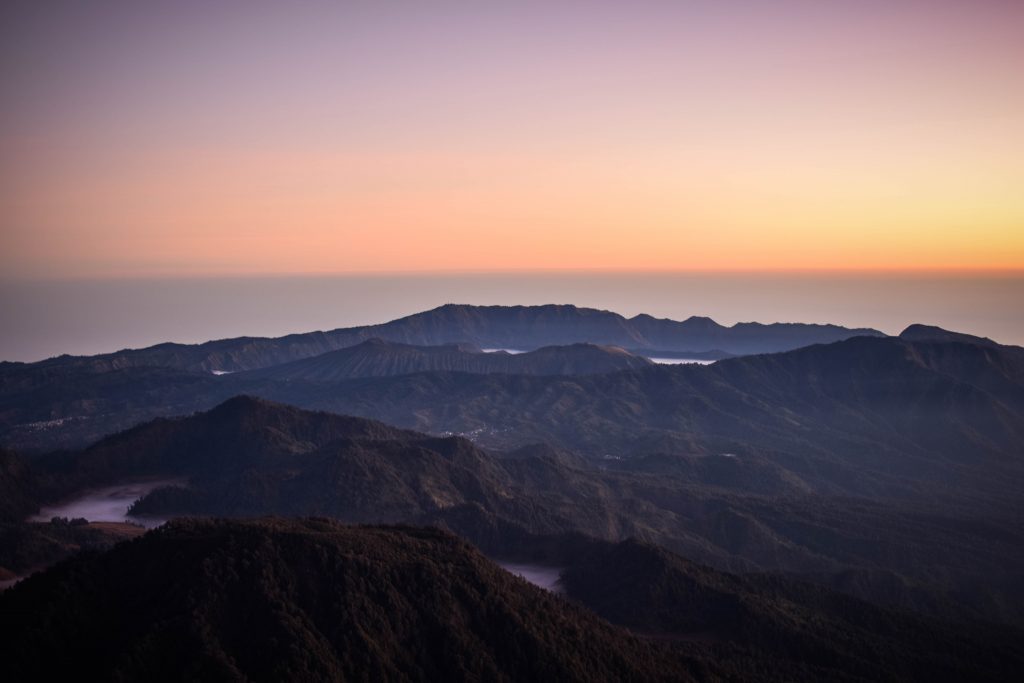
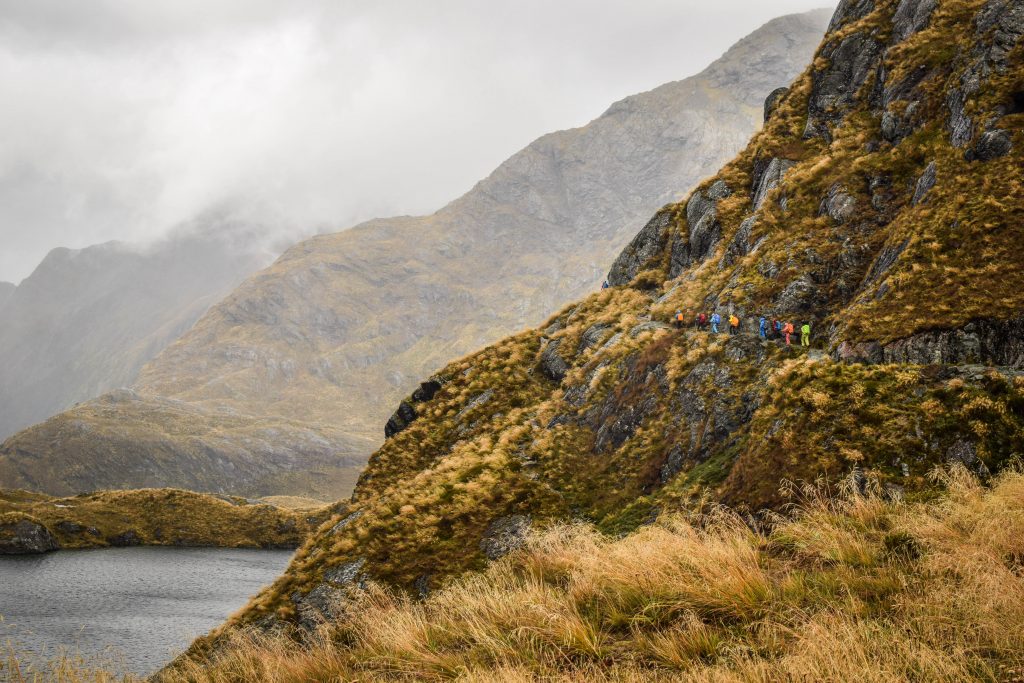
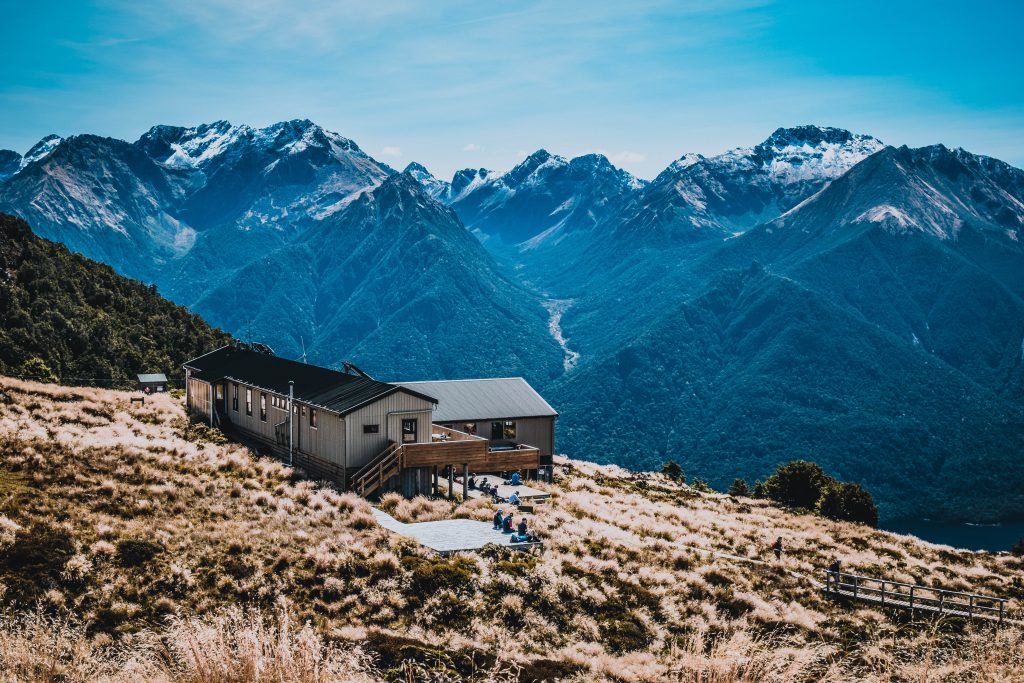
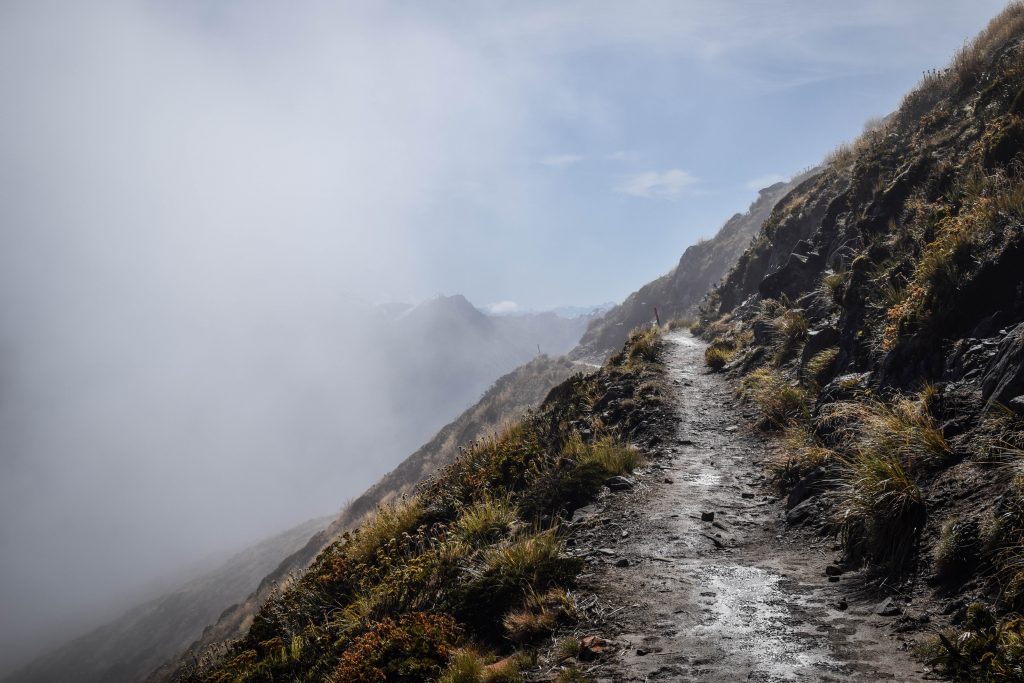
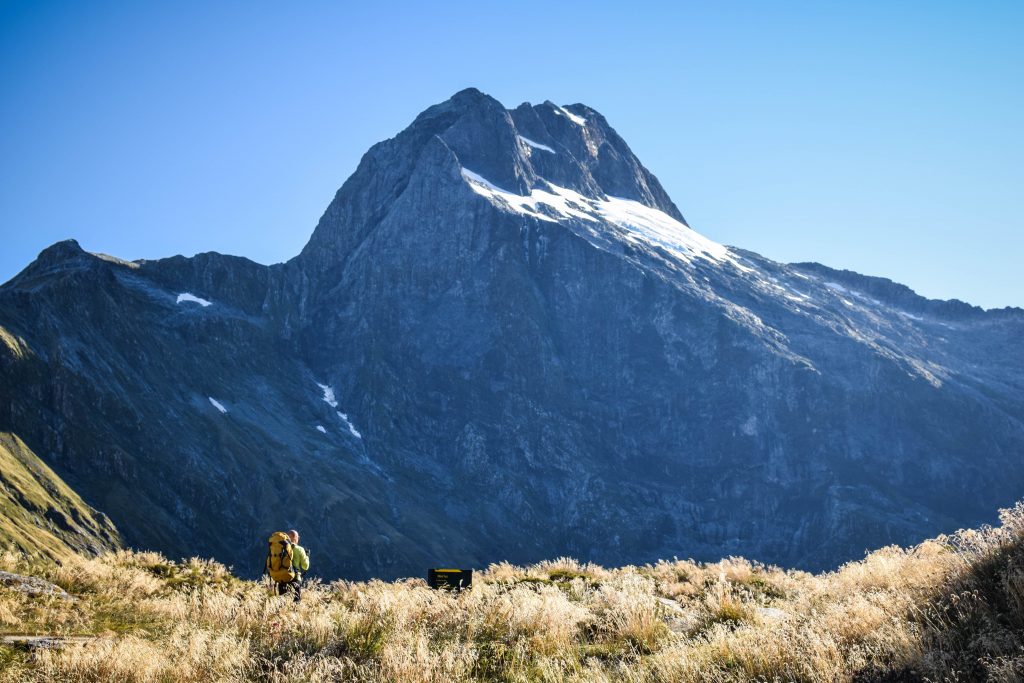
Day 1 made us tired but warm dinner and good sleep helped to recover quickly. At 9 AM we were packed and ready to go. The weather wasn’t as good as the day before. The sky was covered with dark clouds and it was significantly colder. It seemed that the experience up in the mountains could be limited to “walk in the fog”. Moreover, parts of the red track were apparently closed due to the proximity of the border of Poland with the Czech Republic which wasn’t allowed to cross due to the epidemy of COVID-19. In fact, the track meanders just between these two countries, sometimes with hikers having one leg in Poland and another one in the Czech Republic. For common sense – who cares? Unfortunately, virus paranoia was taking its toll.
We had met a fellow hiker the day before saying that he passed through without any issues even though he was seen by border guards. With uncertainties about our route for today, we decided to hit the road and make further decisions on the way.
Route: Szklarska Poręba to Odrodzenie Hut Distance: ~ 20 km
Skalny Pensjonat was way off the red track so it took us a good half an hour wandering around Szklarska Poręba to finally get to the road leading towards Kamieńczyk Waterfall. Here, uphill walk began. Maybe it was better. We could quickly warm up and burn poor breakfast within 1 hour 🙂
We left our backpacks next to the ticket boot and armed ourselves with a helmet. Then it was just a few steps down on a metal construction to see the first glimpse of the highest waterfall on the polish side of Karkonosze Mountains. There are 3 cascades of total high 27 m. Not the most impressive ones but still very photogenic and definitely worth a stop. A regular ticket costs 8 PLN once discounted one 4 PLN.
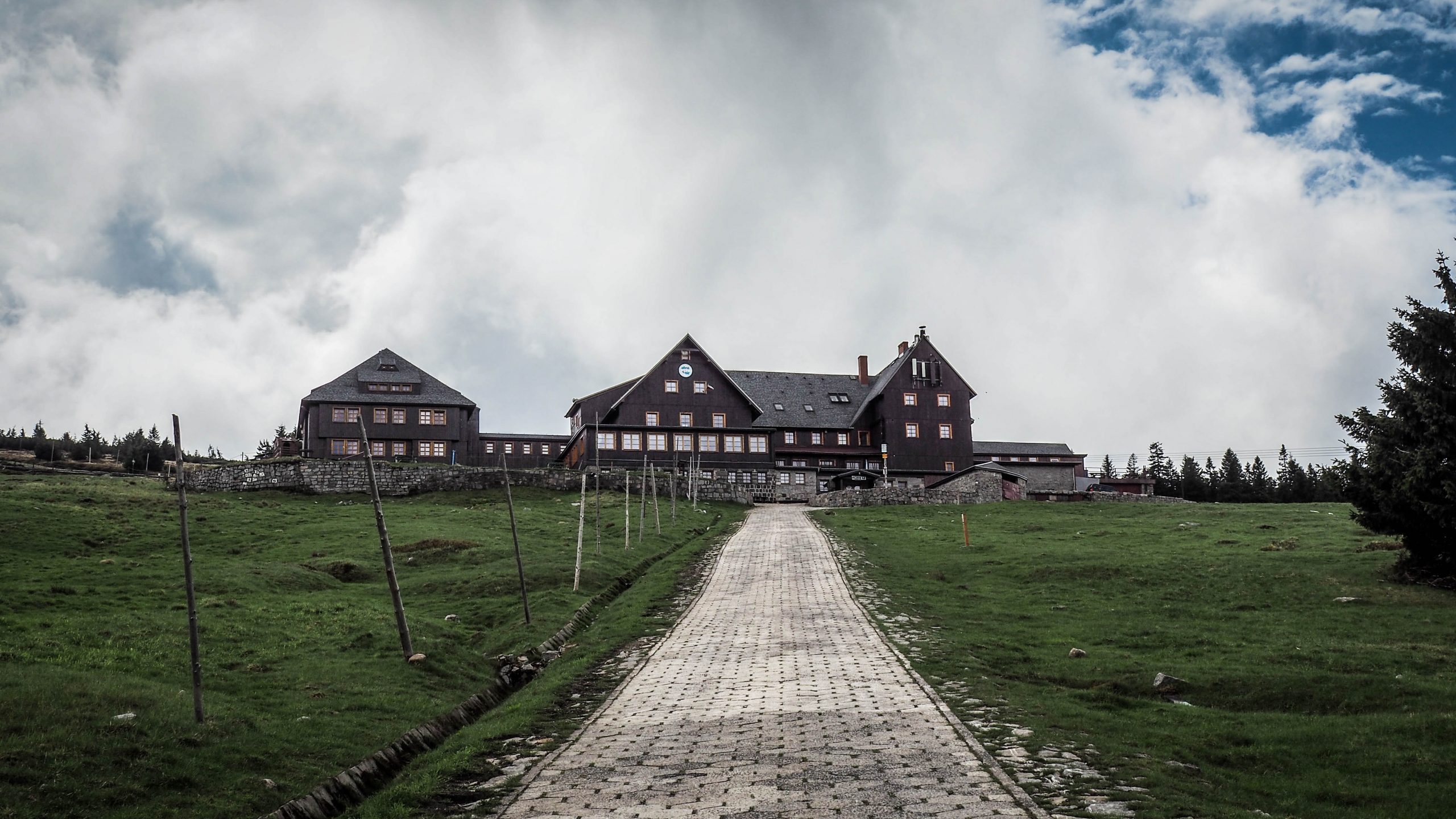
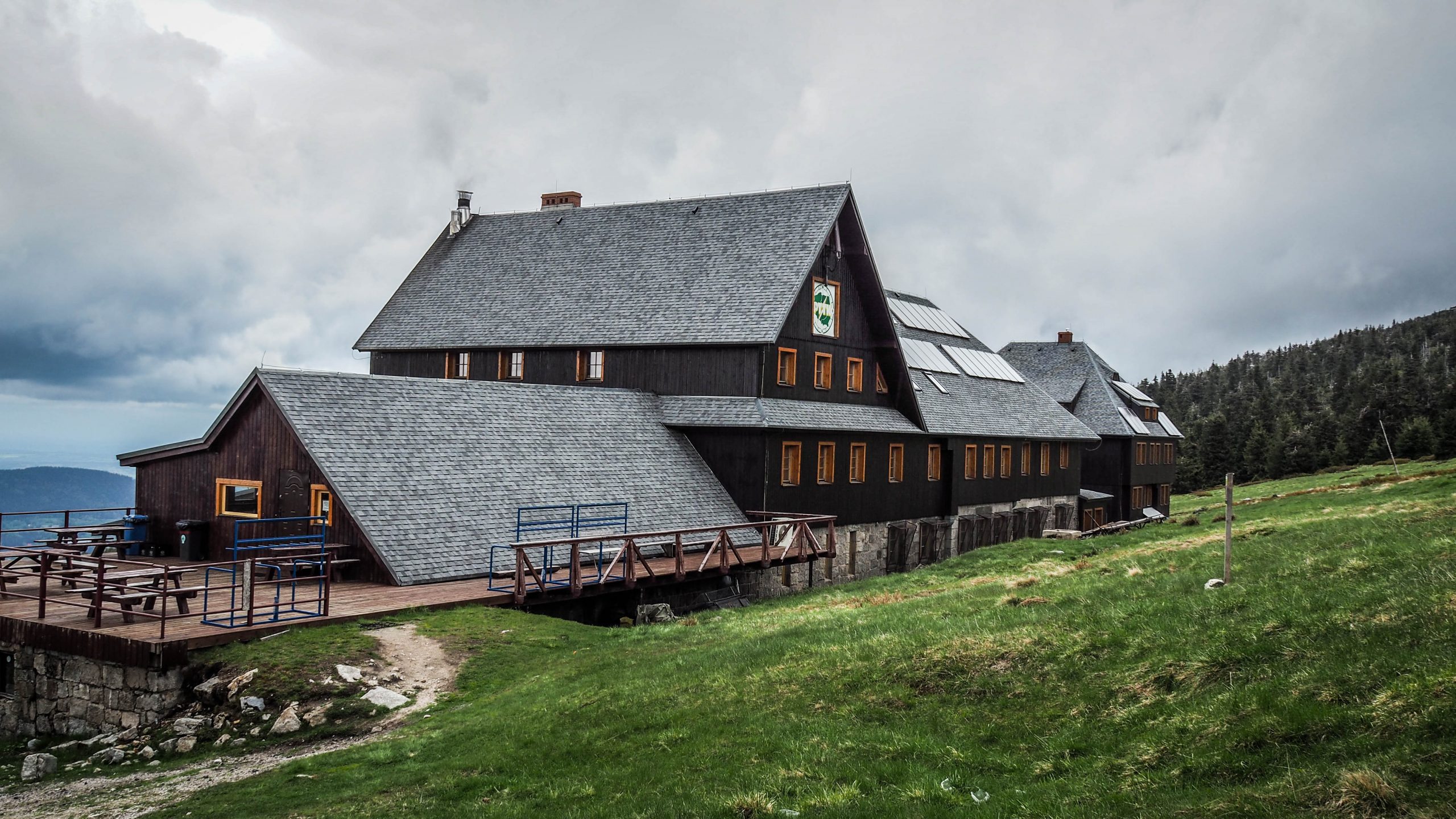
From the waterfall, a boring concrete road leads all the way to PTTK Hut “Na Hali Szrenickiej” (1195 m a.s.l.). It’s time for a coffee. Clouds are passing by so quickly like it’s some kind of weird race and it’s getting certain than in a few hundred meters, we will disappear in the clouds as well.
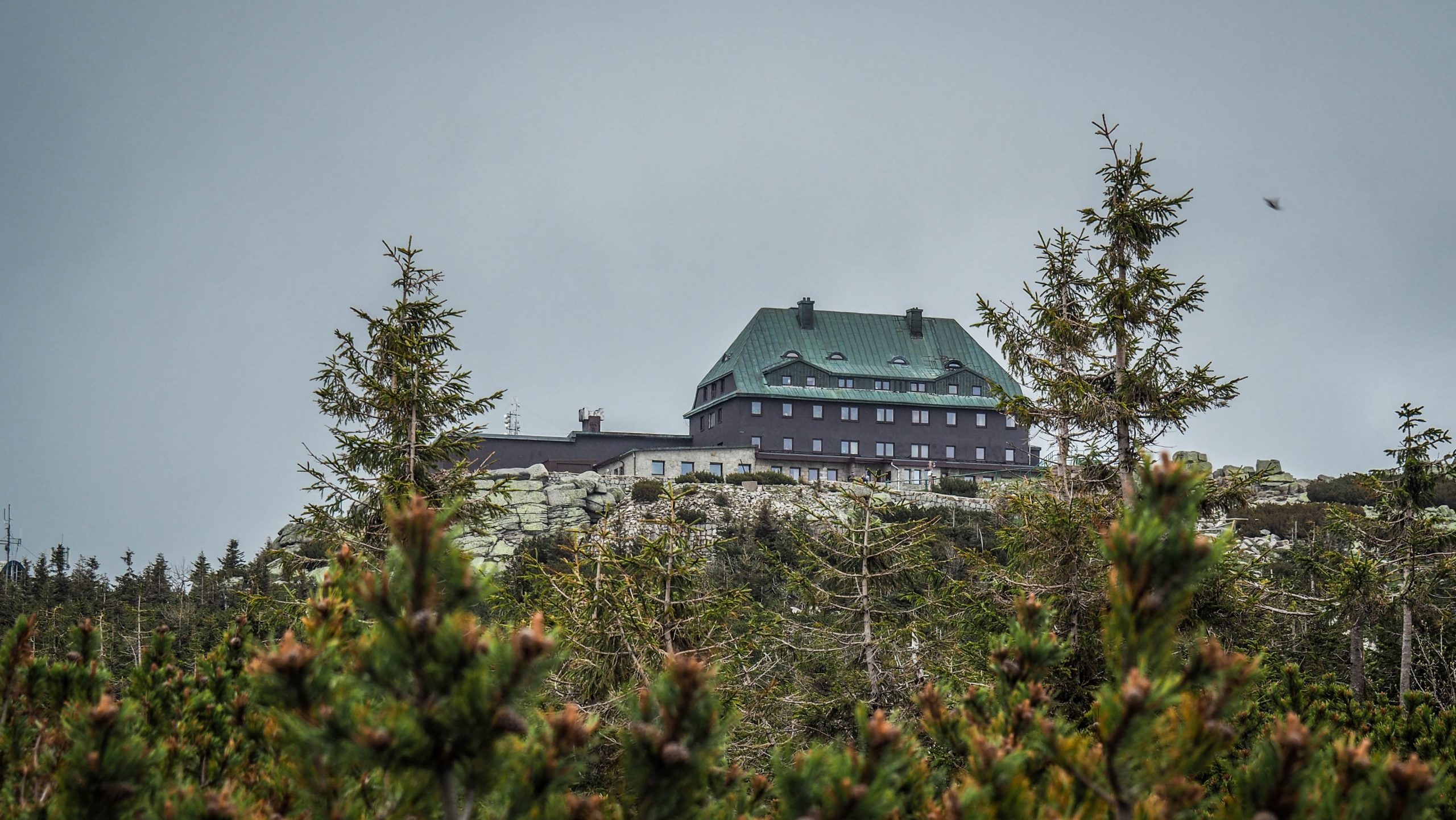
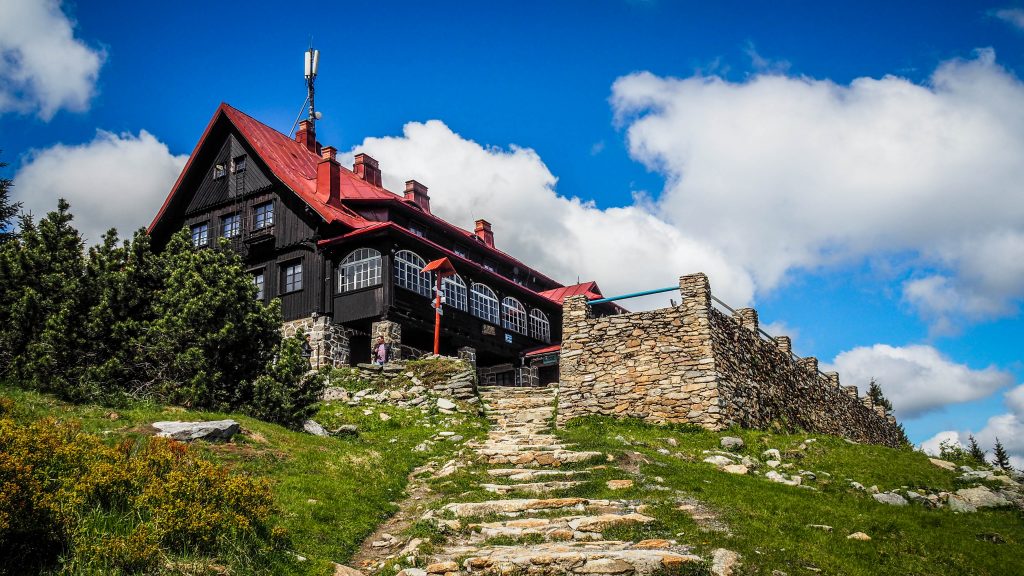
The hut visible close by is on the top of Szrenica (1361 m a.s.l.) and it’s possible and recommended to do a short detour there. Afterwards, it was decision time. The red track was closed and we saw a group of tourists discussing options so I happily join the conversation. The outcome was very Polish – let’s fuck the rules and go anyway.
PTTK Hut “Na Hali Szrenickiej”
PTTK Hut “Na Hali Szrenickiej”
Szrenica Hut
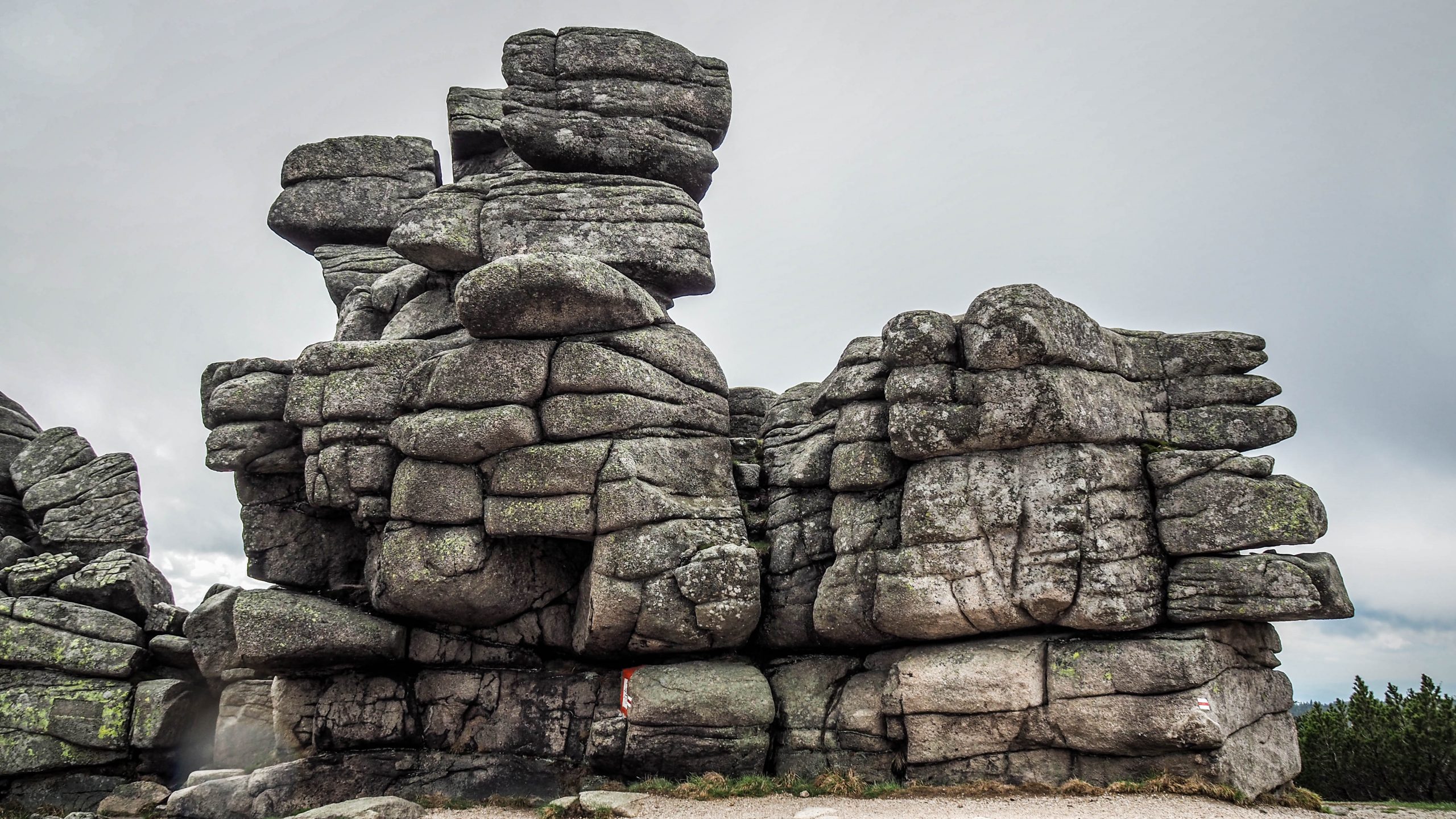
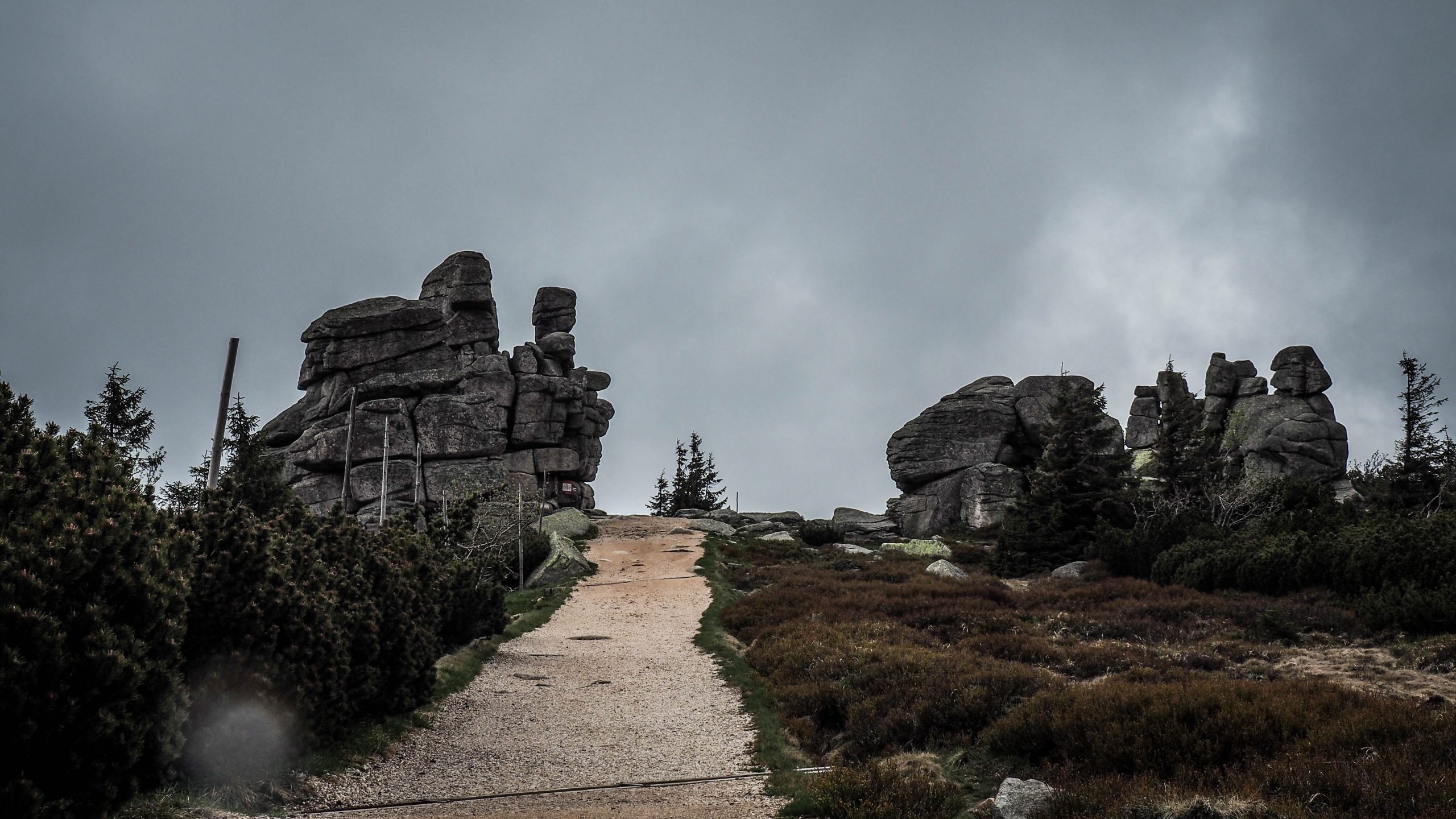
Maybe I didn’t get the sense of humour of those enthusiastic folks because when we left slightly behind taking pics of the rock formation The Three Pigs (Trzy Świnki), the group didn’t go to the red track at all but instead followed the green one towards PTTK Hut “Pod Łabskim Szczytem”. So did we, as being the only outlaws in the area didn’t sound right. From there we planned to continue along the green track to meet a blue one that should link us back on the red just after Śnieżne Kotły.
The Three Pigs
The Three Pigs
Guess what? After PTTK Hut “Pod Łabskim Szczytem” the green track was closed as well and the available alternative was a big detour through the forest, far from all the cool sights. That time our dark side won and we decided to bend the rules and simply follow the closed green track called “Ścieżka nad Reglami”. Just to be clear – we are not proud of it and absolutely do not encourage anyone to do the same. However, having lots of kilometres to go, we weren’t convinced that we will make it to the next overnight stopover before the night. It’s a poor excuse and only shows that we were underprepared but yeah, that’s a story.
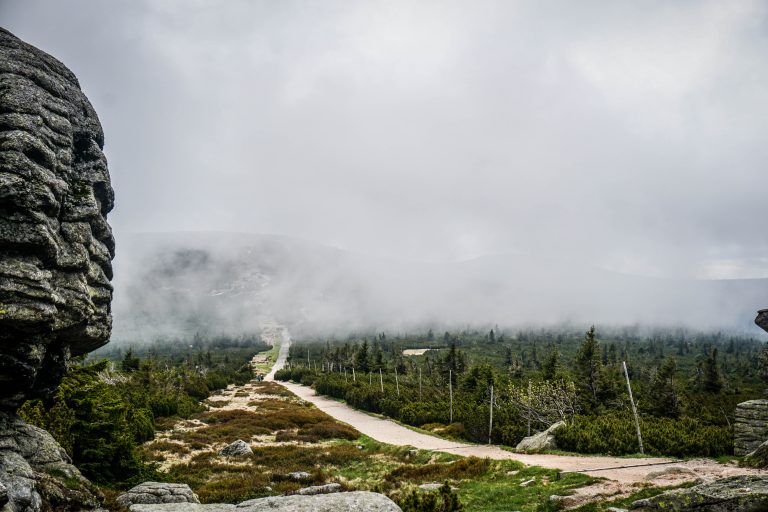
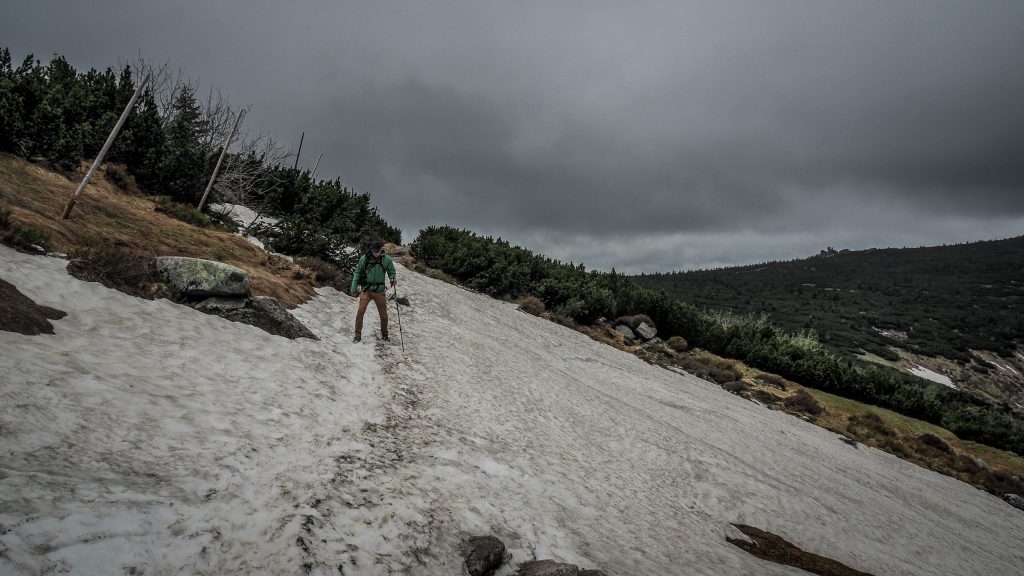
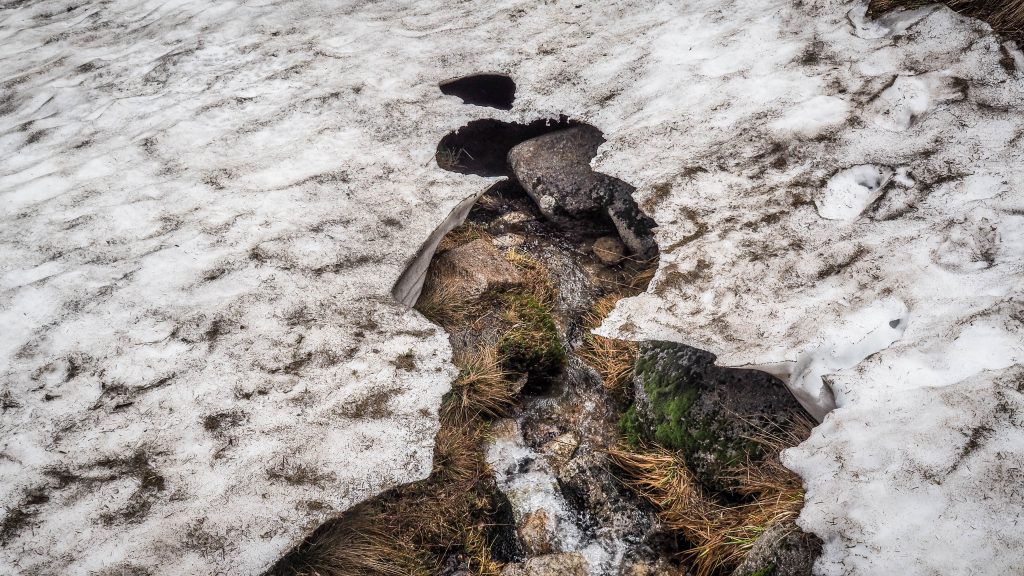
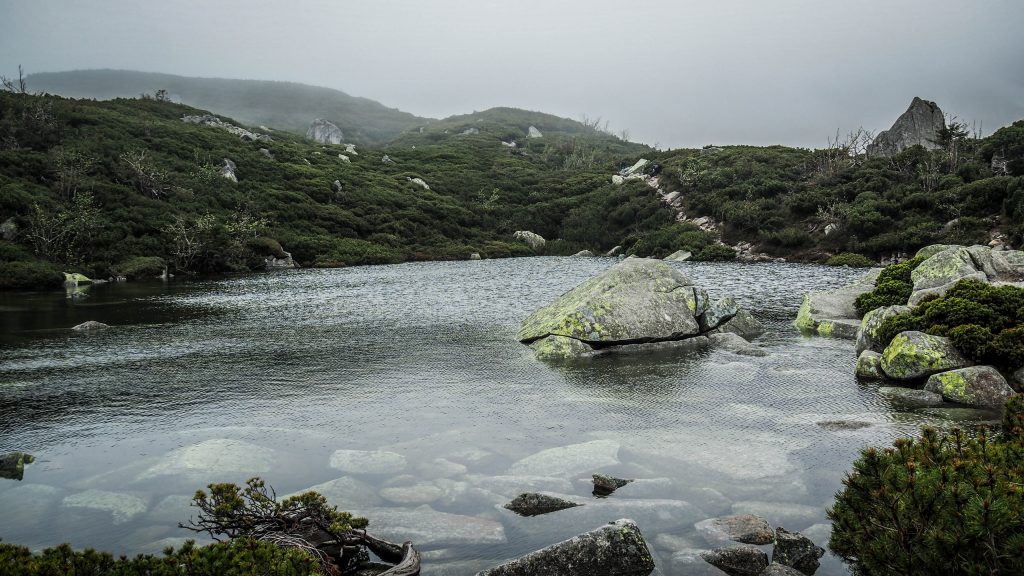
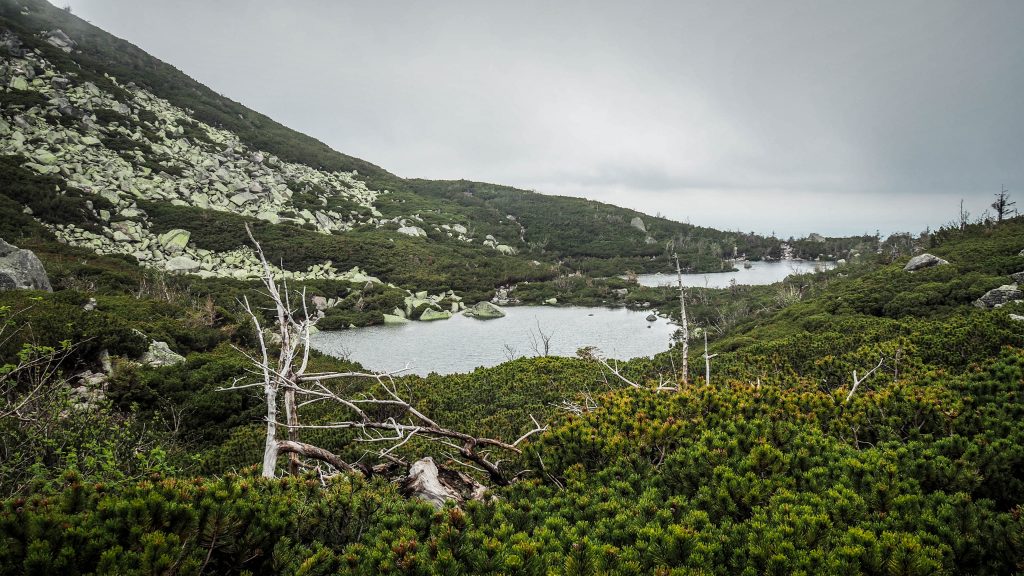
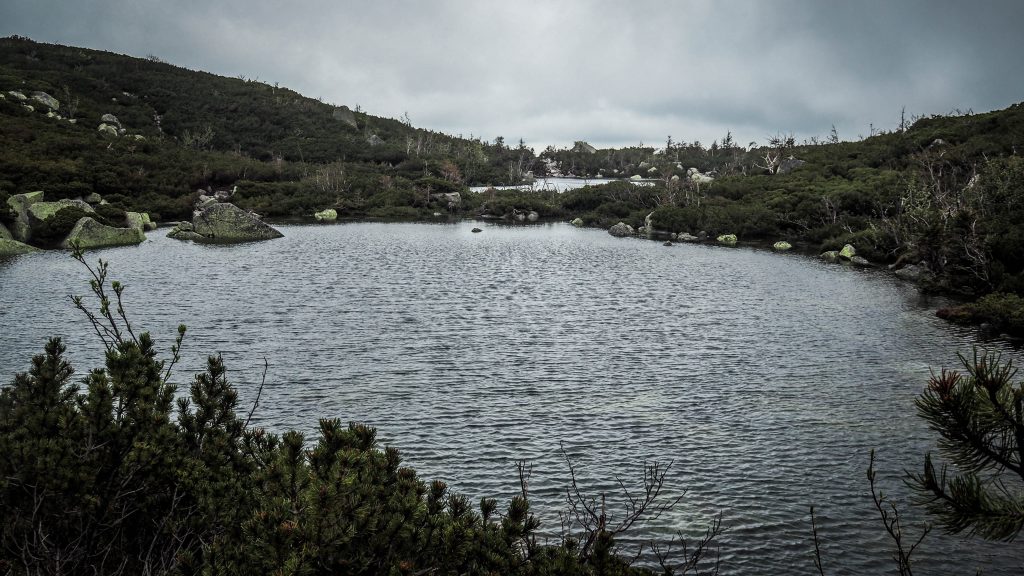
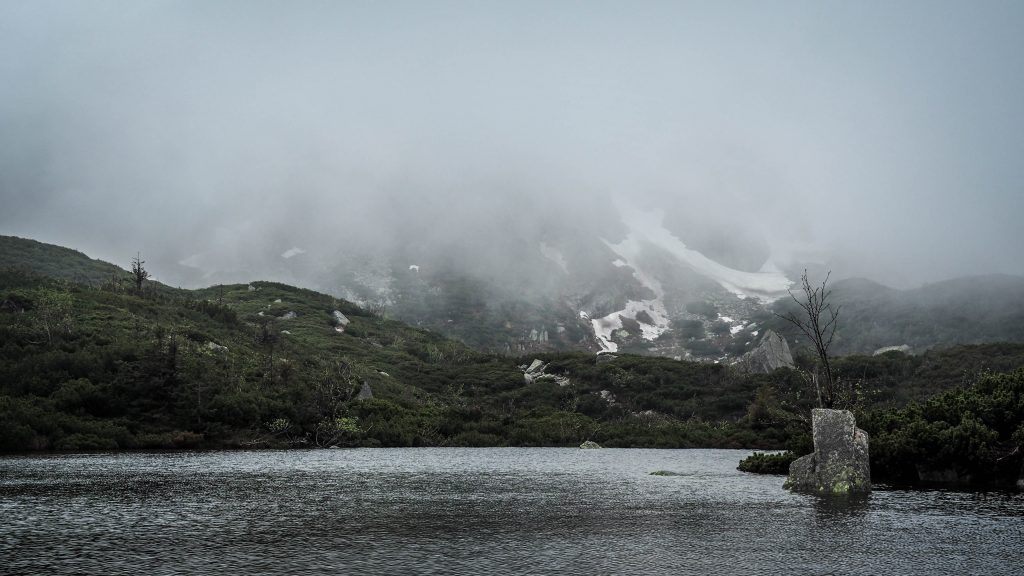
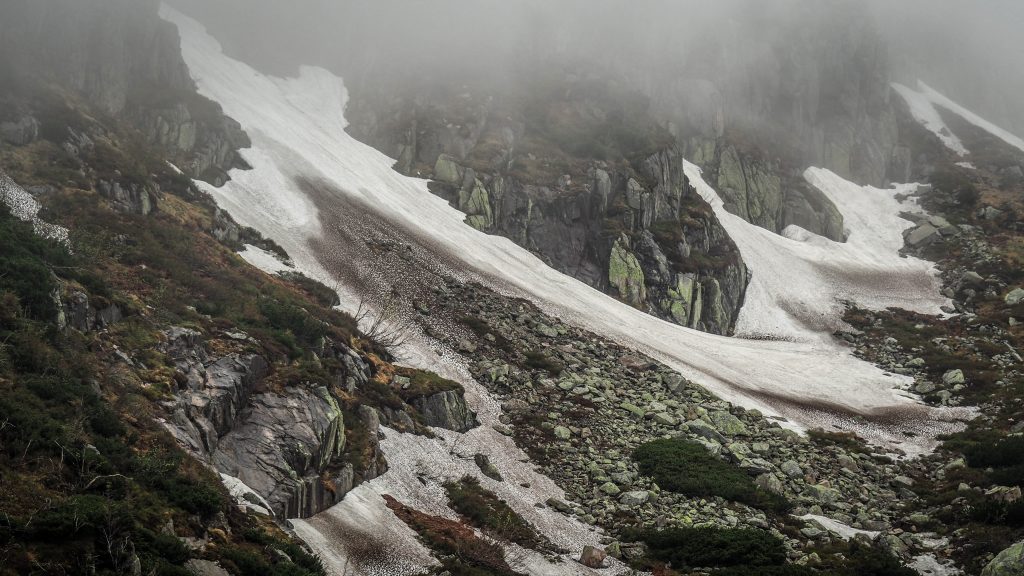
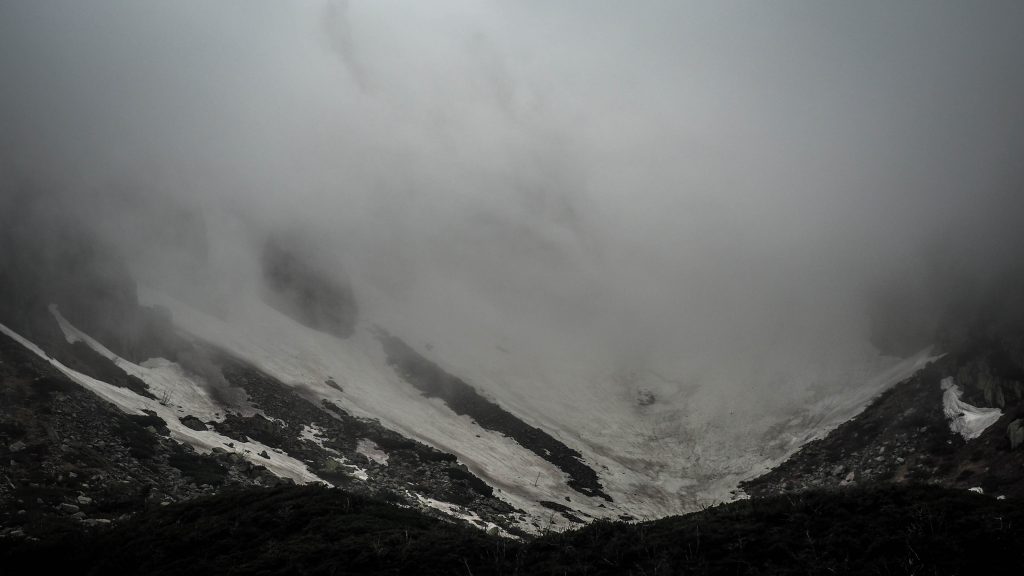
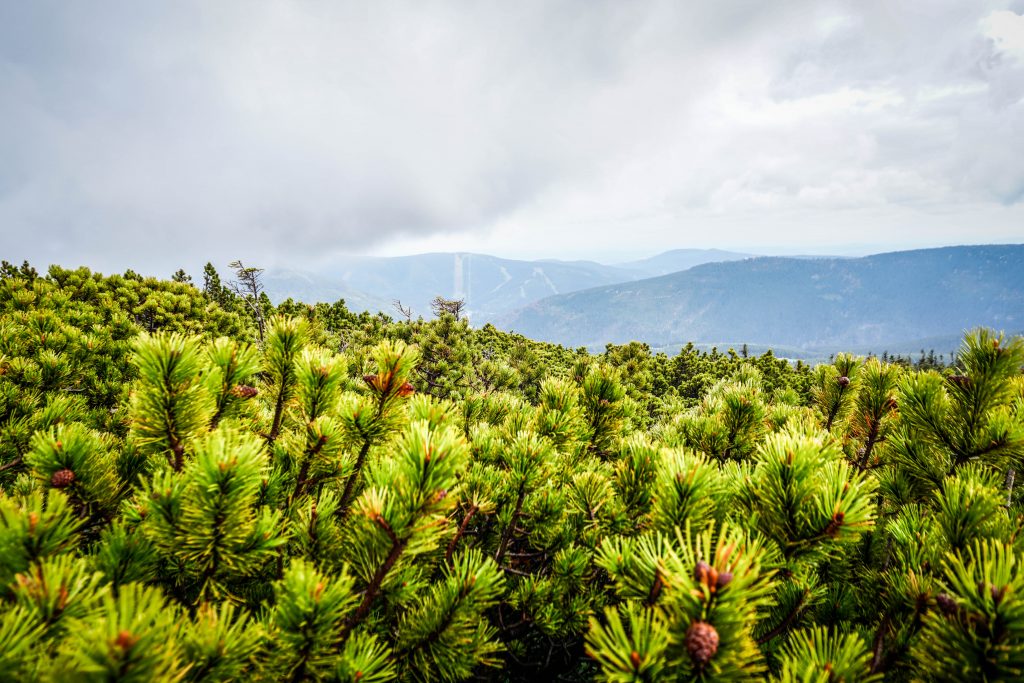
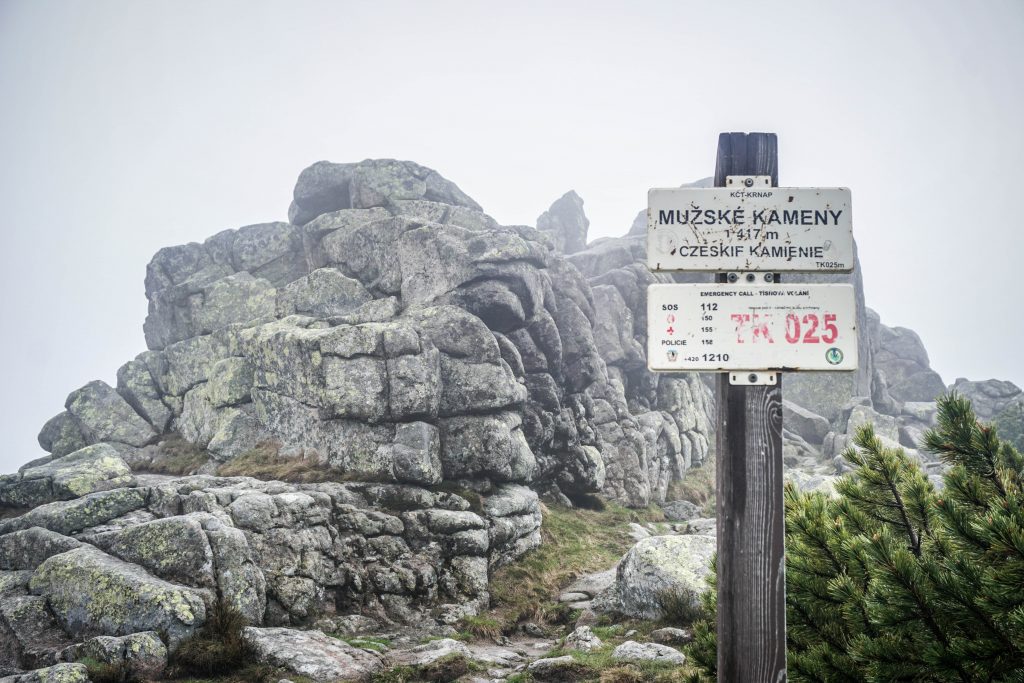
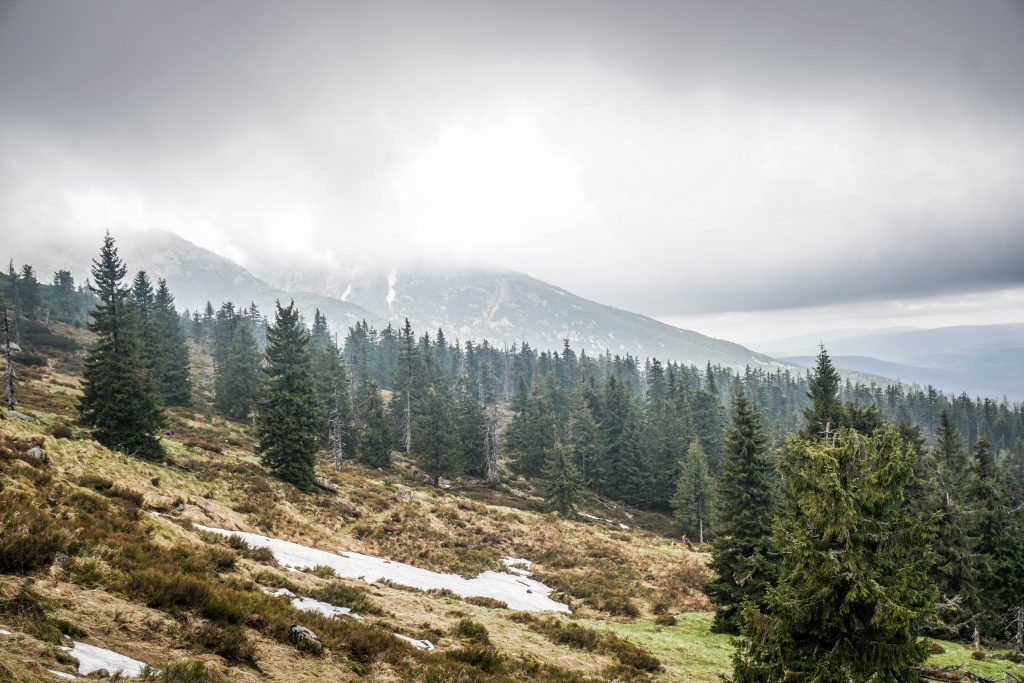
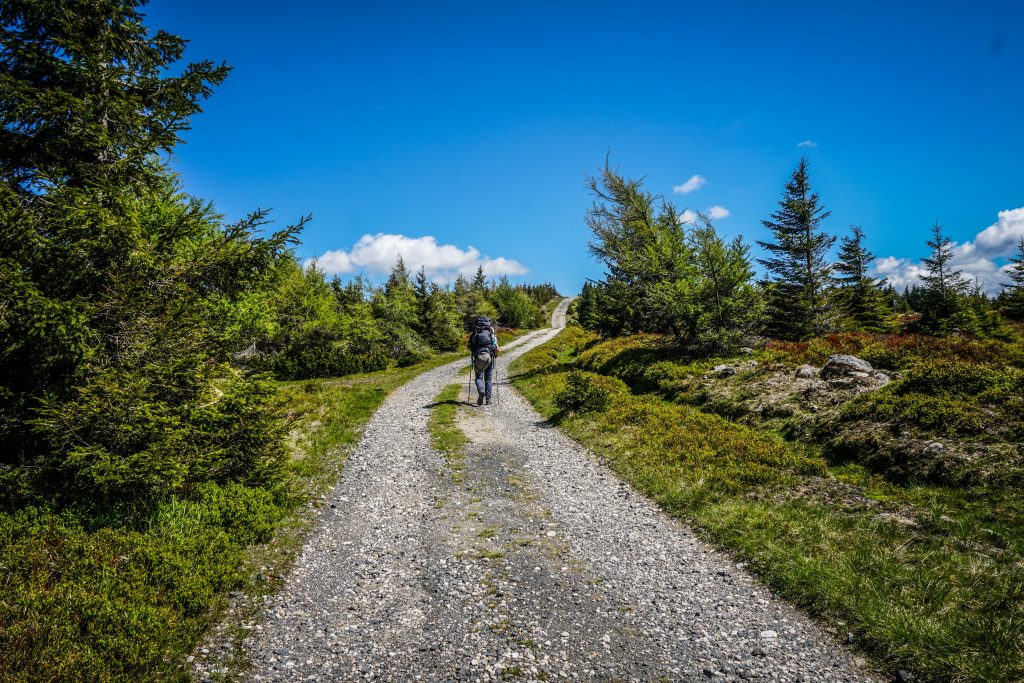
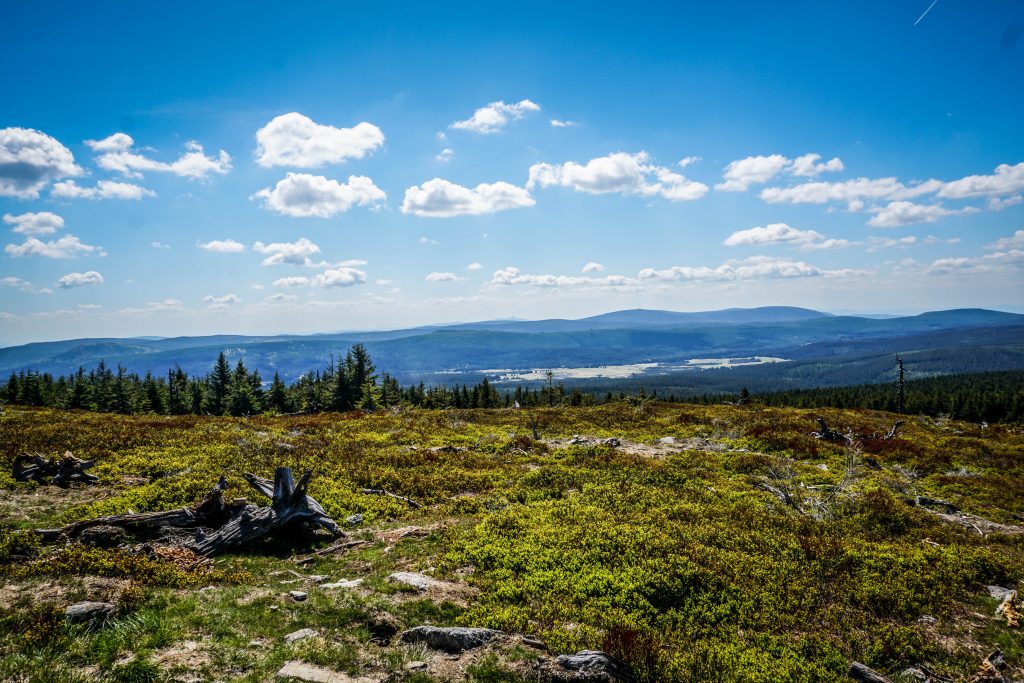
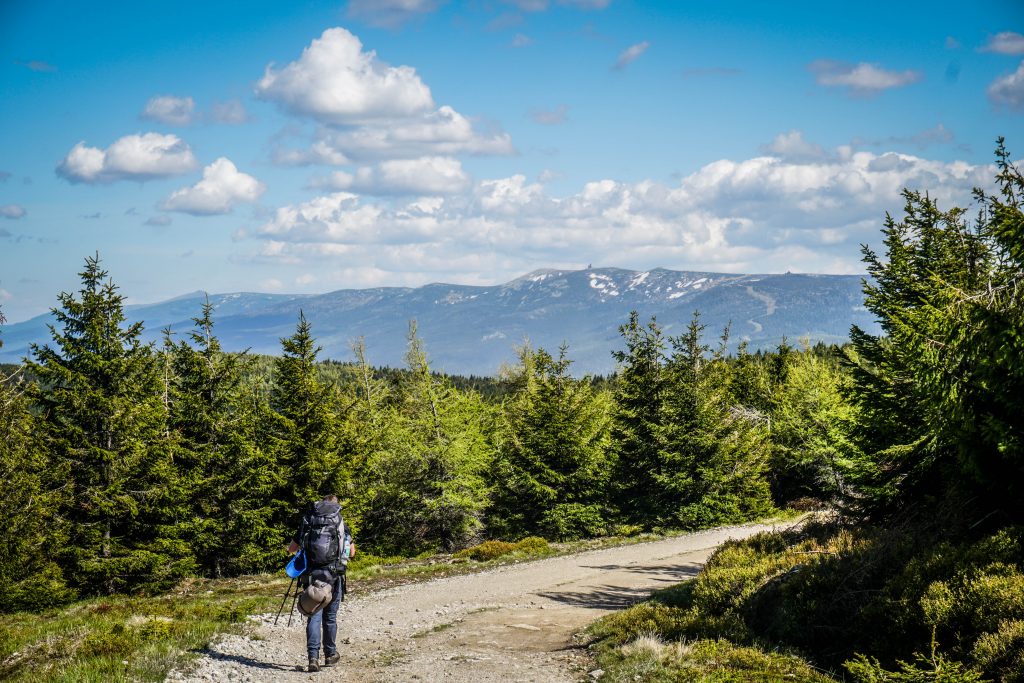
The path was forbidden but incredibly interesting. Fog, snow and passing clouds only added to the atmosphere. No words can describe the fun we had there so just have a look at these pics:
Not too bad, isn’t it?
There were wide panoramic views all the way towards Snowy Ponds “Śnieżne Stawki” where the track got a bit rough. The level of the water in ponds was so high that track partially got completely flooded and we had to scramble on the wet and slippery rocks and tree roots. Honestly, that looked like a decent reason for the track being closed for the average hikers (so the group we belong to). Turning around wasn’t preferred solution so we pushed forward very slowly but successfully, somehow even keeping feet dry.
Finally, we met blue track and went up to Śmielec Pass (Przełęcz pod Śmielcem). Back on the red track again. Continuing in the dense fog was fine but at the same time, we felt lucky that we chose the green track instead. With lower altitude, it was still possible to see the landscape, which most likely wouldn’t be the case up there. Plus we avoided the risk of getting spotted by the border guards (even though we went on the closed track anyway).
After Black Pass (Czarna Przełęcz) energy level dropped significantly but we still had ~ 6 km to Odrodzenie Hut. It was a long 6 km. I went a bit faster downhill, passing Petrova Bouda on the Czech side and Taito stayed behind. Then I took off my backpack and was waiting for him but time was flying and the dude was clearly not there. Probably something had happened. I started to go back only to see him wandering around like stupid around the abandoned Petrova Bouda thinking that it’s our hut and trying to get inside. Well, just desperate hikers 🙂
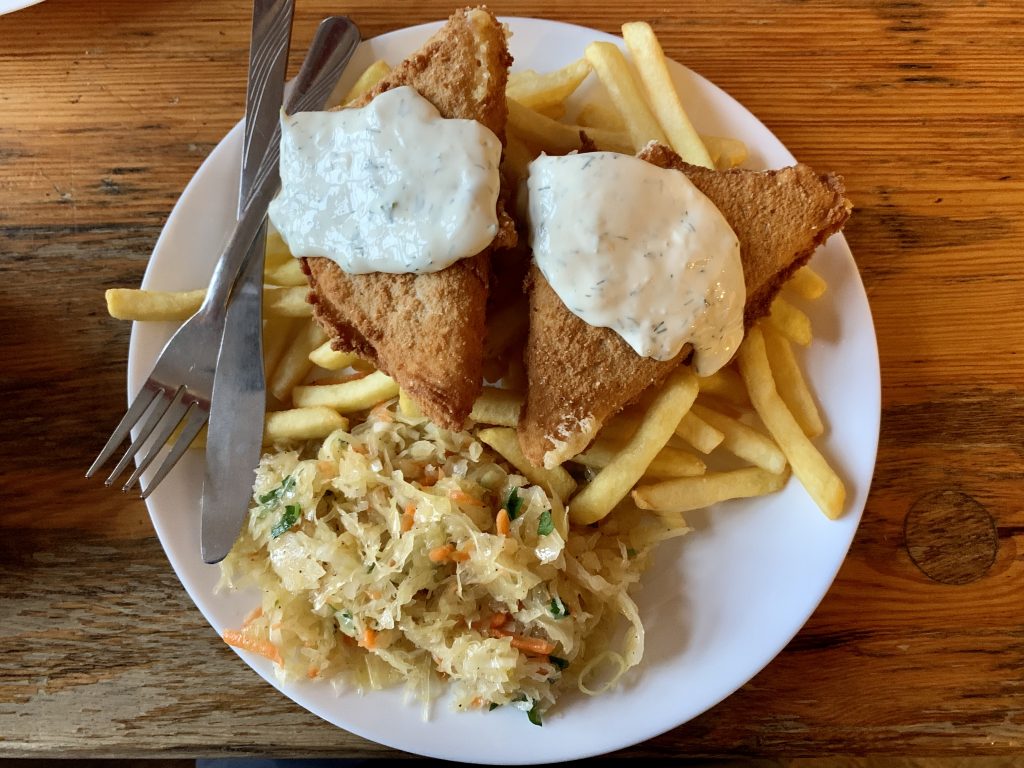
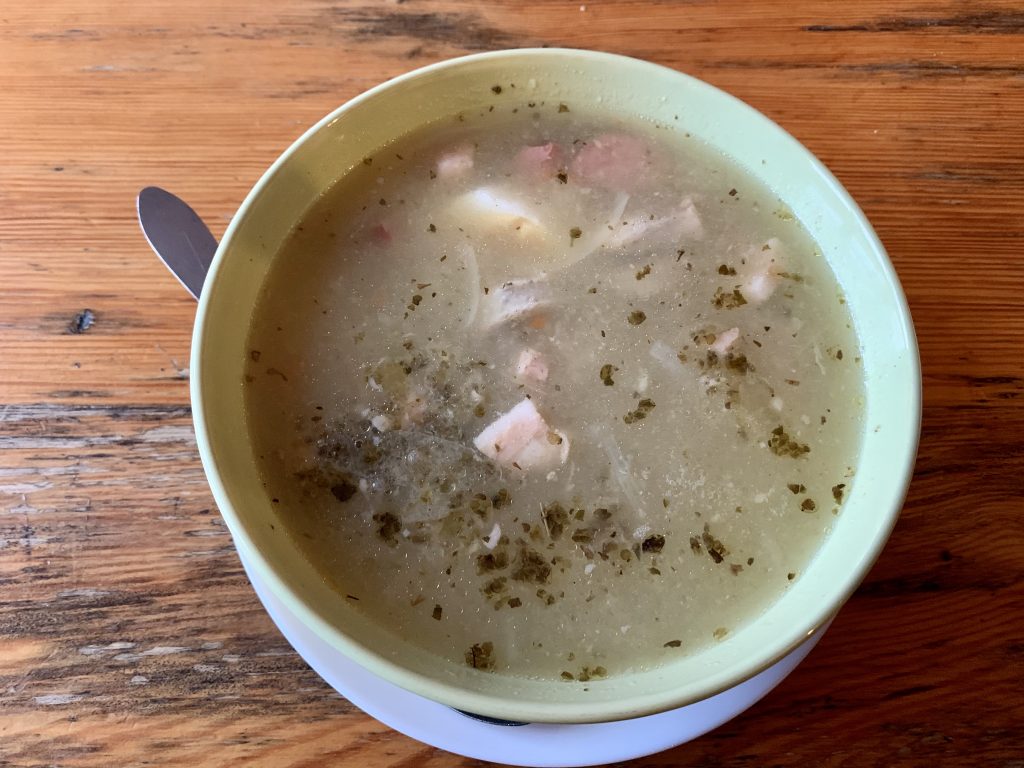
Finally, after another 30-40 minutes, we reached Karkonoska Pass (Przełęcz Karkonoska) at 1198 m a.s.l. from where we ascended final meters thinking very intensively about żurek that we wanted to order for the dinner. We were super lucky to arrive literally 15 minutes before kitchen and as żurek didn’t seem to be enough, fried cheese with fries landed on the table as well.
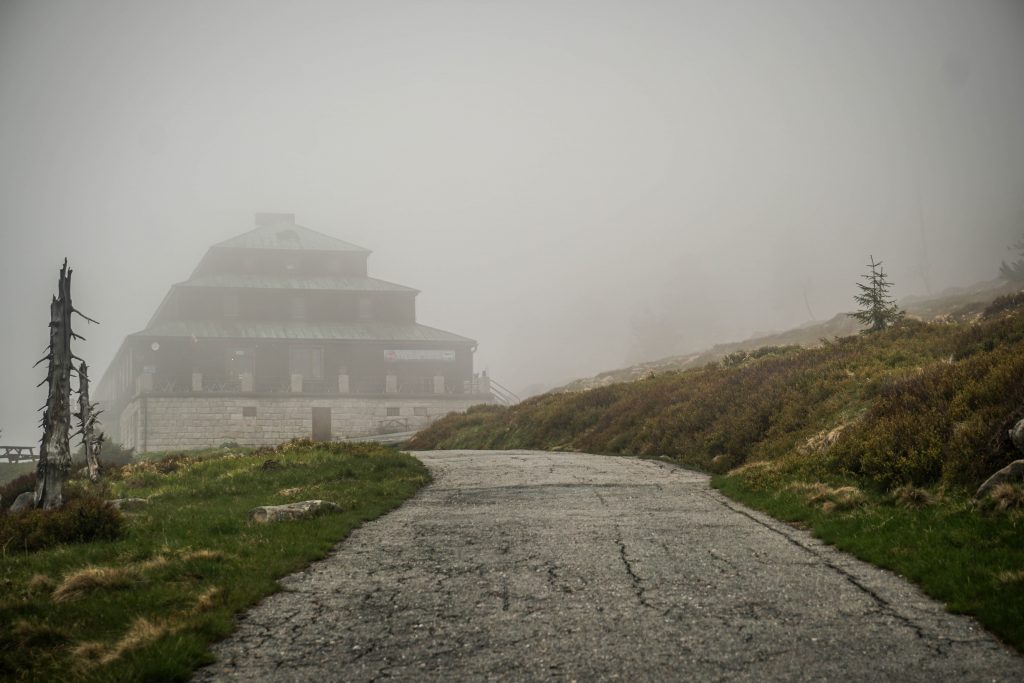
The Odrodzenie Hut was built in 1928 and it sits 1236 m a.s.l. Believe me or not, it was my first overnight stay in a mountain hut in Poland. What a positive surprise! The food was great, rooms very cosy and hot shower after the day like that was a treasure.
PS: After foggy afternoon, next morning greeted us just like that:
Please remember that the distance covered in that stage is only the description of my preferred itinerary. If that sounds too much for you, consider staying overnight in another place. Never underestimate the mountains.
The day has come! The clock showed 10 AM when I was parking the car at the guarded yard at the Wyszyńskiego and Sienkiewicza streets crossing. The price for leaving a car for 3 weeks was very decent (200 PLN) and probably could have been negotiated even more but somehow due to all this hassle with COVID-19 and lack of tourists, it didn’t seem right to discuss it further.
Route: Świeradów Zdrój to Szklarska Poręba Distance: ~ 26 km
The backpack seemed to be heavy, but at that time I didn’t know that after a few kilometres it would seem much too heavy. Maybe because I was just in a good mood, chatting with my hiking mate Taito and not thinking enough about the things that I don’t need and can be left in a trunk.
Taito wasn’t joining me for the full hike, just for a week or so. However, his backpack was pretty heavy too so I guess we both made mistakes that we would need to pay for during the next couple of days.
Świeradów Zdrój looks like a typical Polish spa. There are several holiday houses hosting patients on a few weeks stays as well as private tourists coming independently to try treatments, taste mineral waters and relax on mountain tracks. Getting a drink isn’t a bad idea. Maybe it will boost your energy level on the first uphill stage ?
The red track starts just a short walk down the Wyszyńskiego street. Yes, red would be the desired colour for the next several days. Painted on the trees, stones, branches or simply direction boards. Every glimpse of it would bring me a wide smile and satisfaction.
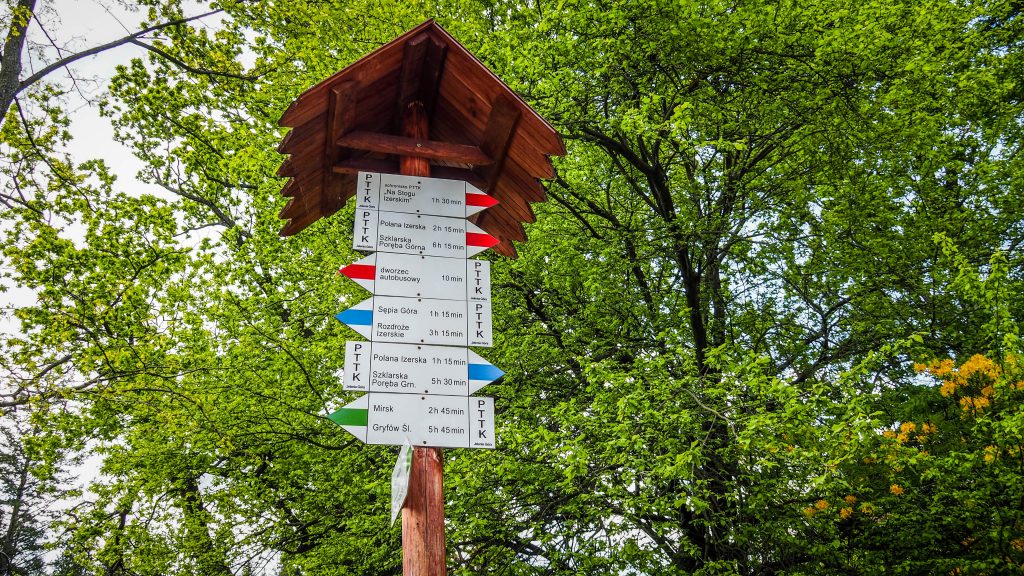
Our final destination for today was Szklarska Poręba ~ 6 – 6.5 hours away. The nearest point of interest was much closer though: PTTK Hut “Na Stogu Izerskim”. Less than 5 km walk (1 hour 30 min away) but all the way is uphill giving a decent warm-up at the start of the adventure.
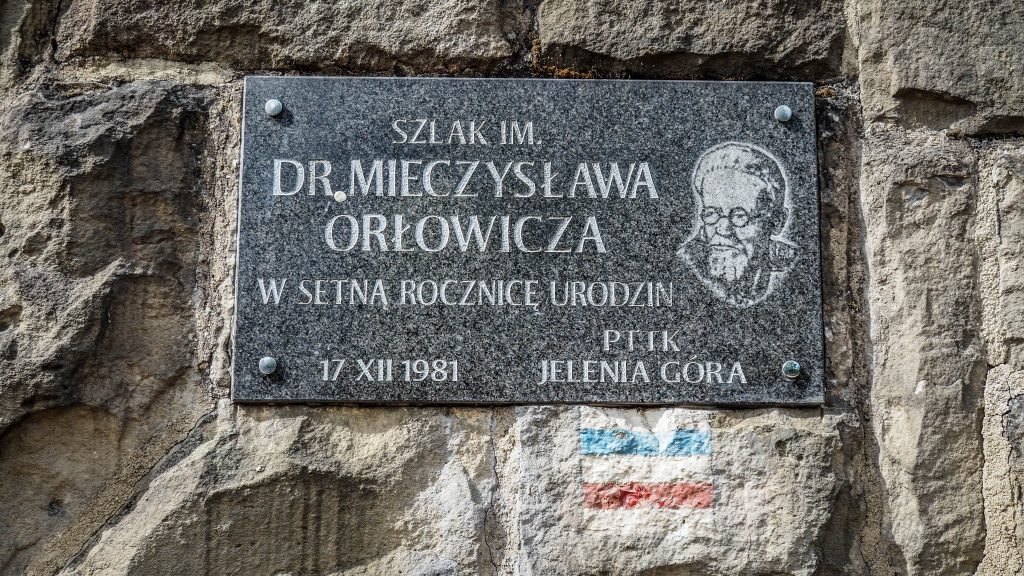
In recognition of his merits for tourism and sightseeing, Mieczysław Orłowicz is the patron of the track
The first fragment of the track isn’t particularly interesting as we were gaining elevation following an asphalt road. After approximately 4 kilometres, the path turns left and the final steep push towards PTTK Hut “Na Stogu Izerskim” begins. From time to time I had to stop and caught my breath. Luckily, the way up was worth the effort and surrounding views kept my camera busy.
Finally, we reached upper gondola’s station and PTTK Hut “Na Stogu Izerskim” (1060 m a.s.l.) was just around the corner. Hassle (and sweat) free accessibility makes that area very popular, at some times even crowded. Anyway, it was coffee time!
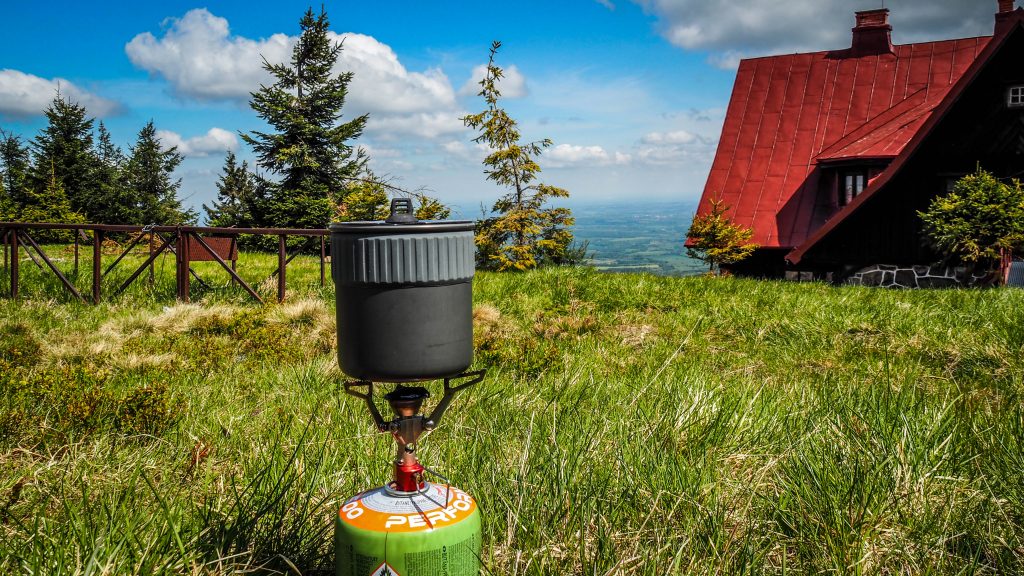
There is something magical about preparing and drinking coffee in places like that one. Even the worst mud tastes like heaven.
The building was constructed in 1924 and at first, it was a private residence of doctor Josef Siebelt. After World War II, it was refurbished into mountain shelter for tourists and it remains one until today.
From the hut, the track becomes much flatter and continues ~ 5 km towards Polana Izerska and then ~ 3 km to Wet Pass (Mokra Przełęcz). From there, climbing for ~ 2.5 km first to Crossroads under Kopa (Rozdroże pod Kopą) and then to Sine Skałki (1122 m a.s.l.). Afterwards, the track descents ~ 5 km towards Zwalisko, passing by Quartz Mine which is worth to have a quick look. Zwalisko is not less interesting either. First of all, here your covered distance should already be around 20 km. Secondly, there is the legend connected with one of the rock formations – Evening Castle (Wieczorny Zamek).
Once in a year, in the midsummer night, the rocks take the shape of the castle and magic door let the brave people inside. And it’s worth it as the castle is filled with treasure. Everyone going inside is allowed to take as much gold as he or she is able to carry out. On one of these nights, the woman with a child noticed the opened door and went inside. She took so many treasures that at first didn’t even notice her young kid staying behind. Finally, the door closed, trapping him inside. The woman was devastated and kept coming to the place every other night hoping for the door to appear again. After the year, she saw the door and rushed inside hopelessly looking for a body of her kid. How surprised she was seeing the kid all fine playing with a golden apple. She quickly grabbed his hand and left the place leaving the treasures behind.
Does it sound like a good life lesson about greediness? I bet it does.
From Zwalisko it is ~ 3 km to the High Stone Hut (Schronisko Wysoki Kamień) which provides magnificent views over Karkonosze Mountains and is a popular spot for couples coming from Szklarska Poręba to see the sunset.
The last stage of that day was ~ 3.5 km steep descent towards the city. We spent the night in Skalny Pensjonat which I can fully recommend. It was a fair compromise between quality and price, though getting there was quite off the red track and made me cover extra kilometres.
The first day of the hike was challenging and we both could feel that bodies need time to adjust to all-day effort and carrying quite some weight. Around halfway, my feet were surprisingly good but shoulders were literally killing me. Every short stop to take a backpack off for some minutes was like long-awaited pleasure. On the other hand, it was exactly as I expected and I knew that every next day will be physically easier.
Please remember that the distance covered in that stage is only the description of my preferred itinerary. If that sounds too much for you, consider staying overnight in another place. Never underestimate the mountains.
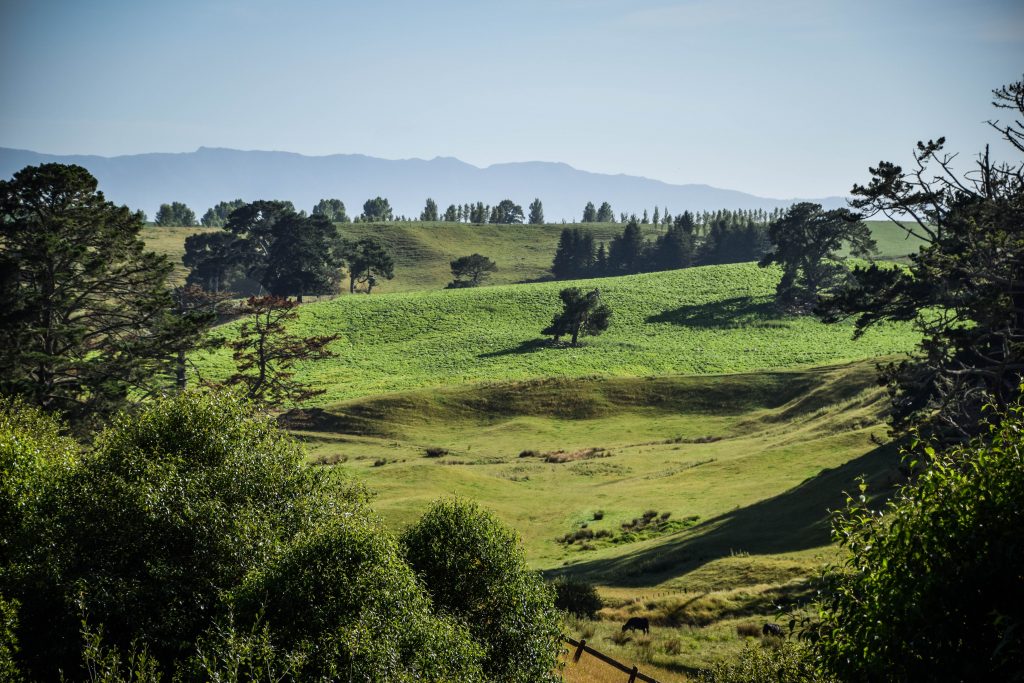
The story began when Sir Peter Jackson and his crew were searching for a possible location of The Shire that meets detailed descriptions from J.R.R. Tolkien books. They took a helicopter to fly above the green hilly landscape of New Zealand’s North Island to find exactly what they were looking for.
Apparently, Mr Alexander who was the owner of the farm informed the crew that there is a rugby game going on and they should come back later. Needless to say, they came back and made a deal.
At first, the movie set was not built with the intention to act as a tourist attraction after filming is over. Temporary materials were used and the whole thing was dismantled after The Lord of The Rings trilogy was made. But the growing popularity of both books and movies made first tourists flocking to see the place. For the filming of The Hobbit, permanent materials were used and everything was left at it’s place. Today approximately 17 per cent of international visitors come here, bringing about 78m NZD to the Matamata-Piako district annually.
I’m not an ultimate fan of The Lord of the Rings or The Hobbit but after watching movies and reading books it was really cool the see the place with my own eyes.
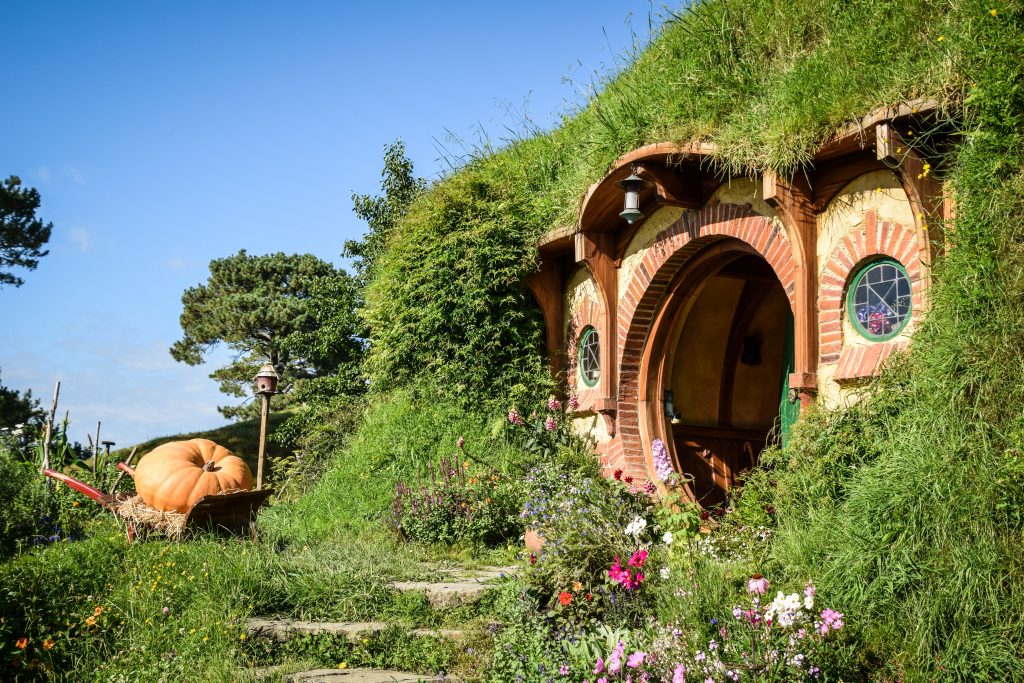
In a hole in the ground, there lived a hobbit. Not a nasty, dirty, wet hole, filled with the ends of worms and an oozy smell, nor yet a dry, bare, sandy hole with nothing in it to sit down on or to eat: it was a hobbit-hole, and that means comfort.
J.R.R. Tolkien, The Hobbit, or There and Back Again
Hobbiton Movie Set
Bookings and prices
Entrance to Hobbiton Movie Set is with guided tours only, which last about 2 hours.
The place is popular. No, wait. Extremely popular! It’s one of a few places in New Zealand where you can be sure to meet organized tours flowing out of huge buses and running towards the entrance armed with cameras in their hands like there is no tomorrow. Therefore, it’s not surprising that a big part of the tickets goes to them.
To avoid disappointment or losing precious time waiting, I strongly recommend booking the tickets online. Once doing that, opt for one of the first or last tours available. Organized tours usually come a bit later after breakfast and depart earlier to reach their next destination in time for dinner.
The tours cost 89 NZD for Adult and 44 NZD for Kids (9-16 years old).
If 2 hours guided tour is not enough, you may want to join 4 hours long Evening Banquet Tour. You will witness the atmosphere of the place dusk and get the chance to feast like a hobbit, though it comes with a much higher price: 199 NZD for Adults, 162 NZD for Kids (9-16 years old) and 104 NZD for Young Children (5-8 years old). Book ahead.
How to get there?
Hobbiton Movie Set is usually visited by tourists approaching from Auckland, Coromandel Pennisula, Hamilton or Rotorua. Wherever you are driving from, it’s easily accessible and you should have no problems finding it. Just don’t forget to keep left 🙂
If you have self-contained vehicle, there is a nice and cheap parking at Firth Tower Museum in Matamata.
If you don’t have your own vehicle, there are tours departing from several bigger cities, such as Auckland, Rotorua, Matamata and others.
Let’s play the hobbit!
I was heading from Coromandel Pennisula full of great memories from the coast and expecting further positive feelings after a visit to Hobbiton Movie Set. The landscape changes and I could feel the spirit of the countryside when getting closer to Matamata and parking my van for the night in picturesque parking next to Firth Tower Museum.
Luckily, a few days before I came across the information that it’s worth buying the tickets to Hobbiton Movie Set online. I’m an early bird so secured the first free timeslot available at 8:30 am. When I stepped outside at 7:30 am, the fresh air made me awake instantly. To avoid being late for the tour, I quickly made my bed and departed full of positive vibes. It was just a 20 minutes drive to reach The Shire’s Rest so I had plenty of time to eat my breakfast and enjoy morning sun which was slowly warming me up.
Our group boarded the green coach bus, tickets were scanned and journey to the Shire began. Our guide Lola introduced herself as well as the driver and then we watched a short welcoming video with Peter Jackson himself.
The whole organization of the tour was top-notch. The route, scenery, hobbit holes, gardens. Not to forget our extremely knowledgable guide sharing all the interesting facts about the movie set. I had the feeling that she treats the job like her dream and that positive vibes helped everyone to dive into the atmosphere of the place.
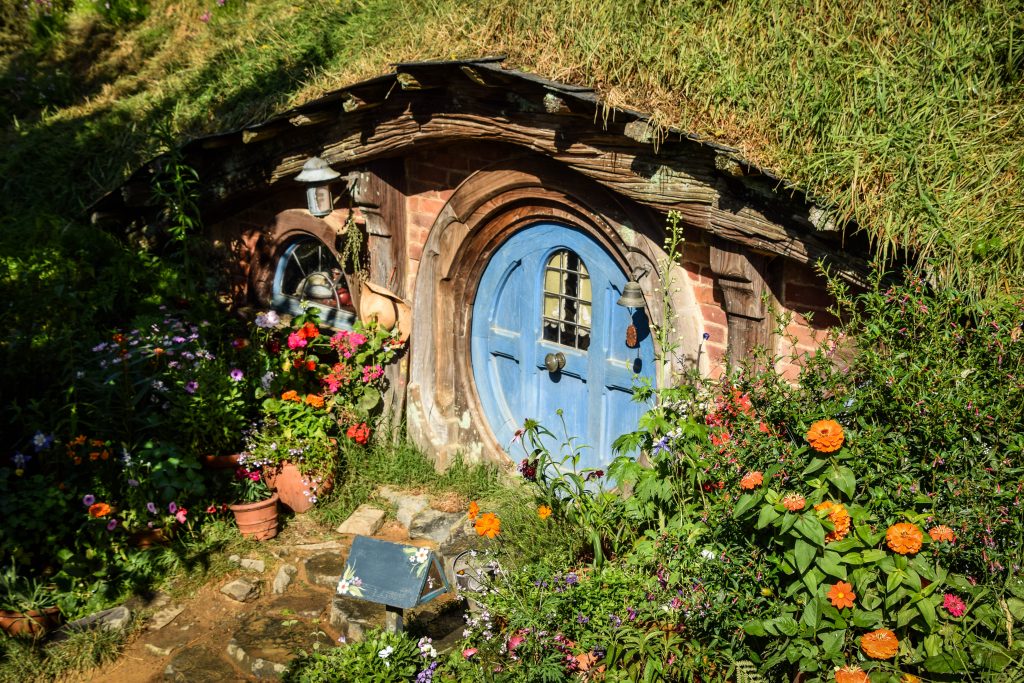
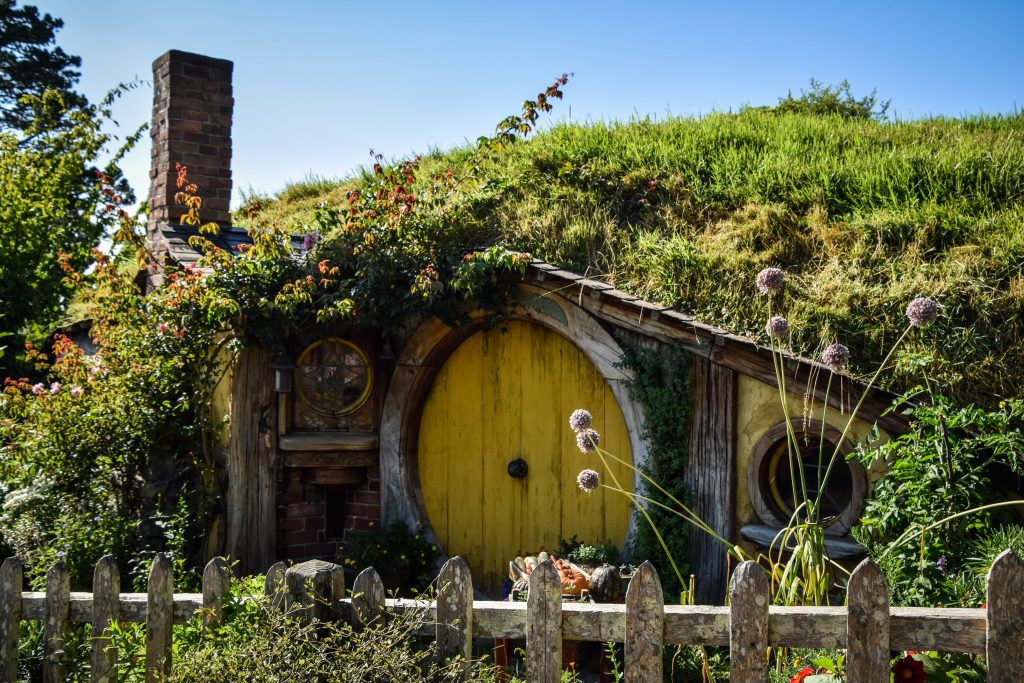
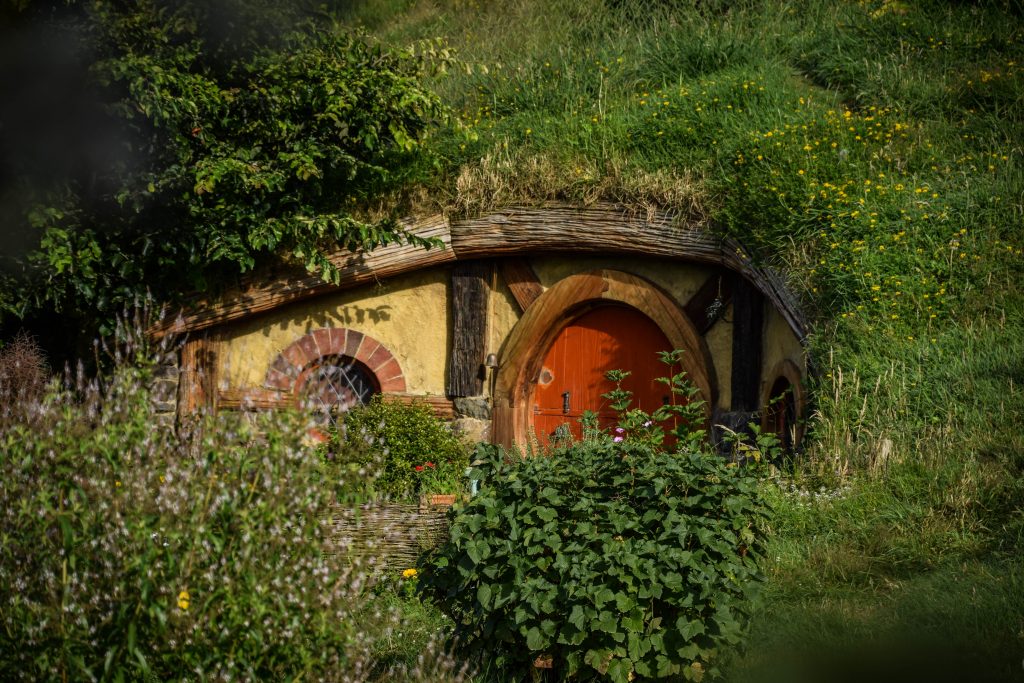
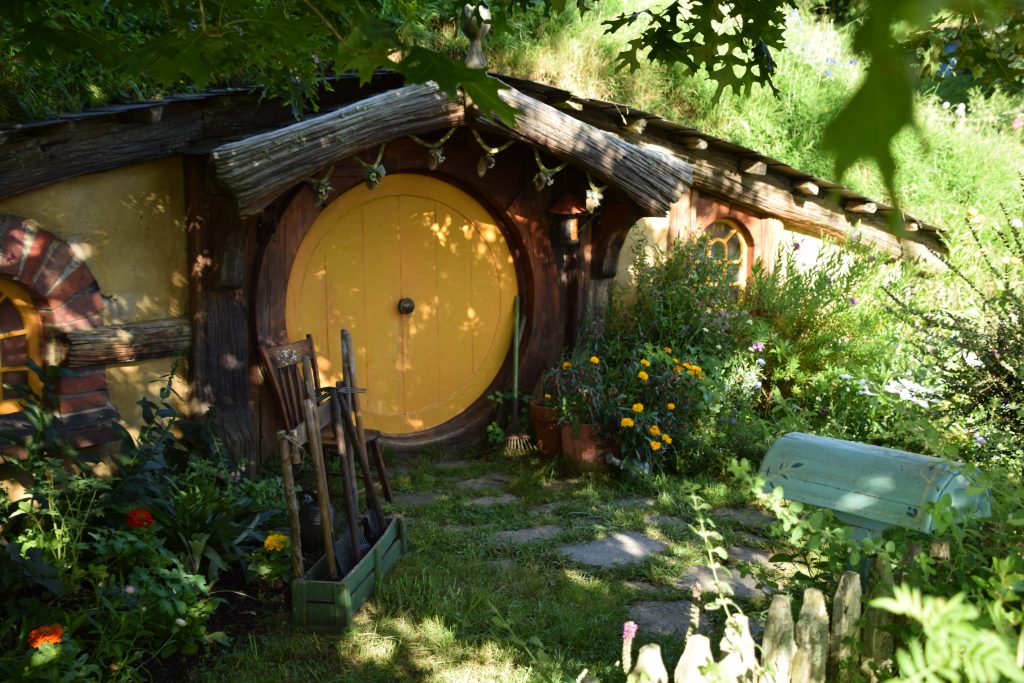
It was a pity that most of the hobbit holes are the facades and only one of them is open to go inside and take pictures when standing in the round entrance, which obviously most tourists do. It creates a bit of a traffic jam but on the other hand, gives a chance to take some more shots of the area or chat with the guide.
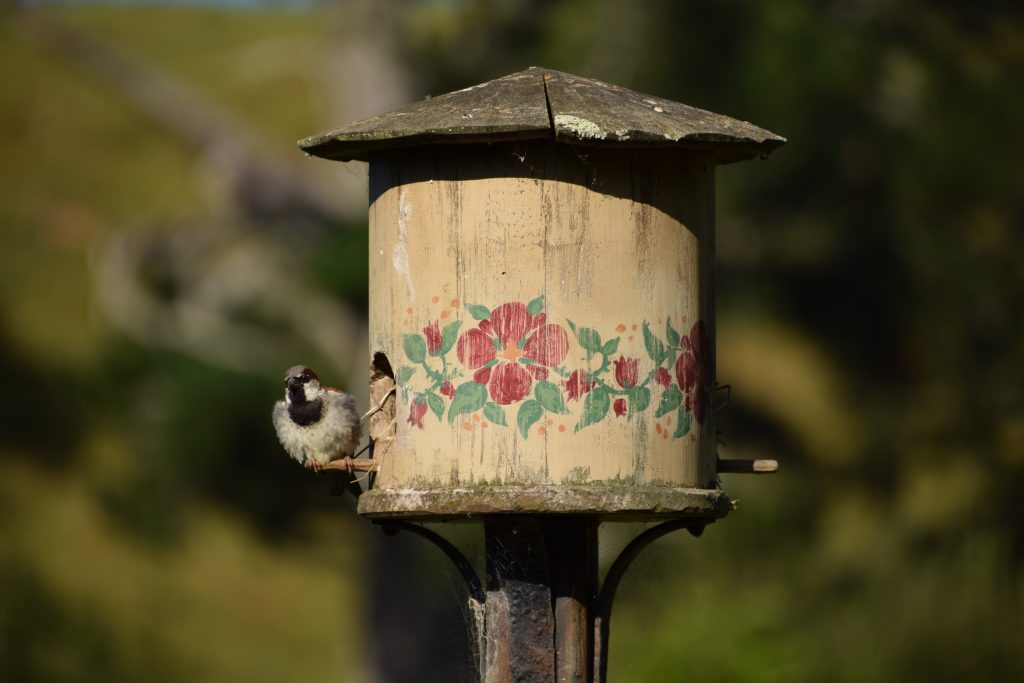
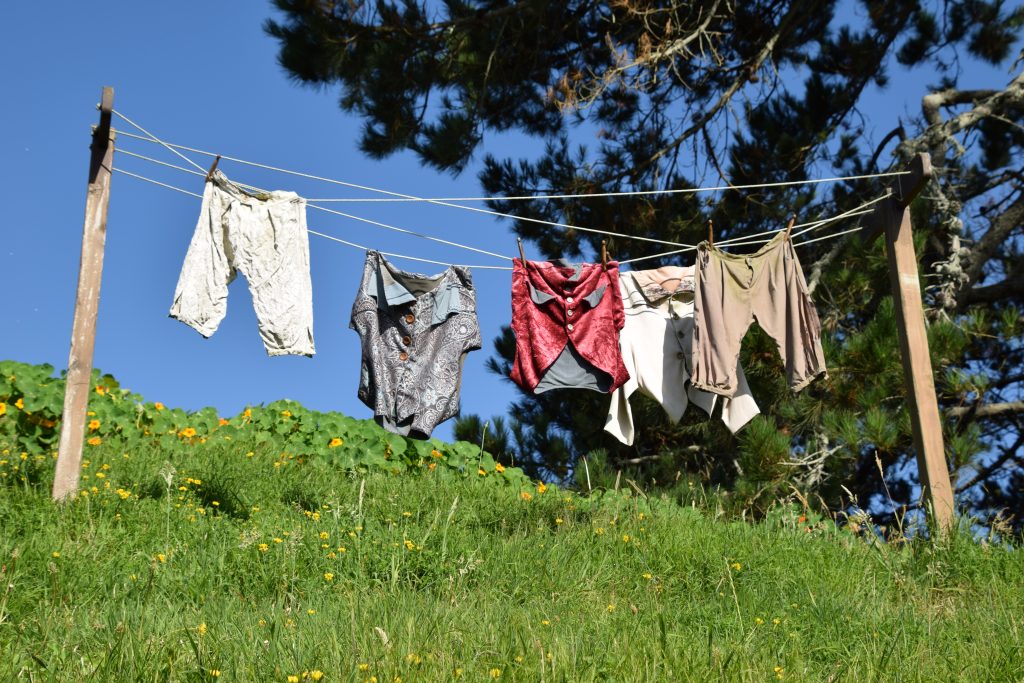
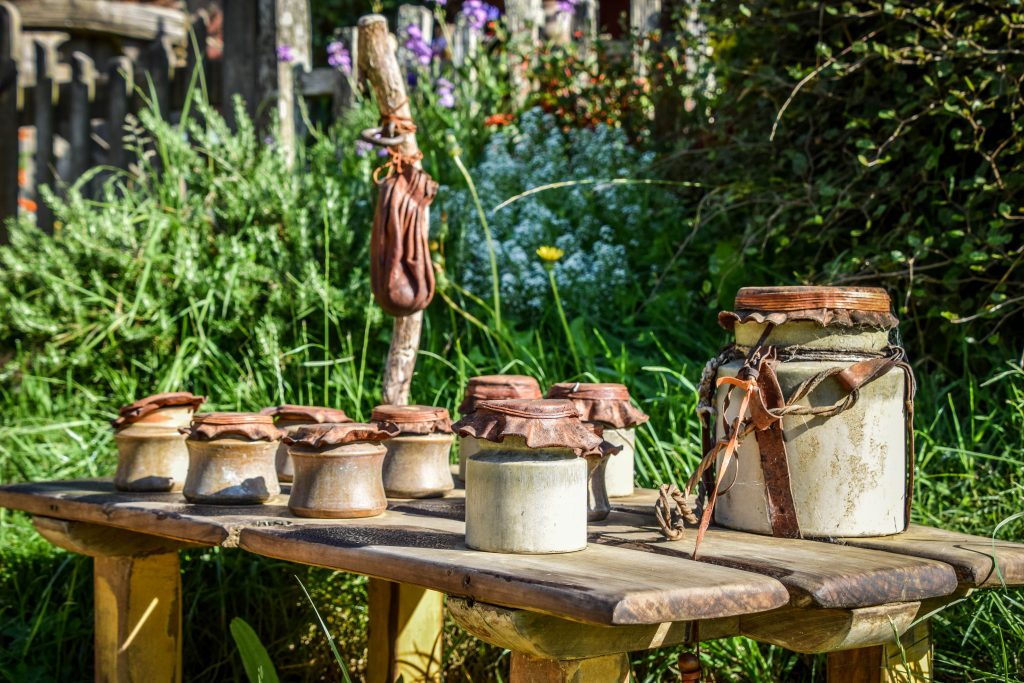
Pay attention to all the details around hobbit holes as well as the gardens as they are simply impressive. Small Hobbit’s clothes hanging on the strings, jars with honey, scarecrows and many more.
The last stop of the tour was the visit to the Green Dragon Inn. Southfarthing beverages such as apple cider, ginger beer and two ales are available and one drink is included in the entrance ticket. It was really nice to cool down and think again about what I just saw and experienced.
To sum up, the visit to Hobbiton Movie Set was definitely worth doing and if I come back to New Zealand one day, I could easily imagine doing it again. It was a beautiful sunny day in a wonderful Middle Earth location 🙂
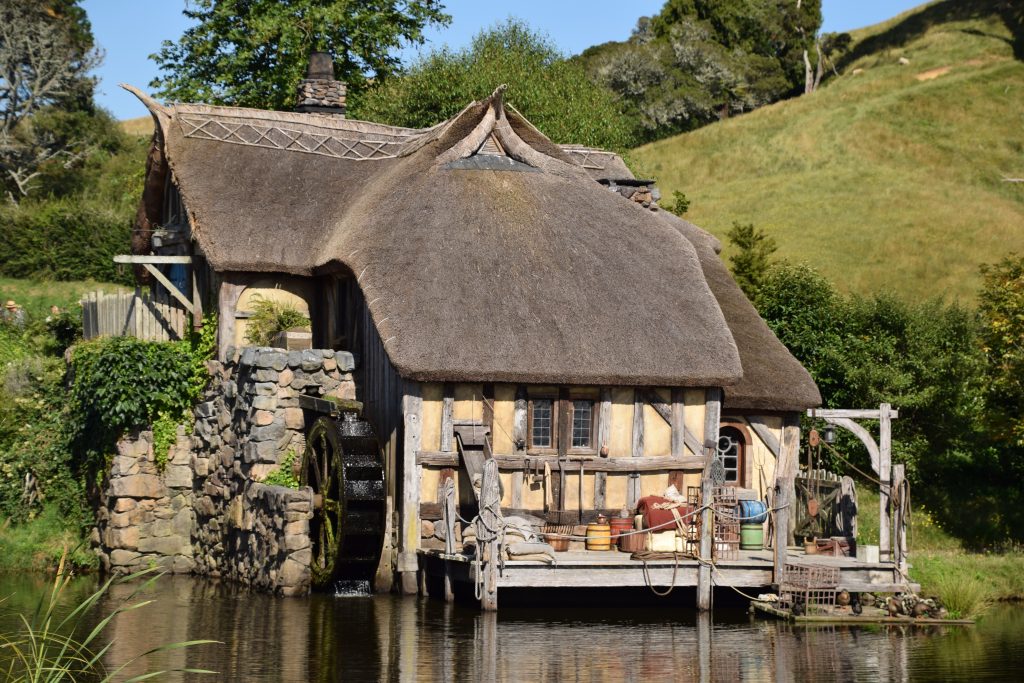
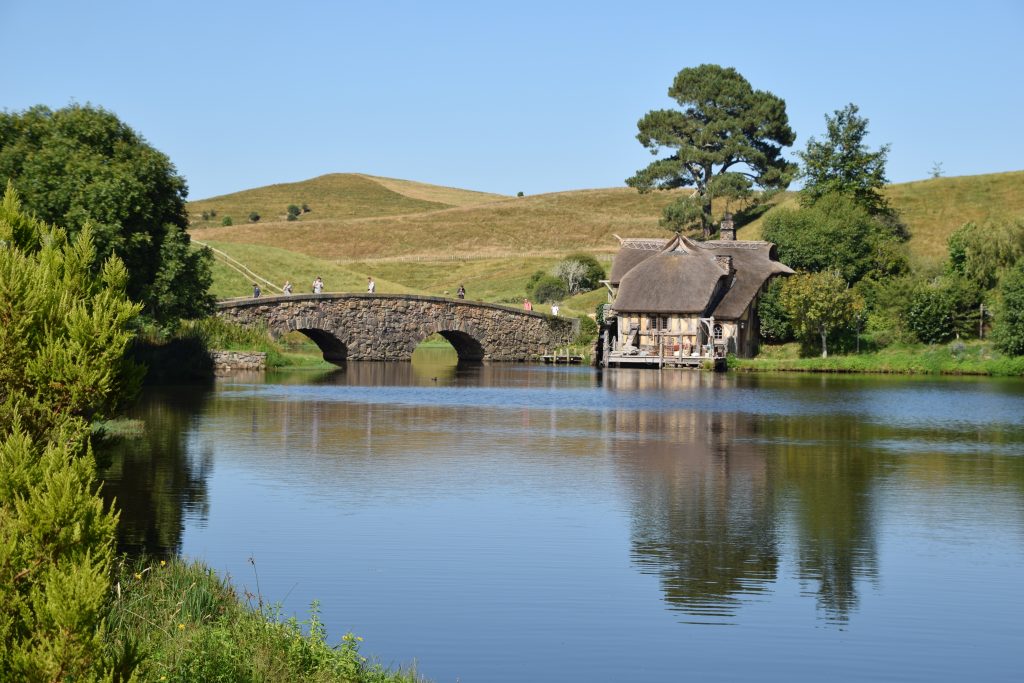
The Mill
What could be improved?
Sometimes the pace was too fast and I had to make the choice of either listening to the guide or focusing on taking pictures as another group was already not far behind. If you listen to the guide, you need to stay somewhere at the front of the group but then it’s getting difficult to take a shot without people on it.
The free time at the Green Dragon Inn could be extended beyond 20 minutes that tourists usually have there to rest and enjoy the drink. It’s a really nice area just by the water so I could easily imagine chilling here a bit longer or at least be given a choice.
Last but not least, I would add a decent visit to the interior of a hobbit hole with the opportunity to take pictures.
In the second half of the day I made my way to Royal Botanic Gardens in Hamilton but that’s the story for another post.
Interesting facts about Hobbiton Movie Set
1. It’s located on a working farm
The movie set covers the are of 4.8 hectares and is located on an actual 500-hectare working sheep farm belonging to the Alexander family. Russel Alexander is the general manager of Hobbiton Movie Set Tours with Peter Jackson owning about half of it.
2. Built and re-built
The Shire was dismantled after filming The Lord of the Rings finished and was re-build, this time for good, to make The Hobbit movies.
3. Is it a place for real fans only?
Not at all. Almost 40% of the visitors haven’t seen the movies and they say it was an awesome tour anyway.
4. People were paid for walking
It sounds like a good job description, doesn’t it? To make the tracks look more authentic and worn out, staff members were hired to walk on top of the houses and around washing lines. I could imagine myself doing that!
5. Fake houses and trees
There is only one hobbit hole with open doors and visitor groups usually queue to take a picture there. Every tourist gets that very same shot and there is absolutely nothing unique about it. Check hashtag #hobbiton on Instagram and you will know what I’m talking about. What about other houses? Most of them are just facades as the interior scenes were filmed in the studio in Wellington.
Other fakes relate to trees. The oak “growing” above Bag End looks real but in fact, is made from fiberglass and has silk leaves. In Tolkien’s book, there is a description of kids playing under the plum trees. You won’t find ones in Hobbiton though. For filming purposes, those were replaced by apple and pear trees which are smaller. Real fruits and leaves were stripped and replaced with fake plums. In the end, probably it didn’t look too good as the scene was cut out from the movie.
6. Scale and right perspective
The hobbit holes were built to different scales, depending on the high of the actor being filmed. Shots with a tall guy such as Gandalf were made at 60 percent scale and the ones with hobbits at 90 percent.
7. Perfect gardens
The plants, flowers, grass – everything looks fresh and very organized thanks to several gardeners working here full time and making sure it catches an eye.
8. Frogs didn’t want to comply
The population of the frogs in this area was huge and they clearly wanted to mark their territory by being loud. The direction Peter Jackson had to take decisive steps. Frogs were removed from the filming location and reintroduced after the job was done.
9. Discrimination of white sheep
Even though there were plenty of local sheep on the farm (over 13.500 to be precise), Peter Jackson didn’t decide to use any of them because of their white faces. Black-faced sheep were brought to the place and appeared in the movie.
10. Sunset which happened to be a sunrise
Do you remember a scene with Bilbo and Gandalf sitting facing a sunset? Another fake as the location faces east 🙂 Therefore, the crew was filming at the sunrise instead and edited in post-production. In the first cinema version, you could have seen birds flying backwards. Later on, it was fine-tuned!
11. Drink to look authentic
Filming of Bilbo’s birthday party was desired to look so authentic that actors were allowed to drink as much as they wanted. Unfortunately, they didn’t know that Peter Jackson supplied a beer containing only 1 percent of alcohol. It’s called Sobering Thought and can be purchased onsite.
12. Treat yourself too
Southfarthing beverages are available at the Green Dragon Inn. Those are an apple cider, ginger beer and two ales. One glass is included in your entrance ticket so don’t forget to make use of it!
Mt Taranaki or Mt Egmont, is a volcano in the center of one of the most popular wilderness areas in New Zealand – Egmont National Park. Standing 2.518m above the sea level gives it a status of the second-highest volcano in the country, just after Mt Ruapehu (2.797m).
Taranaki is a Maori name consisting of two parts: tara means “mountain peak”, and naki (coming from ngaki) means “shining”. The shiny mountain peak clearly relates to the snow covering its upper sloper all year long.
The second name was given by James Cook on 11 January 1770. Yes, this guy is really all over New Zealand and this time the name was given in the honor of John Perceval, 2nd Earl of Egmont, who was one of the supporters of search expeditions for the new continent – Terra Australis Incognita.
Track details
The way to the summit is challenging 12.6 km hike (there and back) with 1.6 km of vertical climb. However, it doesn’t discourage adventure seekers.
Distance: 12.6 km return
Time: 7-10 hr
Best time to go & safety
The best chance for good weather and higher temperatures is from December to April. In other months, the mountain will most likely be covered in snow and ice. Therefore, tourists without experience and proper equipment should not try their luck there.
The last major eruption occurred around 1655, meaning there is an extremely low risk of any volcanic activity going on in the area. However, it doesn’t mean that you should underestimate the mountain. More than 80 people have died since 1891 when records began. Weather can change quickly at any time of the year and even though it’s not a very high or difficult mountain, pay attention and make smart decisions on the way.
Check weather conditions on MetService prior to your summit climb.
How to get there?
North Egmont National Park Visitor Centre is only about 30 min (29 km) drive from New Plymouth. Take a turn off at Egmont Village and continue straight until you reach the parking. When driving from the south, it takes about 2 hours (160 km) from Whanganui.
Where to stay overnight?
Climbing Taranaki Summit is a full day hike so if you stay overnight in New Plymouth, I recommend departing early in the morning.
If you have a self-contained vehicle, there is awesome parking just in front of the visitor centre. In the high season, it gets full pretty quickly so try to arrive in the early afternoon. By doing so, you will secure your place, have time for a nice dinner in the shadow of the mountain and even the chance to tackle some easy and short hikes around the area as a warm-up.
Other than that, there are couple of camping sites or lodges along the way from New Plymouth.
What I did was to stay a night prior to the hike in a self-contained vehicle just next to the visitor center and after the hike, I drove to Ariki Hostel in New Plymouth to take advantage of a hot shower. After a tough hike, it always brings me back to life 🙂 Such a plan was really optimal for me, as I had the chance to enjoy the evening and morning right at the foot of the mountain and then relax in a warm and cozy place.
Interesting facts
The legend has it…
There is a legend that connects all the volcanic summits in the central area of North Island, which adds an extra flavor to the experience. Apparently both Mount Taranaki and Mount Tongariro were in love with Mount Pihanga and the fierce fight between them started. Tongariro won and Taranaki escaped to the west coast where he was trapped by Pouakai Ranges in the place he stands now. It’s often covered in clouds, hiding the tears shed after his lost love. Therefore, be gentle and show compassion when walking on Taranaki’s slopes 🙂
Mt Taranaki covered in clouds
Filming location
Did you know that Mount Taranaki is an actor too? Due to its similarity to Mount Fuji in Japan, it played in the movie The Last Samurai. Reason? Much more space for filming crew than around actual location in the Land of the Rising Sun.
Itinierary
Day 1 – Dawson Falls and Kapuni Loop Track, North Egmont Visitor Centre
As I was approaching Egmont National Park driving along West Coast, the second-highest volcano of New Zealand’s North Island was hidden in thick clouds and I just trusted my map that it’s really there. The road was gaining altitude and after a while, I was in the clouds as well. It was still early afternoon so I took a detour to visit Dawson Falls and make a warm-up on a short Kapuni Loop Track (45-60 min round trip).
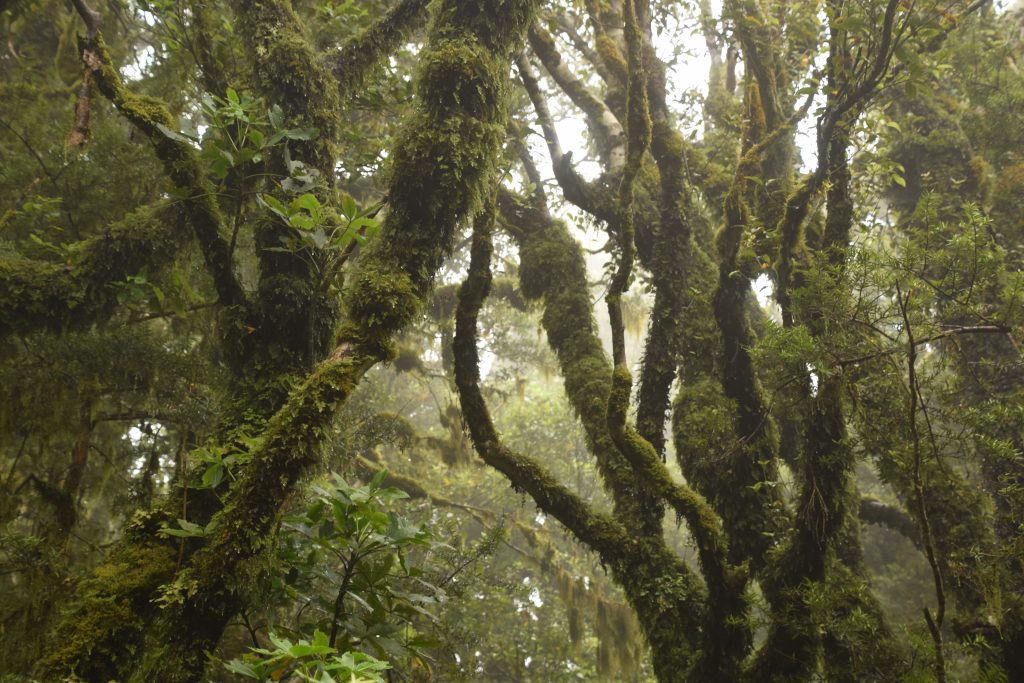
The path leads through the so-called ‘goblin forest’, which indeed looked like a separate fairy tale world, especially in misty weather conditions. I didn’t spot any actual goblins, but twisted trees that grow over the remains of the previous forest destroyed by the volcanic eruption made create the atmosphere of mystery.
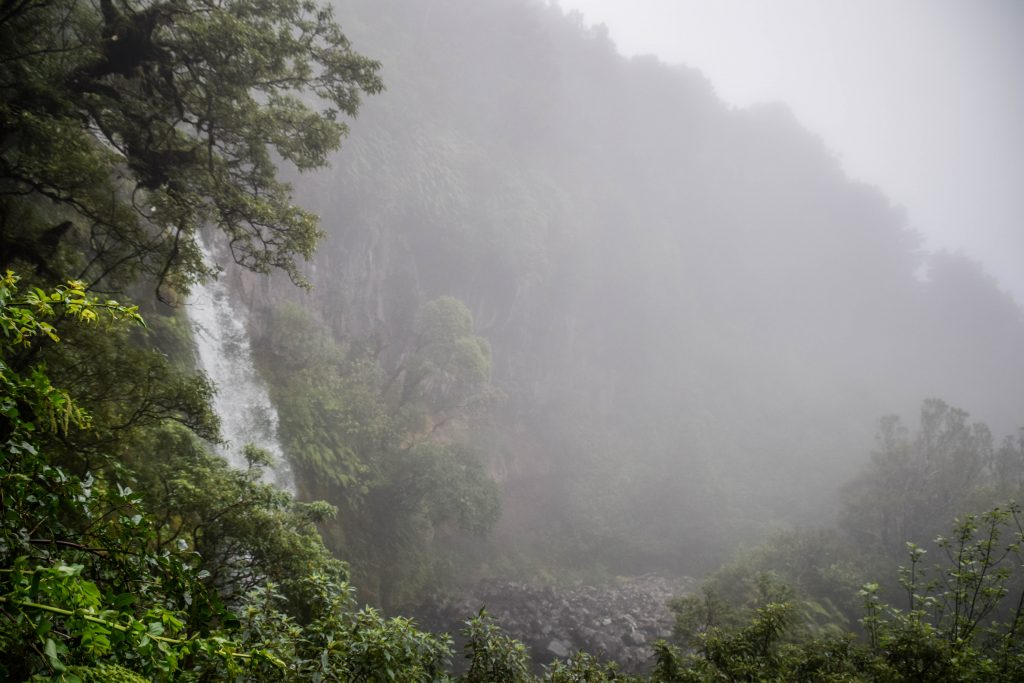
Goblin Forest, Egmont National ParkDawson Falls
Turn off from the main track takes you down to 18 m high Dawson Falls. Like many places in New Zealand, they were named after the first European explorer that reached them in 1885 – Thomas Dawson.
Moving to the other side of the mountain brought significant weather improvement. Strong winds chased the clouds away and once I parked my van next to North Egmont Visitor Centre, the first rays of the sun timidly broke through. Or was it Taranaki itself that stopped hiding his bad mood and decided to present its beauty? I used the remaining time of the afternoon to explore short walks around the place and admire the sunset with a perfectly blue sky. It filled me with confidence that tomorrow I will be lucky enough to go up the summit and enjoy spectacular cloud-free views over North Island.
Day 2 – Taranaki Summit Track, New Plymouth
I departed 8 am sharp and the track was rather empty. Though, it didn’t take longer than 1 hour when I stopped for the first time and saw lots of people down there following my steps. The weather was horrible last days and it seems that everyone was waiting for this perfect sunny window which happened on that day. The way up is definitely a challenging one. It has nothing to do with the zig-zag style that gains altitude in a moderate way. Instead, it’s a straightforward climb first along the wide gravel road and then up the steep slope of the mountain. Tahurangi Lodge was a perfect spot to boost my energy and get rid of the second breakfast. As I pushed forward to the summit, there was more and more snow lying around, the wind blew stronger in my face and the temperature dropped down.
The first stage of Taranaki Summit TrackStairs on the way up to Taranaki SummitMore and more snow on both sides of the trackLoose stones on the way up to Taranaki Summit
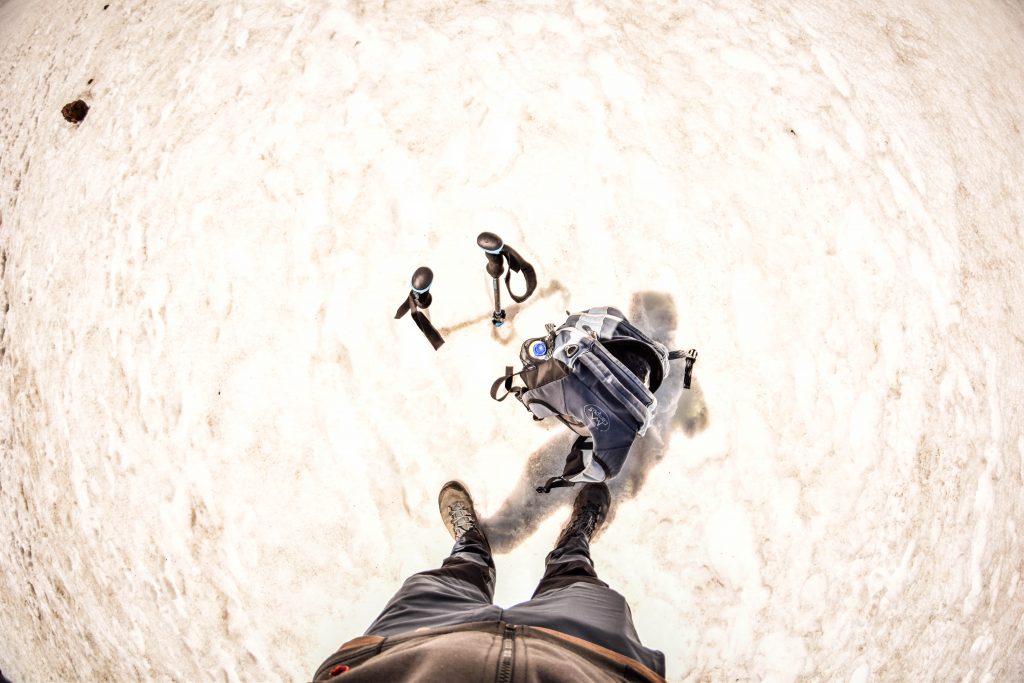
Orange poles, the same as on many other tracks in New Zealand, guided me towards the destination. It was extremely helpful to support myself with hiking poles, especially on the snow around the crater and when going down the mountain. I recommend taking at least one with you to keep the balance. Otherwise, you have a high chance to slip and land on your ass. Not a big deal, but could be painful on some bigger stones 🙂
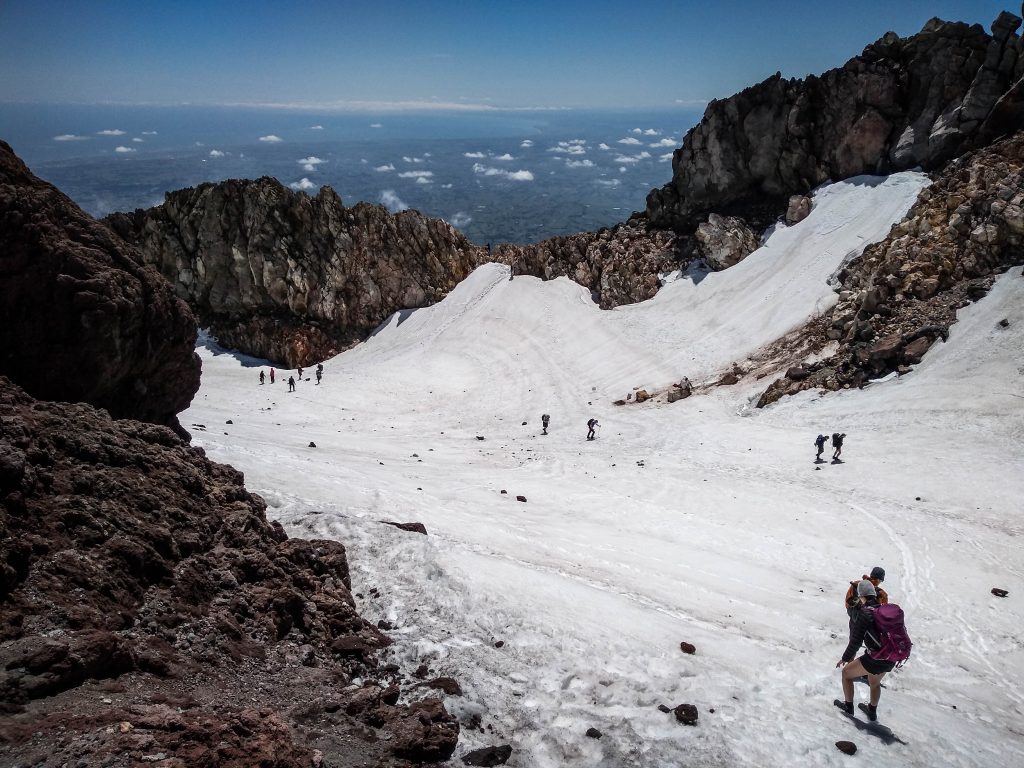
Mt Taranaki craterHikers sliding down in Taranaki craterHiking poles were extremely useful when walking on the snow and loose rocks
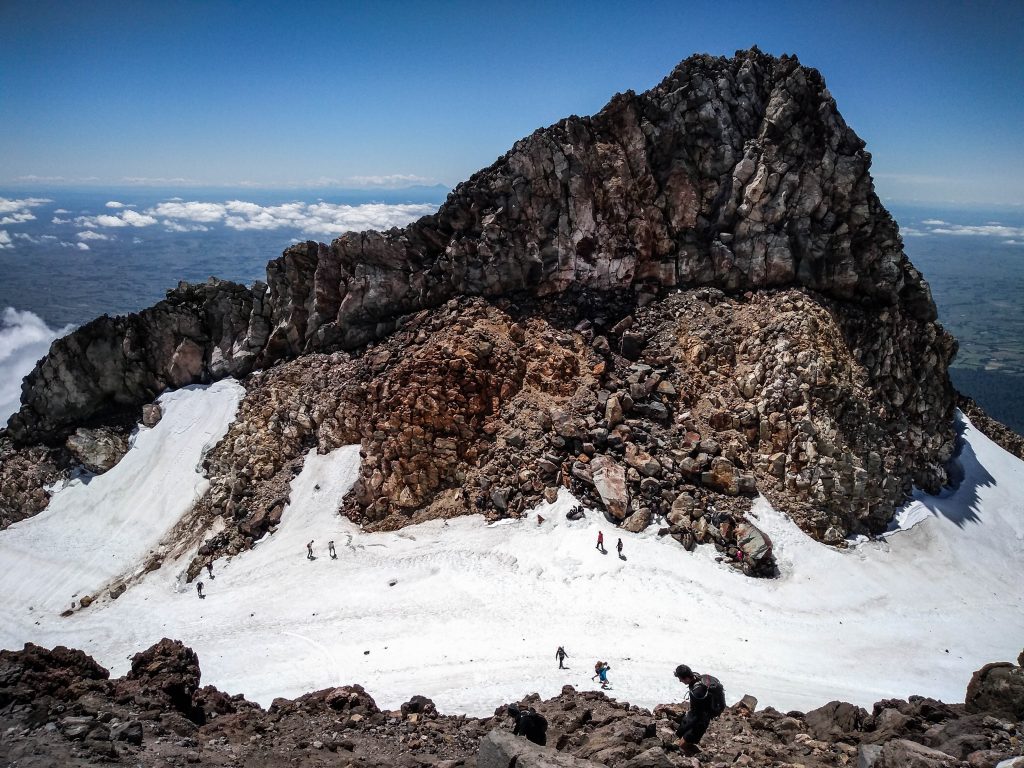
Finally, I put my feet in the crater. There are ice and snow all year round which makes tourists very happy when they play around and slide down on their shoes or ass down the path. But the crater is not the end. From there, it’s another final short climb up to the summit rock.
Final push to the summit rock
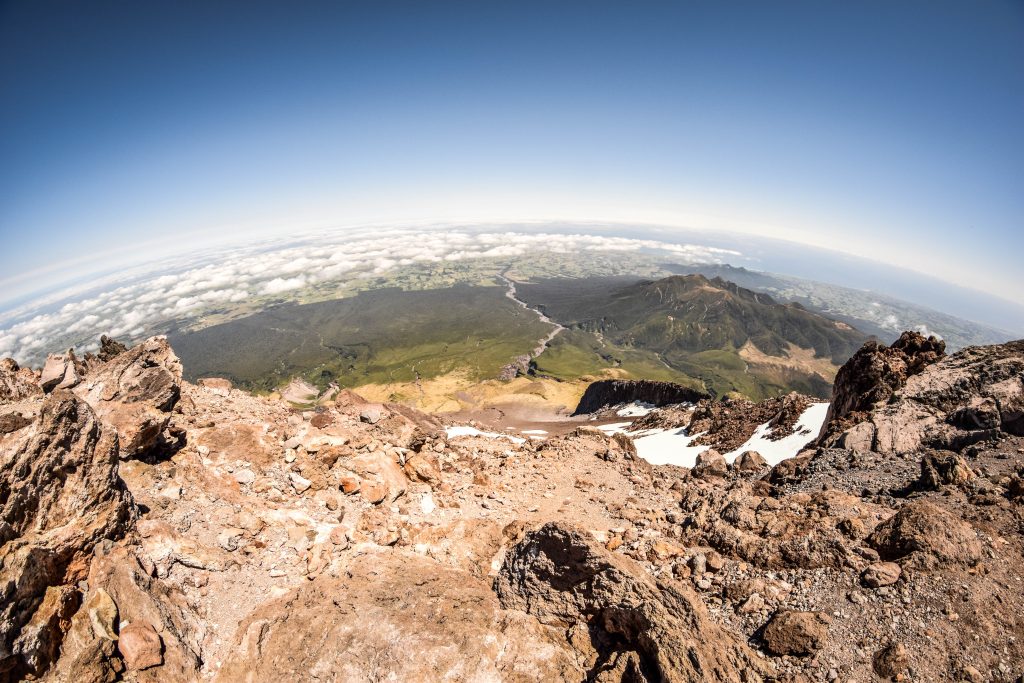
I got two things as a reward for reaching the summit. The first one was the chance to admire 360 degrees panorama across the south-west area of North Island. With good visibility, it was possible to see as far as volcanic summits in Tongariro National Park one side and the Tasman Sea on the other.
The second one was the ultimate satisfaction that I conquered the second highest volcano in New Zealand. Believe me, that was a great feeling. Moreover, Taranaki is one of these places that I’m already dying to visit again as soon as I’m back to the kiwi country.
Panorama from the summit
The way down was significantly easier than the way up. It took me only 2.5-3h to reach the parking lot, comparing to 4-5h that I spent pushing to the summit. Why is it like that? I was basically sliding down on loose stones, very often simply running all the way down as it was the easiest way to keep the balance. I saw many hikers struggling and falling down. I landed on my ass twice, even though I had my hiking poles for support. It was a really fun experience though 🙂 In the afternoon, more and more clouds started to cover the mountain and when I was halfway down and turned around, I couldn’t see the summit anymore. Taranaki started crying after his lost love once again.
Final thoughts
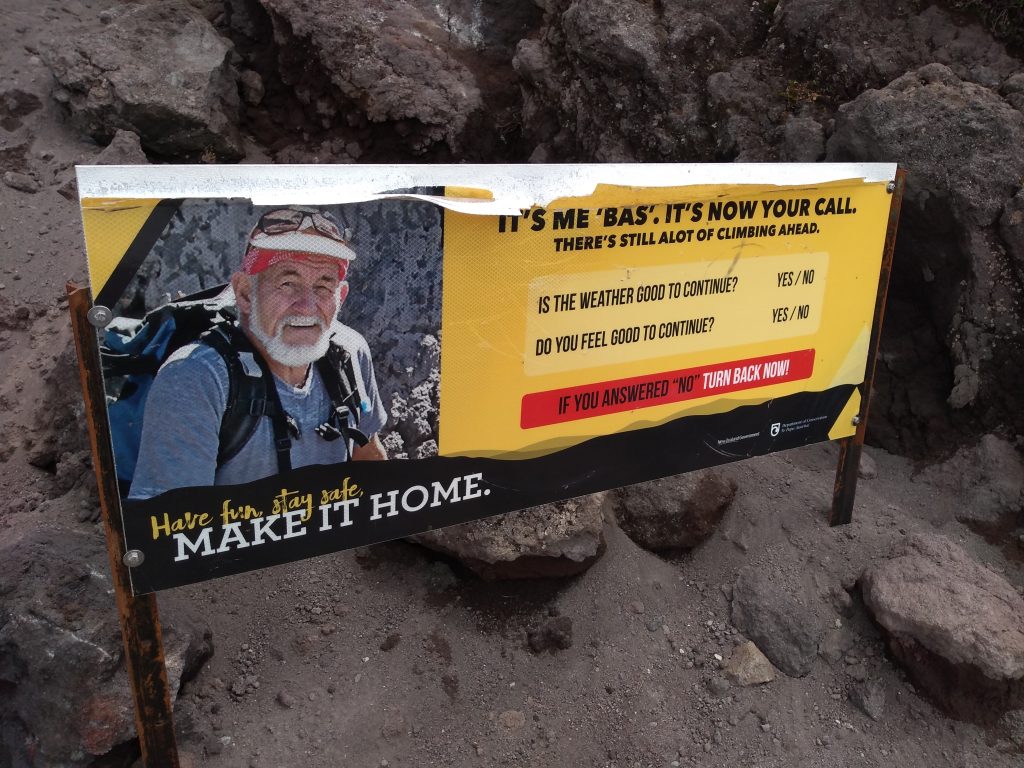
Climbing Mt Taranaki was certainly one of the most memorable hikes on North Island. Be patient and attempt it when the conditions are good. In the end, it’s not only about reaching the summit, but also about enjoying panoramic views. And if the conditions change or you don’t feel well, just listen to Bas and make it back home. The mountain will be always there. Have fun and stay safe!
Other tracks in the area
If the weather is not on your side or you just think that tackling Taranaki Summit Track is too much, don’t let it discourage you! There are several other options in Egmont National Park ranging from the very short and pleasant ones to more challenging multiple days hikes such as Around the Mountain Track. Check the website of the Department of Conservation and select the one that fits you best.
Flinders Ranges National Park was my first stop on the way from Adelaide to Darwin. Well, not exactly on the way as I had to make nearly 200 km detour from Port Augusta. However, the first stop on the way through the iconic scenery of outback Australia. I expected it to be marvellous and pristine. Driving from Melbourne to Adelaide was fun. Great Ocean Road, detour to Kangaroo Island and multicultural city of Adelaide. But now it was a time to get inland. To see the Red Centre. To feel the heartbeat of Australia.
I knew that there are long days of driving ahead of me but all emotions were covered by pure excitement. I love desert landscapes. Silence, remoteness, huge open spaces with me standing in the middle like a small pawn on a giant board. I feel I am self-dependent. Far away from the mess of daily life. Free.
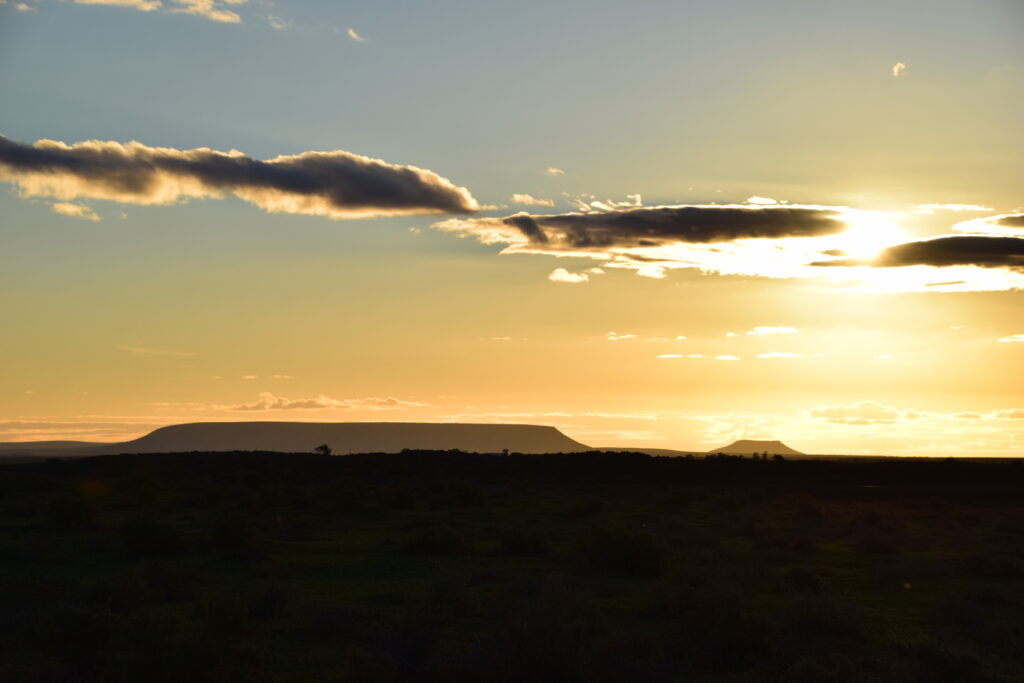
I hit the road in the morning and left Adelaide before traffic jams. The day was beautiful with a blue sky and a pleasant temperature of 20-25C. The plan was to get to Port Augusta with a stop in Mount Remarkable National Park. After a short hike there, I still had enough time to visit Australia Arid Lands Botanic Gardens. I didn’t expect more than boring walk among plants just to kill some time but instead, I got one of the biggest positive surprises in South Australia. Learning about the flora doesn’t come with the thrill of joy in my heart, but the walk through the garden was very relaxing and the landscape around it at sunset time was simply stunning. Look at the pictures below and tell me I’m wrong!
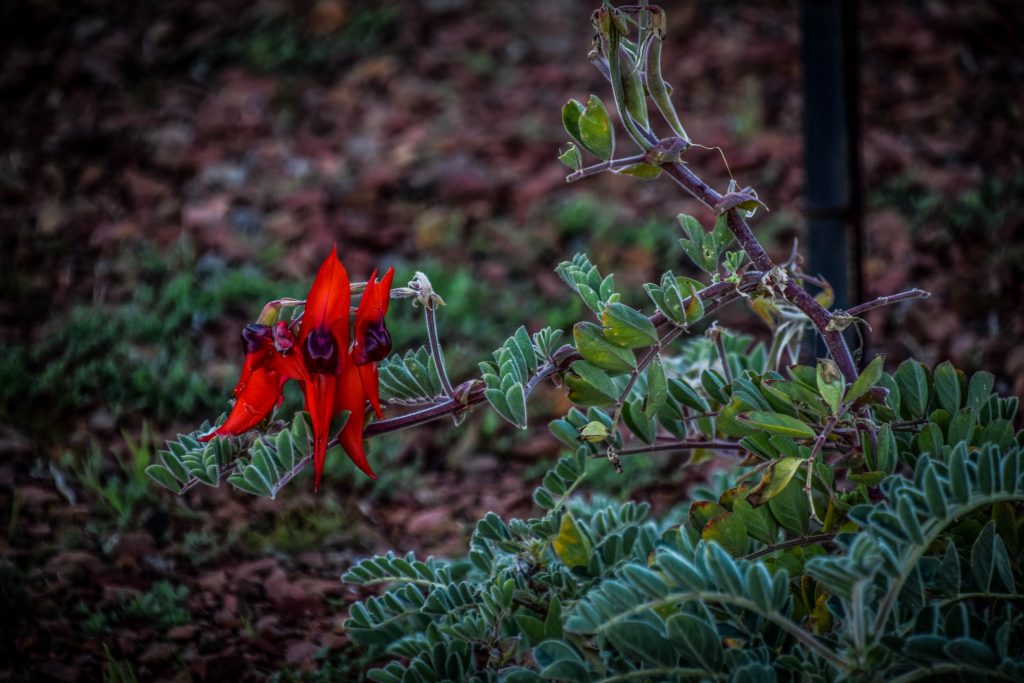
Landscape around Australia Arid Lands Botanic Garden in Port AugustaLandscape around Australia Arid Lands Botanic Gardenin Port AugustaSunset around Australia Arid Lands Botanic Garden in Port AugustaSturt’s Desert Pea
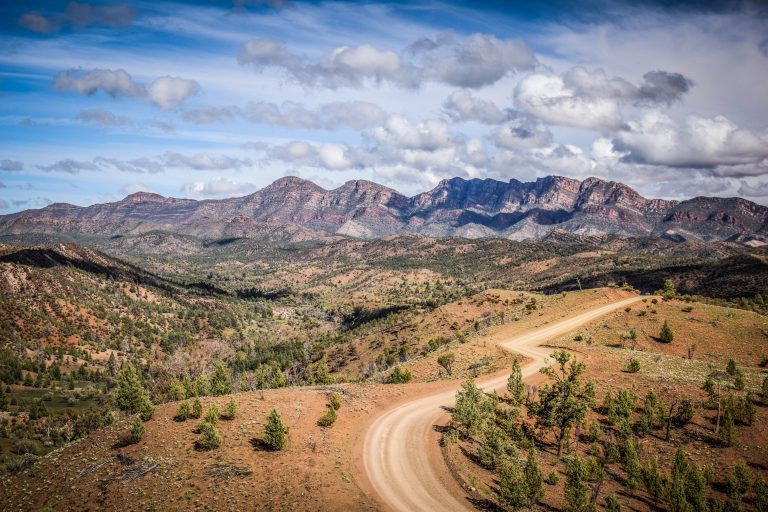
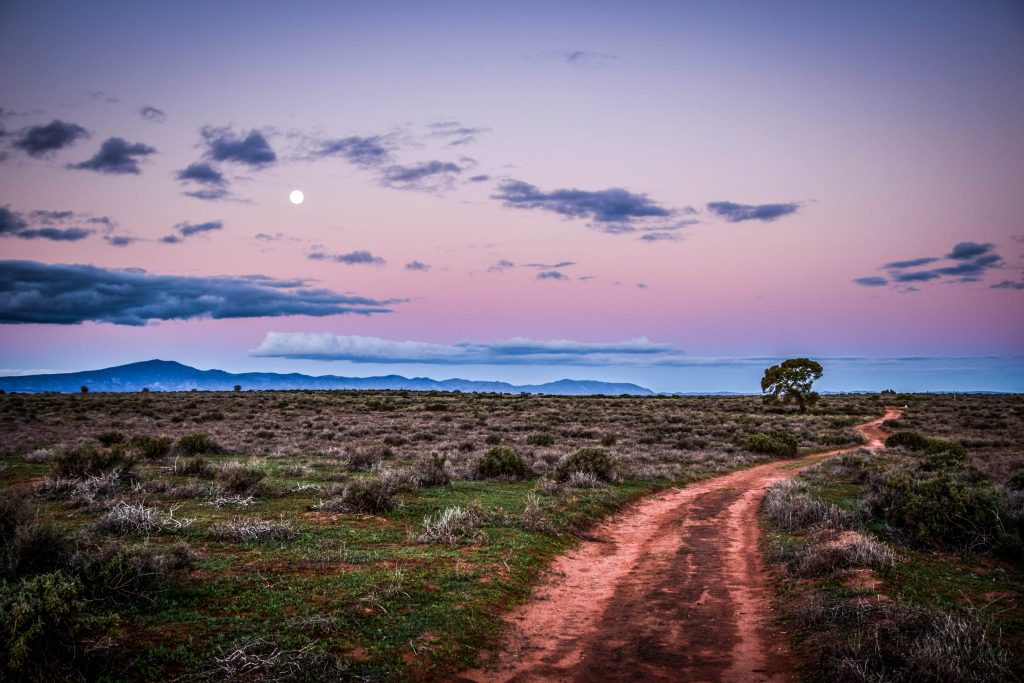
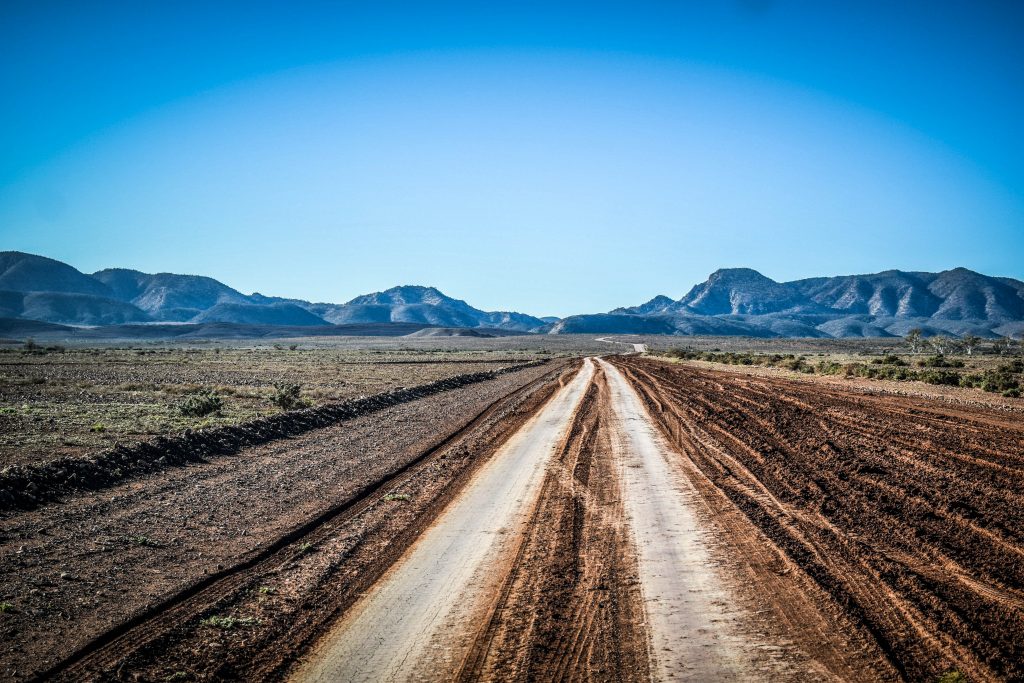
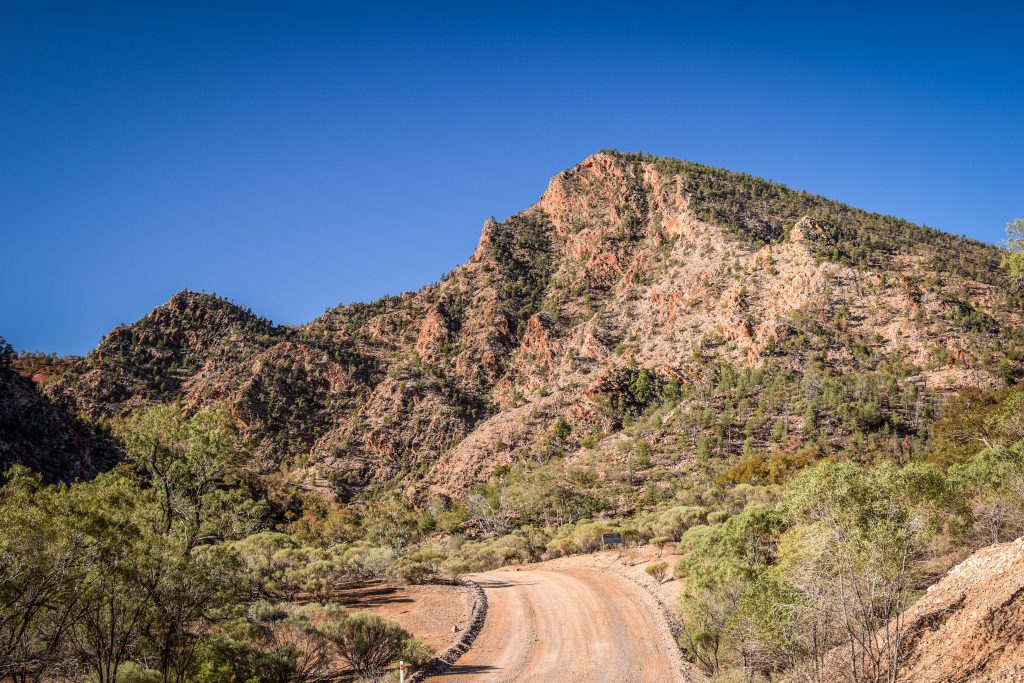
After the night at the gas station, I hit the road well before sunrise. It took me around 2 hours to reach the turn into Brachina Gorge Road. From here, dust road led me as far as I could see, pulling towards mountain ranges growing on the horizon with every second.
Brachina Gorge Road leading towards Flinders Ranges
Flinders Ranges National Park was named for Matthew Flinders, the English navigator who sighted and explored the peaks in 1802.
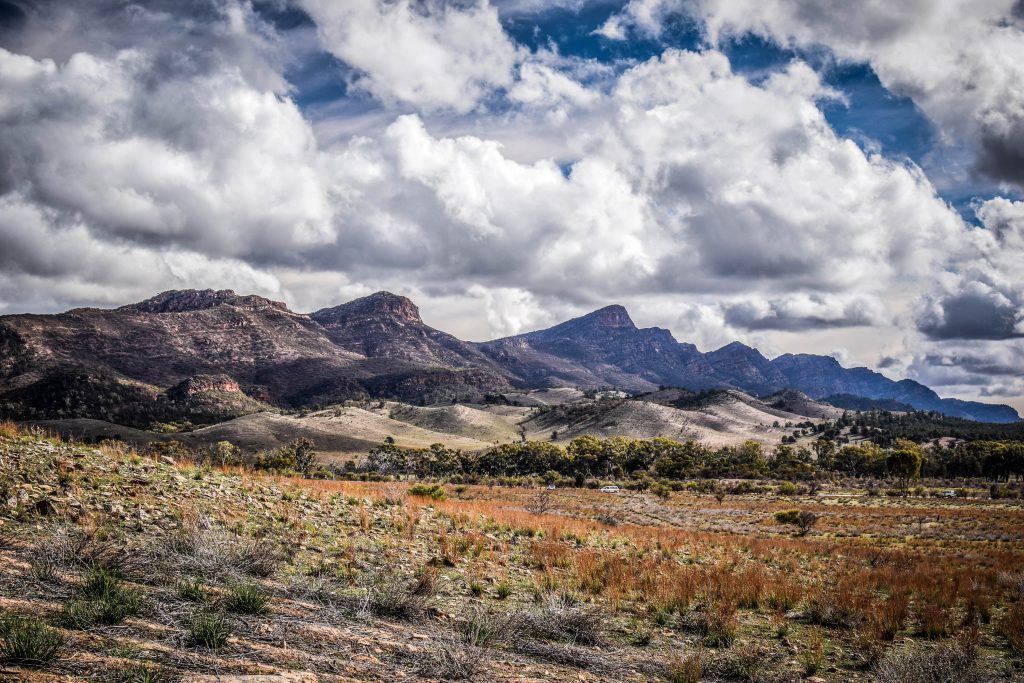
There is a lot to see here. The largest mountains range in South Australia with stunning gorges rich in wildlife as well as historical sites. Ikara/Wilpena Pound is an ancient meeting or initiation place for Aboriginal people and several ruined buildings around Wilpena, Arkaba and Aroona remind about first settlements of Europeans in this region. Contacts between traditional owners (Adnyamathanha people) and newcomers were not always peaceful, especially when it comes to water and land rights.
Best time to visit
The most comfortable time for exploring the area is between April and October. In summer, the temperatures can rise well over 40ºC, which can already be dangerous for your health and safety.
I would suggest staying at least 2 days to do plenty of bushwalks and admire night sky at the campsite.
How to get there
The easiest way is to start from Adelaide and drive around 450 kilometers to the north in the direction of Hawker and Wilpena. You don’t need 4WD at any point.
Alternatively, you can approach Flinders Ranges from the north, following Birdsville Track or from Broken Hill, turning right at Yunta but in both cases don’t think about it without 4WD.
For getting around the park, a 2WD car with high clearance is enough. Roads are unsealed and sometimes rough, especially in Brachina Gorge, but just take it slowly and it’s gonna be fine. I had no problems driving my Toyota Tarago.
Views around Wilpena Pound Resort
Camping
There are 10 campgrounds in the national park. Most of them have basic facilities, such as toilets and fire pits (can be used outside of the fire danger season). As there is no mobile signal at campgrounds, therefore book your spot and vehicle entry fee online or at the Wilpena Pound Visitor Centre. I really recommend staying for the night in Ikara-Flinders Ranges National Park. There is no light source here, so take your own and don’t forget to just turn it off for a while. Then, enjoy the magical spectacle full of stars.
Worth to know
Take Georama virtual tour – a great chance to have the first look at the national park scenery before heading there in person. Views include Wilpena Pound, Pine Hut, Parachilna Gorge and more.
Download mobile apps: Discover the Flinders Ranges (iOS / Android) and Flinders Ranges Walks (iOS, Android). The first one includes driving and walking tours as well as information about geology, wildlife and plants. On the other hand, the second one covers 16 walking tracks in the national park.
Maps can be downloaded from the website National Parks and Wildlife Service South Australia.
Park Passis required to access the Flinders Ranges National Park and costs 11 AUD per vehicle. It can be purchased at the Wilpena Pound Visitor’s Centre.
Top sights in Ikara-Flinders Ranges National Park
Wilpena Pound – 80 sq km amphitheatre of mountains that is also known by its Adnyamathanha name of Ikara, meaning “meeting place”. According to Dreaming stories, the surrounding mountains are the bodies of two giant snakes that laid around during the initiation ceremony. After feasting on the people, they couldn’t move and died, creating the most iconic landmark of the national park.
If you have some cash to spare, take a scenic flight and admire this miracle of nature from the sky. Scenic flights can be booked through the Wilpena Pound Visitor Centre and such a pleasure costs between 100-200 AUD.
Pound Gap Track and Wangarra Lookouts – there are several walking tracks starting at the Wilpena Visitor centre, including the Pound Gap Track (8 km return). It follows Wilpena Creek through tall river red gums and pines. After some time, you will reach Hill Homestead which is worth a stop to read information about historic inhabitants of the cottage and difficult conditions they struggled with. Refill your body with water and calories and continue to lower and then to the upper Wangarra Lookouts to fully enjoy spectacular Wilpena Pound from the inside.
If you are lazy, there is an option to take a shuttle bus that stops around 1 km from Hill Homestead. It runs 3 or 4 times a day but check the schedule at Wilpena Pound Resort.
View from upper Wangarra Lookout
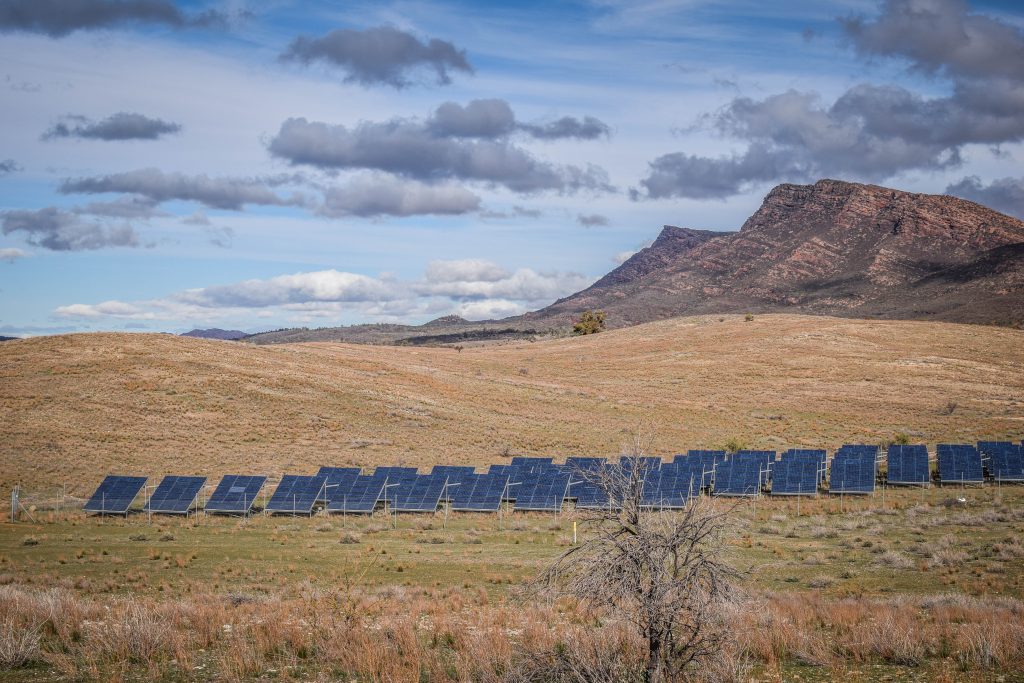
Solar Panel Station – nice short walk on the road towards Wilpena Pound Resort. Nice not because of solar panels but the gang of kangaroos hopping around.
Solar Panel Station
Brachina Gorge – 20 km drive with informative signs along the way telling about the age and formations of the rock and cliffs. Some of the oldest fossils on earth have been found here! If that doesn’t excite you, then just sit back and enjoy the ride with the bumps adding a bit of adventure feel. Amazing experience! If you are lucky, there is a chance to spot a yellow-footed rock wallaby, especially active in the afternoons.
Road through Brachina Gorge
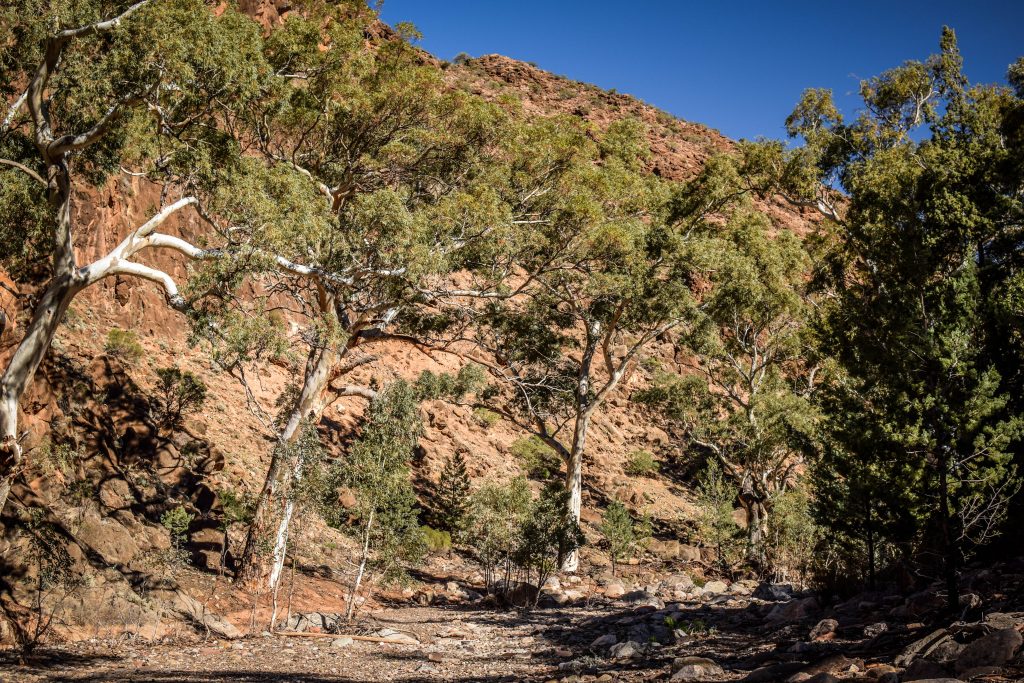
Bunyeroo Gorge – a great opportunity for a walk surrounded by rocks and gum trees. The 7.5 km return hike will take about 3-3.5 hours to complete.
Hiking trail in Bunyeroo Gorge
Razorback Lookout – only a short drive away from the parking at Bunyeroo Gorge following scenic Bunyeroo Valley road lays this iconic viewpoint. Breathtaking panorama of Ikara-Flinders Ranges National Park.
Old Wilpena Station – the oldest pastoral site in South Australia, working until 1985. Remainings of old buildings and cemetery remind about harsh conditions that first European settlers faced after arrival to the region. Two options for a walk here: 1km loop or 3.2km loop.
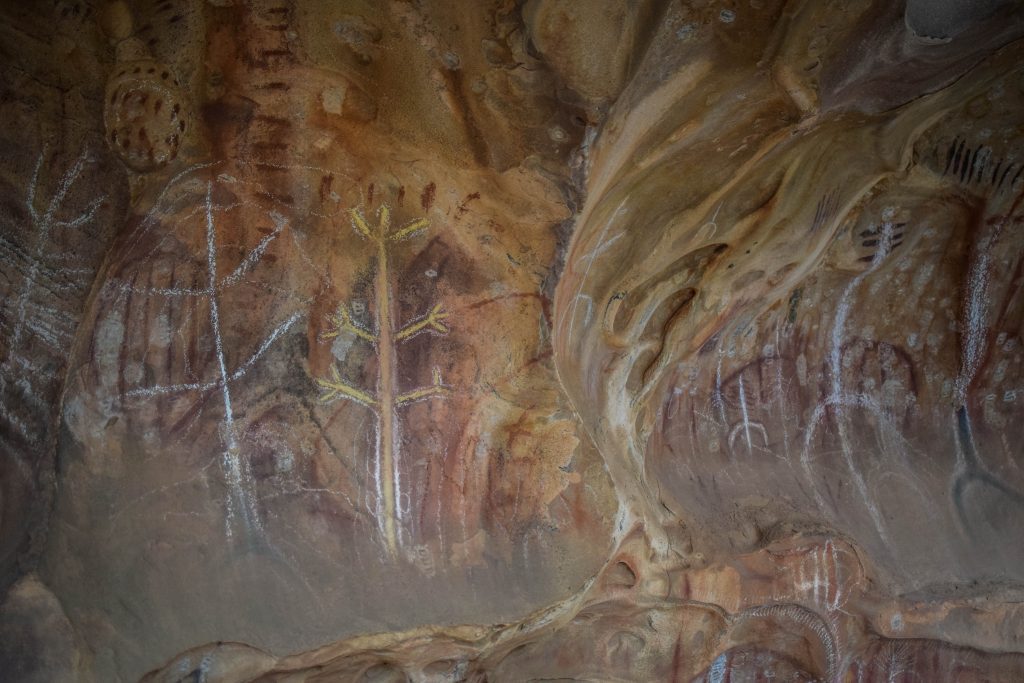
Arkaroo Rock – Short bushwalk taking you to ochre and charcoal rock paintings from the land’s traditional owners. Parking is easily accessible from Ikara/Wilpena Pound (around 17 km). From there, it’s uphill but gentle loop track which shouldn’t take longer than 1-1.5 hours to complete. Other spots to admire aboriginal art are at Perawurtina and Sacred Canyon, however, the last one can be visited only on an organized tour with an Aboriginal guide from Wilpena Pound Resort.
Aboriginal art inside Arkaroo RockLandscape around Arkaroo Rock
St Mary Peak – The highest point of the Flinders Ranges (1171m above sea level) and significant place for aboriginal people of Adnyamathanha. Due to this fact, it’s recommended to respect the summit and not to go beyond Tanderra Saddle. There are two options: the direct route, which is 14.6 km long and takes about 6 hours or the loop route, which is 21.5 km and takes about 8-9 hours. I didn’t do the hike but I heard it’s pretty difficult so take enough supplies and tell someone about your plans.
Aroona Ruins – Above the spring are the remains of sheep station from the early nineteenth century. The area is strongly connected with Hans Heysen, the German watercolour artist.
Parking and campsite around Aroona Ruins
Appealinna Ruins – In the 1850s, Joseph Wills was a local pastoralist who built the homestead and stockyards on the southern side of the creek, while the ruins on the north side were once a busy mining settlement.
Walks and hikes – There are enough tracks to satisfy even the most demanding wanderers and spend several days with nature. Check the full list on the website of the national park and get a map from Wilpena Visitor Centre. Never forget your water and keep in mind safety rules!
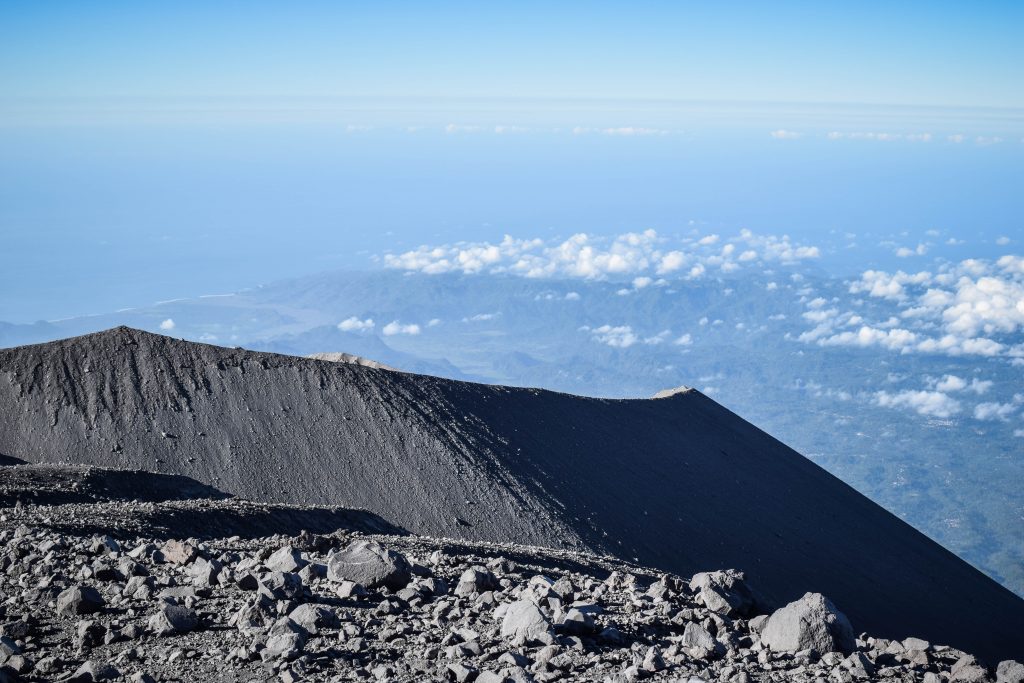
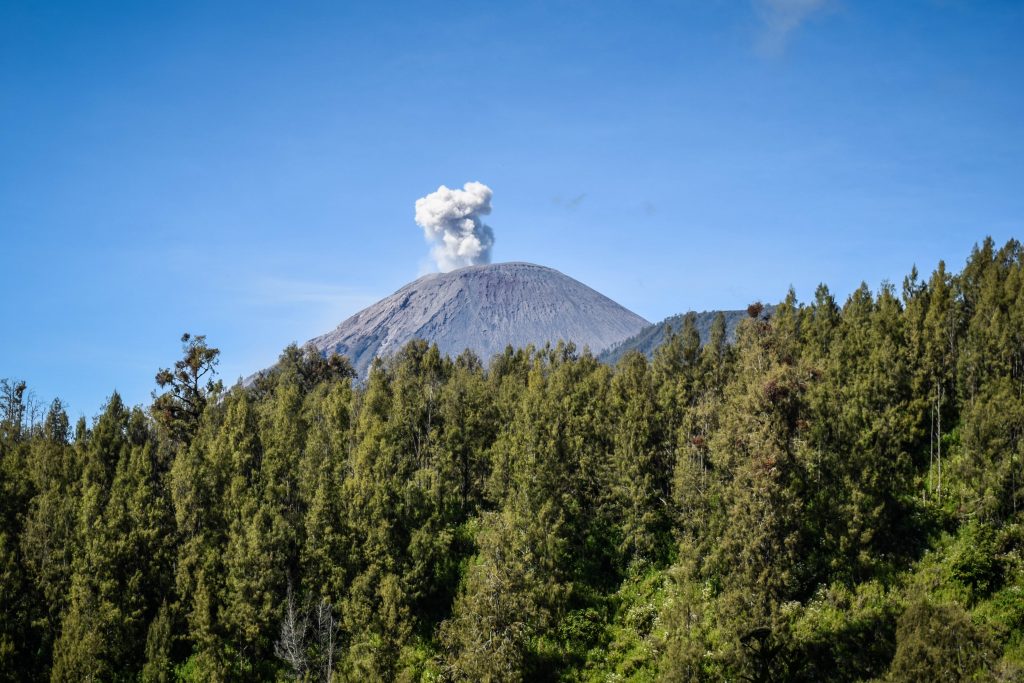
Semeru is a stratovolcano, which with its 3.676 meters above sea level, can be called the roof of Java. The mountain is also known as Mahameru, meaning ‘The Great Mountain’. The name originates from the Hindu cosmology’s mountain of Meru or Sumeru, the place where gods reside.
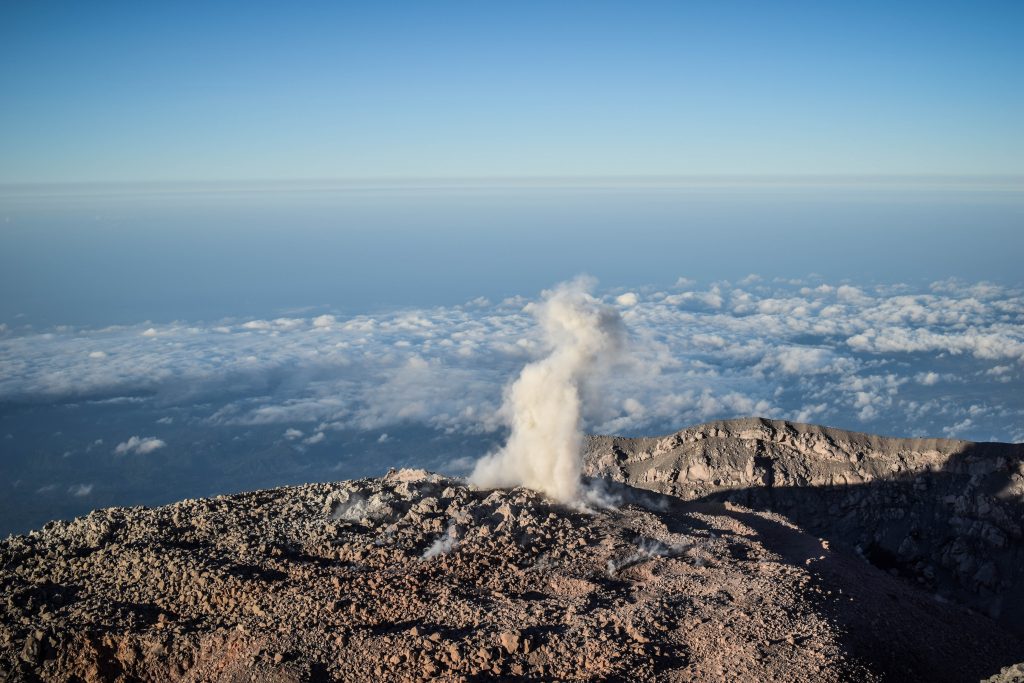
It’s a popular hiking destination that provides you with a feeling of real adventure. In the end, you are walking on an active volcano! The activity can be noticed many times, especially when you see volcanic ash coming out of the crater at the summit. On the way up the mountain, you start thinking about how it will look up there. Is it even safe?
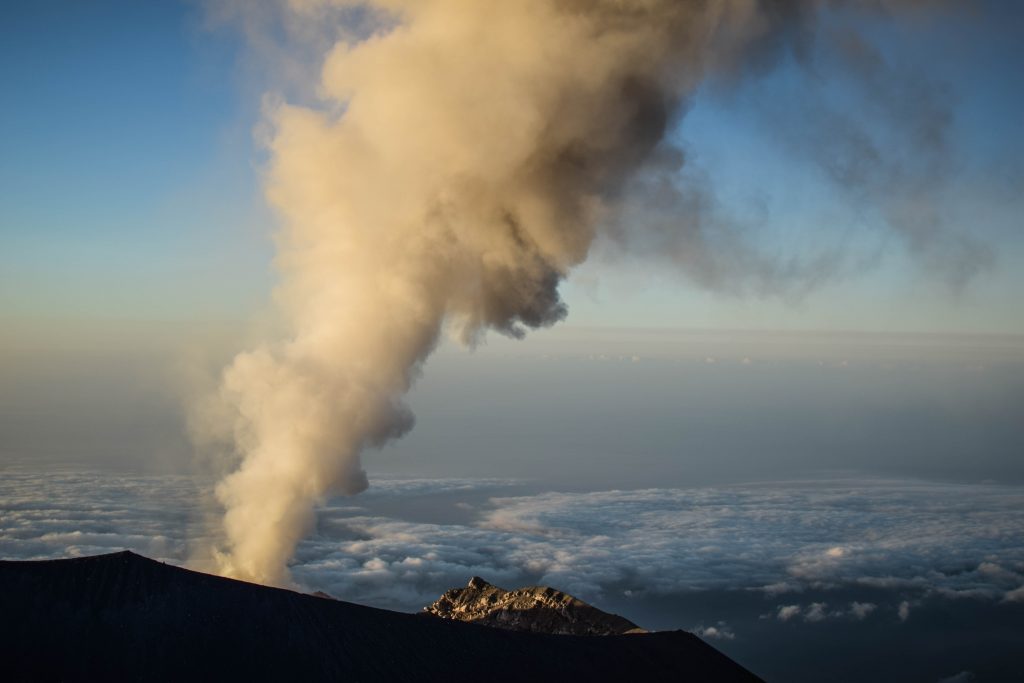
Semeru has a long history of eruptions and can be periodically closed for hikers. I was there in August 2019 and felt perfectly safe. Needless to say, care has to be taken on the last kilometers when walking on the steep and exposed slope and later when wandering around the summit. Most probably you will witness small eruption when volcanic ash goes into the air just a few meters from you but that’s the part of the game and the factor that attracts so many tourists. Just don’t come too close to avoid breathing it in. Everyone wants to have a selfie with a small eruption in the background and it happens every 20-30min!
Everything you need to know before you go
Technical details
Summit: 3,676 meters above sea level
Altitude gain: 1,576 meters
Distance: 42 km return
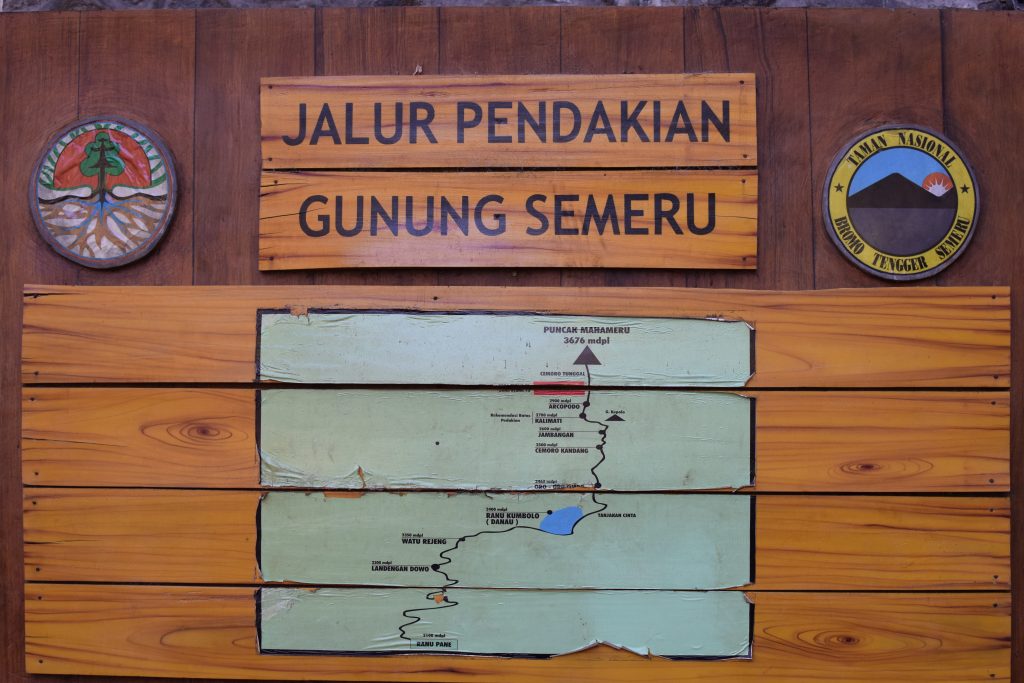
Ranu Kumbolo Lake campsite: 2,400 meters above sea level (10.5 km from the starting point)
Kalimati campsite: 2,700 above sea level (7.5 km from Ranu Kumbolo Lake)
Final ascent: 3 km one way from Kalimati campsite
My difficulty rating: medium / hard
Best time to go
The dry season, which is the best time for the hike, starts from late April and lasts until November. During the rainy season from January to late April the trail to the summit may be closed but most importantly going there can be dangerous. It’s also the time to restore the ecosystem of the area.
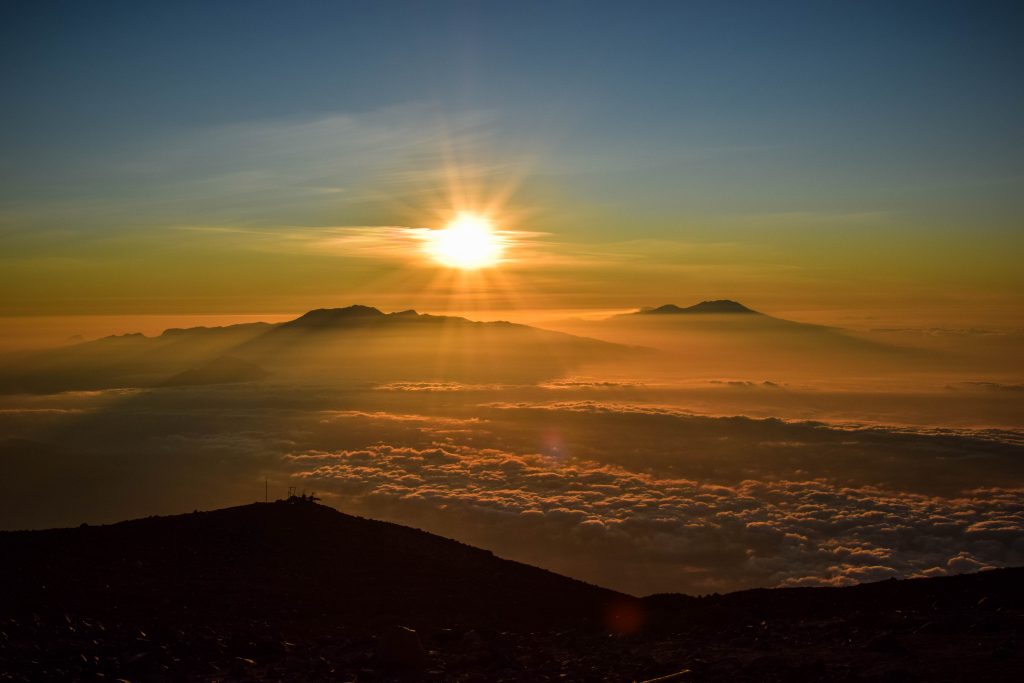
Panoramic views on the way to the summit
How to get there?
We did the route Malang – Tumpang – Ranu Pane. The first leg was really straightforward as we ordered a taxi via the Grab mobile app. Just tell the driver to take you to the jeep’s departure point. Both Grab and Gojek are great ways to get around Indonesia. They work in the same way as Uber but very often have more options available. You can literally order delivery of anything you can imagine!
Being the only hikers there, we waited well over an hour for other people to join in order to lower the costs of jeep ride. Unfortunately, no one came. After bargaining, it cost us 150.000 IDR per person. The rule is simple – the bigger the group, the lower the cost per person is. They charge per vehicle and as it was only two of us, we had to pay a bit more.
Required documents
Medical check – must be obtained from the local hospitals or public health facilities 1 day before the hike. It’s an easy procedure – they just check your weight, high, blood pressure and ask about your general condition. I don’t remember the exact cost, but it was around 20.000-40.000 IDR. We did it in Malang 1 day prior to the hike but you may also do it in Tumpang or even Ranu Pane village.
Passport / ID copy – Photocopy of official identity document that is still valid. For hikers who are less than 17 years old, parents’ approval has to be signed and stamped (6.000 IDR fee) together with a photocopy of parents’ passport / ID.
Registration form – confirmation of online registration or the document filled in the office in Ranu Pane.
Views like that are worth the paperwork
Bookings and prices
Registration for the permit can be done through the websiteof Bromo Tengger Semeru National Park. Just follow the online booking registration flow, make a payment and wait for the confirmation email. The national park puts a limit of 600 people entering the trail every day, that’s why in high season it’s better to make the booking and secure a spot. Don’t forget to do it at least 3 days before the start of the hike.
There was a problem with processing the payment with my credit card, so if you have the same issue, just take enough cash and pay in the office in Ranu Pane. Apparently, if you don’t make a payment as soon as 5 hours after registration, it will be canceled. Even though, we didn’t have any problems explaining to the ranger that the payment couldn’t be processed and he accepted cash.
Ticket prices for Indonesians:
Working Day 19.000IDR per person per day
Holidays 24.000IDR per person per day
Ticket prices for Foreigners:
Working Day 210.000IDR per person per day
Holidays 310.000IDR per person per day
Views from the top of Mount Semeru
Briefing
After picking up the permit in the rangers’ office, you will be invited to the briefing. They explain the route, location of the campsites and some safety tips to keep in mind. One rule is especially worth remembering: whatever you bring in, bring it out with you. There are no rubbish bins and unfortunately, trash can be found around campsites. Indonesia has a big problem with rubbish and makes sure not to leave anything behind. Simply throw it away in Ranu Pane village.
Itineraries
2 DAYS 1 NIGHT
You will walk 42 km in two days and the second one will be especially tiring. Do it only if you are an experienced hiker in decent shape. We did it this way and it was fine, though one extra day to enjoy nature wouldn’t hurt. The campsite at Ranu Kumbalo Lake is only 3 hours walk away from Ranu Pane, that’s why it seemed unreasonable to stay there for the night and we pushed to the end instead.
Day 1: Ranu Pane – Ranu Kumbalo Lake – Kalimati campsite Day 2: Kalimati campsite – Semeru summit – Kalimati campsite – Ranu Kumbalo Lake – Ranu Pane
3 DAYS 2 NIGHTS
The most popular and optimal version of the hike, giving you more time on the side of nature, taking all the sights at a slower pace. Good idea if you have more time to spend in the national park.
Day 1: Ranu Pane – Ranu Kumbalo Lake – Kalimati campsite Day 2: Kalimati campsite – Semeru summit – Kalimati campsite – Ranu Kumbalo Lake Day 3: Ranu Kumbalo Lake – Ranu Pane
4 DAYS 3 NIGHTS
The very long and chilling version of the hike, for me it would be a bit too long though. But if you are with a group of friends, why not 🙂
Day 1: Ranu Pane – Ranu Kumbalo Lake – Kalimati campsite Day 2: Kalimati campsite – Semeru summit – Kalimati campsite Day 3: Kalimati campsite – Ranu Kumbalo Lake Day 3: Ranu Kumbalo Lake – Ranu Pane
On the top of Mount Semeru
With or without a guide?
Taking a guide is not necessary at all. The trail to Kalimati campsite is very easy to follow, there is a lot of people, small stalls selling food and drinks so it’s impossible to get lost. For the final summit push just follow the lights of other hikers and you will be fine as well.
Equipment
Here is my basic packing list for the hike:
Camping: tent, sleeping bag, sleeping mat, gas cooker, cooking pot, lighter. If you don’t have your own equipment, you can easily rent it everywhere in Ranu Pane.
Clothes: thermals, t-shirts, shorts, long pants, warm sweater/hoodie, gloves, hat, socks, underwear, hiking shoes, jacket. Don’t underestimate the weather. Even if it’s warm and nice in Tumpang or even Ranu Pane, the nights at the campsites will be cold as well as final ascent on exposed terrain.
Headlamp and spare batteries, hiking poles, sunglasses. Good light is essential as you will be walking hours in the night. Hiking poles are extremely useful on the last kilometers of the steep summit push so it’s good to have at least one.
First aid kit, basic medications, suncream.
Food Don’t take too much. Indonesia won’t leave you with an empty stomach. There are small stalls on the way where you can buy fruits, drinks, snacks. You will support the local community and keep your backpack lighter.
Camera
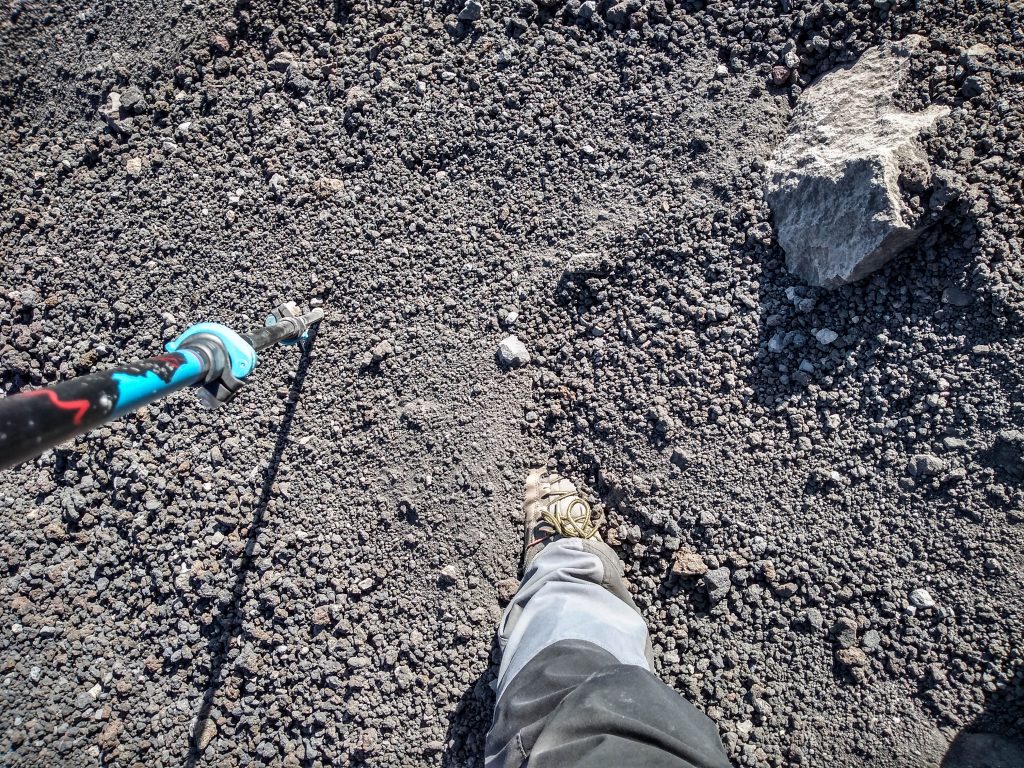
Hiking poles are very useful when walking in volcanic ash
Accommodation in Ranu Pane
There are many accommodation options in the village and the best is to text them through Whatsapp or just come to the village and look around. We chose Thomas Sanjaya Homestay which was simple but perfectly sufficient. There was even a hot water shower which is not always the case in Indonesia. They also run a small shop for those willing to buy some extra noodles, cookies or rent a sleeping bag and gas cooker. The nights can get really cold in the region, giving us a feeling that next night in the tent for sure won’t be too warm!
On the trail – 2 days 1 night
Day 1: Ranu Pane village – Ranu Kumbolo Lake – Kalimati campsite (15km, 5-6h)
Stage 1: Ranu Pane village to Ranu Kumbolo Lake (3-3.5h)
Around 7 am the guesthouse started to be busy with climbers getting breakfast and preparing for departure. The breakfast didn’t surprise – it was a simple nasi goreng (fried rice) with egg. I could say a lot about nasi goreng but let’s just underline that it is absolutely the most popular meal for budget travelers and I had it nearly every day 🙂
Information board at the entrance gate
At around 8 am we were already on the way. First, following asphalt road to the gate of the national park where our permits were checked and then passing through cabbage fields into the forest. Surprisingly, I realized that taking so much food with us was absolutely not necessary. Why? There are warungs (little stalls) on the way! They sell fruits, cakes, drinks and of course fried rice or fried noodles. You can make a stop there and refill your energy, supporting local people running a rather challenging business. They have to descent back to the village every day and then go up again in the early morning, very often simply carrying products on their backs.
Mt Semeru still looked very far away and we admired its graceful shape from the distance when suddenly the cloud of volcanic ash appeared growing just at the summit! It looked totally amazing and it was the first time for me to actually see a small volcanic eruption. It has a long history of eruptions and since 1967 it is in a state of near-constant activity. Small eruptions can happen even every 20 minutes! While it’s an additional advantage that boosts your adrenaline, for your own safety you should never go off the hiking trail.
Small eruption seen from the distance
After 3 – 3.5 hours since departure from Ranu Pane, we arrived at Ranu Kumbolo Lake. There is a beautiful campsite there at the lakeside and obviously some warungs as well. Swimming in the lake isn’t allowed as the water is used for drinking and cooking. I regret a little bit that we didn’t stay there for an extra night. Next time!
Ranu Kumbolo Lake and campsite
Stage 2: Ranu Kumbolo Lake to Kalimati campsite (2-2.5h)
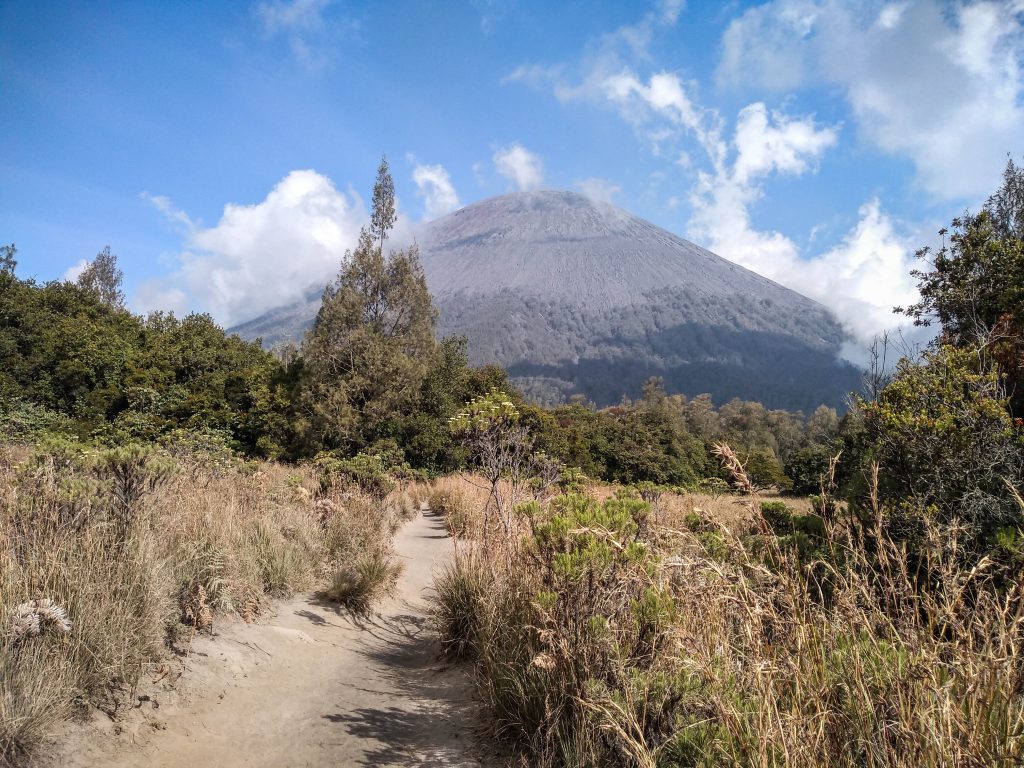
After a lunch break for cooking instant noodles and relaxation at the lake, we continued along much more steep part of the trail leading through forest and grasslands to Kalimati campsite. Here the backpack started to be really heavy and I was glad to have my trekking poles for extra support. Before, we could see Mount Semeru only occasionally, but now it’s getting closer and closer.
View on the way to Kalimati campsite
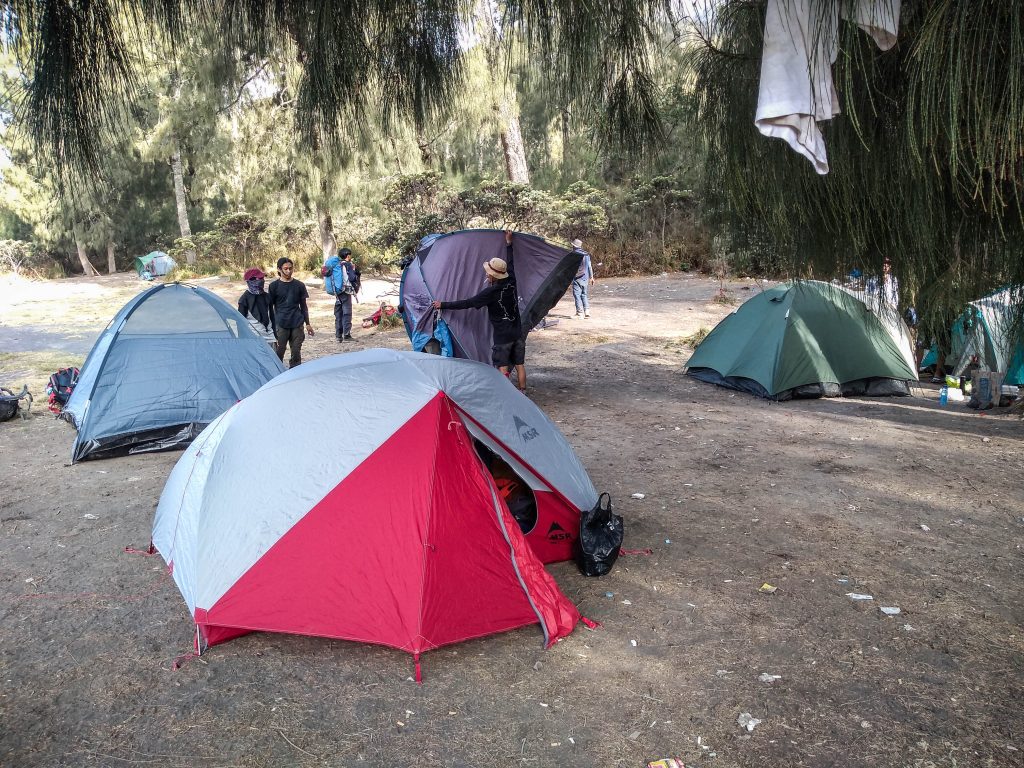
Around 2 – 2.5 hours later I was already setting the tent. The campsite was full of friendly hikers, everyone busy with cooking. If you are short on water, there is a source around 15 min walk from the campsite. Just ask locals for directions.
Having in mind that the night will be short, we tried to get some unstable sleep before the alarm woke us up at midnight.
Kalimati campsite
Day 2: Kalimati campsite – Semeru summit – Kalimati campsite – Ranu Kumbolo lake – Ranu Pane
Stage 1: Kalimati campsite to Semeru summit (4-5h)
The nights at Kalimati campsite can get really cold and the best is to have your own sleeping bag as the rented ones are rather thin. Good idea is to have a thermal layer as well.
We started preparing our breakfast to warm up and feel some energy boost. Most of our things stayed inside the tent and we departed carrying a small backpack with water, snacks, a camera and an extra layer of clothes. Most of the people hit the trail between 00:00 – 01:00 am, so did we. There was a group saying that they want to depart as early as 10:00 pm but I think it’s way too early. Reaching the summit too early leaves you with nothing else to do than wait and get cold. Leave at midnight if you are slower and want to see the sunrise from the summit. If you are faster or it’s enough for you to see the sunrise on the way (which is awesome anyway), then 01:00 – 01:30 am would be enough.
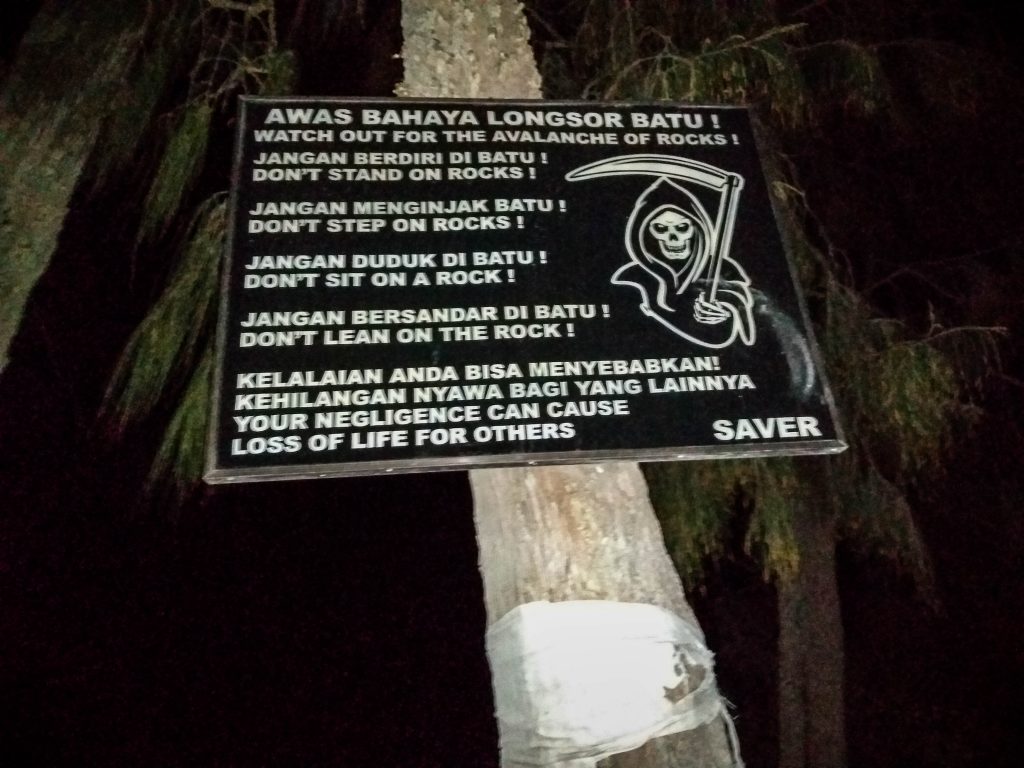
Rocks are your enemies!
I could imagine that the trail is difficult to follow if you go solo, but there were plenty of other hikers getting ready at the same time so we simply followed them. With everyone equipped with head-light, it looked like a moving dotted line in the middle of dark night.
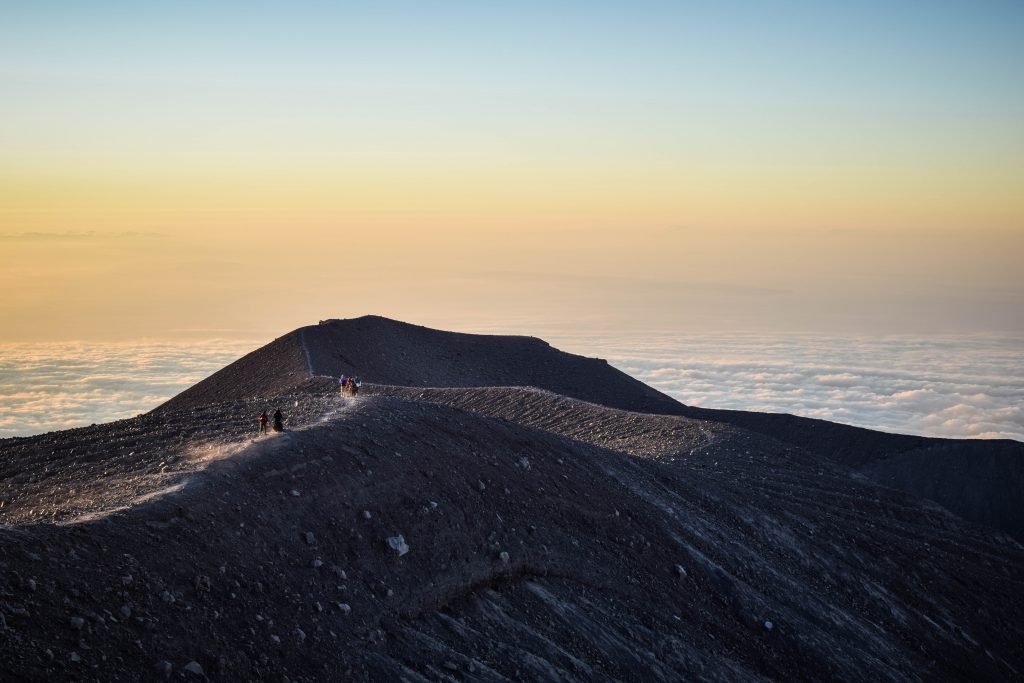
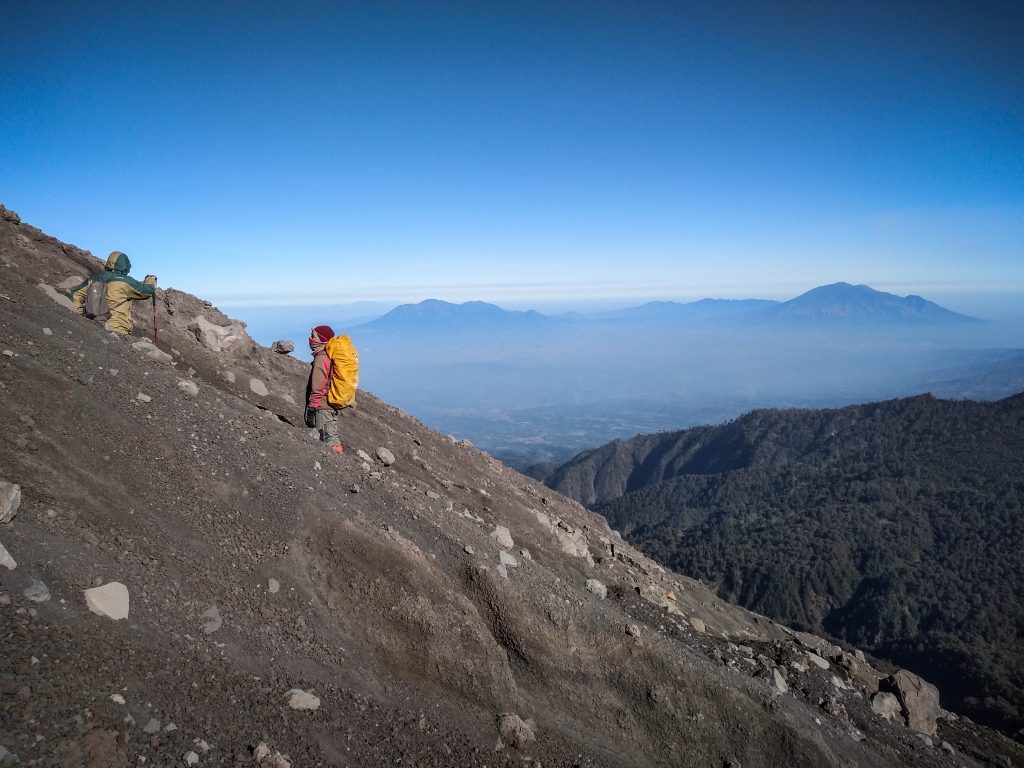
From the campsite, we went into the forest but it didn’t take long to reach infamous volcanic ash and start of the crazy long and slow ascent. So glad that I had my hiking poles! With every 2 steps up, you pretty much slide 1 step down. It’s steep, it’s tiring, it’s cold and it may be very windy due to exposed terrain. You also have to be careful of loose stones rolling down the slope as people walk in front of you. Maybe it’s better that we walked in the darkness? At least we pushed forward not knowing how far we are from the summit.
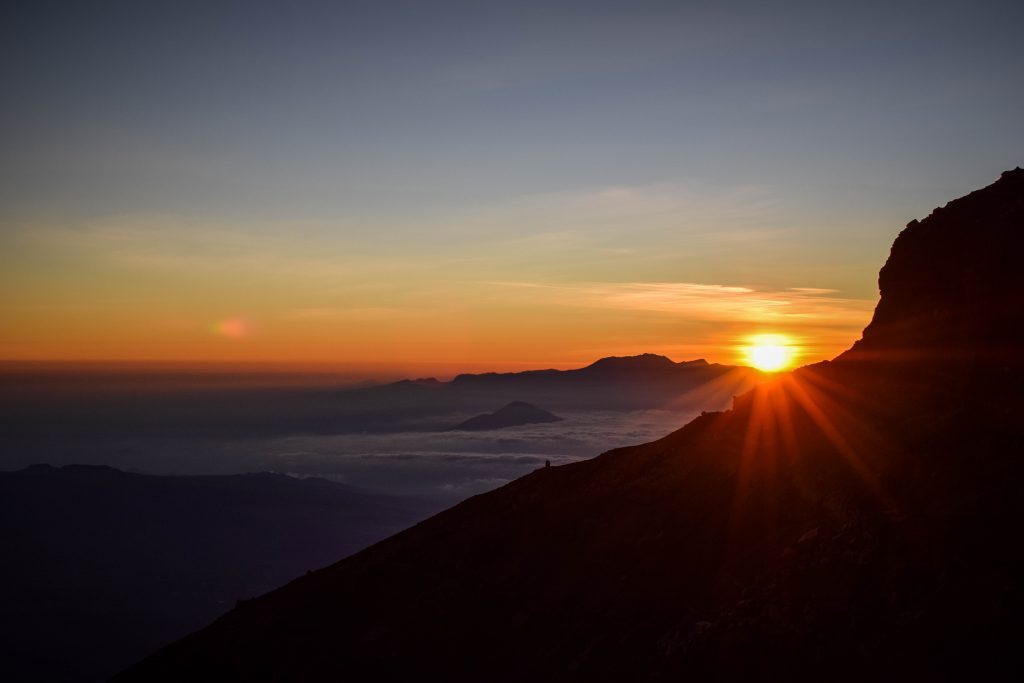
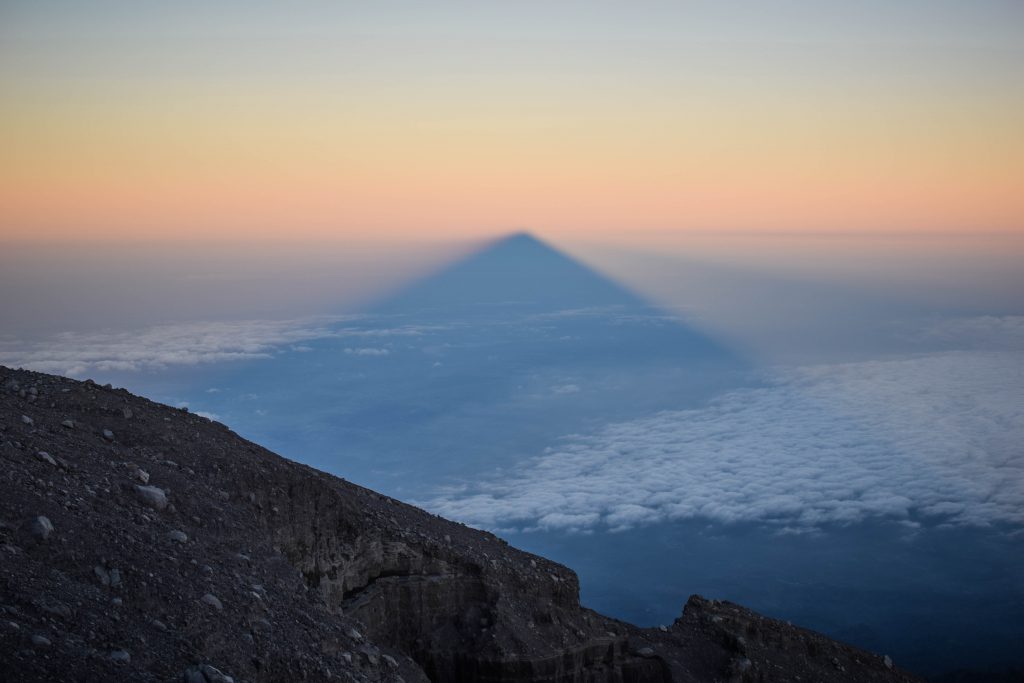
Sunrise on the way to Mount SemeruSunrise on the way to Mount SemeruThe shadow of the mountain at sunrise
Ok, I don’t want to scare you out! It’s definitely not easy but it’s doable. Just pace yourself properly and take breaks if you are running out of breath.
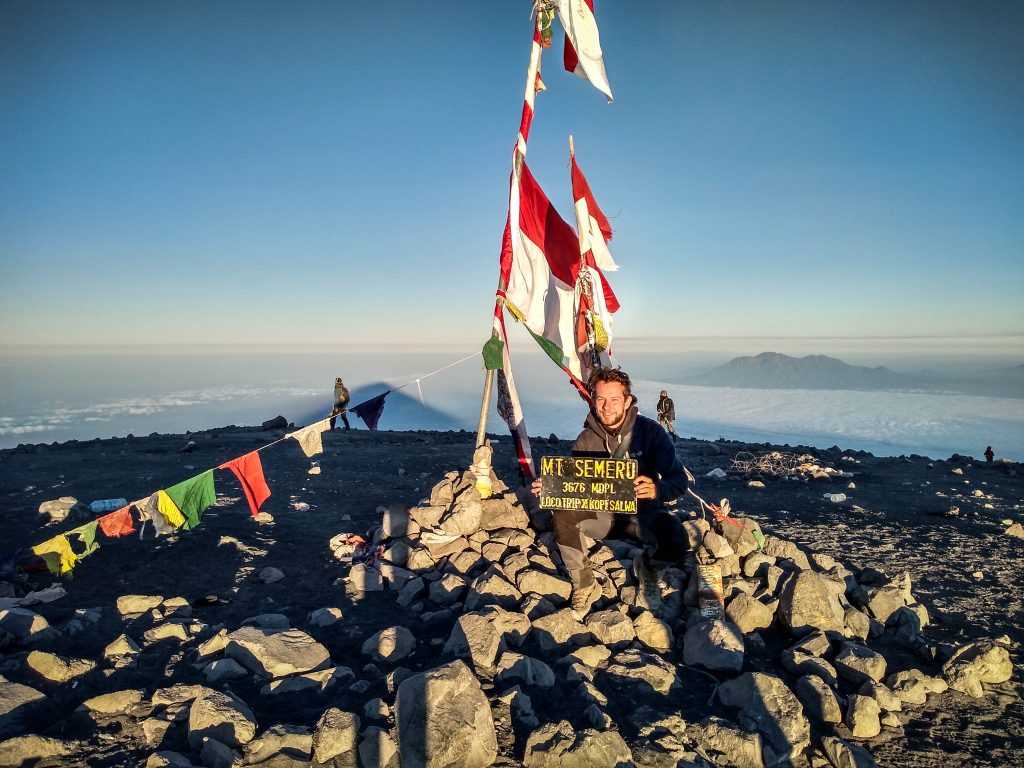
The summit is flat and there is a lot of space to take nice pictures and absorb the views. It’s worth following the trail along the ridge closer to the crater. Being the highest mountain on Java, panorama from Semeru’s top is simply spectacular. We also had a nice chat with a group of Indonesians that treated us with warm ginger drink and a soup! Having something warm in hands when resting on the summit after long and tiring ascent was exactly what we needed.
On the summit of Mount Semeru
But the best point was witnessing 2 small eruptions that happened just in front of us. Exactly the same style as we saw the day before but this time we were only a few meters away. The cloud was growing and taking its shape, hanging in the air and slowly drifting away. The whole spectacle reminds of frequent volcanic activity and the power of nature in Indonesia. In the case of Semeru, eruptions like that usually happen every 20-30 minutes so just hang around and wait for it. Be ready for one of a kind pictures opportunity!
Small eruptions can happen even every 20-30 minIt’s one of a kind spectacle!
Stage 2: Semeru summit to Ranu Pane village (6-8h)
After conquering the summit in 5 hours, the way down to the camp took us… less than 1.5 hours. Using heels and sliding all the way down is the most effective and fastest way to descent. When turning around, it was hard to imagine that we really went up this steep trail in the middle of the night.
The steep slope of Mount Semeru
We did an hour break to cook breakfast, pack all the things and then continued way back to Ranu Pane. After reaching Ranu Kumbolo Lake I started to feel really tired and made breaks more often to take off the backpack and let my shoulders rest for a while. We arrived at the village totally exhausted but extremely satisfied.
The last step was to organize jeep transportation back to Tumpang and from there taxi to the hotel in Malang. As always in Indonesia, negotiate your price and try to join a group of other hikers to split the costs. We couldn’t find anyone and after tough haggling, the driver took us for 200 IDR / person.
The Tiwi Islands, known as ‘the islands of smiles’, are definitely off the beaten track for tourists visiting Northern Territory. The main settlements are on Melville and Bathurst Islands, located around 80 km off the coast from Darwin where the Timor and Arafura seas meet. Other 9 islands are much smaller. The population size is around 2500 people, nearly 90% of whom are Aboriginal.
It is believed that Aboriginal people have lived in the area known today as Tiwi Island for at least 40,000 years.
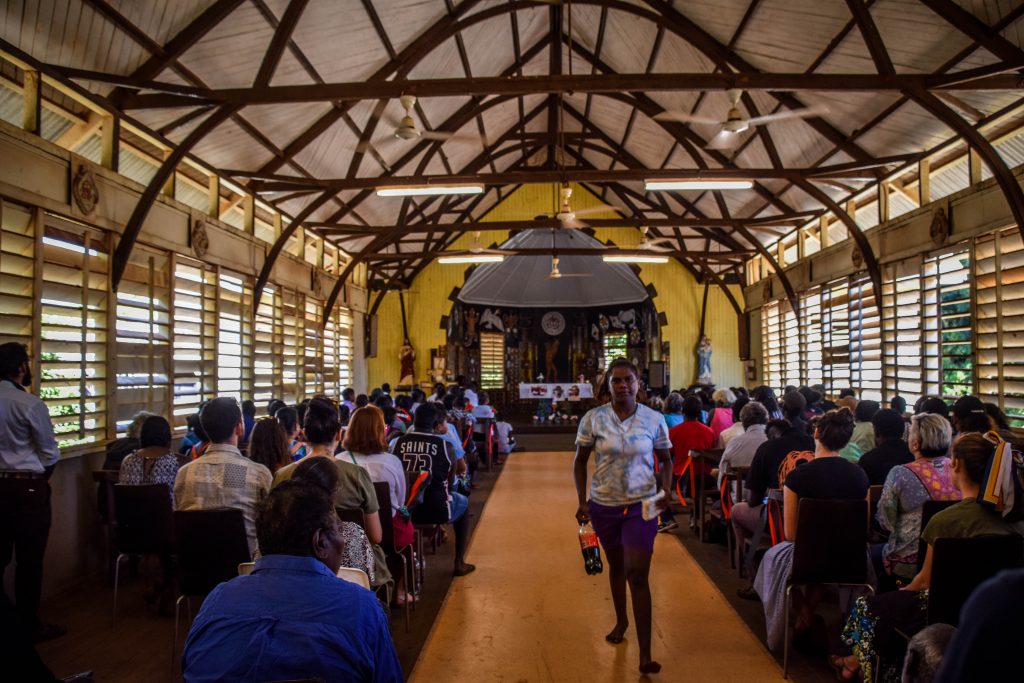
First European settlement (British) was established in 1824 but lasted only 5 years due to hostilities. in 1910 the whole Bathurst Island was declared as Aboriginal reserve and Catholic missionaries moved in. Needless to say, it had a significant impact on local culture and created an interesting mix that exists nowhere else in Australia. The traditional church can still be seen in Wurrumiyanga, just next to the ferry pier.
The islands were handed back to the Indigenous owners and today are governed by Tiwi Islands Land Council.
How to get there?
Visiting the Tiwi Islands and going anywhere further than the main settlement Wurrumiyanga at Bathurst Island requires a permit from the Tiwi Islands Land Council and rather isn’t popular among tourists.
Therefore, the best way is to go for a full-day tour or just buy a return ticket for the ferry operated by SeaLink and go independently. A permit is not needed in such cases. Obviously, I opted for the second option and it was great, though to fully learn about Aboriginal culture, a local guide would be beneficial.
Ferry tickets cost 60 AUD one way while organized tours can cost between 190 AUD to 350 AUD.
Ferry travel time is 2.5 hours each way. Check SeaLink schedule as they don’t go every day (at the time of writing it is Thursday, Friday and Sunday).
The ferry leaves Darwin at 11:15 am and departs on the way back at 3:15 pm so you will have less than 2 hours at the island. That’s not much, but enough to get the feeling of this community and have a walk around to visit art galleries and museum.
Much more expensive alternative is taking a flight. It takes 30 min to get to Bathurst Island from Darwin but it comes with the price of 175 AUD one way.
Art & Culture
Aboriginal people living on the island are known for their unique arts and crafts scene. It’s a perfect place to purchase souvenirs and items to decorate your home: pottery, wood carvings, pained shells but also textiles and clothing.
There are three art centres, museum, the old Catholic mission precinct and Pukamani (burial) poles in the cemetery, all within walking distance in Wurrumiyanga.
Patakijiyali Culture Museum
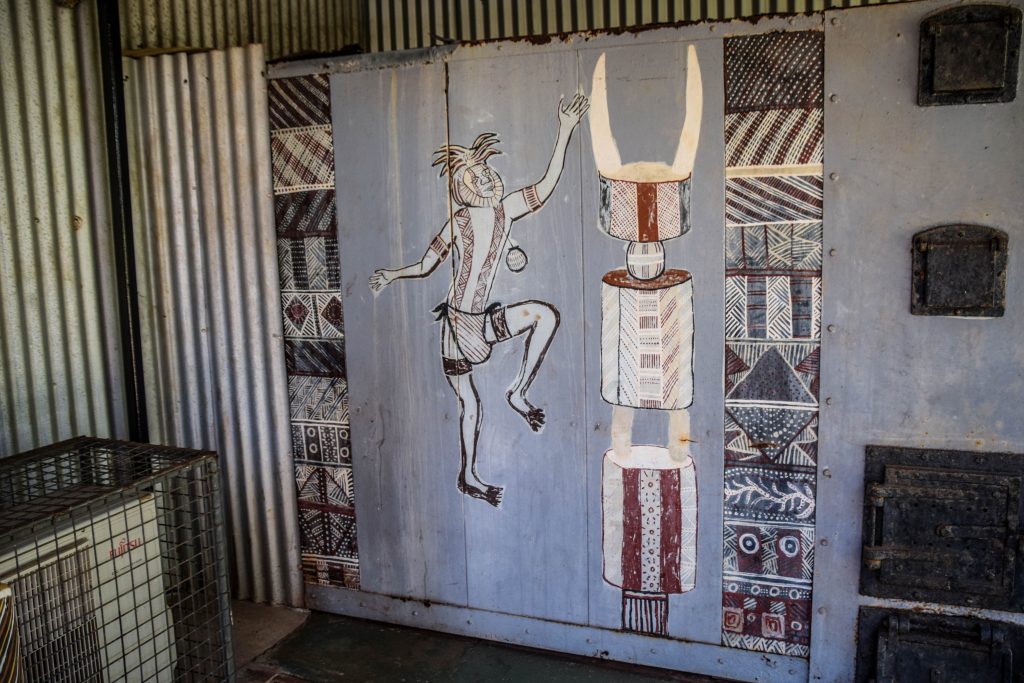
Amazing place to dive into thousands of years old and rich Aboriginal culture. Beautifully crafted rooms display traditional art and sculptures depicting Dreamtime stories as well as old photographs, history of Catholic mission, WWII times, local athletes, flora and fauna that can be found on the islands.
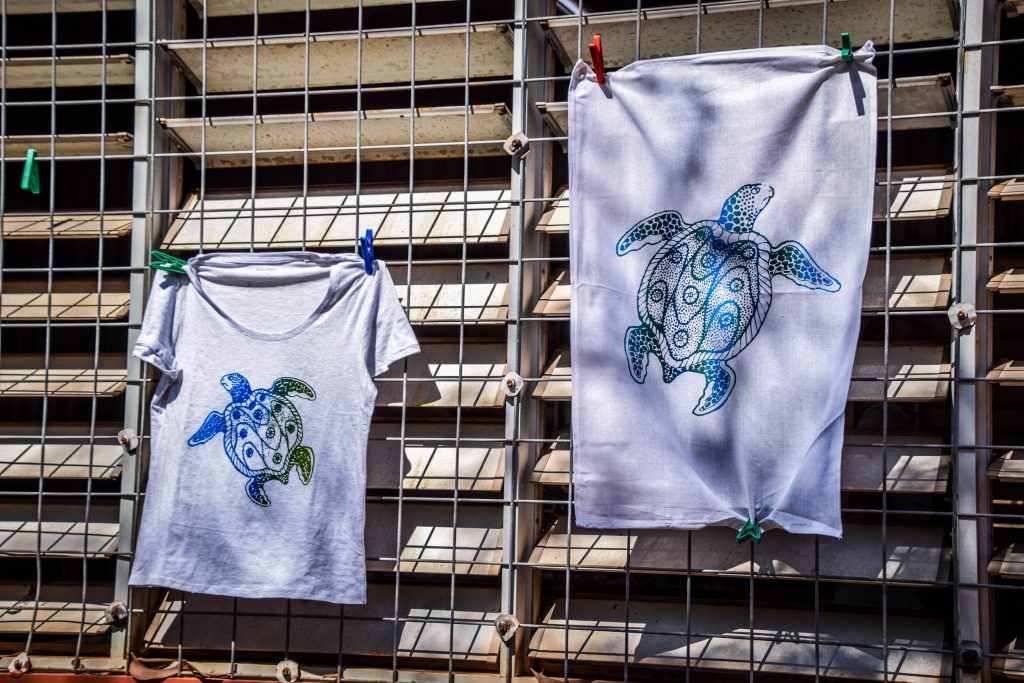
Tiwi Design
They produce ochre paintings on canvas and bark, ironwood carvings, screen-printed fabrics, ceramics and bronze and glass sculptures.
Traditional Church
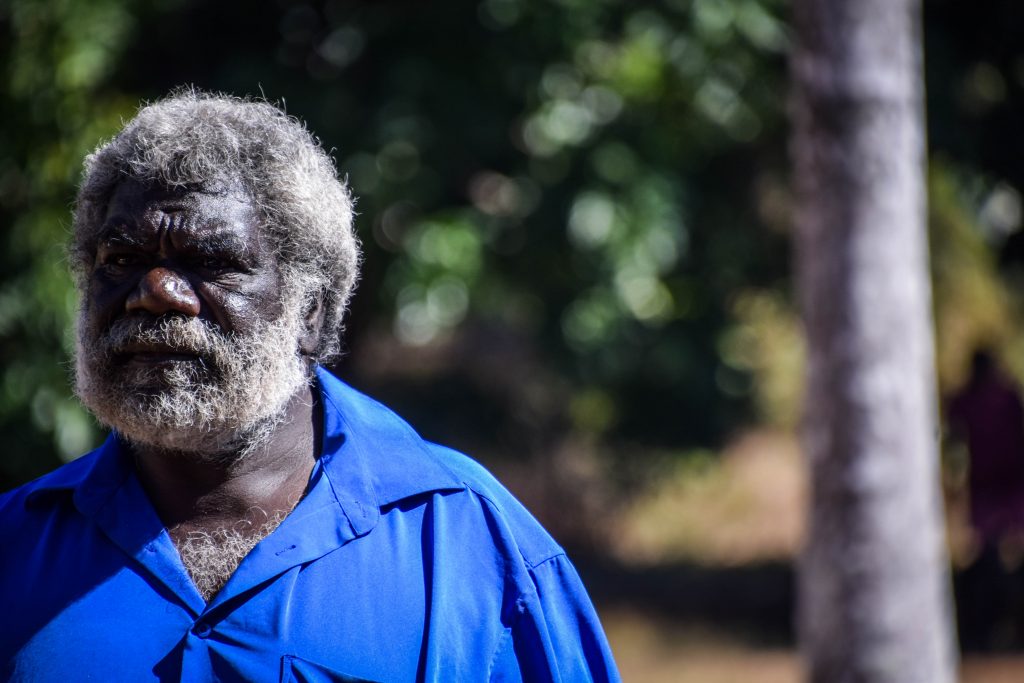
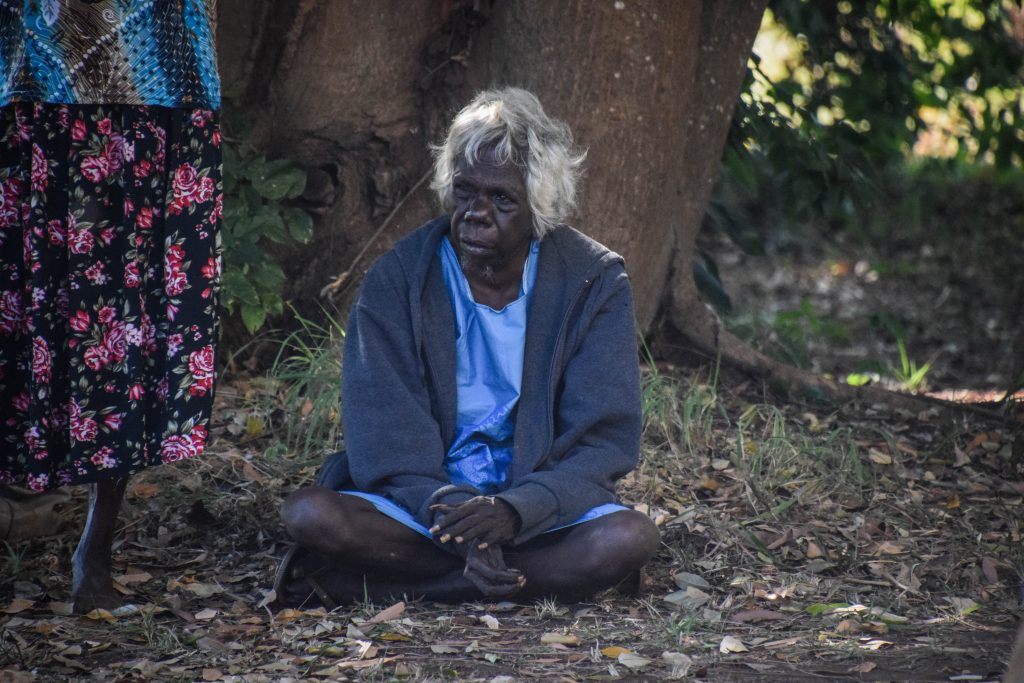
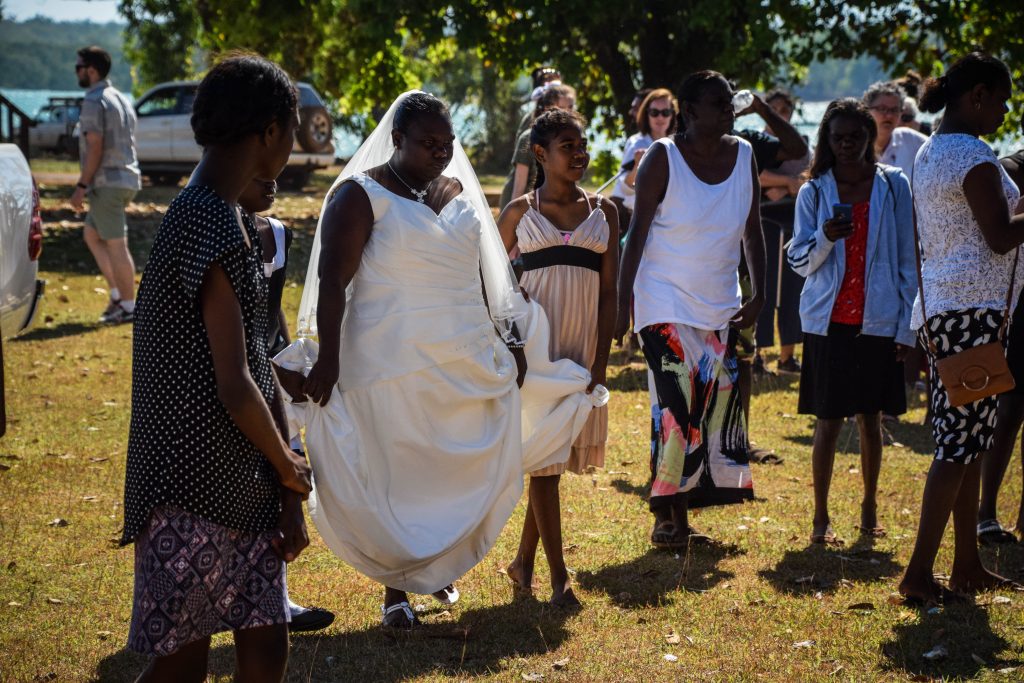
When I’m there, the place is full of worshippers, guests, curious tourists…and dogs cheerfully running around everyone. The wedding was about to take place. It looked like a big deal as the whole village gathered here to celebrate. Art centres were temporarily closed and the museum was open but left without any supervision.
It was definitely the highlight of my trip to Bathurst Island and an amazing opportunity to take great photographies of the people. Moreover, I felt very welcome in the Aboriginal community.
Nguiu Catholic Church Precinct
The Catholic Church precinct was established by Bishop Francis Xavier Gsell MSC in 1940. It includes timber made buildings such as St Therese’s Church, Presbytery and a radio shack.
Cemetery & Pukamani poles
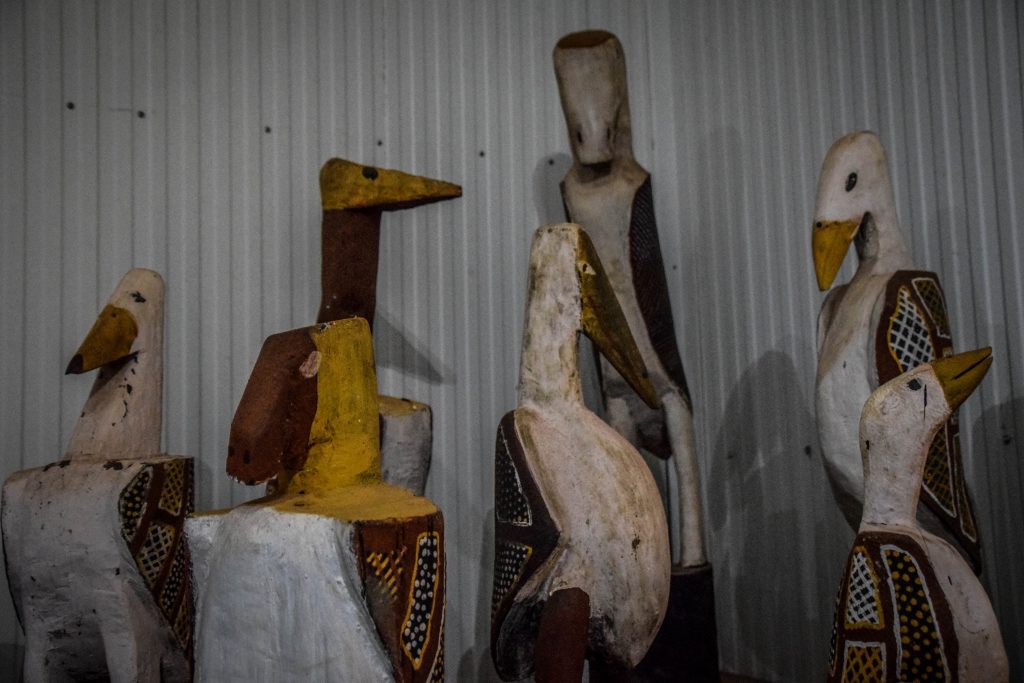
Pukumani poles (also known as tutini) are made from carved wood and painted with natural pigments presenting a deceased person’s life and spiritual journey. Then, they are placed around the burial site as it is believed that the spirit may be present near the body. Rituals involving dance, music, and art are performed at the gravesite to guide the spirit into the afterworld. Painted lines and dots are also applied to the bodies of the living to make them invisible for the spirit. After the ceremony, the burial poles are left to decay.
The ritual originates from the Dreamtime story of Purrukapali and explains how death appeared in Tiwi culture through love, betrayal and rage.
Purrukapali had a wife named Bima and a son named Jinani. One day Bima left their son under the shade of a tree so she could spend some time alone with her lover, Purrukapali’s brother. Unfortunately, the time was passing fast and the shade disappeared leaving young Jinani exposed to the burning sun and imminent death.
Purukaparli was so devastated that he attacked and wounded his brother who flew into the sky and became the moon. Then, he took up his son and carried him in his arms as he walked into the sea towards his own death. At this moment, he declared that no one would avoid death. Bima became the curlew bird, whose wailing cries can be heard at night.
Football mania
Australian rules football was introduced by missionaries and it’s definitely the most popular sport on the islands. Every March, Tiwi Islands Football League final is celebrated at Wurrumiyanga on Bathurst Island which brings thousands of spectators. The teams compete during the wet season, from October to March.
Was it worth coming?
Definitely yes. Even though my time on the island was very limited by the ferry schedule, I had the chance to get to know Aboriginal culture even more and understand their art and beliefs. Without doubts, the highlight was the wedding, where I could see the whole village gathering to celebrate together. Due to the isolation from mainland Australia, the community is bonded together and such events make it very visible.
There are endless hiking possibilities in New Zealand and if you nature enthusiast, that’s the perfect country for you. I prefer camping, however, with the network of more than 950 backcountry huts operated by the Department of Conservation (DOC), carrying your own tent all the way is not always needed.
10 tracks with the status of the Great Walk are multiday adventures located in the most scenic landscapes in the country and providing hikers with good facilities. My story with them is rather simple. I went for one (Tongariro Northern Circuit) and I knew that I want to complete all of them.
North Island
Tongariro Northern Circuit
Distance: 41 km
Time: 2-4 days
Definitely my favorite walk on the North Island. It was also my first Great Walk after arrival to New Zealand so I’m still sentimental about it. Being a loop, there is no hassle with extra transportation so it’s also budget-friendly.
I was extremely lucky with the weather and even though I initially planned the hike for 3 days, I finished it in 2 days which is perfectly doable but tiring. Do it in 3 days or 4 days if you like a more relaxed pace.
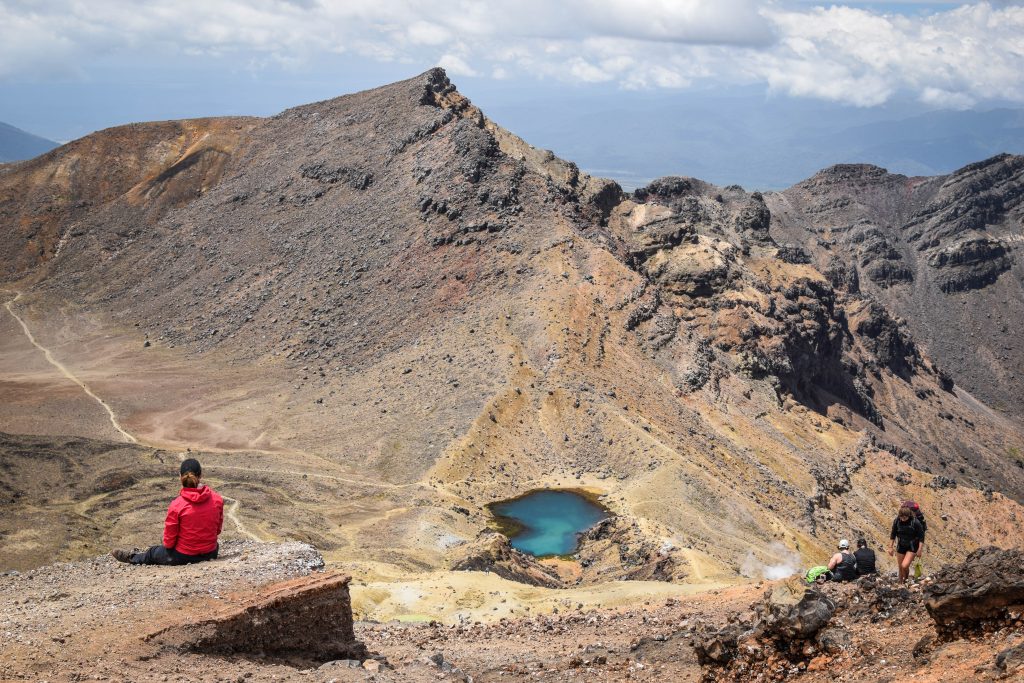
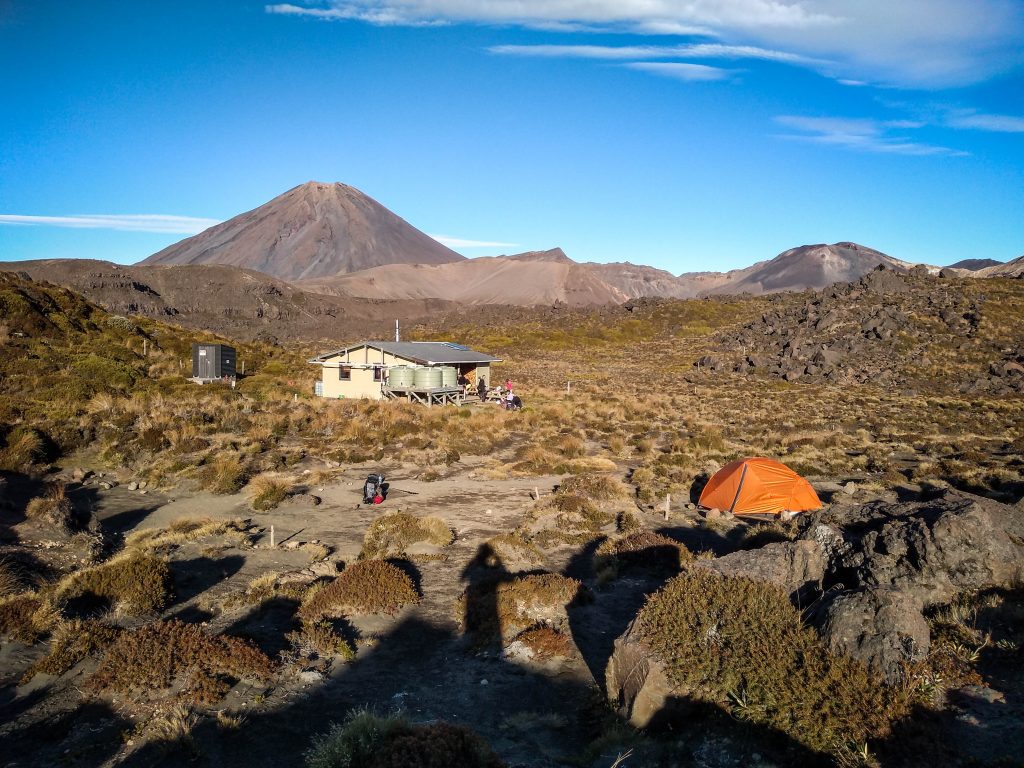
The track meanders through the rugged volcanic landscape with cones of Mt Tongariro, Mt Ruapehu and Mt Ngauruhoe around you. It includes most of Tongariro Crossing which is a day hike done by most of the tourists coming to Tongariro National Park and this section can get crowded.
Don’t miss Blue Lake, Tama Lakes and Taranaki Falls as side trips. They are all worth it!
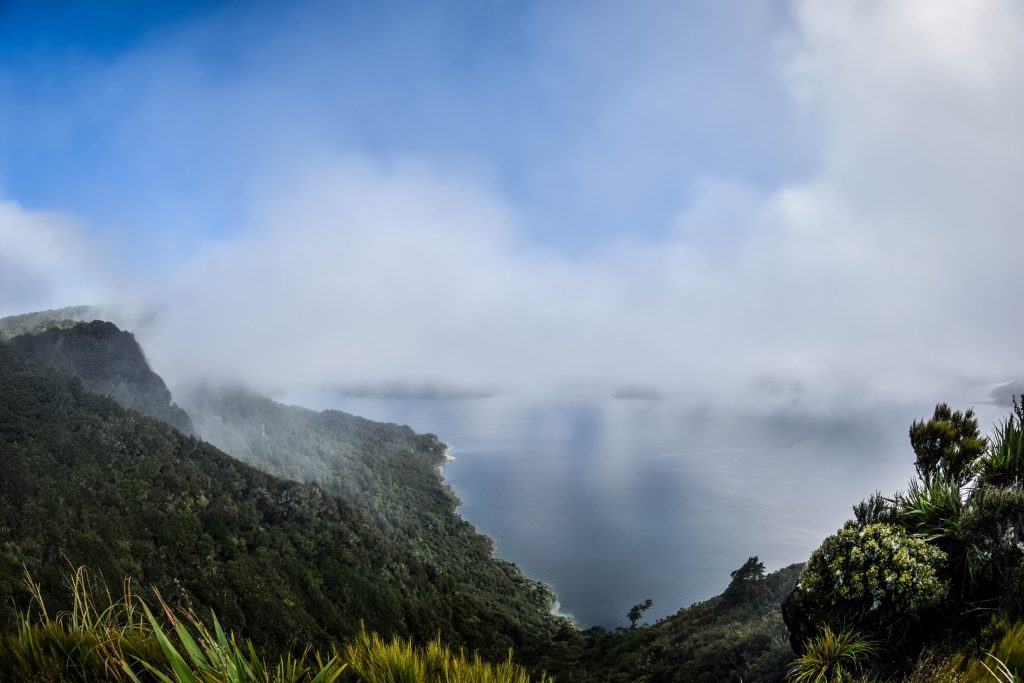
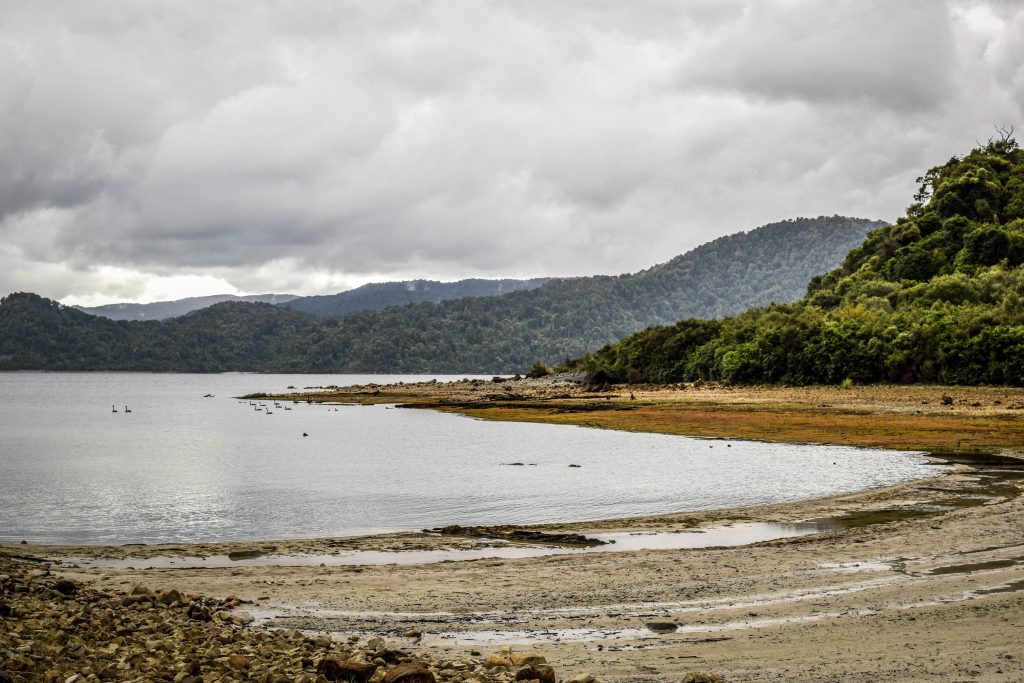
The track follows the shoreline of Lake Waikaremoana and if fairly easy except quite a steep uphill section between Onepoto and Panekire Hut (if walking from Onepoto) or Waiopaoa Hut and Panekire Hut (if walking from Hopuruahine Landing). Rainforest, waterfalls, beaches – you have it all here. Just don’t forget your swimwear!
I started the track at Onepoto and in this way covered the more difficult uphill section on the first day.
Whanganui Journey
Distance: 87 or 145 km
Time: 3-5 days
First of all, it’s not a walk. Unless you can walk on the water. If not, then grab a kayak or canoe, pack your things into waterproof containers and paddle your way down the Whanganui River.
The full version is 145 km long, starts at Taumarunui and finished in Pipiriki (5 days). If you are not such a big enthusiast of paddling, start at Whakahoro instead and cut the distance to 87 km (3 days).
It’s worth stopping at the Bridge to Nowhere, that was built in the times when soldiers coming back from World War I were granted land in the area. The land proved too difficult to cultivate and after building the bridge in the middle of the bush, the plans to continue with the road were abandoned. Therefore, today it’s quite a unique tourist attraction in the beautiful scenery.
Whanganui National ParkWhanganui National Park
South Island
Abel Tasman Coastal Track
Distance: 60 km
Time: 3-5 days
The trail goes along the coast and many hikers rate it as one of the easiest of Great Walks. There are several great campsites on the way where you can pitch your tent on the sand and even enjoy the shower. Jumping in the kayak and doing the whole route or only some fragments from the water perspective is a nice and popular alternative. It’s not a loop so at the end of the track, take a water taxi back to the starting point or if you have a couple of more days to spare, walk back via alternative inland track.
I did it over 3 days starting at Marahau and it seems to be an absolute minimum if you want to cover the whole distance. I camped at Onetahuti Bay and Totaranui. For more relaxed experience and longer breaks at the spectacular bays and beaches, plan 4 or 5 days.
There is one really critical tidal crossing at Aweroa that is passable 1.5 hours before and 2 hours after low tide under normal conditional. Therefore, plan your day accordingly and check tides hours online as there is no alternative way. For me, it was one of the most unique and breathtaking spots on the trail. Oystercatchers wandering around looking for food, a huge area with sand shaped by the water, hilly background and adventurous crossing on its own, sometimes with water above my knees.
Heaphy Track
Distance: 78.4 km
Time: 3-6 days
The longest and one of the most diverse of Great Walks. Being located in Kahurangi National Park, it takes not only good shape to tackle it, but you need extra cash to organize logistics. To come back from one trailhead to another, it’s a long bus trip that takes around 5 hours and costs over 100 NZD.
I hiked the track in 3 days. The first one was a mostly uphill walk in the mountainous area and forest. The second day was way flatter and the forest gave place to wide grasslands at the end arriving at the West Coast. On the last day, walking along the beach I got the chance to admire one of the most remote coasts that I have ever seen.
I spent the nights at Saxon and Heaphy campsites and both had superb location.
Outside of the Great Walks season (1 May – 30 November), it’s allowed to go on the track with a mountain bike.
Paparoa Track
Distance: 55 km
Time: 2-3 days
The only Great Walk that I didn’t experience but that’s because it’s a brand new one due to open in the second half of 2020. When I see its location on the West Coast, I have no doubts it’s on my bucket list for the second visit in New Zealand.
The track crosses the rainforest and the Paparoa Range. According to the Department of Conversation (DOC), mountain bikers are allowed as well.
Routeburn Track
Distance: 32 km
Time: 2-3 days
My favorite of 3 Great Walks in Fiordland National Park. It’s short but breathtaking and there are no boring sections. The weather on my first day was simply horrible with pouring rain and strong winds all the way. But if everything is booked…. gotta go 🙂 Luckily, it had a positive side too, as the passing dark clouds were extremely photogenic.
I spent the night at Lake MacKenzie campsite trying to dry my completely wet clothes at least a little bit. Of course, I failed.
The second day was much better and the sun welcomed me as soon as I opened the tent. After a full day of rain, the Earland Falls were so huge that I had to take a detour built for such situations.
It’s a great track for mountain enthusiasts. I recommend making a side trip to Key Summit which takes around 1.5-hour return. Leave your heavy backpack at the crossroad, there is no need to carry the things all the way up.
[update from DOC website as of 15.03.2020 – check regularly for further news]
The Routeburn Track partially reopens from 12 March 2020 as a new walking experience, named Routeburn Return. It’s a 4-day, 3-night hike beginning and ending at the Routeburn Shelter. This return journey starts and finishes near Glenorchy.
Routeburn Return replaces the Routeburn Great Walk, which is closed for the rest of the season due to storm damage.
The Routeburn Return route may be more challenging than the usual route because of changes in elevation and one of the days is longer than a usual Great Walks experience.
Kepler Track
Distance: 60 km
Time: 2-4 days
Being a circuit makes it easily accessible and budget-friendly. I did it over 2 days in a clockwise direction with overnight at Iris Burn but I must say it was pretty challenging and I finished completely exhausted.
The weather conditions in Fiordland National Park are pretty unpredictable which I experienced on the second day. The thin layer of snow was covering the ground and people coming from the other direction said that yesterday they were walking in a snowstorm. I was really lucky that DOC advised me to follow the clockwise direction!
There are limestone caves near the Luxmore Hut that make for a nice side trip. Take a torch!
Milford Track
Distance: 53.5 km
Time: 4 days
Only 40 independent hikers can start the track each day which makes it extremely difficult to book. I did it 4 months in advance, refreshing the page several days hoping for someone to cancel. I got lucky, but it’s also easier for solo travelers.
This time I left the tent in the car as camping on Milford Track is not allowed. Even though it’s only 53.5 km long, you need to stay in all 3 huts on the way. It has pros and cons. I could easily walk such a distance in 3 or even in 2 days. On the other hand, I was ‘forced’ to take it slowly having more time to appreciate nature. Which was just fine. However, the popularity of the track, lack of campsites and additional transport from one end to another, demand quite a big budget as for the hike in the mountains.
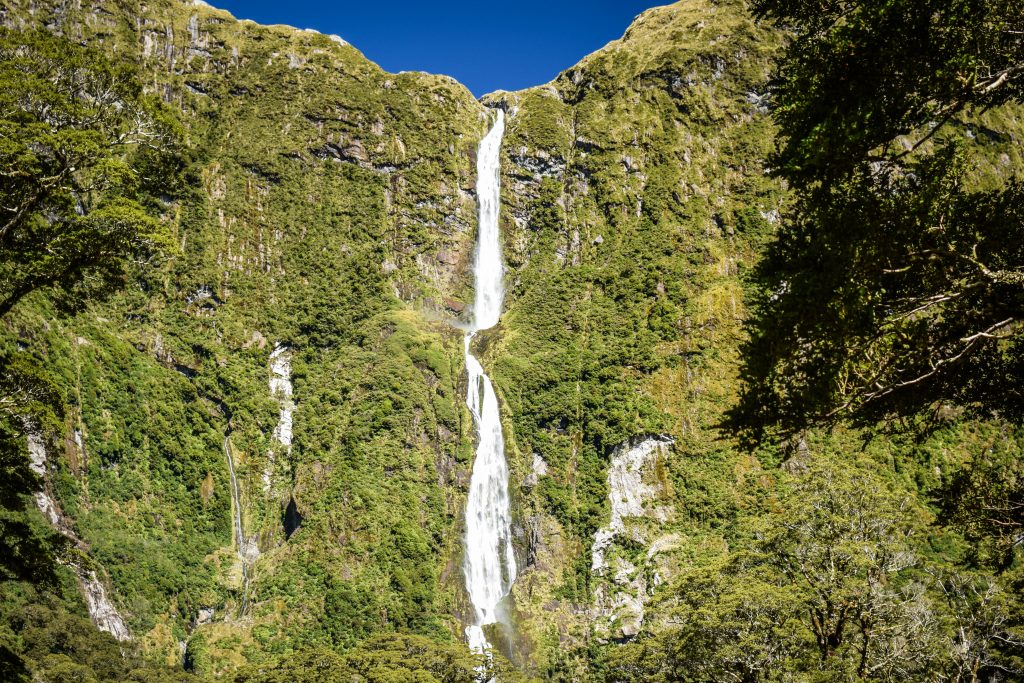
And even though it’s my least favorite of Great Walks in Fiordland National Park, there is still a lot to appreciate. Spectacular views from MacKinnon Pass, the highest waterfall in New Zealand – Sutherland Falls (580m) and of course plenty of wildlife.
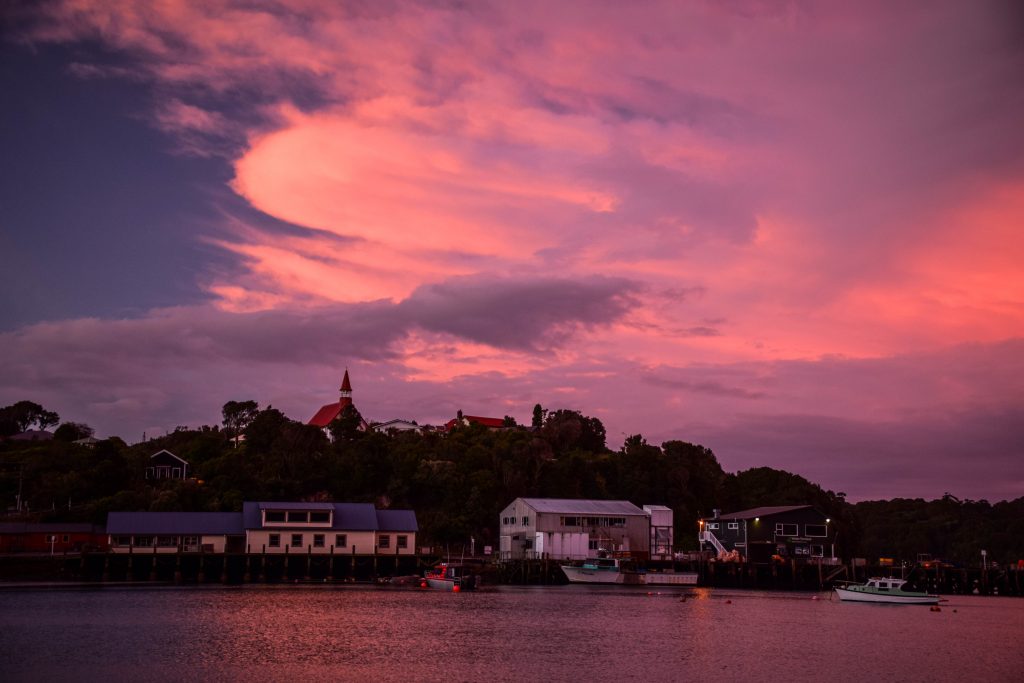
Rakiura / Stewart Island
Rakiura Track
Rakiura National Park covers around 80% of the island and is home to the least crowded of Great Walks. I booked my camping tickets only 2 days before departure which would rather not be possible on other tracks in the middle of the season.
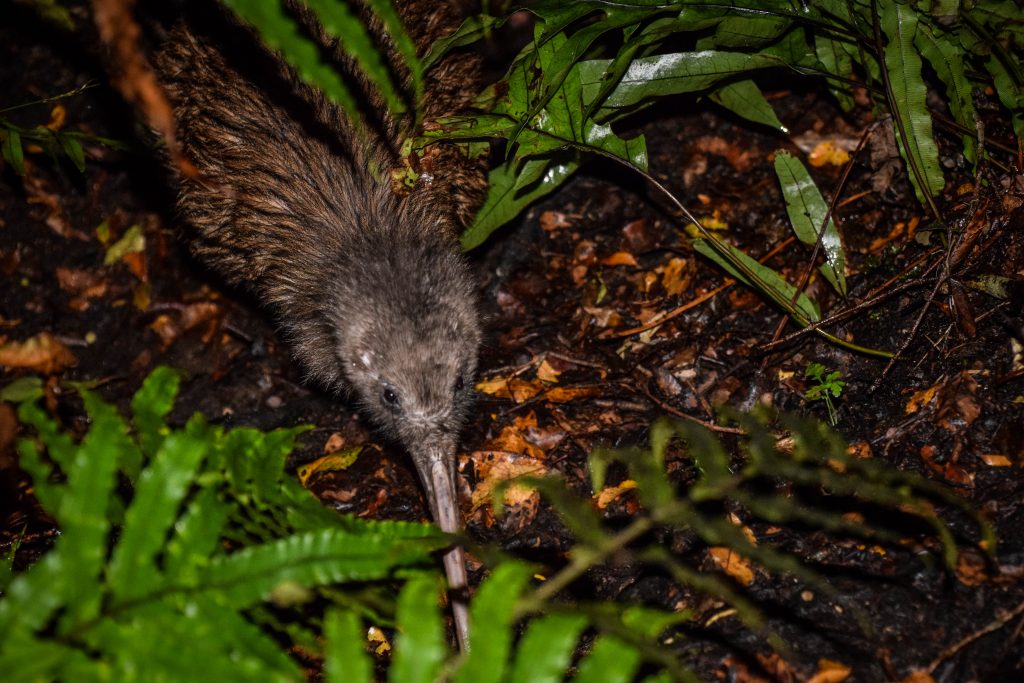
You will hike along sandy beaches and through the forest but the most interesting part is the chance to see the kiwi. It’s the best place in the whole of New Zealand to see its symbolic bird. Apparently it’s possible even in the daylight! I suggest waking up around midnight, taking headlight (best with the red light mode that doesn’t scare kiwi off) and walking quietly around the camp.
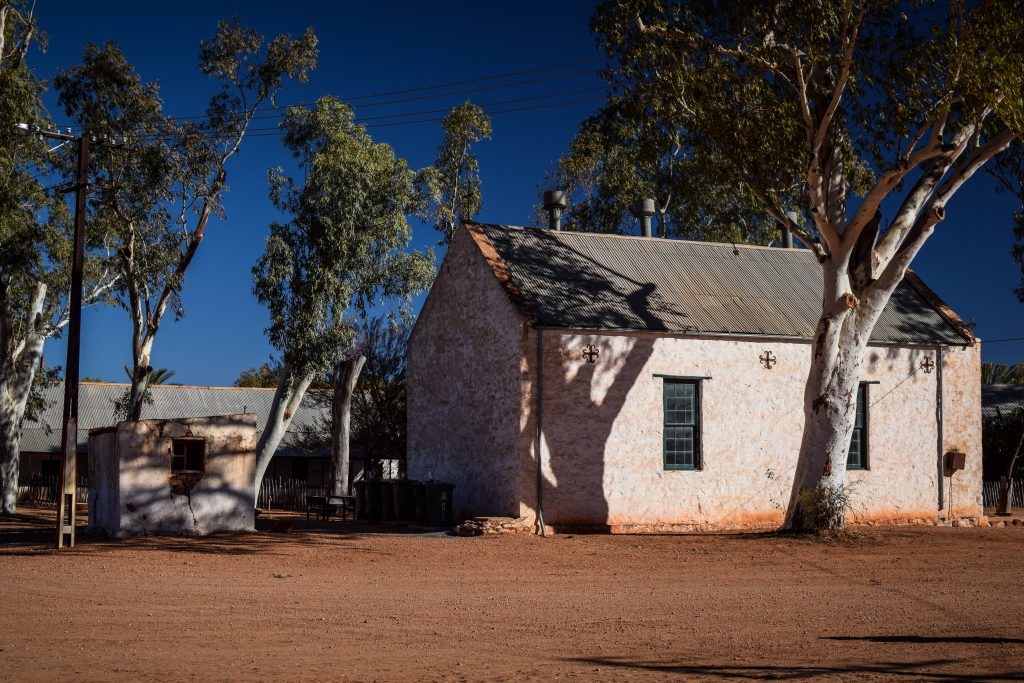
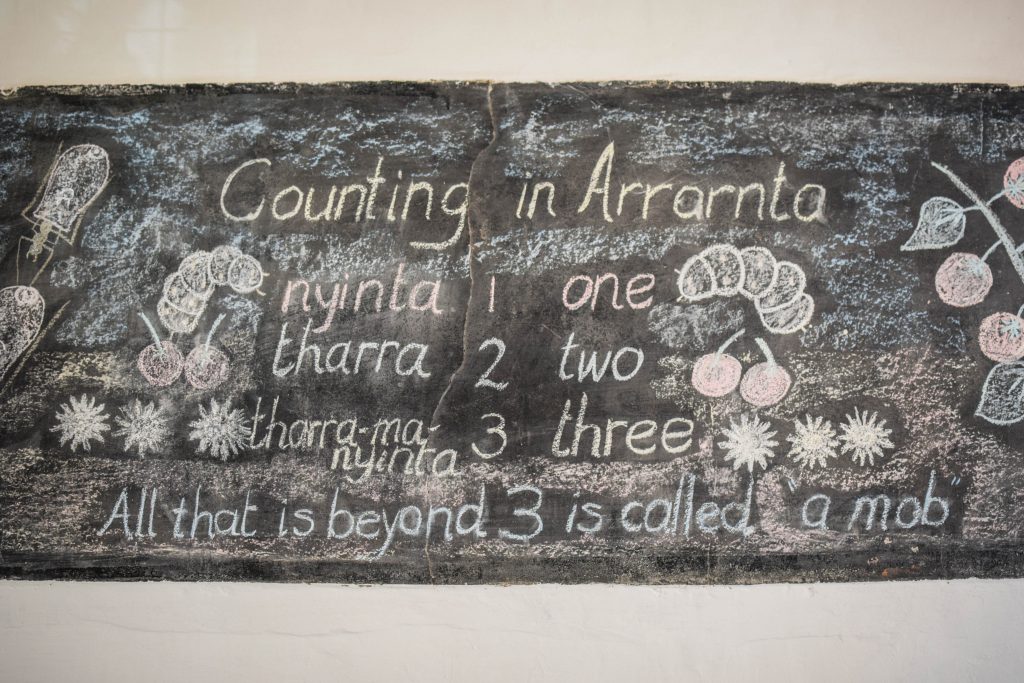
This Aboriginal community is on the way to Palm Valley, therefore its historic precinct is very often visited by organized groups on day tours. It was established in the 1880s as a Lutheran mission by German pastors, hence its name. They constructed characteristical buildings including a church, school and several houses. Today, you can enjoy your time in a tea shop, museum and the Namatjira Gallery.
Albert Namatjira is a world-famous Aboriginal watercolor artist born in Hermannsburg. Due to his art, he gained an appreciation and became the first Aboriginal person to get restricted Australian citizenship allowing him to vote, buy alcohol and claim land rights. In 1953 Namatjira was awarded the Queen’s Coronation Medal and in 1968 he was honored on an Australian postage stamp.
You can admire his works in many museums all around Australia and don’t forget to check the ones in the museum in Hermannsburg Historic Precinct.
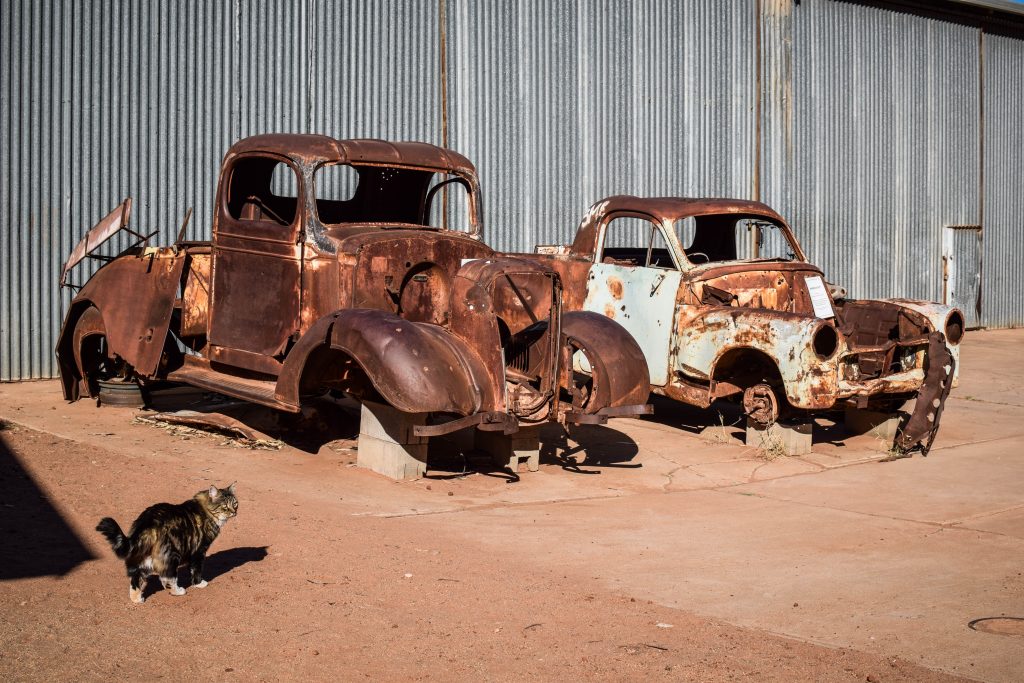
Lutheran mission buildingsOld cars from Lutheran mission timesSchool building in Historic Precinct
Palm Valley
Palm Valley lies within Finke Gorge National Park that covers an area of around 46.000 hectares in Central Australia. Why is it so special? Because it’s like an oasis filled with around 12.000 Red Cabbage Palms after which the valley is named. There is no other place like that in the region and the nearest specimens are 850 km away in Queensland.
Why are there palms on the desert?
One of the very first versions claimed that palms are survivors from prehistoric times when the climate in this region was far more tropical. However, recent studies proved that the same species of palms grow around 1000 north around Mataranka and Katherine. It is believed that the seeds were transported from one place to another by migrating people 15.000 – 30.000 years ago. Why did they move? That remains uncertain and we can only speculate: the rise of sea levels, bushfires, etc.
The theory would, in fact, go in line with Aboriginal legend telling about palm seed brought by the ‘gods form the north’. Is it really possible that the legend survives more than 15.000 years? I don’t know but I like to believe it is. It only adds magical feeling to this already extraordinary place.
The landscape around Palm Valley
While Red Cabbage Palms are the main actors in this theatre, there are about 684 species of plants living in Finke Gorge National Park, 30 of them being rare and 16 that can be found only here.
The Amphitheatre
How to get
there?
You would need 4WD and I mean it. In many parts of Australia, I managed to access remote attractions with 2WD, just taking it easy and driving on corrugated dirt with care. But here, it certainly wouldn’t be possible. You will drive on a sandy bad of Finke River after all!
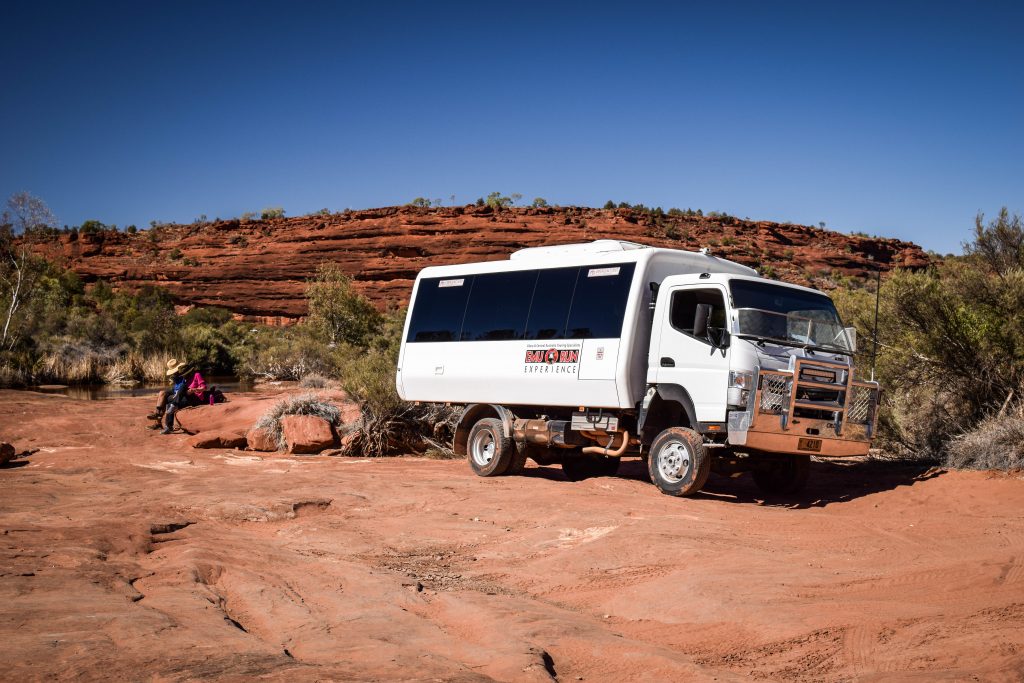
Therefore, without high clearance 4WD, I would suggest going for an organized tour as I did. It was a totally hassle-free experience in a 4WD truck and commentary provided by our guide Bluey from Emu Run Experience was probably the biggest advantage! Daily tours depart from Alice Springs and from there it takes around 2 hours to get to the national park. Besides Finke River National Park, they usually stop at Hermannsburg as well.
The truck from Emu Run Experience tour operator
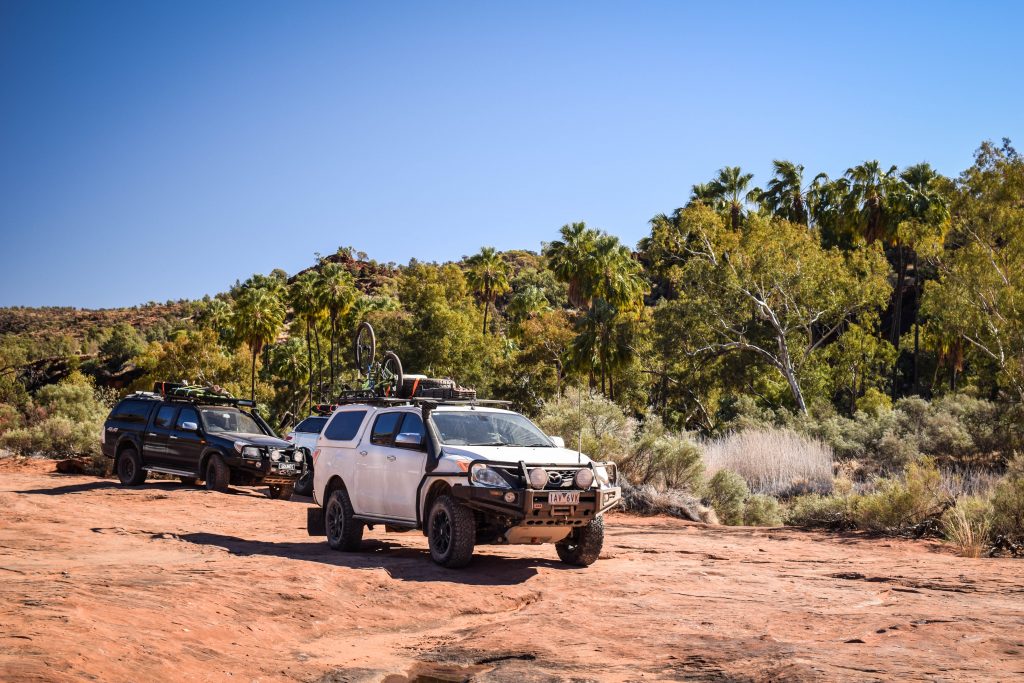
On the way back we saw 4WD Toyota Hilux in trouble when the driver went too fast and broke suspension which in the result made a puncture in the fuel tank. The fuel leaked out completely in just a few seconds and that was the end of the trip for unlucky ones. Other tourists gave them a lift to Alice Springs where they had to find a mechanic and spare parts and then come back to Palm Valley to fix the car onsite. Difficult Aussie life!
Well prepared 4WD vehicles are essential to access Palm Valley
Overnight
If you travel independently you may want to set your camp at the dedicated spot and spend a night in this remote area. It must be an amazing experience and I would certainly do so next time. There are showers, toilets and barbecues provided. Don’t forget to take some cash to pay onsite.
Walks in the area
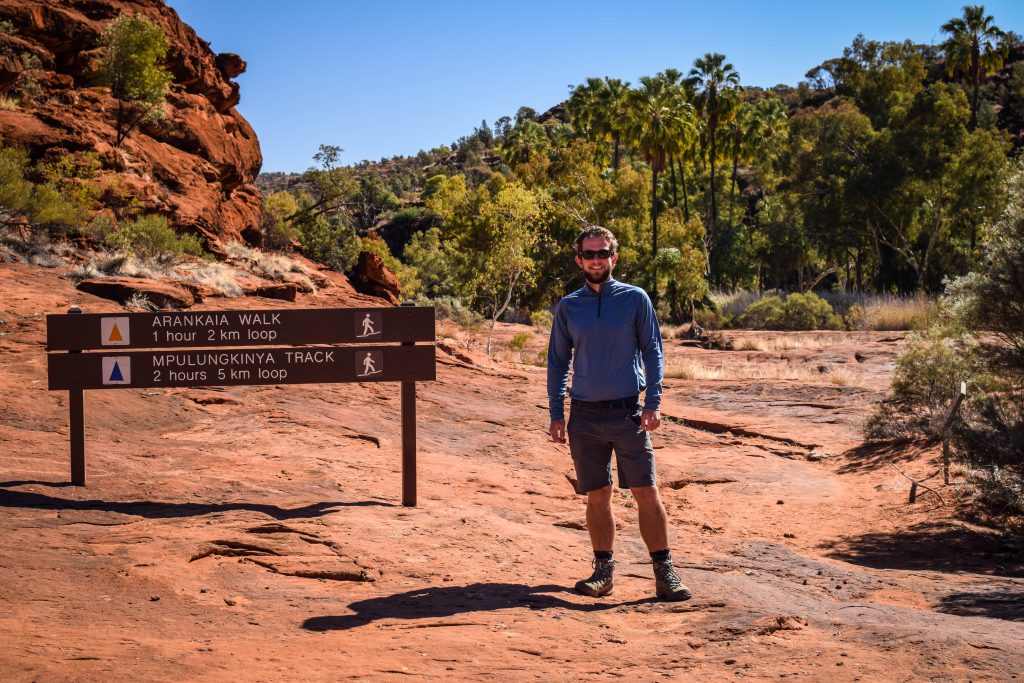
Arankaia Walk (2 km, 1-hour return) – located in Palm Valley itself it gives you the best opportunity to admire these spectacular plants.
Mpulungkinya Walk (5km, 2-hours return) – the longer version of Arankaia Walk.
Kalarranga Lookout (1.5 km, 45 min return) – easy ascent to the top where I was rewarded by the panoramic view of the national park and surrounding amphitheater of rocks. It’s a breathtaking spot for sunset, so if you camp overnight, get here on time!
Mpaara Walk (5 km, 2 hours return) – it’s a nice walk but also cultural experience describing the mythology of Western Aranda Aboriginal people. The start is at Kalarranga parking.
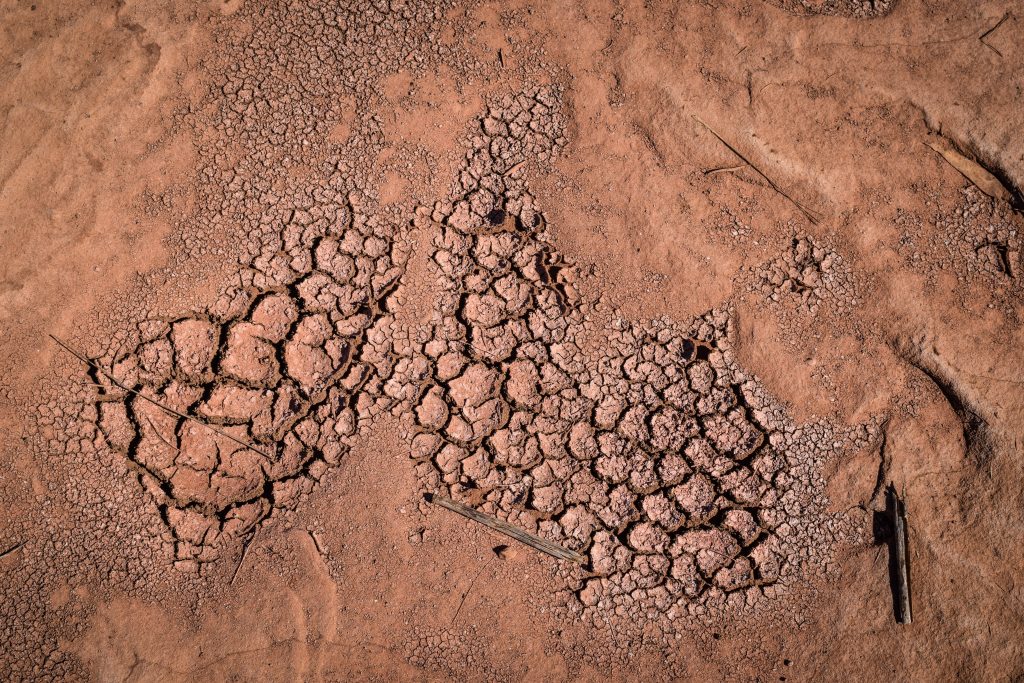
Trailhead of Arankaia and Mpulungkinya tracksThe arid ground in Palm Valley
A few things to remember
Please don’t ignore the guidance provided by Finke River National Park:
Camping is only permitted in the designated camping areas at Palm Valley and along the Finke River at Boggy Hole.
Collect firewood before entering the park.
At Palm Valley, fires are only permitted in designated fire pits.
Pets are not permitted in the National Park.
Rubbish bins are not provided, so take your rubbish with you.
If traveling the Finke River 4WD route, stay on the marked track.
Be careful where you walk and stay on the marked tracks. Young palms can be destroyed by visitors not realizing what they are walking on. The regeneration of the palms is needed for the survival of this population.
It seemed to me that nowadays we live in a digital world and printing out photos is not that common (at least for the personal use). But in fact, it has never been easier and there is a lot of companies offering similar services. With modern technology and software, we can customize our work, have it printed on the high-quality paper and simply wait for the delivery at home.
Why Saal Digital?
Some time ago, tempted by Facebook ads, I volunteered to test the Saal Digital photobook. The company has conducted an interesting campaign in which I received 200 PLN coupon for creation of my first photobook in exchange for the review. I thought it was worth a try.
Saal Digital is a German photo printing company and besides photobooks, you can make your own coupons, cards, posters, calendars, photo booklets, wall decors, and various photo gifts. Have you ever thought about designing a book with your best photos, either for personal or commercial use? Then the offer of Saal Digital may sound tempting.
In the following review, I will share my impressions about the creation of my first photobook and the final result. I must underline that I am more travel than event photographer and I made the photobook with the aim to store memories rather than creating an album for commercial use.
Detailed parameters of my photobook:
26
pages
28×19,
photo
paper glossy
cover:
glossy, unpadded
barcode:
without barcode
How to start?
We can either use dedicated software, use online creator with automatic layout design or upload the project from external software such as Adobe Photoshop or InDesign. I decided to use dedicated software which was fun to play with.
After designing the pages, all you have to do is send your project to the server, fill in the address details, make the payment and wait for the courier with your package.
It’s worth mentioning that the company offers ICC profiles for soft proofing for download. Thanks to this, you can simulate a printout on your monitor.
Software
Dedicated software can be installed both on Windows and Mac OS. The interface is intuitive, and it didn’t take me more than an hour to have the first draft of my photobook ready. I was playing with several available layouts and templates to choose the one the fits me best. If none of them fulfil your expectations, needless to say, you can create your own.
Delivery
The book is printed and sent from Germany and the delivery shouldn’t take too long. In my case, I had it in my hands only 4 days after ordering. The book was packed into thin foil and cardboard. I thought – is that it? I can see a big space for improvement here to ensure that books are delivered without any damage.
Design & quality
The glossy paper on the cover and inside is of high quality and doesn’t get dirty or leave marks after touching with fingers. All pages seem to be well glued together and I have the feeling I can use the photobook for years without being overprotective.
The
photobook can be laid flat, which in my opinion is its additional advantage.
Thanks to this, we can view whole photographs. It also prevents damage to the
back.
The paper used for printing is Fuji Crystal Archive Album. The thickness of this paper is 0.16 mm. Due to the fact that two sides are glued together, the thickness of one card is 0.34 mm including a layer of glue.
The photos are incredibly detailed, well saturated and I can’t really say a bad word about their quality.
On a negative side, I find it odd to pay more for removal of the small QR code on the back cover. You can remove it for an additional fee of 7.50 USD.
Conclusion
I really enjoyed my experience with the creation of my first photobook and I didn’t expect it to be that simple. Several available layouts fully satisfied my needs and once I had my photos selected, then it was just like putting all the puzzles together. The printing quality was high as well.
I made the photobook to keep the memories from travels and for that purpose, it’s a perfect product. However, giving it a more professional look, especially when it comes to the cover, would significantly increase the cost. Leather or natural linen finish costs 27 USD extra and gift boxes from 30 USD to 67.50 USD.
I would definitely recommend Saal Digital photobook, from the perspective of a non-professional or semi-professional photographer that needs a product that helps to recall memories or serves as a gift for special occasions.