Tag

featured

Browsing

Introduction

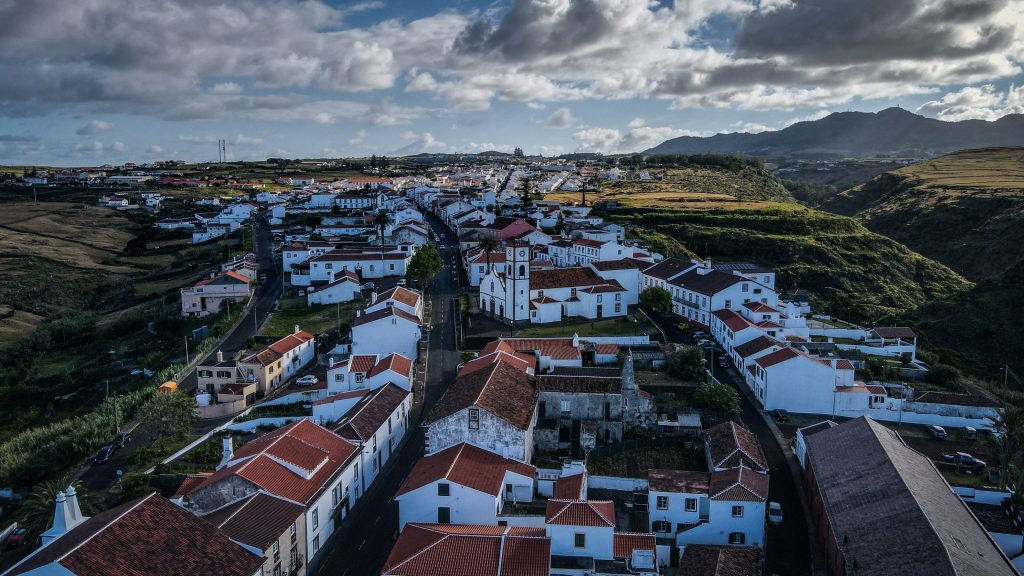
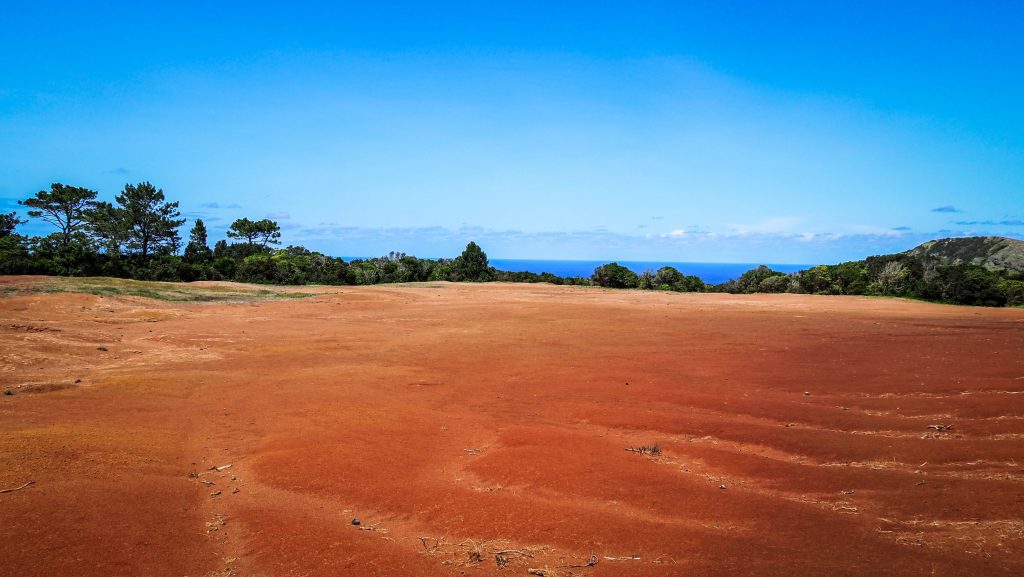
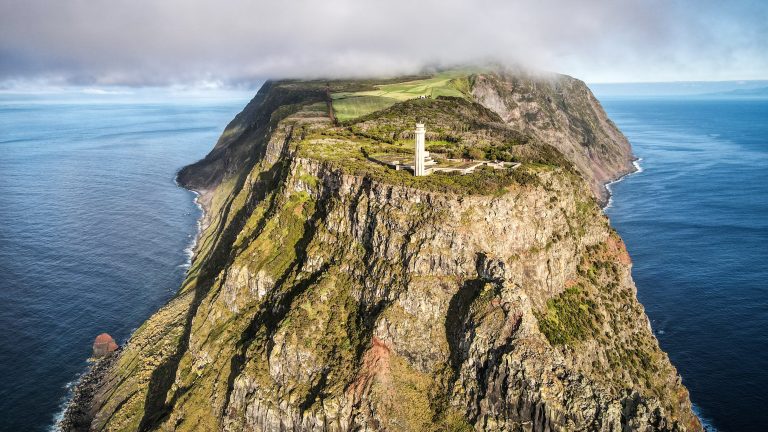
Faial Island has 21 km in length and 14 km at the maximum width and is the third most populous island of the Azores Archipelago with about 15.000 inhabitants. The island is part of the Central Group and also the so-called “Triangle” including two other islands: São Jorge and Pico. The power of nature reminded of itself on the 27th of September 1957, when a volcanic eruption in the Capelinhos kicked off and lasted for 13 months. As of today, it is the last event of this kind in the Azores.

I visited Faial Island on my 4 months trip in pandemic times, when I took the advantage of remote work, spending 2 months in Madeira and 2 months in the Azores. Graciosa is the only island I haven’t visited yet, but isn’t it a good reason to be back one day?

How long to stay?

I would say that 3 full days should be enough to visit all the interesting places on the island and do a couple of hikes. Remember that the weather in the Azores can be unpredictable and if you are unlucky, Caldeira may be covered by clouds for the entire duration of your stay. Check the weather frequently and time your visit there in the best moment. If this is the case, try to stay close to the coast where it’s usually less cloudy.

The mobile app SpotAzores is a great tool for monitoring weather situation in the Azores islands. I used it every day when I was there and I seriously can’t imagine travelling without it!

Where to stay?

Due to my remote work, I always look for a private room with a fast internet connection. The best quality to price ratio offered Banana Manor located in the centre of Horta. It’s a really big house with a huge living room and kitchen available for all guests. There is also a garden with chickens walking around which is a great place for breakfast or evening chill. The room was nice and spacious with two shared bathrooms at the end of a hallway. Parking is available on the streets nearby. Fully recommended!

Getting around Faial

As on all the other Azores islands, renting a car is essential to reach all places. I used the services of Autatlantis several times and I can fully recommend that company. The price was always around 16-20 EUR per day (without any extra insurance) and the cars I had were Toyota Yaris, Citroen C1 or Smart. Bigger ones are available too, of course for the higher price. Pick up and return were smooth and quite fast.

Another popular rental company in the Azores region is Ilha Verde, however, customers’ opinions are mixed and I have never used them.

If you don’t have a driving licence, you can try hitchhiking but you need to be patient and quite lucky. Alternatively, there are public buses but these are infrequent.

Tips

  • The weather is unpredictable and you have to be prepared for anything. Always have with you a waterproof jacket and umbrella. Install mobile app SpotAzores and don’t go to places that are totally covered in clouds. You will lose time and won’t see anything anyway.
  • Book your car in advance in the high season. I was travelling in the Azores between April – May so it wasn’t a problem to get a car from one day to another, however, I can imagine that in high season it could be a problem, especially on the smaller islands.
  • Drive carefully, especially in the fog. It’s pretty normal that cows, sheep or goats stand very close to the road or simply walk on it.
  • If you go hiking, download GPS files and maps from the official website Visit Azores and have them on your phone just in case. In general, trails are well marked but in a dense fog, it’s not that difficult to get lost.
  • Don’t be afraid of hitchhiking. Many trails are linear, which means that you need to get back to the starting point. You can walk the same way or try to save your legs. On some islands, the traffic is minimal but once the car comes, it is almost certain that the driver will stop and help you out.

Horta

Horta is the biggest city on Faial Island and a regular meeting point for yachts and other vessels crossing the Atlantic Ocean. The buildings are full of charm, there are plenty of restaurants and bars but also great nature is accessible within walking distance. It’s my second favourite town in the Azores, just after Angra do Heroismo on Terceira Island. Here are a couple of places worth seeing:

Igreja da Nossa Senhora das Angústias (church) – it dates back to a hermitage founded by the island’s first settler, Joss van Hurtere and his wife, Beatriz de Macedo.

Convento de São Francisco & Horta Museum – housed in the old Jesuitical College, an imposing big-dimensioned building that remained unfinished, because the Jesuits were expelled from Portugal in 1760. There are several collections related to Faial history. Igreja de Nossa Senhora do Rosário (church) is next door and can be visited as well.

Horta on Faial Island, the Azores
Convento de São Francisco & Horta Museum

Casa Memória Manuel de Arriaga – former residence of the 1st President of the Portuguese Republic, elected on August 24, 1911. Today, the place hosts the exhibition of photographs, documents and objects as well as the projection of films which give an insight into the history of the country.

Torre do Relógio – this clock tower was built between 1700 and 1720 together with the original Igreja Matriz, later destroyed by lightning. The initial mechanism of this only public clock dates from 1747.

Horta on Faial Island, the Azores
Aerial view to Torre do Relogio

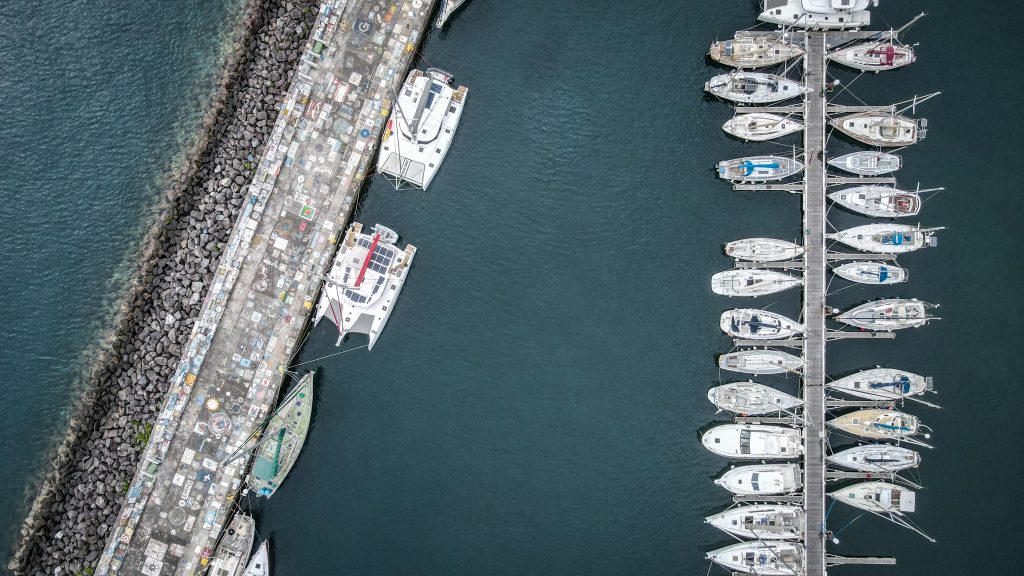
Horta Harbour – important stop for yachts crossing the Atlantic Ocean. The walls and pavements are covered with colourful paintings created by visitors including the names of their vessels, crew members, nationality and the years they visited.

Horta on Faial Island, the Azores
Horta Marina

Other sights

Capelinhos – the volcanic eruption between 1957 and 1958 began in the sea and as a result, a small island was created that is now connected to Faial Island. In fact, as a result of the eruption, the total area of the island increased by about 2.4 km2. Many houses were buried under ashes and more than half of Faial’s population emigrated to USA and Canada to escape the catastrophe. To learn more about the volcanic activity in the Azores, visit Capelinhos Volcano Interpretation Centre (entrance fee: 9 EUR). I recommend you to climb the ridge on the right side of the lighthouse for an amazing panoramic view.

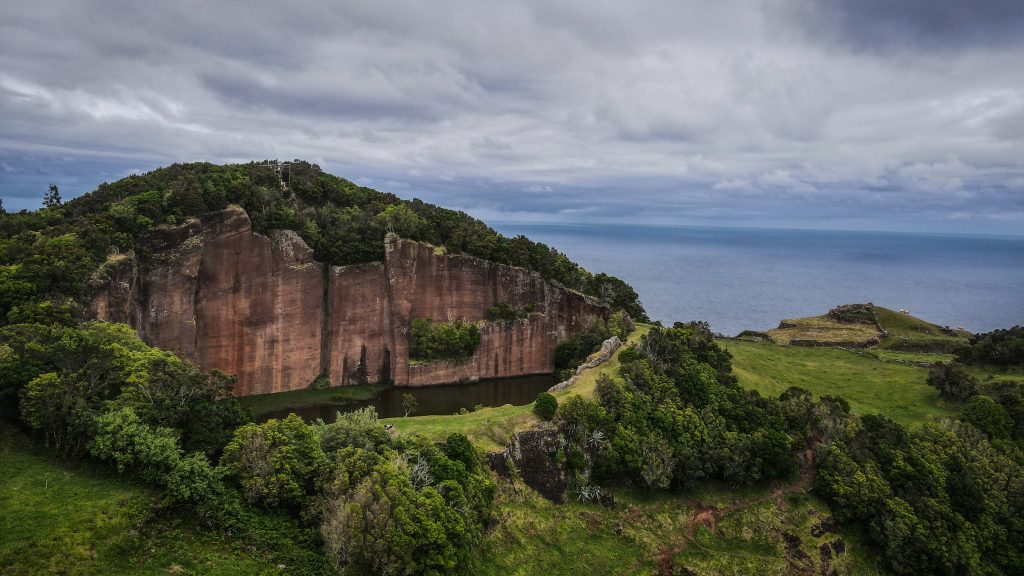
Morro de Castelo Branco – is a 10,000-year-old rock formation, and a protected area due to the number of bird species that use it as a rookery. The PRC05 hiking trail passes by that area but you can also drive down and park very close to the rock.

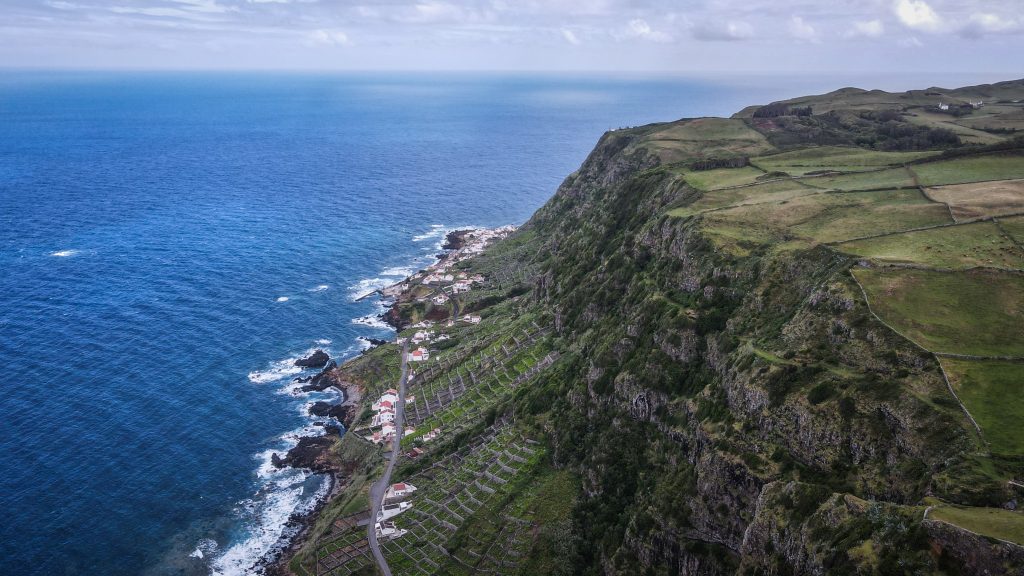
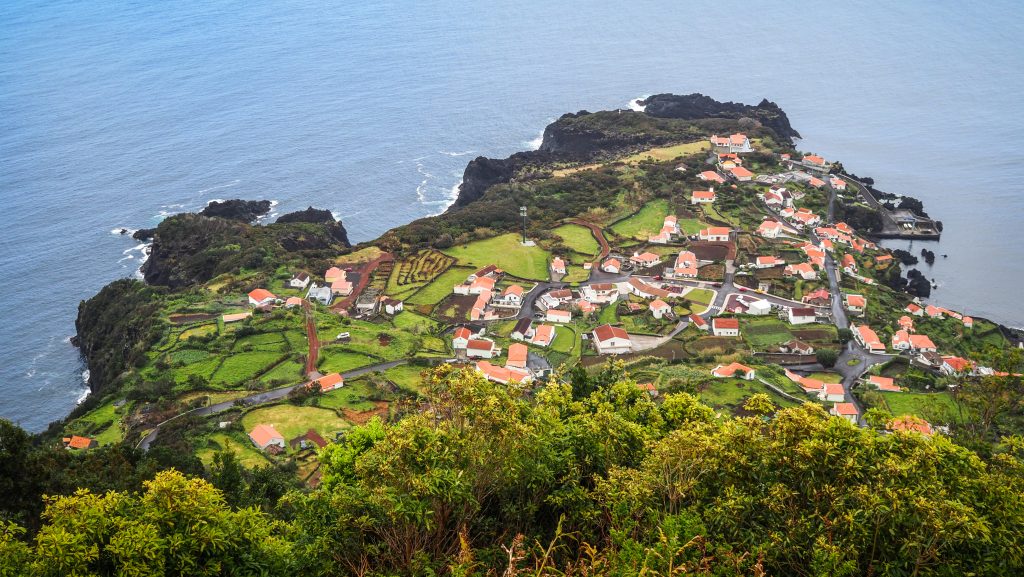
Praia da Faja – Small village located on a fajã, which is the term used to define a small extension of land, located along the ocean, formed from rock debris or a volcanic delta from lava meeting the ocean. There is a small beach with dark sand and stones, quite popular with surfers. It can be reached with a car or following hiking trail PRC02.

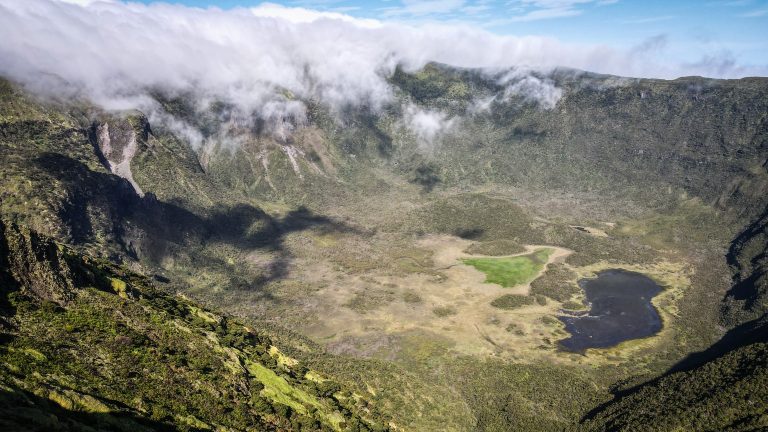
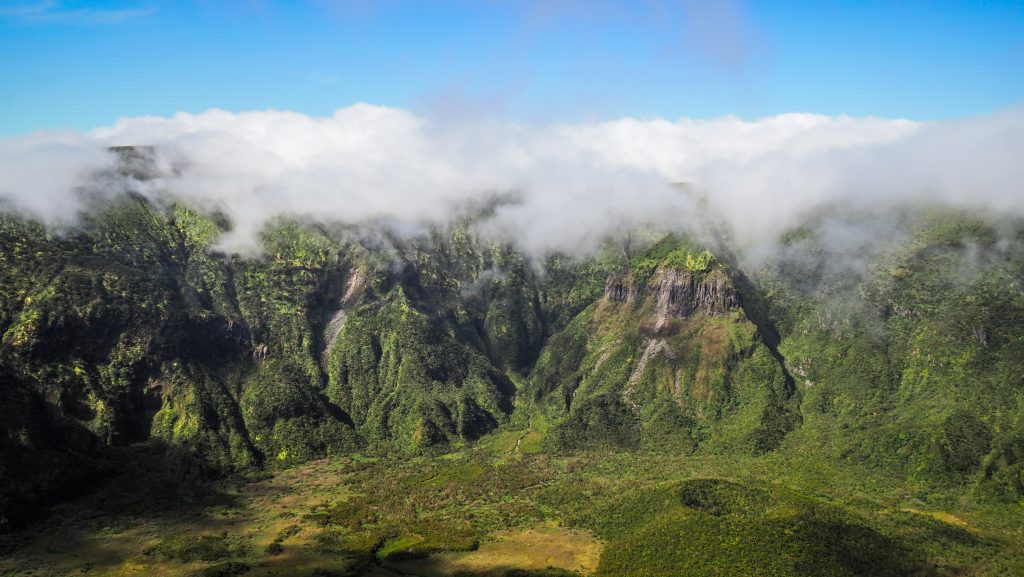
Caldeira – this natural feature is definitely the highlight of Faial Island. It has a diameter of 1450 meters and a depth of 400 meters. The PRC04 hiking trail starts at the parking and goes around it. Highly recommended in good weather!

Praia Do Almoxarife –  long stretch of black sand with bathing area, only 5km from the city of Horta. Great views over Pico Island guaranteed!

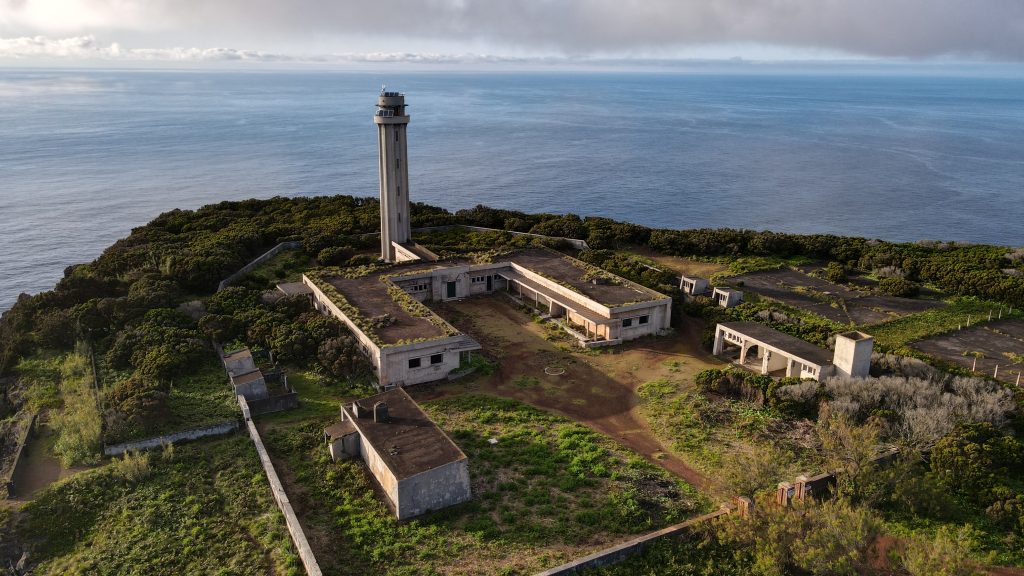
Ribeirinha – the name comes from the small river and valley that was occupied during the period of settlement. in Portuguese, Riberinha means small “ribeira”, or small river. A popular landmark is a lighthouse, which following the earthquake of 1998, was left in ruins. PRC09 is a great hike in the area, passing by the village, coast, lighthouse and several viewpoints. It is 8.3 km long and takes 2.5 hours to complete.

Viewpoints (Miradouro)

As on every island in the Azores archipelago, there are plenty of viewpoints and usually, they are easily accessible by car. Just look for the sign ‘Miradouro’ which in the Portuguese language means viewpoint. Here is the list of the most popular ones but of course nice views are nearly everywhere and it’s easy to find a stunning ‘no-name’ spot.

  • Miradouro do Cabeço das Pedras Negras
  • Miradouro da Ribeira Funda
  • Miradouro da Ribeira das Cabras
  • Miradouro de Nossa Senhora da Conceição
  • Miradouro Ponta Furada
  • Miradouro do Monte Carneiro

Hiking trails on Faial

PRC01 FAI – Cabeco do Canto

Short route with the start point on the road leading to Cabeco Verde. I left my car next to the information board and shortly I reached a lava cave which is apparently 55 meters deep, but views are quite limited due to trees. After passing on the left side of Algar do Caldeirao, soon I started climbing the stairs towards Cabeco do Canto. Quite a steep one! Once on top, I went around the volcanic cone (no big views here) and then went back following the same way.

Faial, the Azores
Aerial view to Algar do Caldeirao
Faial, the Azores
Aerial view to Cabeco do Canto

PRC02 FAI – Rocha da Faja

The best is to park the car on the main road near the church and from there descent through the fields and forest towards Praia do Norte beach, checking out a very nice viewpoint on the way. The beach itself is a great place for a break to chill and watch the waves. The trail continues through the centre of the village on the asphalt road before it starts to climb up first following a dirt road and then through the forest, back to the starting point.

Faial Island, the Azores
Praia do Norte seen from the viewpoint
Faial Island, the Azores
Beach in Praia do Norte

PRC04 FAI – Caldeira

The best and the most popular trail, going around the highlight of the island – Caldeira. From the parking, it’s just a few minutes to get the first glimpse of its interior. Caldeira is located in the central part of the island, therefore to fully enjoy the hike, make sure you go there in good weather. Otherwise, when the clouds roll in, there won’t be any views whatsoever.

Faial Island, the Azores
Interior of the Caldeira
Faial Island, the Azores
Caldeira is often covered by clouds, check the weather before you go!
Faial Island, the Azores
The summit of Pico seen from the Caldeira viewpoint

PRC05 FAI – Rumo ao Morro de Castelo Branco

The natural reserve and geosite of Morro do Castelo Branco is a highlight of this short hike and at the same moment, one of the most beautiful places on the island. It is an effect of the volcanic eruption that happened thousands of years ago. Due to the number of bird species nesting there, climbing is forbidden. The rest of the trail is rather average and follows partly asphalt road and partly pastures.

Faial, the Azores
Aerial view of Castelo Branco

PR03 FAI – Levada

After spending 2 months on Madeira Island, I knew very well what levada was. The memories of endless trails following water channels that transport water from one side of the island to the other was back immediately 🙂
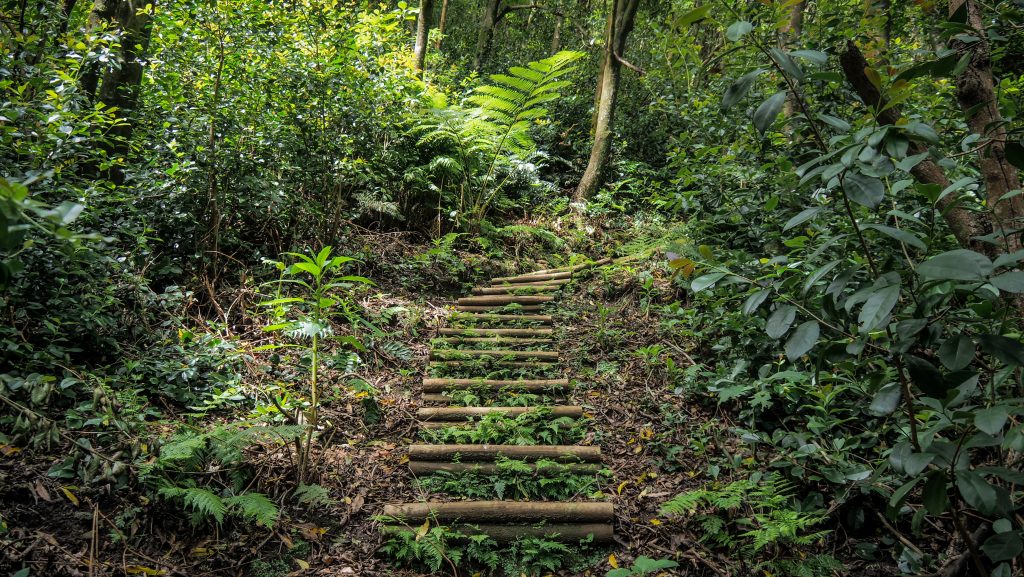
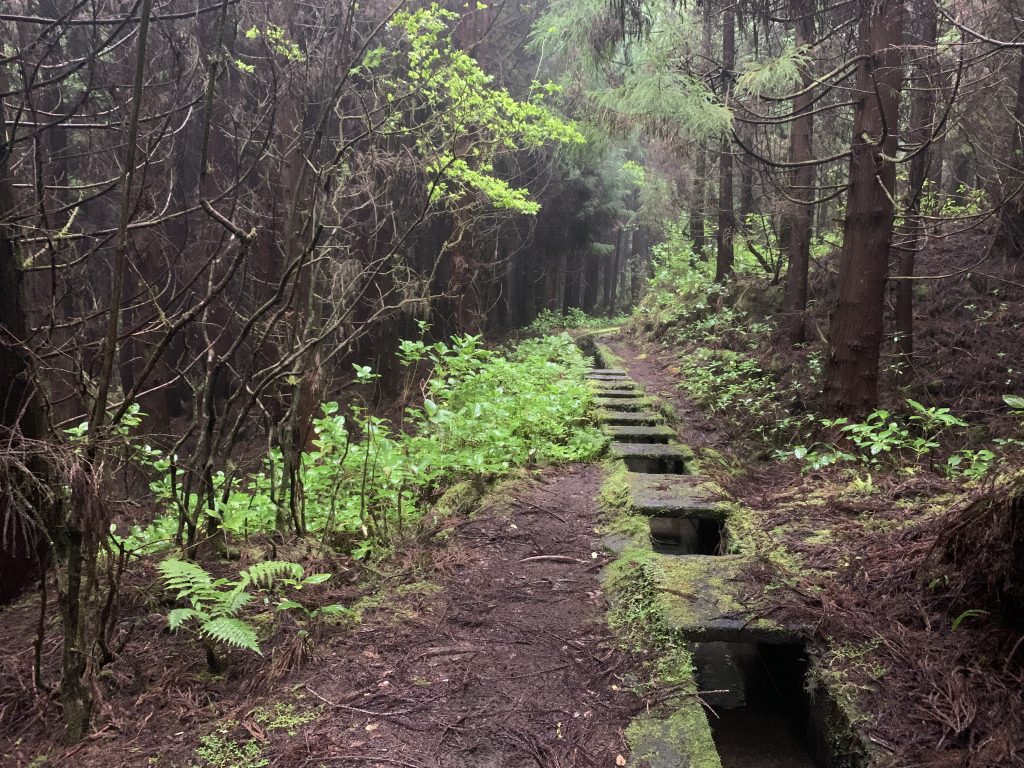
If you start near Cabeco dos Trinta, there is an option for a short detour to its interior, which I highly recommend. Come back the same way and turn right. After a few minutes, you will see the levada. Its construction was finished in 1964 with the main purpose of supplying water for the production of hydroelectric energy. The end of the trail is at Alto do Chao and you would rather need to come back the same way to reach your car.

Faial Island, the Azores
Levada – water channel running in the middle of the forest
Faial Island, the Azores
The trail passes through short tunnel

PR06 FAI – Dez Vulcoes

Long and demanding hike starting at the viewpoint of Caldeira. It follows PRC04 for around half of its distance when you need to turn right and head towards PR03 Levada and Cabeco dos Trinta. Further spots of the way are Cabeco do Fogo, Algar do Caldeirao and Cabeco do Canto. Finally, after crossing the road, there is a grand finale walking through the landscape formed by the volcanic ashes of Capelinhos. The eruption took place in 1957/1958. Close to the parking, there is the underground Interpretative Centre of the Vulcao dos Capelinhos, where you can learn about the volcanic nature of all the Azores islands as well as get to where the other famous volcanoes in the world are located. Entrance fee: 9 EUR.

Faial Island, the Azores
The lighthouse around Capelinhos area

PR07 FAI – Caminhos Velhos

Similar to PR06, it starts (or ends) at the parking next to Caldeira viewpoint. I would recommend starting here because then most of the walk will be downhill. Cross the tunnel, have a look at the interior of Caldeira and then continue on the zig-zag dirt road. When it merges with asphalt road, on the left side there will be Old Cabouco the Recreational Forest Reserve, a great place for a short break. Next, the trail goes towards Miradouro do Cabeço das Pedras Negras from where it joins PRC09 until arrival to Ribeirinha. Check out the ruing of the church of Sao Mateus and the ruins of the Lighthouse of Ribeirinha. Both places were destroyed by the earthquake that hit the area in 1998.

Faial Island, the Azores
The ruins of the Lighthouse of Ribeirinha

PRC08 FAI – Entre Montes

Easy circular hike close to Horta, with historical importance. The first underwater telegraphic cable was installed here in 1893 which played an important role during the war. The whole route provides great views all around the city as well as the fortress of Sao Sebastiao. At the top of Monte da Guia, there is a viewpoint and the chapel of Nossa Senhora da Guia. On the way back, you may want to visit the informative Museum of Whaling Industry (Museo da Baleia) or make a short detour to the remains of Forte da Greta. Finish the hike at Praia do Porto Pim.

Faial Island, the Azores
Aerial view over Horta

PRC09 FAI – Ribeirinha

Start the trail in the centre of Ribeirinha village and then head towards the coast. Follow it until Porto da Boca da Ribeira and then start the ascent through the forest to the ruins of the Lighthouse of Ribeirinha. Continue through the forest to the viewpoint of Ribeirinha. When you reach an asphalt road, turn left and make a short detour to the ruins of the church of Sao Mateus. Both places, the church and the lighthouse were destroyed in the earthquake of 1998. From there, it’s time for a tiring ascent to Miradouro do Cabeço das Pedras Negras. Make a short break there and then start the descent back to Ribeirinha. The trail is highly overgrown in some parts but no worries, it’s still doable.

Faial Island, the Azores
The ruins of the Lighthouse of Ribeirinha
Faial Island, the Azores
The trail through the forest

Coast to Coast

The ultimate hike through the island, starting at Ribeirinha and finishing in Capelinhos (or the other way around). It’s the combination of PR06 and PR07 and most probably the distance needs to be split into 2 days unless you are very fit and don’t mind taking a challenge to complete it in one very long day.

Introduction

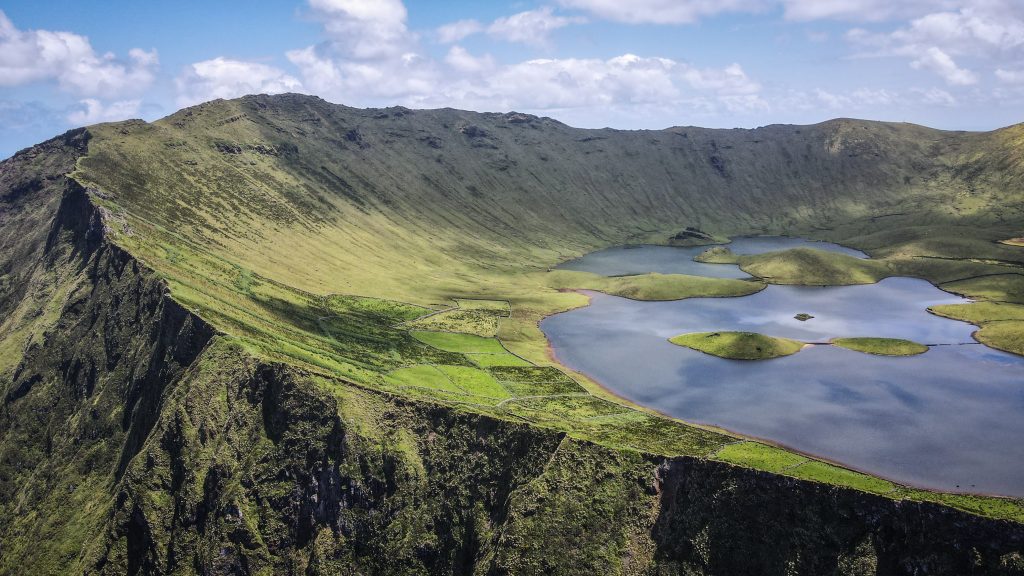
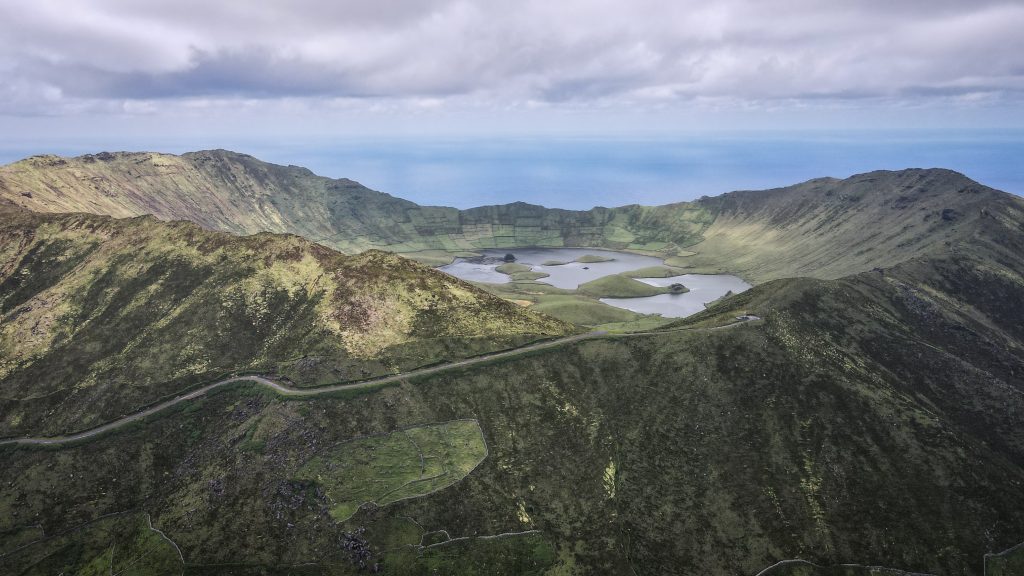
Corvo is the smallest island in the Azores archipelago (17.1 km2) and together with Flores, it forms the Western Group. Due to its isolation, it is probably the least visited one. Both islands were discovered around 1452 by the Portuguese explorer Diogo Teive on his return from Newfoundland.

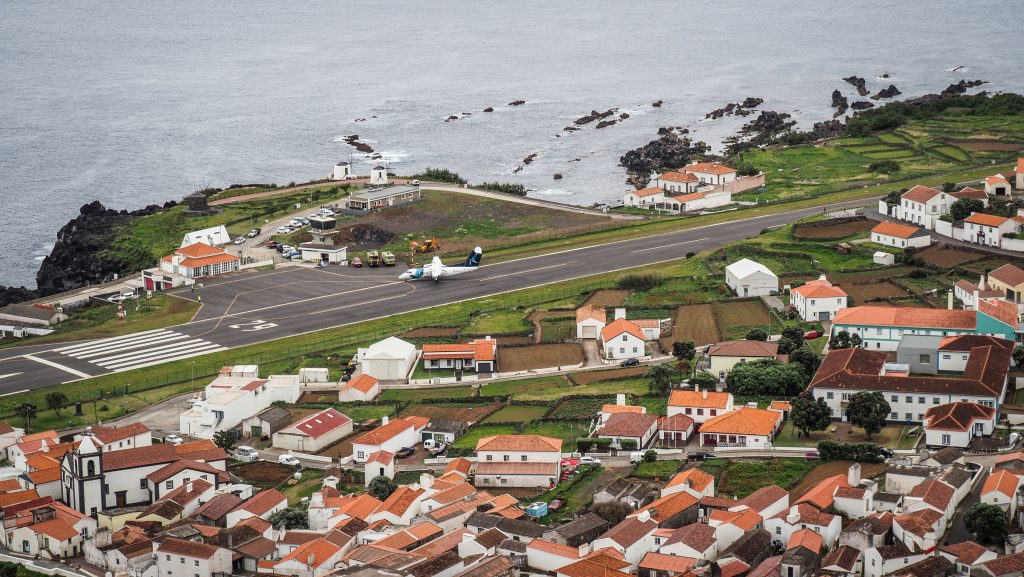
Vila do Corvo is the only settlement on the island, located in a lava fajã which forms the island’s main level surface. It is a pretty little village with narrow streets, a port and an airport. The population is at the level of about 460 inhabitants, so yeah, everyone knows everyone!

How to get to Corvo?

Most of the travellers head to Corvo with organized boat tours, departing in the morning from Santa Cruz das Flores, spending around 4 hours on the island and then coming back. Boats usually pass next to the north coast of Flores Island giving an extra opportunity to see waterfalls and caves. The cost of such a trip, including a boat and taxi transfer to Caldeirao, is about 50 EUR.

If you are short on time, it is a good option but for me, 4 hours on Corvo didn’t seem to be enough. I asked for the possibility to go on one day and come back on the next, but unfortunately, May is still outside of the high season and there was simply no boat on the following day.

Therefore, I decided to choose a small ferry operated by Atlantico Line and organize it all by myself. The ferry departed at 9:30 from Santa Cruz das Flores and it took about 40-50 minutes to disembark in Vila do Corvo. The cost of a one-way ticket is 10 EUR.

It’s also possible to fly to Corvo with SATA Azores, however it’s more expensive and flights are infrequent.

Ferry, or rather a small boat heading to Corvo Island

How long to stay on the island?

I stayed on the island for 2 nights and it was great. I wasn’t in the hurry, had more than enough time to feel the island, do all hiking trails and simply wander around Vila do Corvo without any reason, enjoying beautiful weather and taking lots of pictures.

In the summer months (June-August), certainly, there are more connections between Flores and Corvo, so it should be much easier to tailor the trip to your needs from the timing perspective. For the most optimal experience, I recommend spending at least one night on the island.

Corvo, Azores
Vila do Corvo, Azores

Getting around Corvo

The only transportation that you need is the taxi up to the Caldeirao. Other than that, it is best just to walk around, both in Caldeirao itself as well as the way back to Vila do Corvo. To get a driver, ask in your accommodation or any small shop and friendly folks will certainly help you out and share the phone number.

Where to stay?

There are not too many options to choose from. The most popular seems to be Guest House Comodoro. This is exactly where I stayed, and I can fully recommend it. They have a decent breakfast included in the room rate, rooms are spacious, and the terrace is a nice place to have a rest observing slow village life. Internet connection is great too. Cost: 65 EUR / night.

Alternatives are Joe & Vera’s Vintage Place and The Pirates’ Nest. Both places have excellent reviews so they must be good too.

Tips

  • The weather is unpredictable and you have to be prepared for anything. Always have with you a waterproof jacket and umbrella. Install mobile app SpotAzores and don’t go to places that are totally covered in clouds. You will lose time and won’t see anything anyway.
  • Book your car in advance in the high season. I travelled in the Azores between April – May so it wasn’t a problem to get a car from one day to another, however, I can imagine that in high season it could be a problem, especially on the smaller islands.
  • Drive carefully, especially in the fog. It’s pretty normal that cows, sheep or goats stand very close to the road or simply walk on it.
  • If you go hiking, download GPS files and maps from the official website Visit Azores and have them on your phone just in case. In general, trails are well marked but in a dense fog, it’s not that difficult to get lost.
  • Don’t be afraid of hitchhiking. Many trails are linear, which means that you need to get back to the starting point. You can walk the same way or try to save your legs. On some islands, the traffic is minimal but once the car comes, it is almost certain that the driver will stop and help you out.

Hiking trails on Corvo

There are only two official hiking trails on the island but both are great and can be done in one long day.

PRC02 – Caldeirao

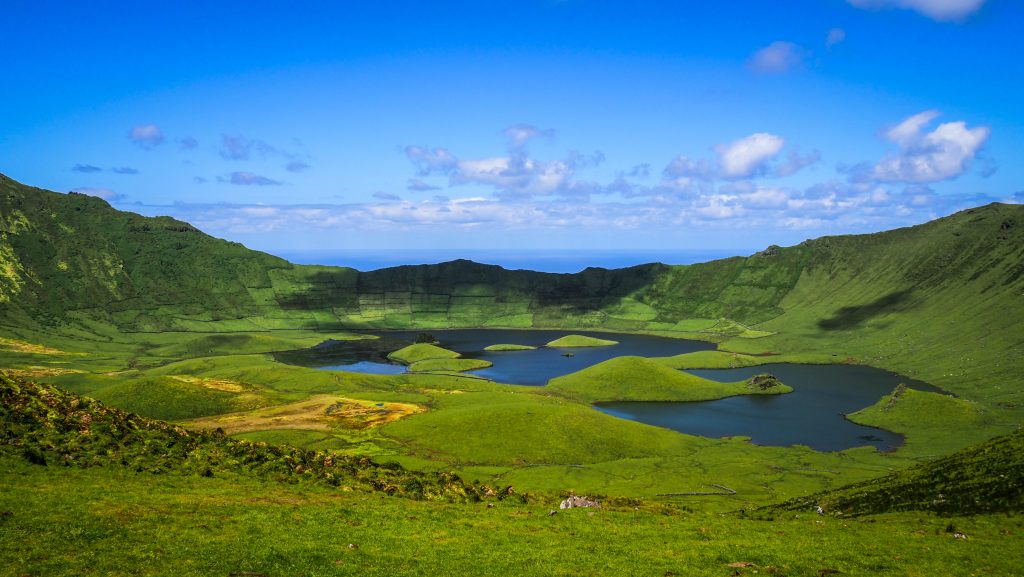
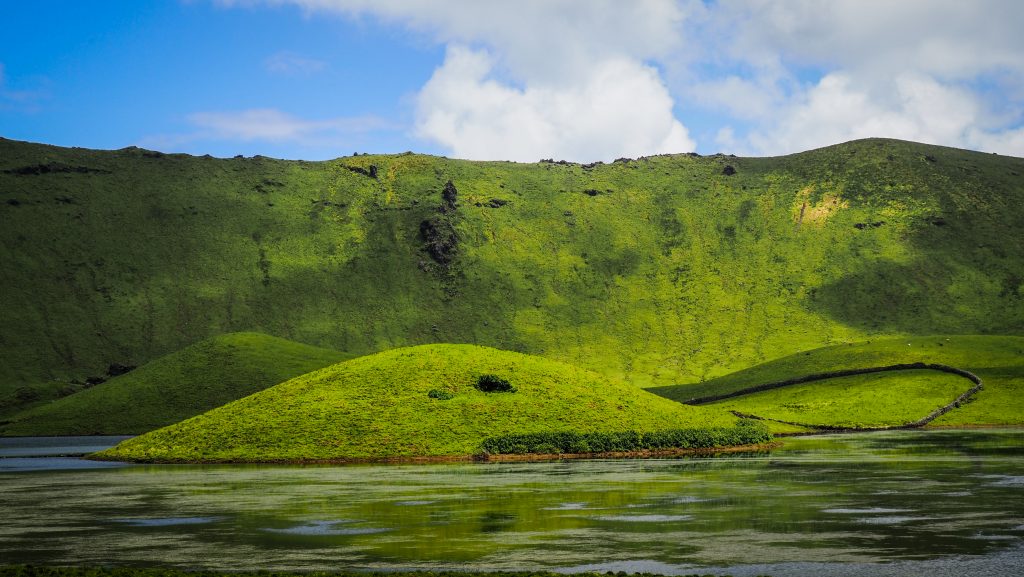
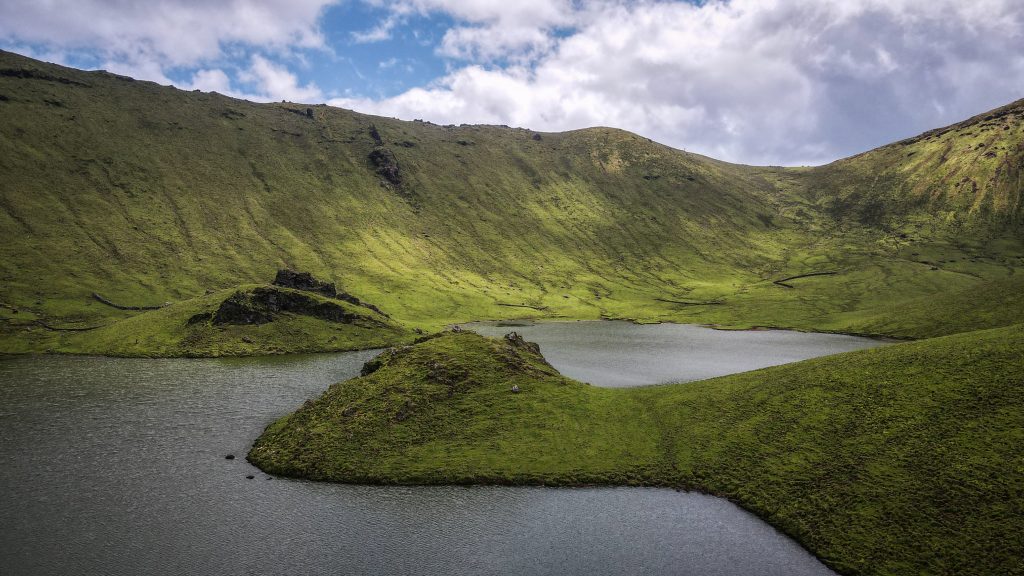
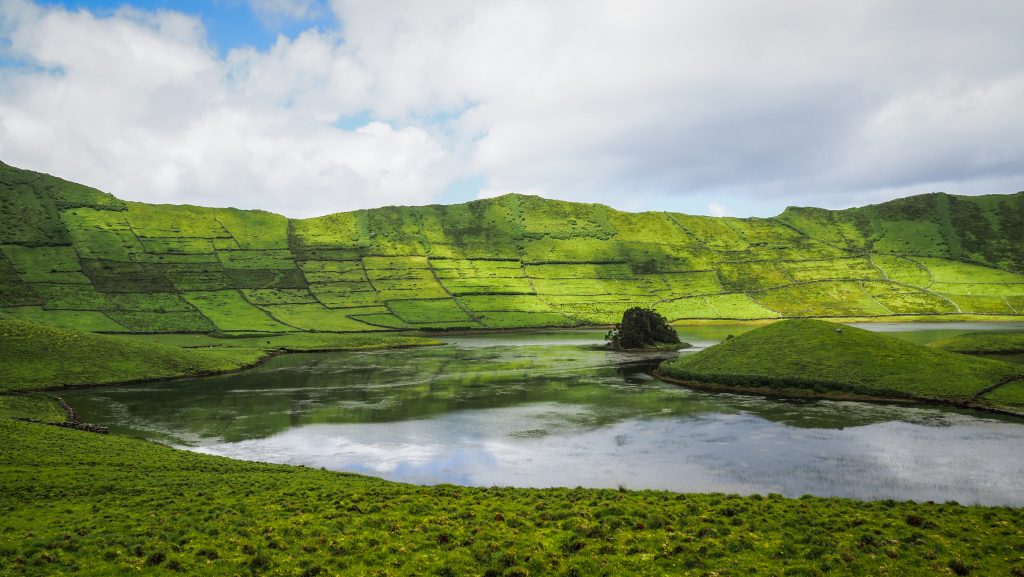
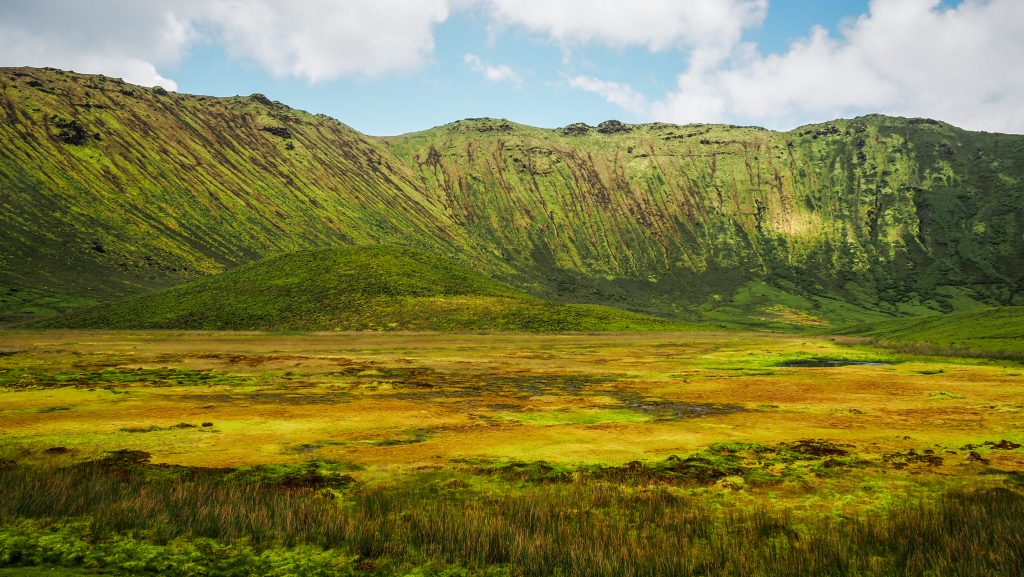
It begins at the end of the road leading to Caldeira and from there you descent to the bottom of it. Follow counterclockwise direction looking out for next signalling pole (which in my opinion are quite poorly visible even in good weather). Your walk around the lake will be certainly observed by the rangers of this place – cows. But don’t worry, they aren’t dangerous as long as you don’t disturb them too much. Once the round is completed, you have to climb back up to the point where you started.

Corvo, the Azores
Corvo, the Azores
Corvo, the Azores
Corvo, the Azores
Corvo, the Azores
Corvo, the Azores
Corvo, the Azores

PR01 – Cara do Indio

This great trail connects Caldeirao with Vila do Corvo and I took it to come back to the village. The beginning is quite boring, as it follows asphalt road but after a while, it turns right and the landscape starts to look better and better. The trail passes next to water tanks, through pasture lands and stone walls, which are typical in the landscape of the Azores. Later, the view opens to Flores Island, well visible on the horizon. Once you reach the cliffs, watch out for Cara do Indio – a rock formation that resembles “the face of the Indian”.

Corvo, the Azores
Rock formation Cara do Indio

Further on, there is a viewpoint overlooking Vila do Corvo with a nice bench to sit down and have a rest before the final phase. After passing through the historic centre of Vila do Corvo, you will get the chance to admire traditional windmills before the hike ends at Praia da Areia.

Corvo, the Azores
Corvo, the Azores
Corvo, the Azores
Corvo, the Azores
Corvo, the Azores

GPS, maps and leaflets of both hikes can be downloaded from the great website: https://trails.visitazores.com/

Other places to see

It is worth visiting the Church of Nossa Senhora dos Milagres (the island’s patron saint) as well as the Corvo Visitors’ Centre. Casa do Tempo Ecomuseu do Corvo is a great place to learn about the history of the island and watch interviews with local people (free of charge). A bit further up the road, there is also Corvo’s Wild Bird Interpretation Center but the entrance fee is 3 EUR and it’s a total waste of money.

Introduction

Madeira is an autonomous region of Portugal since 1976. In fact, it’s the name not only for the island but also for an entire archipelago which is formed by the Madeira Island (741 km²), Porto Santo (42.5 km²), the Desertas Islands (14.2 km²) and by the Selvagens Islands (3.6 km²).

The initial plan was to stay here for one month but now I already know that it will be rather two months. Because why not? After all, nothing is waiting for me in Poland and my remote work gives me great flexibility.

Why Madeira?

I was thinking about visiting this island for quite some time. The first attempt was during the long weekend in May 2018 but damn, I’m so happy I ended up in Croatia instead! And I don’t mean that Split blew my ass out but now I know that the idea of spending 4 days in a place like Madeira was ridiculous. It’s just way too short.

The temperatures here are about 20C all year long which makes it a very pleasant place to be, especially during the Polish winter. It seems that I left my country perfectly on time because a few days later, there was heavy snowfall for several days. My friends kept posting photos enjoying such conditions but seriously, I haven’t regretted my decision for even 1 second. Winter is not for me.  

Of course, in pandemic times, the beauty of the place and weather are not the only relevant aspects when choosing your destination. Madeira has one of the easiest entry procedures in Europe which I will describe in the second part of the article.

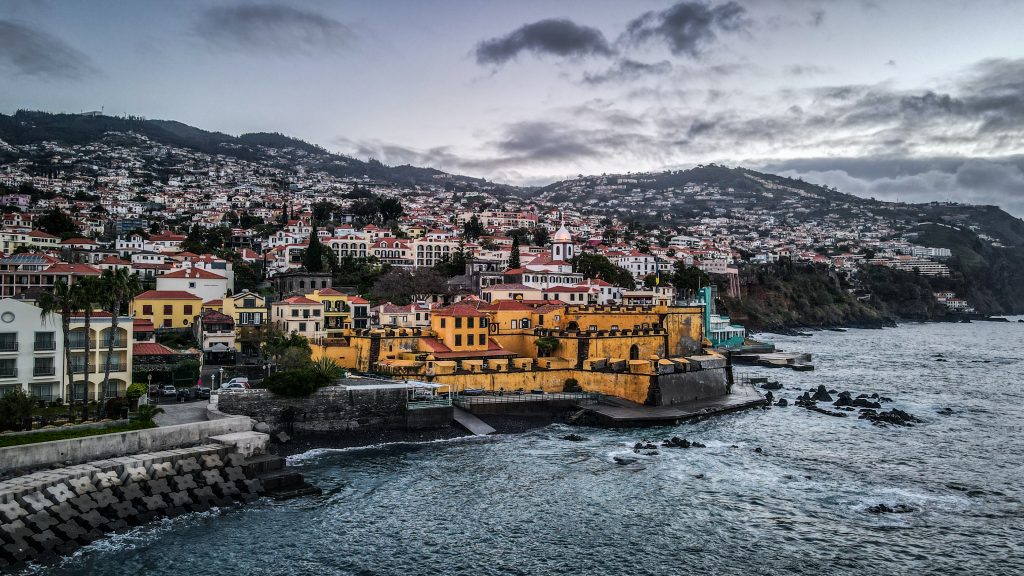
Funchal, Madeira, Portugal
Funchal is the capital city of Madeira

Small complications…

With current flexibility to do my work from any place I can, the choice was simple. I bought my flights around 2 weeks prior to departure hoping for the restrictions to stay the same. Unfortunately, the news coming from Portugal were not optimistic and on Friday afternoon I got the message from my brother “I think you won’t fly to Madeira”. My flight was on Monday morning so yeah, I got pissed.

Some websites informed about total borders closure, some only about the land border with Spain. There was also information about the closure of the airport in Lisbon (where I had my transit). And another one about mandatory PCR tests even if you only transit in Lisbon.

In short – one big information chaos.

It is so easy to panic reading all those dramatic headlines. On the next day, I called the hotline of TAP Portugal airlines asking about flights status. It was planned as scheduled and apparently there was no need for a PCR test. Somehow the guy on the phone didn’t sound too convincing so I decided to keep digging on the official website and there it appeared – the info that all passengers with transit in Lisbon have to present negative PCR result BEFORE boarding the plane. The result shouldn’t be older than 48 hours and it had to be translated into English.

It was Saturday evening and my flight was on Monday morning from a different city. I had no choice but to take the 5 AM train to Warsaw on Sunday morning to do my test there. The results were supposed to be in less than 24 hours “in most of the cases”. After 4 PM I started checking the system every half an hour and at midnight I fell asleep. Woke up at 5 AM. No result. Took an Uber to the airport. No result. Luckily my connection was quite complicated: Warsaw – Geneva – Lisbon – Funchal and I only had to show the result in Geneva which gave me some extra time.

The result came 5 minutes before boarding the plane in Warsaw. Negative.

Funchal, Madeira, Portugal
The archipelago is situated in the North Atlantic Ocean

Flights

The simplest way to get to Madeira from Poland is to take a direct charter flight. Usually, it costs around 1000 – 1500 PLN for a return ticket. The flight is operated by Enter Air. I didn’t use that option which hadn’t been wise because it could have saved me a lot of trouble and money (PCR can be done for free upon arrival at the airport in Madeira). I have never used services provided by tour operators and also that time I searched my connections on old good SkyScanner.com.

There were two options available with transit either in Germany or in Switzerland and because of the lower price, I chose the latter one.

Regardless of where you are travelling from, the best is to limit transit to the absolute minimum. The rules and restrictions change way too often, so check the information on a regular basis. Some time ago, I heard about problems with transit through Germany. Non-German passengers flying on EasyJet from Madeira to Berlin were refused to board the plane.

Following the increase in infections in Poland during the Easter period, mainland Portugal imposed a compulsory quarantine on travellers, even those in transit. It means, that until the rules change, connection in Lisbon is no longer an option. This is why a charter flight seems to be the safest way of getting to Madeira.

Madeira, Portugal
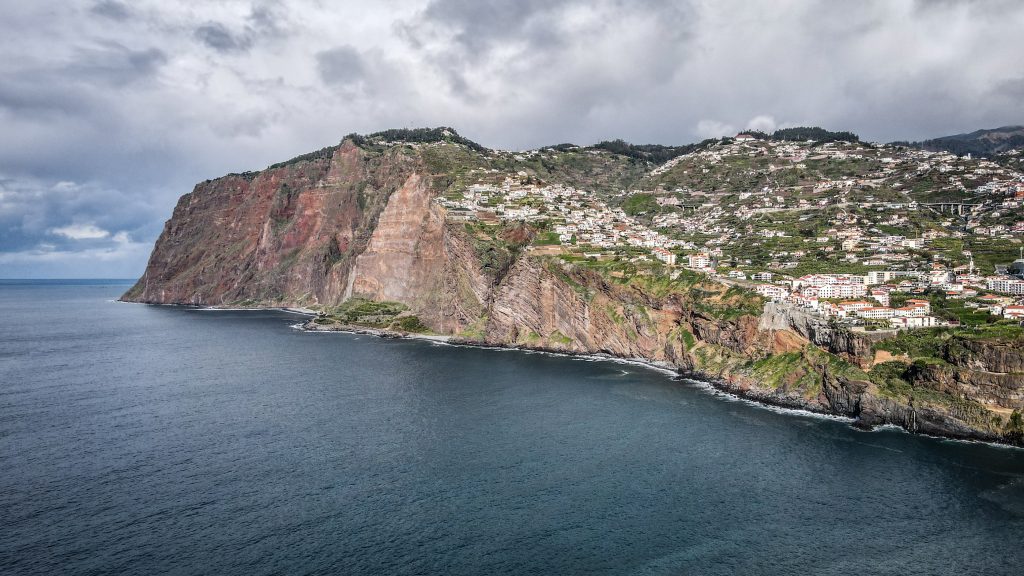
Madeira is home to the highest cliff in Europe – Cabo Girao

Free COVID-19 tests

As on most of the isolated islands, also in Madeira COVID-19 is under control. To keep it that way, the local government invests in PCR tests that are provided for free to all arriving passengers (if they haven’t already done the test prior to departure in their home countries). PCR tests aren’t cheap, so it’s a really significant advantage for your travel budget.

After reclaiming my luggage, I was greeted by the staff in protective clothing asking if I had my test already done or not. Based on your answer, you will be either directed to the right, or to the left line. I followed the right one as I had my test done and I also uploaded it already to the website www.madeirasafe.com. Every tourist has to register there to obtain a QR code which will be scanned at the exit from the terminal. The procedures went extremely smooth, I was given a free bottle of water and there I was. Officially in Madeira.

If you don’t have your tests results, simply follow the left blue line and you will end up in a testing station. The samples are taken both from your nose and throat. The results are supposed to be available in 12 hours but usually, it’s shorter than that. Of course, you can proceed to your accommodation but other than that you are officially on quarantine and you mustn’t leave your room.

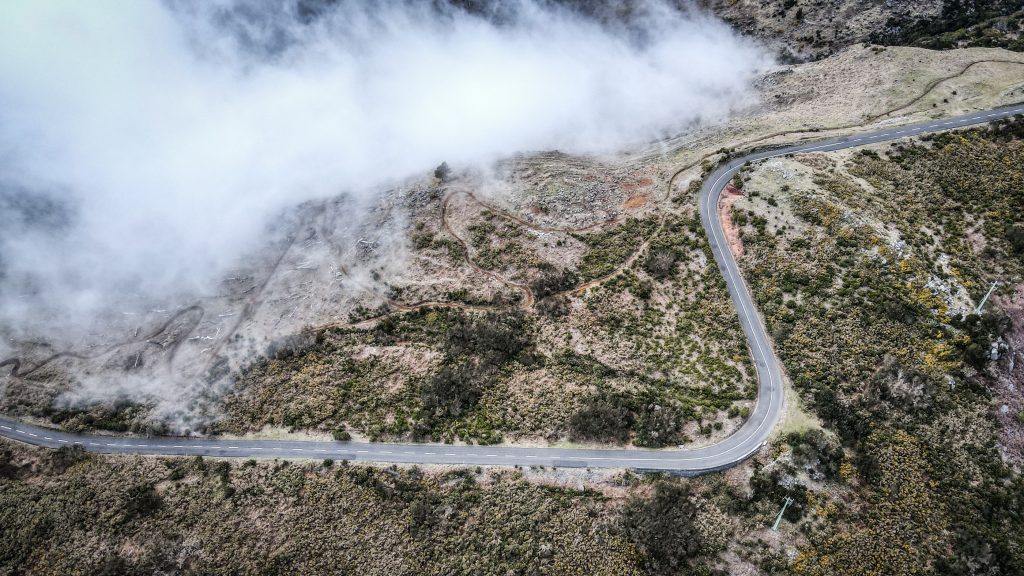
Road leading to Pico do Areiro
Road leading to Pico do Arieiro

Restrictions

Rules with masks are exactly the same as in most of the other places in the world. They have to be worn in all public areas. In general, the rule is followed, especially in Funchal. In other, smaller cities it’s rather more relaxed. There is no need to wear a mask on hiking trails or on the beaches.

Hand sanitizers are widely available and I have never came across one that was empty.

Curfew is in place from 7 PM until 5 AM in the weekdays and from 6 PM until 5 AM on the weekends. Be aware that most of the places close 1 hour before that. If you get hungry after that, your only option would be takeaway delivered by BringEat, Uber Eats or Glovo. It’s not allowed to be outside during curfew hours and the only exception is the way to and from the airport. The streets in Funchal really get empty so it’s not a joke and you should also take is seriously.

Described restrictions were in place during my stay on the island between February and March 2021.

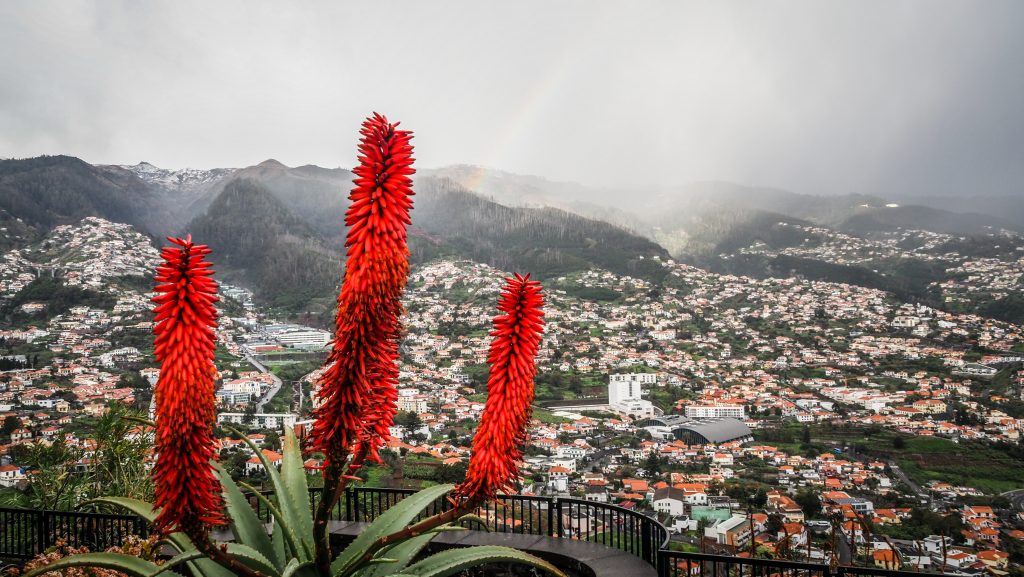
Funchal, Madeira, Portugal
View over the biggest city In Madeira and surrounding hills

Accommodation

I found my place to stay on Airbnb and it seems to be the best way. Staying for a longer period of time gives you an additional argument at hand to negotiate a good price. I went to a centrally located room hosted by Residencial. There is really fast internet which was especially important to me due to remote work. All the sights around city centre are within walking distance. The only negatives are quite thin walls and terrace which tends to be occupied by loud guests.

After all the mess with COVID-19 and depressing winter weather in Poland, Madeira turned out to be a really nice place to spend a couple of weeks sightseeing and working remotely. If you have any questions about the island, feel free to ask in the comments!

Introduction

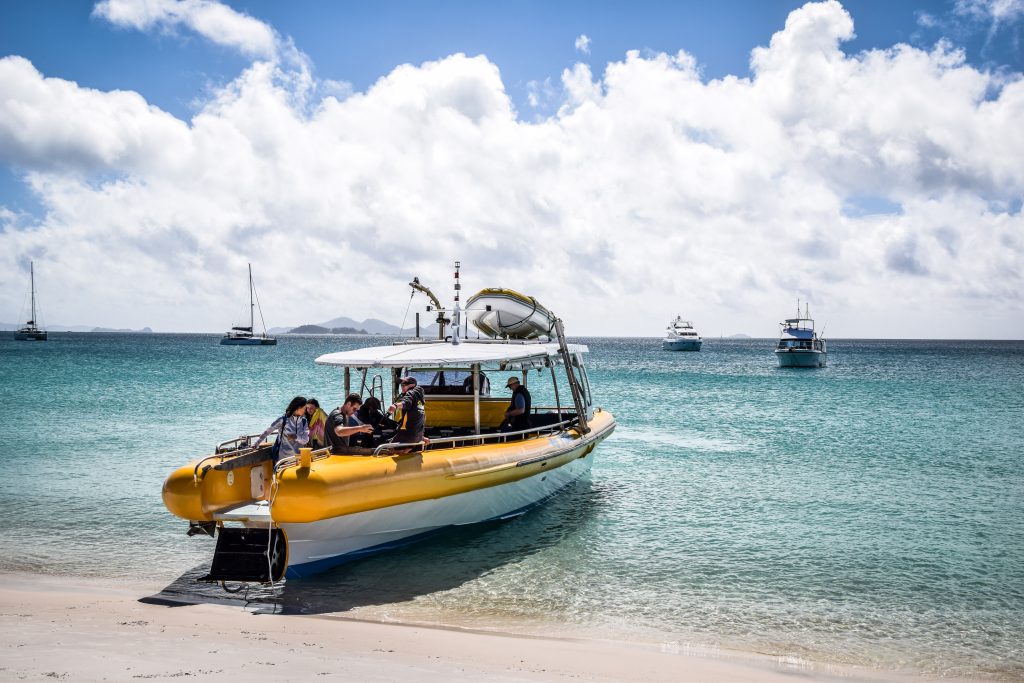
There are 74 islands in the Whitsunday archipelago which lies between the northeast coast of Queensland and the Great Barrier Reef. Most of the islands are uninhabited while the most popular among tourists is definitely Whitsunday Island. Airlie Beach is the major gateway, where you can book lots of tours and activities. For me, it wasn’t any different. I arrived in the early morning and made my way directly to the meeting point of my tour.

I spent a lot of time browsing different boat tours and looking for the best quality to price ratio. Overnight yachts tours sound to be an amazing experience, however, it’s Australia and such attractions aren’t cheap. That’s why I chose 1-day tour on an open-air speedboat operated by Big Fury. The standard price is 170 AUD but you can usually find a slightly better price on BookMe.

What to bring?

You definitely don’t need much. Pack your swimwear, towel, sunscreen, sunglasses and some warmer hoodie or jacket just in case. There isn’t too much walking involved so don’t worry about your shoes either.

1-day itinerary

The departure time of the tour was at 10 AM and a few minutes before we were greeted by the staff. They checked passengers list and gave us kind of swimsuits that we were supposed to wear while snorkelling. Fins and goggles were available on the deck as well.

We quickly gained speed and soon reached the first spot for snorkelling. Not the best though! Corals and fish were nice but nothing extraordinary. The worst was the temperature of the water was really cold and after a few minutes, I wasn’t interested in swimming but simply wanted to warm up on the deck. The swimsuits were rather designed to protect from the stingers (which wasn’t a problem anyway at this time of the year) rather than keep me warm.

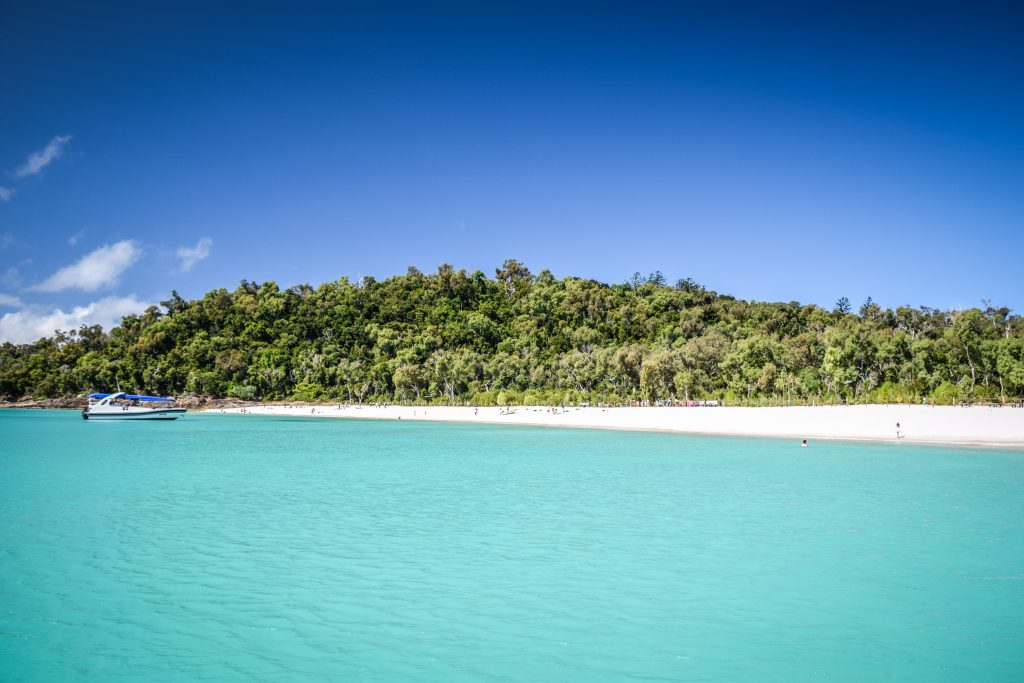
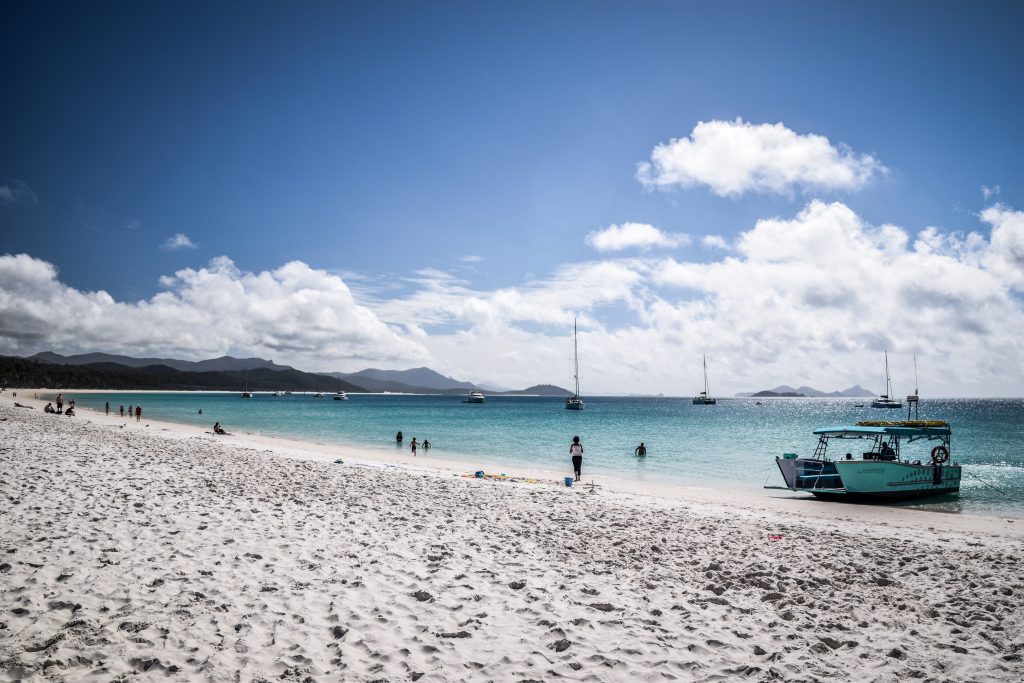
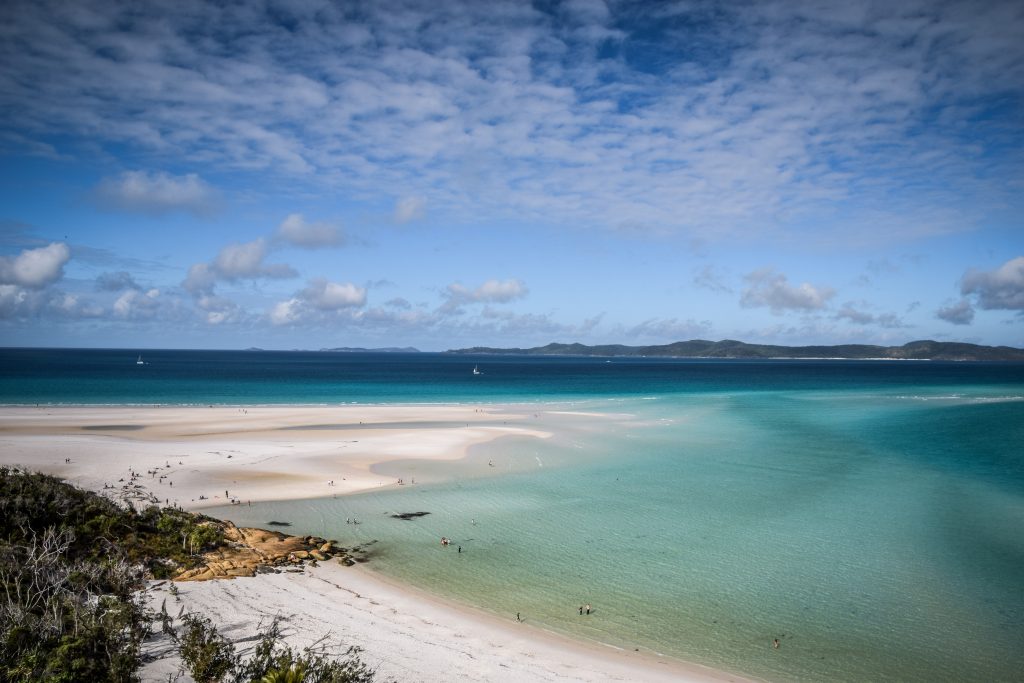
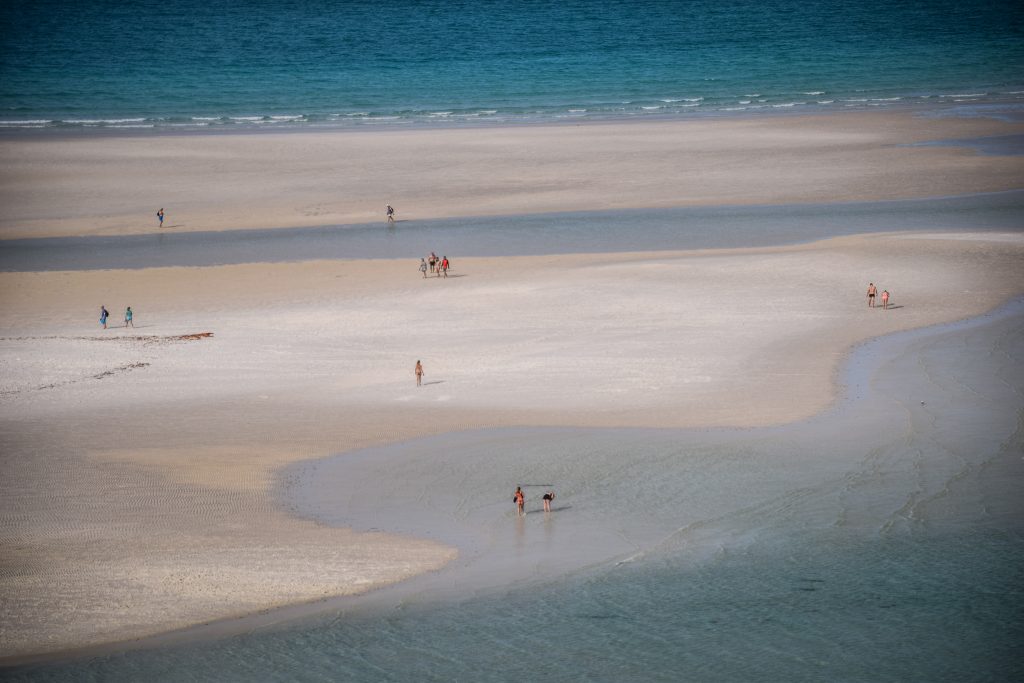
The next stop was on the famous Whitehaven Beach which stretches for 7 kilometres. It is considered to be one of the best in the world, mainly due to its bright white sands, which consist of 98% pure silica. The sand on Whitehaven Beach does not retain heat making it comfortable to walk barefoot on a hot day.

Whitsunday Islands in Australia
Not too bad colours, right?
Whitsunday Islands in Australia
Let’s get ready to explore the island!
Whitsunday Islands in Australia
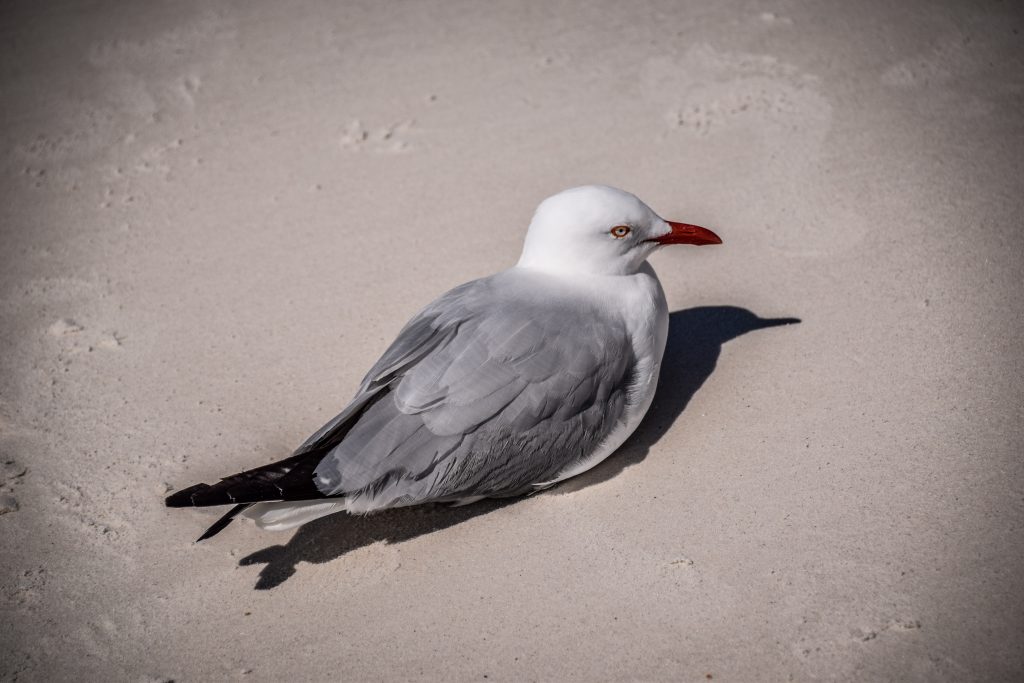
Seagulls like the island too
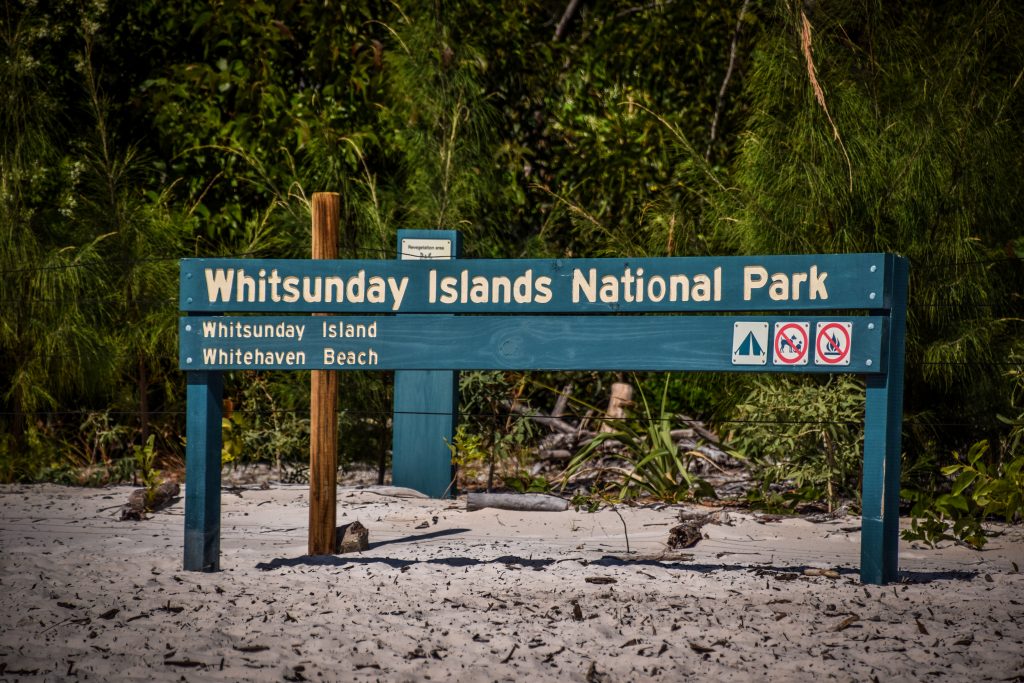
The whole area is protected as a national park
Whitehaven beach is 7 km long

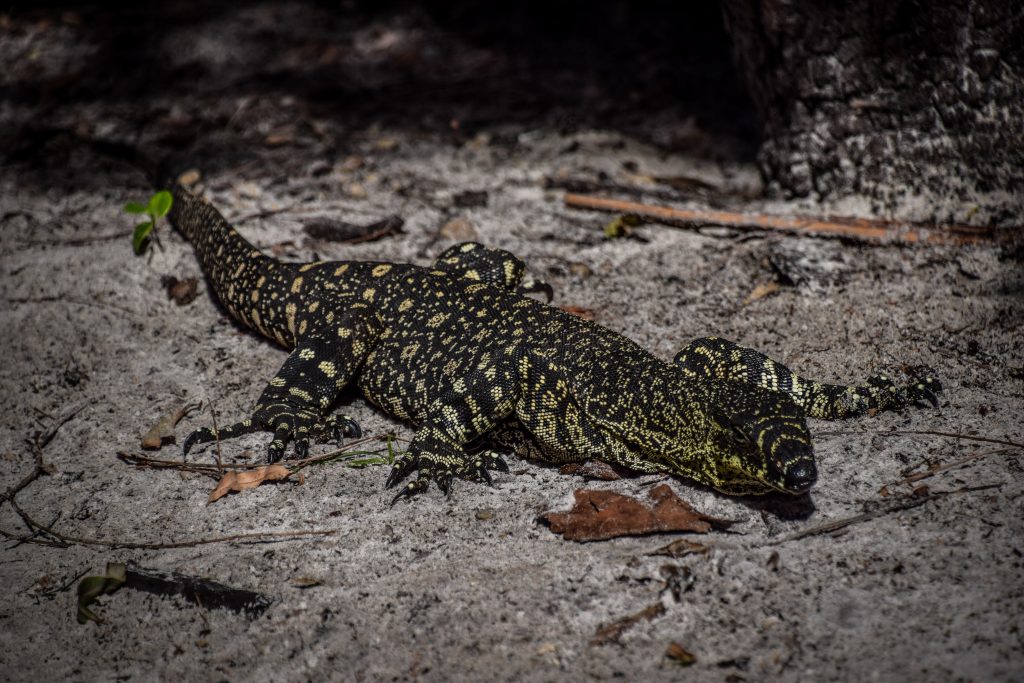
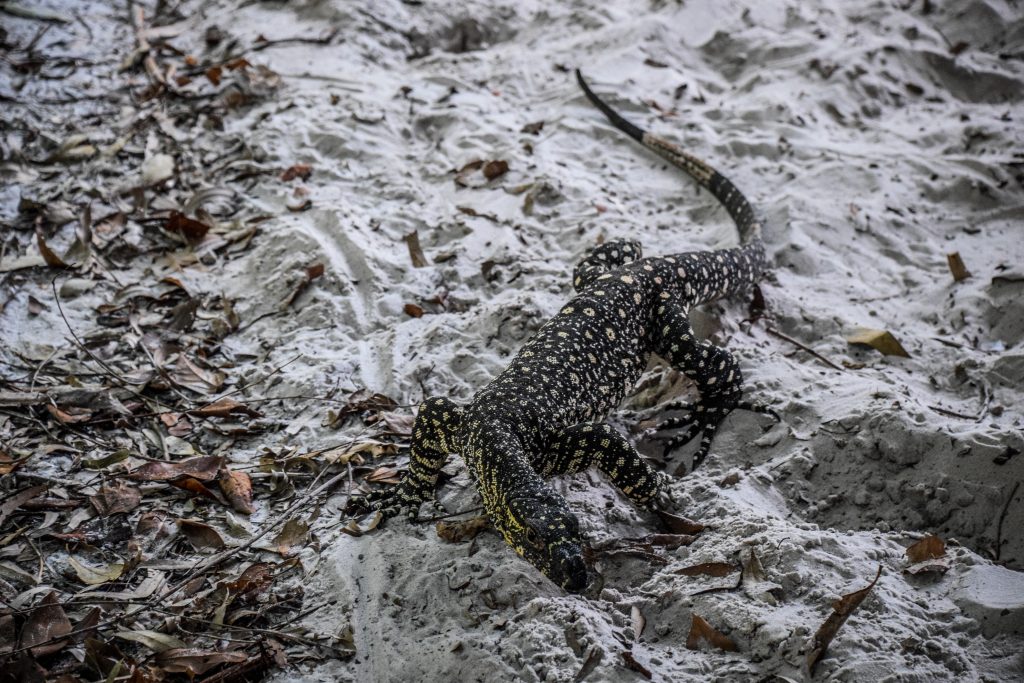
After some chillout time here, it was time for lunch. It came in the form of a buffet in a shaded spot and was really delicious! The smell and noise attracted goannas that came out of the bush to look for an easy meal. Goannas are some species of lizards of the genus Varanus found in Australia and Southeast Asia.

Goanna at Whitesunday Islands
There are plenty of goannas around the shaded lunch spot
Looking for food leftovers that was dropped by humans

There was still some time left until the departure so I went for a short walk towards South Whitehaven Beach Lookout. The view is really good and there were almost no other people!
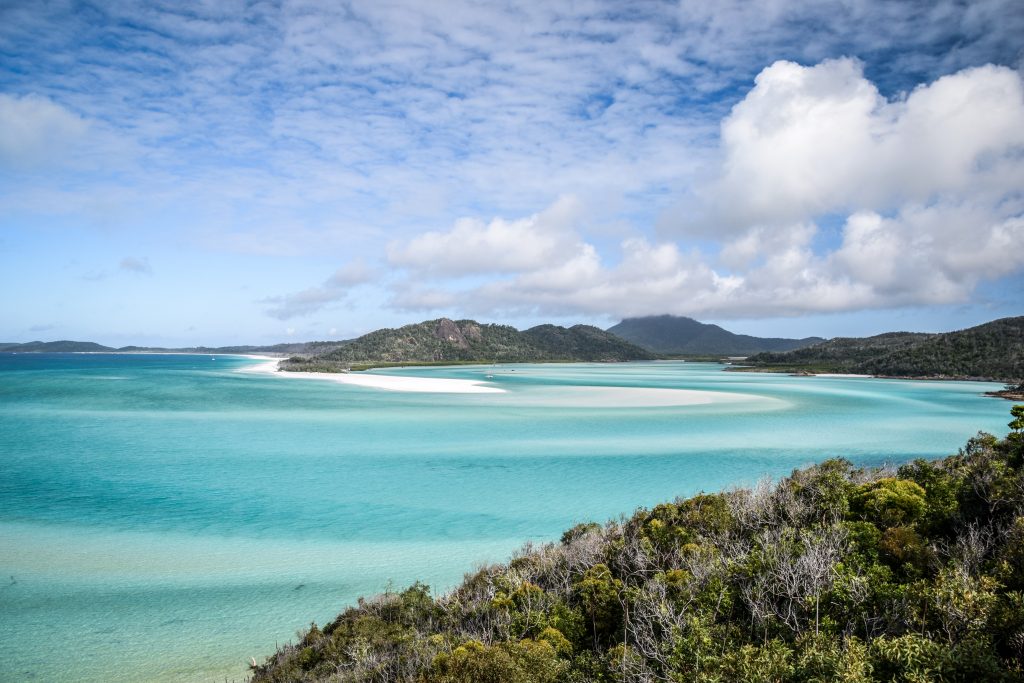
The last stop was on the other side of Whitehaven Island to see the panorama from the famous Hill Inlet Lookout. It’s one of the best known, postcard style views from Australia with breathtaking swirling sands and unique colour of the water. The distance to walk is 1.3 km (return). Definitely worth seeing, even though the place is usually very crowded as every tour stops here.

Hill Inlet on Whitsunday Islands
Classic view from the Hill Inlet Lookout…
…and the other side with amazing white sands
Hill Inlet on Whitsunday Islands

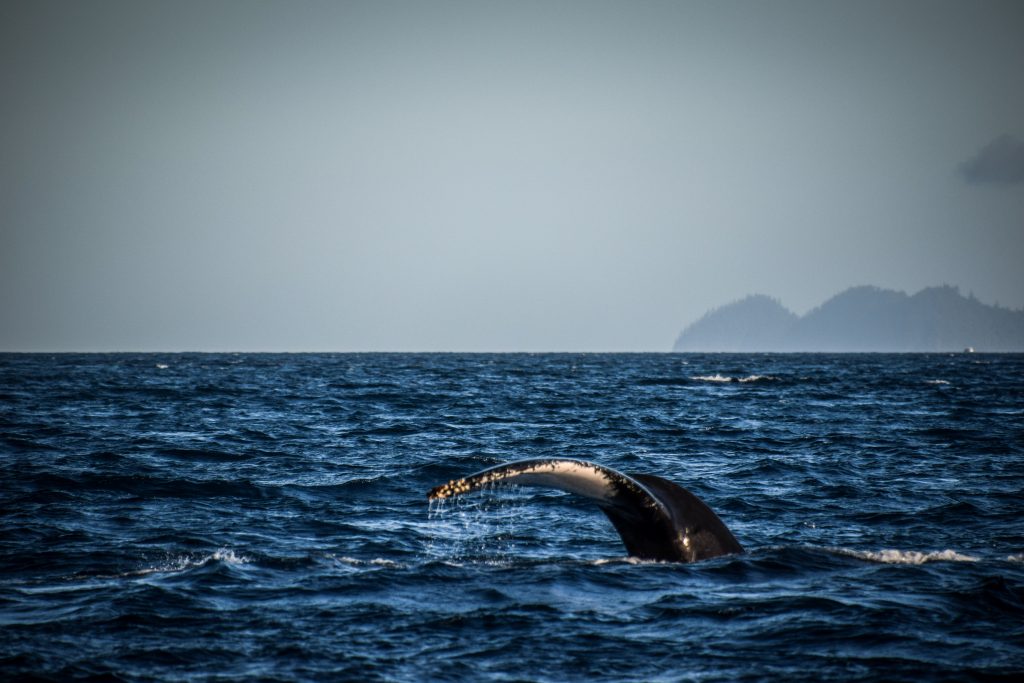
On the way back to the port, the captain reduced the speed couple of times, looking around for humpback whales. There wasn’t any sign of one at first but then one of the passengers spotted one in the distance. Unfortunately, it was quite far away from the boat and I was able to take a picture with maximum zoom, but the quality is far from perfect. Still, better than nothing!

Humpback whale around Whitsunday Islands
Humpback whale making a splash

We were back in the marina about 5 PM and I was really full of positive emotions after a lovely day. Sure, I could easily imagine cruising around the islands for additional days, exploring them more in detail and sleeping on a campsite or on the deck. However, considering the costs, a 1-day trip with Big Fury is a great deal for backpackers and budget travellers.

Introduction

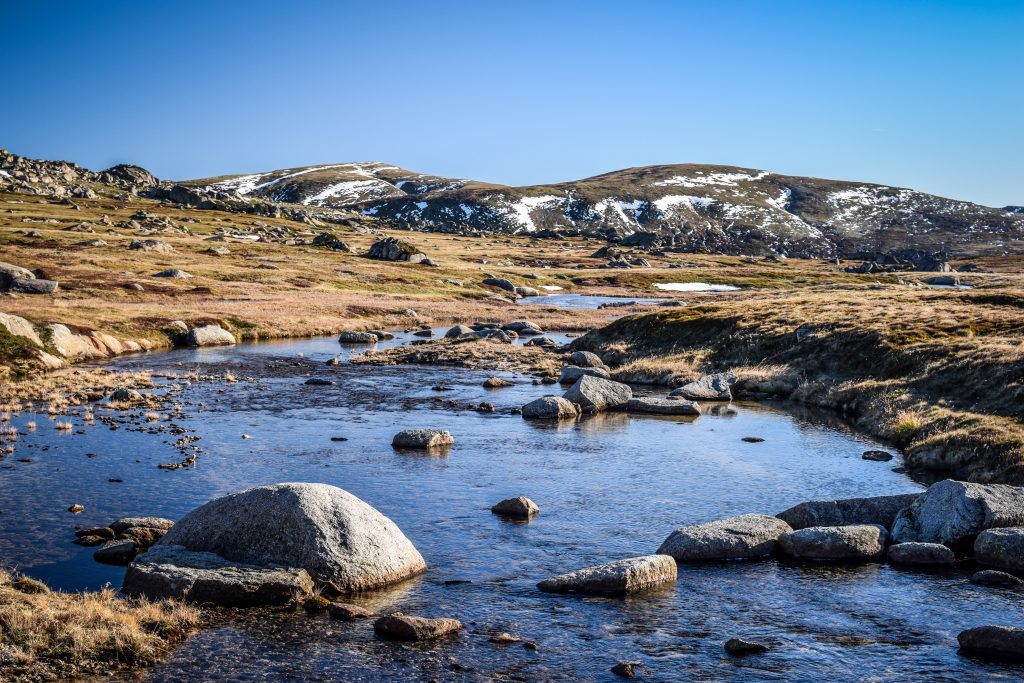
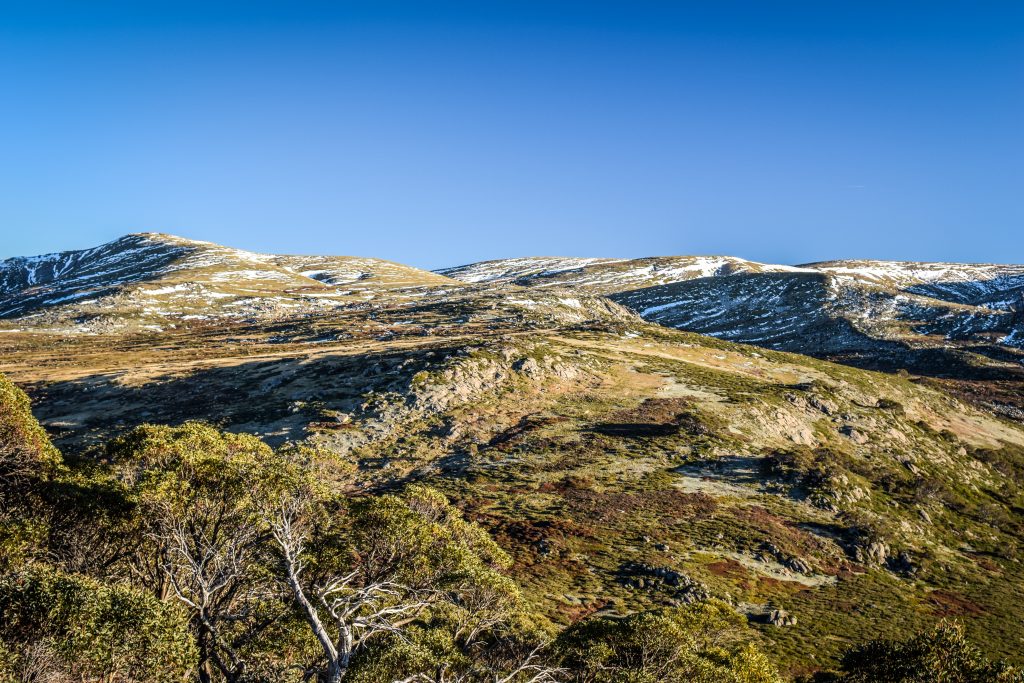
The park is named after Mount Kosciuszko, which at 2,228 metres is Australia’s highest mountain. The best way to discover the area is to go for a walk. Nature enthusiasts will be rewarded with alpine views, crystal clear streams, glacial lakes and historic huts.

At the northern end of the national park are the Yarrangobilly Caves. The limestone dates back 440 million years. An impressive place to discover with an extra opportunity to relax in a naturally heated thermal pool. Don’t forget your swimmers!

During winter, it’s one of the best places in the country for skiing. All New South Wales alpine resorts are within Kosciuszko National Park: Perisher Blue, Charlotte Pass, Thredbo and Mt Selwyn.

Yarrangobilly Caves and Thermal Pool

I made my first stop at Yarrangobilly Caves Visitor Centre to purchase 24 hours pass to the National Park. It costs $17 per vehicle per day (24hrs) and includes free entrance to some of the self-guided caves in the area. I was advised to visit South Glory Cave first and that was exactly what I did.

Yarrangobilly’s karst landscapes were created from a belt of limestone laid down about 440 million years ago. Karst environments preserve evidence of climate change, floods, droughts, fires, animal and human activity. All of that makes it an incredible place to discover.

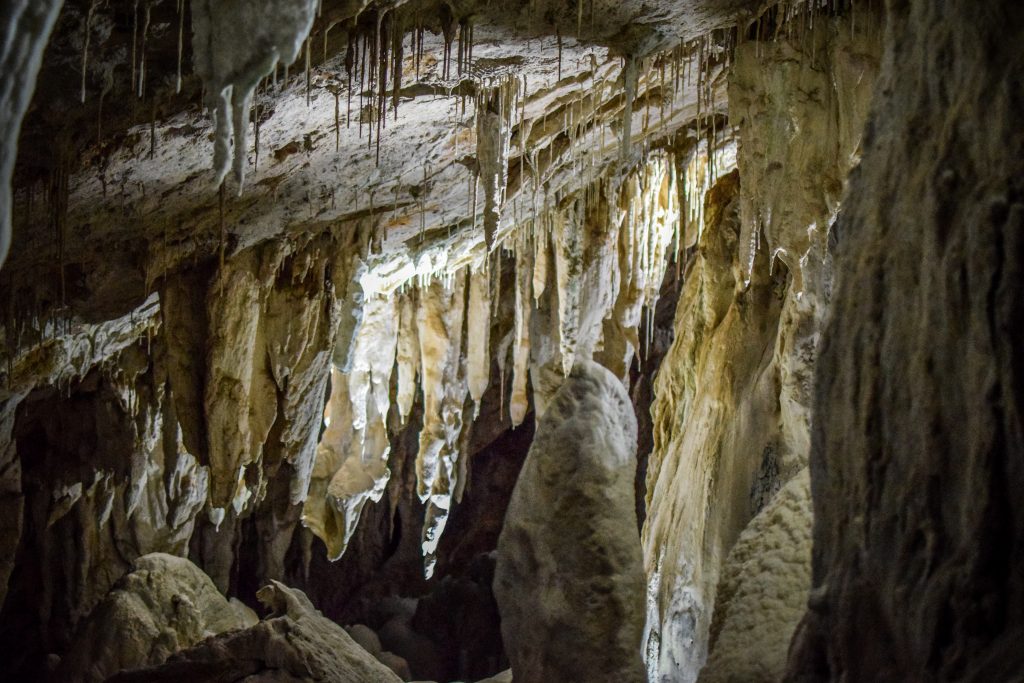
South Glory Cave is the largest one in the Yarrangobilly area of Kosciuszko National Park. I drove past the visitor centre following the signs to the parking. All that area can be easily accessed with a 2WD vehicle. From there, the cave is accessed along a 500m gravel track, leading to Glory Arch. Yarrangobilly river flows just down the escarpment.

The fact that the tour is self-guided makes it much more interesting than just following a group. I was inside completely alone and it took me around half an hour to go through and read information signs. Even though there are sensor lights that switch on as you approach, having your own flashlight is essential. Moreover, the average temperature in this cave is around 10 C so bring a hoodie or a jacket.

After visiting South Glory Cave, it’s a good idea to hike the Castle Cave Walk with the views to limestone cliffs and Mill Creek Gorge. and on to Castle Cave. The track is 3.2 km return and shouldn’t take you more than an hour. Detailed map of the track can be found on the website of NSW National Parks.

If one short track is not enough, head back towards the parking and join Yarrangobilly River Walk. It’s an easy 3 km loop beside the river with an interesting stop on the way – Thermal Pool. Water temperature is on a constant level of 27C so bring your swimsuit and towel! It was nice to jump in and refresh my body, especially after a visit in a cold and damp cave. Detailed map of the track can be found on the website of NSW National Parks.

Glory Farm Walk is a short extension to the thermal pool walk. It’s 2.8 km long (return hike) and follows Yarrangobilly River to the site of Henry Harris’s Glory Hole Farm which provided meat and vegetables for the Kiandra miners in the late 1800s.

There are more caves in the area: Jillabenan Cave, Jersey Cave and North Glory Cave. The first one can be visited on a guided tour. It’s the smallest of the Yarrangobilly Caves with the path through it being 73m long. I didn’t join the tour as visiting South Glory Cave fulfilled all my expectations towards stalagmites and stalactites 🙂 Jersey Cave and North Glory Cave are closed until further notice.

After longer than expected visit in Yarrangobilly Caves, it was time to move on toward Thredbo, which was over 2 hours away.

Mount Kosciuszko Summit (Main Range Walk)

There is not much to do in Thredbo outside of ski season. I had a short walk but then simply made my way to Ngarigo campground which is located along Alpine Way. The place isn’t big but there was only one more campervan parked. I have no idea what the temperature in the night was, but it was damn cold! Definitely the coldest night in Australia during my trip. I used everything I could: blankets, sleeping bag and hoodie.

I woke up at dawn I set off without breakfast. It was the first time that I had to turn on the heating as the front windshield got icy! The way to the parking at the end of Kosciuszko Road took me about 1 hour. After breakfast, I packed my backpack and followed the Summit Track. The distance to the summit is 9.3 km (about 2 hours) but I had the plan to take another path on the way back, completing the loop called the Main Range Walk. It’s a 22 km loop that in theory should take between 7-9 hours but in my case, it was rather closer to 5-6 hours.

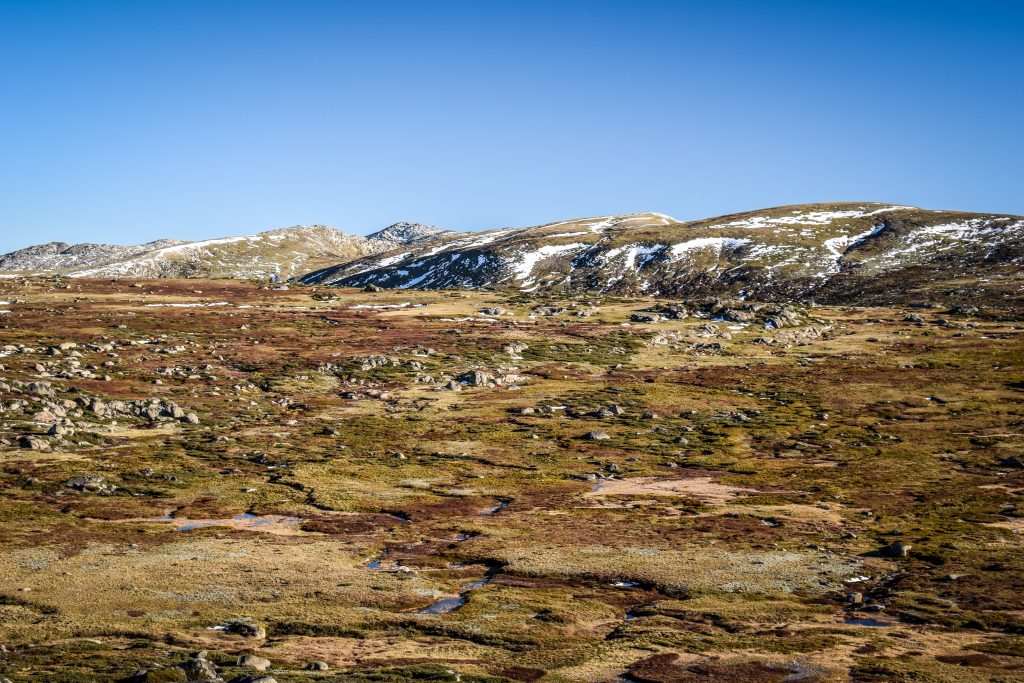
The morning was very cold but the sun was rising higher and higher warming up the air. Small streams along the track got frozen and there was snow clearly visible in the upper parts of the mountains. I definitely didn’t expect to see it in Australia!

Glacier-carved landscape in Kosciuszko National Park
Kosciuszko National Park
Mornings in late May can be quite cold!
Frozen water along the track
Kosciuszko National Park
Alpine meadows

I crossed Snowy River and then, 6 km from the beginning of the track, I passed Seaman’s Hut which is a small safe haven if the weather turns. Rawson Pass is another 1.7 km away. Here it was the time to turn right and make the final ascent to the summit of Mount Kosciuszko.

You may wonder, where the name comes from?

It was given by Polish explorer Count Pawel Edmund Strzelecki who was the first to summit the peak in 1840. It refers to Polish hero General Tadeusz Kosciuszko, a prominent figure in the American revolution. Apparently, the highest Australian mountain looks similar to the sight in which General Kosciuszko was buried.

Kosciuszko National Park
Approaching the summit
Kosciuszko National Park
Views from the top of Mount Kosciuszko

From the distance, the mountain doesn’t look impressive at all. But in sunny weather, the views from 2228 m a.s.l. are decent enough to justify the effort 🙂 Honestly, the landscape here doesn’t feel like Australia at all. Or maybe I just got used to the desert on one side and the ocean on the other?
Continuing the hike along the Main Range Track
Walking on the snow? Why not!
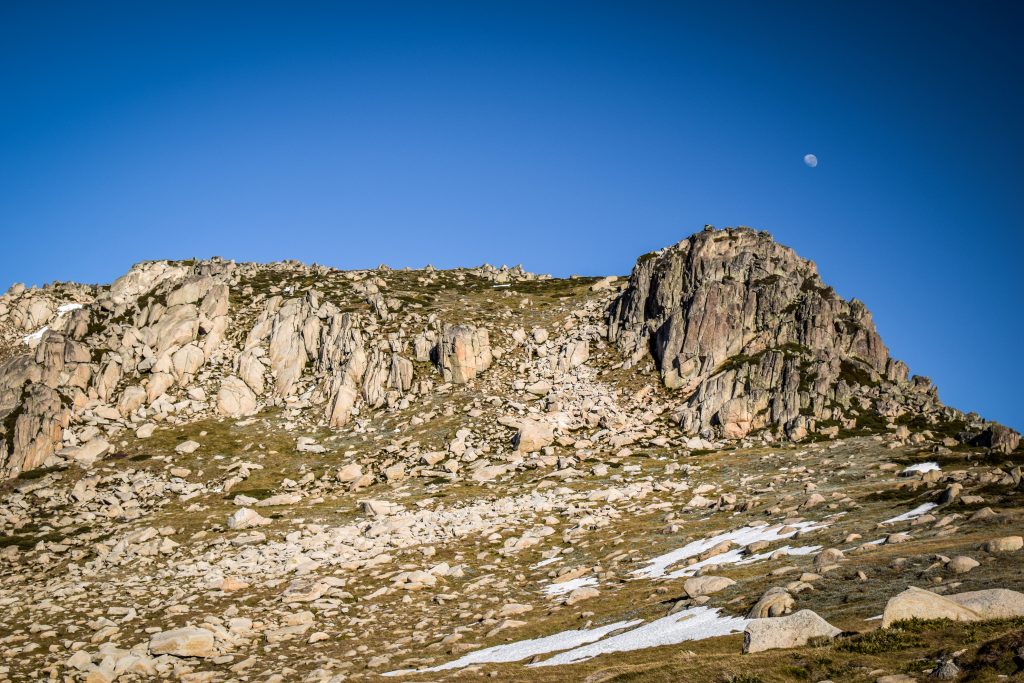
Moon just hanging over the mountain
Kosciuszko National Park
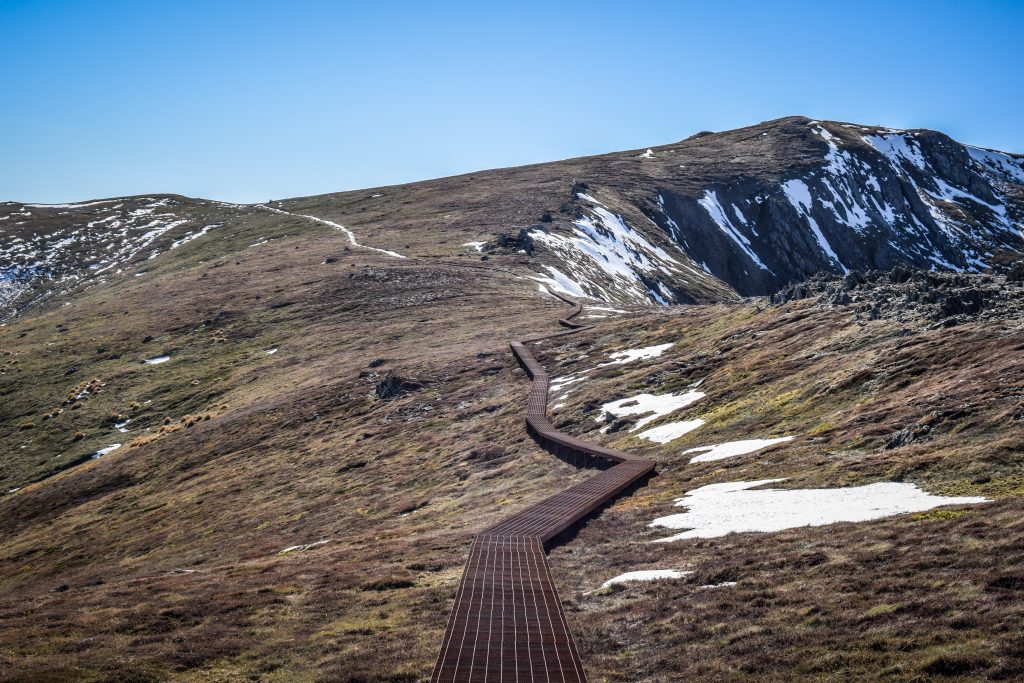
Part of the track leads on metal platforms
The Main Range Walk is very scenic!
Fantastic alpine views
Kosciuszko National Park
Track covered by snow
Views along the Main Range Track
Kosciuszko National Park
Unique Australian landscape in Kosciuszko National Park

I started the descent following the same way as before but shortly after I turned left on the track leading towards Muellers Pass. Then, it continues to Northcote Pass which is just next to Albina Lake. There is an opportunity of a short detour to Blue Lake which is definitely worth doing.

I’m not sure what are the rules of freedom camping in Kosciuszko National Park but I saw two tents pitched on the meadows. Certainly, the nights are cold, but what a great location! If you are a camping enthusiast, consider doing the same.

After crossing the Carruthers Creek, the track goes to the meeting point of Club Lake Creek and Snowy River. From here, the last uphill section leads back to the parking lot.

Finally, the moment has come. The last day on the Main Sudetes Trail. I left Głuchołazy in the early morning and started ascent first to Przednia Kopa (495 m a.s.l.) and then to Średnia Kopa (543 m a.s.l.). Even though I already had over 400 km in my legs, I felt surprisingly well.

.

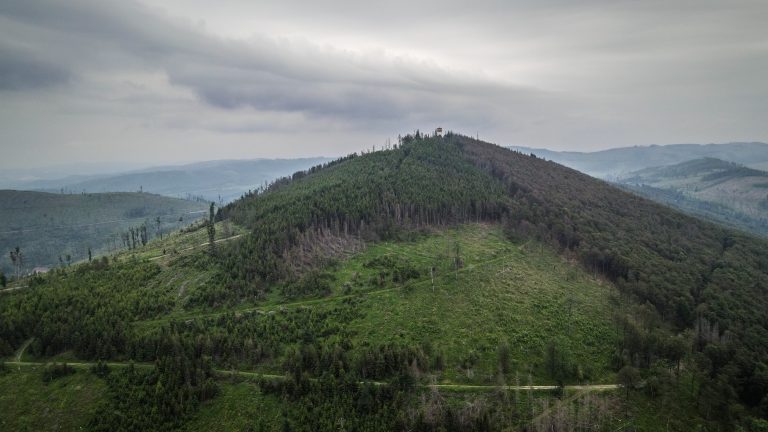
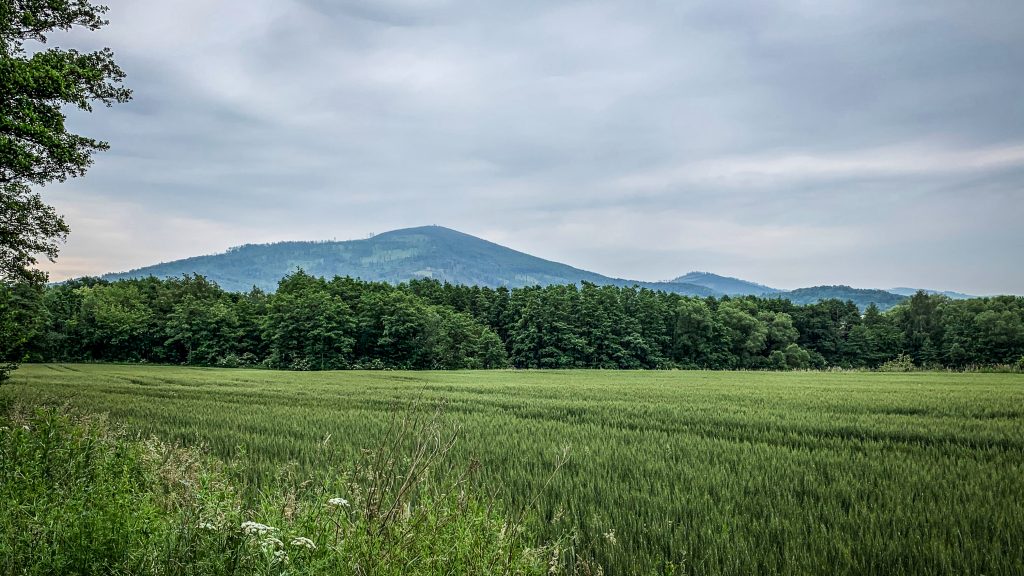
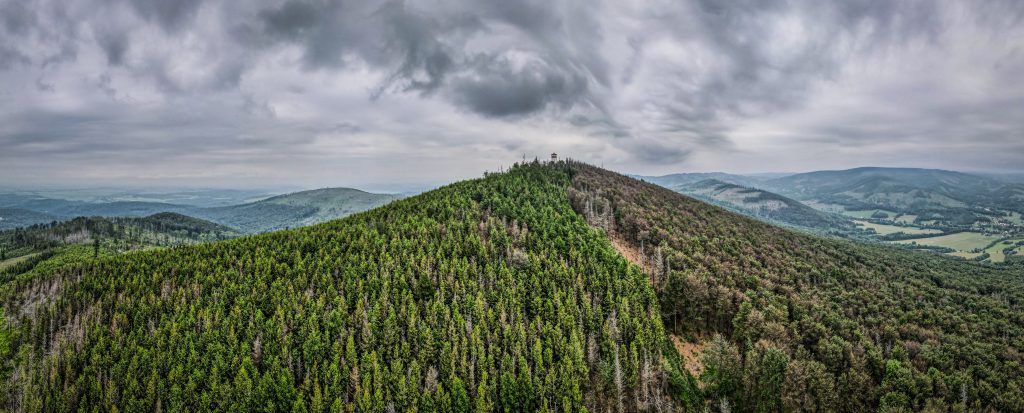
Next 7 kilometres through Podlesie to Jarnołtówek passed quickly due to easy and flat terrain. In the distance, I could already see the highest peak of Opawskie Mountains and the last mountain to tick off on the Main Sudetes Trail – Biskupia Kopa (890 m a.s.l.). It was also the last serious ascent, therefore I took a break for a second breakfast and to play with my drone.

Główny Szlak Sudecki
Landscape around Jarnołtówek
Biskupia Kopa seen from the distance

It’s about 4 kilometres from Jarnołtówek to the top of Biskupia Kopa with over 500m of elevation difference. That’s just enough to warm up for real! Unfortunately, I had to make another stop and put the rain cover on my backpack as the weather was getting worse. There is a mountain hut “Pod Biskupią Kopą” just 15-20 minutes from the summit, in case you are in a need of a hot drink or a meal.

Once on top, I was on the border between two countries – Poland and the Czech Republic. Views are limited by the trees but there is an option to climb an observation tower that stands on the Czech side. I skipped it that time due to clouds rolling in and continued descent towards Srebrna Kopa instead.

Biskupia Kopa, Główny Szlak Sudecki
Aerial view on Biskupia Kopa
Główny Szlak Sudecki
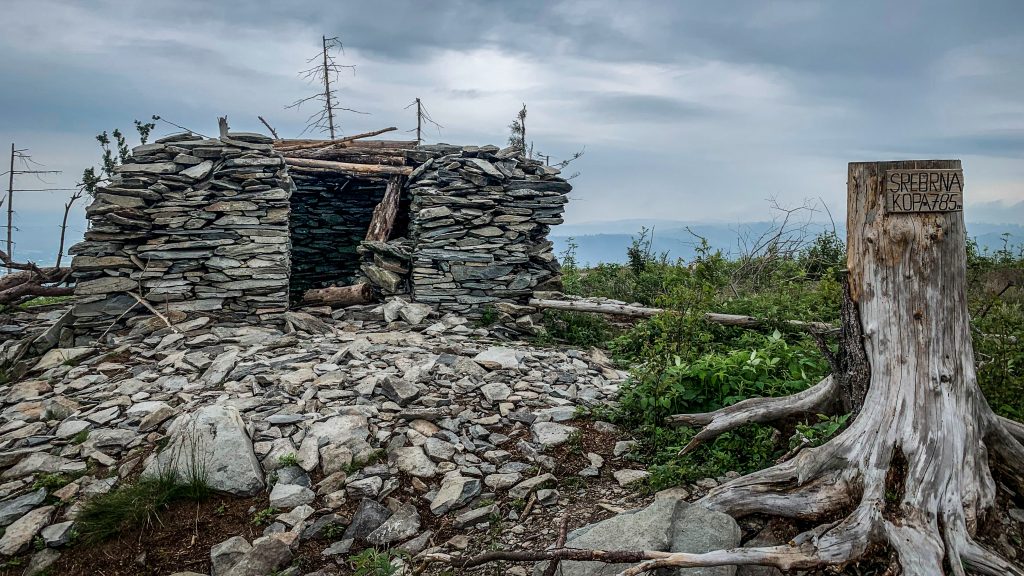
On top of Srebrna Kopa

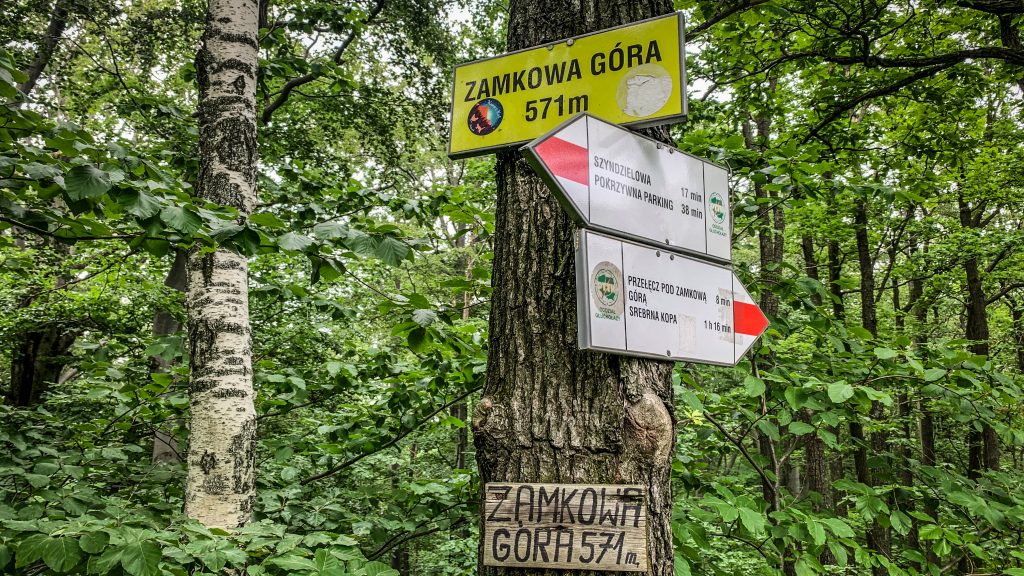
Soon, I reached Pass Under the Castle Mountain (Przełęcz pod Zamkową Górą) and then Castle Mountain (Zamkowa Góra – 571m a.s.l.) itself. Pokrzywna village, which is famous for its fishery, was only half an hour away.

From there to Prudnik it was less than 15 km left. My plan was to catch the last train of the day heading to Wrocław and spend the night in a hostel there, before continuing back to Świeradów Zdrój to pick up my car. Ambitious plan and no time to waste!

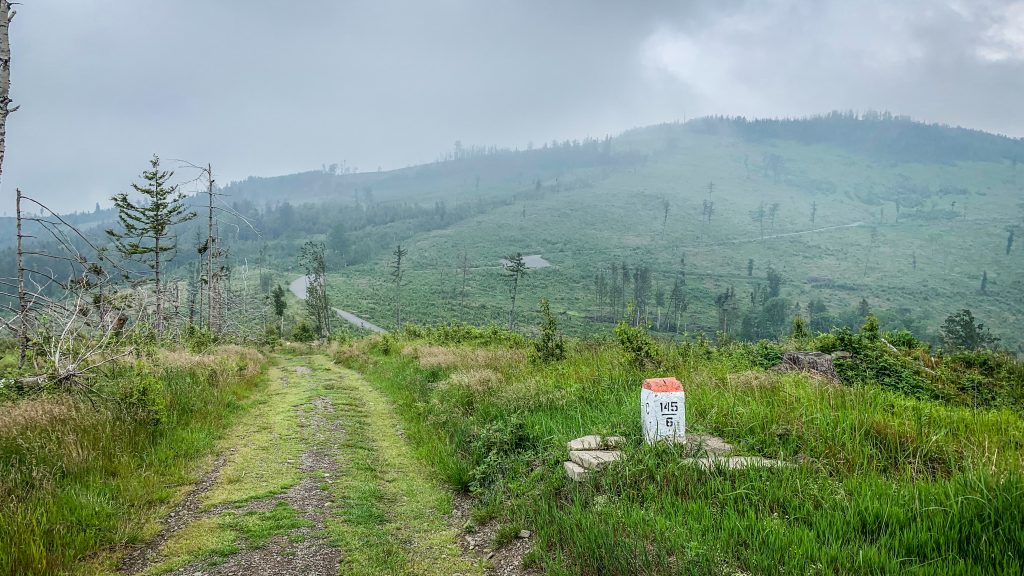
The trail goes along Polish and Czech border
Główny Szlak Sudecki
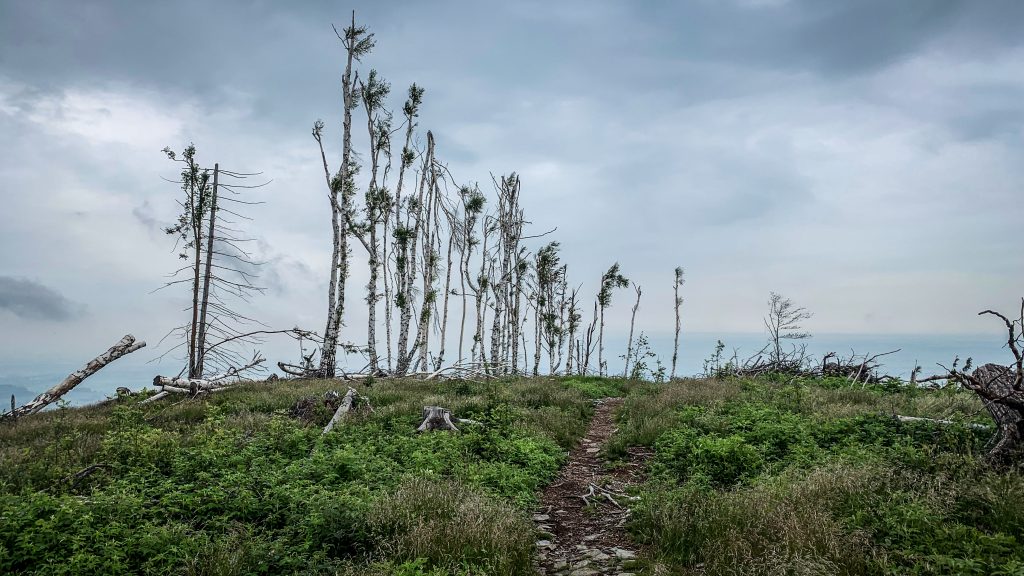
Fallen trees around the trail
Główny Szlak Sudecki
Castle Mountain (Zamkowa Góra)
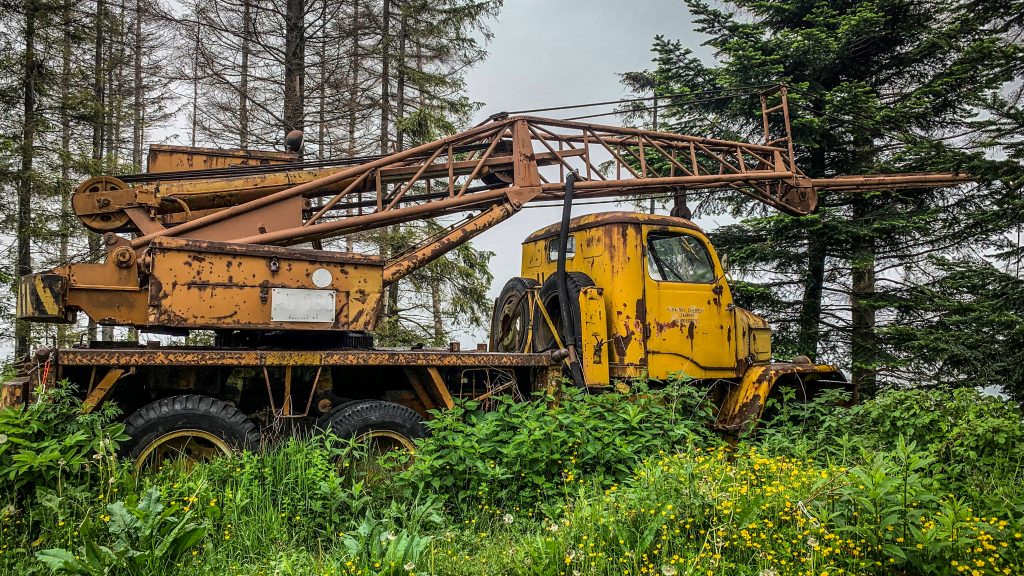
Spooky truck in the middle of nowhere

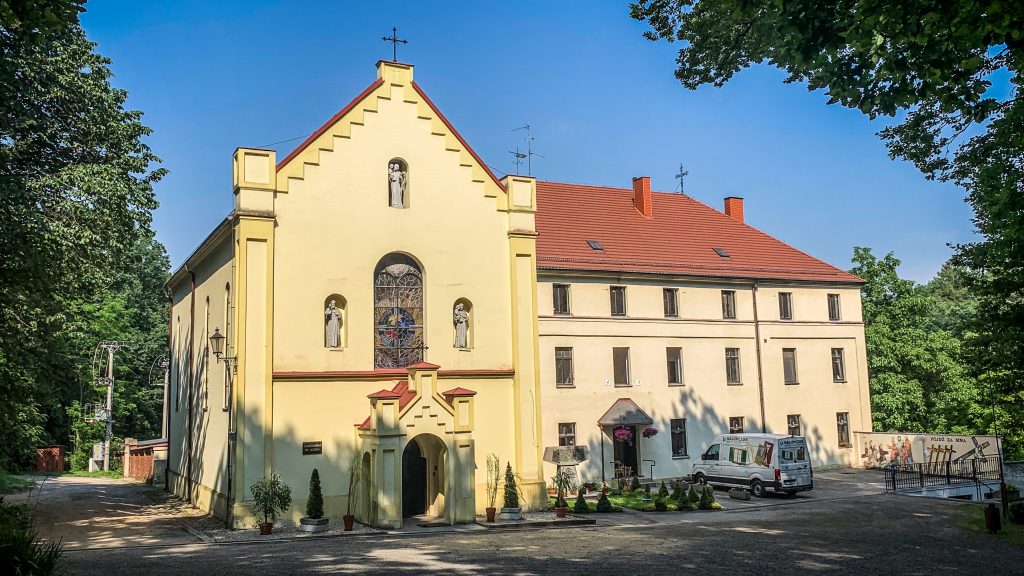
The trail continues through Wieszczyna and Dębowiec to Prudnicki Forest (Las Prudnicki) and a monastery where Cardinal Stefan Wyszyński was imprisoned, an important figure in Polish history. The Prudnik’s buildings are already visible on the horizon and I make the last stop to climb the observation tower on the Goat’s Mountain (Kozia Góra).

Monastery in Prudnicki Forest
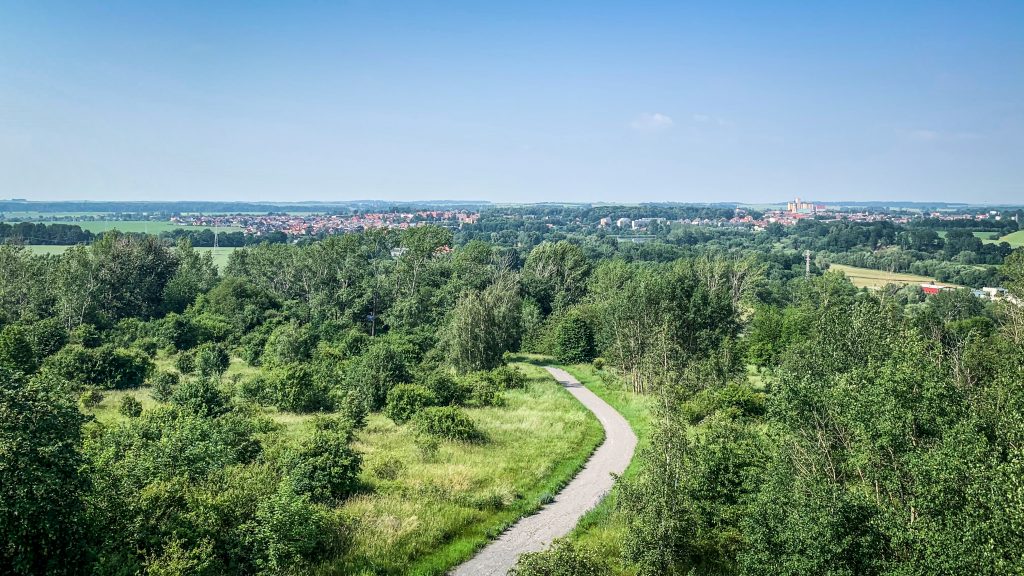
View to Prudnik from the observation tower

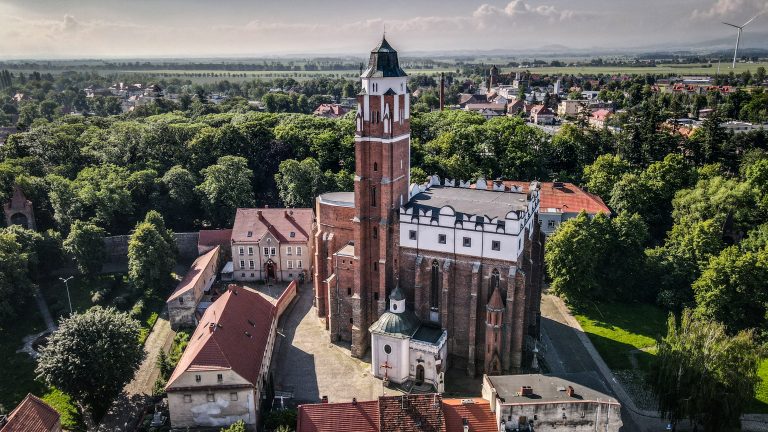
If you have some time in Prudnik, you may want to see the market square with a nice fountain, local museum and the church of St. Michael the Archangel.

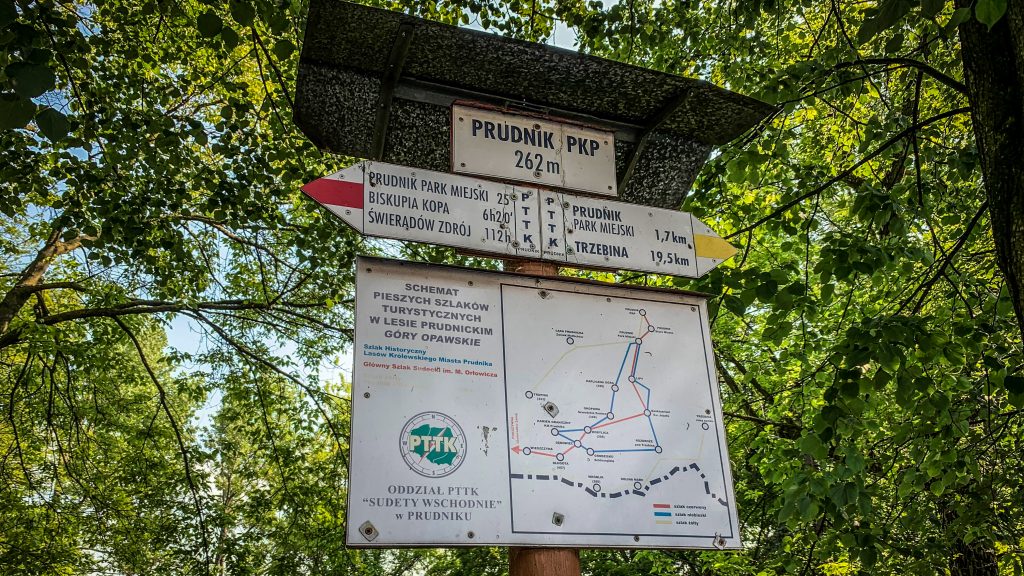
I walked quickly through the streets of the city towards the train station, where there is also a plate marking the end (or beginning) of the Main Sudetes Trail. It shows 112 hours to Świeradów Zdrój from where I started. How long did it take me? No clue. I wasn’t that ambitious to count hours 🙂
I finished walking the trail that most probably I would never walk if there wasn’t lockdown due to COVID-19. Was it worth doing? In such circumstances, for sure yes. I was really happy, satisfied and proud of myself that when most of the people locked themselves at homes, I could go out and spend several days close to nature.

Prudnik PKP – the end of the Main Sudetes Trail

Would I do it again if the borders are open and I can travel elsewhere? Probably not.

When I finished Tour du Mont Blanc a few months later, I couldn’t resist the feeling that I could walk it once again, even tomorrow. Because it was absolutely amazing. The Main Sudetes Trail, on the other hand, is just kind of a one-time experience. But still – a nice experience!

Introduction

Stage 16 is complicated both logistically and physically. Between Paczków and Głuchołazy there are hardly any options for an overnight stay, not to mention long kilometres of walking on the asphalt roads.

Route planning

Total distance from Złoty Ztok to Głuchołazy is 58,5 km, which is clearly out of range for regular hikers. You may want to split it as follows:

Option 1: Złoty Stok – Paczków (13 km) and then Paczków – Głuchołazy (45,5 km)

Option 2: Złoty Stok – Piotrowice Nyskie (30.5 km) and then Piotrowice Nyskie – Głuchołazy (28 km)

.

Option 2 sounds more reasonable, though it involves overnight stay at Piotrowice Nyskie Palace, which isn’t particularly cheap. As it’s nearly the end of the hike, you can simply tell yourself that you deserve a little bit of a luxury 🙂

First kilometres towards Paczków

I hit the road in Złoty Stok following the main road passing through the town. Soon, on the right side, I noticed old lime kilns. If you want to learn more about their history, plan your first break here and have a look at the information board.

Finally the red track turn left leaving the main road and continues towards Błotnica and further to Kozielno and Paczków. Kozielno reservoir on your left is another nice place for a short break.

Zbiornik Kozielno, Główny Szlak Sudecki
Kozielno Reservoir

What to do in Paczków?

Paczków was founded in 1254 and shortly after defensive walls were erected. Remains of them can still be noticed today. Besides that, several other places are worth seeing: City Hall, Church of St. John the Evangelist, Gas Museum and city towers: Ząbkowicka, Wrocławska and Kłodzka.

City Hall

A beautiful building with the tower that retained its original renaissance character until today. It can be climbed and the panorama of the entire city fully rewards the effort.

Paczków, Główny Szlak Sudecki
City Hall in Paczków

Church of St. John the Evangelist

The temple is really huge and towers over the city so you can’t miss it. The construction began in 1350 and lasted about 30 years. The current shape of the building is the result of reconstructions in the Renaissance, Baroque and Neo-Gothic styles. An interesting fact is that in the 16th century, fearing the invasions of the Turks, the temple was rebuilt and fortified. A round stone well was set up in the southern aisle, the only one in Europe that was located inside the church.

Paczków, Główny Szlak Sudecki
Church of St. John the Evangelist in Paczków

Gas Museum

The gasworks in Paczków was built in the years 1898 – 1901 and shortly after started providing permanent gas supply. Over 90 years later, the place was turned into a museum, being the only facility in Poland where all the municipal gas production facilities have been preserved. You can see a huge collection of gas lamps, meters, cookers, heating stoves, irons but also more weird objects such as refrigerator or curling iron. Unfortunately, it was closed on the day of my visit in town due to COVID-19 pandemic, but it must be an interesting and unique place to visit.

City Gates: Ząbkowicka, Wrocławska, Nyska and Kłodzka

System of medieval town fortifications in Paczków is one of the best-preserved examples of its kind in Poland. Initially, three city gates led to the ring of defensive walls and in the 15th century, a fourth was built. Currently, Wrocławka Gate can be climbed for panoramic views and at the Nysa Gate, there is a wooden, roofed walking gallery with viewing platforms open to the public free of charge.

Paczków, Główny Szlak Sudecki
Kłodzka Gate in Paczków

The Main Sudetes Trail used to end in Paczków but a couple of years ago, it was extended to Prudnik. Therefore, I had to postpone celebration and continue my hiking adventure for a little bit longer. I turned left just after Nyska Gate and followed the main road all the way to the turn leading to Unikowice. Asphalt road passes through the village, goes further to Lisie Kąty and then to Ujeździec. It was only 8 kilometres from Paczków but the road seemed to be incredibly long and just boring with no mountains views at all.

Główny Szlak Sudecki
Small chapel with the indication of red track

There was still 10 kilometres between me and my bed for tonight. The boring path continued for 4 kilometres to Trzeboszowice. After passing it, the track turned right and took me to Ratnowice. Both are just another small villages en route without anything particularly interesting. For remaining distance, the landscape was quite monotonous. The only highlight was a young deer roaming the fields. Finally, I arrived at Piotrowice Nyskie and had the whole afternoon for relaxation after that difficult day. The distance was just fine, but walking on asphalt roads is usually much more tiring for the feet. Together with the monotonous landscape, it can be tiring for the mind too.

Główny Szlak Sudecki
The Main Sudetes Trail enters small village of Ratnowice

The following day started with 3 km to Kałków, unfortunately again on an asphalt road. I wondered if the trail would look like this until the end and if so, why was it extended. Luckily, after passing Łąka, it was finally the time to take a bit wilder path and cross the farmlands to reach Jarnołtów.

Główny Szlak Sudecki
Crossing the farmlands
Głuchołazy, Główny Szlak Sudecki
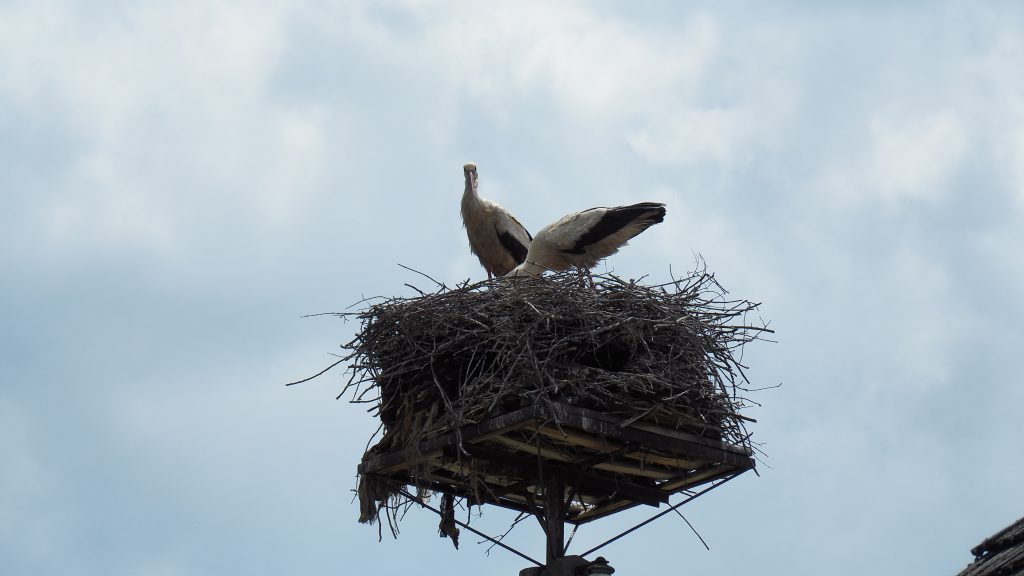
Storks are very common on a trail

Next targets were Sławniowice and Gierałcice, from where Polish-Czech border is a stone’s throw away. The track continues along on an asphalt road (yeah, again) until it finally separates and continues through the fields to Głuchołazy, passing Biała Głuchołaska river.

In Głuchołazy, I stayed in Guesthouse Iwona. Clean and spacious room with a nice yard in front of the house. There is not much to do in town but a short walk around the old market square and the Catholic Church of St. Lawrence is a good idea. And if you still have too much energy, wonderful Beech Forest Nature Reserve can be explored on foot.

Głuchołazy, Główny Szlak Sudecki
City centre of Głuchołazy
Głuchołazy, Główny Szlak Sudecki
In some places it seems like the time stopped

I was really happy to finally reach the town. Last two days were probably the worst ones during the entire hike. But I also had high hopes for the next day as I knew that mountains will be back for the last time. Biskupia Kopa (890m a.s.l.) is the highest peak in the Opawskie Mountains. So, the plan was easy. Climb it and then finish my adventure on the Main Sudetes Trail in Prudnik.

Introduction

The name Waitomo comes from the Maori words wai (water) and tomo (hole). The whole region has impressive cave systems, out of which the most popular are the ones accessible by tourists: Glowworm, Raukuri and Aranui.

To be honest, I am not a big fan of caves and after visiting a couple of them before, every next tour feels pretty the same. However, Waitomo Caves were on my must-see list from the very beginning as there was something that I had never seen before – glowing worms.

What are glowworms?

Glowworms are the larvae of the fungus gnat. Their luminescent organs attract small insects which come in the direction of the light only to be caught into sticky threads. In fact, the more hungry the larvae are, the brighter the light. The larval stage lasts between 6-9 months. After that, it turns into a pupa stage, similar to cocoon which develops into adult fungus gnat about 2 weeks later. Seems like the only reason for their short life is reproduction. They don’t have a mouth, therefore after mating and laying eggs, they die. And then the whole process repeats.

The guides will certainly tell you much more interesting details. Stay quiet and avoid shining your flashlight directly on them as it can scare them off and as a result, they will dim the lights.

How much does it cost?

I arrived at Waitomo Caves Discovery Centre in the afternoon and instantly set my wallet of fire. All the options seemed to be so tempting! I had done some online research before and I knew that for sure I want to do Glowworm Cave Tour and Black River Rafting. In the end, I added Raukiri Cave Tour to the deal as well.

Combined ticket for both cave tours costs 100 NZD and Black River Rafting Tour (Black Labyrinth) costs 150 NZD. Yeah, it is pricey. Don’t forget to have a look at www.bookme.co.nz for possible deals and promotions.

What to take?

As it usually is in the caves, the atmosphere is rather wet and cold. Wear good shoes and be prepared for temperature about 12˚ – 14˚C all year round.

If you go for Black River Rafting, you would need to take a swimsuit (to wear under a wetsuit that you get from your guides). It’s also good to have a bag where you can put your clothes for the duration of the adventure as well as a towel and flipflops. And definitely don’t forget your spirit for adventure!

Glowworm Cave Tour

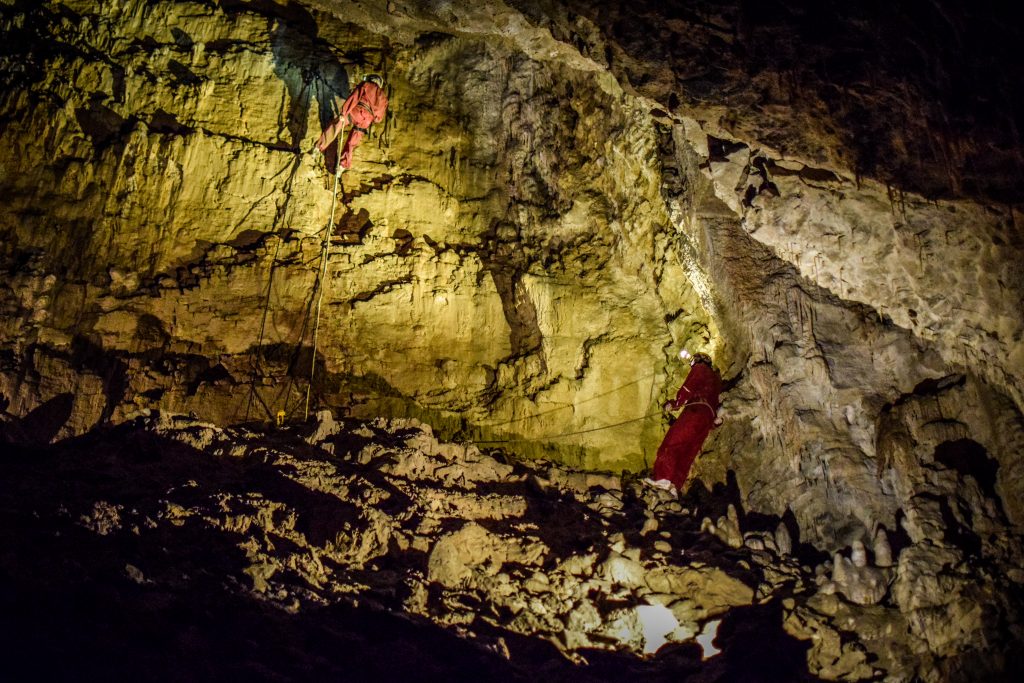
The tour is the most popular one in the area and it really is an absolutely unique experience. There were two parts of it. First, I got to admire cave formations in the dry section. Then it was the time to hop into the boat and the real fun began. Shortly after, we were already in the large cavern known as the Cathedral. The guide navigated through the darkness by pulling the rope in such a graceful and smooth way that it seemed to be an art in itself. The first time to see glowworms could be a bit overwhelming. It so many of them! Hundreds of blue points glowed above my head and once again, I could not believe how lucky I was to spend 3 months on the other side of the world – in New Zealand.

Black River Rafting

It was raining the whole night and the temperature wasn’t too high either. I felt cold even under the blanket inside the van. That’s why I was far from being optimistic about jumping to cold water and spending 3 hours in a cave.

After checking-in at Waitomo Homestead, I met the other guys from my group. It was 5 of us in total plus 2 guides – Mitch, who used the word ‘awesome’ in literally every sentence, and a girl whose name I don’t remember but she was a talented singer which we had the opportunity to experience inside the caves.

We got wetsuits, which were still wet after the last tour the day before. Wearing a wet and cold wetsuit isn’t particularly nice but after a short time, it adjusted to body temperature.

Next, we got helmets with flashlights and of course black tubes. We made a stop next to the stream, just to practice jumping to the water as there are small waterfalls to jump from inside the caves. Don’t worry, just 2-3 metres high so it really isn’t a big deal, even for the person who doesn’t like heights. It was quite fun and the water didn’t seem to be as cold as expected. The wetsuit was doing a good job!

After entering Raukiri cave, we simply walked the first stage until we reached the first waterfall. The jump was awesome! Then, we stopped for marshmallow in chocolate (typical kiwi thing), observed glowworms, saw an eel, jumped from the second waterfall and in the end drifted slowly towards the exit, one after another, holding our feet and creating something like a small train. We were asked to turn off our flashlights to experience total darkness and our second guide started singing a beautiful Maori song. Total darkness, glowworms above your head and live singing inside the cave. Just imagine that. Unforgettable.

The whole experience ended with hot shower, tomato soup and bagel. It was an amazing tour and if I get the chance to repeat one of the cave attractions in Waitomo, I would definitely choose Black River Rafting.

Raukiri Cave Tour

The emotions had not subsided yet but it was already the time for another attraction. I set off to Raukiri cave, that time to take part in walking guided tour. The cave is huge and even though I was already inside during Black River Rafting, the area opened for walkers is a completely different one.

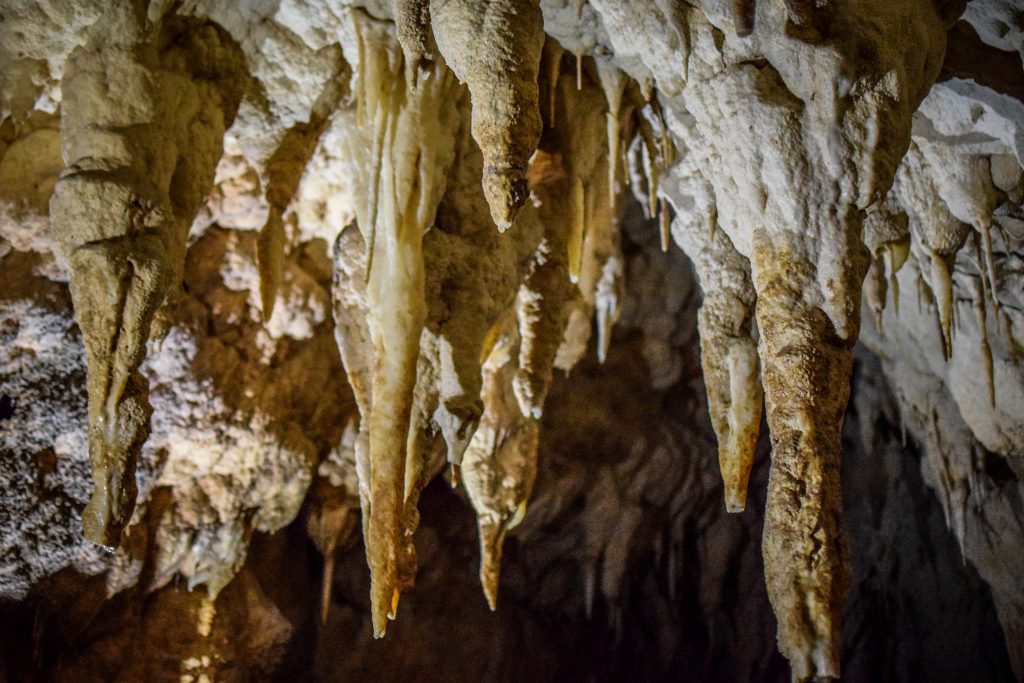
The guide Nathan had a good sense of humour and he introduced the history of the cave, shown stalactites and stalagmites as well as interesting fossils and cave creatures. We covered 1.6 km out of 7.5 km cave system. It was still a nice tour, however definitely the least exciting. I would say, just a regular cave tour which I would not do again if I ever come back to Waitomo.

Waitomo Caves, New Zealand
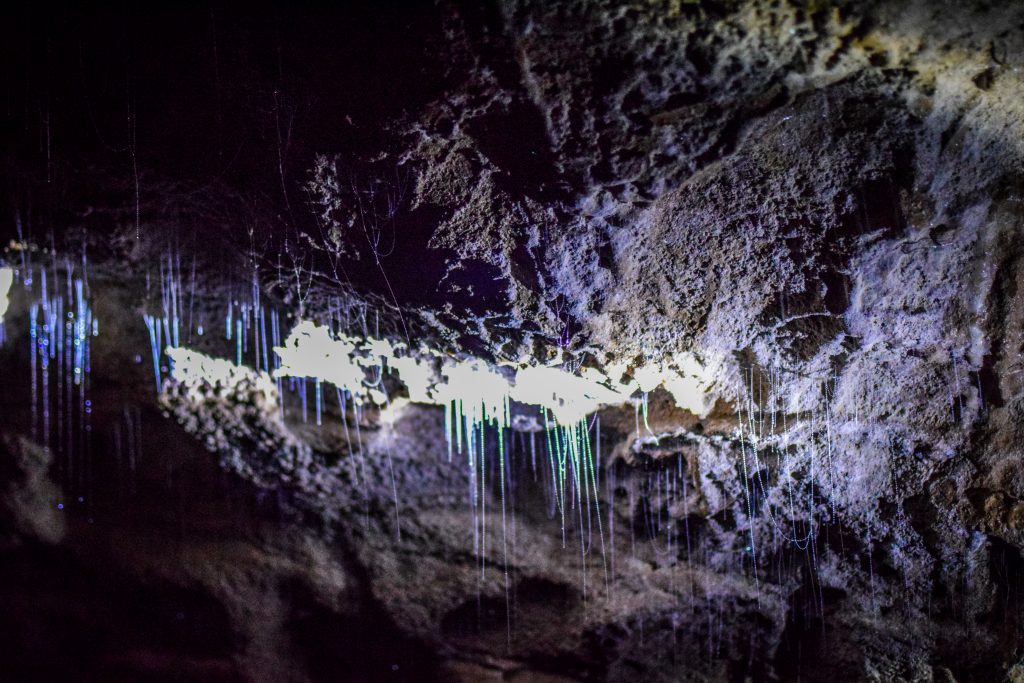
Glowworms spotted in Raukiri Cave
Waitomo Caves, New Zealand
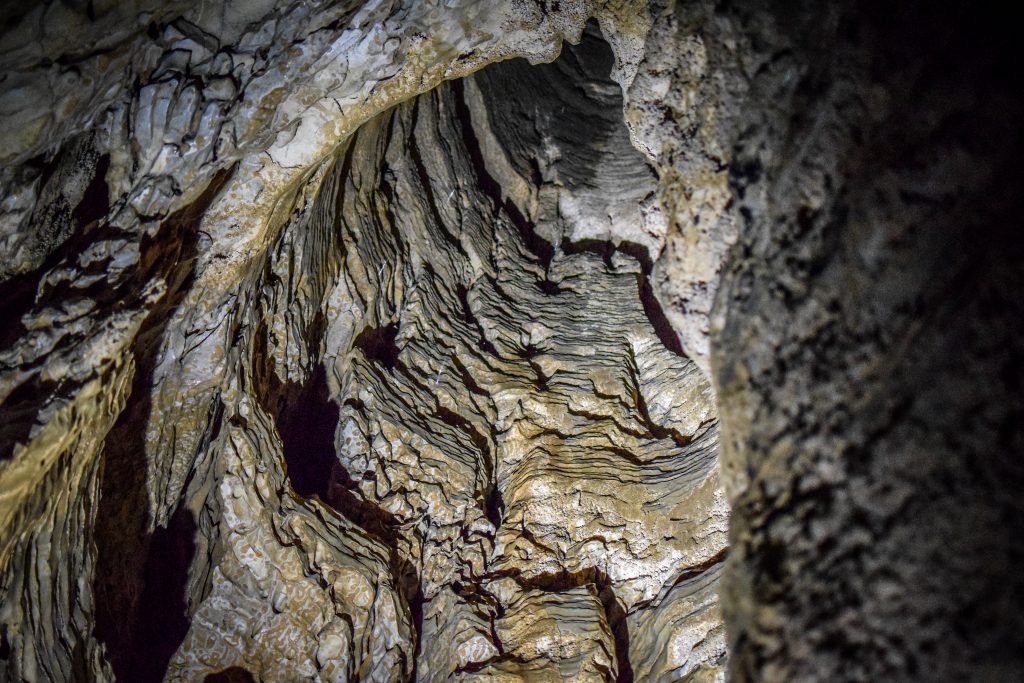
Rock chimneys inside the cave
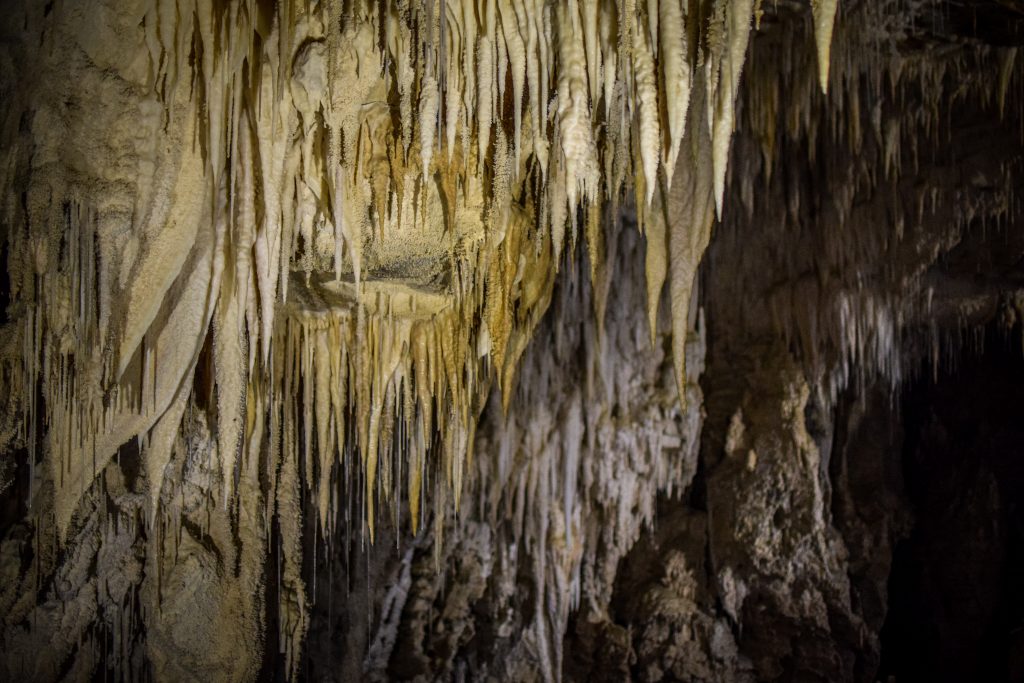
Plenty of stalagmites and stalactites
Waitomo Caves, New Zealand
They are only puppets 🙂
Waitomo Caves, New Zealand
Trip through Raukiri Cave is about 1.6 km long

Other sights in the area

As always in New Zealand, there are so many nice places close to each other that it can take days or even weeks to see one region. King Country is not different. If you are done with Waitomo Caves, take your time to visit Mangapohue Natural Bridge, Piripiri Cave and Marokopa Falls.

Mangapohue Natural Bridge

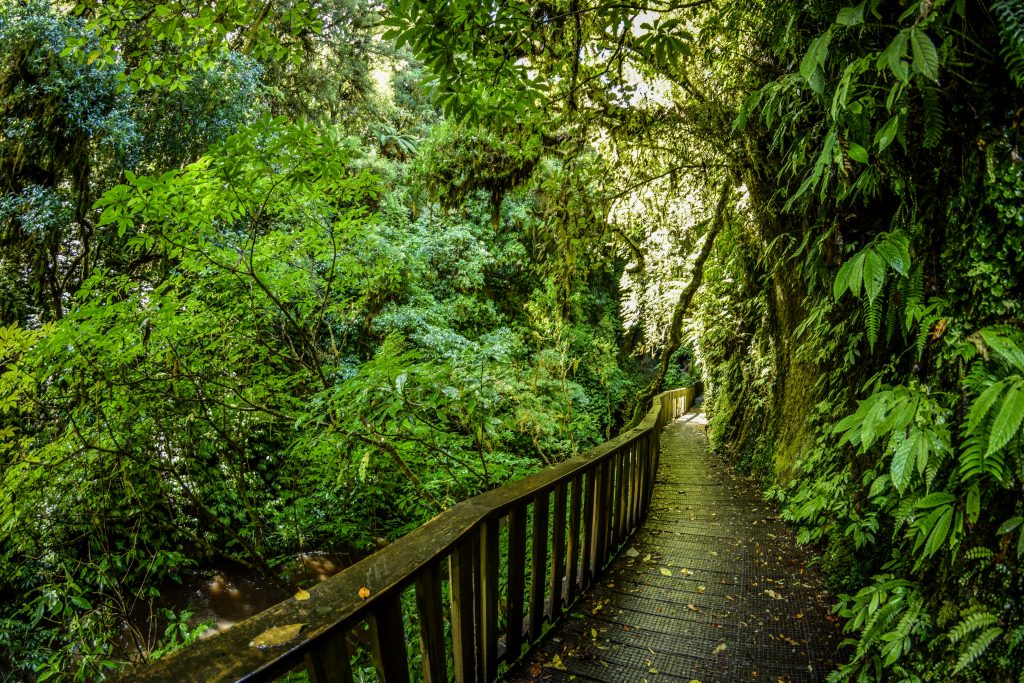
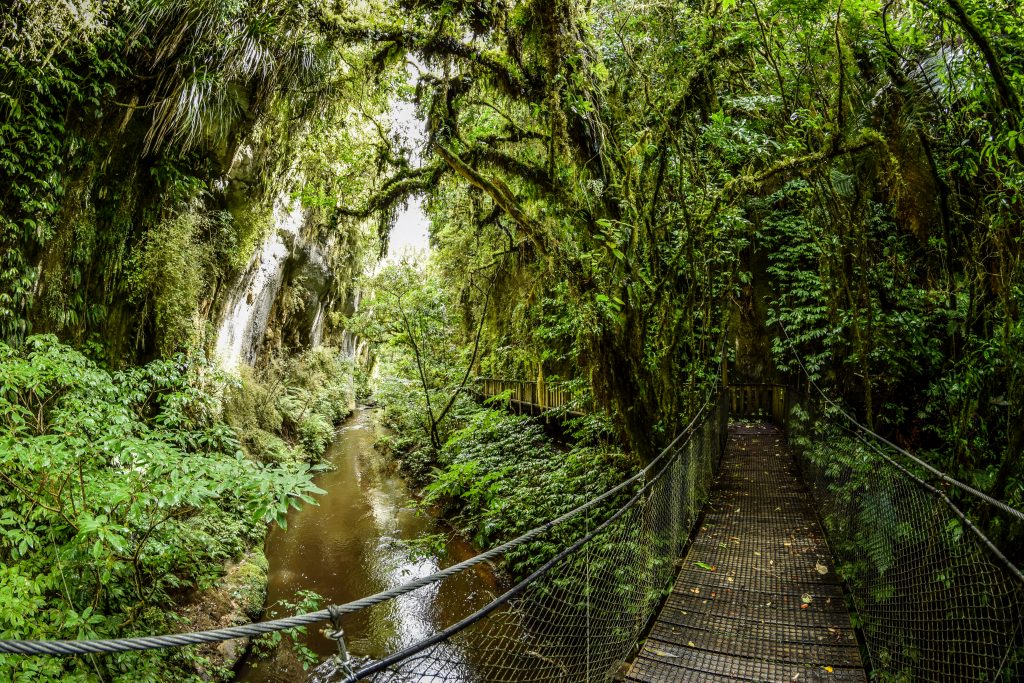
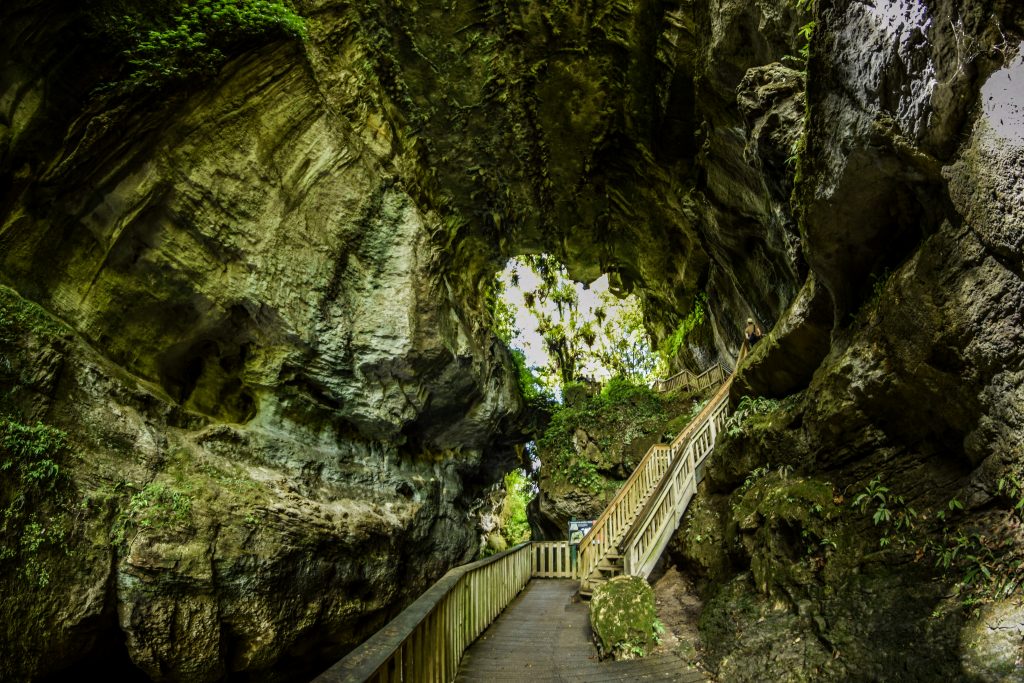
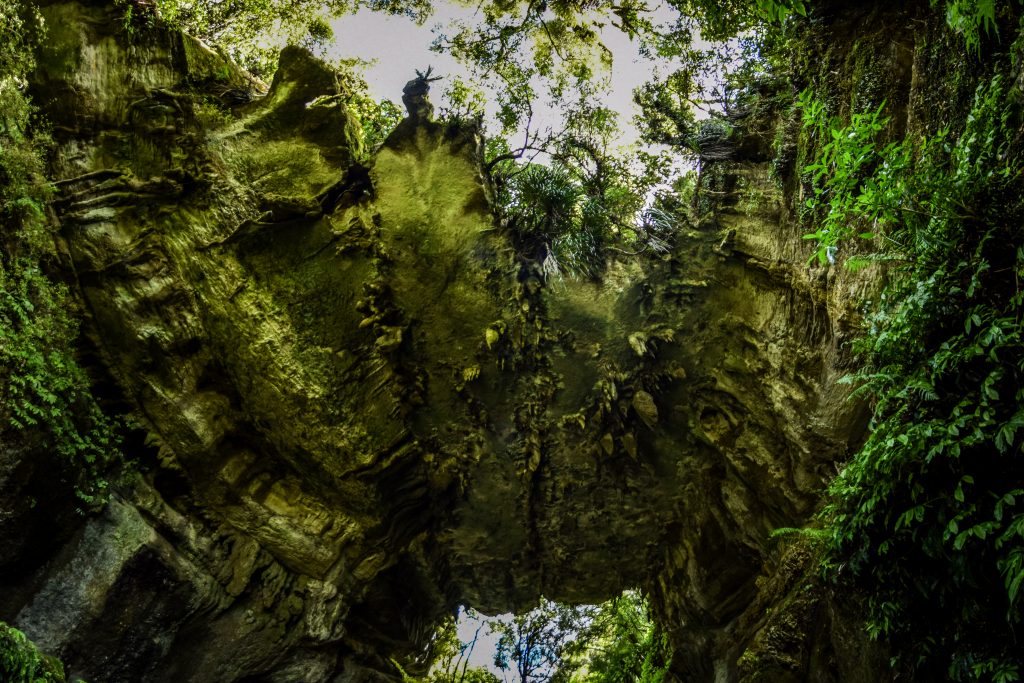
It’s a 700m loop track through a limestone gorge that passes underneath a 17 m high natural arch – remains of an ancient cave system. Go up the stairs and have a look at an impressive ceiling with rock formations.

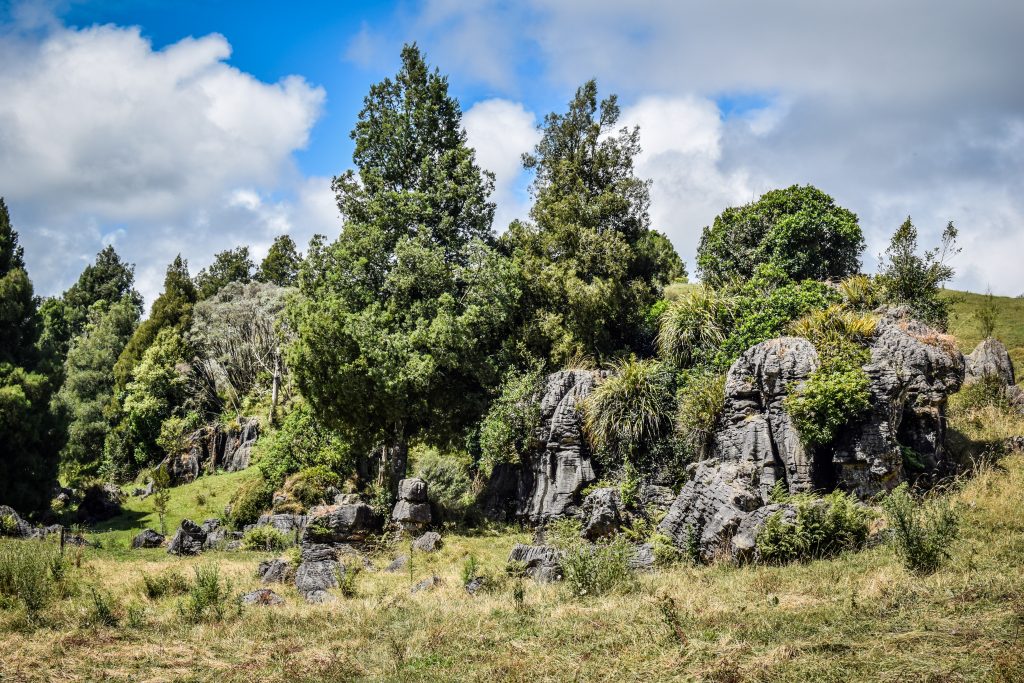
The track continues over farmland and back to the parking. Pay attention to limestone outcrops as on some of them you can notice ancient fossils. It’s a really cool place, don’t miss it!

Boardwalk leading towards Mangapohue Natural Bridge
Mangapohue Natural Bridge, New Zealand
Scenic bridge in the middle of the bush
Mangapohue Natural Bridge, New Zealand
Stairs leading through 17m high natural arch
Rock formations on the bottom of the arch
Mangapohue Natural Bridge, New Zealand
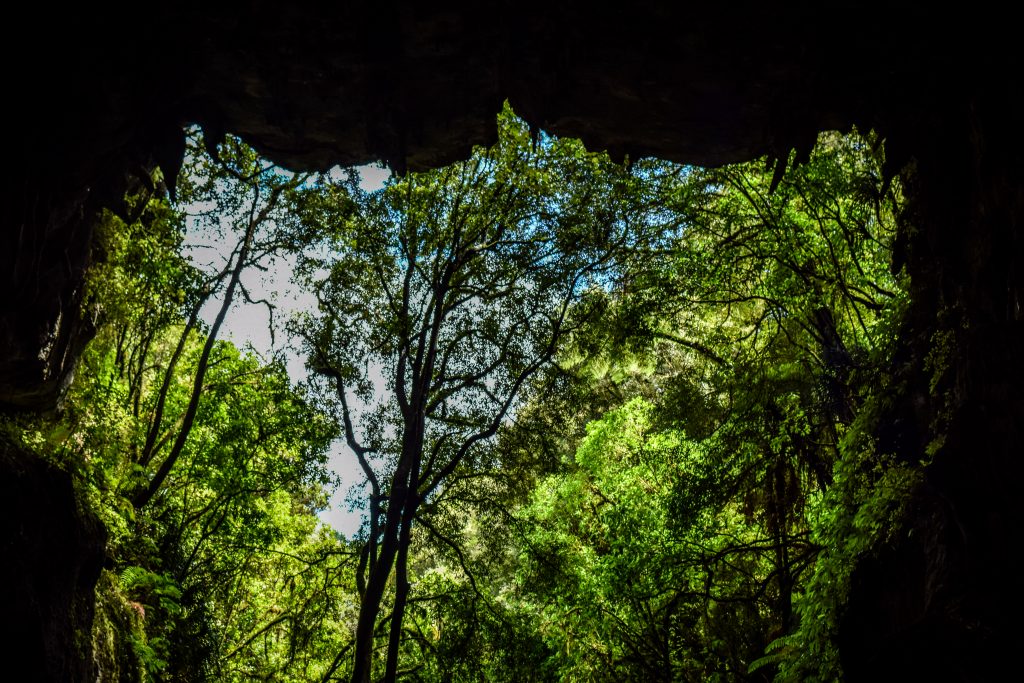
View from the inside of the arch
Mangapohue Natural Bridge, New Zealand
The track continues through the farmlands and back to the parking

Marokopa Falls

The short track (600m return) takes you through the forest down to the viewing platform. The 35 m high falls are without doubt one of the most beautiful ones in New Zealand. If you are lucky, you will experience a wonderful rainbow and their bottom. Great for photographs!

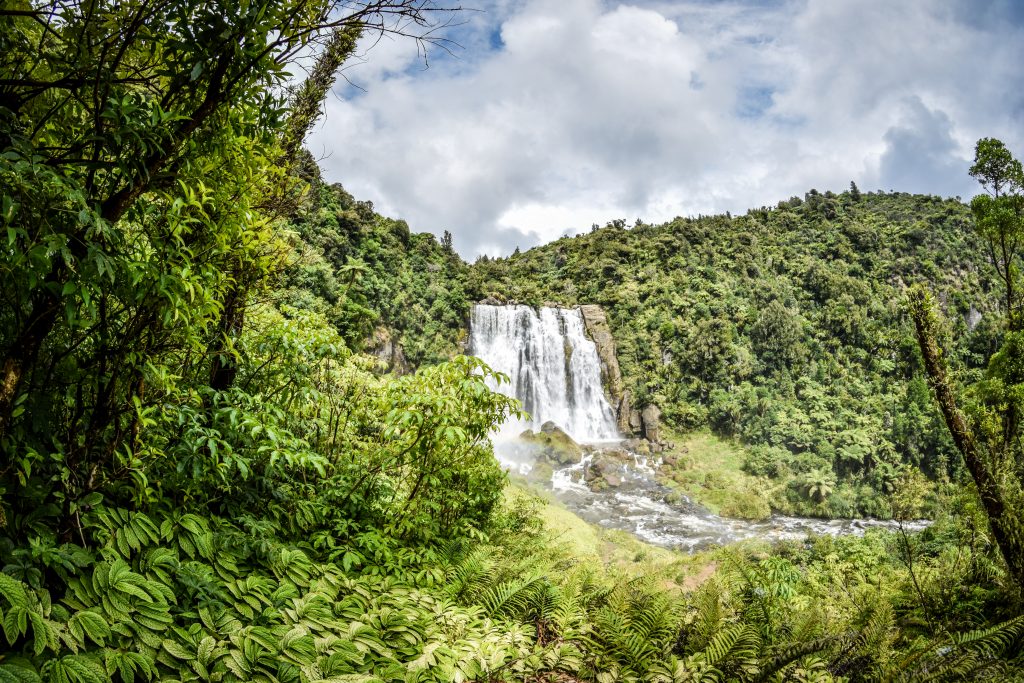
Marokopa Falls, New Zealand
Marokopa Falls

Piripiri Cave

Hiking path through native bush and past limestone outcrops leads to a short staircase that goes down to the cave entrance. There is an observation platform at the bottom.

After the night near Stronie Village, I had to retreat my steps towards Biała Woda and join Main Sudetes Trail there. Luckily, the same as the day before, I managed to catch a ride quite quickly and save my legs from walking on a boring asphalt road.

The good news was that the distance to Lądek Zdrój (12 km) is rather easy and without significant elevation gains. A mostly downhill path through the forest is especially nice in hot weather and with sore muscles after getting to the top of Śnieżnik on the previous day.

I made a short break at Kąty Bystrzyckie. Next, the track goes gently uphill to the pass where you can see a small chapel. The legend says that it was built on the site of the death of 3 Swedish generals during the Thirty Years War.

The track follows the wide and comfortable road through the farmlands and forest until the first buildings of Lądek Zdrój pop up on the horizon. I could hear thunders becoming louder and louder, therefore I quickened my pace and shortly after arrived at the market square in the city centre.

The town is considered to be the oldest health resort in Poland, because according to historical sources, as early as 1241 there were bathing facilities here destroyed by Mongols returning from the battlefield near Legnica.

The area of old market square with the town hall, old tenement houses and restaurants is nice for a longer break and hot meal. Other than that, I recommend checking out the building of Wojciech Spa, Protestant church ruins as well as two picturesque bridges: the one of St. John of Nepomuk which is close to the old market square and the covered bridge which is more in the spa part of the city (still within walkable distance).

Wojciech Spa – a historic building from the 17th century, rebuilt two hundred years later. It houses a marble swimming pool designed in the style of a Turkish bath, stylish stone bathtubs for pearl baths and a pump room for waters from local springs.

Lądek Zdrój, Dolny Śląsk
Historic building of Wojciech Spa
Lądek Zdrój, Dolny Śląsk
Wojciech Spa seen from the sky

Bridge of St. John of Nepomuk – It was erected in 1565. The author of the sculpture took inspiration from the figure of the patron saint of Bohemia on the Charles Bridge in Prague.

Lądek Zdrój, Dolny Śląsk
Bridge of St. John of Nepomuk

Covered Bridge – one of the most original and beautiful monuments in Lądek. It was built in the 1930s in order to connect two spa facilities.

Lądek Zdrój, Dolny Śląsk
Covered bridge in Lądek Zdrój

Protestant church ruins – built in 1846, the temple was destroyed in the fire in 1999.

Lądek Zdrój, Dolny Śląsk
Ruins of Protestant church

The second part of the day from Lądek Zdrój to Złoty Stok is longer (16 km) and much more difficult due to elevation differences, especially ascent to the Great Jawornik (Jawornik Wielki, 872 m n.p.m.).

I left Lądek Zdrój crossing the bridge over Biała Lądecka and followed the red track towards Pass Under the Konik (Przełęcz Pod Konikiem) and further to Orłowiec village. There, it was time to take a turn from the main road and start tiring ascent to Jaworowa Pass (Przełęcz Jaworowa).

It’s over 3 kilometres to the top of the Great Jawornik. The views are limited because of the trees but there is a viewing platform within 150 metres of a detour from red track. Unfortunately, clouds were hanging very low and I could see absolutely nothing anyway.

There are 6 more kilometres to Złoty Stok but all the way downhill so it didn’t take long to reach historic villa Złoty Jar and shortly after I saw first tourists hanging around in rope park and gold mine museum. Sightseeing was on my list too but first I wanted to drop my heavy backpack at Gold Stok Hotel. The room was simple but comfortable. Moreover, a bed and a private bathroom was everything I needed at that time.

It was getting late and there is quite a lot to see in Złoty Stok, therefore I simply went out for the walk and dinner, leaving tourist attractions for the morning of the next day.

This medieval mining settlement was established in connection with the mining of gold (traces from as early as the 10th century were discovered). Złoty Stok is the oldest mining and metallurgical centre in Poland. The last mine (arsenic ores) was closed in 1961. Today, it’s a popular tourist destination with all attractions being related to its past.

Gold Mine Museum – A specially prepared tourist route with a museum exhibition covering two adits. The first one is called “Gertrude” (500 m) and presents a unique collection of geological maps, ancient mining instruments and rich collection of rocks, ores and minerals from around the world.

The second one, called “Czarna” (700 m), is located in the upper part. This adit leads visitors through the 16th-century, hand-forged workings. You can learn about mining techniques used over the centuries and admire the only underground waterfall in Poland. The tour ends with an underground tram ride in the direction of a daylight 🙂

Złoty Stok, Dolny Śląsk
Entrance to Gertrude adit
Złoty Stok, Dolny Śląsk
The only underground waterfall in Poland

Medieval Technology Park – A replica of a medieval settlement with a lot of real size devices. All of them still work and knowledgable guide presents their usage and let tourists try them themselves. 1-hour tour is concluded with the visit in Executioner Hut. He played an important role in punishing criminals and thieves.

Ochre Adit – It was opened in 2017 and the underground part includes 130 meters of the pavement that is opened for visitors. Sightseeing possible only with a guide.

Combined ticket for all three attractions costs 59 PLN per adult and you should count at least 3.5 hours for sightseeing.

Introduction

Numerous beaches, ocean, forest, mountains, waterfalls and rich history. It’s a perfect combination for every holiday. Add to it relaxed vibes as well as proximity to Auckland and you will get a very popular place for summer escapes from a big city.

The area was occupied by Maori long time before the arrival of Europeans. Unfortunately, the distance from Auckland, availability of kauri timber and discovery of gold resulted in intense colonisation and Maori lost most of their lands by the 1880s.

The Peninsula was named after HMS Coromandel, a ship of the British Royal Navy that stopped at Coromandel Harbour in 1820 to purchase kauri spars. The ship was named for India’s Coromandel Coast.

The following itinerary encircles the peninsula from east to west and assumes that you have your own transportation.

Day 1 – Waihi, Whangamata, Wentworth Falls, Tairua, Hot Water Beach, Cathedral Cove

The day is busy and packed with attractions so it’s essential to start early. Driving along the east coast of Coromandel Peninsula will reward you with scening summer towns, waterfall, gold and silver mine and hot water beach. All of that finished with the grand finale at famous Cathedral Cove. Let’s start!

Waihi

Gold was first discovered here in 1878 and soon after the Martha Mine became one of the most important gold and silver mines in the world and the reachest one in New Zealand. It closed in 1952 due to change in the gold price, outdated machinery and the world depression of the 1930s. In the 1970s, when the gold price went up again, interest in mining at Waihi returned. The site was reopened as an open pit in 1988.

The detailed story is presented in Gold Discovery Centre and additionally, you can join a guided tour to see modern-day gold mining up close. After putting on safety gear, you will board a van driven by a knowledgable guide that stops in many interesting spots along the way. It’s a different kind of experience comparing to historic mines all over North Island, where you walk through old tunnels and see the machinery.

Tickets are quite expensive though – Gold Discovery Centre 25 NZD, guided tour 39 NZD and combo ticket including both 59 NZD (prices for adults).

Remainings of old buildings
Waihi, Coromandel in New Zealand
Open pit in Martha Mine
Waihi, Coromandel in New Zealand
Open pit in Martha Mine
Van used for guided tours around the mine

Whangamata

Popular summer-holiday town with restaurants, parties, fine beaches such as Whangamata Beach or nearby Onemana Beach and a wide selection of water attractions.

Wentworth Falls

From Whangamata follow Wentworth Valley Road for around 8 kilometres inland. Park your car and head towards Wentworth campsite. From here, the return hike to the falls should take about 2 hours. The track is easy, mostly flat and crosses two bridges on its way. The falls are in two drops of about 20 metres each.

Tairua

Another popular getaway destination with one particularly nice spot to stop by which was once a volcanic island – Mount Paaku. It’s a short but very steep, half an hour return hike with reward panorama of Pauanui and Tairua. The area was also occupated for a long time by Maori tribes.

Coromandel Pennisula
Panorama from Mount Paaku

Hot Water Beach

If you see crowds digging holes in the sand and then jumping into them then yes, you are in a good place. It looks quite ridiculous from the distance but in fact, it really is a unique place! Hot water flows from the depths of the earth to surface in the Pacific Ocean exactly here at Hot Water Beach. You can pay a few dollars to rent a spade or simply ask some friendly folks at the beach. Keep in mind that the best time to create your own natural spa is within two hours either side of low tide. Check the times here.

Hot Water Beach, Coromandel
Very popular Hot Water Beach
Hot Water Beach, Coromandel
Dig your own hole and enjoy natural spa!

Cathedral Cove

The place with the famous cathedral-like arch is indeed picturesque but somehow I missed that ‘wow effect’. There is too much hype about it and it’s all over Instagram creating false expectations. All those photos with increased colour saturation and extra effects look nice but when you arrive at the actual place… eyes don’t have extra settings 🙂 Best would be to get here in the late afternoon to avoid crowds. From the parking, it’s about 30-45 minutes hike one way. Alternatively, you can park your car in Hahei and walk from there (60-70 minutes one way), take a bus or water taxi.

Cathedral Cove, Coromandel
Famous arch at Cathedral Cove from one side…
Cathedral Cove, Coromandel
…from the inside…
…and from another side
Cathedral Cove, Coromandel
Rock formations in the cove
Cathedral Cove, Coromandel
Beach and rock with the arch at Cathedral Cove

Day 2 – Shakespeare Cliff Lookout, Otama Beach, Opito Bay, Waiau Falls, Kauri Grove, Coromandel Town

The second day is fully focused on nature. You will reach remote beaches but also waterfall as well as majestic kauri trees – a cornerstones of the original forests of the North Island.

Shakespeare Cliff Lookout

Scenic reserve located between Cooks Beach and Flaxmill Bay. A very short walk rewards with memorable views of Mercury Bay. You may also spot a cairn that records the arrival in 1769 of the HMS Endeavour under the command of James Cook.

Otama Beach and Opito Bay

Both spots are accessible via Black Jack Road. It’s mostly unsealed but in a good shape so no problems at all with driving a campervan. The long stretch of Otama Beach comes first. Walk around and enjoy remoteness while listening to the sounds of the ocean.

If you continue driving further along a winding road, you will finally arrive at Opito Bay. Here, I recommend you to do exactly the same as at Otama Beach.

Coromandel Pennisula, New Zealand
Otama Beach
Opito Bay
Coromandel Pennisula, New Zealand
Opito Bay

Waiau Falls and Kauri Grove

Both attractions are located on Road 309 so you need to drive back from Opito Bay towards Kaimarama and then take a turn to Waiau. After half an hour, there will be parking next to Waiau Falls. It’s only 10 metres high but still a very nice place for a quick stop.

Waiau Falls

From there, is about 10 minutes hike to kauri grove which was probably the highlight of the day. I had never seen this kind of trees before and damn, I was impressed. Just imagine that back then, the whole Coromandel Peninsula was covered by such a forest! The oldest trees are 600 years old and have about 6m circumference.

Kauri trees are a cornerstone of the original forests of the North Island. They are one of the longest-living tree species in the world as well as the largest.

Tane Mahuta with a diameter of 4.6m and height of 52m is the largest kauri tree still standing. It is estimated to be between 1200 and 2000 years old. You certainly shouldn’t miss seeing it when travelling through Northland.

Kauri timber was used by Maori for a very long time, especially for builduing boats and houses or carving. The gum was used as a fire starter and for chewing.

The arrival of Europeans brought the decimation of these magnificent forests. The mature trees were felled to fulfil the high demand for sawn timber of unsurpassed quality for building. The gum was obtained through digging, fossicking in treetops, or more drastically, by bleeding live trees. Finally, more forest was cleared as demand for farmland.

Coromandel Pennisula, New Zealand
My first time to admire kauri trees!
Coromandel Pennisula, New Zealand
Fantastic forest walk at Coromandel Peninsula

Coromandel Town

The discovery of gold in the 1860s resulted in an establishment of settlement that quickly grew to over 10.000 inhabitants. Have a walk around the town admiring the Victorian architecture and finish the day with fish & chips and sunset view at Mcgregors Bay.

Mining & Historic Museum located in the historic Coromandel School of Mines building presents the life of mining and its impact on a small town so you may want to visit it in the morning if you are interested.

Coromandel, New Zealand
Architecture in Coromandel Town

Alternative: night in Port Jackson / Fletcher Bay

A very scenic road goes from Coromandel Town to the very top of the peninsula. It’s about 60 km but you have to count at least 2 hours to get there. The road is gravel and very shaky, so I felt a bit insecure while pushing my campervan to its limits already in a first week. I arrived at Macdonald Recreation Reserve, which is more or less halfway and made a decision to turn back.

Nevertheless, if you decide to proceed further, coastal views will certainly take your breath away. It makes sense to drive in the afternoon, stay for the night in one of DOC’s campsites in Fletcher Bay or Port Jackson and come back to Coromandel Town the following day in the morning.

Hiking enthusiasts will be happy as Coromandel Coastal Walkway (3 hours one-way) links Fletcher Bay with Stony Bay and provides fantastic views.

Coromandel Pennisula, New Zealand
Short rest in Macdonald Recreation Reserve
Coromandel Pennisula, New Zealand
Could easily have a nap here!

Day 3 – Thames, Pinnacles

The highlight of the last day at Coromandel Peninsula is without doubt a hike to the Pinnacles. But before you head towards Coromandel Forest Park, dive into the gold rush times at well maintened Goldmine Experience in Thames.

Thames

Currently, it’s the largest city on Coromandel Peninsula but back in time, it was even the second-largest city in New Zealand. As usual, all because of the gold rush. At that time it was discovered in the lower Kauaerange valley. Two smaller settlements (Shortland and Grahamstown) were founded to support mining in the early 1860s and later on merged into one forming Thames.

Visit in Goldmine Experience was worth the time and money as it was completely different than modern mine in Waihi. The staff is lovely too and they will certainly tell you more about the story of that place. Wear a helmet to walk through the tunnel and have a look at still working stamper battery in action. It’s really noisy but no worries, you will get ear protection.

School of Mines & Mineralogical Museum is another historical spot on the map of the city. I decided to skip it though as minerals aren’t that interesting for me and the main plan for the day was a hike to Pinnacles.

Coromandel, New Zealand
School of Mines & Mineralogical Museum

The Pinnacles Track

After a quick stop in Pak’n’Save to stock with food, I moved on towards Coromandel Forest Park and Kauaeranga Valley. From visitor centre (you may want to ask for maps or weather conditions) it’s another couple of minutes on unsealed road to the parking and start of the hike.

Official timing says it’s 3 hours one way to the hut and another 30-40 minutes to the summit. If you are in a good shape, it’s perfectly doable to reach the hut in about 2 hours. But as always, better assume more and take it easy.

The Pinnacles Track follows the route used by packhorses when carrying supplies for loggers, gum diggers and gold miners who worked in the area during the early 1900s.

First kilometres are rather moderate but the track goes continuously up at some point you may get tired. After reaching the trails junction, you can either continue on the Webb Creek Track or the Billygoat Track. The best and the most popular scenario is to take Webb Creek Track for ascent and then descent following Billygoat Track. That’s exactly what I did as well.

The views are getting better and better the higher you go and the last section will take you to The Pinnacles Hut. It’s a popular overnight place and indeed it must be nice to admire night sky in such a place. I didn’t have a reservation so had a quick lunch instead and then made a final push to the summit.

Very clear message from the staff working in The Pinnacles Hut

The summit seems to be very close but it is a tough ascent, first on the wooden stairs and later on a metal ladder attached to the rocks. Stay focused but don’t forget to look around – that views are the main reason of coming here after all 🙂 Once on the summit, you should feel great satisfaction.

The Pinnacles, Coromandel
The weather was perfect – warm but with some clouds providing shadow
Panorama of the Pinnacles
The Pinnacles, Coromandel
The hike there and back should take between 6-8 hours

I descended back towards the Pinnacles Hut and then continued all the way to the same trail junction as before, but that time I chose Billygoat Track, finally arriving at the parking where I left my van.

That’s all about the trip to the Coromandel Peninsula. It was a wonderful time packed with beautiful places, history and scenic hikes. I hope you will enjoy it too. And if you have a question, don’t hesitate to leave a comment.

Cheers!