Tag

featured

Browsing

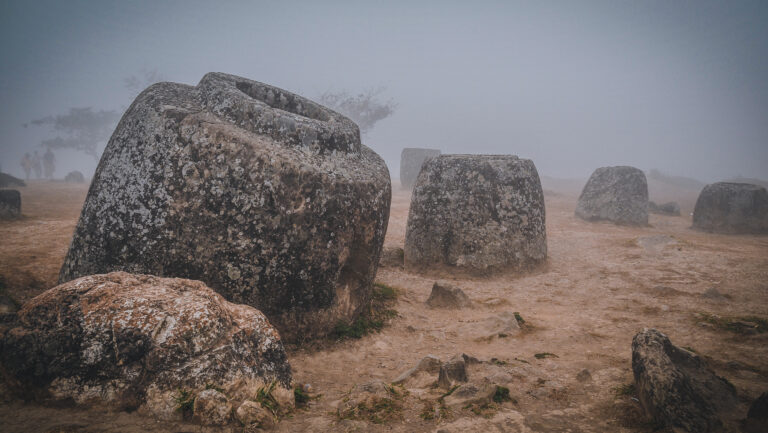
Phonsavan town itself is little more than a base for exploring the nearby Plain of Jars. Those mysterious giant stones are empty inside and archaeologists assume that they were used for burial rituals. Several quarry sites have been recorded, usually close to the jar sites.

The area was heavily bombed during the Second Indochina War, with some jars destroyed or looted. However, many of them (around 2500) still remain. Around 80% of the jars were carved from quarried sandstone, with the rest made of granite, limestone, or conglomerate rock. Similar sights have been found in the Assam region of India, southern China, and Vietnam, which suggests that the Austro-Asiatic people who created these structures, may have migrated along a trade route across Asia, finally reaching Laos.

It is believed that there are over 90 jar sites in Xiangkhouang Province, most of them being off-limits to tourists. Each site has from one to 400 stone jars. Before opening the three most popular sites, they had to be cleared of UXO (unexploded ordnance). The first one was opened only in 1992 and in 2019 the archaeological ruins are on UNESCO World Heritage List.

The legend

As always, if there is a mysterious place, so there is also a legend. The giants that inhabited the area were ruled by a king, named Khun Cheung, who fought a long battle against an enemy. After the victory, he supposedly ordered the creation of the jars to brew and store huge amounts of alcohol made from rice to celebrate his victory. 

When to go?

The best time to visit Laos is between November and April, as it’s the dry season. However, try to avoid February and March if possible. It doesn’t rain, but it’s the time when the burning season starts and dense haze hangs over the mountains and the air quality is regularly rated as unhealthy.

How to get there?

Phonsavan is about 260 km away from Luang Prabang, 235 km from Vang Vieng, and 350 km from Vientiane. You will easily find buses going there in all above mentioned cities but be prepared for many hours onboard. Even though the distances aren’t huge, the roads are narrow, winding, and sometimes in very bad condition.

I went there when doing the North East Loop on a rented motorbike but I don’t recommend that option. Especially the section between Luang Prabang and Phou Khoun is full of trucks and extremely dusty. Better to stay on a bus and enjoy the views through the window. For bus connections, check 12Go.Asia.

Where to stay?

I arrived without a reservation at Kongkeo Guesthouse and took a private room for 200 LAK. They offered also a bed in a dormitory for 70 LAK but I had to work online on that night. It was a nice room with a double bed and mosquito net and a hot shower with really good water pressure which isn’t a norm in Laos. Laundry is available too, at 20 LAK per kilogram.

How long to stay?

One full day is enough to check out the three major sites of the Plain of Jars and the museum or visit the silk farm. If you plan to see the remains of the old kingdom in Muang Khoun or do the Ban Phakheo hike, you will need to add 1-2 days more.

Interesting sights

Plain of Jars is the main attraction bringing tourists to Phonsavan and I have to agree, it’s well worth it. All three major sites can be easily visited independently in half a day on a rented motorbike or you may join a full-day tour, which often includes a visit to Ban Napia (known as spoon village where the locals recycle metal scrap to make spoons and other objects) and Muang Khoun (former small kingdom of Xieng Khuan). Your hotel or homestay will certainly help you out with organizing both options but you can also ask directly at the travel agents located on the main road.

Plain of Jars: site 1

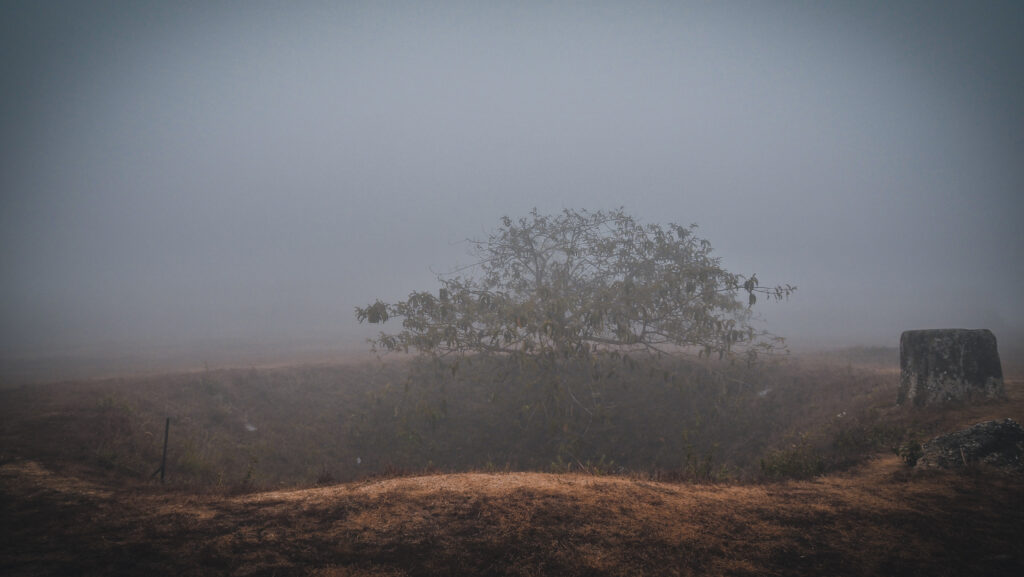
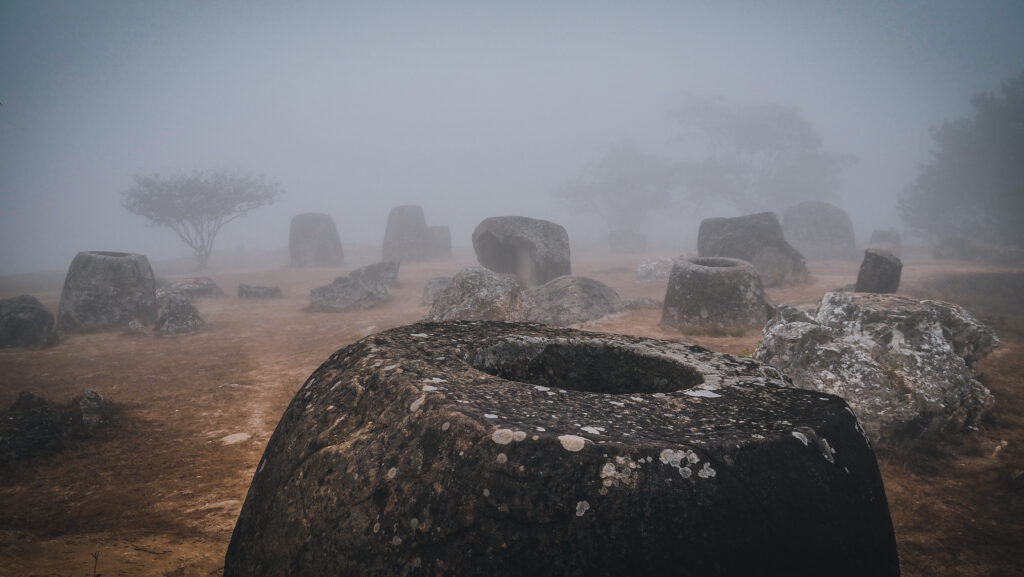
The biggest, most popular and my least favorite site. Maybe I was simply unlucky, but at the time of my visit, two buses full of Chinese tourists arrived, which took away all the charm of that place. In the morning hours, the area was also covered in fog so couldn’t see any nice views from the hill. Anyway, there are over 300 jars here, a few bomb craters and a small cave with two holes that are thought to have been chimneys for a crematorium. Don’t forget to step into the visitor center to learn more about the history and archaeological research. Entry ticket: 20.000 LAK.
Plains of Jars, Laos
Foggy site 1 of Plain of Jars
Plains of Jars, Laos
The fog undoubtedly created an interesting vibe of that place
Plains of Jars, Laos
The cave at site 1
Plains of Jars, Laos
Bomb crater
Plains of Jars, Laos
Site 1 is the most popular among tourists
Plains of Jars, Laos
Early morning at site 1

Plain of Jars: site 2

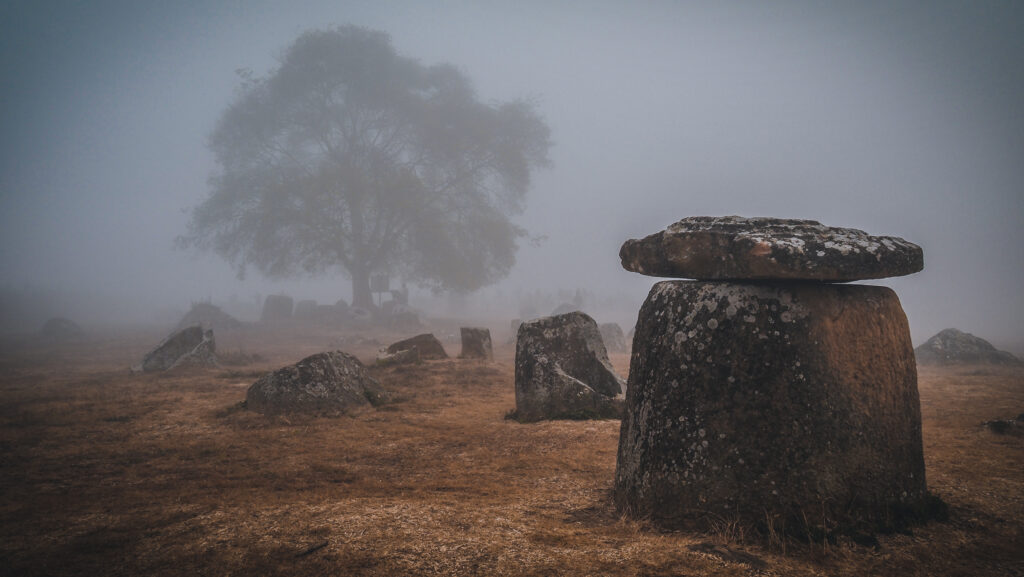
It’s a pair of small hills with jars on top of both of them. A very atmospheric place with a nice panorama of surrounding hills and farmlands. Entry ticket: 20.000 LAK.

Plain of Jars, Laos
Magical location under a beautiful tree
Plain of Jars, Laos
It used to be a lid covering the jar
Plains of Jars site 2
Plain of Jars, Laos
Remains of old Russian tank nearby site 2

Plain of Jars: site 3

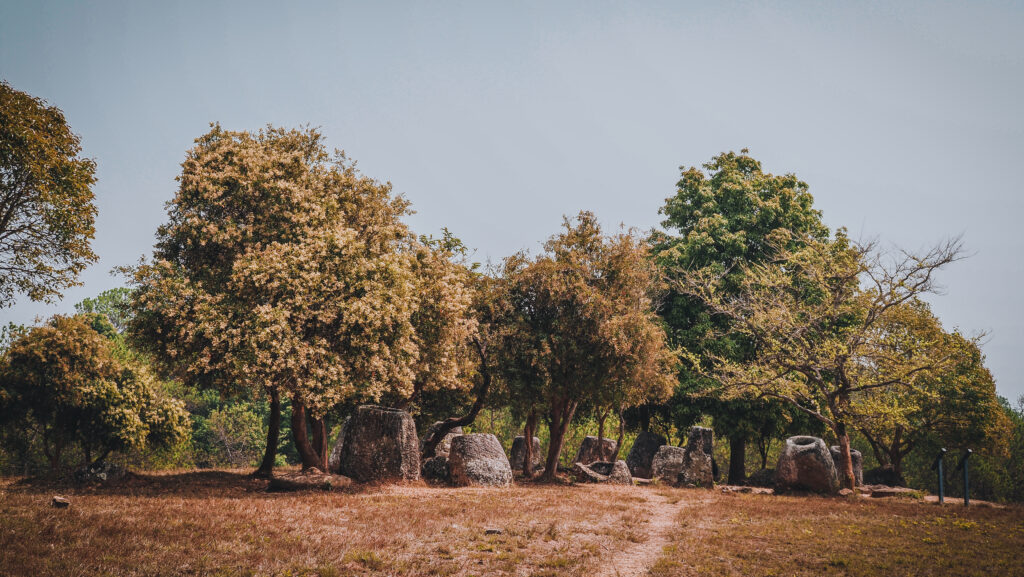
A beautiful half-kilometer walk through rice paddy fields brings you to that site. Picturesque jars sit under a canopy of trees. Very nice place and the least popular as I was there completely alone. Entry ticket: 20.00 LAK.
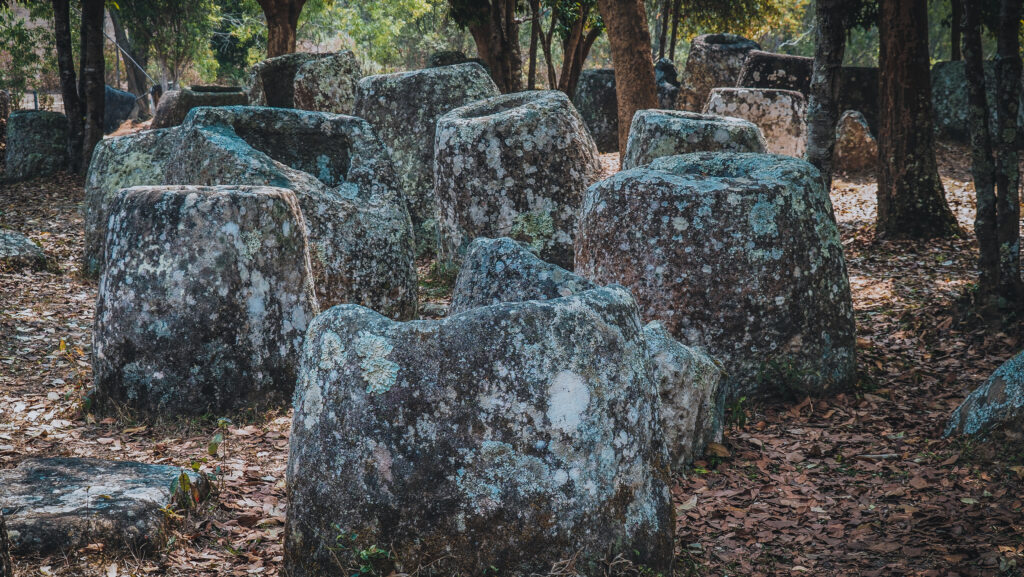
Plains of Jars, Laos
Jars around site 3
Plains of Jars, Laos
The idyllic location of site 3
Plains of Jars, Laos
To get to site 3, you need to cross rice paddies

Ban Napia

Also known as spoon village where the locals recycle metal scrap to make spoons and other objects. It’s about 10 minute’s ride from site 3 of Plain of Jars. Only if you have some time to kill.
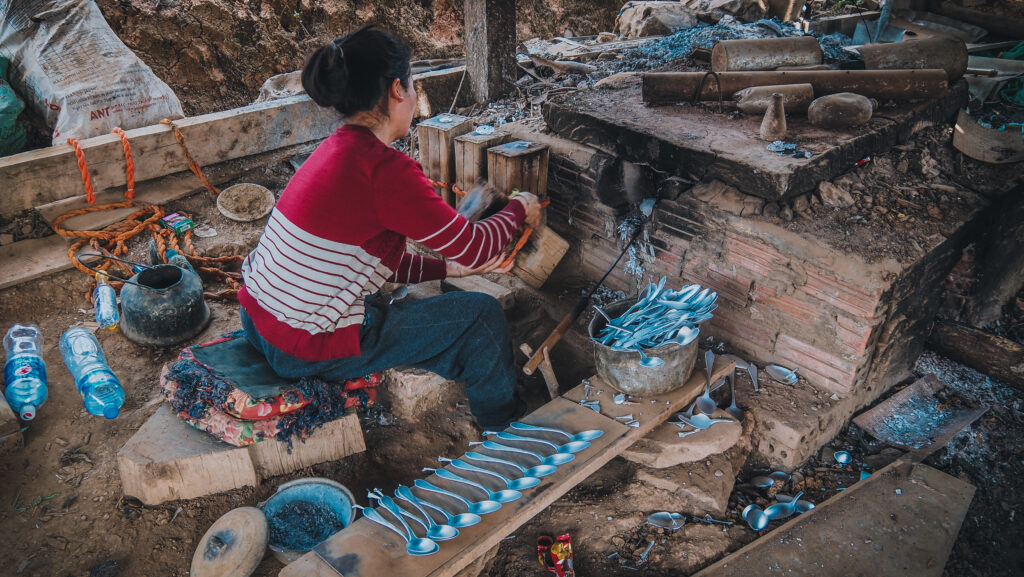
Plains of Jars, Laos
Process of making spoons

Xieng Khouang Provincial Museum

One of the most interesting museums in Laos, with extremely nice members of staff, one of whom showed me around. On the ground floor, there is information about the famous Plain of Jars and the history of the Xieng Khuang kingdom. On the first floor, you will learn more about the war period as well as about the local customs of ethnic communities living in that area. The entrance ticket costs 15.000 LAK.

MAG UXO Visitor Information Center

I highly recommend visiting this place to learn more about the war era and the effects of UXO (unexploded ordnance) on people’s lives. The USA dropped more bombs on Laos during the Vietnam War than they did on Germany and Japan combined during World War II. It makes Laos, per person, the most heavily bombed country in history. Over 25,000 people have been killed or injured by UXO since the bombing ceased. On the second floor, you may see a few interesting videos about the organization and its work in Laos. Learn more on their website.
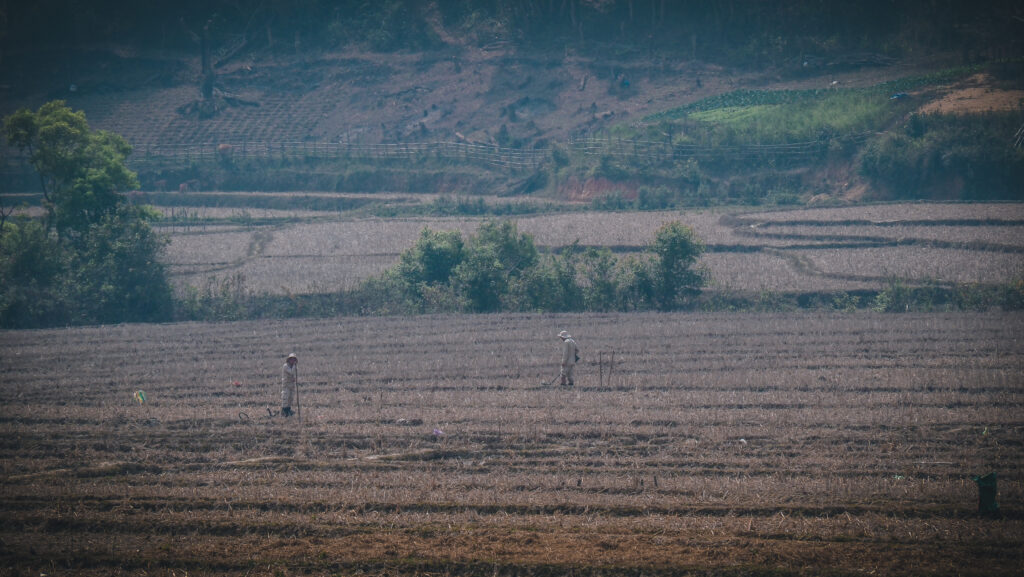
Plains of Jars, Laos
MAG team searching for UXO

Mulberries Silk Farm

I arrived outside of guided tours hours but still was welcomed by a kind woman who brought me through the entire process of working with silk. They train and involve Lao village producers in silk production and by that, improve their livelihood and standard of living. Some wonderful products are available for purchase in the shop. Guided tours are at 9:30, 11:00, 14:00 and 15:30 and are free of charge.

Ban Phakheo hike

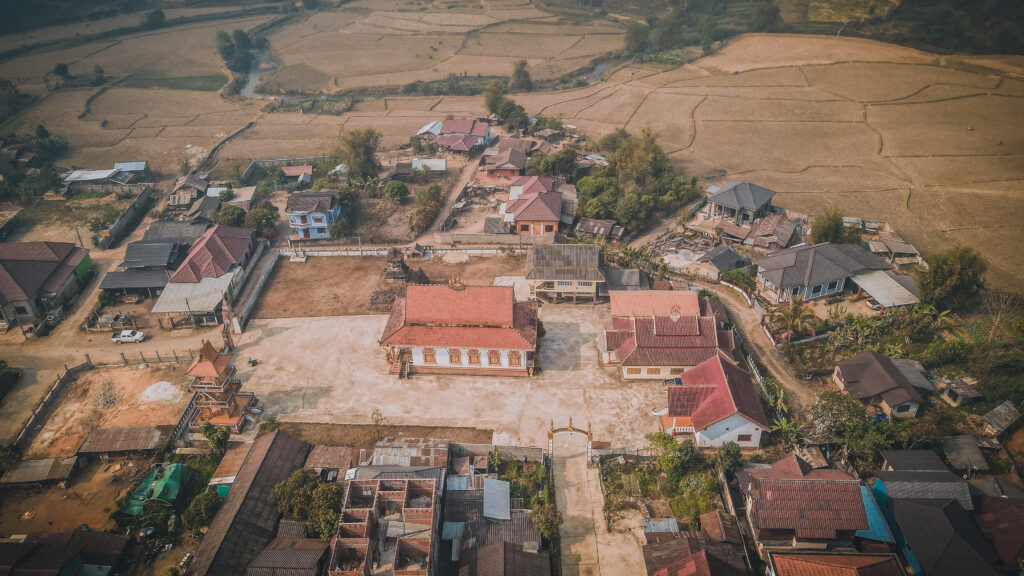
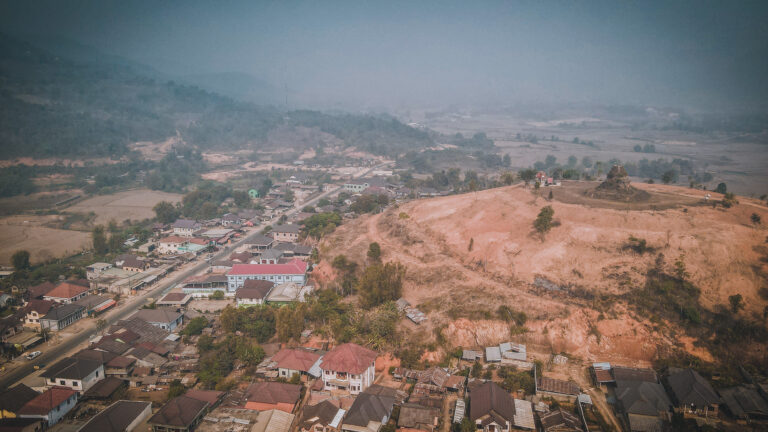
2 days hike to the Hmong village of Ban Phakheo, including a visit to nearby Jar Site 52 and Tad Ka Waterfall. When I asked one of the tour agents on Whatsapp, I was quoted a price of 180 USD for a group of 1-2 people. I believe it’s way too much for a hike in Laos so I simply went to Ban Phakheo on a motorbike. Look for “Turn-off to Tad Ka Waterfall” in Google Maps and follow the dirt road for about 1,5 km when you will have the junction to Pakheo. Turn right and just follow the dirt road passing by some other small villages on the way, until you reach your destination. The road is in decent condition and can be easily done on Honda Wave or similar. The panoramic views around the mountains are amazing and the location of Ban Phakheo is superb too. It’s well worth visiting here independently, even though the hike must be nice too.

The aerial view of Ban Phakheo

Muang Khoun

Muang Khoun, known also according to its old name as Xieng Khuang, was once the royal seat of the small kingdom of Xieng Khuang. It was a large and beautiful city protected by wide moats and forts occupying the surrounding hills. There were sixty-two pagodas and their stupas, of which the flanks apparently kept treasures.

As a result of long years of invasions by Thai and Vietnamese soldiers, pillaging by Chinese bandits in the nineteenth century and a rain of bombs during the 2nd Indochina War, nearly nothing was left of the kingdom’s exquisite temples. Today, the remains that remind us of the kingdom’s former glory are Pha That Foon, That Chomphet, Wat Phiavat and Wat Si Phom.

Find more info in a separate post.

Tham Piew Cave

It’s nearly 1.5 hour’s drive from Phonsavan and if it’s on your way, it makes sense to stop there but I wouldn’t go just for the cave itself. It’s a historical site that was the scene of a human tragedy during the war. In 1968 the US Air Force fired a missile directly into the cave, which at the time was used as a shelter. 374 people were killed. The interior of the cave is filled with small rock piles, as a memorial to all those who died.
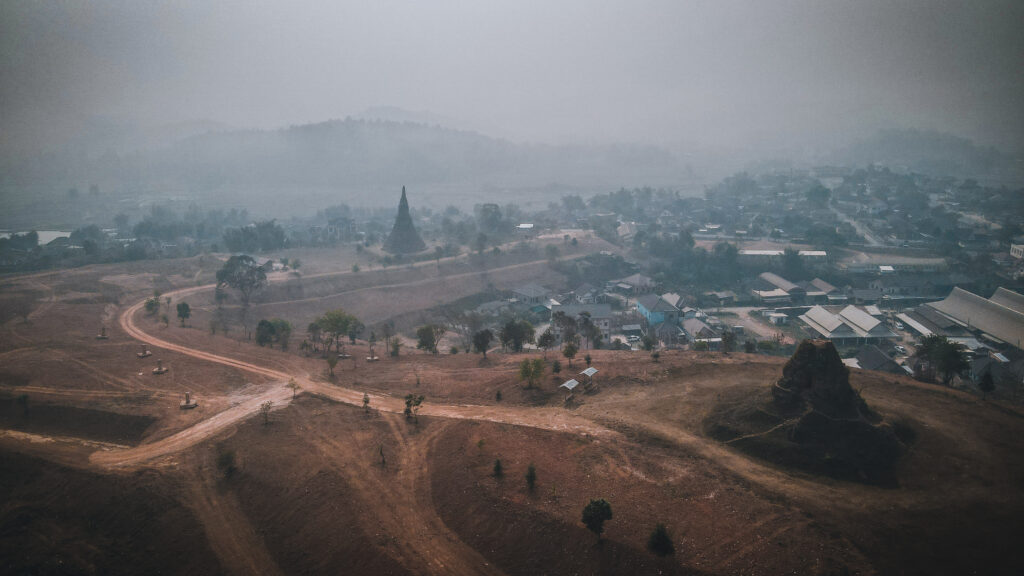
Muang Khoun, known also according to its old name as Xieng Khuang, was once the royal seat of the small kingdom of Xieng Khuang. It was a large and beautiful city protected by wide moats and forts occupying the surrounding hills. There were sixty-two pagodas and their stupas, of which the flanks apparently kept treasures.

As a result of long years of invasions by Thai and Vietnamese soldiers, pillaging by Chinese bandits in the nineteenth century and a rain of bombs during the 2nd Indochina War, nearly nothing was left of the kingdom’s exquisite temples. Today, the remains that remind us of the kingdom’s former glory are Pha That Foon, That Chomphet, Wat Phiavat and Wat Si Phom.

When to go?

The best time to visit Laos is between November and April, as it’s the dry season. However, try to avoid February and March if possible. It doesn’t rain but it’s the time when the burning season starts and dense haze hangs over the mountains and the air quality is regularly rated as unhealthy.

How to get there?

Muang Khoun is about 30 km away from Phonsavan. Route 1D which runs eventually to Paksan is paved and comfortable to travel.

You can rent a motorbike from most of the guesthouses and travel agents in Phonsavan and travel there independently or sign up for a tour, which takes you to a few sites in the Plain of Jars as well as Muang Khoun.

Where to stay?

Most people stay in Phonsavan and visit Muan Khoun for a few hours, but if you have to, you may check out Neejli Guesthouse or Mrs Tout Guesthouse.

Muang Khoun, Laos
Ruins of ancient temples

How long to stay?

Half a day is enough to check out the temples and have a relaxing meal or drink around the nearby market.

Interesting sights

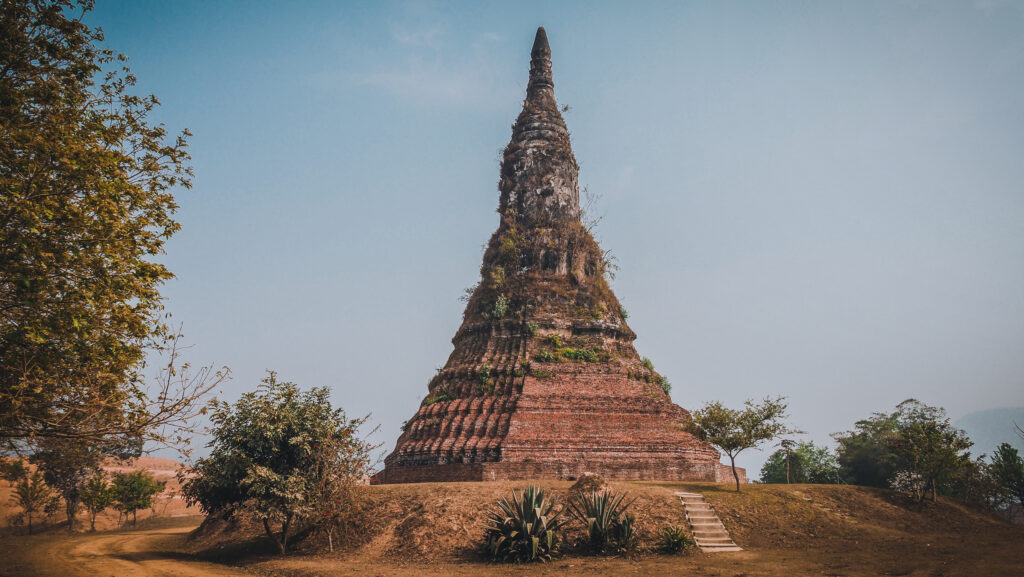
Pha That Foon

That in Lao means “stupa” and “chedi”, a Buddhist monument. Often, the structure houses cremation remains. Its size depends on the status and wealth of the deceased. Monuments considered the most sacred, contain relics of the Buddha. During the construction of a that, religious items such as manuscripts, Buddha images, and other items of value are stored in the interior. A sculpture of a tree composed of jewels serves as its central pillar.

That Foon was built in 1576 and was erected to house the ashes of Lord Buddha that were brought from India and other treasures. Unfortunately, Chinese invaders plundered it. It was rebuilt after the 2nd Indochina War and now again looks pretty decent.

Muang Khoun, Laos
Renovated Pha That Foon
Muang Khoun, Laos
Aerial view of Pha That Foon

That Chomphet

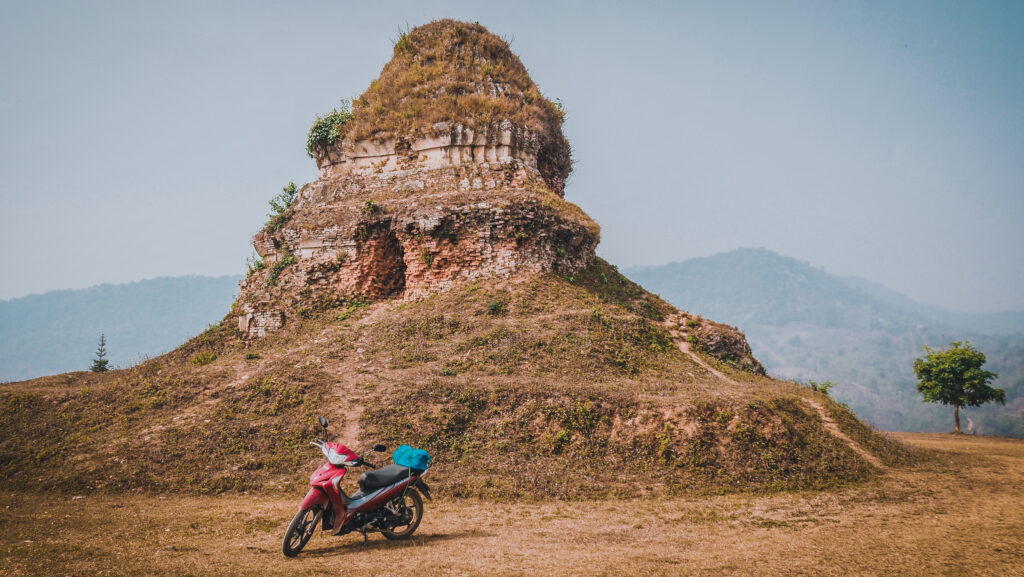
Further along, the ridge is less elegant That Chomphet, built around the same period as That Foon. It was almost completely destroyed in 1966 during the war. However, it’s a nice viewpoint of the town and surrounding mountains.

Muang Khoun, Laos
That Chomphet (and my motorbike)
Muang Khoun, Laos
Aerial view of That Chomphet

Wat Phiavat

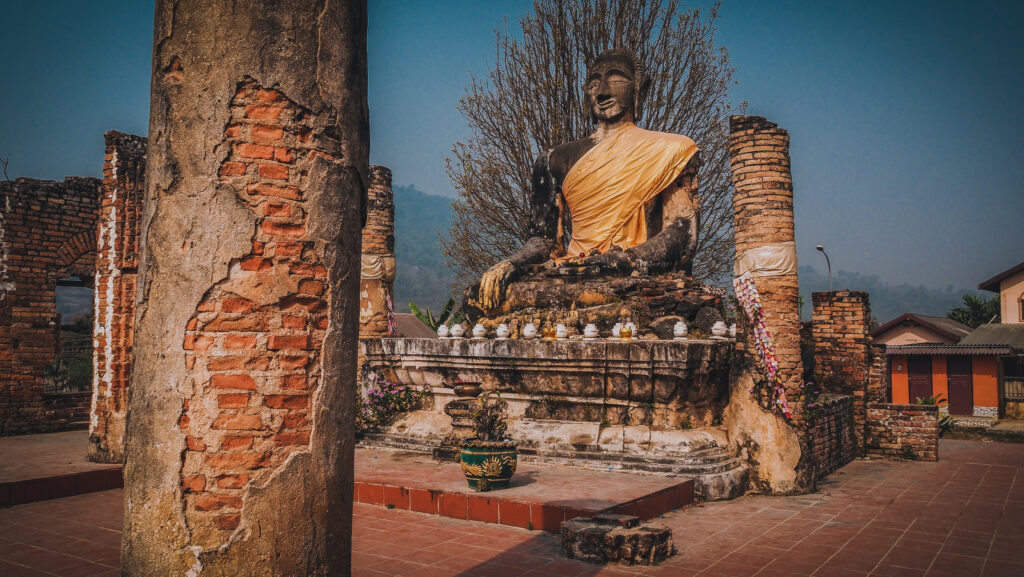
The large Buddha image and remnants of pillars are traces of Wat Phaviat’s grandeur. The temple was built in the 14th century. In one tale, the same artisan who built Wat Si Phom located a few blocks away, constructed Wat Phaviat.

Muang Khoun, Laos
Buddha statue in Wat Phiavat

In the 19th century, local bandits and invading armies damaged the temple searching for riches. Fightings in the 1st Indochina War destroyed the temple and its large Buddha image in 1953. The community rebuilt both a year later. The intense bombing of the 2nd Indochina War destroyed most of the structure, leaving the Buddha image, some pillars and part of the wall seen today.

[AD] Are you looking for a good-quality Buddha statue for your home or office? Then, please check the offer of the Lucky Incense Buddha Statue.

Wat Si Phom

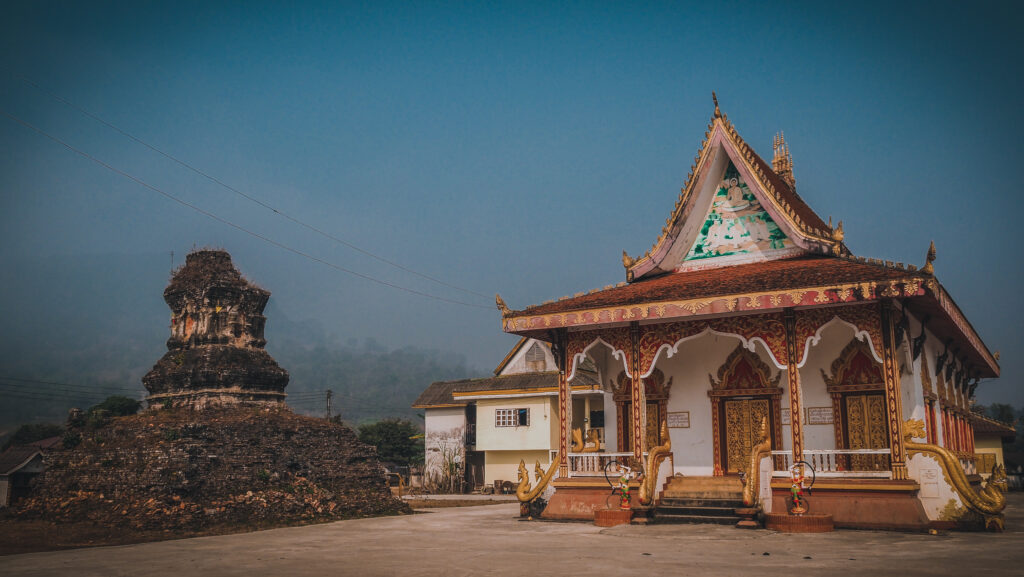
The temple was founded in 1390 shortly after Muang Phuan became a vassal of the powerful Lao Lan Xang Kingdom. Its architecture is modelled on the Lan Xang style. Invasions and wars ravaged Xieng Khouang, including Wat Si Phom. The townspeople rebuilt the religious hall after the end of the 2nd Indochina War.

Muang Khoun, Laos
Wat Si Phom
Muang Khoun, Laos
Aerial view of Wat Si Phom

Plain of Jars – site 16

Remote and hardly visited site of the famous Plain of Jars. It’s about 15 minutes drive from the town so you may check it out if traveling on a motorbike. Take a turn-off at Na Lin village.

Summary

Muang Khoun has some interesting temples to visit in about 2-3 hours. I definitely wouldn’t travel a long distance to get there, but if you are visiting Phonsavan, it’s a pleasant ride out of town.

Learn more about Phonsovan in a separate post.

Phong Nha used to be just another sleepy village on the banks of the Son River in the countryside of Vietnam, but it all changed with the discovery of one of the world’s largest caves. Guesthouses, tour agencies and restaurants popped up feeling an opportunity and they were right. Today this area is considered to be an adventure tourism hotspot.

I had been looking forward to the visit to Phong Nha for quite some time, as I heard a lot of positive reviews claiming it to be one of the most beautiful nature places in Vietnam. As an enthusiast of multiday hiking trips, I was strongly tempted by the wide offer of tours including camping in the jungle or even inside the caves. In the end, I decided to go for it and selected Hang Tien Cave Exploration, one of the tours offered by Oxalis Adventure.

This is not a paid review. I simply decided to write it as I truly enjoyed the experience.

How to get to Phong Nha?

Phong Nha is one of the top tourist areas so it can be easily reached by bus from all the major cities around. There is an airport in Dong Hoi in case you want to save some time and energy when coming from Hanoi. The capital of Vietnam can be also reached by bus or by train but the travel time will be significantly longer (about 12 hours).

If you ride on a motorbike, the best would be to start at Dong Ha (~ 140 km) or Dong Hoi (~ 40 km) when approaching from the south or Vinh (~ 200 km) when coming from the north.

Where to stay before the tour?

I booked 2 nights at Phong Nha Friendly Home and also left my luggage and motorbike there for the duration of the tour. The room was spacious and clean and there was a nice view from the terrace. The only negative point was the hot water in the shower that didn’t last too long so I had to be quick 🙂

The owners are very friendly and breakfast is included in the price (about 400.000 VND per night).

Price and booking

The cost of the Hang Tien Exploration Tour is 9,900,000 VND (426 USD) per person and the tour has a limited annual number of visitors. Yeah, I know. It isn’t cheap. But let’s just think that for each group of 10 tourists, there are 1 tour guide, 2 safety assistants, 1 chef, 2 camp guards, and 4 porters. Oxalis provides all the meals, and camping and safety equipment such as helmets, harnesses, headlights, gloves and a waterproof box for your valuables. The final night is spent at Tu Lan Lodge which is of extremely good quality, much better than the hotels or guesthouses that I usually book. It’s a lifetime experience and I think it is worth the money.

When to go?

The tours are operated from November to September and the best would be to go around April – May. The days are getting warmer and dipping in the water is certainly more fun. I made a trip in late January and it was pretty cold, especially at night or when crossing rivers with icy water. Tours depart on a fixed schedule, on Tuesdays and Saturdays (as of January 2023).

There are no tours from September to October due to the rainy season and increased water levels.

How long to stay in the area?

Besides the amazing trip with Oxalis, it is still worth spending some time for further exploration of the region. It has so much to offer: Phong Nha Cave, Paradise Cave, Duck Stop and Botanic Garden, just to mention a few interesting places!

I spent there two extra days but I could easily imagine an additional one or two in summer when it’s warmer you can do more water activities.

The trip plan

Day 1

The big day has come! I was thinking for a long time about which tour to choose and nearly booked another one (Tu Lan Explorer) but luckily Oxalis consultant advised me to pick Hang Tien Exploration Tour which doesn’t involve too much swimming, which isn’t that nice in January. So, there I was, waiting at my guesthouse for minivan pickup.

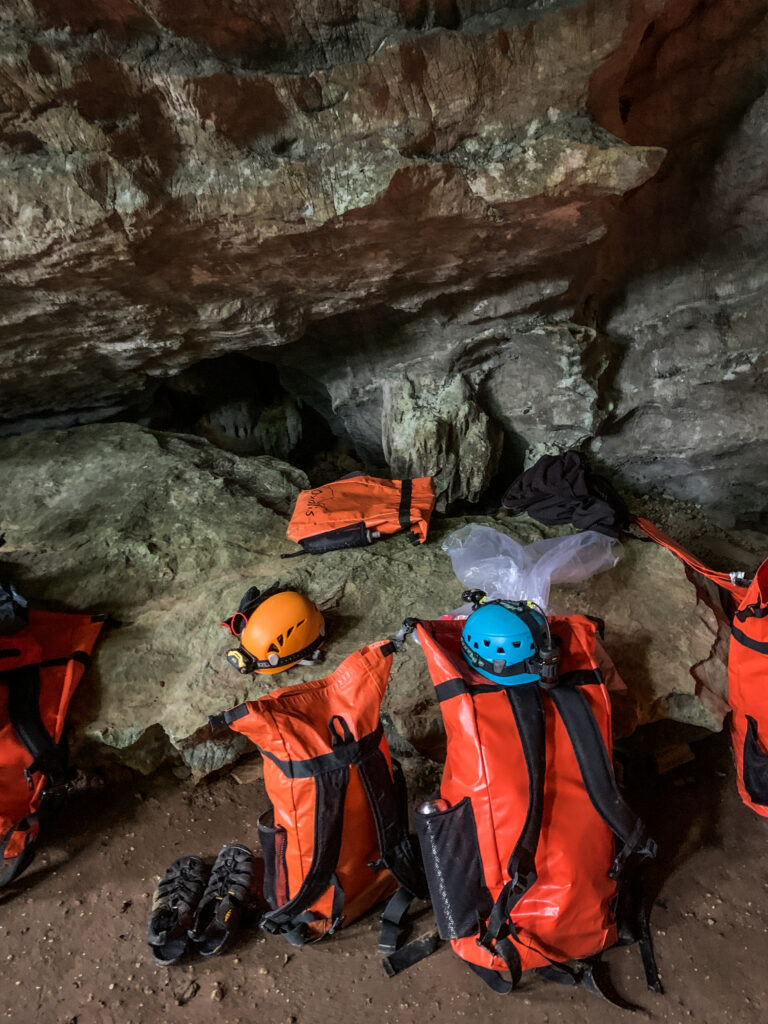
They came right on time and about one hour later, we arrived at the Oxalis base camp in the countryside. We were given the equipment (protective helmet, gloves, backpack, bottle with water, and waterproof box for electronics). Then, we met our guide (Dai), who explained all the details of the tour and we had to repack: some things were taken by the porters, and some we carried ourselves. Unfortunately, I chose a backpack that was quite small and only later on I noticed that there were a few bigger ones but they were already taken by other. Well, too bad. Remember to pay attention and choose wisely! As always, my backpack was full to the limits.

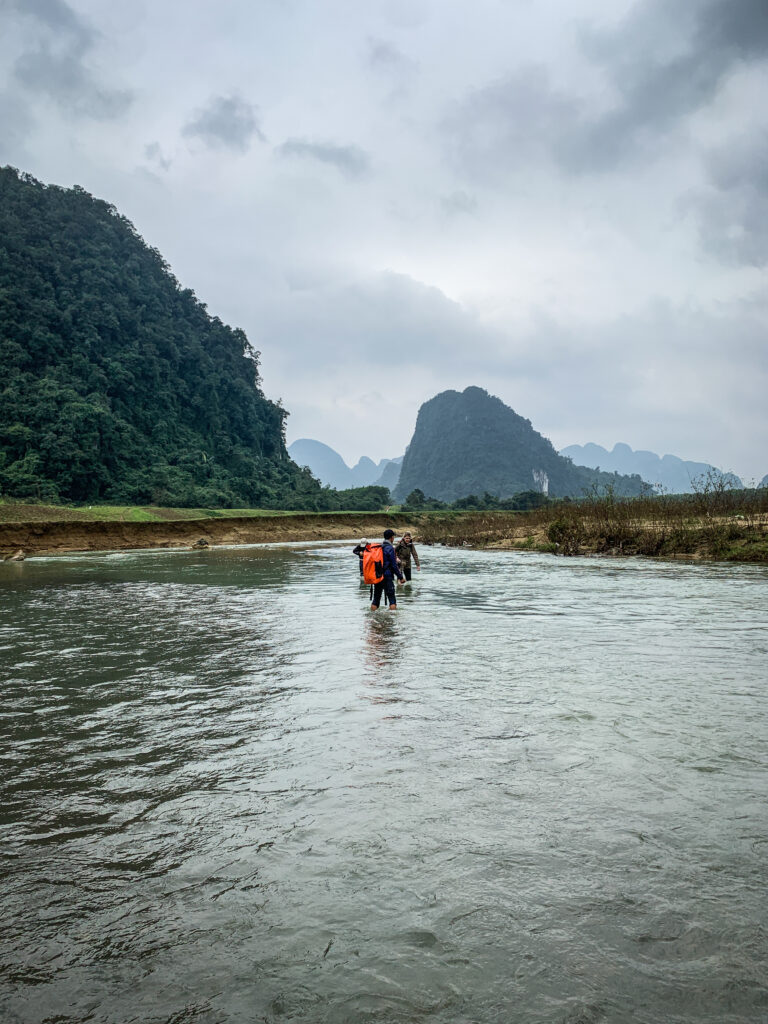
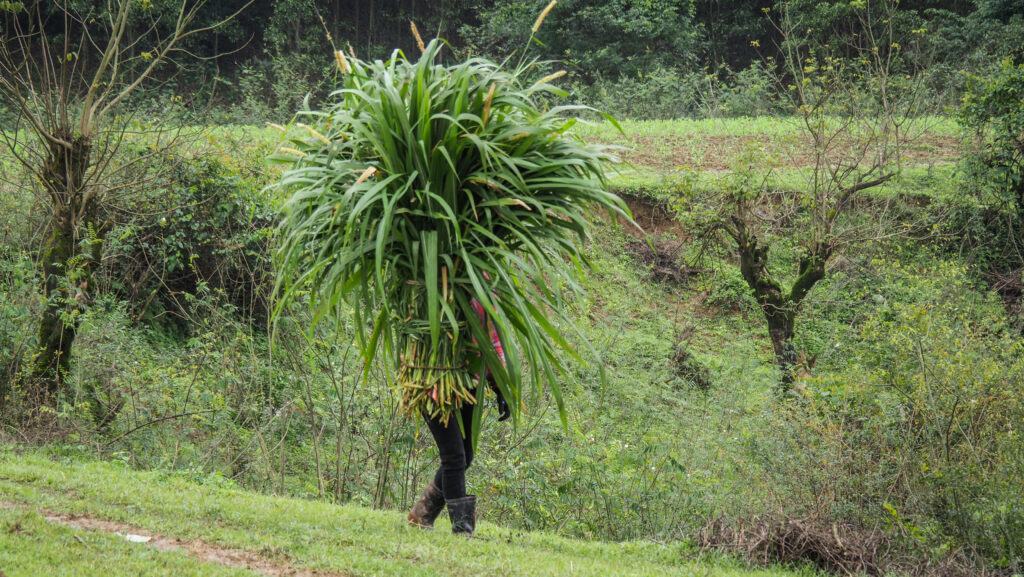
We hit the trail walking first through the countryside and saw the daily activities of local people. Many of them were riding bikes with some plants attached to them. Looked quite funny as sometimes you couldn’t really even see the rider, just a motorbike and moving leaves. The road was getting muddier and muddier. In general, the first day was definitely the muddiest of all. We crossed a fast-flowing river with a strong current, some people did it with hiking shoes but it meant that they had to spend the rest of the day with completely wet feet. Luckily, I had my trekking sandals, which were excellent for that purpose so I quickly changed.

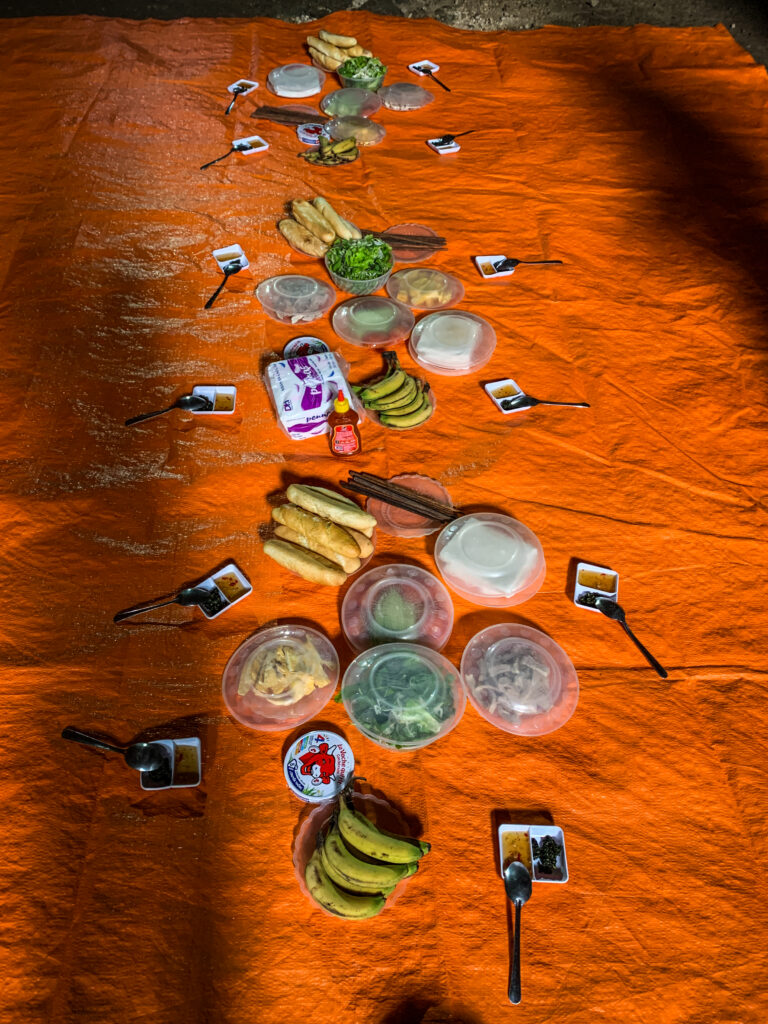
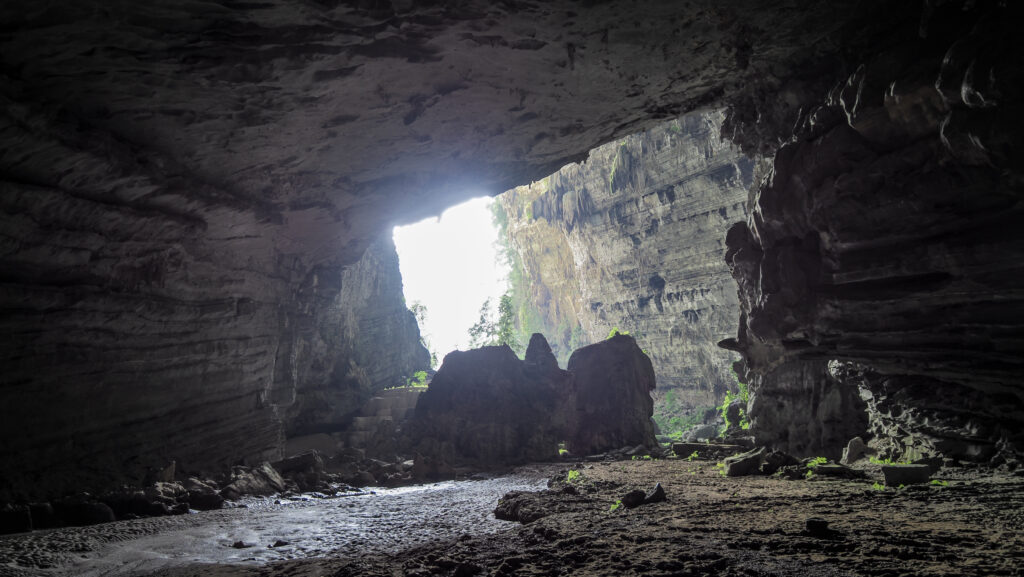
Then we continued through muddy terrain to the Secret Cave. The interior was small but really beautiful. Then we had lunch, mostly bread, rice paper and all the ingredients to prepare a sandwich or a spring roll by ourselves. Then we went to Hung Ton Cave which involved going down the steep ladder while wearing a safety harness. It was quite easy, even though it looked scary as I had never used that kind of equipment before. I felt perfectly safe as I was convinced that the guides were experienced and knew what they were doing. Then, as the water level was high and no one was interested in swimming in cold water, we took a short boat ride out of the cave.

From there, we hiked through more and more muddy terrain, but luckily there were barely any leeches. We crossed some more streams, one of them with a pretty strong current and water level up to the waist. I think it was the most dangerous section of the trip. If someone had fallen down, they would have gone with the river flow and for sure got hurt.

Finally, we reached our campsite. Some people took a swim in the river and jumped into the herbal steam bath. I didn’t do so as the water was way too cold for me. Instead, I drank a few cups of delicious ginger tea and warmed myself up next to the fireplace.

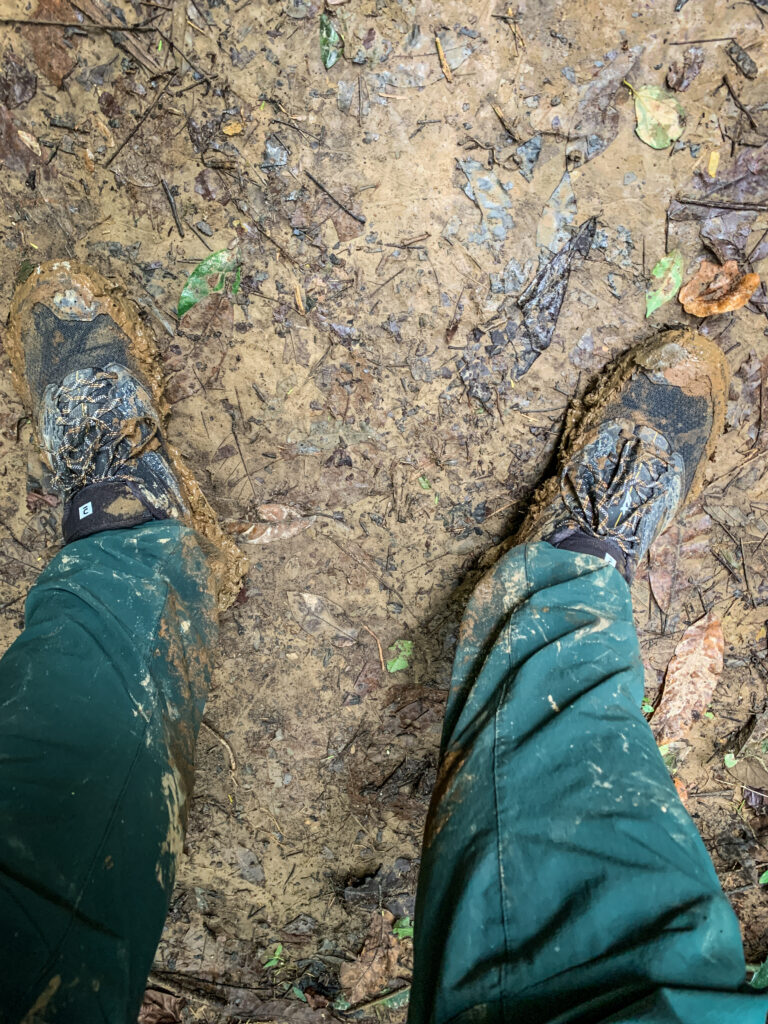
We started drying our clothes next to the fireplace, including shoes, which didn’t end up well for me. I left them there for the night and in the morning the right one was seriously burnt.

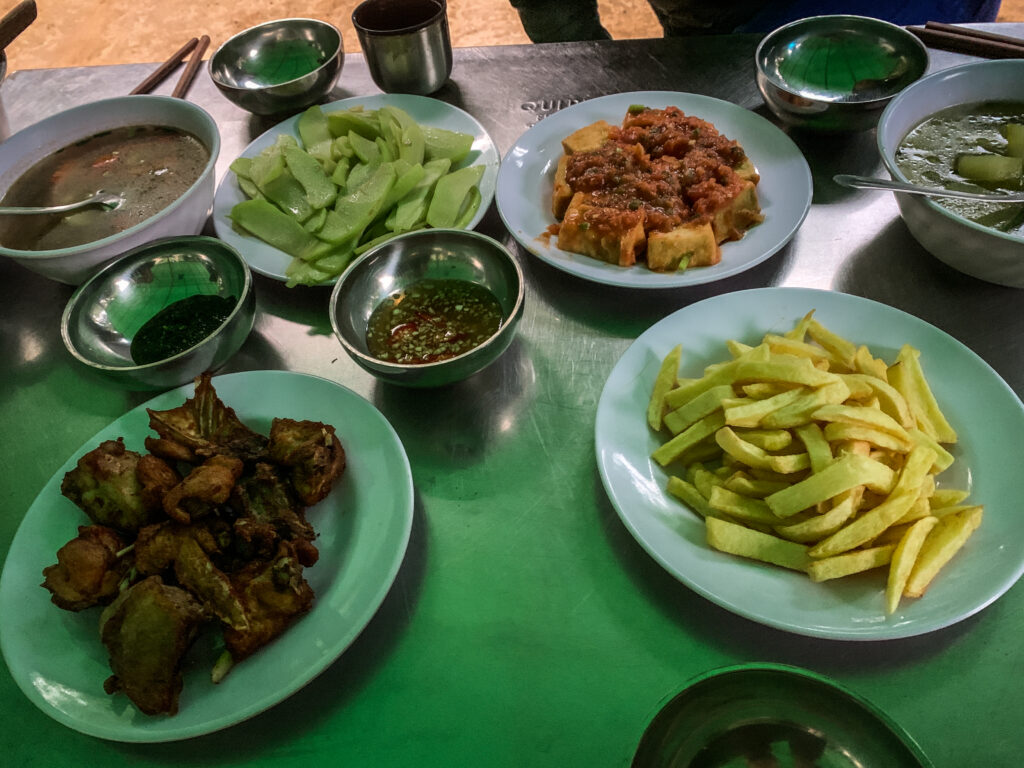
The dinner was very delicious and it felt really great to eat at the camp in the middle of the jungle. After dinner we were sitting around the fire, having a nice chat and at some point, roasted peanuts were served, which was a nice surprise.

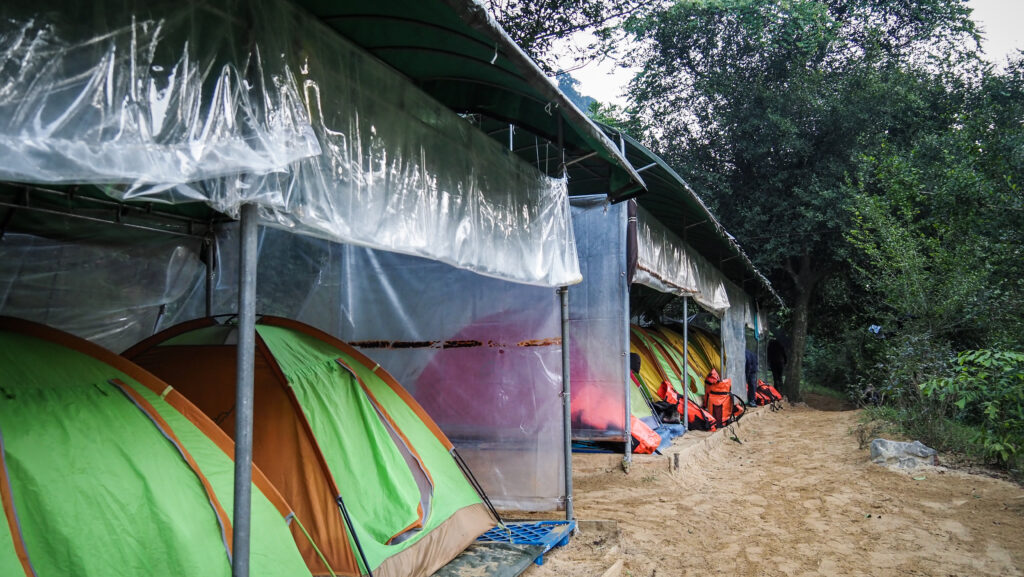
The camp was nicely organized with tents under some kind of roof and on an elevated platform. There was also a thermal steam bath, a bathroom with water in the bucket and a properly-looking toilet.

In the end, everyone went to sleep quite early. The night was quiet and I slept well even though I was a bit cold. Everyone was given two sleeping bags but they were extremely thin, so it was necessary to use extra layers of clothes.

Day 2

We woke up at about 8 AM, got breakfast and then had some time to pack the things and get ready. On that day, the trail was supposed to be less muddy and without many river crossings. The total distance to go was about 8 km with roughly 350m of ascent. Unfortunately, I noticed that one of my shoes got burnt while lying too close to the fireplace. What can I say, I am a jungle genius.

I set off in my Keen sandals as there were small river crossings at the very beginning of the hike and I preferred to have dry feet.  I was glad to see that the trail was indeed less muddy than the day before. There were no caves en route today, just pure jungle. We had our first picnic at the beautiful spot at the lake. The meal was really delicious. Rice with papaya and some other veggies, peanuts and sauce. The weather was also much better than the day before, with the occasional sunny period but still cold, especially while resting. Luckily, there were still no leeches as well as no mosquitos.

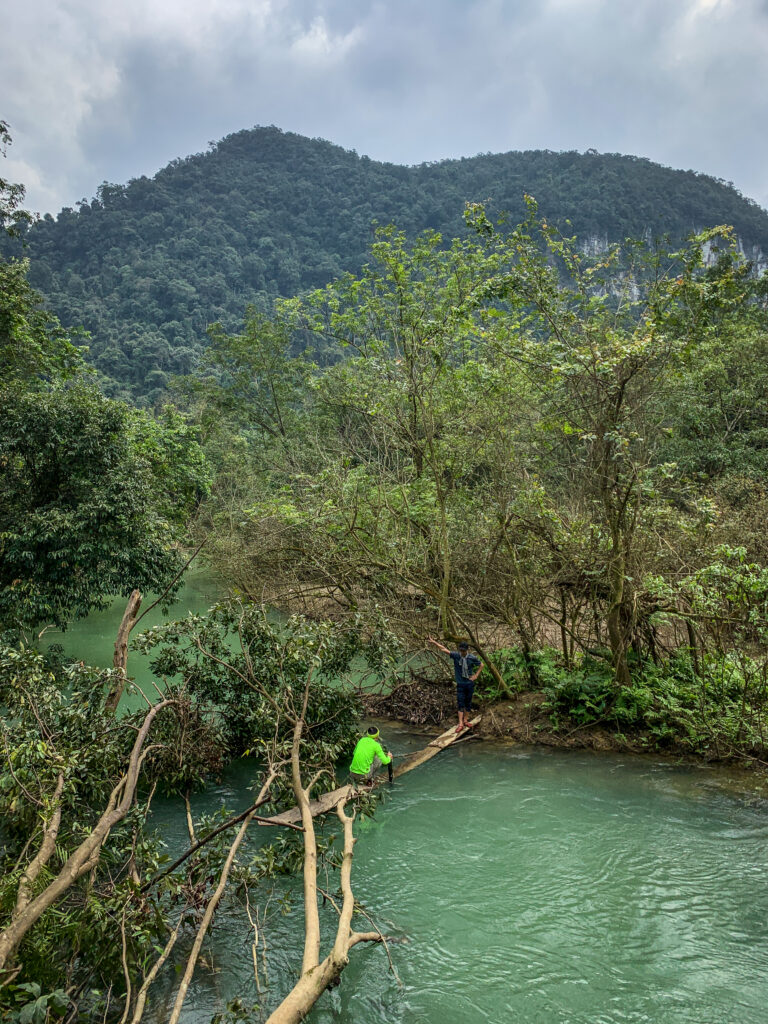
After the lunch break, we had to cross the small lake walking on the fallen tree and the over the wooden mini-bridge but it was submerging under the weight of the person walking on it, so I again decided to change shoes to sandals and keep sports shoes dry.

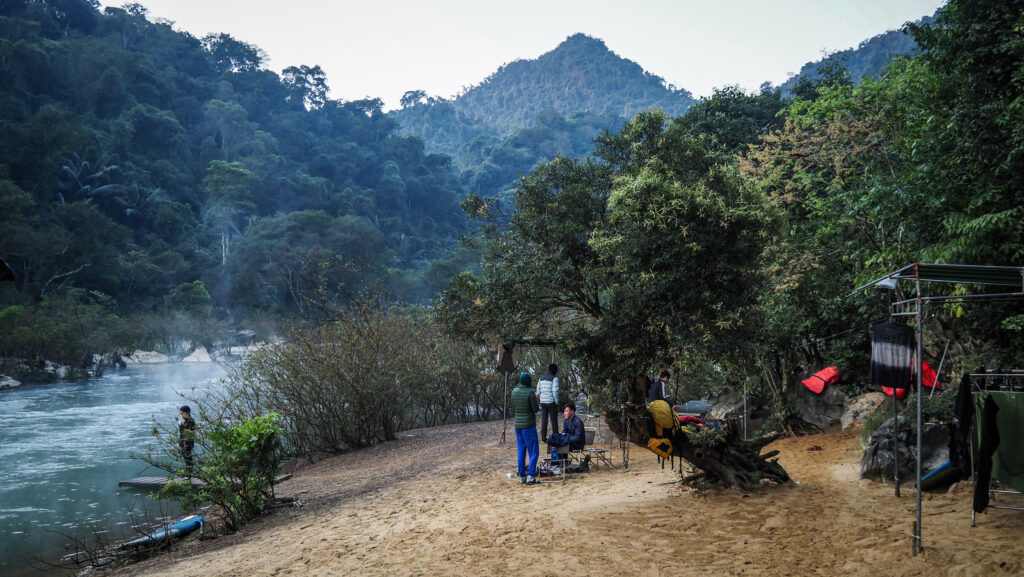
Then we walked and walked until we reached our second campsite set in an amazingly scenic location at the riverbank. There was a kind of small beach and Oxalis guys even organized a stand-up paddleboard. This time I decided to take a short dip in the water but it was really so goddamn cold. Immediately after, I jumped inside the herbal steam bath. It was really cool experience.

Phong Nha, Vietnam
Phong Nha, Vietnam
Phong Nha, Vietnam

The evening was pleasant. I learned how to play a Vietnamese card game and we had delicious dinner again, followed by chitchat at the fireplace. The chef also prepared some hot sweet potatoes and corn. Awesome. The sky was clear so we could admire hundreds of stars.

There was another Oxalis camp for a different tour, on the other side of the lake, but we couldn’t hear them at all.

Day 3

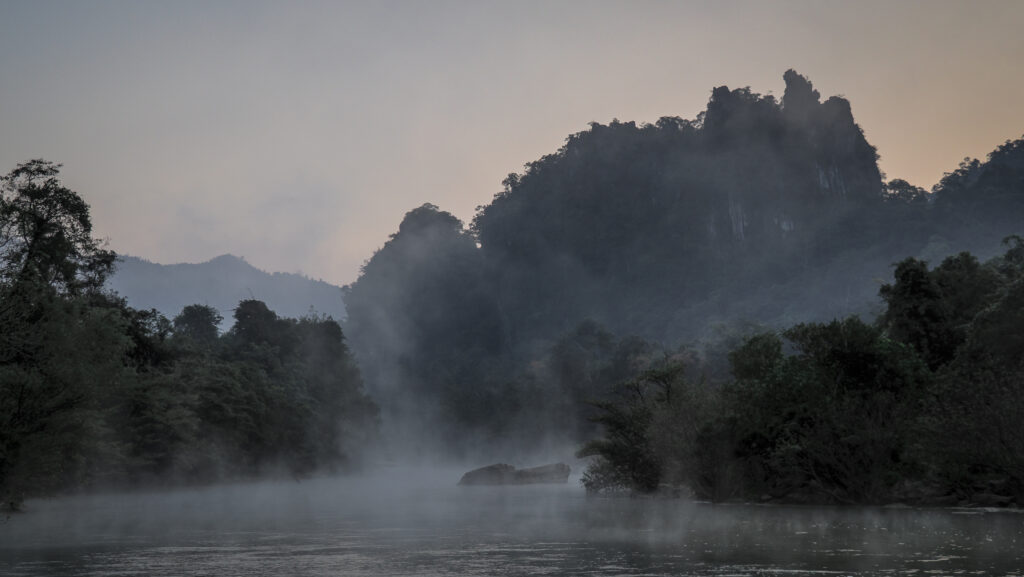
The third day of the trip was the most exciting one as we visited the two biggest caves: Hang Tien 1 and Hang Tien 2. The morning on the campsite was cold but there was nice scenery with a morning mist over the river. Breakfast was delicious too, with nice banana pancakes and chocolate sauce.

We were also asked to decide if we want to take the longer route through the jungle which includes going up the mountains or rather a shortcut and coming back the same way through Hang Tien 1. We voted for the longer hike, which was also my preference.

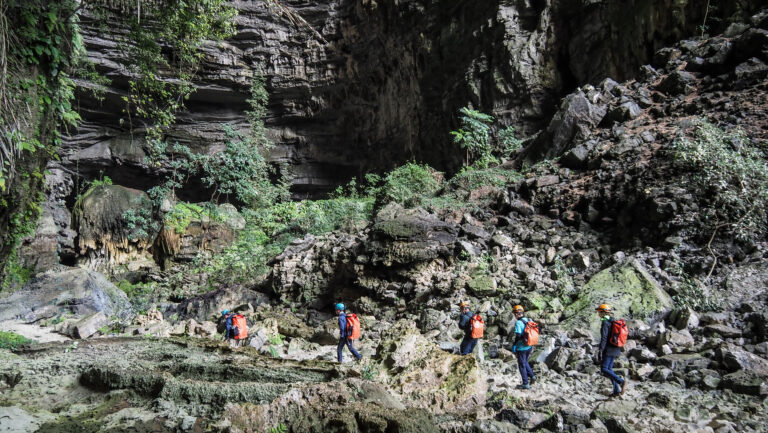
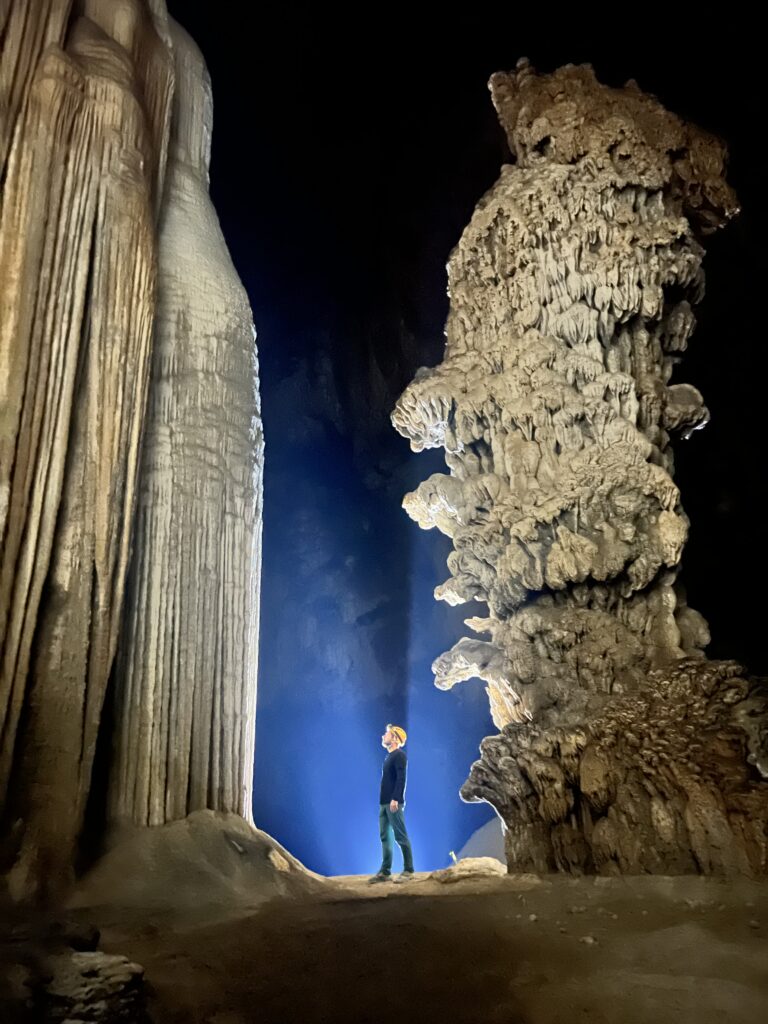
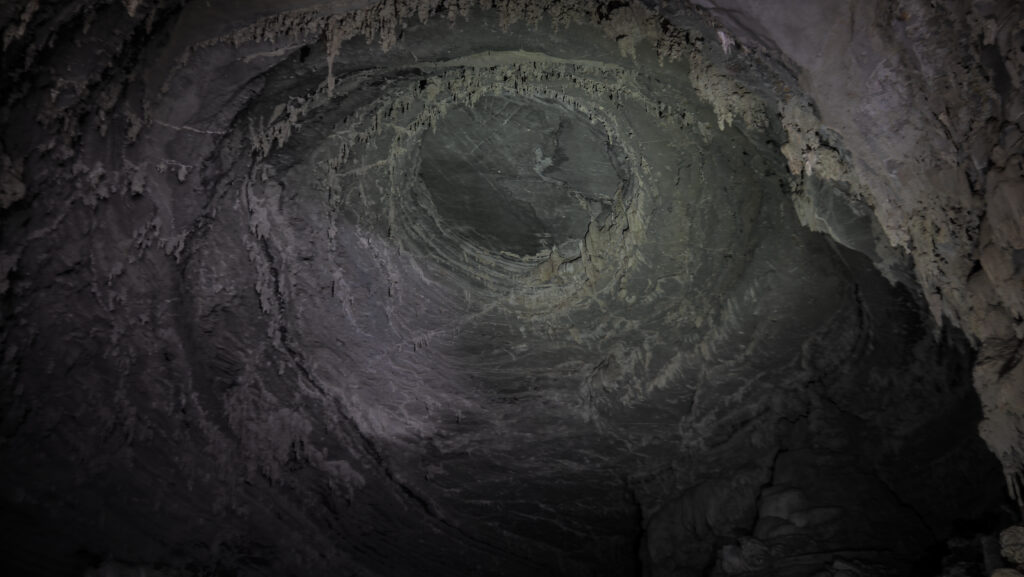
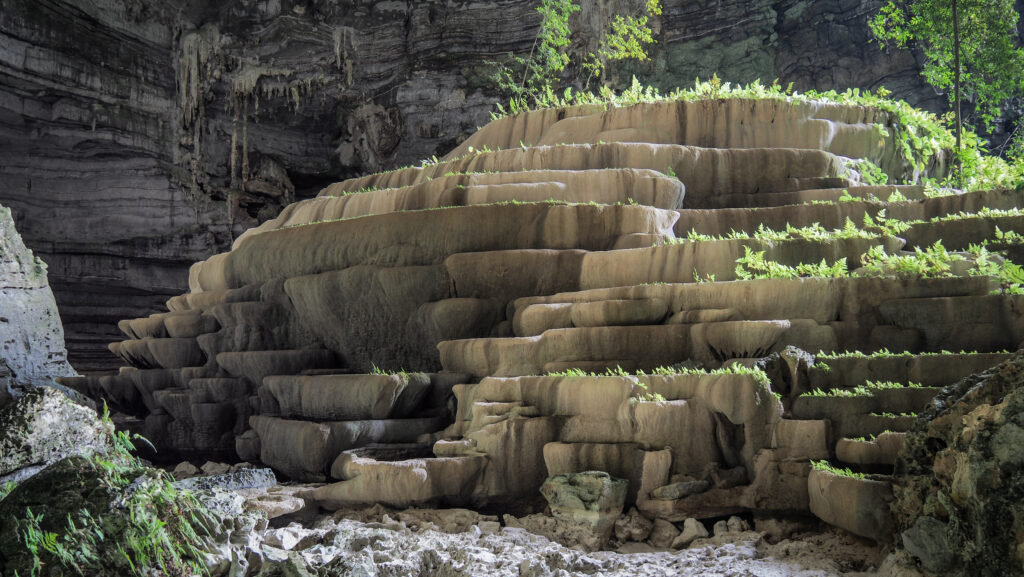
It was a short trek to the entrance of Hang Tien 1, where we made a stop for a photo session. Then we went inside and it was really, really nice. Very big cave, exciting to walk through with some climbing and narrow passages but allowing to keep the feet dry. Inside, we could see calcite terraces and the circular ceiling dome. Further in we were given a safety harness and instructed to climb a 10 m ladder to reach the cave exit, opening out to a lush forest.

Phong Nha, Vietnam
Phong Nha, Vietnam
Phong Nha, Vietnam

From there we continued to Hang Tien 2, which was smaller but probably even more beautiful inside with crystal-like rock formations. We could leave our backpacks at the entrance because it was a one-way cave with the exit the same way. We took some cool group photos here, with shadows reflected on the rocks and also individual ones while standing between stalagmites and stalactites. The guides were equipped with special lights, which made the photos look really professional.

Phong Nha, Vietnam
Phong Nha, Vietnam
Phong Nha, Vietnam

After leaving the cave, we had a nice lunch and then continued the hike through the jungle. The weather was perfect and the hike was really pleasant, even though it was quite steep at some points. We rested for a while at the top and then started descent until we reached the road, where the minibus was already waiting for us.

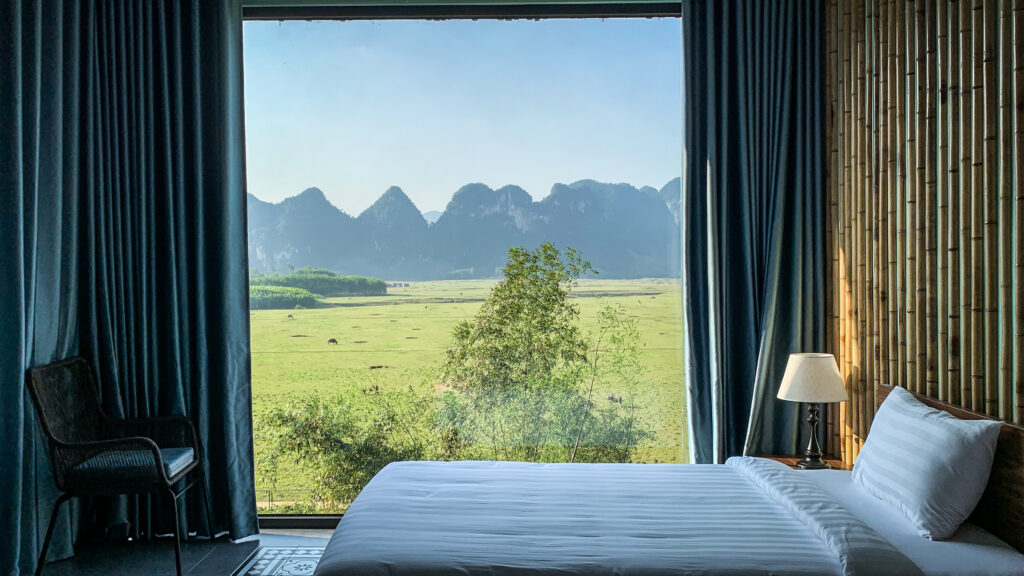
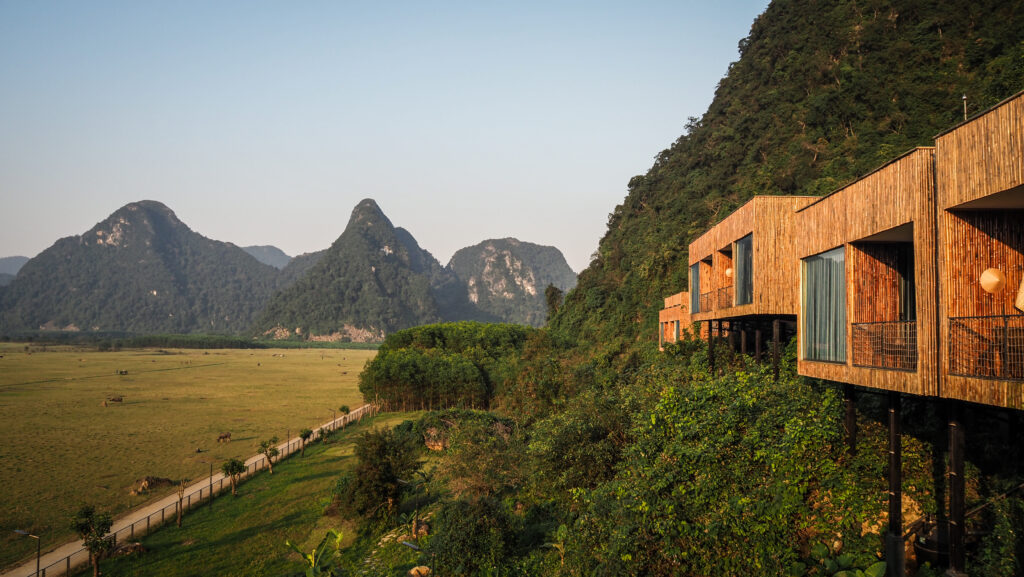
It took about 1 hour to reach the Oxalis office and Tu Lan Lodge. We received keys to the rooms and had some time for taking a shower or riding a bike before going for dinner. The room was so amazing! Big panoramic window with a view of all the area and the mountains, even from the bathroom! Definitely the best room during my Vietnamese trip. But well, it wasn’t cheap 🙂 I did a short bike ride around the village but was definitely planning to wake up early the next day and explore some more.

Tu Lan Lodge, Vietnam

The dinner at the house of the local guide was delicious. A real feast with plenty of dishes but everyone was quite hungry! We also had some happy water (a local alcoholic beverage), obviously for better digestion 🙂

Day 4

The last day shouldn’t really be counted as an active one unless you grab a bike and go explore the village. That was exactly what I did! We had free time until 12:00 and the area is way too beautiful to just sit on the terrace. Bikes are available for free for anyone staying at Tu Lan Lodge.

Phong Nha, Vietnam
Phong Nha, Vietnam

It’s a real rural area with extremely friendly people always greeting you and smiling. Lots of great photo opportunities too, especially of people working in the ricefields.

Finally, it was time to set off back to Phong Nha and say goodbye to the group. What an amazing 4 days it was!

Other tours

Hang Tien Exploration is not the only tour in Oxalis Adventure offer. They have both longer and shorter hikes so simply visit their website and find the one that fits you best. It isn’t a sponsored recommendation as I truly liked my days in the Phong Nha area 🙂

Summary

All in all, it was an excellent trip. Logistics, guides, food, accommodation as well as communication with the consultant prior to the trip – everything was on a high level. It’s definitely not a cheap tour, but on the other hand, it’s an experience that you don’t have the chance to get very often. I wholeheartedly recommend Oxalis Adventure for all nature enthusiasts visiting Phong Nha.

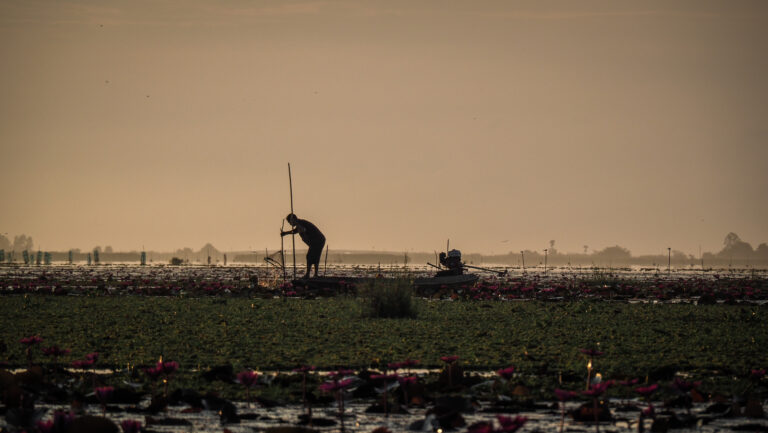
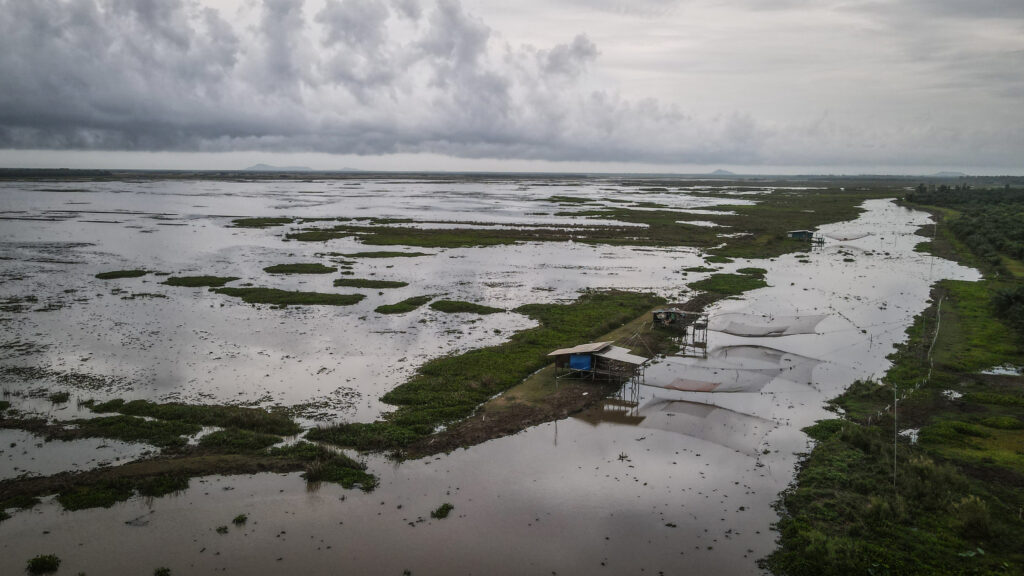
Thale Noi means the small sea and indeed, travelling by long-tail boat on this vast freshwater lagoon gives you the feeling that you are on an amazingly calm sea. The Lake is located in the Phatthalung province of southern Thailand, covers an area of 28 square kilometres, and forms the northernmost portion of the Great Songkhla Lake. The wetland area was declared a Ramsar site, which recognizes its international importance under the criteria of the Ramsar Convention on Wetlands for containing representative, rare or unique wetland types or for their importance in conserving biological diversity.

When to go?

The lotuses and water lilies are in full bloom from January to March/April and this time of the year corresponds with the largest number of migrating birds. I visited the place exactly on the first day of April and the scenery was amazing with a minimal number of tourists. In general, November is the wettest month of the year and July is the driest.

Thale Noi Lake in Thailand
Morning activities on the lake
Thale Noi Lake in Thailand
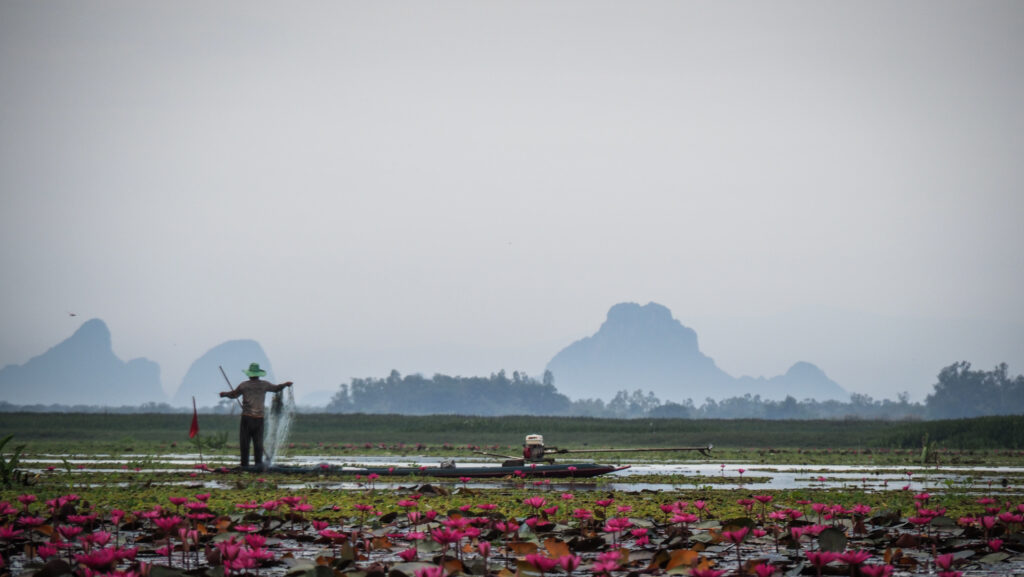
Fisherman in the “office”
Thale Noi Lake in Thailand
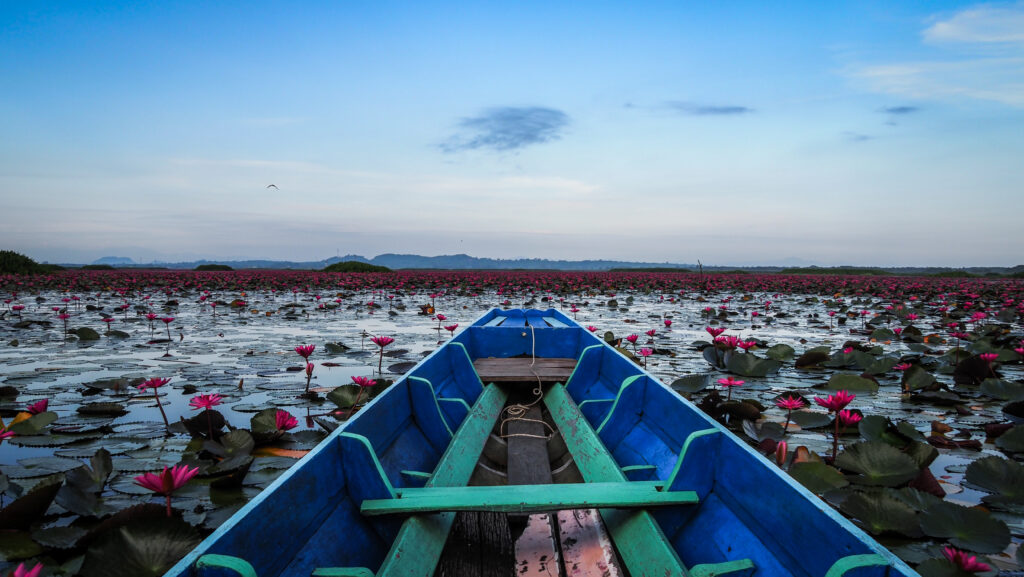
Seems like floating on a carpet made from lotus flowers

How to get there?

The easiest way is to fly from Bangkok to Hat Yai, Nakhon Si Thammarat or Trang and arrange a further trip from one of these. The southern railway connects Phatthalung with Hat Yai and Nakhon Si Thammarat, but you can easily get mini-buses or buses too.

Where to stay?

As long as you are planning to take a sunrise boat trip, you should stay overnight somewhere around the lake. I recommend Chuanchom Resort. It’s basically just opposite the area where the boatmen hang out in the morning. The room is simple but perfectly fine for a short stay. I paid around 700 THB for one night.

How long to stay?

One day is enough to explore the area. After the sunrise trip, you may want to check out Thale Noi Viewpoint Tower and then make a stop in Phatthalung, before heading further.

Thale Noi Lake in Thailand
Lotus flower

Sunrise boat trip

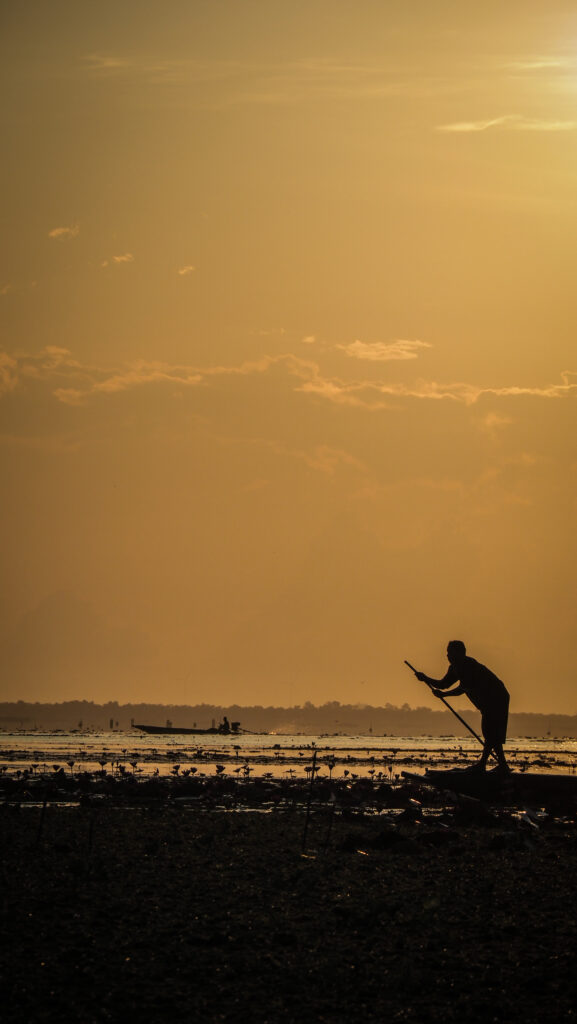
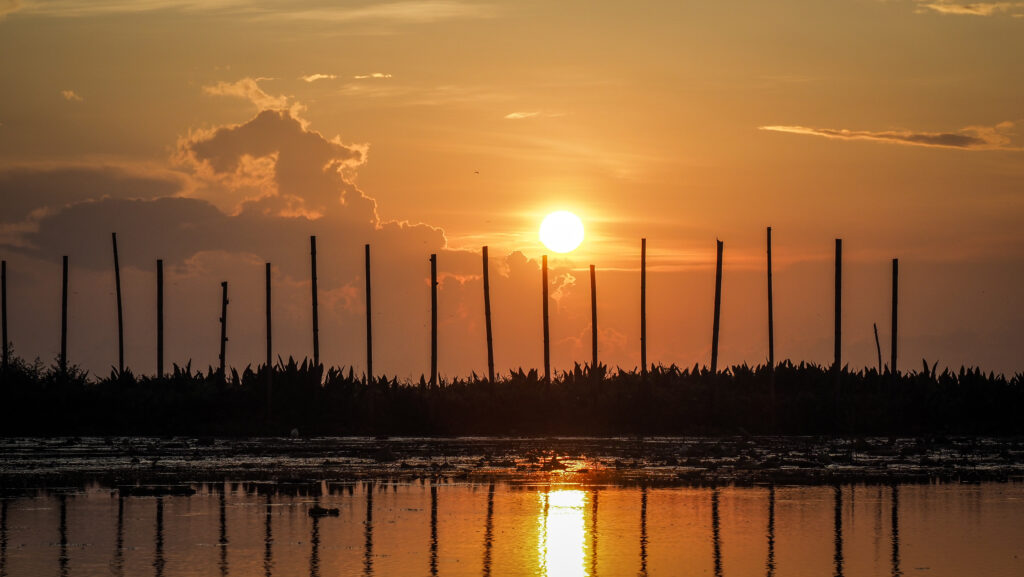
Boat trips can be arranged around the big parking, opposite the road next to Chuanchom Resort. Just go there in the morning and speak directly with the boatmen. I highly recommend starting around sunrise time, as it’s purely magical to see how the wetlands spring to life. The prices vary depending on the duration of the trip. The 1-hour trip will cost about 550 THB while the longer one, which is over 2 hours, will cost about 900 THB or more. I took the longer one and totally loved it. It was even more than 2 hours as the boatman didn’t have a watch and I didn’t control the time either. After a while, he just asked me what time it is and then we turned back. Perfect cooperation 🙂 Long-tail boats can carry up to 7 people.

Thale Noi Lake in Thailand
It’s worth waking up early!
Thale Noi Lake in Thailand
Sunrise is the best time for a boat trip on the lake

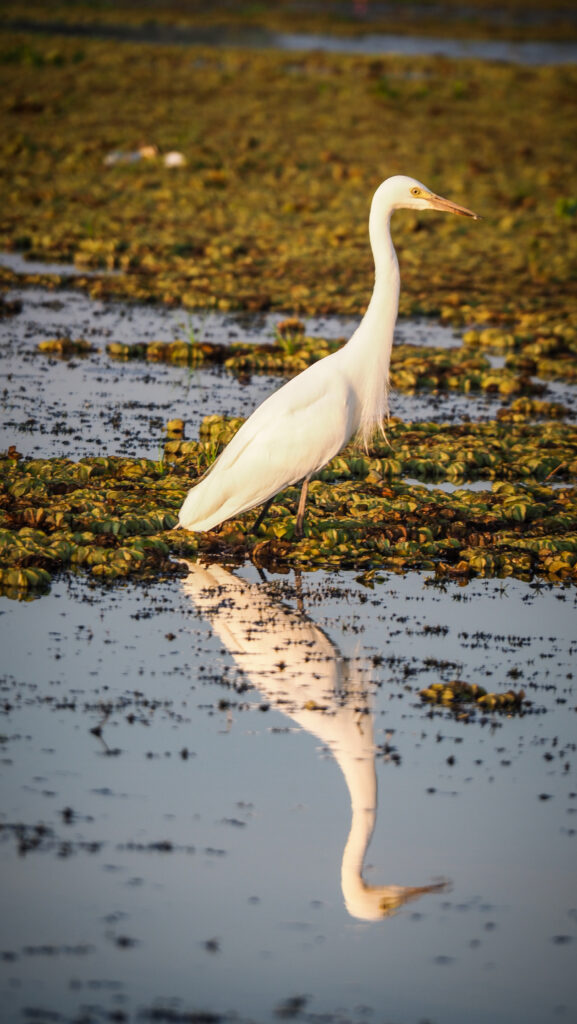
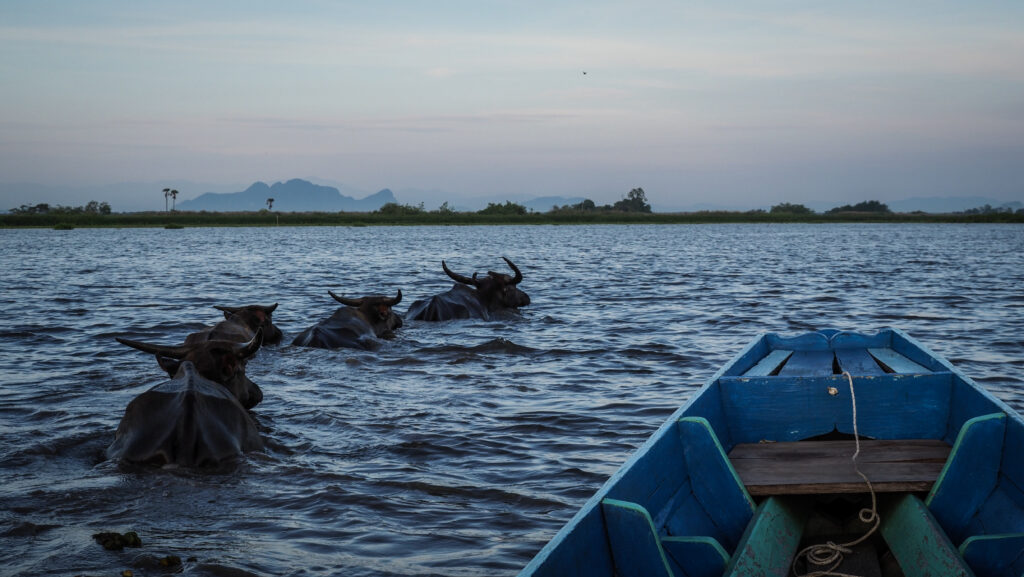
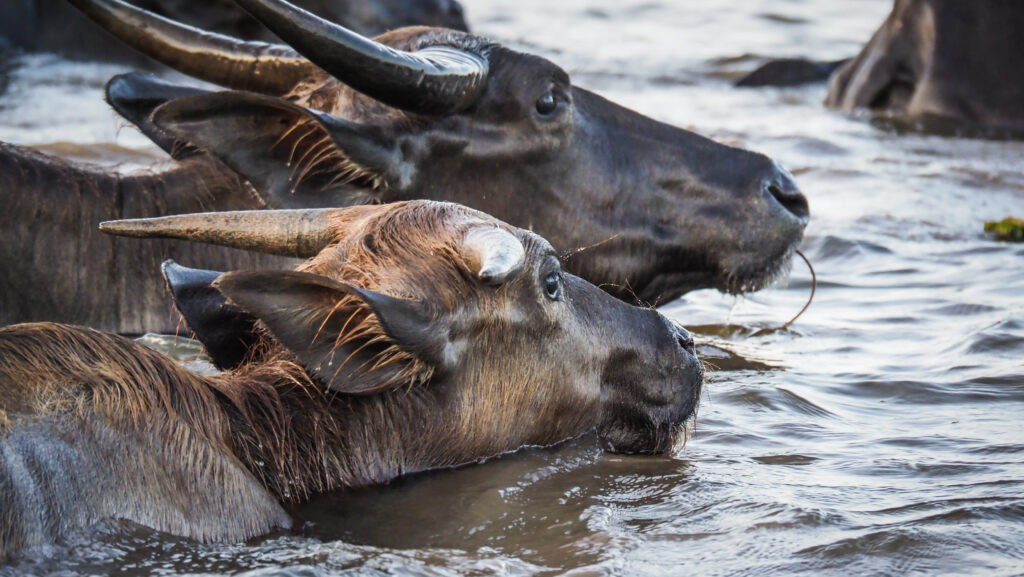
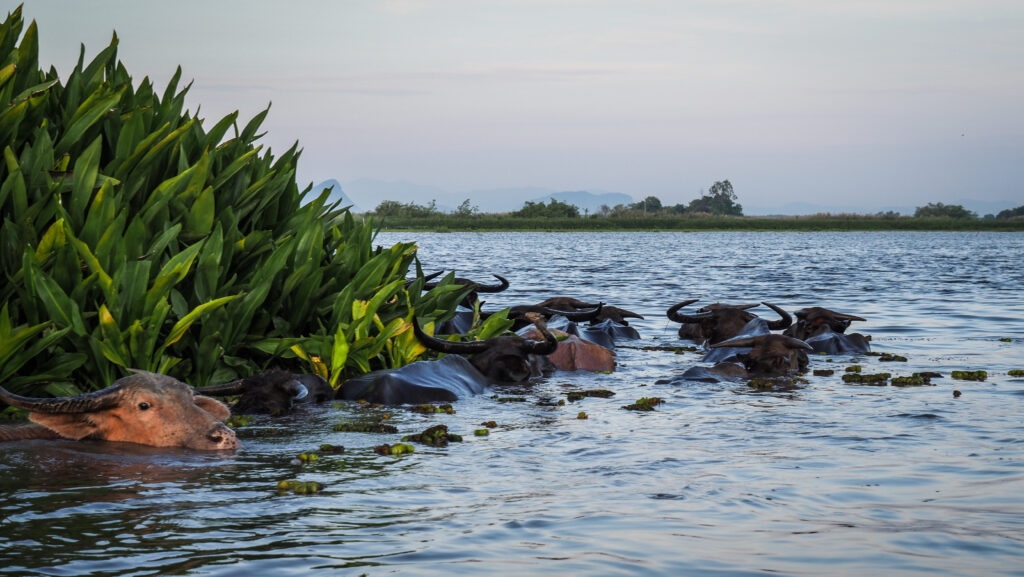
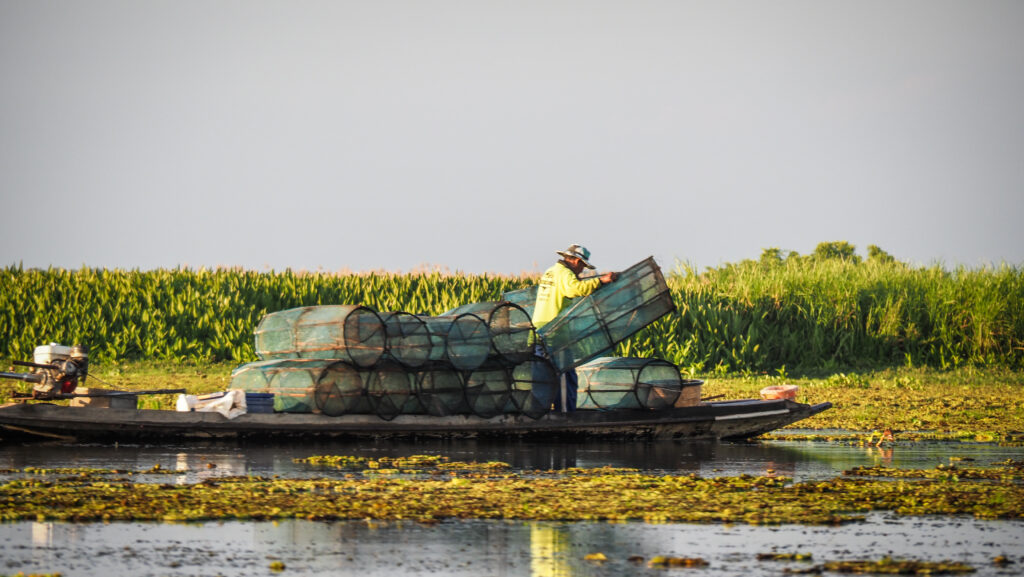
Thale Noi is an important habitat for various wildlife, particularly waterfowl. January to April is the time of the year with the largest number of migrating birds and the sunrise hours are best for observation. Besides that, you will certainly spot water buffaloes. Local fishermen can be spotted too, checking their fish traps and nets but also unknowingly posing for photos. The long-tail boat glides across the water strewn with lotus flowers like a carpet. And when there are no plants on the surface, it acts as a mirror, reflecting incredible formations of clouds.

There are many photo spots when the boatman switches off the engine so you can take in all that view in silence.

Thale Noi Lake in Thailand
Water buffaloes marching through the lake
Thale Noi Lake in Thailand
Water buffaloes
Thale Noi Lake in Thailand
Seems like they really enjoy the water!
Thale Noi Lake in Thailand
Fisherman preparing fish traps

Other interesting places

Chaloem Phrakiat Bridge

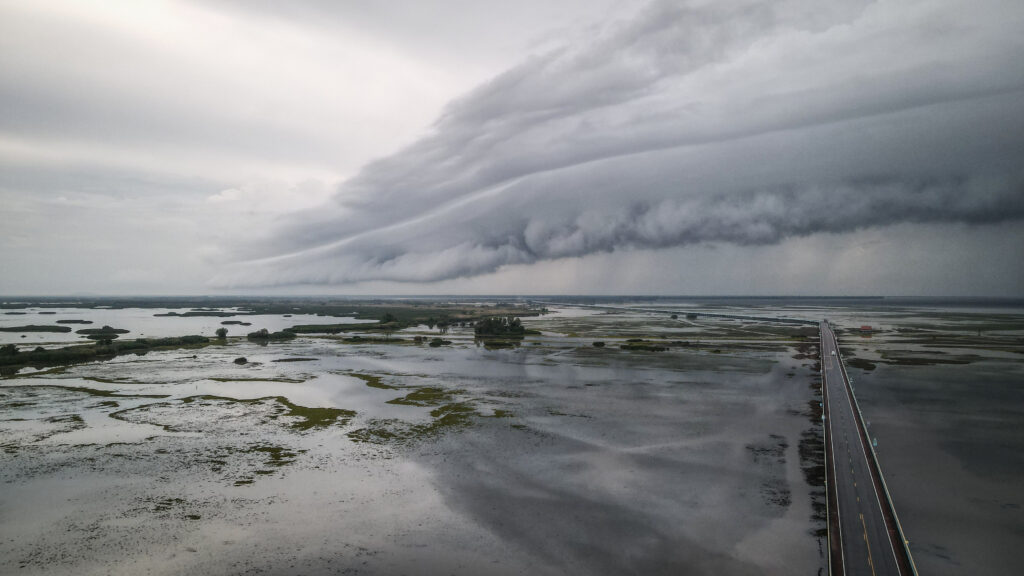
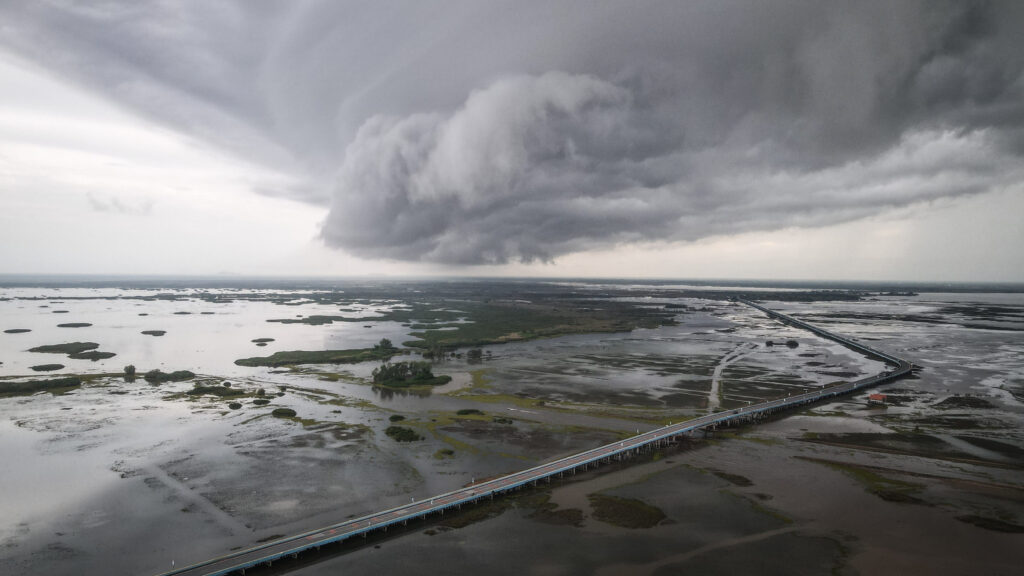
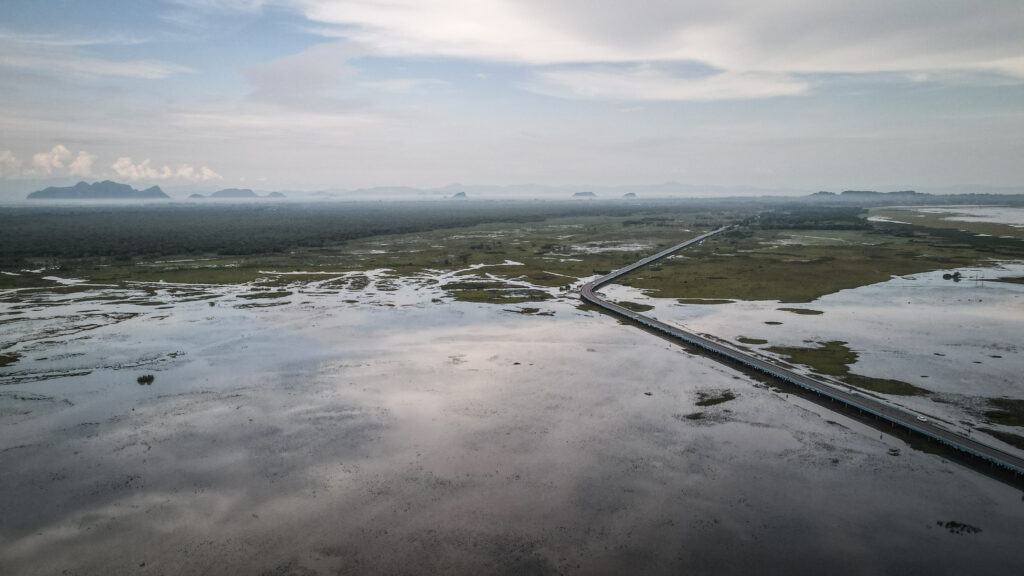
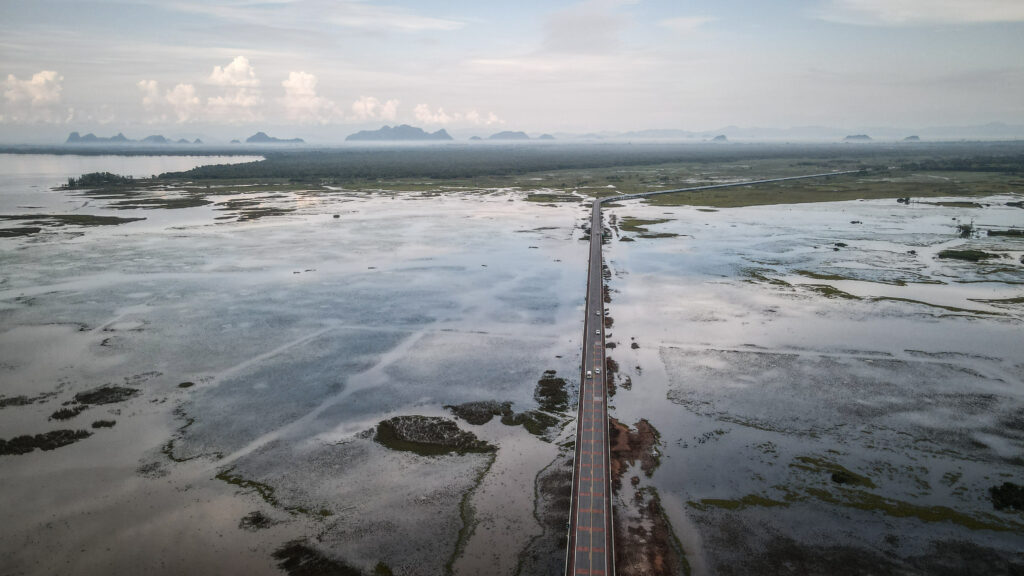
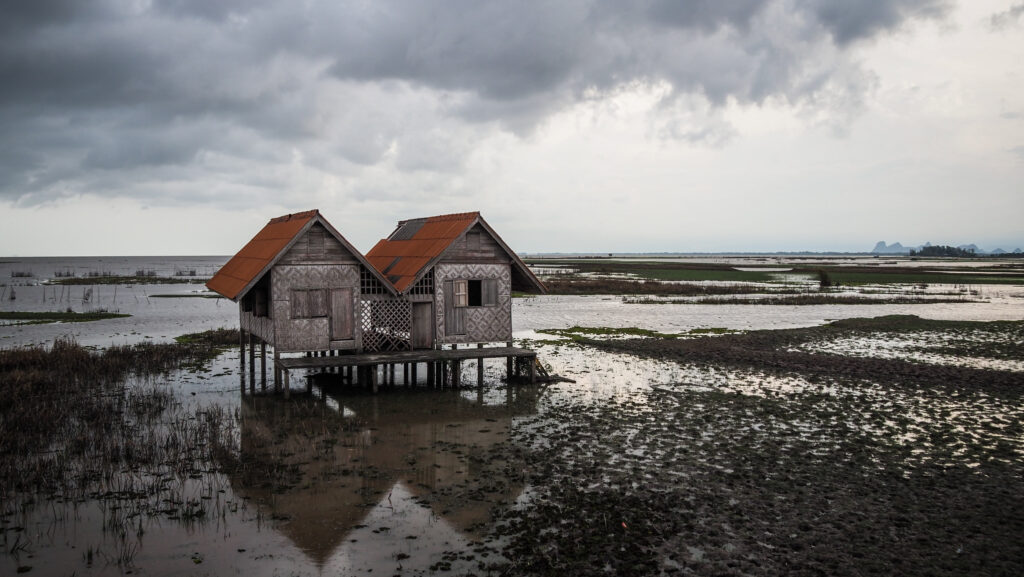
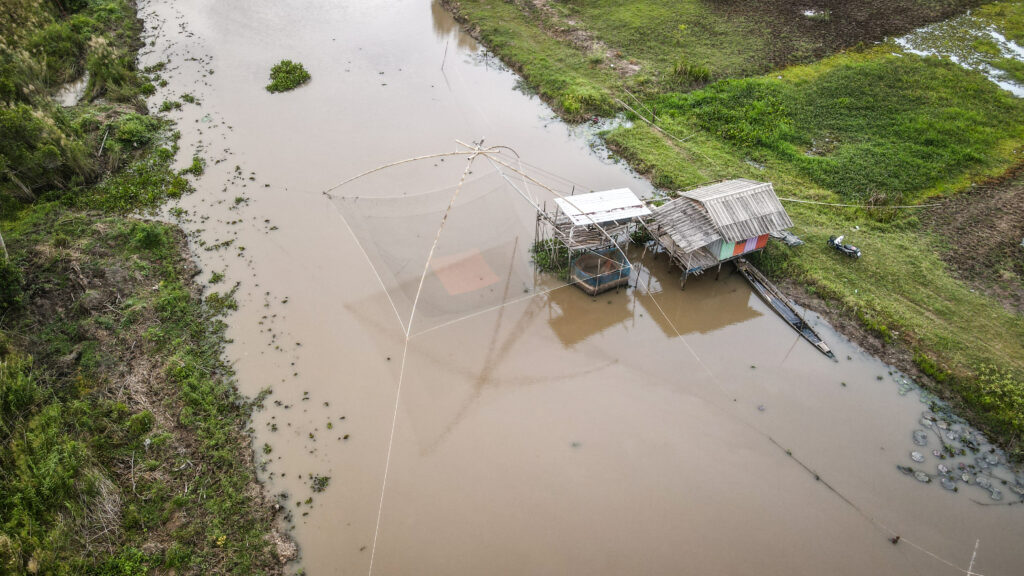
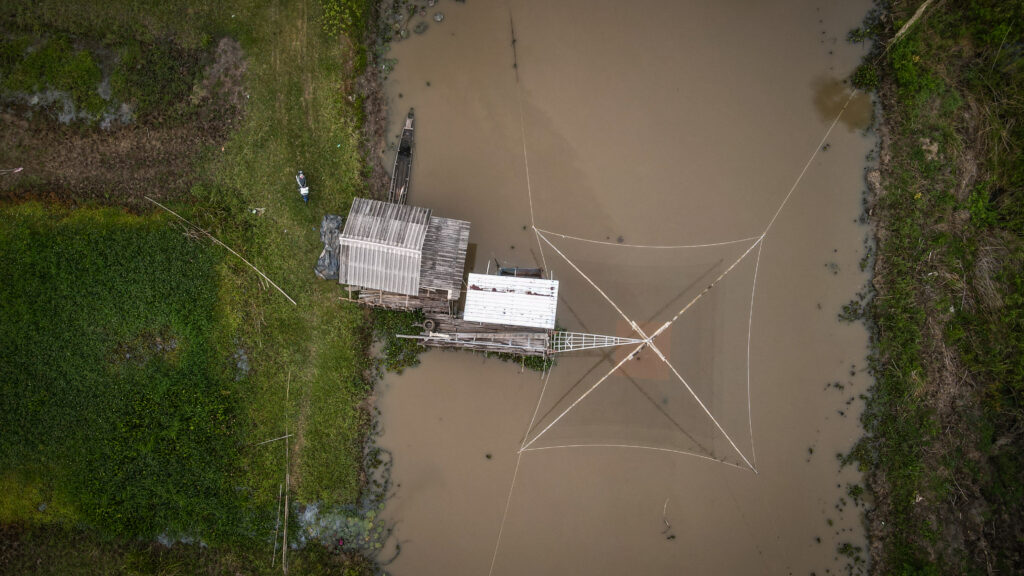
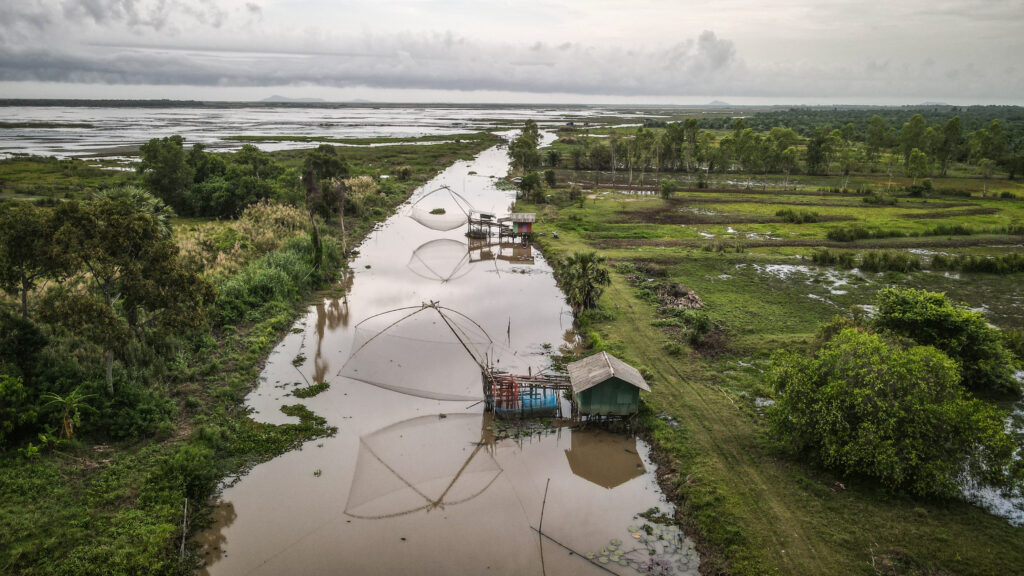
Spanning 5.5 kilometres, it is the longest bridge in Thailand. There are some rest stops so you can pull over and take your photos if you are driving. When you enter the bridge from the Gulf of Thailand side, you may spot giant square-shaped nets which are mounted on a wooden frame named ‘yo‘ in Thai. The nets are dipped into the water and then raised to catch the fish which can then be sold at local markets. The very picturesque Twin House is located more or less about halfway along the bridge, on its left side.

Thale Noi Lake, Thailand
Amazing cloud formations above the bridge
Thale Noi Lake, Thailand
5,5 km – the longest bridge in Thailand
Thale Noi Lake, Thailand
It is possible to safely stop at the bridge and take photos
Thale Noi Lake, Thailand
Be careful with your drone as there are many birds around
Thale Noi Lake, Thailand
Aerial view of Thale Noi
Thale Noi Lake in Thailand
Twin House is located more or less about halfway along the bridge
Thale Noi Lake, Thailand
Giant nets used for fishing
Thale Noi Lake, Thailand
The nets are dipped into the water and then raised to catch the fish
Thale Noi Lake, Thailand
Top-down view of the fisherman house
Thale Noi Lake, Thailand
Panorama with fishermen spots

Thale Noi Viewpoint Tower

Walk up the stairs to admire the panorama of Thale Noi Lake.

Phatthalung

There are no must-see places in town, however, some are worth the visit if you have time to spare.

Phatthalung Museum is a former residence of the Governor of Phatthalung. Beautiful, Thai-style houses are now accessible to the public. When it comes to temples, I would recommend visiting Wat Khuha Sawan, with a cave full of Buddha statues and Wat Khao Chiak with 800+ steps uphill and beautiful panoramic views as a reward. To finish the day, Saen Suk Lampam Beach is a good spot for enjoying lakeside views, especially during sunset.

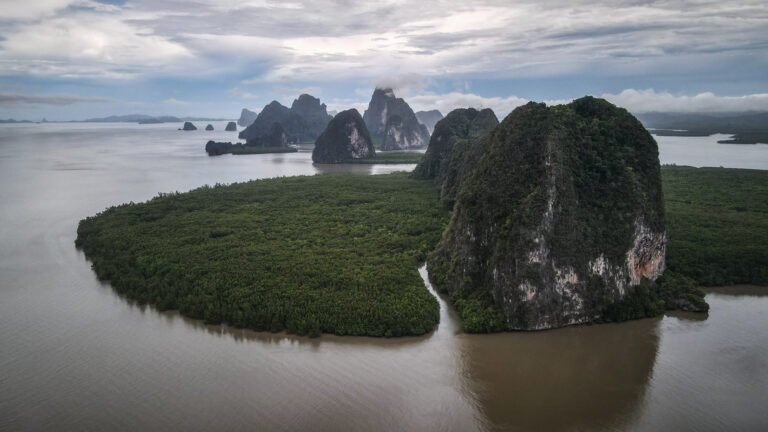
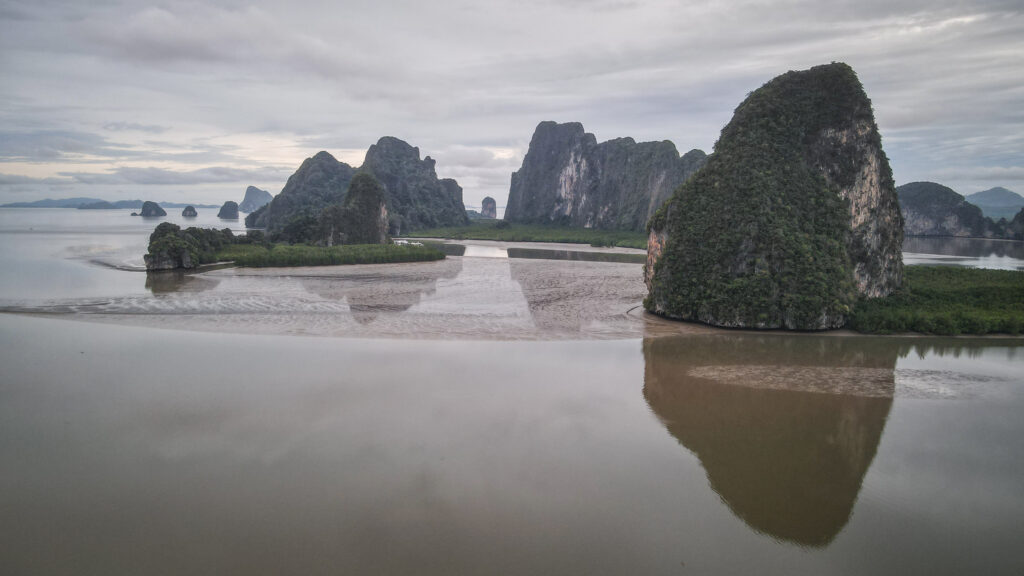
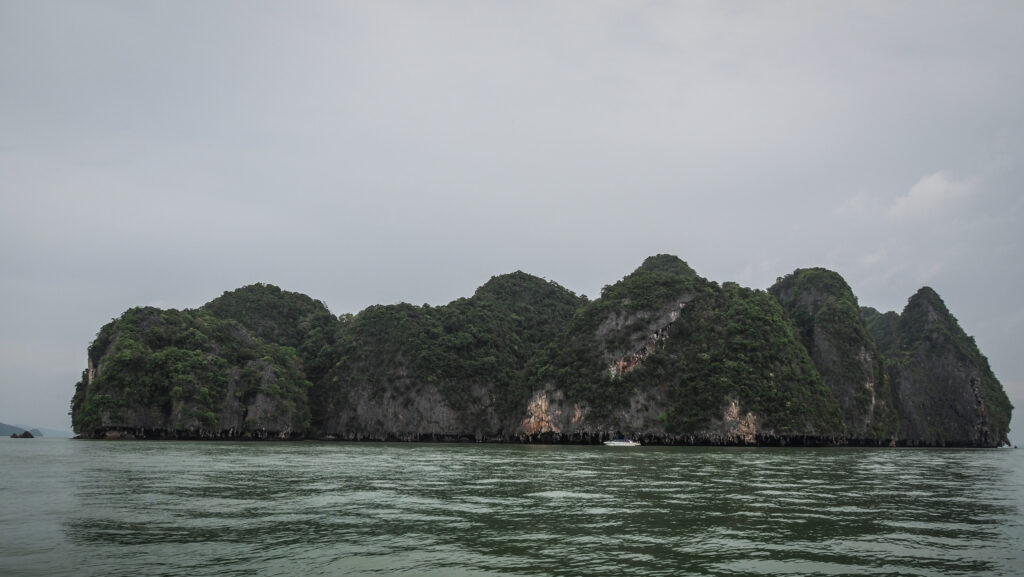
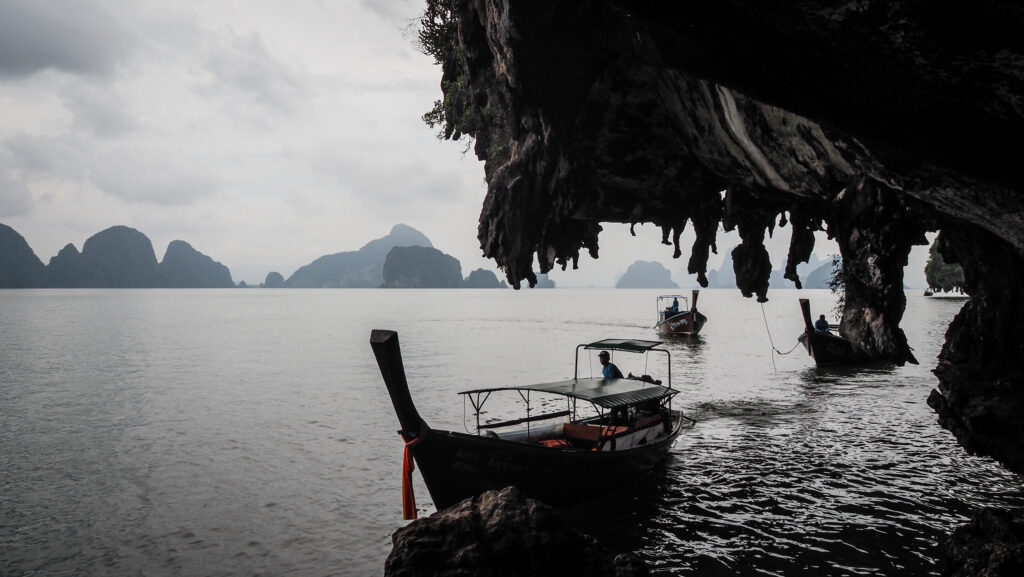
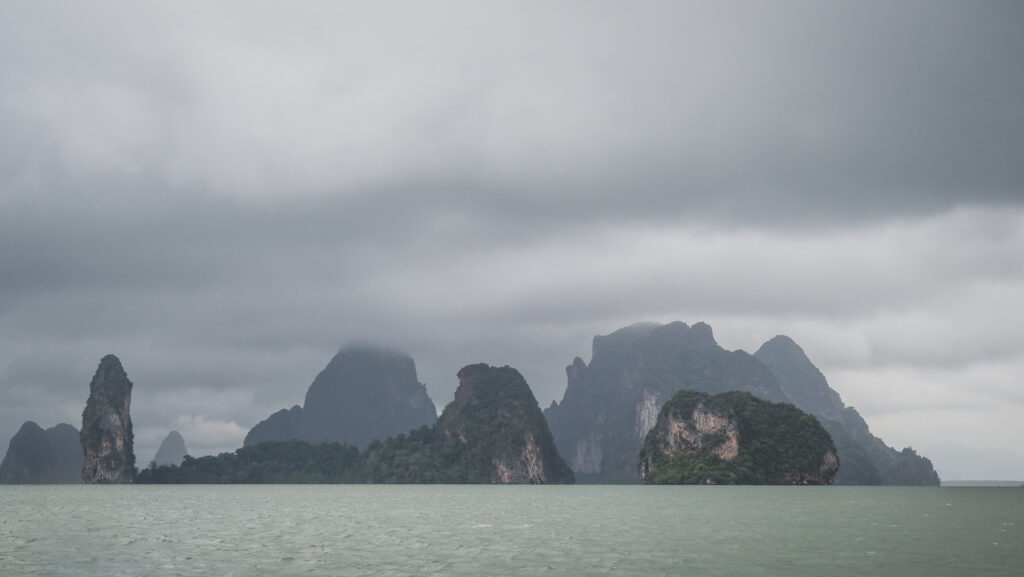
Phang Nga Bay with its 42 islands is located in the northern part of the Malacca Strait between Phuket and the provinces of Phang Nga and Krabi on the mainland of southern Thailand. A large part of it is protected by the Ao Phang Nga National Park. The landscape attracts tourists with huge limestone karsts that seem to grow out of the calm waters of the Andaman Sea. It’s something that just can’t be missed when travelling in that region.

This article describes a tour around the bay, with an overnight stay on Panyee Island. There are two big islands in that area, but I believe that they deserve a longer visit on their own, as otherwise, you would feel too rushed. The two islands are Koh Yao Yai and Koh Yao Noi and you can read about them in my previous posts.

Where to find a boat trip?

Prior to the trip, I did my research on Google Maps and found a place with quite many positive reviews: Service Tour Boat Friendly Price. Yes I know, the name sounds catchy 🙂 They are located next to Pracharat Pier and parking shouldn’t be a problem. Hanah, who is the owner, can be easily contacted by phone (+66933906568) and is really friendly.

They offer two kinds of tours. Tour A includes James Bond Island, Lod Cave, Saokadong Cave and Panyee Island. Tour B includes James Bon Island, Hong Island, Nok Krariang Cave and Panak Island. Each tour costs around 2,000 THB. If you want to combine two tours and additionally stay overnight at Panyee Island as I did, you may need to negotiate your price. It will be higher as after the night on the island, someone has to come and pick you up the following morning, so expect to pay around 3,000 – 3,300 THB. Of course, if you travel with a group of friends, the price per person becomes more affordable.

The easiest to get to Pracharat Pier is from Phuket or Krabi. I went there on a rented motorbike from Krabi and it took me about 2 hours.

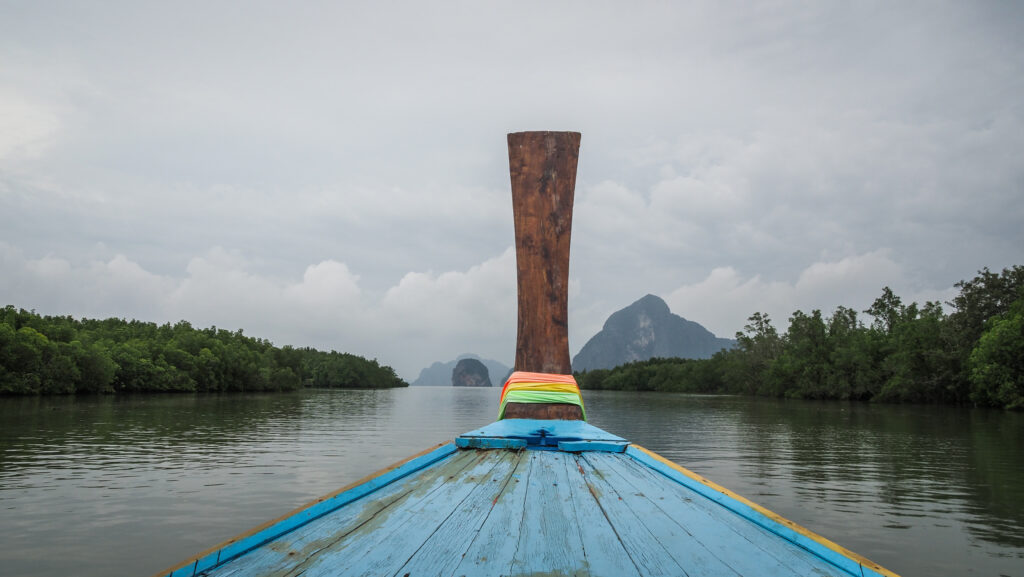
Of course, Phang Nga Bay can be reached by speedboat directly from Phuket and it’s way easier to organize. It’s up to you to decide what kind of experience you want. Speedboat with lots of other people or private long-tail boat which allows you to go at your own pace. Another good option could be arranging a long-tail boat at Koh Yao Noi or Koh Yao Yai Islands.

Phang Nga Bay, Thailand
Drone shot taken around Panyee Island

When to go?

The best time to visit Phang Nga Bay is from November to May, outside of the rainy season. The weather is stable and showers are rather occasional. In other months, accommodation may be cheaper but organizing a boat may be way more difficult and the whole experience won’t be as pleasing as it could be.

How long to stay?

Most people just do a day tour but I wanted to feel Phang Nga Bay after all the tours and noisy speedboats come back to the mainland. Therefore, I stayed 1 night on Panyee Island which was an excellent choice. If you have the time, I really recommend you do the same.

Where to stay?

I booked a room at Jamesbond Bungalow Ko Panyee which was an excellent choice. The view from the terrace was amazing and there were nice chairs to lie down on. The host was very friendly and the internet connection was fast. I paid 850 THB for 1 night’s stay.

What to take with you?

You won’t need much, but make sure these items find a place in your bag:

  • Rain jacket
  • Sports shoes or trekking sandals (may be useful in the caves)
  • Flip flops
  • Swimsuit (you may get wet on the kayaks)
  • Insect repellant
  • Sunglasses
  • Hat

Day 1

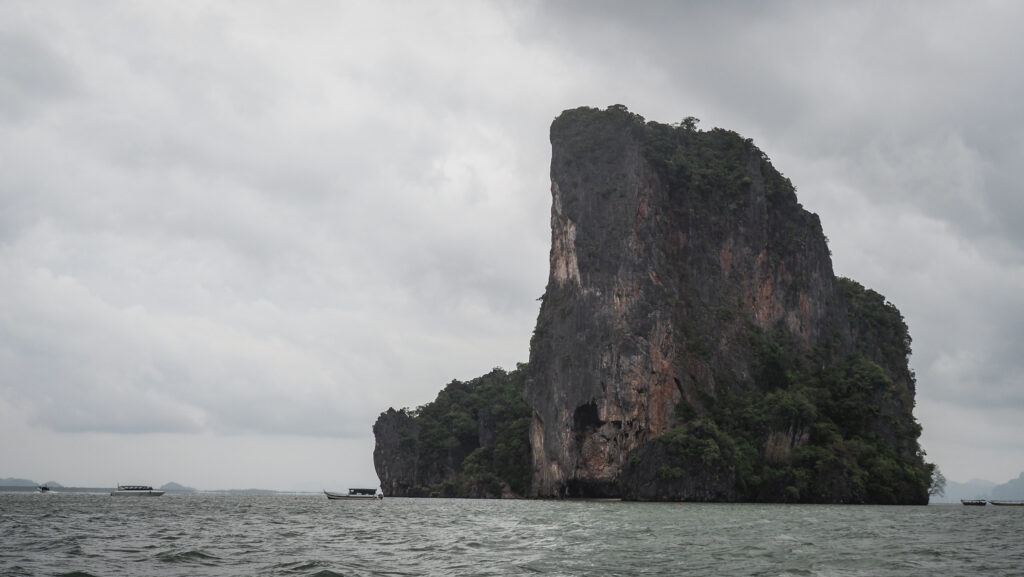
The trip started with a visit to the faraway spot: Phanak Island. Normally you can do a short kayak trip here to enter the lagoon which is possible at low tide only. If you don’t want to do that the boatsman can pull over next to the rocks and let you get off the boat to have a short walk and have a look at the lagoon. It was a really good start to the tour and the island also looks amazing while you are approaching it. There is also Ice Cram Cave in the other corner of the island. Nothing spectacular but if you are already around…

Phang Nga Bay, Thailand
Approaching Phanak Island
Phang Nga Bay, Thailand
Ride in a long-tail boat
Phang Nga Bay, Thailand
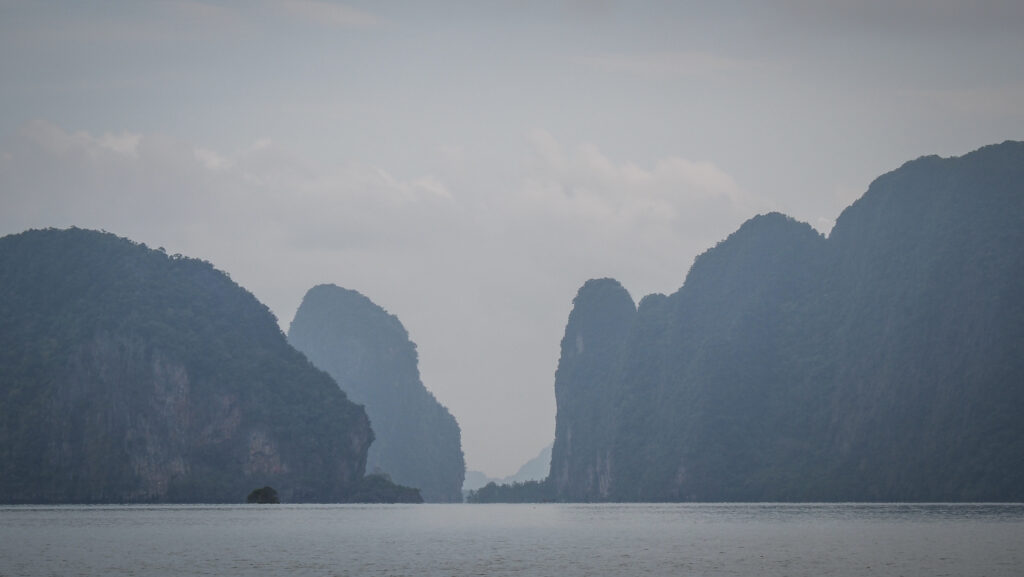
The visibility wasn’t perfect on that day
Phang Nga Bay, Thailand
Around the caves

The next stop was at the Birds Cave on Ko Sa Ang Yai Island. It was the most adventurous cave as to get into, you need to climb the wooden ladder. It’s a small place but very atmospheric and well worth the visit. From there, we went to one of the biggest attractions in this area: Hong Island. Again, there is an option for a short kayak trip at the additional fee of 300 THB, and this time I decided to go for it. In fact, it’s a guided trip so actually you don’t paddle yourself but just sit as a passenger. A bit strange 🙂 Some passes are really low so the guide will ask you to lie down and watch out for your head. It was really fun, even though it was raining. You feel so small being surrounded by these towering limestone walls.

Phang Nga Bay, Thailand
Kayaking around Hong Island
Phang Nga Bay, Thailand
Various small islands in Phang Nga Bay
Phang Nga Bay, Thailand
Impressive walls growing out from the sea

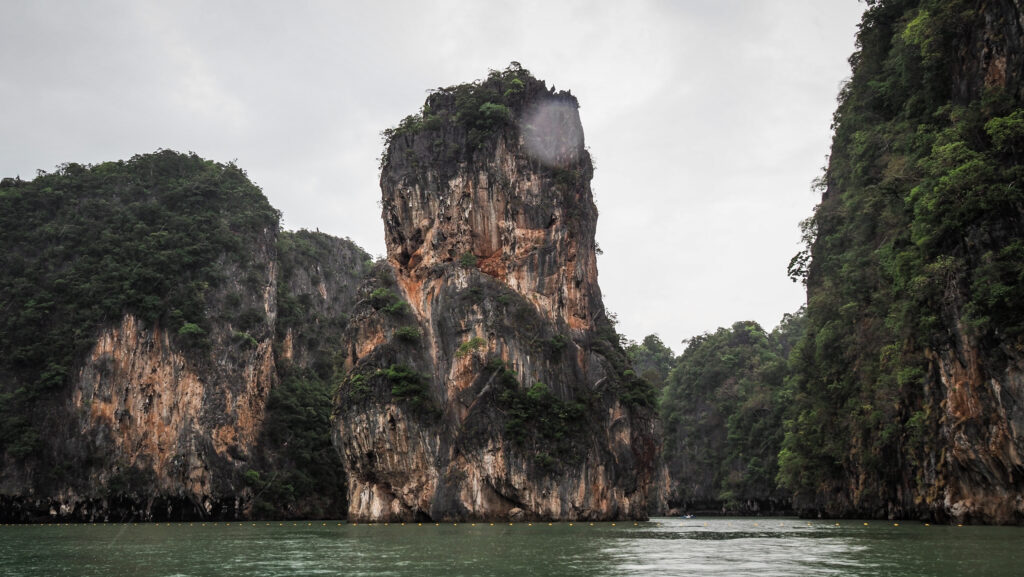
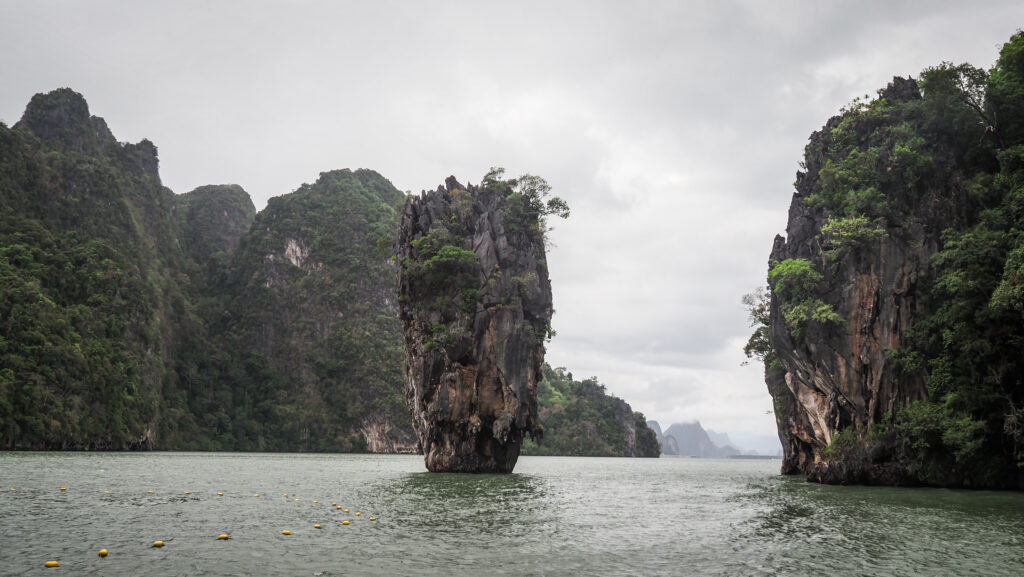
Then, it was time to move on to Ko Tapu, also known as James Bond Island. Very tourist place, which suddenly might get super crowded as many boats arrive at the same time. However, it’s good to see it once in a lifetime. The place appeared in the 1974 James Bond movie The Man with the Golden Gun. There is a national park fee of 300 THB per person paid upon arrival.

Phang Nga Bay, Thailand
The famous rock as seen from the James Bond Island

The last stop before arriving at Panyee Islands for chilling was Thalu Mountain and Lot Cave. It’s another kayaking stop and again paid 300 THB extra. For me, it was even better than Hong Island so I can highly recommend it. The same as before, you go with the guide who does the paddling job and just enjoy the scenery. You will see impressive rocks, mangroves and most probably some “walking fish” so the mudskipper which is a half-fish half-reptile. The only thing that influenced negatively my experience here was the guide who was all the time talking about his family and how poor he is, kind of forcing the tip in an unpleasant way.

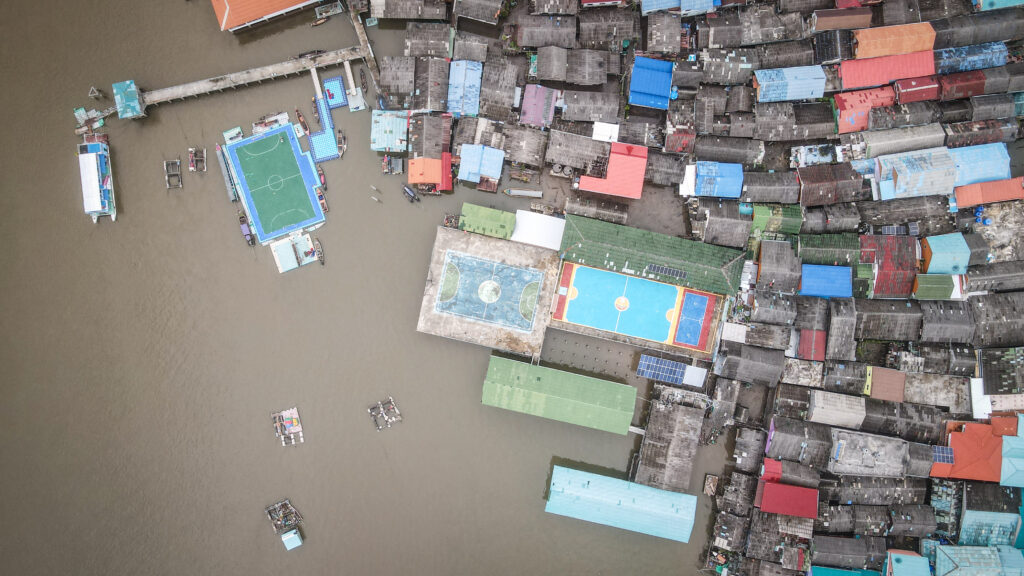
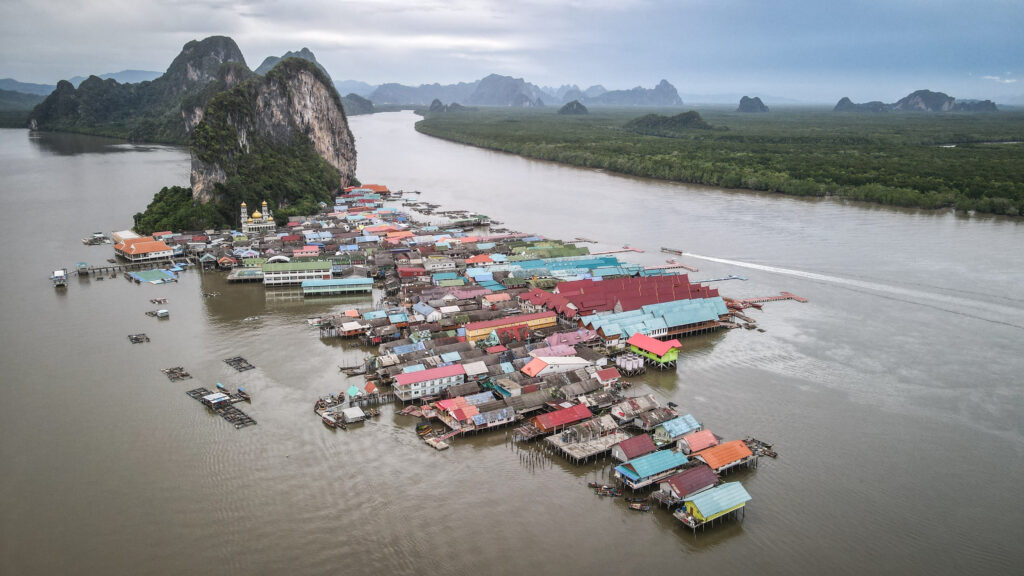
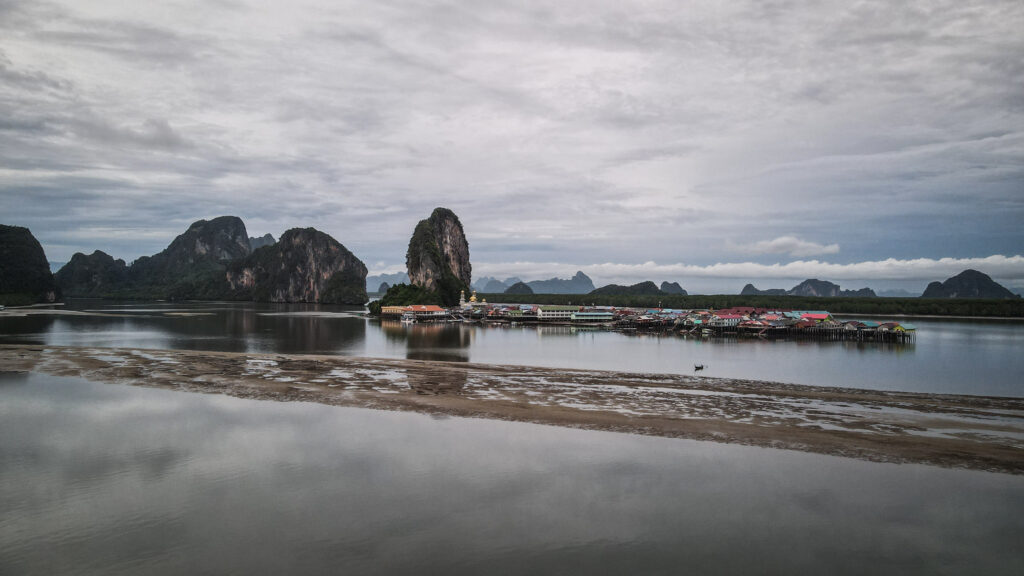
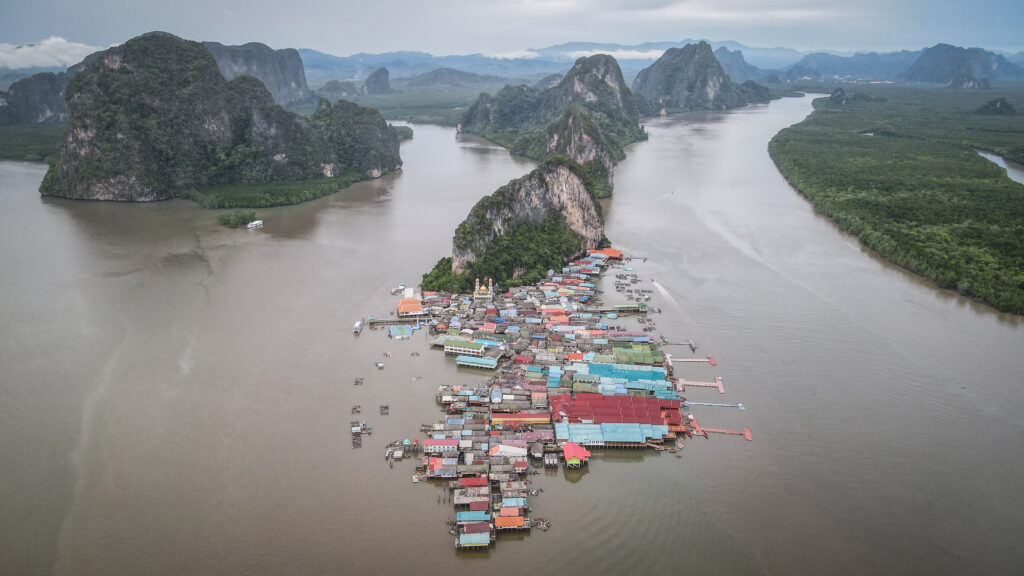
Finally, we arrived on Panyee Island and I agreed with the boatsman to pick me up the next day at 10 AM. I left my things in the room and went for a walk. Panyee Island is a fishing village built on stilts by Malay fishermen from Kedah state. It was very peaceful in the afternoon when all the tours already left and only local people remained. And me, probably the only tourist staying overnight 🙂 The scenery around was truly fantastic, as you can see in the drone shots below. For the dinner, you may find some cheap bites in the market area close to the mosque.

Koh Panyee in Phang Nga Bay, Thailand
Seems like a nice place to play football!
Koh Panyee in Phang Nga Bay, Thailand
Panyee Island, what a location!
Koh Panyee in Phang Nga Bay, Thailand
Calm afternoon at Panyee Island
Koh Panyee in Phang Nga Bay, Thailand
Unbelievable scenery!

Day 2

I was picked up according to schedule and I was really glad that it seemed to be a sunny day. That’s why, on the way back to the pier, I could see the scenery of Phang Nga Bay once again, in different conditions. We made one more stop to visit the cave of the name that I don’t even remember anymore 🙂 But the highlight was just a relaxing boat ride in the morning sunshine. Hanah greeted me upon arrival and I jumped on my motorbike to check some other points in the area, before coming back to Krabi.

Samet Nangshe Viewpoint

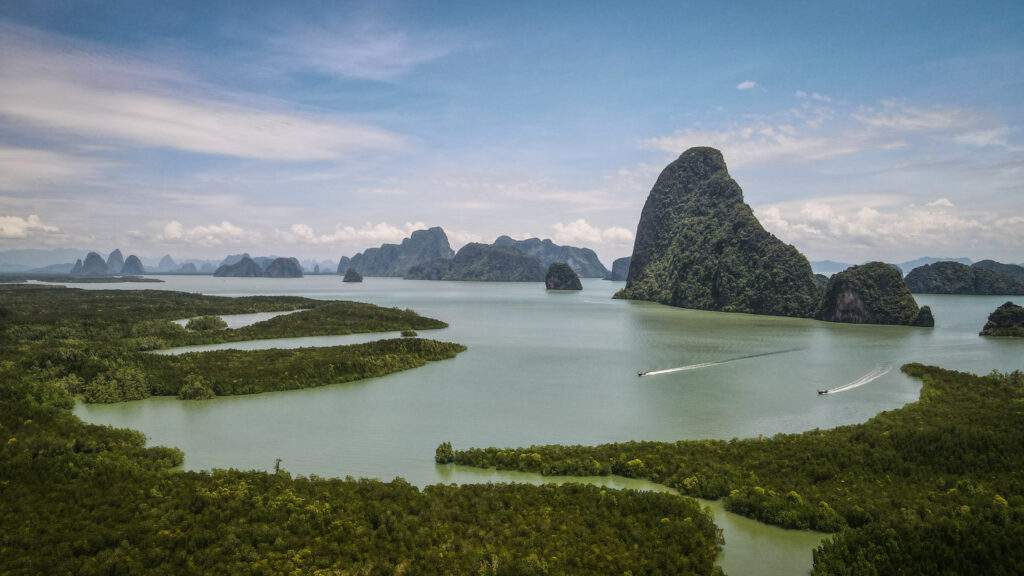
Being so close, you can’t miss the visit to this amazing place. The view is good at any time of the day but of course, it’s absolutely breathtaking during sunrise and sunset. You need to park at the bottom and use their 4X4 taxi to go up. It costs 90 THB per person for a return ticket. There is a restaurant at the top but it may get very busy.

Phang Nga Bay, Thailand
What a view from Samet Nangshe Viewpoint!

Benyaran Museum and Waterfall

A private collection of all kinds of things in aspects of culture, traditions, living conditions, occupations, etc. The entrance fee is 150 THB for foreigners and I personally think that it isn’t worth it. There is a small waterfall, a few minutes’ drive beyond the museum which can be visited free of charge. Follow the signs.

Phang Nga

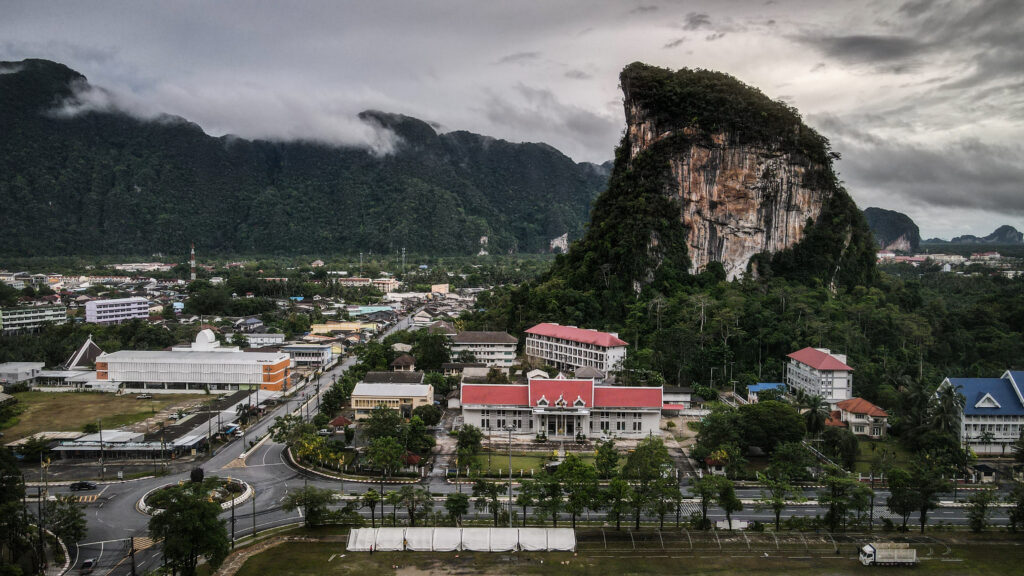
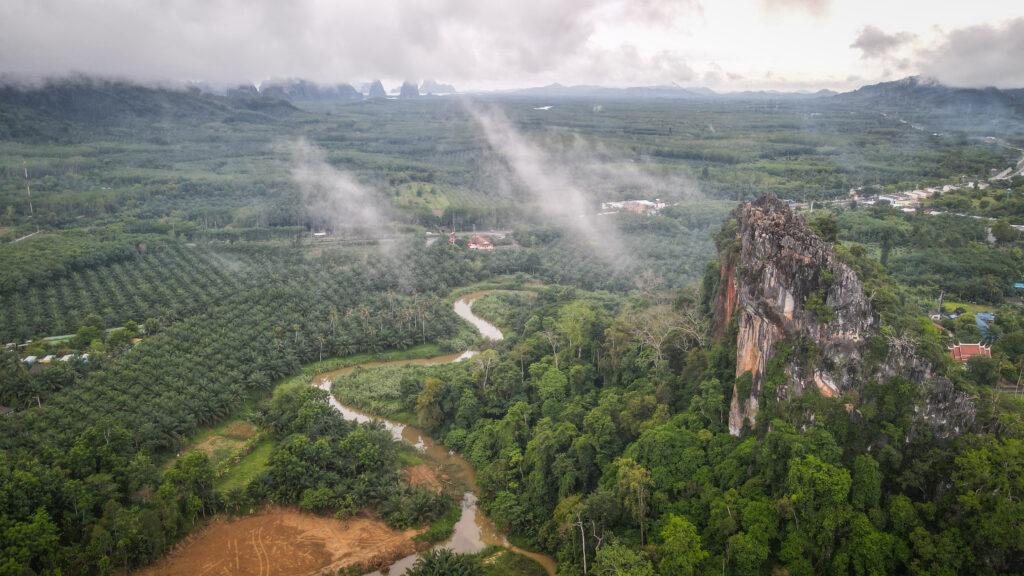
Phang Nga is also the name of the city, the capital of Phang Nga Province. A rather compact place, just for a quick stopover. You can have a look at Tham Sam, a nice limestone cave with wall paintings from as early as 1850. It is located next to a beautiful lake and limestone cliffs. Free to visit.

Another cave nearby is Tham Phung Chang. The price (500 THB) includes canoeing, bamboo rafting, and walking. I had enough caves that weekend so I left it for the next time.

Phang Nga, Thailand
Phang Nga is a small and sleepy town
Phang Nga, Thailand
The landscape around Phang Nga

Summary

Overall, it was an excellent and unforgettable time, even though the weather was far from perfect, especially on the first day. It’s not cheap, but if you travel with a group of friends, then it definitely makes more sense than an organized speedboat tour from Phuket. Overnight stay on Panyee Island gave me the chance to see the quiet side of Phang Nga Bay, almost without any other tourists around. Well worth it!

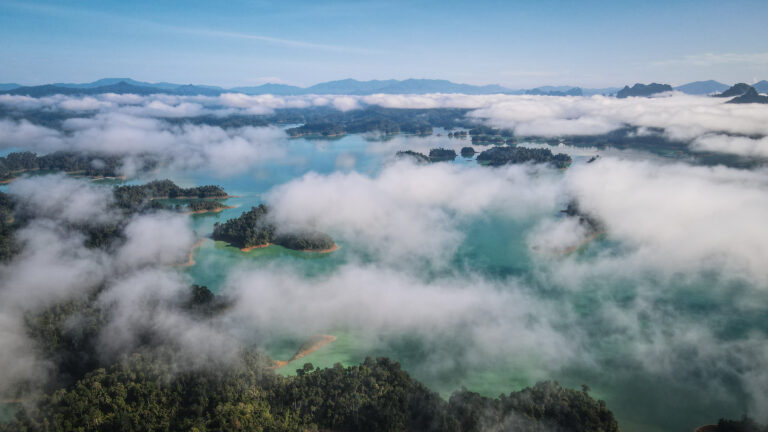
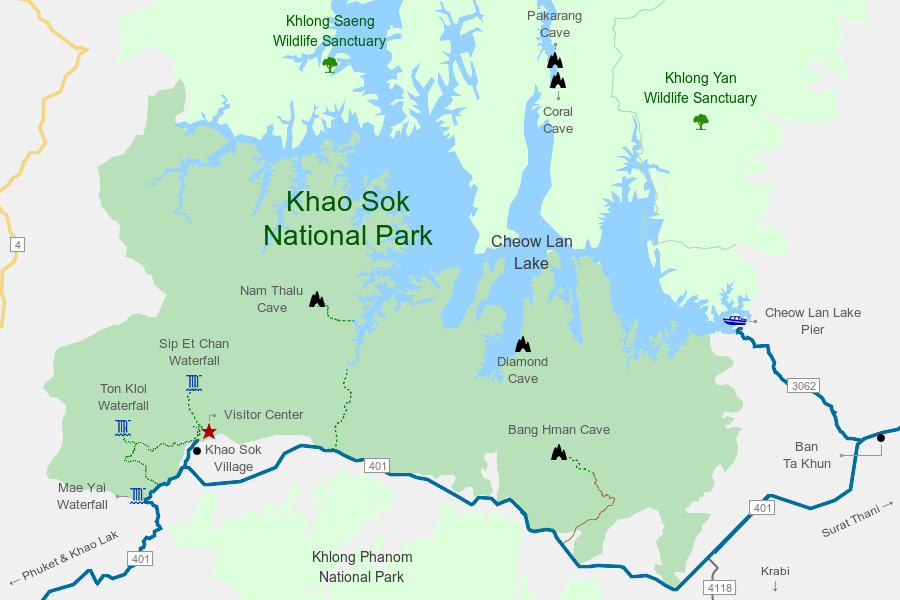
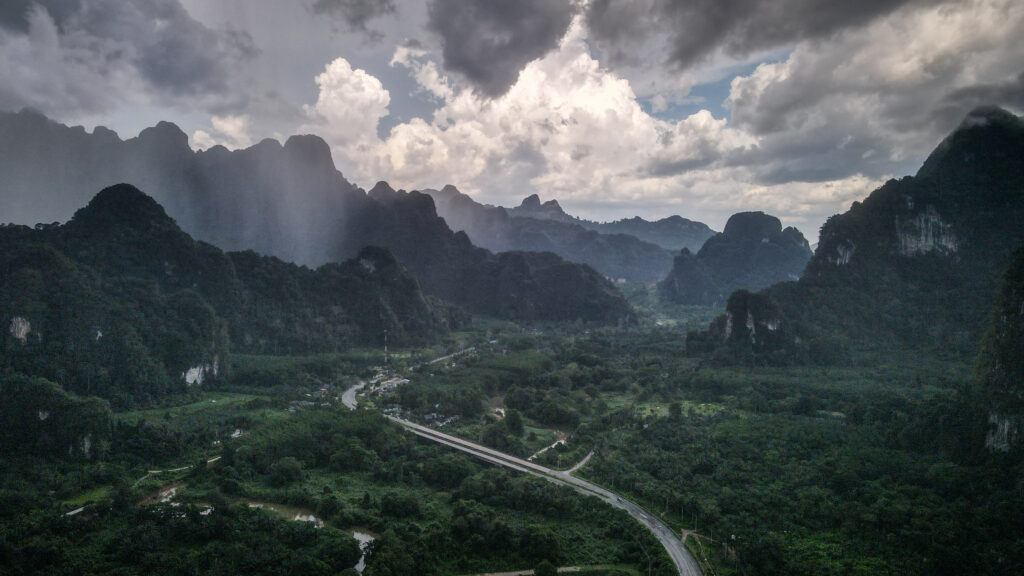
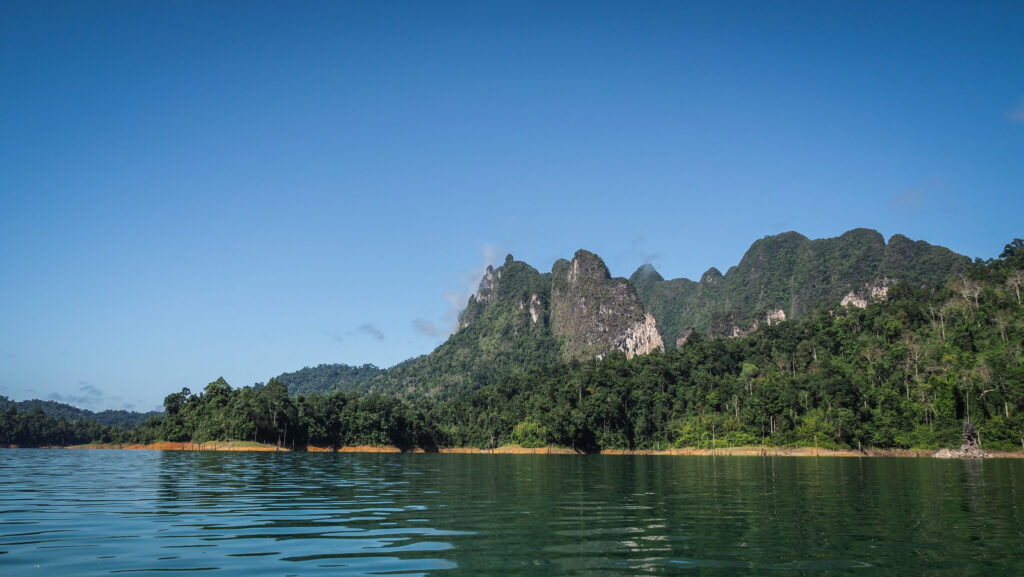
It’s a popular tourist destination as it’s conveniently located between Phuket and Koh Samui or Koh Phangan. The main attractions of Khao Sok are Cheow Lan Lake, wildlife, iconic limestone hills, waterfalls, raft houses spread over the lake, trails, caves and rivers. It’s a real paradise for nature lovers and be sure that some time here will stay in your memories forever.

The park covers 739 square kilometres and was officially established on the 22nd of December 1980. Luckily, in the 1970s, Thai students, who had joined communist insurgency groups, set up a stronghold in Khao Sok, as it provided ideal conditions to hide and operate guerilla warfare. They managed to keep at a distance not only the Thai Army but also loggers, miners and hunters. Who knows what the rainforest would look like now if not for coincidences like this one?

In 1982 Rajjaprabha Dam was built, closing off the Pasaeng river and creating 165 km2 of the Cheow Larn Lake. This dam was built to provide a source of electricity to southern Thailand, which by now had become a major tourist destination.

How to get to Khao Sok?

It’s a popular place so arranging transportation from other spots in Thailand will be rather easy. The most convenient way is to start the trip from Krabi, Phuket, Khao Lak or Surat Thani with a minivan. Just ask the travel agent or the receptionist at your hotel and I’m sure they will guide you through the options.

I started from Krabi but in this section of my travel, I had a rental car for about two weeks, so it was really easy to get around. I took a white Toyota Yaris ATIV from PURE Krabi Car Rental and it was easily the best and the most worry-free rental experience that I have ever had. Easy contact through Whatsapp with the owner, no deposit needed, the low maximum liability of 5,000 THB and there was even a free WiFi device on board. Perfect!

Khao Sok National Park, Thailand
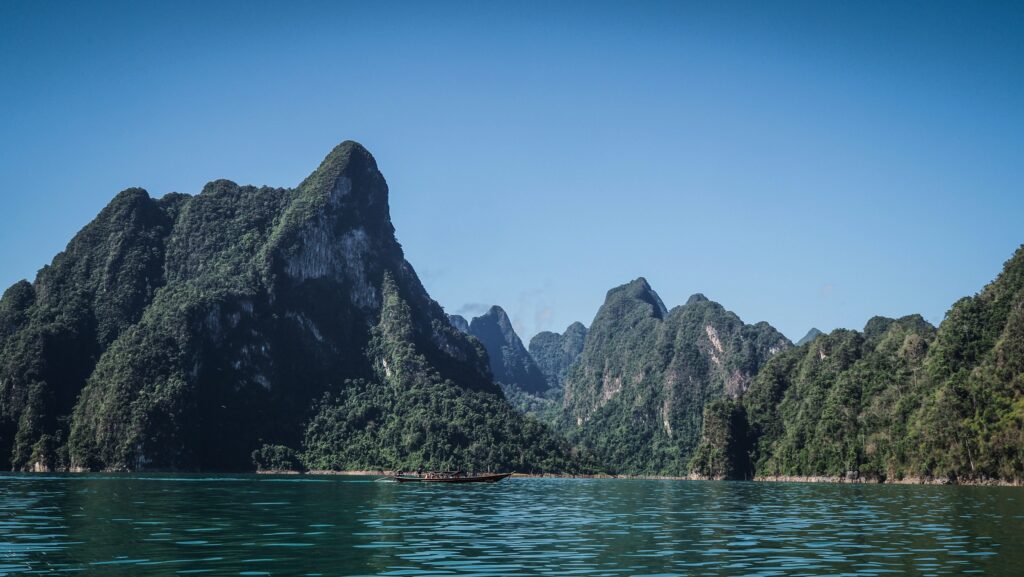
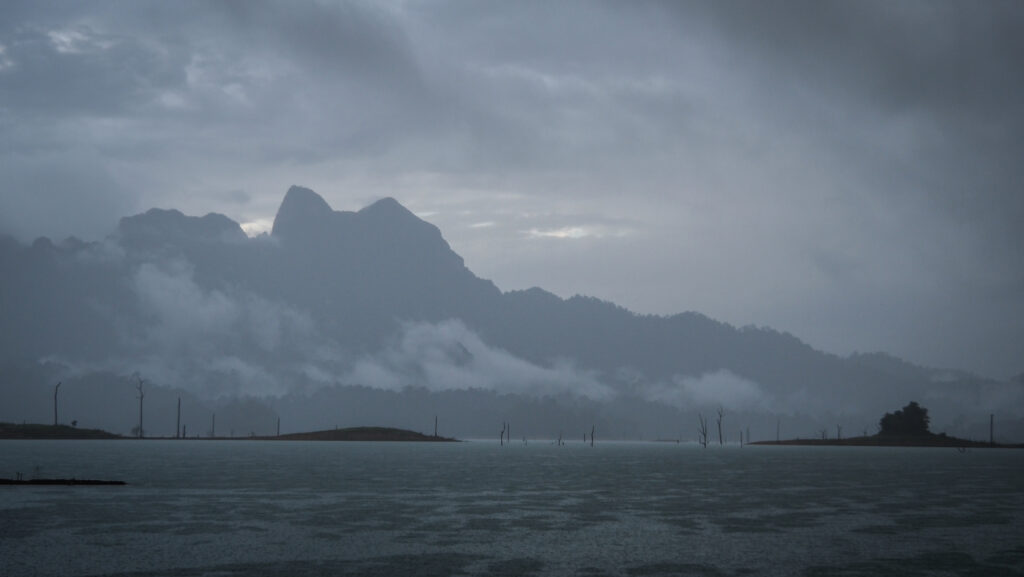
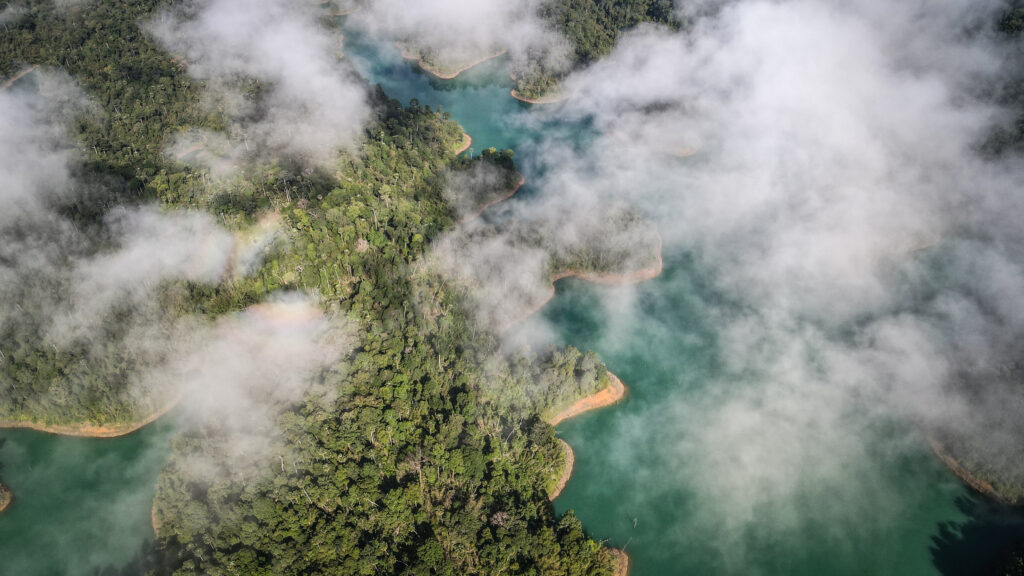
Surrounded by limestone mountains
Khao Sok National Park, Thailand
The boat ride is incredibly scenic

When to go?

It’s a humid jungle environment with high temperatures and heavy rains year-round. The rain intensifies during the months of June through November but it shouldn’t discourage you from visiting this beautiful place. Just be prepared to get wet at any time of the year. Tropical downpours can be strong but usually, they don’t last for long. After all, it’s a rainforest!

If you really hate rain, February is the driest month on average with 30mm of rainfall, so plan your trip at this time.

Khao Sok National Park, Thailand
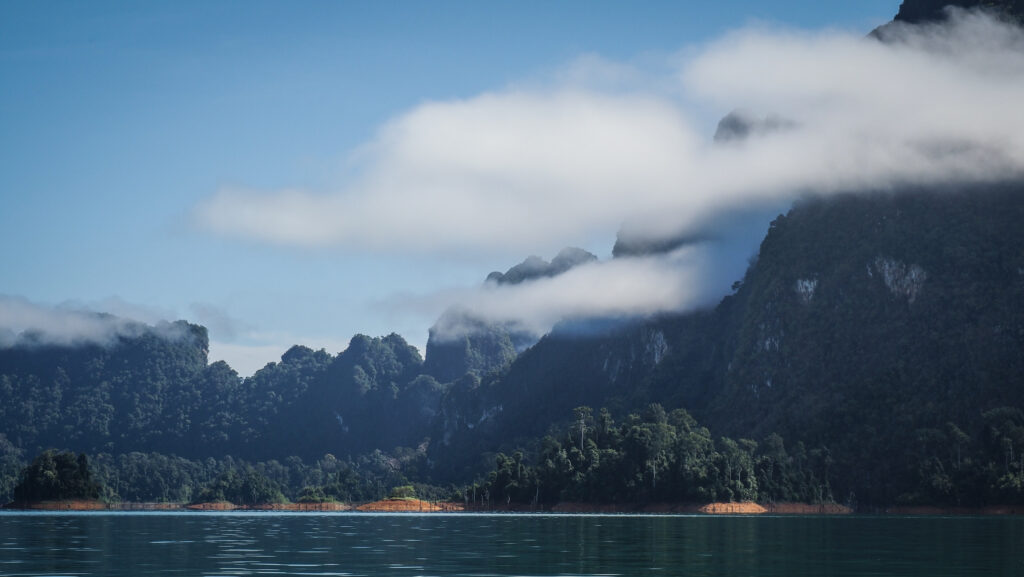
Low clouds in the morning hours
Khao Sok National Park, Thailand
Morning hours are the most photogenic so have your camera ready!

How long to stay?

At least 3 days should be counted to fully enjoy the visit to Khao Sok. I spent 2 days on the trip to Cheow Larn Lake and 1 additional day hanging around the village and enjoying a guided night jungle walk. Anything shorter would have felt rushed.

Where to stay?

I booked a room at Khao Sok Jungle Huts Resort which was an excellent choice. Free parking, mosquito net, great restaurant and unbelievably friendly host. I arranged all my trips here. The place is very green with easy access to the river and you can occasionally spot some monkeys.

Khao Sok National Park, Thailand
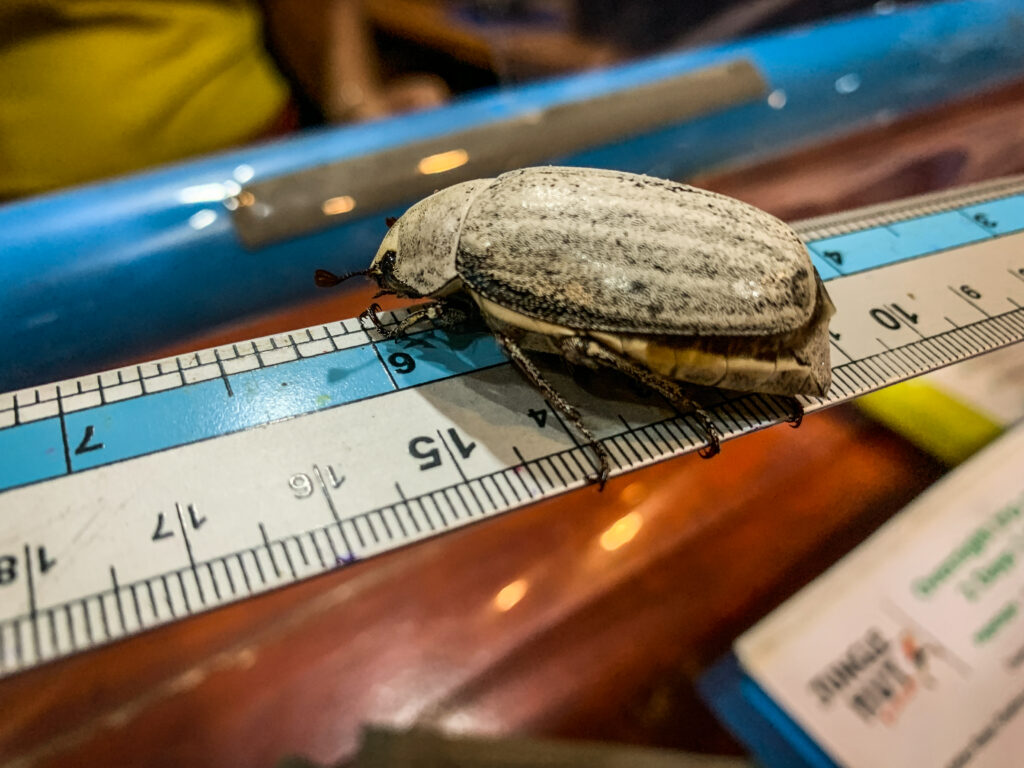
This huge insect just landed at the reception while I was checking in

What to take with you?

You won’t need much, but make sure these items find a place in your bag:

  • Rain jacket
  • Sports shoes or trekking sandals that can get wet (for the cave tour)
  • Long trousers and long socks
  • Swimsuit
  • Insect repellant with DEET (there will be leeches)
  • Sunglasses
  • Hat

National Park fees and opening hours

According to the official website, as of June 2022, the entrance fees for foreigners are 200 THB for adults and 100 THB for children 3-14 years old. Thai citizens pay 40 Baht for adults and 20 Baht for children. The entrance fees are valid for multiple days only if staying inside the park, either when camping or staying at raft houses on the lake. In other cases, you will have to buy a new ticket every day, which I find a bit ridiculous. After coming back from the tour of raft houses, I still wanted to do the guided night walk and I had to pay again for the new entrance ticket.

Luckily, it seems that the prices went down because when I was visiting in March 2022, the entrance ticket was 300 THB.

The park is open from 6 AM to 6 PM daily, all year round. Entering after 6 PM is possible if you do a night walk with a guide.

Khao Sok National Park, Thailand
Cheow Lan Lake

What to do in Khao Sok?

The park can be split into two popular areas, which are 67 km apart. The first one is around the national park headquarters and Khao Sok Village, where it is possible to hike a number of trails, join guided night walks, visit waterfalls or take part in activities on the river. The second one is around Cheow Lan Lake and is popular for boat trips, raft houses, caves and limestone mountains.

source: www.thainationalparks.com

Overnight trip to Cheow Lan Lake

I booked a 2D 1N trip at my hotel one day in advance. The cost should be around 2,500 THB but ask if the entrance ticket to the national park is included.

The minibus picked me and some other guests up and we were taken to Cheow Lan Lake Pier where we bought national park tickets and boarded a long tail boat. The ride on the lake was extremely fun. Interestingly, the lake was created in 1982 as part of a damming project to provide hydroelectricity to the south of Thailand. It stretches over an area of 165 km2. We were surrounded by limestone hills and it all felt like going deeper into some unknown Jurrasic Park.

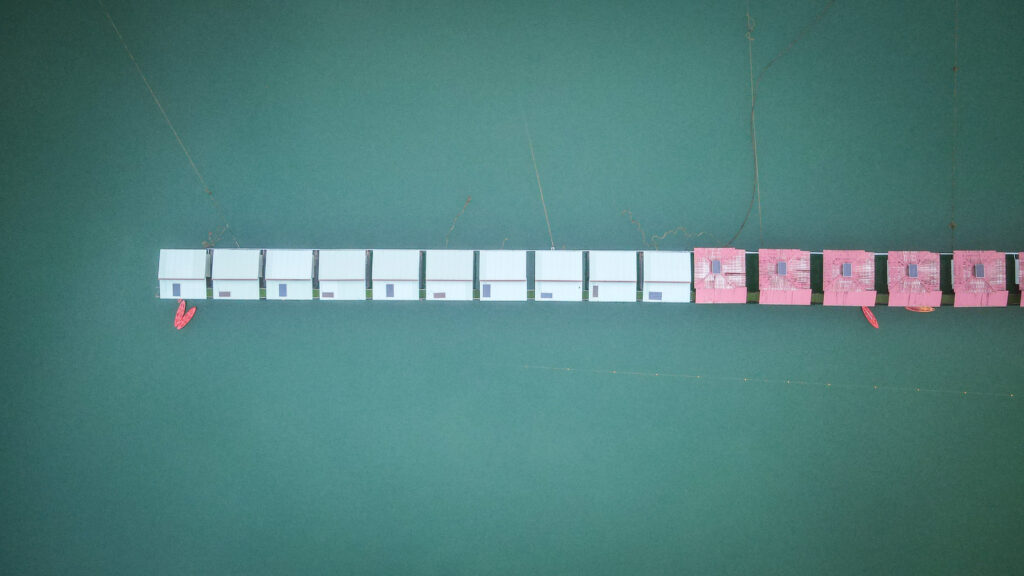
There are many raft houses spread all over the lake, from which it is possible to visit caves, viewpoints, limestone hills and get to some exciting trails. The one I stayed at was called the Smiley Lakehouse. Very pleasant place with simple rooms and private bathrooms. As I was travelling alone, I was asked to share a room with another solo traveller. Of course, I agreed and ended up with a new friend from Germany.

Khao Sok National Park, Thailand
Raft houses on the lake
Khao Sok National Park, Thailand
Imagine waking up in these surroundings!
Khao Sok National Park, Thailand
Kayaks are available and paddling around is a great way to kill some time

We had a bit over one hour to chill out, swim in the lake or use one of many available kayaks. I decided to paddle around a bit but it was really tough in that sunny weather!

Then, it was time to return to the boat and head to Nam Thalu Cave. For me, it was the most adventurous part of visiting Khao Sok National Park. Once inside the cave, you wade or maybe even have to swim through the water. Keep all your valuables in a waterproof bag or ask your guide to store them for you. Due to the weather forecast for the afternoon which included rain, we were a bit hurried. Apparently, it may be extremely dangerous if you get caught inside the cave in heavy rain as the water level rises very fast.

We saw plenty of bats and spiders that can be recognized by their eyes reflecting the light. There could be also some snakes around but we didn’t see any. It is definitely not a place to go with small kids and you should wear proper shoes, not flip-flops.

As soon as we exited the cave, the heavy rain started so we were really just in time! It was raining the whole way back to the boat. Rain in the jungle means one thing. Be careful of leeches! A few people in our group were affected so it’s best to stop from time to time and check your body and the body of your buddy. They can move really fast so pay attention to the area around your ankles but also under your armpits.

We went back to the raft house where we had time to relax while waiting for dinner. It was really amazing to see when the rain stopped and clouds were rolling over the massive limestone hills.

Khao Sok National Park, Thailand
Limestone hills after the rain

The night was calm and in the early morning, we boarded the boat again, this time looking for wildlife. We saw a lot of monkeys and some hornbills, but unfortunately no elephants.

Khao Sok National Park, Thailand
Hornbills were seen in the early morning
Khao Sok National Park, Thailand
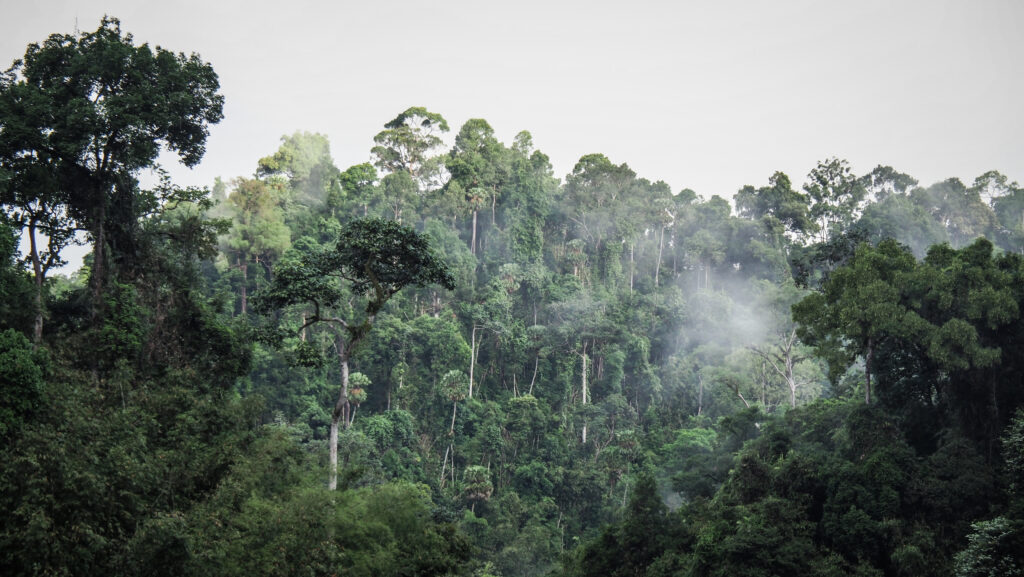
Misty rainforest

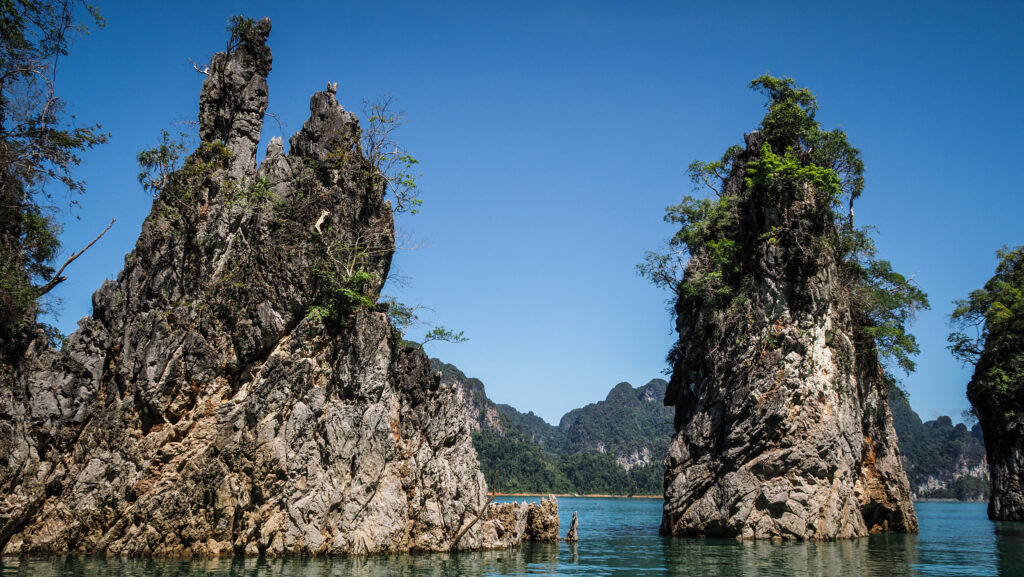
After breakfast, it was time to pack the bags and go back to the pier, with two more stops on the way: Khao Sam Kloe, which is a group of 3 beautiful rocks, and Pra Kie Phet Cave, a small and this time without water but with bats and some huge spiders which scared the shit out of me, even though they are harmless for humans.

Khao Sok National Park, Thailand
Khao Sam Kloe
Khao Sok National Park, Thailand
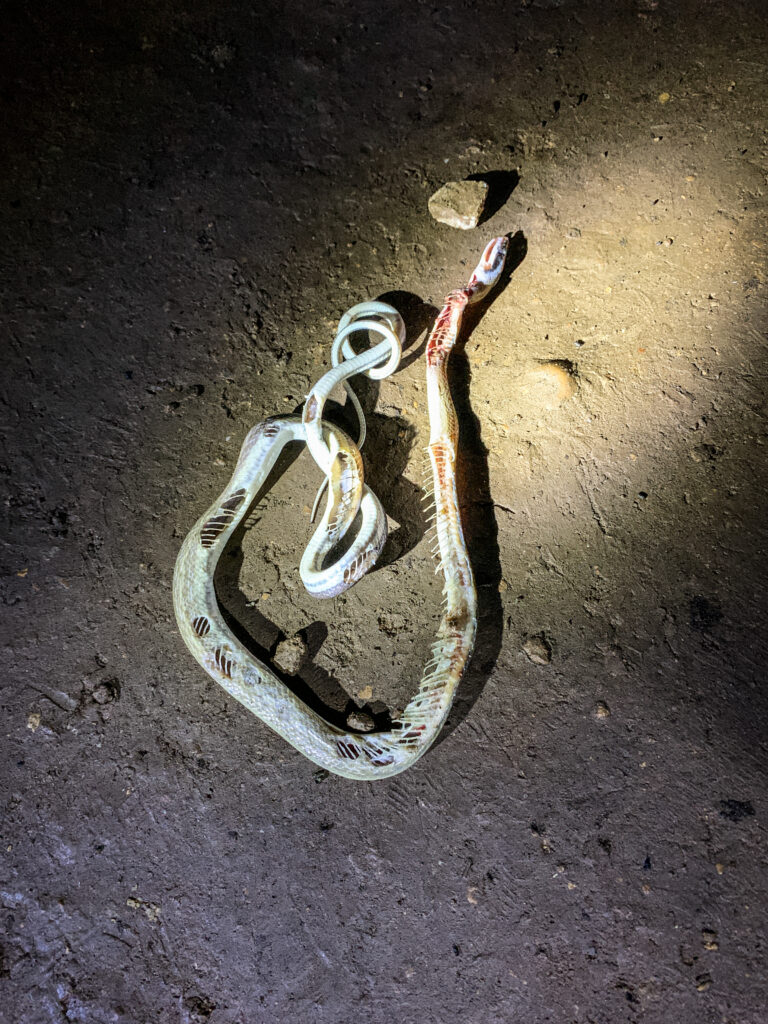
It used to be a snake…
Khao Sok National Park, Thailand
Plenty of spiders inside Pra Kie Phet Cave

In the end, the minibus transported us back to Khao Sok Village with a short lunch stop at Ratchaprapha Dam Scenic Viewpoint. All in all, it was a wonderful trip, absolutely worth the price. I highly recommend spending the night at the lake instead of doing only a day trip. It will add so much more to the experience!

You can also arrange your trip independently, by arriving at Cheow Lan Lake Pier and getting a boat from there to the floating house that you booked before or simply arranging the boat trip for a few hours. However, to see all the other attractions around, I believe it’s better to go for an organized trip with a guide, which includes an overnight stay in a raft house.

Night jungle walk

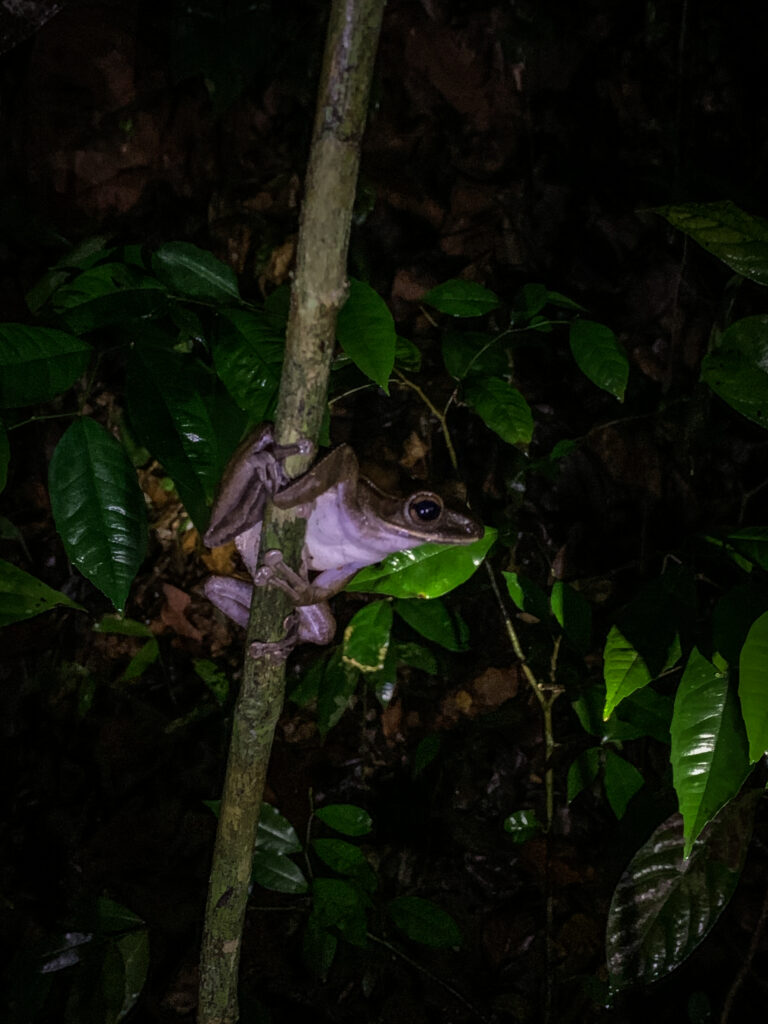
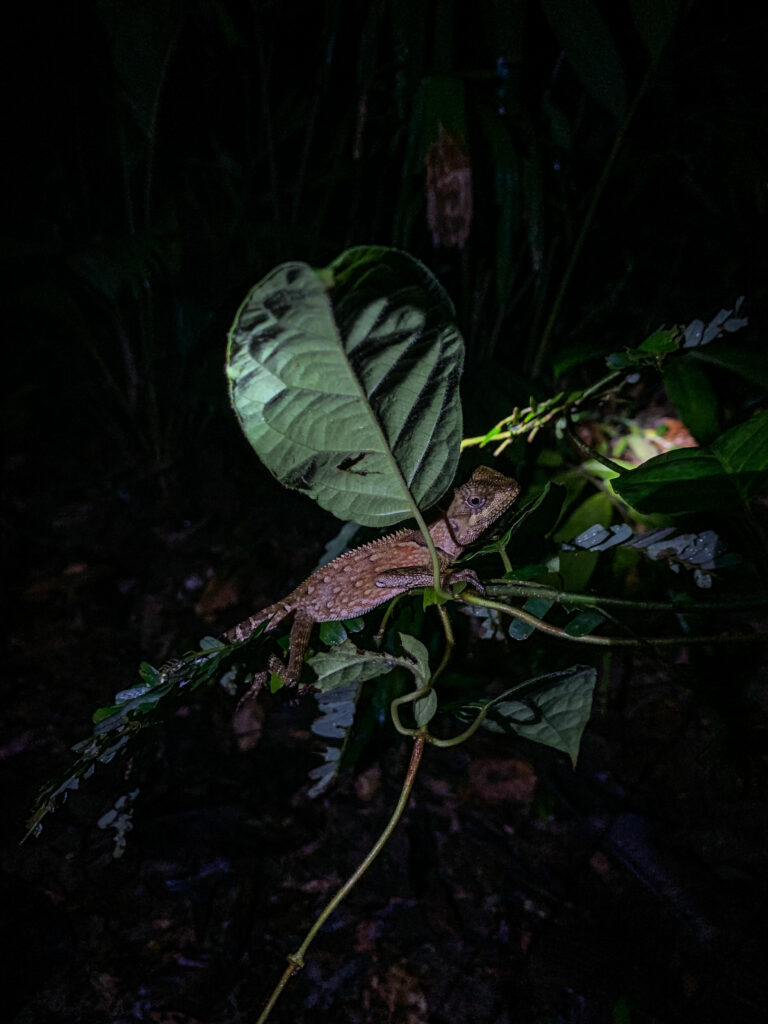
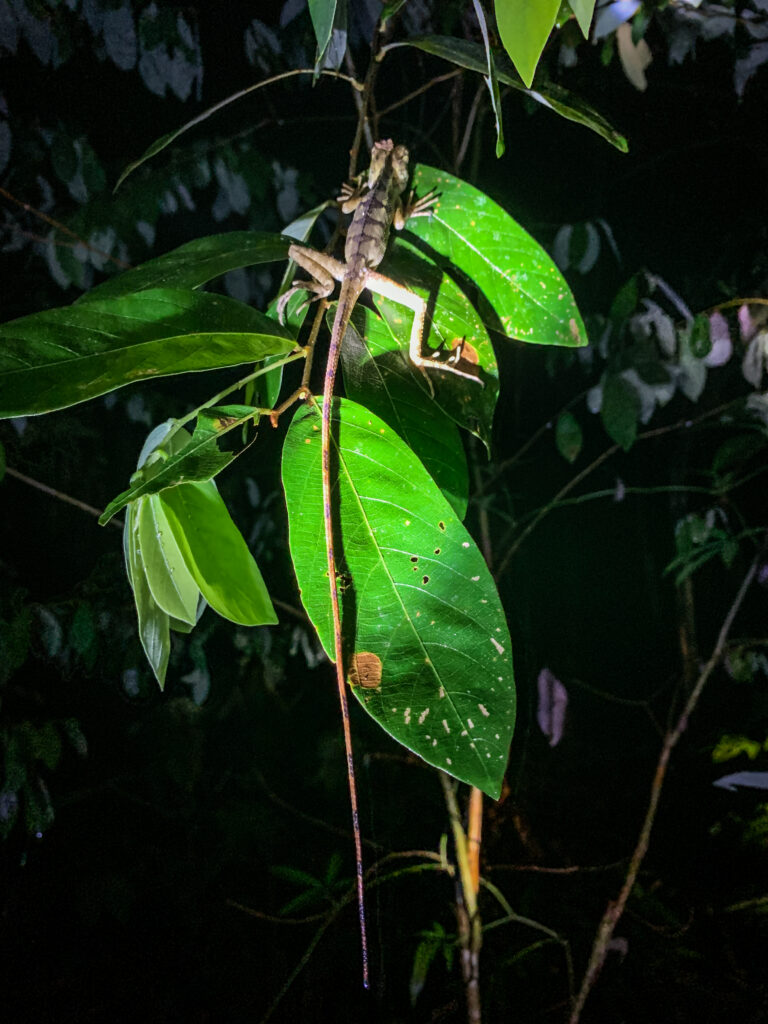
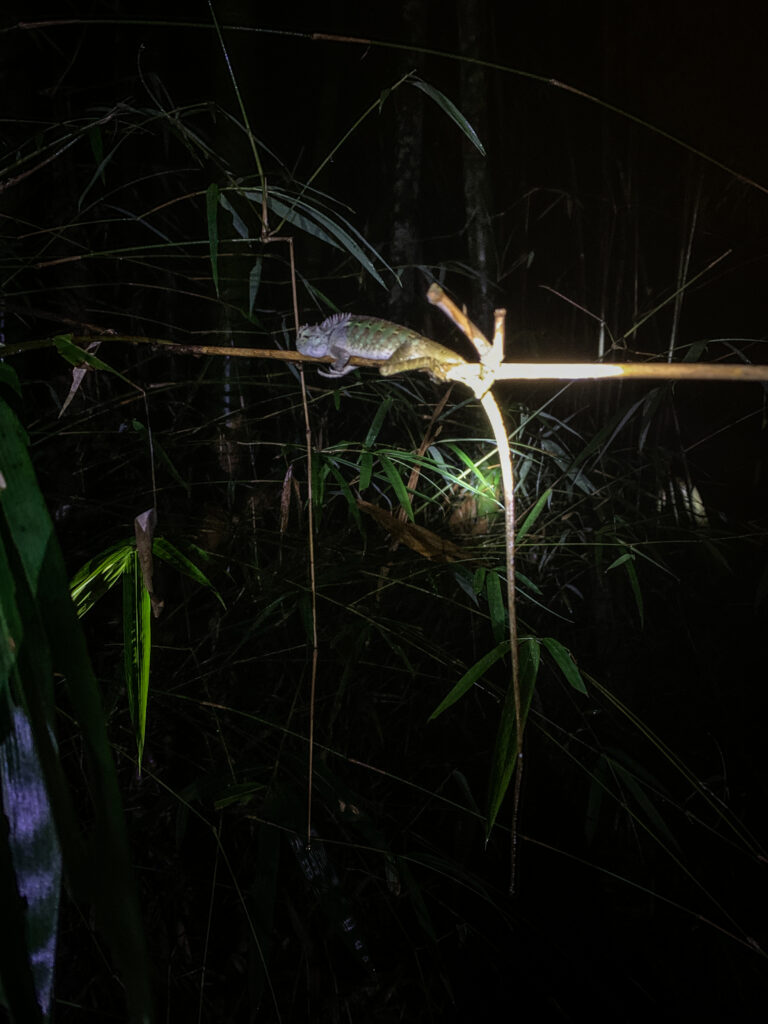
It’s actually a really fun experience, even though you don’t go deep in the jungle but rather follow the dirt road, around the park’s headquarters. We saw some frogs, snakes, spiders, and lizards as well as stick insects.

Rafflesia flower hike

Rafflesia is a parasitic plant with no leaves or roots on its own. It invades the liana vines and like a parasite, it absorbs all the vine’s nutrients. Once a year small buds begin to develop beneath the root bark of the vine. As they mature, they swell, breaking through the bark. They then burst open revealing the massive flower, which can be up to 80 cm! I haven’t done this hike but it’s definitely on my list, even in other places in South East Asia!

Ton Kloi Waterfall

One of the hikes that starts at the national park headquarters. It is 7 km long and runs along the Sok River. The first 2.9 km of the trail, until a checkpoint guarded by rangers, doesn’t require any guide to walk. However, if you want to continue all the way to the end, the guide is obligatory. There are many other, smaller waterfalls along that trail.

Sip Et Chan Falls

This 11-tiered waterfall is accessible by a nearly 4 km long trail starting from the north side of the campground next to the park’s headquarters. You can walk the first 400-50 meters on a wooden boardwalk freely, but a guide is required for the remaining distance.

Mae Yai Waterfall

It’s outside of the national park and you can just see it from the road while driving from Khao Lak. Otherwise, I wouldn’t say that it’s worth a dedicated trip.

Khao Sok Elephant Sanctuary

It’s one of the sanctuaries with really good comments from visitors. You may be able to make food for the elephants, feed and walk with them, but riding or bathing is absolutely forbidden.

River tubing or bamboo rafting

Both activities are especially fun in wet months when the water level in the river is high. It’s best to arrange it directly at your hotel or at street agencies.

Off the beaten trail – Khlong Phanom National Park

Rarely visited park, with a very nice loop hiking trail which should take you under 2 hours. You have a couple of viewpoints along the way until you finally arrive at the big tree. The entrance fee is quite cheap at 100 THB.

Khao Sok National Park, Thailand
Around Khlong Phanom National Park

Summary

It was a magical time in nature and if you are looking for something else than Thai islands, look no further. There are plenty of activities to do both for very active people and also for those lazier ones. Spend the night in a raft house, waking up early to admire the morning mist and listen to the sounds of the jungle. This is one of these experiences that you will remember for a lifetime. I am a big nature enthusiast and I had 3 days of an absolute blast.

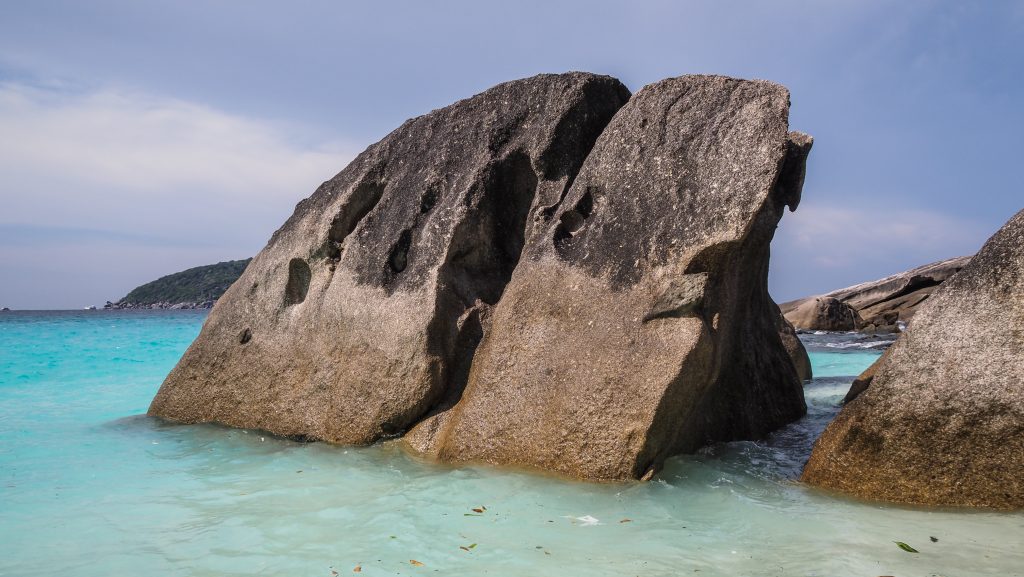
“Similan” is a Yawi (a Malayan dialect) word which means nine. The park had originally nine islands numbered 1 to 9 but expanded to include two more remote islands back in 1998: Ko Tachai and Ko Bon.

Crystal clear waters filled with marine life, white sand beaches and tropical forest. All of these made Similan Islands incredibly popular and unfortunately, overcrowded. National Park authorities have been constantly reducing the number of tourists allowed to visit the islands and as of today, it’s not possible anymore to stay overnight at any of the islands in the archipelago.
Similan Islands in Thailand
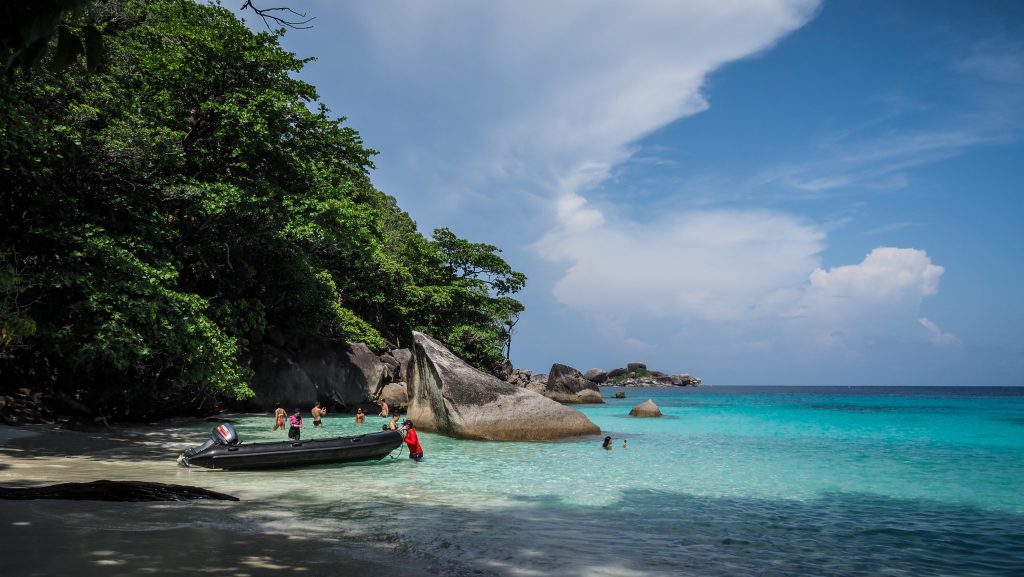
Similan Islands have rocky shores

The islands are located about 70 km off the coast in Phang Nga Province and the nearest popular towns on the mainland are Khao Lak and Phuket.

How to get to Similan Islands?

The Similans can be reached only by tour company-operated speedboats. The best is to base yourself in Khao Lak and ask around at travel agents or your accommodation.

If you are into diving, you may want to check out the offers of liveaboard dive boats which are ideal for multiple days adventures.

Thap Lamu Pier is the main pier for boats operating to the islands but there are several others in the area, used by various tour operators so make sure you check where to check in for the tour if pick-up from the hotel isn’t included.
You can also book your tour in Phuket but that will significantly extend the duration of the trip as you have to add a few hours in a minibus, which means super early departure and late arrival back to the hotel. I wouldn’t recommend that, as you will also miss the chance to explore Khao Lak, which is a nice place itself.
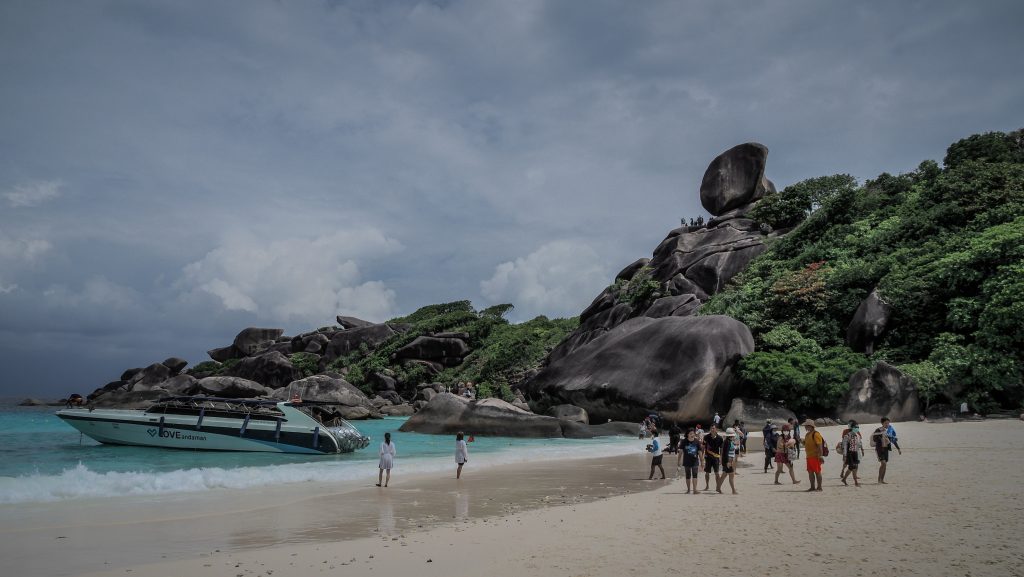
After doing my research, I decided to book the tour online via Klook.com. The price was significantly cheaper compared to the official one on the website of Love Andaman.

Similan Islands in Thailand
Sailboat Rock on Koh Similan

Price and entrance fees

The prices of one day trip should vary between 2,000 – 3,500 THB, depending on what is included. Back in March 2022, the trip cost me 2.200 THB and the National Park entrance fee was included. Always make sure that it’s the same in your case, to avoid any surprises at the pier or upon arrival to the islands. Especially as this is one of the most expensive national parks in Thailand.
As of June 2022, the entrance fees for Similan Islands are 500 THB for adults and 250 THB for children 3-14 years old. These are the prices for foreign tourists. As usual in Thailand, local citizens will pay significantly less: 100 THB for adults and 50 THB for children.

Similan Islands in Thailand
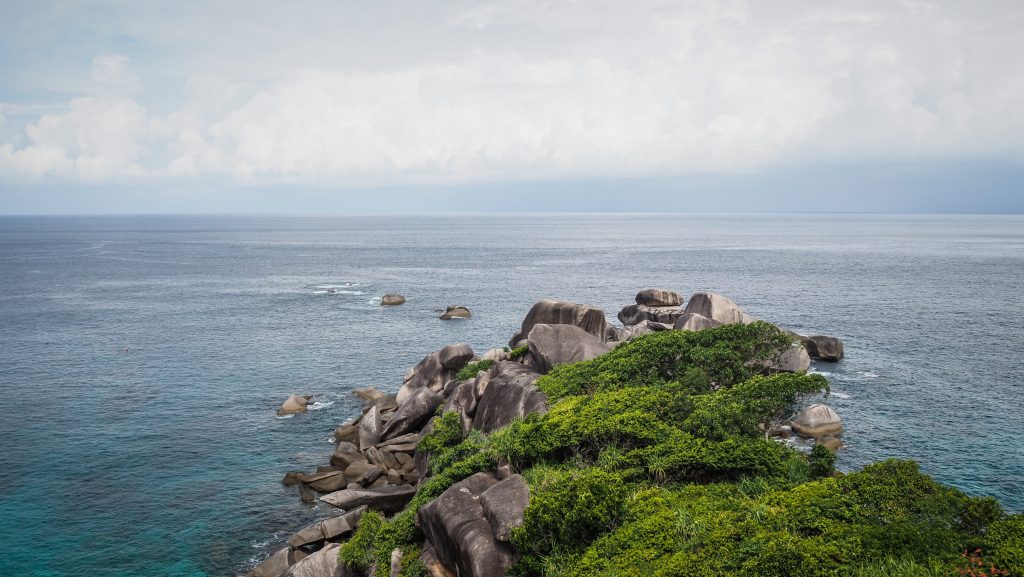
One of the views from Sailboat Rock on Koh Similan

When to go?

The best time to visit Similan Islands is from December to April, outside of the rainy season. The waters are clear, making it the best time for scuba diving and snorkelling. The weather is stable and showers are rather occasional.

The park is usually closed for visitors from the 15th of May until the 15th of October but it may close even earlier if the weather is terrible. The daily opening hours are from 8 AM to 4 PM.

Similan Islands in Thailand
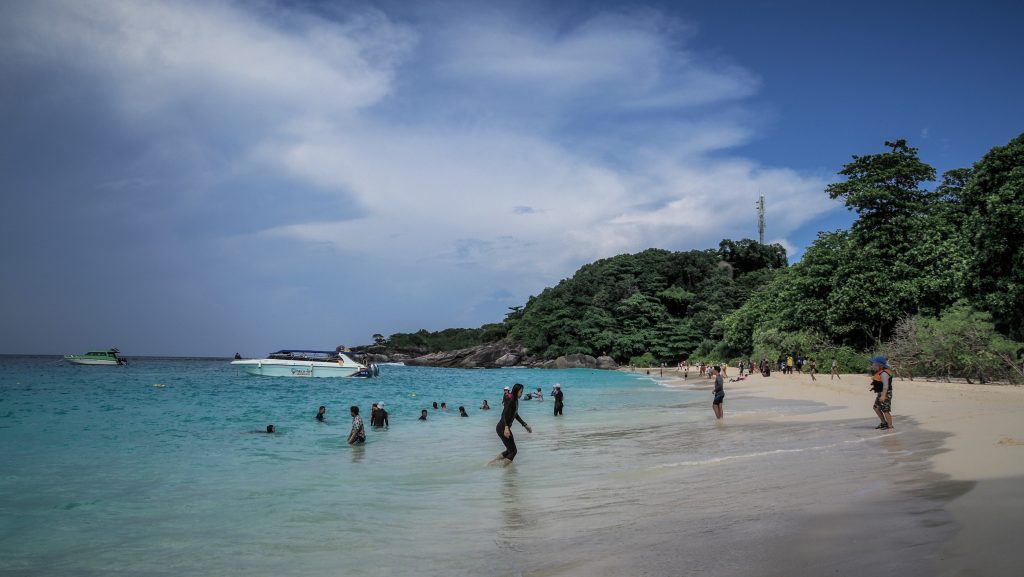
The beach on Koh Miang An Island
Similan Islands in Thailand
The beach on Koh Miang An Island

How long to stay?

Camping or any other kind of accommodation is not available on the islands. Therefore, if you don’t join liveaboard diving boats, one day trip will be your only choice to discover that area.

The trip plan

The boat operated by Love Andaman is leaving Thap Lamu Pier at about 8:30 AM but you certainly should arrive earlier to check in and to have enough time to enjoy the breakfast! Yes, breakfast is included in the price and it’s actually a really good one, with a wide selection of snacks and drinks. After checking in, you will receive a colourful wristband corresponding to the group that you have been assigned to. The guide will call your number and give you safety instructions as well as general talk about the plan for the day.

The first stop is at Island No. 8, also called Koh Similan. That’s the most popular spot with iconic Sail Boat Rock and the viewpoint up there. The panorama over the turquoise-blue shallow waters of Donald Duck Bay is indeed spectacular. A path through the rocks leads to the top but isn’t too difficult. You will also get enough time to have a walk, swim or just sit on the beach.

Next, the boat stops around Island No. 9, also called Koh Ba Ngu for snorkelling. Of course, it’s an optional activity but highly recommended as you will see plenty of fish or even a turtle if you are lucky.

At about 12:00, there it’s time for Thai buffet lunch. After a nice surprise in the morning with a quality breakfast, the lunch was delicious too. I have done several boat trips during my 5-month stay in Thailand and the food delivered by Love Andaman was definitely the best.

After lunch, there is another stop for snorkelling at Island No. 7, also called Bayu Island. Some people spot a turtle here but unfortunately, I wasn’t so lucky.

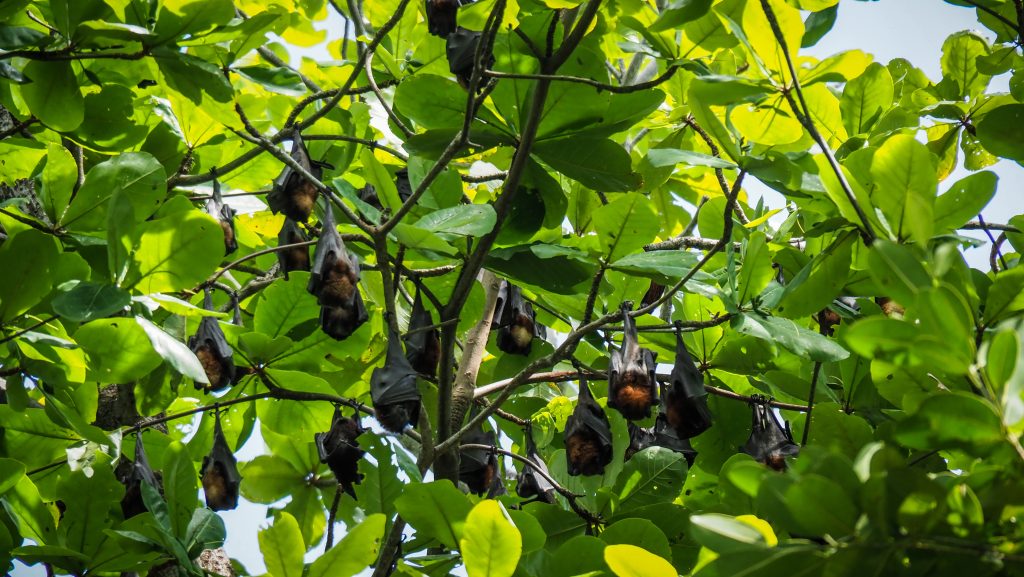
The last stop is at Island No. 4, also called Koh Miang An Island. There is a nice path through the forest connecting two beautiful beaches where you can enjoy water activities or simply chill on the sand. Don’t forget to look up as you might be able to see a lot of bats, hanging on the branches and resting before an evening meal.

Similan Islands in Thailand
Plenty of bats up in the trees!

The boat leaves Similan Islands at about 15:15 and arrives back at the pier at about 16:30. Needless to say, above mentioned program is the general one and it can be changed depending on the weather and sea conditions.

Summary

All in all, it was a day well spent. Everything was on an excellent level: food quality, attention of guides, snorkelling spots, and comfort on the boat. And if you get a good promo on Klook.com, the value is amazing. I would definitely go again!

Koh Yao Yai (South Island) is the bigger sister of Koh Yao Noi (North Island), located in the middle of the spectacular Phang Nga Bay in the Andaman Sea, between Krabi and Phuket. It’s much less developed than touristy Phuket, which makes it an ideal place to experience a more real and rural Thai island atmosphere. The majority of the population is Muslim so don’t be surprised to see mosques and hear calls for prayer.

It’s an excellent place to be if you love relaxing rather than hardcore parties which you may find in Phuket or Koh Phi Phi. Let me suggest to you how to organize a trip there and what is worth visiting!

How to get to Koh Yao Yai?

The island can be reached only by sea from several places, but the easiest would be to start in Phuket or in Krabi. You could also look for speedboat connections from Koh Lanta or Koh Lipe. I decided to take a speedboat from Krabi and the experience was very smooth.

Koh Yao Yai Island, Thailand

When to go?

The best time to visit Koh Yao Yai is the same as for all the other islands in that area, from November to May, outside of the rainy season. The weather is stable and showers are rather occasional. In other months, accommodation may be cheaper but it’s better to check the boat schedule well in advance as may get wet frequently.

How long to stay?

Koh Yao Yai is quite a small island but you should consider the possibilities of several day trips: Phang Nga Bay, Koh Yao Noi or Hong Island are just some of the most popular ones. I would say that at least 3 – 4 full days would be needed to fully discover the region if you decide to base yourself here and not on Koh Yao Noi.

Koh Yao Yai Island, Thailand
Low tide hours
Koh Yao Yai Island, Thailand
Swimming might be tough or impossible in some places during low tide

Where to stay?

Hotels, bungalows and resorts, all of these are available on the island at various prices. I stayed in KLONGBON GARDEN HOME for about 750 THB per night. It was located in the south of Chong Lard Pier so you will need a motorbike taxi to get there. It’s more like a budget option but the room was clean and it was really cool to sit and chill on the small terrace. You can easily make a reservation on booking.com or agoda.com.

Getting around the island

The easiest would be to rent a motorbike and move around the island at your own pace. If you don’t want to ride it, you should consider tuk-tuks, bicycles or long-tail boats.

There are guys offering motorbikes already at the Chong Lard Pier, but I usually prefer renting from a place with trustworthy reviews, therefore, I just did it at my guesthouse.

Beaches

Lam Haed Beach

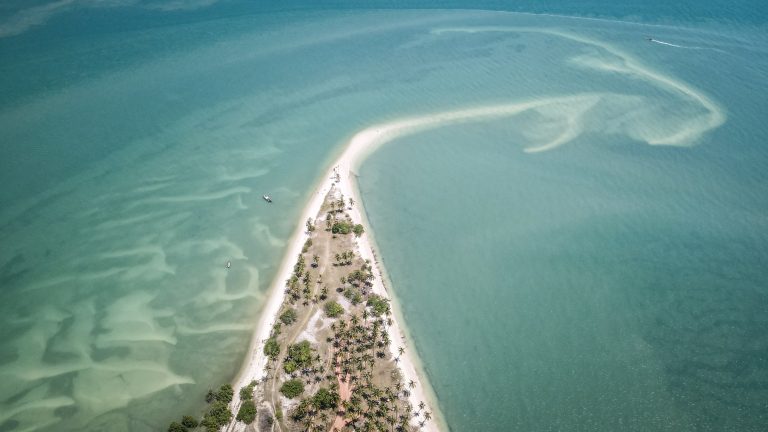
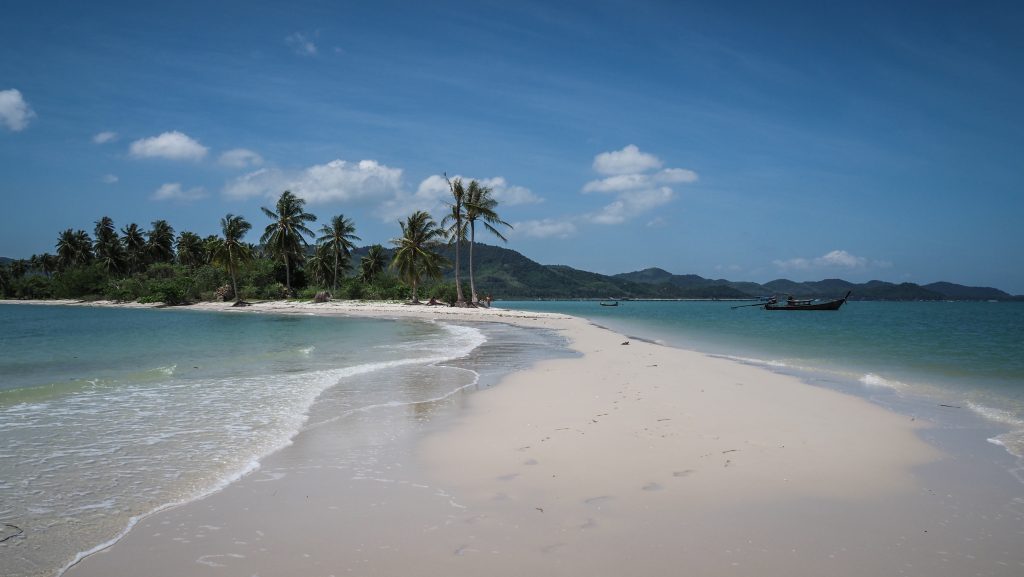
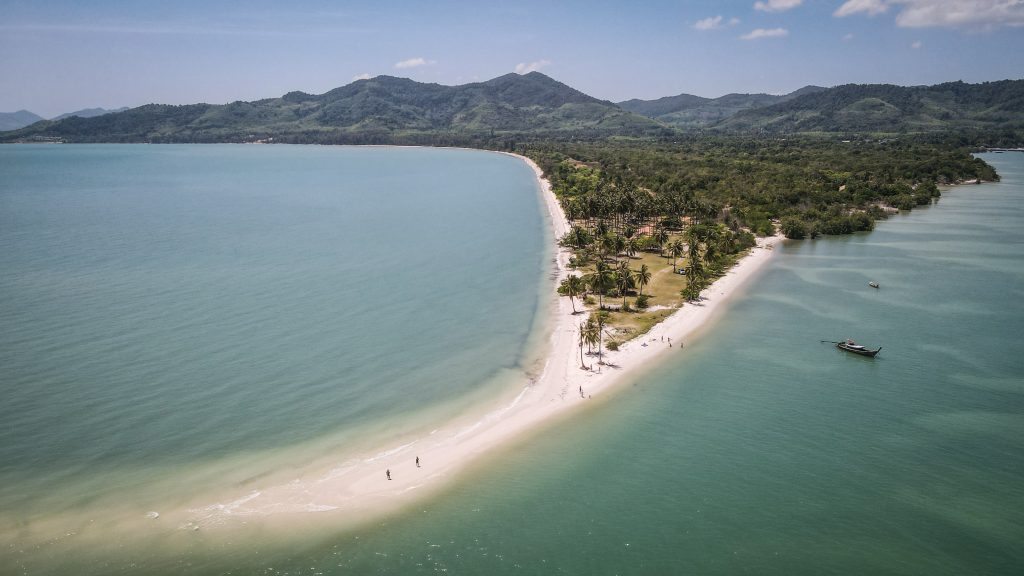
One of the most beautiful and scenic beaches in Thailand. It’s pretty long, with many coconut palm trees in the background, but what makes it absolutely amazing is the northern tip that turns into a sandbar that goes far into the sea and is perfectly walkable.

Koh Yao Yai Island, Thailand
Lam Haed Beach with coconut palms in the background
Koh Yao Yai Island, Thailand
Aerial view of Lam Haed Beach
Koh Yao Yai Island, Thailand
The tip of the beach turns into an amazing sandbar
Koh Yao Yai Island, Thailand
What scenery for beach walks!

Son Bay Beach

Great beach, almost deserted. It is long but narrow so in high tide, there is not a lot of space. It is surrounded by a big bay, which gives it an additional plus.

Loh PARed Beach

Decent place for swimming with lots of restaurants and small shops nearby. Perfect spot to catch the sunset.

Loh Had Beach

Another white sandy beach that is quiet and suitable for relaxing with local restaurants nearby.

Ao Muong Beach

Located a bit more south of Loh Had Beach. Unfortunately, there is a lot of trash around.

Ao Sai Beach

The pleasant beach down a bumpy track. If you feel unsure about riding a bike, just park and walk the remaining distance. You can see hermit crabs scuttling around and simply enjoy the beautiful views. It’s worth visiting the fishing village too, to have a closer look at how locals spend their days.

Koh Yao Yai Island, Thailand
Fisherman preparing the boat
Koh Yao Yai Island, Thailand
Locals spend their days catching seafood

Nok Ok Cape

An adventurous journey, the last piece leads partly through dense jungle and a creek. Better just to park your motorbike and walk. Nevertheless, the beach is completely deserted and absolutely worth a visit.

Other attractions around Koh Yao Yai

Viewpoint

It is located very close to Klongbon Garden Home if you decide to stay there. Climb the stairs and enjoy the spot overlooking the north of Koh Yao Yai island as well as Hong Island and other smaller islands around.

Chong Lard Pier

Arrival and departure point from Koh Yao Yai. You may get a longtail boat to the sister island of Koh Yao Noi and other more distant places too.

Day trips from Koh Yao Yai

Koh Yao Noi

Koh Yao Noi (North Island) is the quieter and smaller sister of Koh Yao Yai (South Island). It can be easily accessed in a few minutes by boat from Chong Lard Pier. It doesn’t make sense to transport your motorbike, just rent one on the other side and explore the most interesting places: Klong Jark Beach, Tha Khao Beach or Mankei Bay. Read more about exploring the island in one of my previous posts here.

Koh Yao Noi, Thailand
Amazing Mankei Bay on Koh Yao Noi Island

Koh Hong, Koh Pakbia, Koh Lao Lading

It’s a popular day trip from Krabi, but a long-tail boat trip can be easily arranged from Koh Yao Yai too and in fact, the islands are even closer. There will be plenty of snorkelling opportunities in the clear waters of Lading Island, Pakbia Island, and Hong Lagoon. The best beach, surrounded by limestone cliffs is on Hong Island, where most likely you will enjoy your lunch. Don’t forget to visit the viewpoint! More about Hong Island and Lading Island can be read in my previous post here.

Koh Hong, Thailand
Perfect beach on Koh Hong Island

Phang-Nga Bay

The boat trip here is one of the best that can be done in Thailand. The whole area is characterized by limestone cliffs and rock formations, as well as mangrove forests and many small islands. There are many popular places to stop by and explore further. Koh Tapu is known as James Bond Island for its appearance in a Bond film. Koh Phanak Island attracts tourists with its caves and lagoons and at Ko Hong, you have the chance to do an awesome kayak trip.

Summary

I have definitely enjoyed my stay on Koh Yao Yai and there are enough attractions, not only on the island but in the close surroundings, to justify a few days stay. It’s a much calmer place than Phuket or Koh Phi Phi, but still in the middle of beautiful Phan-Nga Bay.

You may ask, which of the two islands is better to base yourself on, Koh Yao Yai or Koh Yao Noi? In my opinion, Koh Yao Noi is a nicer and more charming place so I would recommend booking your accommodation there and simply doing a full-day trip to Koh Yao Yai.

Koh Yao Noi (North Island) is the quieter and smaller sister of Koh Yao Yai (South Island), located in the middle of the spectacular Phang Nga Bay, between Krabi and Phuket. The majority of about 4.000 inhabitants are Muslim.

It’s an excellent place to be if you love relaxing rather than hardcore parties which you may find in Phuket or Koh Phi Phi. Let me suggest to you how to organize a trip there and what is worth visiting!

How to get to Koh Yao Noi?

The island can be reached only by sea from several places, but the easiest would be to start in Phuket or in Krabi. You could also look for speedboat connections from Koh Lanta or Koh Lipe. I decided to take a speedboat from Krabi and the experience was very smooth.

When to go?

The best time to visit Koh Yao Noi is the same as for all the other islands in that area, from November to May, outside of the rainy season. The weather is stable and showers are rather occasional. In other months, accommodation may be cheaper but it’s better to check the boat schedule well in advance.

How long to stay?

Koh Yao Noi is quite a small island but you should take into consideration the possibilities of several day trips: Phang Nga Bay, Koh Yao Yai or Hong Island are just some of the most popular ones. I would say that at least 3 – 4 full days would be needed to fully discover the region.

Where to stay?

Hotels, bungalows and resorts, all of these are available on the island at various prices. I stayed in Mookdaman Bungalow for about 800 THB per night. It was located within walking distance of Klong Jark Beach and there were some restaurants nearby too. The room was clean and it was really cool to sit and chill on the small terrace. You can easily make a reservation on booking.com or agoda.com.

Koh Yao Noi, Thailand
Koi Roi Island can be seen from An Pao Pier

Getting around the island

The easiest would be to rent a motorbike and move around the island at your own pace. If you don’t want to ride it, you should consider tuk-tuks, bicycles or long-tail boats.

There are guys offering motorbikes already at the Manoh Pier, but I usually prefer renting from a place with trustworthy reviews, therefore, I walked for about 15 minutes to Fortune Travel, which I can totally recommend.

Beaches

Klong Jark Beach

One of the best, if not the best beach on the island. It’s quite narrow but with such great views. Little beach bars are very nice too and you can feel so relaxed!

Koh Yao Noi, Thailand
Small islands seen from the eastern coast

Tha Khao Beach

Great beach at high tide. At low tide you have to walk through wet sand for a while and even when you arrive at the water, it looks sandy and is still shallow. Countless crabs scurry across the ocean floor, so don’t forget your shoes.

Koh Yao Noi, Thailand
The aerial view of Tha Khao Beach
Koh Yao Noi, Thailand
The village near Tha Khao Beach

Little Long Beach

Not so easy to get to and the road can get quite muddy but most likely you will have the beach for yourself.

Long Beach

A little out of the way but a nice beach to relax at. No vendors at this place so bring your own drink and food.

Mankei Bay

Secluded beach surrounded by high cliffs on the northern tip of the island. The way there is a bit tricky though. Continue past Paradise Hotel / Tree House Villas on a dirt forest road or park your motorbike on the side and walk the rest of the distance (500-700 meters). There are some weird abandoned constructions but just ignore them and head down towards the beach.

Koh Yao Noi, Thailand
The aerial views of Mankey Bay
Koh Yao Noi, Thailand
The northern tip of the island is very scenic from the air!

An alternative way is to rent a kayak at Tree House Villas and paddle there for about 15 minutes.

An Pao Beach

Suitable for watching the sunset, but the beach is just average.

The Hideout Beach

Another decent place for sunset but that’s pretty much it. Too muddy for chilling or swimming in the sea and quite tricky to reach on a motorbike so be careful.

Koh Yao Noi, Thailand
Small islands around The Hideout Beach at low tide

Other attractions around Koh Yao Noi

Ko Kudu Yai

Beautiful private island where the chances of being alone are very high. You can rent a kayak at Paradise Ko Yao Resort for about 200 THB and then paddle to the island or ask around for a long-tail boat taxi.

Koh Yao Noi, Thailand
The aerial view of Ko Kudu

Ko Nok

For a taste of a little adventure, I recommend renting a kayak (about 300 THB for 4 hours) and paddling for 30 minutes to reach the island. Once there, you can enjoy the beach and hike to the viewpoint. Alternatively, you can find a boat to take you there at Laem Sai Pier.

Day trips from Koh Yao Noi

Koh Yao Yai

The bigger sister of Koh Yao Noi. Koh Yao Yai literally means ‘long and large island’, and indeed it is one of the largest in Thailand, with a length of about 30 km. It can be easily accessed in a few minutes by boat from Mahon Pier. It doesn’t make sense to transport your motorbike, just rent one on the other side and explore the most interesting places: Lam Haed Beach, Loh Had Beach, Loh Pared Bay Beach or the viewpoint.

Koh Yao Yai Island, Thailand
Aerial View of Lam Haed Beach on Koh Yao Yai Island

Koh Hong, Koh Pakbia, Koh Lao Lading

It’s a popular day trip from Krabi, but a long-tail boat trip can be easily arranged from Koh Yao Noi too and in fact, the islands are even closer. There will be plenty of snorkelling opportunities in the clear waters of Lading Island, Pakbia Island, and Hong Lagoon. The best beach, surrounded by limestone cliffs is on Hong Island, where most likely you will enjoy your lunch. Don’t forget to visit the viewpoint! More about Hong Island and Lading Island can be read in my previous post here.

Koh Yao Noi, Thailand
Small islands around Koh Yao Noi
Koh Yao Noi, Thailand
The islands can be easily explored on a long-tail boat
Koh Hong, Thailand
Koh Hong Island, Thailand

Phang-Nga Bay

The boat trip here is one of the best that can be done in Thailand. The whole area is characterized by limestone cliffs and rock formations, as well as mangrove forests and many small islands. There are many popular places to stop by and explore further. Koh Tapu is known as James Bond Island for its appearance in a Bond film. Koh Phanak Island attracts tourists with its caves and lagoons and at Ko Hong you have the chance to do an awesome kayak trip.

Summary

I have definitely enjoyed my stay on Koh Yao Noi and there are enough attractions, not only on the island but in the close surroundings, to justify a few days’ stay. It’s a much calmer place than Phuket or Koh Phi Phi, but still in the middle of beautiful Phan-Nga Bay.

You may ask, which of the two islands is better to base yourself on, Koh Yao Yai or Koh Yao Noi? In my opinion, Koh Yao Noi is a nicer and more charming place so I would recommend booking your accommodation there and simply doing a full-day trip to Koh Yao Yai.

Phi Phi Islands are one of the most famous islands off the Andaman Coast of Thailand. The archipelago consists of two islands: Koh Phi Phi Don and Koh Phi Phi Leh. Only the first one is inhabited and all tourist amenities are there. It’s a vehicle-free island so prepare for a walk with your luggage. Alternatively, some hotel workers can move your luggage in a cart.

Koh Phi Phi Don was seriously damaged in the 2004 tsunami, where hundreds of people on the island lost their lives. Roughly 70% of the island’s infrastructure was destroyed. Before the great tsunami, it was a quiet and elegant resort. After the cataclysm, Thailand urgently needed money, so the tourist infrastructure of the island was quickly rebuilt, but it was done without any reasonable planning. Currently, Phi Phi Don has a reputation as a big, noisy party place. Then, is it still worth visiting? Let’s find out.

Koh Phi Phi, Thailand
Phi Phi Leh visible at the distance
Koh Phi Phi, Thailand
Panorama of Koh Phi Phi Leh

How to get to Koh Phi Phi?

The island can be reached only by sea from several places, such as Phuket, Krabi, Koh Lanta or Koh Lipe. You can choose between buying a one-day trip around the archipelago or using ferry/speedboat connections and deciding by yourself how long you want to stay. I decided to take a speedboat from Krabi with Bundhaya and the experience was very smooth. All the boats depart and arrive at Tonsai Pier.

When to go?

The best time to visit Koh Phi Phi is the same as for all the other islands in that area, from November to May, outside of the rainy season. The weather is stable and showers are rather occasional. In other months, accommodation may be cheaper but it’s better to check the boat schedule well in advance.

How long to stay?

Koh Phi Phi Don is a small island but you shouldn’t miss a day trip by long-tail boat around the archipelago, including Bamboo Island, Monkey Beach and Phi Phi Leh with the famous Maya Bay. I would say that 2 full days should be enough for all sights and some relaxing time at the beach.

Day trippers seem to be a bit in a rush, so I was very glad that I took my time and spent two nights on the island.

If you are a party type, consider staying longer as Koh Phi Phi Don is one of the biggest party hot spots in Thailand.

Where to stay?

Hotels, bungalows and resorts, all of these are available on the island at various prices. I stayed in Dee Dee Sea Front for about 1200 THB per night. It was located a bit further from all the noisy bars and the room was very comfortable. You can easily make a reservation on booking.com or agoda.com.

Dee Dee Sea Front
Address: 211 Moo 7, Phi Phi Island, Ao Nang, Amphoe Muang, Phi Phi Island, 81210, Thailand
Phone: +66 62 426 2265 GPS coordinates: N 007° 44.651, E 98° 46.462

Getting around the island

Options are limited to walking, riding a bicycle or renting a long-tail boat. Motorbikes are not available for tourists.

One day trip around the archipelago

I booked a tour with Visa Travel Team Phi Phi, just contacting them on Line. It was called One Day Tour By Longtail Boat With Sunset & Plankton and the cost was 850 THB (not including the 400 THB national park fee). Snorkel, mask, life jacket, water and lunch box were provided.

After meeting the staff in front of McDonald’s in Tonsai Bay, we boarded our long-tail boat and departed towards Shark Point for the first snorkelling stop. It’s just in front of Long Beach. We didn’t see any blacktip reef sharks but there were other colourful fish. The waters were a bit rough so it wasn’t very easy to swim around.

Next, we got our picnic lunch (fried rice) and continued to Bamboo Island for a bit longer stop. It’s a wonderful circular island filled with wild bamboo. The powdery white sand and clear water were really great for chilling. I did a short drone flight, ate lunch and then dipped once more in the sea.

The way to Monkey Beach was incredibly scenic. We passed by Mosquito Island, which is completely uninhabited and rarely visited by tourists, as well as Nui Beach. I have to admit that I really don’t like and don’t trust macaques but the ones on Monkey Beach were not too interested in the presence of people who were taking photos of them from every angle. Anyway, better watch out for your bag and don’t leave it unattended, especially with food inside. The beach is nice and it is a great place to swim and snorkel, but a bit too busy for my taste.

Monkey Beach
Koh Phi Phi, Thailand
Spectacular coast of Koh Phi Phi Don
Koh Phi Phi, Thailand
On the way from Bamboo Island to Monkey Beach
Koh Phi Phi, Thailand
The weather was just perfect!

Soon, it was time to move to another island in the archipelago – Phi Phi Leh. First, we passed by the Viking Cave. It is famous for apparently prehistoric paintings of a Viking boat on its wall. It is home to thousands of swift bird nests, which build nests using their saliva. Locals go here to harvest these nests as the saliva of these birds is an excellent source of protein and it is a thriving industry, especially in Chinese culture. It is sold at a premium price and is listed as one of the most expensive animal product foods to be consumed by man. Tourists are not allowed to go inside.

Koh Phi Phi, Thailand
Passing by the Vikings Cave

From the Viking Cave, we continued to one of the most beautiful places I have seen on several islands on the Andaman Sea. The first one was Pi Leh Lagoon, with incredibly beautiful turquoise water enclosed by towering limestone cliffs. It’s the Thailand that you see on postcards.

Koh Phi Phi, Thailand
Entering Phi Leh Lagoon

The second incredible spot is Maya Bay. It was made famous when it appeared in the movie “The Beach”, with Leonardo Di Caprio. Unfortunately, it was also the beginning of its problems. The bay got closed for over three years in 2018 due to the damage caused by hundreds of boats with visitors coming every day. Nowadays, the beach stays off-limits for all vessels and people have to disembark at Loh Samah Bay at the other side of the island and walk through the interior.

Koh Phi Phi, Thailand
Maya Bay

Maya Bay is declared as a National Park and every foreigner has to pay the entry fee of 400 THB. The beach is really beautiful with crystal clear sea and white sand. It is allowed to enter the sea but only to your ankles and any kind of swimming is strictly forbidden. In theory, there is a limit of 300 visitors in one hour, but I hardly doubt that it’s monitored.

On the way back, we did one more snorkelling stop, just next to the rocks in front of Maya Bay but of course without entering it. Meanwhile, it got pretty cloudy so visibility underwater was not the best. After that, we continued very slowly to Tonsai Pier, enjoying the nice sunset. For those who want, there is also an option for a night swimming with bioluminescence plankton, of course depending on weather conditions.

Overall, it was one of the best boat tours I have done in Thailand and I was extremely satisfied with it. All the places can be also visited independently with privately hired long-tail boats, and not on an organized group trip. If you opted for that, I would advise visiting Phi Phi Leh first, early in the morning before it gets crowded.

Koh Phi Phi, Thailand
Sunset on the way back

Other attractions on Koh Phi Phi Don

Loh Dalum Beach

Probably the most accessible and popular beach on the island. Nice white sand and calm water with almost no waves but pretty shallow water. Kayak rental and taxi boats to various locations are available. At night, there are bars with parties and fire shows.

Koh Phi Phi, Thailand
Calm waters of Loh Dalum Beach
Koh Phi Phi, Thailand
Loh Dalum Beach at low tide

Viewpoints

Viewpoint 1 is a bit kitschy but continues for another 10 minutes and you will reach much better spots. Viewpoint 2 is the most popular one but you may continue even a bit higher to viewpoint 3. Bring water and repellent as mosquitos can get crazy around sunset.

Koh Phi Phi, Thailand
Panorama from one of the viewpoints

Tonsai Village

Small but tightly packed heart of the island. You can find literally everything here: street food, restaurants, tourist offices, souvenirs, bars, tattoo studios, and massage salons. There are even McDonald’s and Burger Kings which is quite unusual on such a small island. Well, just another example that proves that Koh Phi Phi Don is a specific place.

Koh Phi Phi, Thailand
Aerial view of Tonsai Village

Viking Beach

The beach is small but nice and it is a part of the Viking Resort. The big advantage is the location, away from the hustle and bustle of the Tonsai area.

Long Beach

If you continue further from Viking Beach, you will eventually reach this place. It’s a lovely beach which is great for snorkelling, with lots of fish to be seen around the rocks. On the negative side, there are noisy boats passing by all day en route to Tonsai Pier. But that’s just how it is on Phi Phi Islands.

Summary

Even though Koh Phi Phi is indeed a party place, I really enjoyed my time there and I am not a party enthusiast. I did my research so more or less I knew what to expect. Sure, it is overpriced, crowded and noisy. But you don’t have to stay there for several days and it’s possible to book your room in quieter parts of the island. The day trip around the archipelago was excellent and it was worth coming even only to do that.

After two days I moved to Trang Islands and which was an excellent choice. The archipelago is quiet and has a much more local vibe. Just like Koh Lanta, it’s a good counterweight to Phi Phi Islands.