Introduction
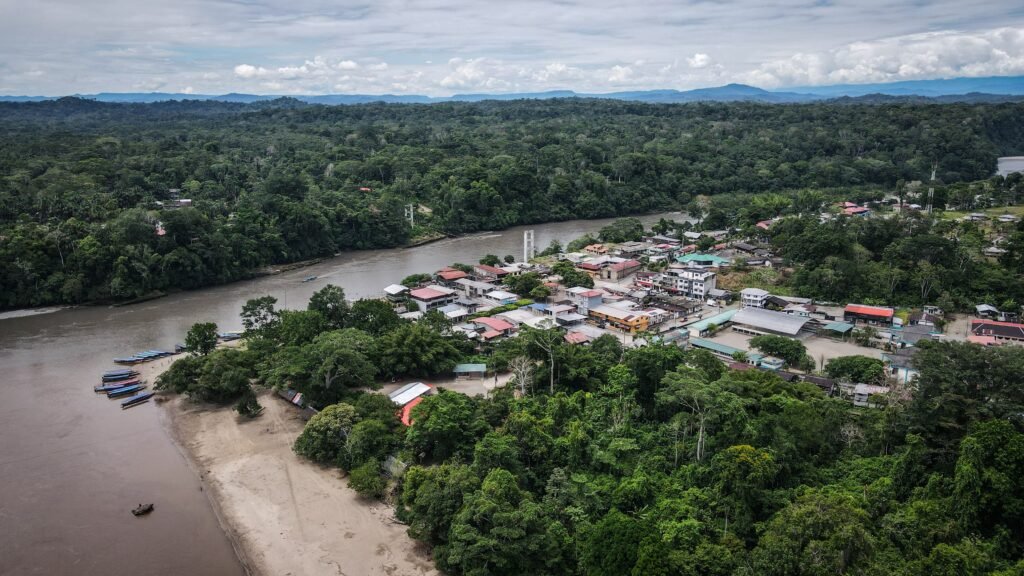
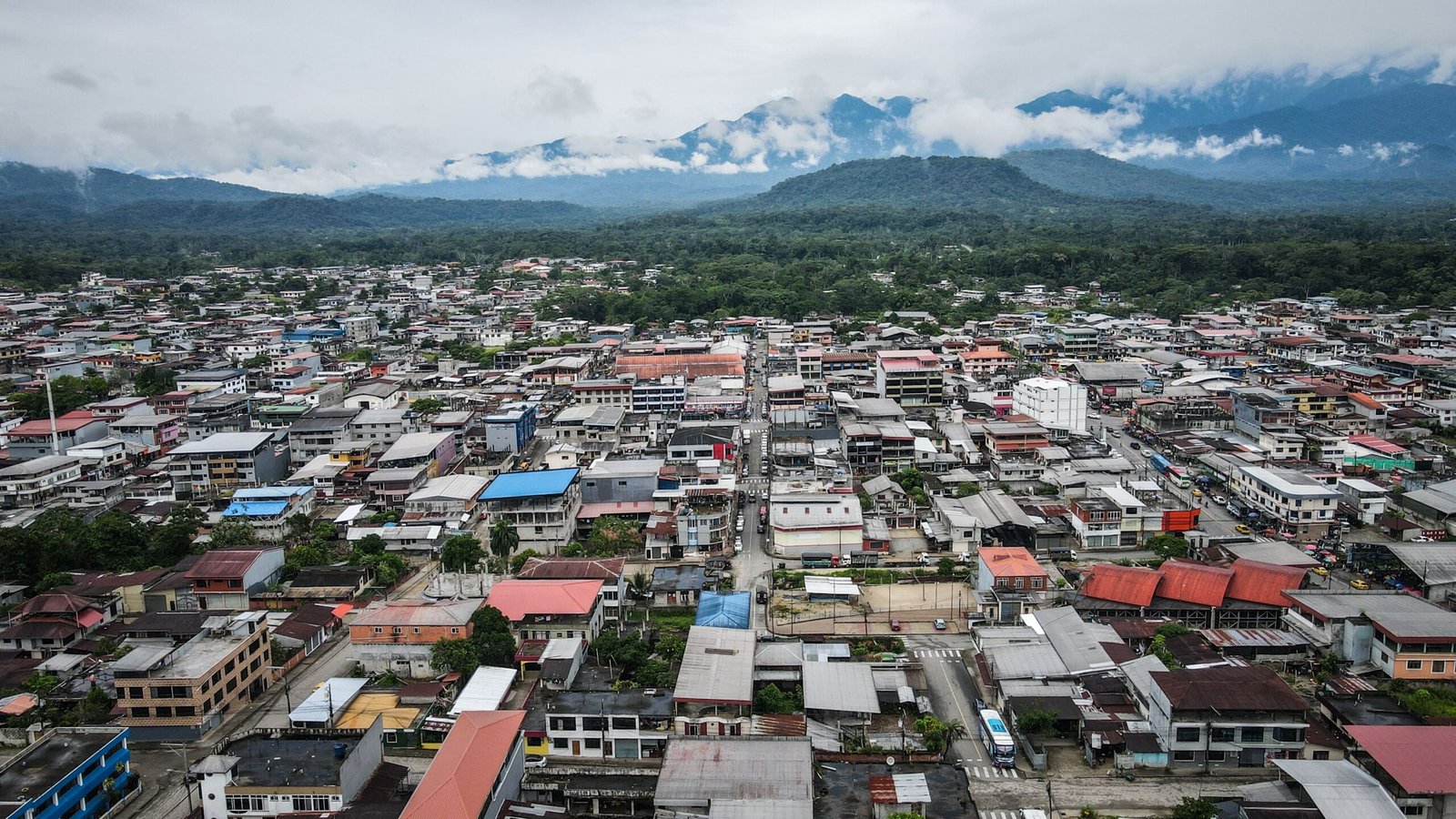
Tena is a small but lively city surrounded by lush rainforest, winding rivers and green hills. It is one of the most accessible starting points for exploring the country’s eastern lowlands. Located at the confluence of the Tena and Pano rivers, the city offers a fascinating mix of urban life, Indigenous traditions and extraordinary natural surroundings.
While the country’s Andean highlands are known for their dramatic volcanoes and colonial towns, the Amazon region offers a completely different atmosphere. Here, warm and humid weather, dense vegetation, colourful wildlife and powerful rivers shape everyday life. Visitors can explore nearby waterfalls, go rafting or kayaking, discover jungle trails, visit Indigenous communities or simply enjoy the slower pace of life.
A Brief History of Tena
Long before Tena became an important town in Ecuador’s Amazon region, the surrounding territory was home to Indigenous communities, particularly the Quijos, who had developed their own traditions, social structures and deep knowledge of the rainforest. Their lives were closely connected to the rivers and forests, which provided food, transportation, medicine and materials for everyday life.
The arrival of Spanish explorers in the 16th century dramatically changed the region. Attracted by rumours of gold, cinnamon and other valuable resources, Spanish expeditions pushed eastwards from the Andes in search of wealth and new territories. The wider Quijos region became an important area of colonial expansion, although the difficult geography and determined resistance of its Indigenous inhabitants made Spanish control far from straightforward.
The colonial period was marked by conflict, exploitation and attempts to impose new religious and administrative structures. Indigenous communities resisted Spanish rule on several occasions, with a major uprising in 1578 leading to the destruction of several Spanish settlements in the region. Many Indigenous inhabitants withdrew further into the forest, while others gradually adapted to the changing circumstances. Over time, the Kichwa identity and language became increasingly prominent among local communities.
The origins of modern Tena are somewhat more complicated than its traditional founding date suggests. The city officially celebrates 15 November 1560 as its foundation day, traditionally associating its establishment with Spanish colonial expansion. However, the exact circumstances of its founding remain historically disputed, and there is no conclusive evidence establishing that date as the beginning of the present-day settlement.
Tena’s development into a more established settlement took place much later. Around the turn of the 20th century, the area began to experience more significant changes, with new settlers arriving and religious missions playing an important role in education and the organisation of local communities. The arrival of the Josephite missionaries in 1922 further contributed to the town’s development.
An important administrative milestone came in 1959, when Napo became a separate province with Tena as its capital. The town subsequently became an increasingly important centre for government, trade and transportation in the central northern Amazon. Later developments, particularly the expansion of road connections and the discovery of oil in the wider Amazon region during the second half of the 20th century, brought further migration and economic change.
How to get to Tena?
From Quito to Tena
The easiest and most affordable way to reach Tena is by public bus.
Several bus companies operate this route, including Flota Pelileo, Cooperativa Amazonas and Cooperativa Baños. There are multiple daily departures, although schedules can change, so it is worth checking at the Quitumbe Terminal before travelling.
The route passes through the Papallacta area and Baeza before continuing towards the Amazon lowlands. Along the way, you will notice a dramatic change in scenery, from the cool Andean páramo to increasingly dense vegetation and warmer tropical landscapes.
The descent towards the Amazon is one of the most scenic parts of the journey, so try to get a window seat.
From Baños to Tena
If you are travelling from Baños, reaching Tena is even easier. Buses connect the two destinations, with the journey taking approximately 3–4 hours, depending on the service and road conditions.
From Guayaquil to Tena
Travelling from Guayaquil takes considerably longer. The journey covers approximately 480 km and usually takes around 10–11 hours by bus. Direct connections may be available, but it is worth checking the schedule in advance.
Can You Fly to Tena?
Tena has an airport, but it is not currently served by regular commercial passenger flights. For most independent travellers, travelling by bus or private vehicle is therefore the most practical option.
Getting Around Tena
Once you arrive, getting around the city is relatively easy. Taxis are inexpensive and useful for reaching accommodation or attractions outside the town centre. For nearby destinations such as Puerto Misahuallí, you can also use local buses departing from Tena’s main bus terminal.
Where to stay in Tena?
If you are travelling on a budget, I recommend Hostal Limoncocha. It offers good value for money, with clean, comfortable rooms and access to a shared kitchen, which is especially useful if you prefer to prepare some of your own meals.
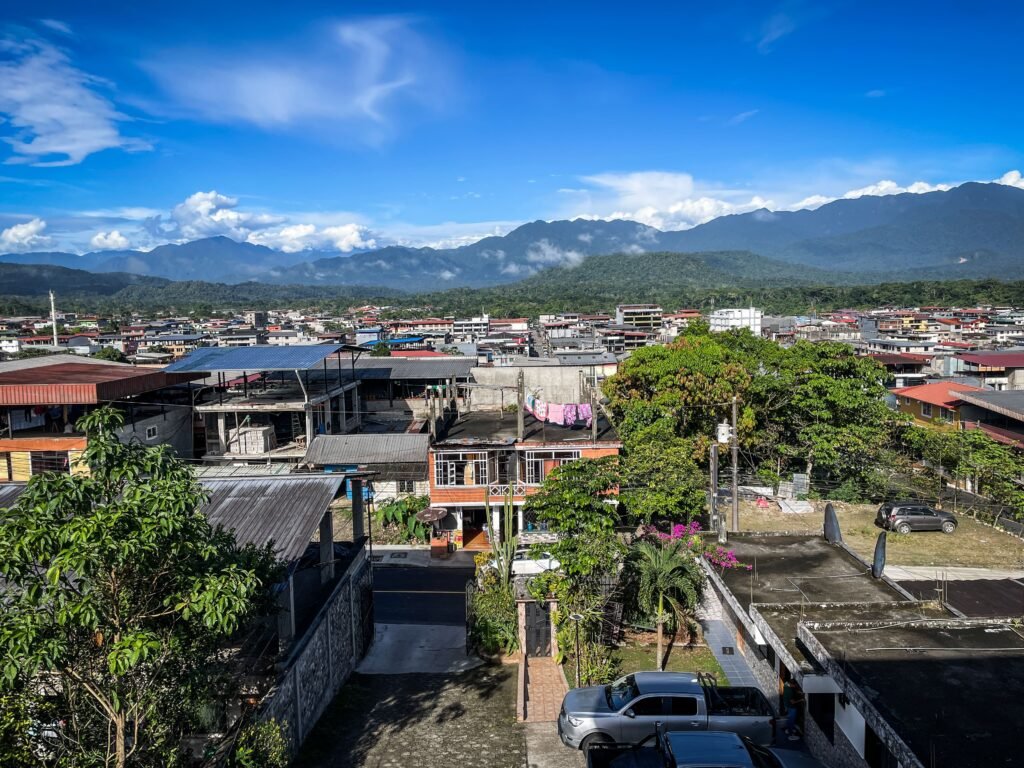
It also has laundry facilities, making it a practical choice for travellers on longer trips. One of its nicest features is the panoramic view from the upper floor, where you can enjoy a different perspective of Tena and its green surroundings.
What to see around Tena?
Mercado Artesanal de Comidas Típicas y Artesanías
If you want to experience local Amazonian cuisine, this traditional food market is a good place to start. It brings together several food stalls serving regional dishes, making it an interesting stop for anyone curious about the culinary traditions of the Napo region.
Look out for maito, a traditional Amazonian preparation in which fish is wrapped in bijao leaves and cooked over a fire. You may also come across local ingredients, tropical fruits and other regional specialities. The market also offers handicrafts, allowing you to browse locally made souvenirs.
Parque Amazónico La Isla
One of the easiest ways to experience Amazonian nature without leaving the city is to visit Parque Amazónico La Isla. The park occupies a natural peninsula surrounded by the Pano and Tena rivers. It offers walking trails through tropical vegetation, with opportunities to learn about native plants, medicinal trees and the wildlife found in this part of Ecuador.
However, there is something worth mentioning before your visit: safety concerns have been reported in the park and its surrounding areas. Local media reported a theft of equipment from one of the park’s offices in 2022, while visitor accounts have also raised concerns about robberies along some of the more secluded forest trails.
For this reason, I would recommend visiting during daylight hours, avoiding isolated sections of the park and not carrying unnecessary valuables. It may also be worth checking with local authorities or your accommodation about current conditions before heading there.
Tena Observation Deck
From an elevated viewpoint, you can admire the rooftops of Tena, the surrounding green hills and the seemingly endless vegetation stretching towards the rainforest. It is particularly appealing for photography, especially when the weather is clear.
Malecón Escénico de Tena
It is a pleasant place for an afternoon walk, with landscaped areas, pedestrian paths, viewpoints and places to sit and enjoy the surroundings. There are also restaurants, cafés and small shops nearby.
The atmosphere becomes particularly enjoyable in the evening, when the temperatures drop, and locals come out to socialise. The illuminated riverside areas and pedestrian bridge also make for some nice photographs.
Tena Central Park
Like many traditional Ecuadorian towns, Tena has a central square that serves as a meeting point for residents. You can take a short walk, relax on a bench and observe the daily rhythm of the city.
The park is also conveniently located near the cathedral and other central streets, making it an easy stop during a walking tour of Tena.
Cavernas de Jumandy
Located near Archidona, approximately 20–30 minutes north of Tena, the Jumandy Caves are among the most interesting natural attractions in the area. This underground cave system features impressive rock formations, flowing water and dark passages that make exploring it a little adventure in the heart of the Ecuadorian Amazon.
Getting there by public transport is relatively easy. We took a bus from Tena and got off along the main road, from where it was just a short walk to the caves’ reception area. As there were no other visitors interested in joining us, we opted for a private tour. After paying the entrance fee, we changed into more suitable clothes, put on rubber shoes provided for the visit and met our guide, who was ready to take us underground.
The entrance to Jumandy Caves costs approximately 5.50 USD per person, including a guided cave tour. If you cannot form a bigger group, then you will need to pay 20 USD for a private tour (1-3 people). Rubber boot rental is an extra 1 USD.
The adventure started almost immediately, as we had to walk through water from the very beginning. Fortunately, it never got higher than waist level, although navigating some of the passages required a little effort. At one point, we had to grab a rope and pull ourselves across to the other side, which made the experience feel more like a proper adventure than an ordinary sightseeing tour!
Along the way, we also entered a particularly narrow passage to admire some of the cave’s natural rock formations. The surroundings were dark, humid and quite atmospheric, with the sound of flowing water accompanying us throughout the walk.
One of the highlights was reaching a larger underground waterfall. You can stand underneath it and enjoy what our guide described as a kind of natural massage.
Just when we thought we had seen everything, we encountered perhaps the most unexpected sight of the entire visit. At the far end of the cave, we spotted a little girl, who seemed completely out of place in the dark underground surroundings. It turned out to be our guide’s daughter, who had apparently made her way there all by herself, dressed in a rather fancy outfit. She was probably around ten years old. Definitely not something you see every day!
After exploring the cave, we came back to the entrance, changed our clothes and got ready to leave. We walked back to the main road, where, luckily, a bus arrived just a few minutes later.
El Gran Cañón de Cotundo
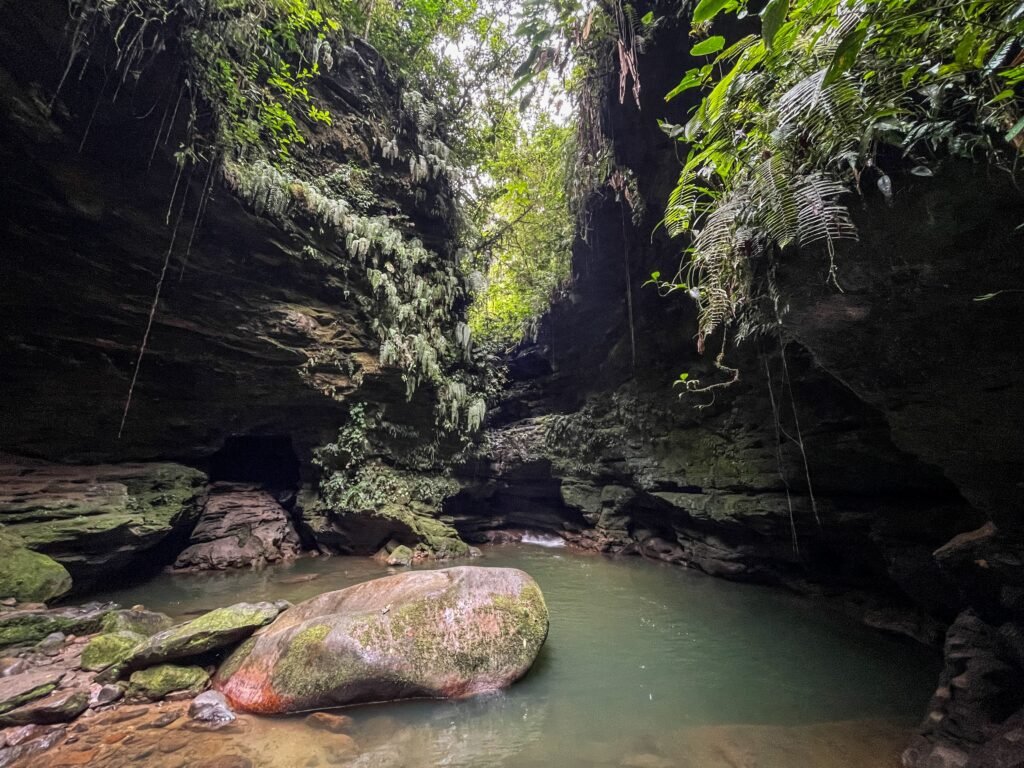
If you enjoy natural swimming spots and unusual landscapes, El Gran Cañón de Cotundo is well worth a visit. Located a bit further north than Jumandy Caves, this natural attraction is formed around the meeting of the Jondachi and Ñachiyacu rivers.
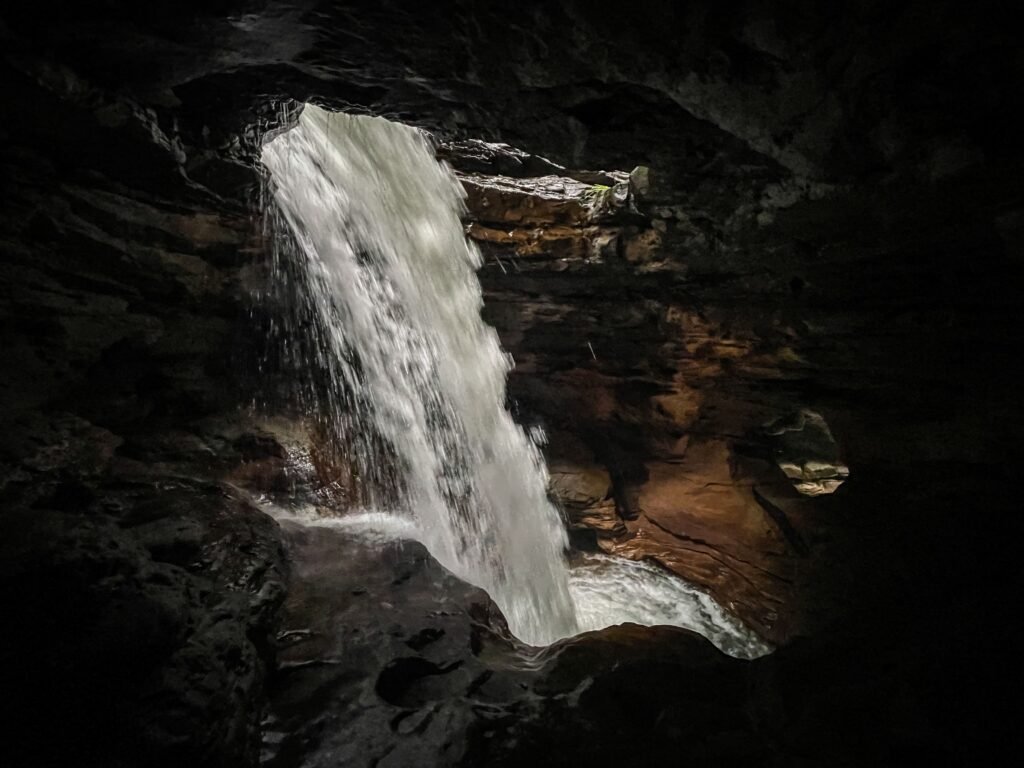
The water has carved its way through the surrounding rock, creating a narrow canyon with natural pools and beautiful rainforest scenery. One of its most interesting features is a small waterfall inside a cave, where adventurous visitors can experience a jump into the water from a designated spot.
There are two access points leading to the canyon, and we decided to take the one located at the very end of the dirt road. Once you’ve finished exploring, I highly recommend trying the local maito – it was hands down the best we tasted anywhere in Ecuador!
Laguna Azul
Located in the community of Alukus, in the rural parish of Talag, this beautiful natural swimming area is approximately 20–25 km from Tena. It is formed by several crystal-clear pools created by water flowing between impressive natural rock formations.
The striking blue-green colour of the water is what gives the place its name. You can spend time swimming, relaxing beside the pools or exploring the surrounding vegetation. There are also small waterfalls and natural rock slides that add to the experience.
The attraction is managed by the local Kichwa community, making it an interesting example of community-based tourism in the Ecuadorian Amazon. Local food is also available.
Puerto Misahualli
Located approximately 30 minutes from Tena, Puerto Misahuallí is a small riverside village and one of the most popular destinations in the surrounding Amazon region.
The village sits on the banks of the Napo River and is particularly famous for its sandy river beach and the capuchin monkeys that roam freely around the main square. These curious animals have become one of the area’s biggest attractions, although it is important not to feed or touch them.
There is more to Misahuallí than monkeys, however. You can take a motorised canoe along the Napo River, visit nearby Indigenous communities, explore jungle trails or simply relax by the water.
Personally, I think Misahualli deserves at least one day, although you could easily spend even more time exploring the area.
Have a look at my travel guide dedicated to Puerto Misahualli HERE.