Introduction
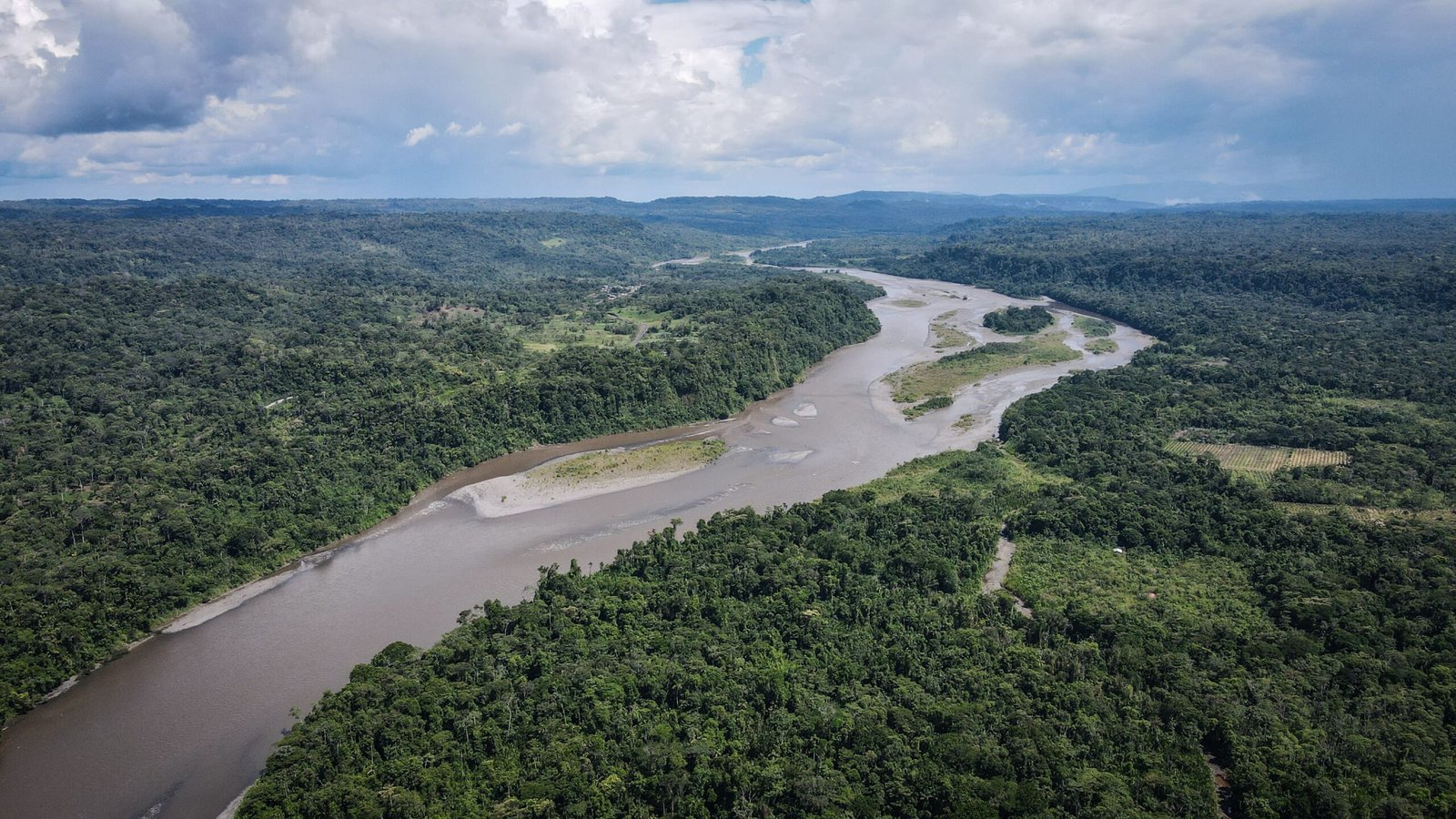
Nestled in the lush foothills of the Ecuadorian Amazon, Puyo is a vibrant city surrounded by dense tropical forests, winding rivers and endless shades of green. Located in the province of Pastaza, approximately 950 metres above sea level, it serves as one of the main gateways to Ecuador’s vast Amazon rainforest. Unlike the high-altitude cities of the Andes, Puyo enjoys a warm, humid climate throughout the year, with frequent rainfall that keeps the surrounding landscape exceptionally green.
The city’s name comes from the Kichwa word Puyu, meaning cloud or mist, a fitting description of a place where low-hanging clouds often drift across the forest-covered hills.
A Brief History of Puyo
Long before Puyo appeared on Ecuador’s maps, the surrounding territory was inhabited by Indigenous communities who had developed their own cultures, languages and ways of life over generations. The wider Pastaza region remains home to several Indigenous nationalities, including the Kichwa, Shuar, Achuar, Waorani, Shiwiar, Sápara and Andoa. Their ancestral connection to the rainforest continues to shape the identity of the region today.
The commonly recognised founding date of modern Puyo is 12 May 1899, when Dominican missionary Fray Álvaro Valladares arrived in the area accompanied by Indigenous representatives from Canelos. Together, they established a small settlement near the Puyo River, which gradually developed into a stopping point for travellers, missionaries and traders moving between the Andean settlements and the Amazon lowlands.
During its early years, Puyo remained a relatively small and isolated community. Its development accelerated in the early twentieth century as settlers arrived from Andean towns such as Baños and Píllaro. Trade, agriculture and missionary activities contributed to the gradual expansion of the settlement. In 1911, Pastaza became an administrative canton, although Puyo would only become its established administrative centre several decades later.
A major milestone came in 1959, when Pastaza was officially established as an Ecuadorian province, with Puyo designated as its capital. From that point onwards, the city developed into an important administrative, commercial and transport centre for the central Amazon region.
How to get to Puyo?
Getting to Puyo is relatively straightforward, thanks to its road connections with the Ecuadorian Highlands and other destinations in the Amazon region. The city is accessible by public bus or private vehicle, with most travellers arriving from Quito, Baños or Tena.
From Quito to Puyo
The most common way to reach Puyo from Quito is by bus. Services depart from Terminal Terrestre Quitumbe, located in the southern part of the capital. Several transport companies operate routes connecting Quito with Puyo, usually travelling through Ambato and Baños before descending into the Amazon foothills.
The journey takes approximately 5–6 hours, depending on traffic, road conditions and the number of stops. If you prefer to drive, expect around 4–5 hours for the journey.
From Baños to Puyo
If you are already visiting Baños de Agua Santa, reaching Puyo is particularly easy. The two cities are connected by a scenic road that follows the Pastaza River through a landscape of dramatic cliffs, waterfalls and increasingly dense vegetation.
Regular buses connect Baños with Puyo, and the journey generally takes around 1.5–2 hours. This is one of the most enjoyable ways to approach the Ecuadorian Amazon, as the scenery changes noticeably along the way.
From Tena to Puyo
Travellers exploring the northern part of the Ecuadorian Amazon can also reach Puyo from Tena. Buses operate between the two cities, with a journey of approximately 2–2.5 hours. This connection makes it relatively easy to combine both destinations in one itinerary.
From Guayaquil to Puyo
Travelling from Guayaquil takes considerably longer. Buses generally follow a route through Riobamba and Baños before continuing east towards Puyo. Depending on the service and road conditions, the journey can take approximately 7–8 hours.
Travelling by Car
Having your own vehicle offers greater flexibility, particularly if you plan to explore the waterfalls, viewpoints and smaller communities scattered around Pastaza province. The road from Baños to Puyo is especially scenic, passing through the spectacular Pastaza River valley and several popular natural attractions.
There is no regular commercial passenger flight connecting Quito or Guayaquil directly with Puyo. Although there is an airfield in nearby Shell, it mainly serves smaller aircraft and flights to remote Amazonian communities rather than conventional domestic airline services.
Where to stay in Puyo?
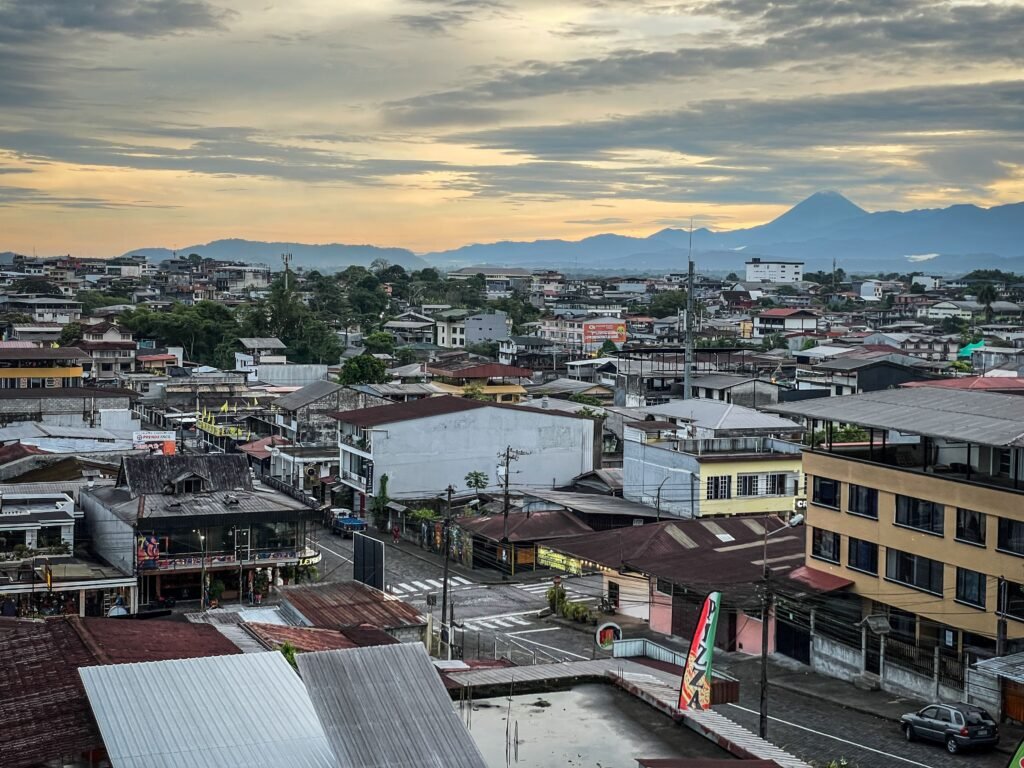
I stayed at Hostal Real Amazónico, conveniently located just a few minutes’ walk from the bus terminal. The city centre is also easily accessible by taxi, making it a practical base for exploring Puyo. The room was very basic but clean, and the Wi-Fi worked well throughout my stay. Considering the location and facilities, I thought it was good value for money, with a double room costing around US$25 per night for two people.
What to see around Puyo?
Malecón Boayaku Puyo
Malecón Boayaku is one of the city’s best-known public spaces and a good place to experience everyday life in Puyo.
Situated in Barrio Obrero, alongside the Puyo River, the malecón is a riverside promenade with walking areas, viewpoints, bridges and features celebrating the cultural identity of Pastaza. It is particularly pleasant for a relaxed walk, especially when the weather is cooler.
The malecón is also a good starting point for exploring the nearby Paseo Turístico del Río Puyo.
Paseo Turístico del Río Puyo
For a quieter experience of the Amazonian environment without leaving the city, head to Paseo Turístico del Río Puyo.
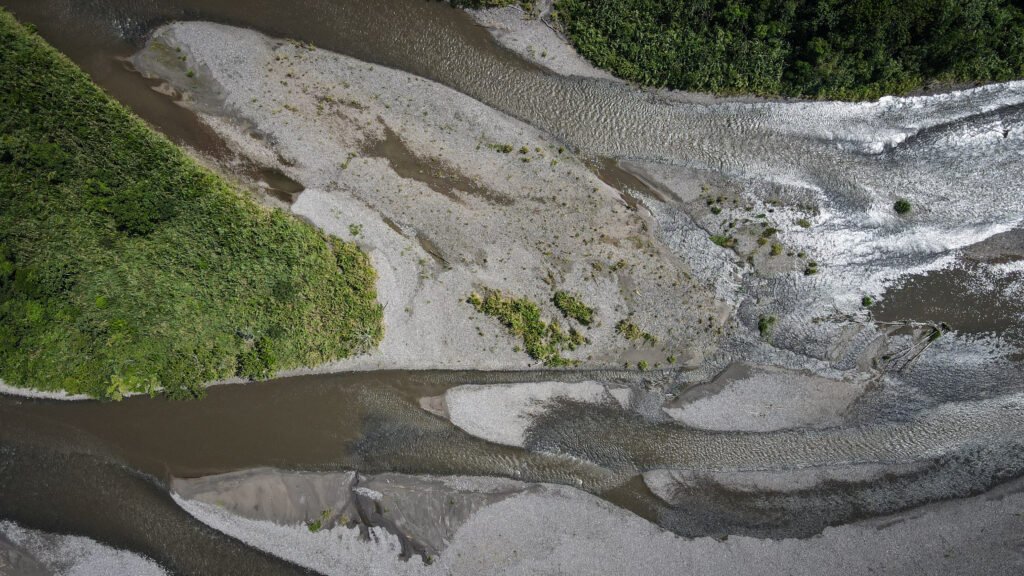
This walking route follows the river through a section of tropical vegetation, creating a pleasant escape from the traffic and activity of central Puyo.
Along the way, you can enjoy the sounds of the forest, spot butterflies and birds, and appreciate the lush vegetation that makes this region so distinctive.
Parque Etnobotánico Omaere
The park was established to preserve knowledge about Amazonian plants and the traditional ways in which Indigenous communities use them. During a guided walk, visitors can discover medicinal plants, edible species and materials traditionally used for building houses, making tools and preparing everyday products.
Mercado Mariscal
This traditional market brings together fresh produce, local ingredients and small food stalls serving inexpensive meals. It is particularly interesting for travellers who want to discover dishes associated with the Amazon region rather than sticking to familiar Ecuadorian food.
Some of the specialities worth looking for include:
- Maito: Fish or chicken wrapped in bijao leaves and cooked over a fire.
- Chontacuros: Edible palm grubs, traditionally grilled and served on skewers.
- Chicha de yuca: A traditional fermented or freshly prepared cassava-based drink, depending on the local recipe.
- Palmito: Tender palm heart, used in salads and other regional dishes.
The market is also a good place to discover tropical fruits and ingredients that are less commonly available in Ecuador’s highland cities.
Parque Central 12 de Mayo
Parque Central 12 de Mayo is the traditional heart of Puyo. Its name commemorates 12 May 1899, the date traditionally recognised as the foundation of the modern city.
Surrounded by shops, restaurants and public buildings, the square is a convenient place to take a break and observe everyday life. The nearby cathedral is another interesting landmark.
Museo Etno-Arqueológico de Puyo
The museum houses cultural and archaeological material connected with the peoples who have inhabited the Amazon region. Its exhibits offer a glimpse into traditional ways of life, local history and the cultural development of the wider Pastaza area.
It is a relatively small attraction, so you should not expect a large modern museum with extensive exhibition halls. Nevertheless, it can add valuable context to the other places you visit, particularly if you are interested in understanding the region beyond its natural landscapes.
Cascada Hola Vida
Located south of Puyo, in the direction of Pomona, Cascada Hola Vida is one of the most popular natural attractions in the surrounding area.
Getting to the waterfall involves a short walk through tropical rainforest, following a trail surrounded by dense vegetation. The journey itself is part of the experience, with the opportunity to observe the plants, insects and sounds of the Amazonian ecosystem.
At the end of the trail, you reach a waterfall cascading into a natural pool. If conditions are suitable, you can take a refreshing swim in the water.
You will need a taxi from Puyo to get there. Alternatively, take any bus heading to Macas and ask to be dropped at the turnoff to Pomona. A small shop nearby can arrange a taxi to the waterfalls.
Finca Mirador Indichuris
One of the most impressive viewpoints around Puyo is Finca Mirador Indichuris, located near Pomona, approximately 29 km from the city.
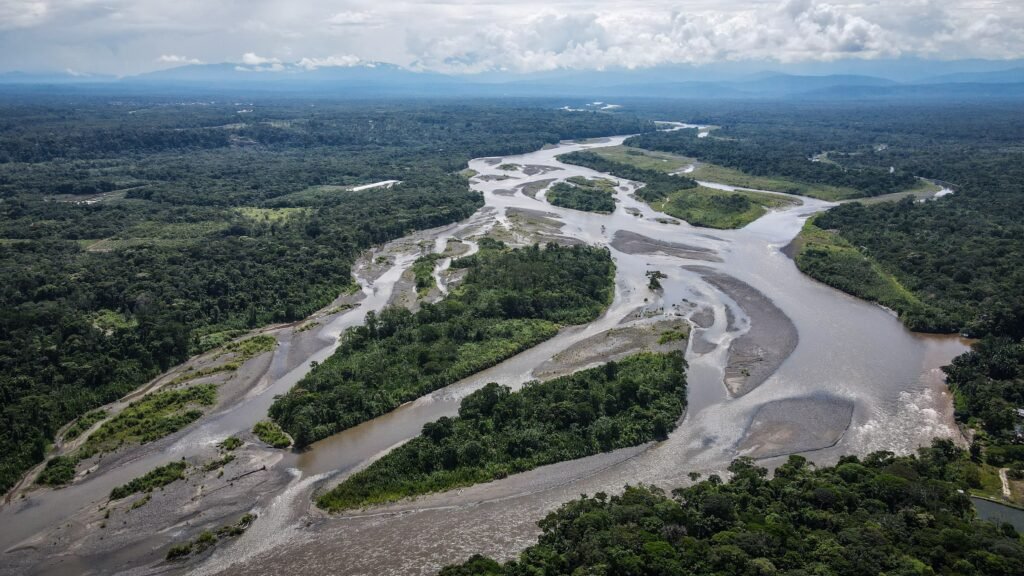
The main attraction is the panoramic view over the Amazon rainforest and the surrounding river valley. From the viewpoint, you can appreciate the meeting of the Puyo and Pastaza rivers, with an enormous expanse of green forest stretching into the distance.
The property features wooden platforms, hammocks and swings positioned to take advantage of the spectacular scenery. It is also associated with community-based tourism, with opportunities to learn more about local Kichwa traditions.
Indichuris is often combined with Cascada Hola Vida, as both attractions are located along the route towards Pomona. The easiest way to get to both places is by taxi from Puyo, as the traffic to Pomona is minimal and you may get stuck. We were waiting a really long time to get a ride back to Puyo.
Nate Saint’s House
Located in the nearby town of Shell, about 10–15 minutes by car from Puyo, Nate Saint’s House is an interesting stop for anyone curious about missionary activity and aviation history in the Ecuadorian Amazon.
Nate Saint was an American missionary pilot who arrived in Ecuador in the late 1940s. He played an important role in establishing aviation links with remote communities in the rainforest. His story is particularly associated with the events of 1956, when he and four other American missionaries were killed during an encounter with members of the Waorani community.
The house preserves part of this history, with photographs, historical objects and information about the missionary aviation operations based in Shell. It provides an insight into an important, though controversial, chapter of the region’s history and the complex relationship between missionaries and Indigenous communities.
Visits require advance arrangements, so contact the organisation responsible for the property before making the journey. Sadly, during my visit in October 20206, I didn’t receive any answer from them, and I was only able to check out the building from the outside.
La Casa del Árbol
This recreational complex is a few minutes’ drive from Puyo, and the main attraction is a structure that allows visitors to climb towards the treetops, offering a closer look at the vegetation from above. There are also walking trails, a swimming pool, canoes and adventure activities, including a swing. Sadly, the place is kitschy and incredibly neglected, with facilities that appear to have deteriorated over time. I wouldn’t recommend wasting time going there.