Introduction
Unlike Ecuador’s better-known Amazon destinations, Macas has a relatively understated tourism profile. Yet its position between the Andes and the rainforest makes it an excellent place to explore southeastern Ecuador’s cultural diversity and natural beauty.
The history of Macas goes back to the early period of Spanish expansion into the eastern territories of what is now Ecuador. Spanish expeditions entered a region already inhabited by Indigenous peoples, including the Shuar, whose communities had their own social structures, territories and traditions.
The Spanish presence in the area was never a straightforward story of settlement. Expeditions encountered resistance, and early settlements experienced considerable instability. One settlement in the region was Sevilla de Oro. Historical accounts describe the destruction of this settlement in the late sixteenth century, after which survivors moved to a different location across the Upano River.
Macas subsequently developed into a more established settlement. Its exact founding history is not entirely straightforward, although 15 August 1563 is commonly commemorated as its foundation date. The city later became an important administrative and commercial centre for the eastern territories.
The Shuar and Macabeo cultures
One of the most fascinating aspects of Macas is the coexistence of two distinct cultural identities: the Indigenous heritage of the Shuar and the Macabeo people. Shuar are Indigenous inhabitants of the Amazon region of present-day southeastern Ecuador, including the territory around Macas, and their history in the area stretches back long before the arrival of the Spanish. The Macabeos emerged much later as a distinct regional mestizo community, shaped by colonial-era settlement and the mixing of cultural influences over subsequent generations.
Traditionally, Shuar families lived in dispersed settlements throughout the Upano River Valley and the forested foothills near the Kutukú Mountains. Rather than concentrating in large towns, many communities organised their lives around extended family networks, with households maintaining their own gardens and relying on a detailed understanding of the surrounding environment. Their traditional subsistence activities included cultivating crops, hunting, fishing and gathering forest products. Cassava, known locally as yuca, was particularly important, while plants such as guayusa played a role in everyday life and cultural practices. Shuar knowledge of the forest encompasses far more than food: it includes medicinal plants, seasonal changes, animal behaviour and the relationships between people and the natural world. Their language, Shuar Chicham, remains an important expression of cultural identity and is spoken alongside Spanish in many communities.
Shuar history is also a story of resistance and adaptation. Spanish attempts to establish control over the eastern territories repeatedly encountered opposition, and Shuar communities maintained considerable independence for centuries. During the nineteenth and twentieth centuries, missionary activity, expanding settlement, new roads and commercial development brought profound changes to their way of life. These processes also contributed to the loss of ancestral lands and growing pressure on forest territories. Nevertheless, Shuar communities have continued to defend their cultural identity, organise politically and adapt their livelihoods to changing circumstances. Today, Shuar people participate in education, local government, commerce and contemporary Indigenous rights movements while continuing to preserve elements of their language, knowledge and traditions. Their cultural world also includes a rich mythology featuring figures such as Etsa, associated with the sun and the struggle against darkness, and Nunkui, connected with fertility, cultivation and the productivity of the earth. These stories express relationships between human life, spiritual forces and the natural environment. For visitors to Macas, learning about the Shuar provides a deeper understanding of the Amazon as a living cultural landscape rather than simply a wilderness to explore.
The Macabeos originated where a distinct local culture developed through the mixing of Indigenous and European populations during and after the Spanish colonial period. However, their origins are more complex than simply being descendants of Spanish settlers. Over time, Macabeos became known for their agricultural lifestyle, strong community ties and hospitality.
One particularly interesting tradition is guayusa, an infusion made from Amazonian leaves that is traditionally offered to visitors. Another is randimpa, a form of collective work in which community members help one another with tasks such as clearing land, harvesting crops or moving a house. These practices reflect the importance of cooperation and mutual support in traditional Macabeo life.
How to get to Macas?
By Bus
Travelling by bus is the most practical option for most visitors. Several transport companies operate routes connecting Macas with Quito, Cuenca, Riobamba and other Ecuadorian cities. Services arrive at the city’s main bus terminal, from where you can take a taxi or walk to accommodation in the centre.
From Quito
Direct buses to Macas are available from Quito’s intercity bus terminals, particularly Quitumbe in the south. Operators serving the route include Touris San Francisco Oriental and Baños, although schedules and departure points can vary.
Another option is to take a bus to Puyo and continue south to Macas. This can be useful if you want to explore the Pastaza region along the way.
From Cuenca
Cuenca is another useful starting point, especially if you are travelling through southern Ecuador. Buses connect the two cities via routes crossing the eastern Andes and descending towards Morona Santiago. Transport companies include Turismo Oriental and Cooperativa de Transportes Macas.
The trip typically takes around four to seven hours, depending on the service and route.
From Riobamba
If you are exploring Ecuador’s central highlands, you can travel from Riobamba to Macas by bus. The route crosses mountainous terrain before descending towards the Amazonian foothills. Allow approximately four to six hours, and check conditions before departure, particularly during periods of heavy rainfall.
By car
Driving gives you more flexibility to stop at viewpoints, small towns and natural attractions along the way.
From Quito: Travel south towards Ambato, continue through Baños and Puyo, then follow the Troncal Amazónica south to Macas. Allow roughly 6–8 hours, depending on traffic and stops.
From Cuenca: Follow the eastern route towards Guarumales and Méndez before continuing to Macas. Travel time varies with the chosen route and road conditions.
From Riobamba: Take the mountain route towards Cebadas and the Atillo area before continuing east towards Macas. Expect winding roads and allow extra time.
Where to stay in Macas?
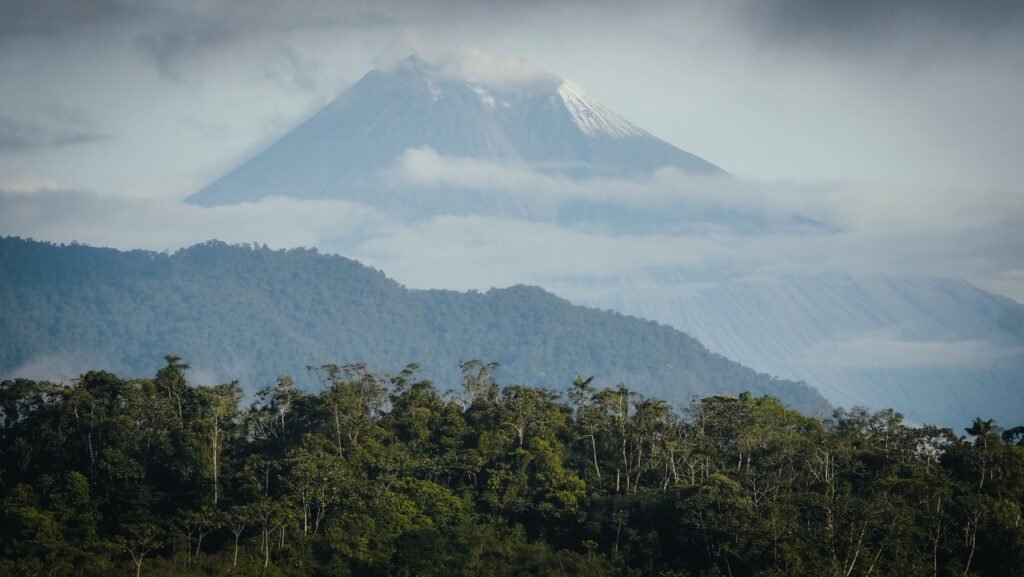
During my visit to Macas, I stayed at Alojamiento | Centro Macas | Citys Heard Stay, and I was very happy with my choice. The room was clean, comfortable and pleasant, making it a great place to relax after exploring the city and its surroundings. One of the highlights was the rooftop terrace, where I could enjoy panoramic views over Macas and admire Sangay Volcano in the distance on a clear day. The central location was another advantage, providing a convenient base for discovering the city’s main attractions, local restaurants and everyday life. If you’re looking for a comfortable place to stay in Macas with the added bonus of a rooftop view, this accommodation is well worth considering.
What to see around Macas?
Catedral Santuario Católico Purísima de Macas
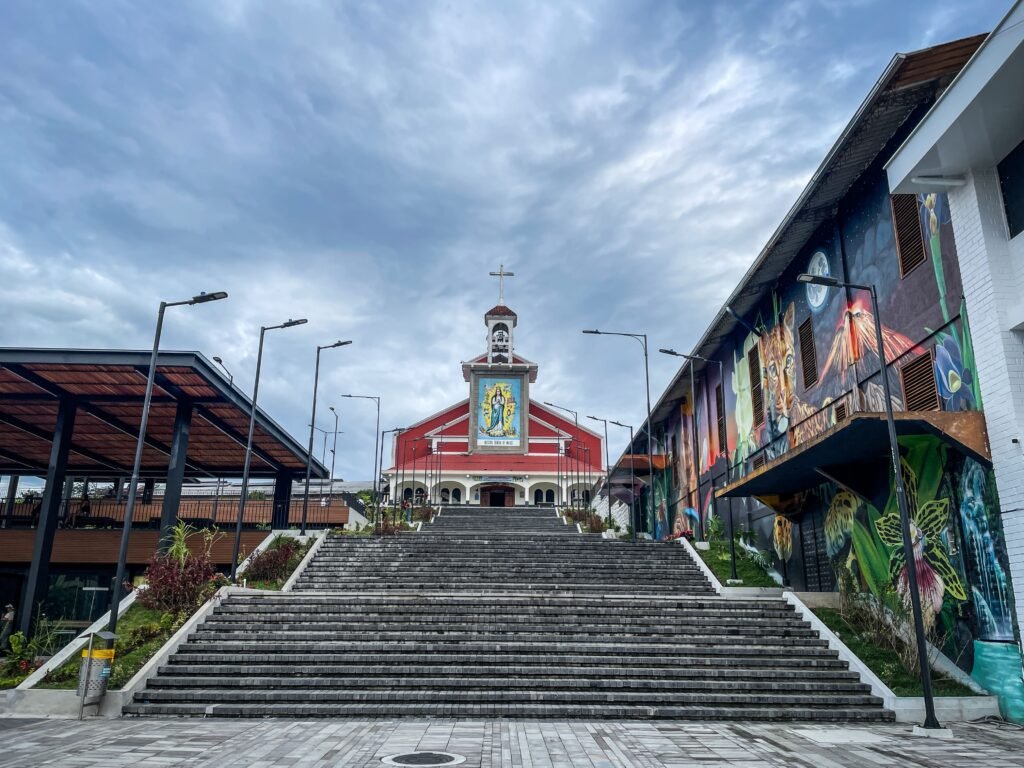
One of the city’s most important landmarks and a good place to begin exploring its history. Dedicated to the Purísima de Macas, a revered Marian figure closely associated with local religious traditions, the sanctuary reflects the strong influence of Catholicism on the city’s cultural identity. Its architecture and religious artwork make it worth a short visit, even if you are not particularly interested in churches. Take a moment to appreciate the building’s details and learn about the devotion that has connected generations of residents with this important local symbol.
Parque Central de Macas
Surrounded by important buildings and everyday city life, the square offers a glimpse into the slower rhythm of this Amazonian provincial capital. It is a pleasant place to sit beneath the trees, watch locals go about their day and take a break between sightseeing stops. Visit in the morning for a quieter atmosphere or later in the day, when people gather in the centre, and the streets become livelier. The park also makes a convenient base for exploring nearby cafés, shops and restaurants on foot.
Mirador La Randimpa
For a different perspective on Macas, visit Mirador La Randimpa, a viewpoint associated with the city’s green surroundings and the landscape of the Upano Valley. It is a nice addition to a walking tour if you want to escape the busier streets and enjoy some fresh air. Bring your camera and take your time looking out over the surrounding scenery.
Parque Recreacional
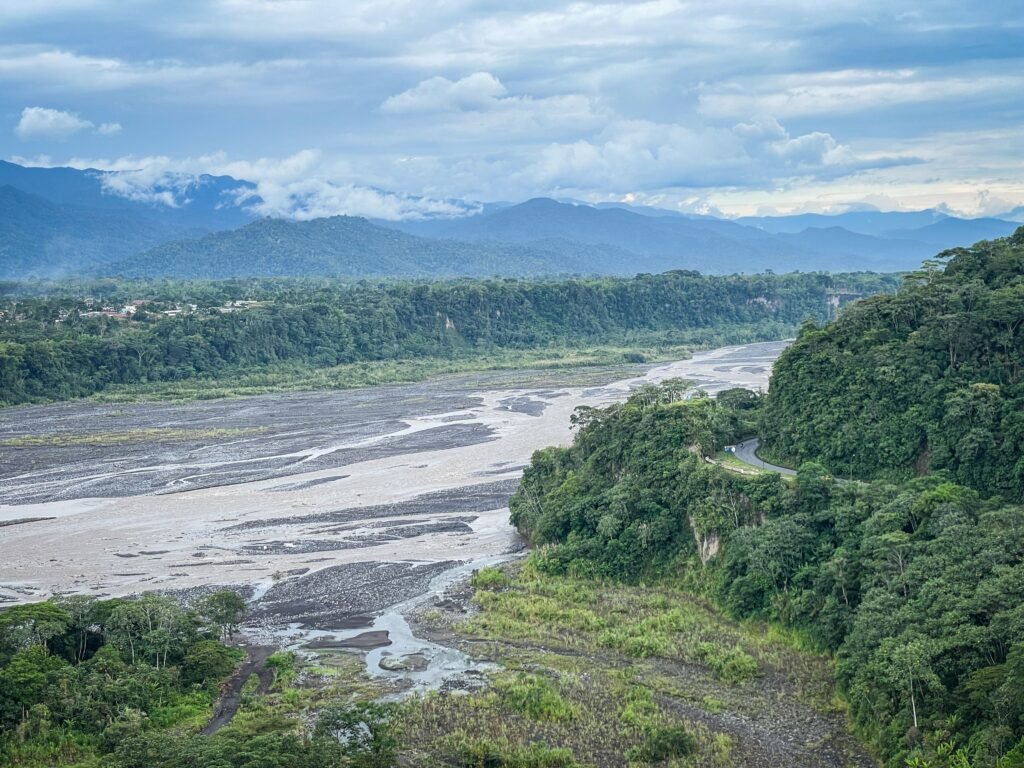
The Parque Recreacional Jorge Felipe Rivadeneira is a pleasant green space where you can enjoy a quieter side of the city. Shaded paths, vegetation and areas to sit make it suitable for a leisurely stroll or a break from sightseeing. The park also has viewpoints towards the Upano River, giving visitors a glimpse of the natural landscape beyond the urban area.
Mirador del Quilamo
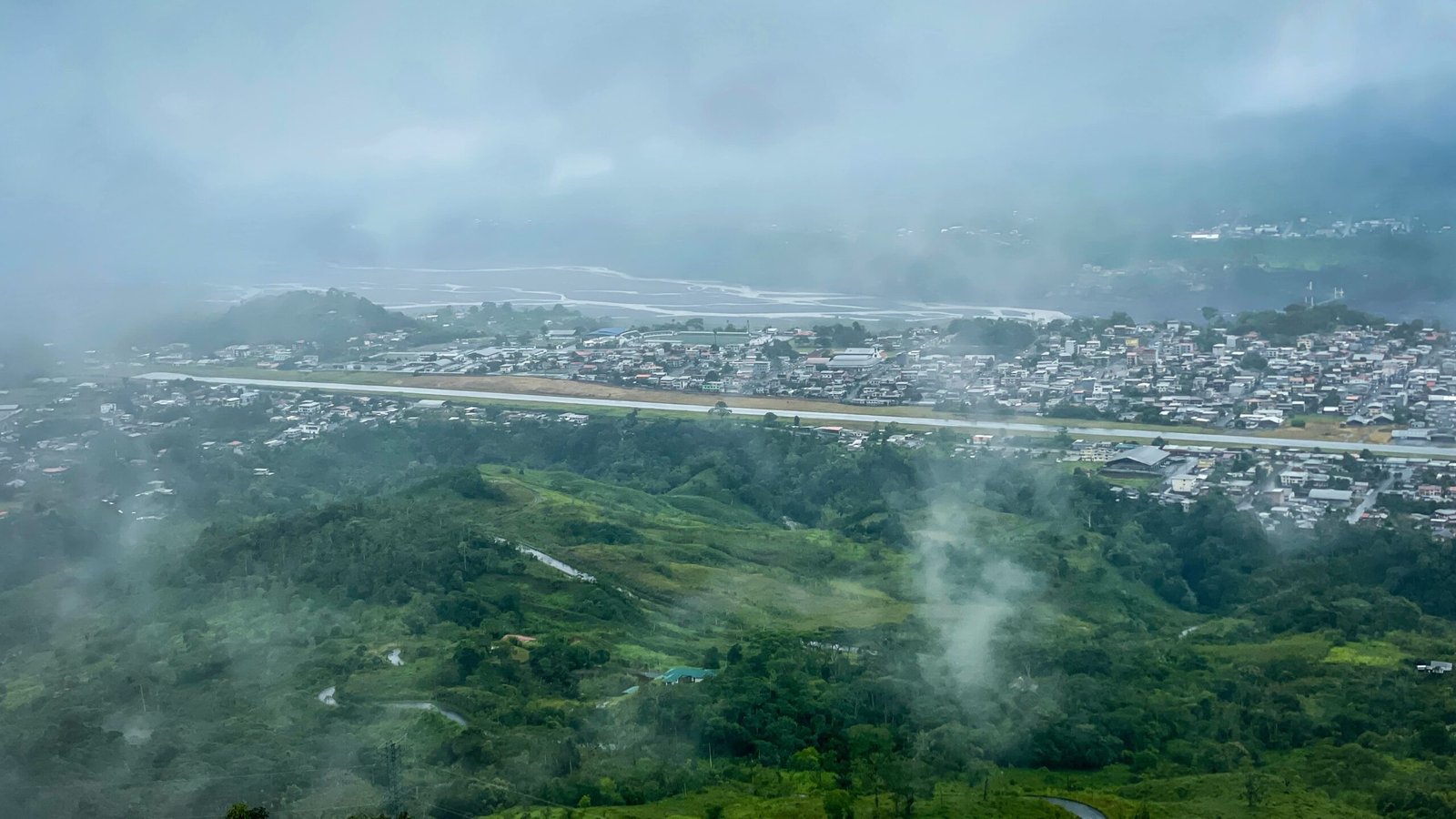
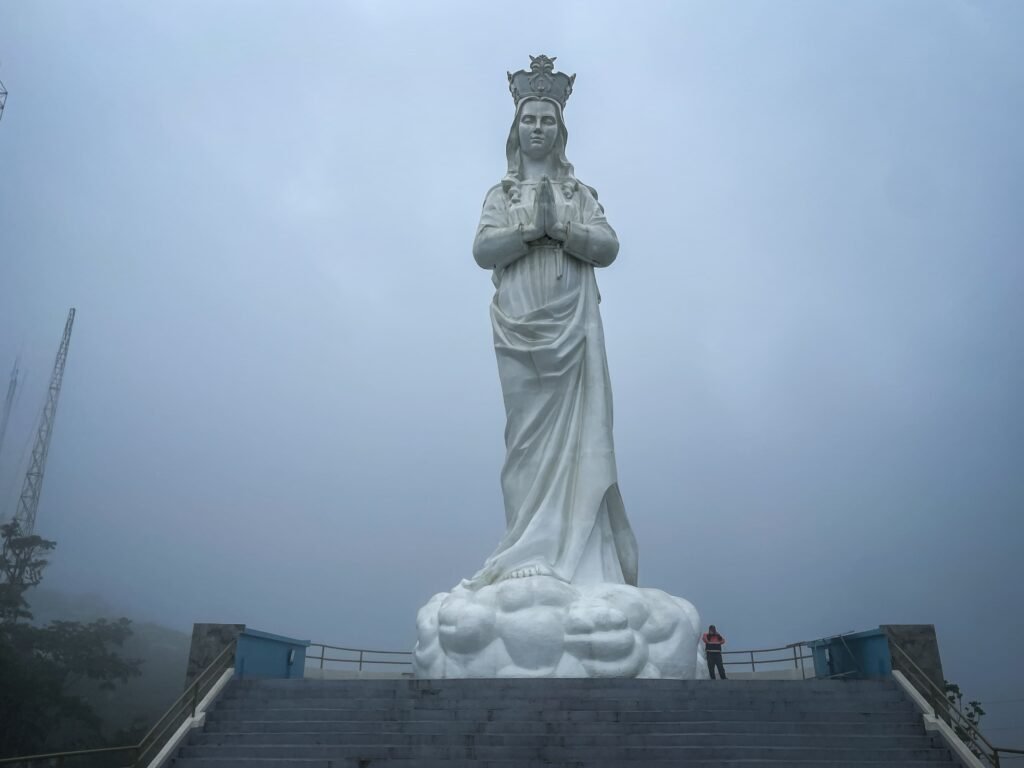
If you visit just one viewpoint in Macas, make it Mirador del Quilamo. Located above the city, this scenic spot is known for its monument to the Purísima de Macas and its sweeping views across the Upano Valley. From here, you can appreciate the contrast between the built-up city, the broad river valley, the forested landscape and the Kutukú mountain range. Early morning is a good choice if you hope to see the distant mountains before clouds gather.
Centro Gastronómico Shuar “YAWI”
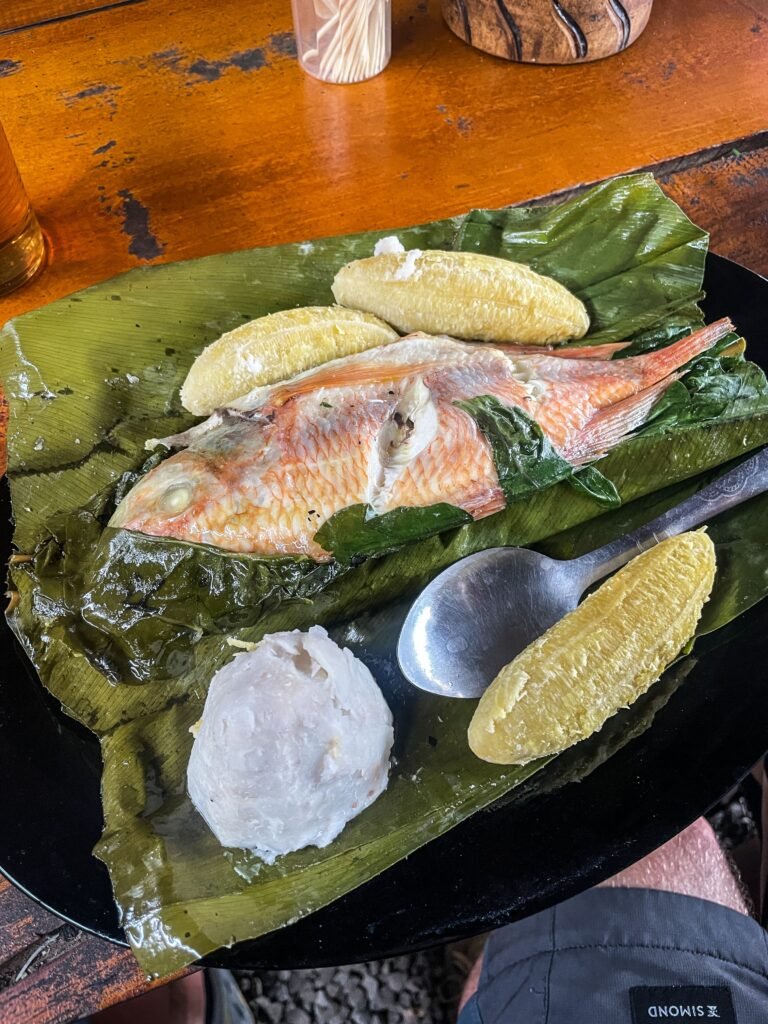
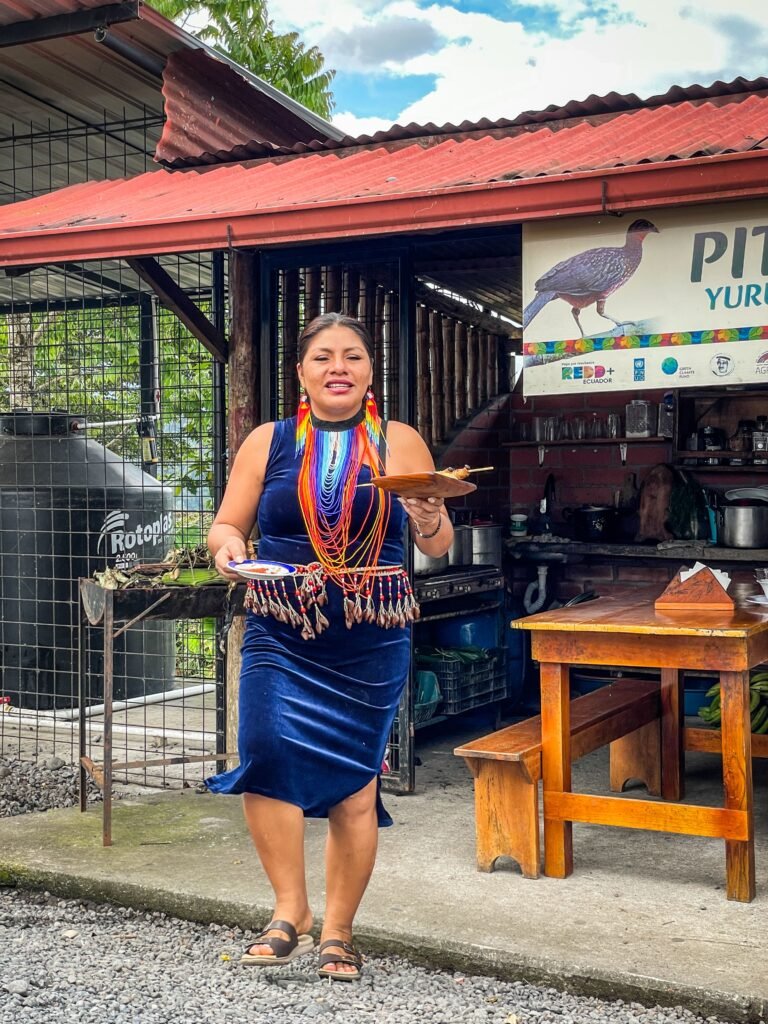
A visit to Macas would not be complete without discovering the food traditions of the Amazon, and Centro Gastronómico Shuar YAWI is a place to explore Shuar culinary heritage. Look out for dishes featuring yuca (cassava), plantains, fish and locally used herbs. If available, try ayampaco, a traditional preparation in which seasoned ingredients are wrapped in leaves and cooked.
Alto Upano viewpoint
For a more expansive view of the region, head to Mirador Alto Upano, located in the parish of San Isidro outside the urban centre. At approximately 1,736 metres above sea level, this elevated viewpoint looks towards the Upano River, the surrounding green mountains and the impressive landscapes of the Amazonian foothills. Sangay Volcano is another major attraction here, although clouds can obscure the summit. You will need transport to reach it, so consider arranging a taxi.
Cascada Yantza – Musap
If you have time to venture beyond the city, Cascada Yantza–Musap offers a chance to experience the rainforest more directly. The journey involves travelling into the countryside, followed by a walk along a forest trail.
Trying local food
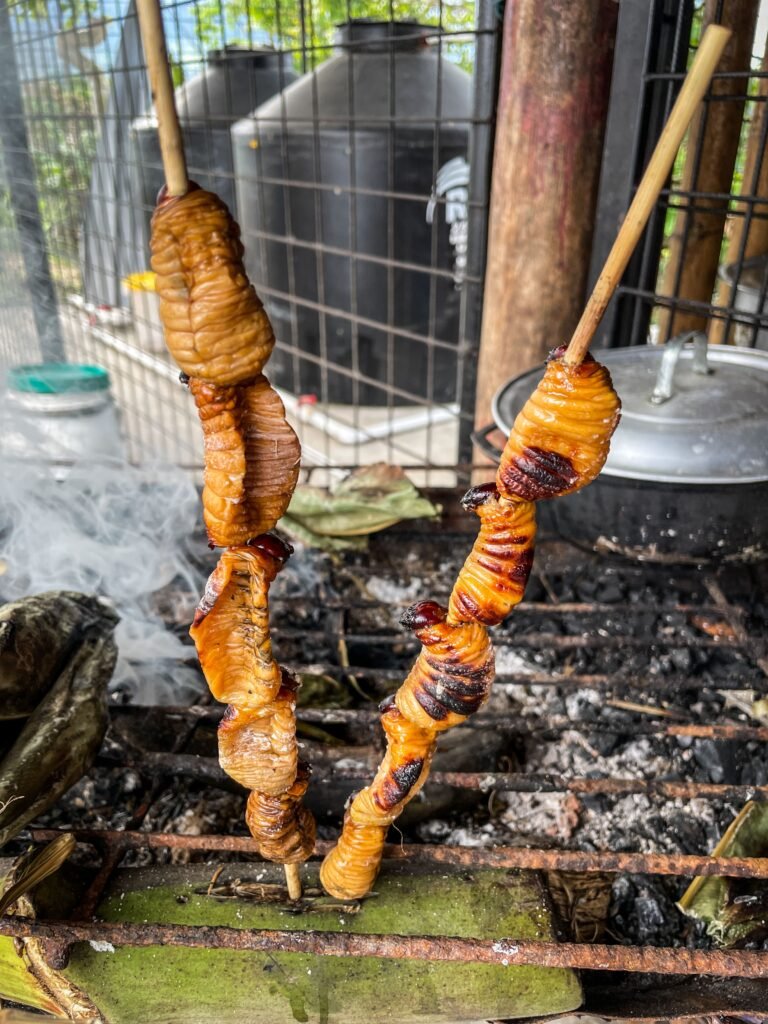
Food provides another way to understand Macas’s cultural history. Local cuisine draws on ingredients cultivated or gathered in the surrounding region, including cassava, maize, peanuts, tropical fruits and freshwater fish.
One of the best-known regional dishes is ayampaco, a preparation in which fish or meat is seasoned with herbs and other ingredients, wrapped in leaves and cooked. Recipes vary between communities and cooks, making it a useful introduction to the diversity of food traditions in the Ecuadorian Amazon.
Another important part of local life is guayusa, an infusion made from the leaves of Ilex guayusa, a plant native to the Amazon region. The drink has cultural significance among Amazonian peoples, including the Shuar, and is also associated with hospitality and everyday social life in Macas.
Guayusa contains caffeine and is traditionally consumed for its stimulating effect. Sharing the drink can be more than a simple refreshment: in some cultural contexts, it is connected to conversation, collective knowledge and the rhythms of daily life.
Exploring the deeper Amazon on a multi-day expedition
Local tour operators can arrange guided journeys into more remote areas of Morona Santiago, where dense forest, winding rivers and isolated communities offer a very different perspective on Ecuador’s Amazon region. Depending on the itinerary, you may spend your days hiking beneath the forest canopy, looking for tropical birds and other wildlife, learning about medicinal plants, and discovering how Indigenous communities use and understand their natural surroundings. Some expeditions also include river journeys, overnight stays in basic jungle accommodation and opportunities to learn about Shuar traditions from local guides. Trips can range from two days to longer adventures, depending on the destination and level of remoteness. If you’re particularly interested in exploring relatively untouched rainforest, contact a specialist operator in Macas to discuss a tailor-made itinerary, as reaching the more isolated areas may require additional travel time. Be prepared for humid conditions, muddy trails and simple facilities, but also for an opportunity to experience a side of the Ecuadorian Amazon that a short city visit cannot provide.