Introduction
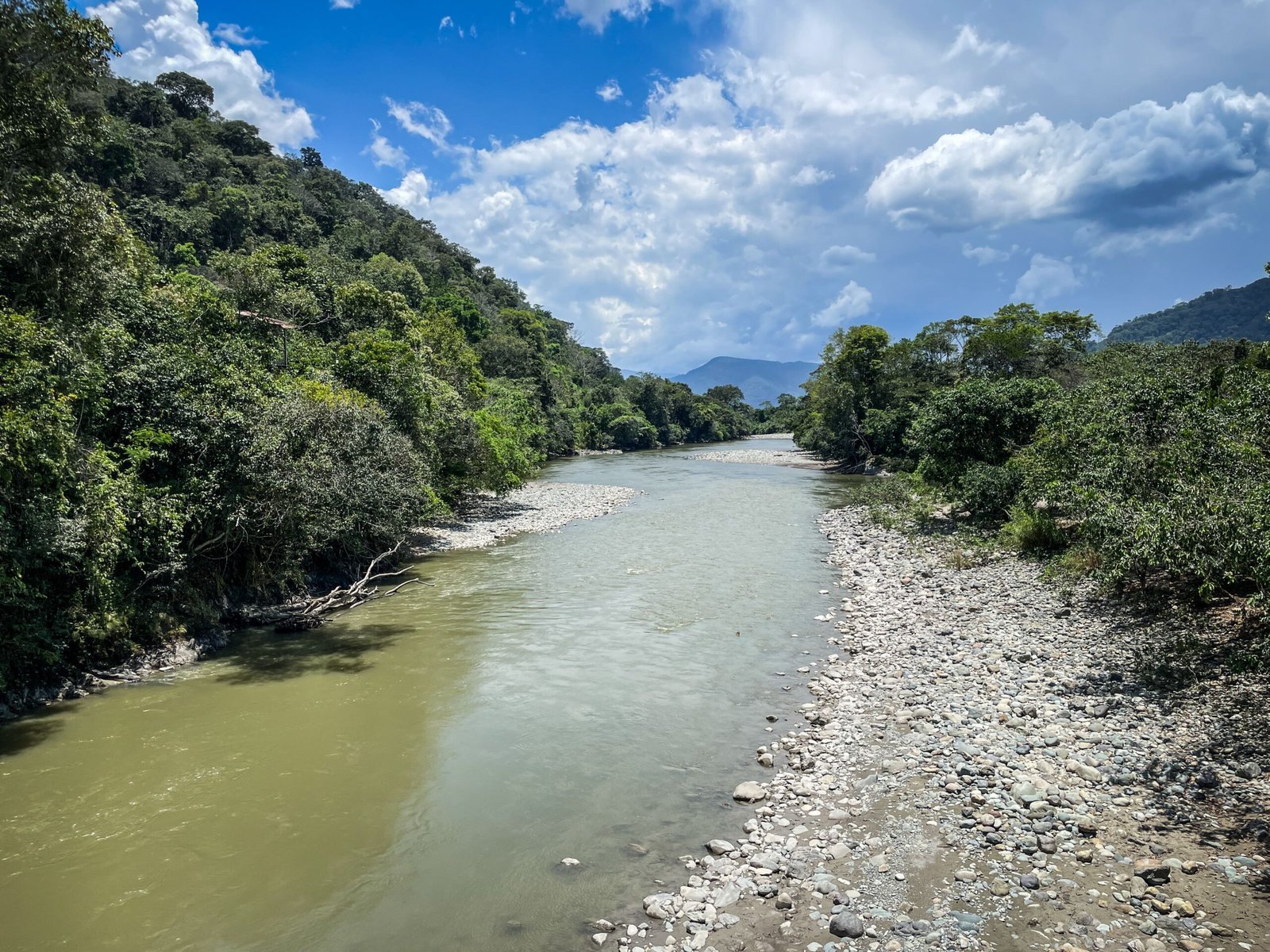
Gualaquiza occupies a fascinating geographical transition between the Andean highlands and the Amazon rainforest. Its relatively low elevation, warm climate and abundant rainfall create an environment where dense vegetation, impressive waterfalls and remarkable biodiversity are part of everyday life.
Despite its natural beauty, Gualaquiza remains relatively unknown to international travellers, especially when compared with more popular destinations in Ecuador. Yet this is precisely what makes the town interesting. Life here moves at a slower pace, tourism is still developing, and the surrounding countryside offers plenty of opportunities for exploring lesser-visited corners of the Ecuadorian Amazon.
A Brief History of Gualaquiza
Long before Gualaquiza appeared on colonial maps, the surrounding territory was inhabited by the Shuar, an Indigenous people with a long-standing connection to the forests and rivers of the southern Ecuadorian Amazon. Their communities developed ways of life closely adapted to the rainforest environment, relying on agriculture, hunting, fishing and extensive knowledge of local plants and natural resources.
European interest in the region began centuries ago, although reaching these remote territories was far from easy. Spanish expeditions ventured eastward from the Andean settlements in search of new territories, resources and possible routes into the Amazon basin. The area around Gualaquiza gradually became known to colonial explorers, partly because of earlier attempts to establish settlements and access the region’s natural wealth. However, geographical difficulties and resistance from Indigenous populations made permanent European control difficult.
The establishment of the modern settlement is generally associated with the Franciscan missionary José Prieto, who arrived in the area in 1815 and is credited with founding Gualaquiza. Early colonial settlement developed around missionary activity and agriculture. Crops such as sugarcane and maize became important, while the surrounding forests and rivers continued to shape the lives of the local population.
During the nineteenth century, several religious missions attempted to establish a more permanent presence in the region. Jesuit missionaries arrived in the 1870s, although their stay was relatively short. The Salesians followed towards the end of the century and eventually became particularly influential in the development of local institutions and missionary settlements.
Gualaquiza’s history also reflects the gradual movement of settlers from the Andean provinces of Azuay, Cañar and Loja. People arrived in search of agricultural land, economic opportunities and access to the region’s natural resources. Gold exploration and cattle farming contributed to this migration and gradually transformed the local economy and settlement patterns.
An important milestone came on 16 August 1944, when Gualaquiza officially became a canton. This administrative change marked a significant step in its political development and helped establish its position as an important settlement in Ecuador’s southeastern Amazonian region. Following the creation of Morona Santiago Province in 1953, Gualaquiza became part of the newly established province.
How to get to Gualaquiza?
Gualaquiza is located in the southeastern part of Ecuador, in Morona Santiago Province, and can be reached by road from several major cities in the country. Although it is somewhat off the main tourist trail, the town is connected by regular intercity bus services, making it possible to visit without renting a car.
The most convenient starting points are Cuenca, Loja and Macas. The journey from each city takes you through changing landscapes, from the Andean highlands and mountain valleys to the greener, warmer surroundings of the Amazonian foothills.
From Cuenca to Gualaquiza
Cuenca is one of the best places to start your journey to Gualaquiza. The distance is approximately 170 km, depending on the route, and the bus journey takes around 5 hours.
There are two main road connections. One passes through Gualaceo, Sigsig and Chiguinda, while the alternative follows the road through Gualaceo, Plan de Milagro and San Juan Bosco. Both routes offer beautiful scenery as the landscape gradually changes from the highlands to the tropical eastern slopes.
Several bus companies operate services between Cuenca and Gualaquiza, including Cooperativa 16 de Agosto and Turismo Oriental.
From Loja to Gualaquiza
Travelling from Loja is another convenient option, particularly if you are exploring southern Ecuador or arriving from the Peruvian border.
The route covers approximately 185 km and passes through Zamora, Yantzaza and El Pangui before reaching Gualaquiza. Along the way, you will experience the transition from the southern Andean region into the lush landscapes of the Amazon basin.
Bus companies serving this route include Loja Internacional, Nambija and Unión Yantzaza. Allow approximately 4–5 hours for the journey, although actual travel time can vary depending on road conditions and the service you choose.
From Macas to Gualaquiza
Macas, the capital of Morona Santiago Province, is another possible starting point. The distance to Gualaquiza is approximately 200 km, and the road passes through Sucúa, Logroño, Méndez, Limón and San Juan Bosco.
The journey generally takes around 5–6 hours. Transport is provided by companies such as Cooperativa 16 de Agosto and Cooperativa Sucúa.
From Quito to Gualaquiza
If you are travelling from Ecuador’s capital, you can find direct long-distance bus connections to Gualaquiza. The journey is considerably longer than from the southern cities, so it is worth checking departure times and travel duration before setting off.
Companies that operate this route include Touri San Francisco and Centinela del Oriente. Alternatively, you can travel from Quito to Macas and continue from there to Gualaquiza, although this involves changing buses.
Where to stay in Gualaquiza?
Accommodation options in Gualaquiza are relatively modest, and you shouldn’t expect a large selection of hotels or backpacker hostels. However, if you are travelling on a budget, you can find simple places to stay without spending too much.
During my visit to Gualaquiza, I stayed at Hostal El Paraíso, a good budget option for travellers looking for basic but comfortable accommodation. My room was clean, and one of the biggest advantages was its location, just a short walk from the town’s bus station. This made arriving with luggage and organising onward transport particularly convenient.
What to see around Gualaquiza?
Jardín Botánico El Gato
Jardín Botánico El Gato turned out to be quite different from what I initially imagined when hearing the words botanical garden. Rather than a carefully designed collection of plants with neatly organised sections and labelled species, the place felt more like someone’s personal experiment that had gradually evolved into something rather special.
The concept seemed to be quite simple: plant as many different species as possible and let nature do its thing. Surprisingly, it worked well. Today, the garden resembles a curious combination of a traditional botanical collection and a dense tropical jungle, with vegetation growing in all directions and creating some wonderfully unusual corners.
Walking along its paths felt a little like stepping into an adventure movie. Some sections were so overgrown that they reminded me of the jungle landscapes from Jurassic Park. It was easy to imagine dinosaurs appearing between the enormous leaves and tangled vegetation!
We enjoyed exploring the garden at our own pace, discovering different plants and taking photographs along the way. One of the highlights was climbing the tower to reach its upper viewpoint, which offered a different perspective of the surrounding greenery.
Sendero Ecoturístico Las Culebrillas
For those who prefer walking through natural surroundings, the Las Culebrillas area offers an opportunity to explore the humid tropical forest surrounding Gualaquiza. The trail leads through dense vegetation, where the sounds of insects and birds accompany you along the way.
One of the main attractions in this area is Cascada Las Culebrillas, a waterfall hidden among the greenery. The route is particularly appealing to travellers interested in photography, birdwatching and discovering the smaller details of the rainforest ecosystem, including native plants and wildlife.
Cascadas de Kupiamais
The waterfall complex consists of several separate drops, creating opportunities to admire the surrounding landscape and photograph the rushing water. The journey involves a drive from Gualaquiza, followed by a hike through the forest.
The walk itself is part of the experience. The trail passes through lush vegetation, with the possibility of spotting birds and enjoying the atmosphere of the Amazonian forest. Once at the waterfalls, visitors can take photographs, relax beside the water and, where conditions permit, enjoy a refreshing swim.
As this is a natural attraction within the territory of the Shuar community, it is advisable to arrange your visit in advance. Local guiding and food services may be available through the community, allowing you to explore the area with someone familiar with the surroundings.
Encañonado El Waquiz
Another natural attraction worth including in your Gualaquiza itinerary. Located in the lush surroundings of the town, it offers an opportunity to discover one of the smaller waterfalls hidden among the region’s tropical vegetation.
We actually visited the waterfall as part of an improvised excursion. After spending some time at Playa Unión del Ideal, we found a taxi camioneta and negotiated a ride back to town, with an additional stop at El Waquiz along the way.
From the drop-off point, we followed a relatively short path downhill to reach the waterfall. It wasn’t particularly large or spectacular in height, but something about this little corner of nature was charming. When we arrived, we had the place almost entirely to ourselves, which made it even more enjoyable. That didn’t last long, though, as several other visitors soon appeared.
Playa Unión del Ideal
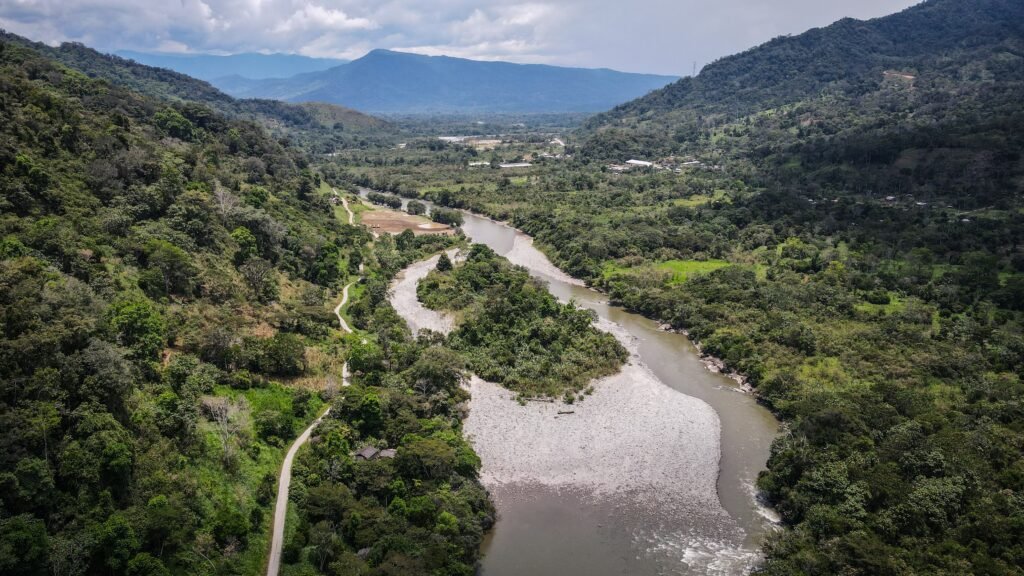
Despite its name, this is not a coastal beach. Instead, it is a riverside recreation area where the Cuyes and Cuchipamba rivers meet, creating a pleasant setting for spending a few hours beside the water.
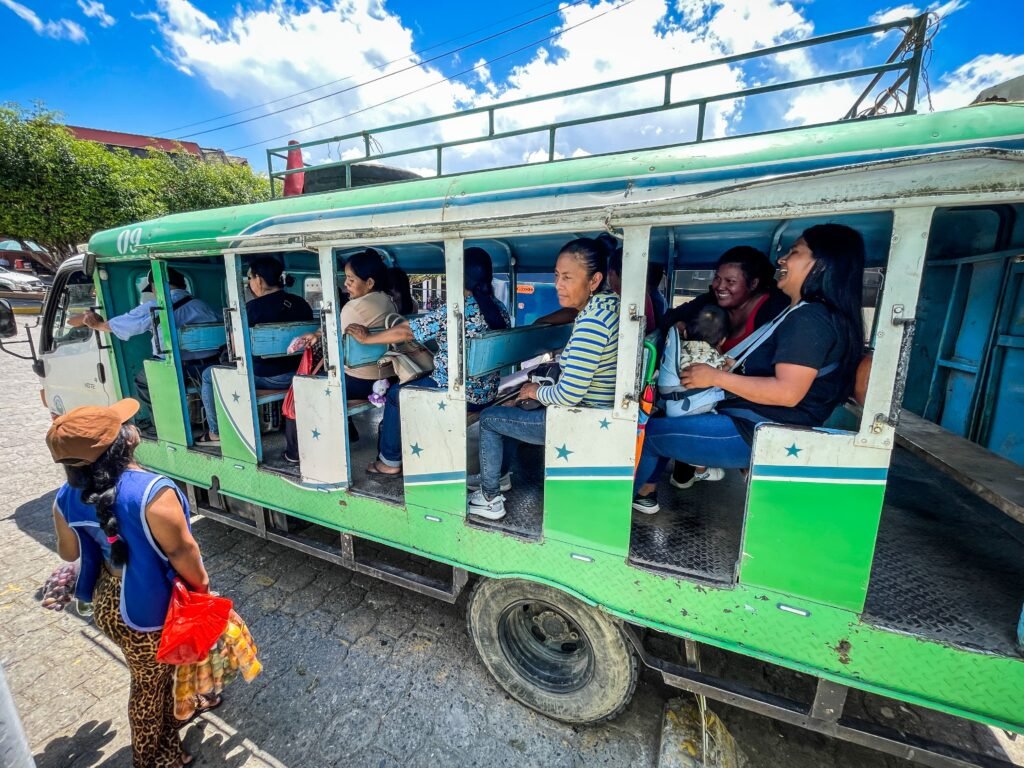
Getting there can be part of the adventure itself. We decided to take a ranchero, a rather unusual form of local transport that is essentially a truck converted into a passenger vehicle. The best part? It has no windows, so there is plenty of fresh air, and you can enjoy the surrounding scenery along the way. It was a pretty cool experience and certainly more interesting than sitting inside an ordinary bus!
Once we arrived at Playa Unión, we spent some time exploring the riverfront, walking around and enjoying the peaceful atmosphere. I also took the opportunity to fly my drone and capture some footage of the surroundings. We even entertained ourselves by throwing small stones into the water, trying to make them skip across the surface. A friendly local dog decided to accompany us for a while, making the whole visit feel even more relaxed.
It was a simple afternoon, without any particular sightseeing agenda, but these spontaneous moments often become some of the best memories of a trip.
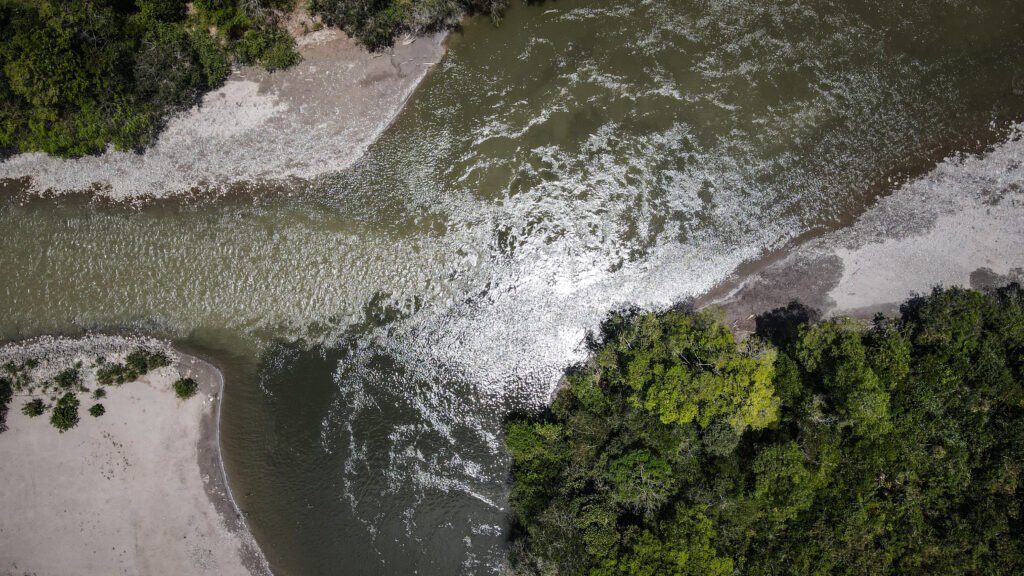
The area is suitable for swimming and other water-based activities, depending on the season and river conditions. During busier periods, you may also find local food stalls and places to relax by the water.
One thing worth keeping in mind is the return journey. We became a little too focused on waiting for another ranchero and ended up standing in the sun for quite a long time. In hindsight, we should have taken one of the passing camionetas (pickup trucks used for local transport) instead. Eventually, one stopped and agreed to take us back to the town centre for the same price as the ranchero.
Despite the slightly longer wait, Playa Unión del Ideal was a lovely place to spend an afternoon and a good reminder that exploring Gualaquiza doesn’t always require a complicated itinerary.