Introduction
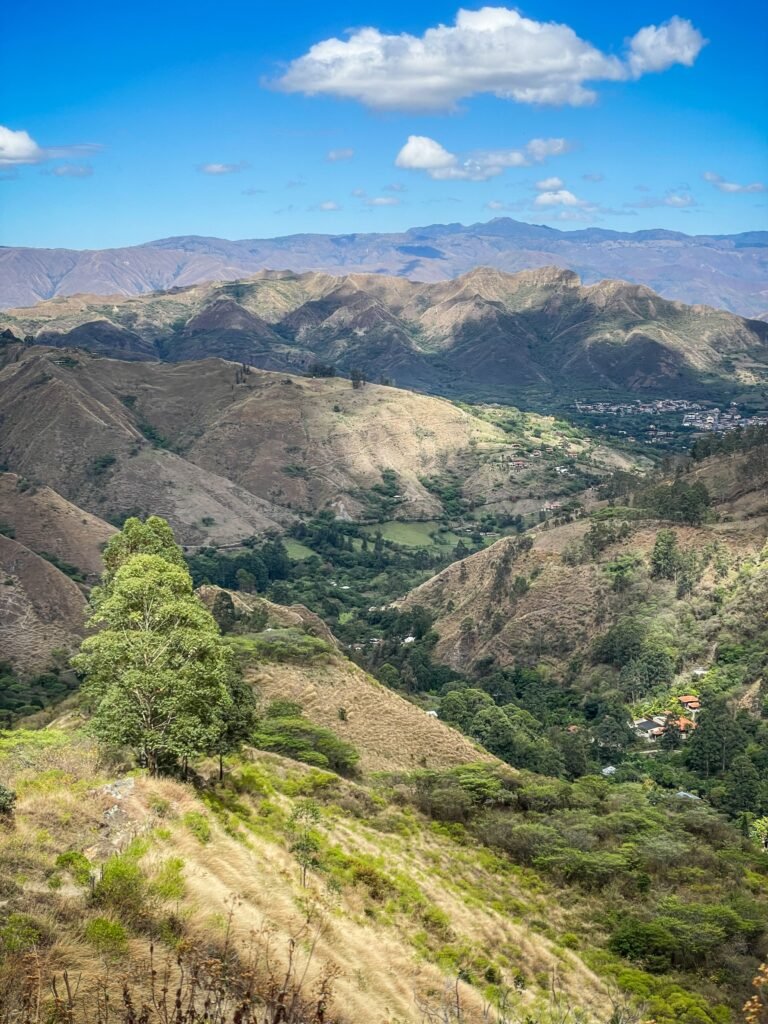
Vilcabamba is a small town in southern Ecuador, located approximately 40 km south of Loja, at an elevation of around 1,700 metres. Surrounded by green hills and crossed by the Chamba and Uchima rivers, it has a noticeably warmer and drier climate than many other parts of the Ecuadorian Andes. Agriculture has traditionally played an important role in local life, with crops including maize, peanuts, bananas, sugar cane, cassava and citrus fruits.
The town is best known internationally as the “Valley of Longevity” or “Valley of the Centenarians”. During the second half of the 20th century, reports of residents supposedly living well beyond 100 years attracted considerable attention from journalists, researchers and foreign visitors. This reputation eventually turned Vilcabamba into an unusual destination for people interested in health, ageing and alternative lifestyles.
Today, the town has a multicultural character, with a mix of long-established Ecuadorian families and foreign residents, including expatriates who have settled in the area.
A Brief History of Vilcabamba
Long before the establishment of the modern town, the Loja region was inhabited by indigenous communities, most notably the Paltas. They occupied parts of what is now southern Ecuador and maintained their own social structures, agricultural practices and cultural traditions.
The Inca Empire expanded into the southern Ecuadorian Andes during the 15th century, incorporating territories in the Loja region into its wider political system. However, the history of the Paltas and other local communities did not end with the Inca expansion. Their presence continued into the colonial period, although Spanish rule brought major changes to land ownership, settlement patterns and local society.
Spanish colonisation and the foundation of Vilcabamba
Following the Spanish conquest, the Loja region was reorganised under the colonial system of encomiendas, through which Spanish settlers received rights to collect tribute and organise indigenous labour.
Historical accounts identify Pedro de León as the first encomendero associated with Vilcabamba, with records placing his involvement between 1538 and 1581.
The foundation of Vilcabamba is traditionally dated to 1 September 1576 and associated with the Spanish settler Luis Fernando de la Vega. The settlement later became an ecclesiastical parish under the name La Victoria.
During the colonial period, agriculture became increasingly important to the local economy. Fertile land and a favourable climate supported the cultivation of maize, sugar cane, tobacco, peanuts and various tropical and subtropical fruits. Large agricultural estates gradually gained influence in the surrounding countryside, changing the relationship between local communities and the land.
Vilcabamba becomes a civil parish
A significant administrative milestone came on 29 May 1861, when Vilcabamba was officially recognised as a civil parish within the canton of Loja under Ecuador’s territorial division legislation.
This date remains important in the town’s local history and is commemorated as its political anniversary. Over time, Vilcabamba developed as an agricultural settlement, with its economy based largely on farming and livestock.
The origins of the longevity legend
Vilcabamba’s international reputation began to grow during the 20th century, when reports emerged of unusually large numbers of residents reaching the age of 100 and beyond.
Journalists and researchers became interested in the possibility that the local climate, diet, physical activity, relatively low levels of industrial pollution or even the mineral composition of the drinking water might contribute to exceptional longevity.
Some popular accounts attributed the supposed health benefits to the water from the surrounding rivers, although these claims were never scientifically established.
The subject received more rigorous attention in 1982, when researchers Richard B. Mazess and Ralph W. Mathisen published a study examining historical mortality records from Vilcabamba. Their findings challenged the claims of exceptional longevity, concluding that exaggerated ages in population records accounted for the apparent unusually high number of centenarians.
Although the scientific evidence did not support the popular legend, the nickname “Valley of Longevity” had already become firmly associated with Vilcabamba and continues to attract visitors interested in its unusual reputation.
How to get to Vilcabamba?
Vilcabamba is located in southern Ecuador, approximately 40 km south of Loja, in the province of the same name. Despite its popularity among foreign visitors and expatriates, the town does not have its own airport or direct long-distance bus connections from most major Ecuadorian cities. The easiest way to reach it is through Loja, which serves as the main transport hub for the surrounding region.
From Loja to Vilcabamba
Loja is the main starting point for the final leg of the journey. Vilcabamba lies approximately 41 km south of the city, and the drive usually takes between 45 minutes and 1.5 hours, depending on the transport used.
The cheapest option is to take a local bus from Loja’s main bus terminal (Terminal Terrestre Reina del Cisne). The journey follows the road south through the agricultural valleys of Malacatos before reaching Vilcabamba.
The main operators serving this route include Vilcabambaturis and Sur Oriente. Vilcabambaturis operates frequent departures throughout the day, with published schedules running approximately from 05:45 to 20:45. The journey takes around 1–1.25 hours.
A bus ticket costs approximately US$1.50–2.00, although fares can change. It is worth having small cash denominations available.
If you prefer a quicker journey, taxis are available in Loja. A private taxi takes approximately 45–60 minutes and is a more convenient option if you are travelling with luggage or arriving outside bus operating hours.
From Quito to Vilcabamba
Travelling from Quito to Vilcabamba involves a considerable journey because the two destinations are separated by much of Ecuador’s southern highlands.
The most straightforward budget option is to take an overnight bus from Quito’s Quitumbe bus terminal to Loja. The journey generally takes around 11–13 hours, depending on the operator and road conditions.
Once in Loja, transfer to a local bus heading to Vilcabamba. Allow another 1–1.25 hours for this section.
An alternative is to fly from Quito to Ciudad de Catamayo Airport (LOH), near Loja. The flight takes approximately 50–60 minutes. From the airport, you can arrange a taxi or transfer to Vilcabamba, which takes around 1.5 hours by road. You can also travel to Loja first and continue by local bus.
From Cuenca to Vilcabamba
Cuenca is another convenient starting point for travelling to southern Ecuador. Buses connect Cuenca with Loja, with the journey usually taking approximately 4–5 hours.
Services are operated by several intercity bus companies, including Cooperativa Loja. Buses depart from Cuenca’s main bus terminal.
After arriving in Loja, continue south towards Vilcabamba using one of the local bus services described above.
The total journey normally takes around 5–6 hours, excluding waiting time between connections.
From Guayaquil to Vilcabamba
Travelling from Guayaquil requires crossing from Ecuador’s coastal lowlands into the southern Andes.
There are direct intercity bus services between Guayaquil and Loja, including those operated by Cooperativa Loja. The journey generally takes around 8–10 hours, depending on the departure and road conditions.
Buses depart from Guayaquil’s Terminal Terrestre. After reaching Loja, change to a local bus towards Vilcabamba.
An overnight service can be useful if you want to avoid spending most of the following day travelling. However, check the arrival time in Loja to make sure you can connect with onward transport to Vilcabamba.
From Peru to Vilcabamba
Travellers arriving from northern Peru can reach Vilcabamba via the Macará–La Tina international border crossing.
From the Peruvian side, Piura and Sullana are the main transport hubs for reaching the border. After crossing into Ecuador, continue towards Macará and then Loja. From Loja, local buses run south to Vilcabamba.
There are also routes connecting the Loja region with northern Peru, but international bus services and border arrangements can change. Check current departures and border operating conditions before travelling.
Another possible route from Peru is through the La Balsa border crossing near Zumba, although this involves more remote roads and additional connections. It is generally less straightforward than travelling through Macará.
Where to stay in Vilcabamba?
Avalon B&B is a great accommodation option in Vilcabamba. The rooms are very clean and spacious, and the property has an interesting design with a lovely garden that adds to its relaxed atmosphere. The owner is friendly and easy-going, creating a welcoming environment without being intrusive. It’s a particularly good choice if you’re looking for somewhere comfortable, peaceful and a little different from a standard hotel.
What to see around Vilcabamba?
Parque de Vilcabamba
The central park is the natural starting point for exploring Vilcabamba. It is a small town square surrounded by restaurants, cafés, shops and the local church. There isn’t a huge amount to see here, but it’s a pleasant place to sit down, have an ice cream and watch everyday life unfold.
One thing I noticed during my visit was the surprisingly large international community. Despite Vilcabamba being a relatively small settlement, there were quite a few foreigners, particularly people who seemed to have settled here rather than simply passing through. The combination of local Ecuadorian life, international residents and relaxed cafés gives the town a slightly unusual atmosphere.
We spent some time around the square after visiting Rumi Wilco, stopping for ice cream before heading out for dinner. We also found a Turkish restaurant, where I ordered a shish kebab while Michelle went for a chicken wrap.
Rumi Wilco Nature Reserve
Rumi Wilco is a privately managed nature reserve on the edge of Vilcabamba, within walking distance of the town centre. The protected area covers less than 40 hectares, but it preserves an interesting section of the valley’s native vegetation. Its name comes from the wilco tree, a species particularly associated with this part of southern Ecuador.
The reserve has a network of self-guided trails crossing different types of terrain, from relatively easy riverside paths to steeper sections climbing the surrounding slopes. It is also a good place for birdwatching, with more than 140 bird species recorded in the reserve.
We visited in the afternoon and paid a $2 contribution using the wooden honesty box at the entrance. We started with a walk along the river before I decided to climb one of the nearby hills. Michelle stayed behind while I continued uphill.
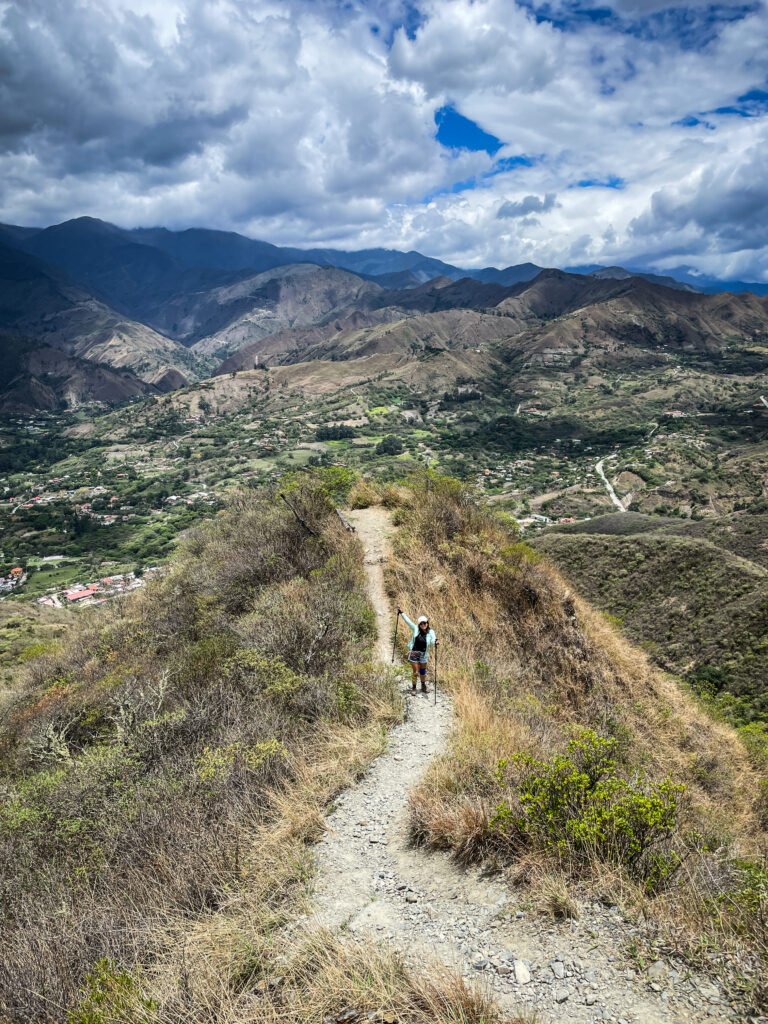
The climb rewarded me with nice views across the valley. I also spotted another trail continuing higher into the mountains, but it wasn’t marked on my offline maps, so I decided not to take the risk of following an unfamiliar route.
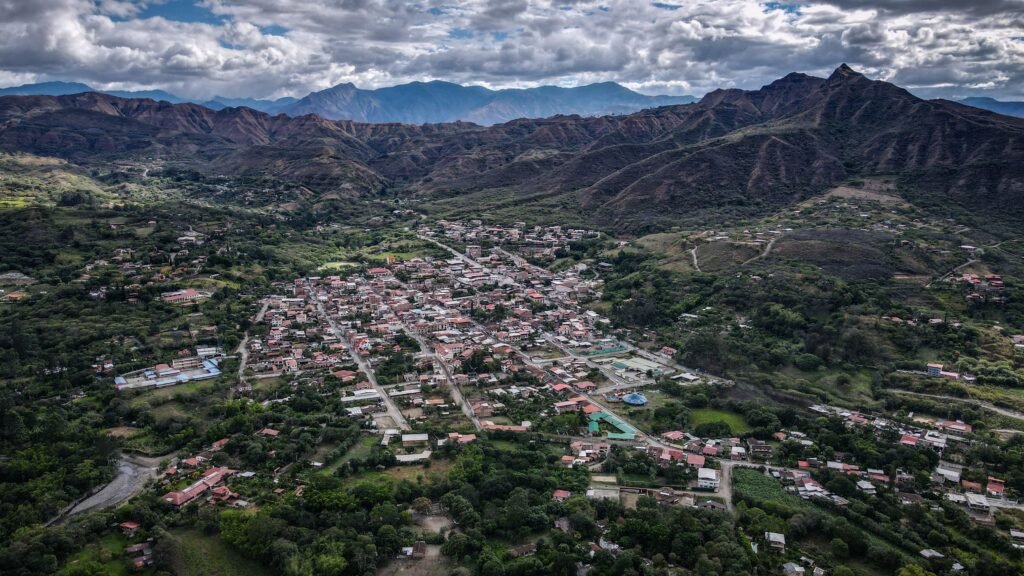
After flying my drone, I started descending to meet Michelle. On our way towards the exit, we suddenly encountered two dogs. The smaller one approached Michelle and tried to bite her. Fortunately, she was wearing a knee stabiliser, which took the impact. The dog managed to tear her trousers, but thankfully her leg was unharmed. It was a frightening moment, and we realised how easily the situation could have ended much worse.
Despite the unpleasant incident, Rumi Wilco was one of the more interesting places we visited around Vilcabamba. The riverside setting and the views from the higher trails make it worth exploring.
The entrance is at the end of Agua de Hierro road, across a footbridge over the Chamba River. It is approximately a 15-minute walk from the central square.
Cerro Mandango
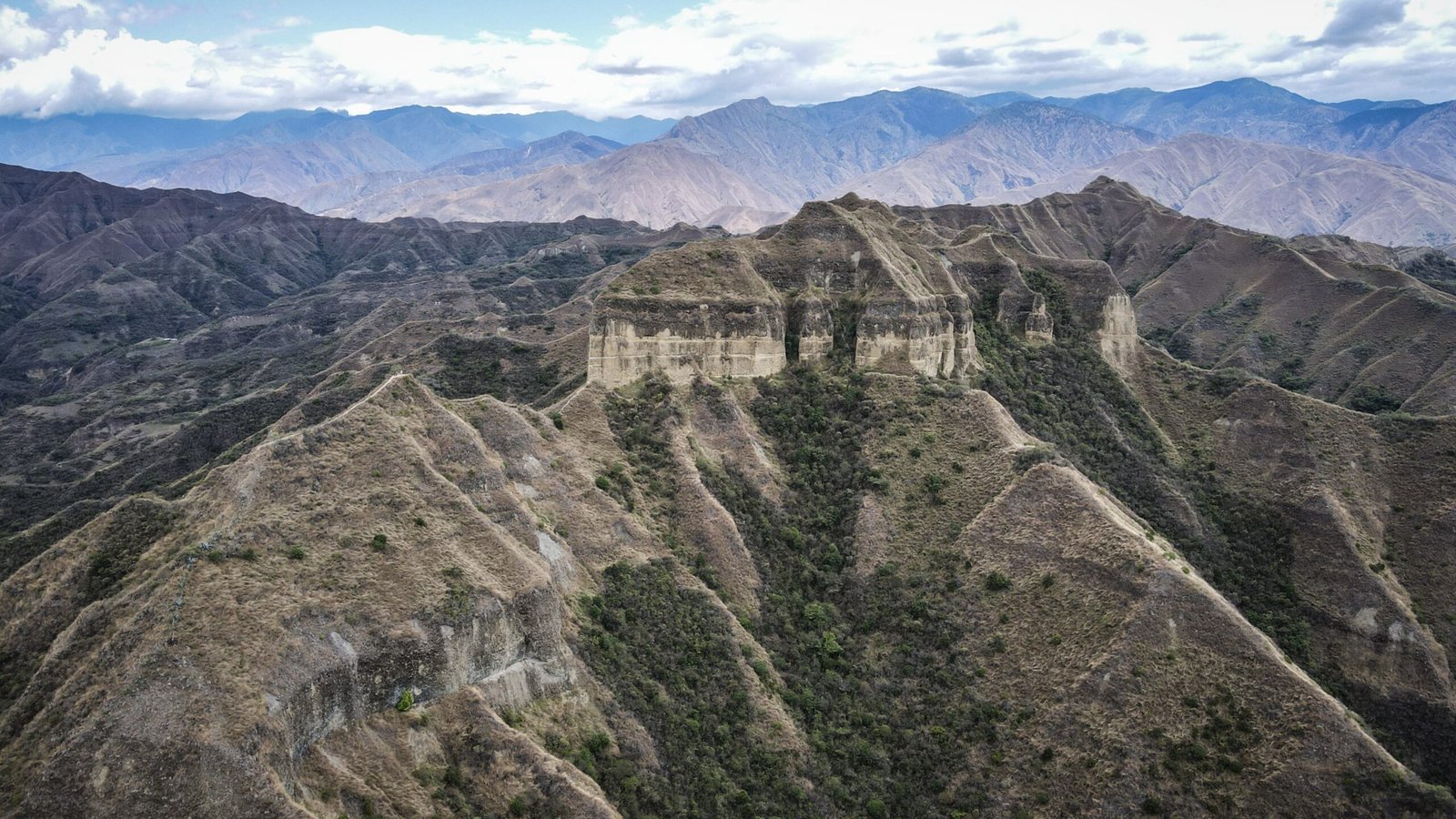
Cerro Mandango is probably the most recognisable natural landmark around Vilcabamba. Its unusual rocky silhouette rises above the valley and is sometimes called El Dios Acostado (the Sleeping God) because of its distinctive shape.
The mountain is one of the area’s most popular hiking destinations. The trail climbs through dry vegetation and rocky terrain before reaching viewpoints overlooking Vilcabamba, the surrounding agricultural land and the mountains beyond. The landscape is particularly impressive because of the contrast between the green valley and the exposed rock formations.
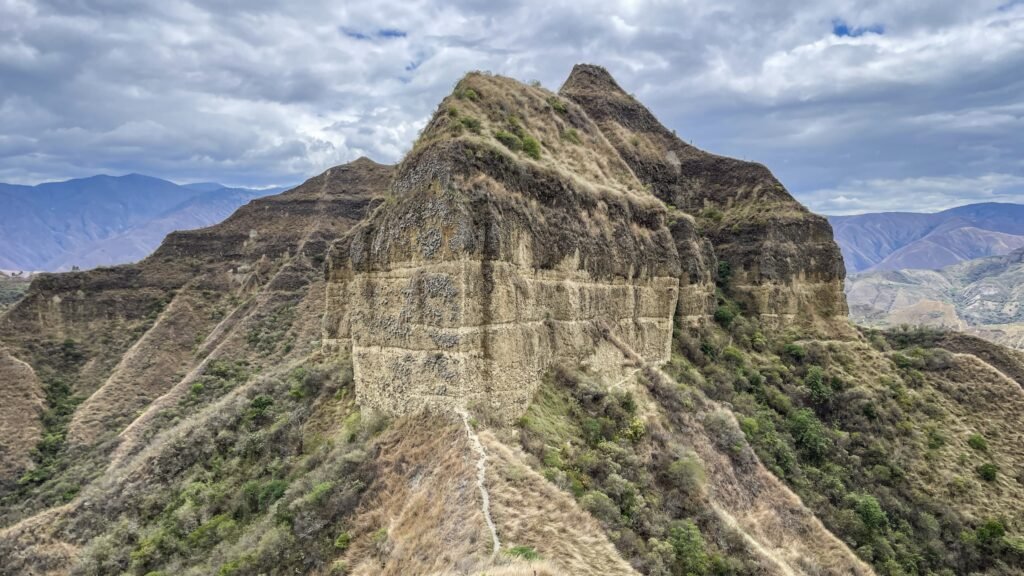
The ascent took us approximately 60 minutes to reach the main viewpoint. There were several other hikers on the trail, which made the experience feel more comfortable.
The views were fantastic, especially towards the unusual rock formation standing in front of us. It was one of those landscapes that looks even better in person than in photographs.
We decided not to continue further along the ridge because we had read that the remaining section could be tricky. Looking back, perhaps we should have given it a try, at least to see how far we could get.
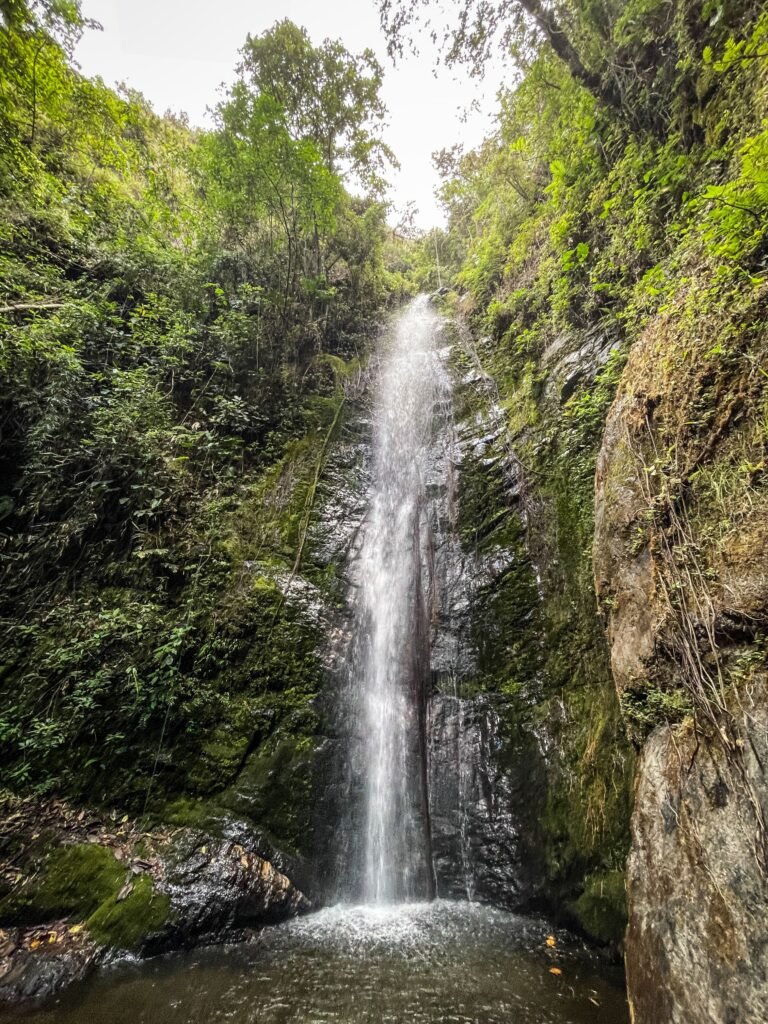
Cascada El Palto
Cascada El Palto is a waterfall located in the countryside, near San Pedro de Vilcabamba. Reaching it involves a hike through rural landscapes, with views over the surrounding hills and agricultural areas.
I headed to the main square and found a camioneta (local pickup truck used as transport). The driver agreed to take me to the trailhead for $5, which seemed like a fair price.
The walk there and back took approximately three hours and offered some lovely views over the hills and countryside. The waterfall itself was not particularly spectacular, at least compared with some of the waterfalls I had visited elsewhere in Ecuador, but it was still a pleasant destination and a good excuse to explore the surroundings.
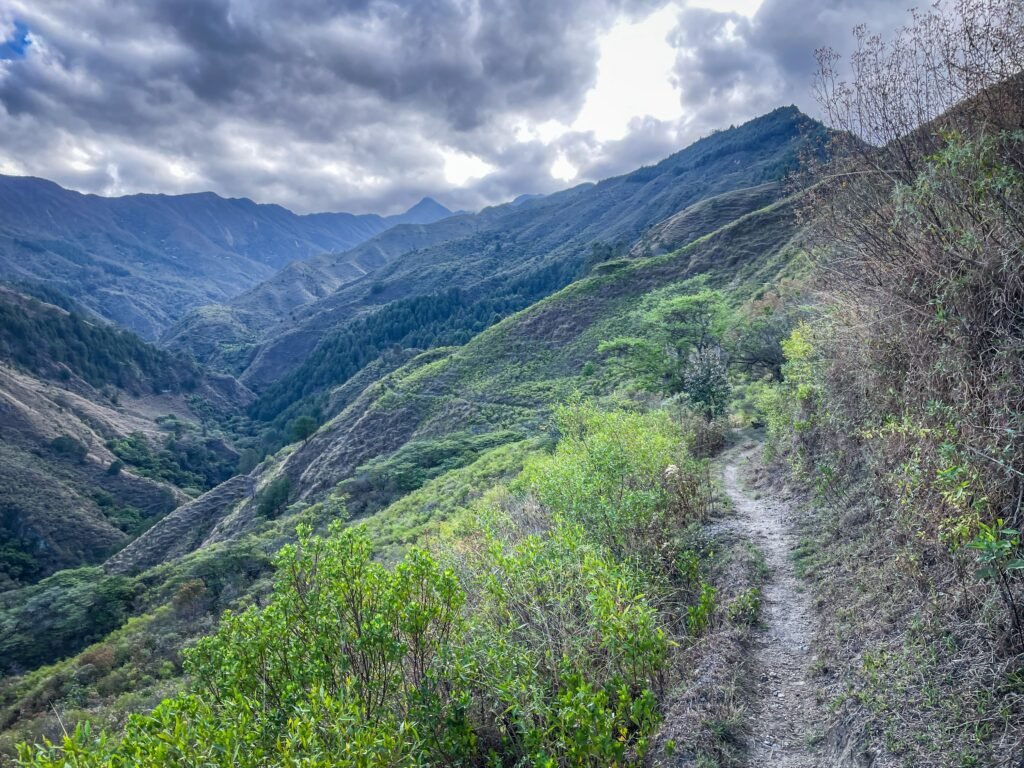
One slightly less enjoyable part of the experience was crossing private property towards the waterfall. The owner charged me another $2 for access and tried to calm down an aggressive dog that was barking nearby. Unfortunately, when I was leaving, the owner was nowhere to be seen, and the dog was still there, making the exit rather uncomfortable.
Fortunately, the pickup driver was already waiting for me when I returned to the main road. He had arrived about half an hour earlier than agreed, which was actually quite helpful as I could get back to Vilcabamba sooner than expected.