Introduction
Located in the central part of the country, Naryn is known for its mountains, wide-open landscapes, and strong nomadic traditions. While the town itself is fairly small, it’s an excellent base for exploring some of Kyrgyzstan’s best natural attractions, including Song-Kul Lake, Tash Rabat, Kel Suu Lake, Eki Naryn, Salkyn Tor, and several scenic mountain passes.
If you’re looking for luxury hotels or busy tourist streets, Naryn probably isn’t the right destination. But if you enjoy road trips, hiking, horseback riding, or simply spending time in nature, this region has plenty to offer. The slower pace of life and relatively small number of visitors make it feel much more authentic than some of the country’s better-known destinations.
Permits
There is a CBT office in town, so if you plan trips from Naryn to Kel Suu Lake or other places that require a permit, you can arrange them here.
How to get to Naryn?
The town is connected to the rest of the country by well-maintained roads, and several transport options are available depending on your budget and travel style.
By Shared Taxi
The most popular way to reach Naryn is by shared taxi. These depart throughout the day from the western bus station in Bishkek once enough passengers have filled the vehicle. The journey usually takes 4.5 to 6 hours, depending on road conditions and the number of stops along the way. Shared taxis can also be taken from other cities, e.g. Kochkor.
Shared taxis are faster than minibuses and are a good choice if you want to reach Naryn in a single day without renting a car.
By Minibus
Budget travellers can also take a marshrutka from Bishkek. Tickets are cheaper than shared taxis, although the trip is usually a bit longer because of additional stops. Vehicles generally leave in the morning, so it’s best to arrive early to secure a seat.
By Rental Car
Renting a car is the best option if you plan to explore the Naryn region beyond the town itself. Having your own vehicle makes it much easier to visit places like Song-Kul Lake, Tash Rabat, Kel-Suu Lake, and the surrounding mountain valleys at your own pace.
The drive from Bishkek follows the main highway over the scenic Dolon Pass before descending into Naryn. The route is fully paved and suitable for most vehicles during the warmer months, although winter conditions can make mountain roads more challenging.
The best time to visit Naryn
The best time to visit Naryn is from June to September, when the weather is mild, mountain roads are generally open, and most of the region’s top attractions are easily accessible. This is also the season when nomadic families move to the high pastures with their livestock, making it the perfect time to experience traditional yurt camps and Kyrgyz hospitality.
Spring (April to May)
Spring arrives slowly in Naryn due to its high altitude. While lower valleys begin to turn green, snow can still cover the surrounding mountains, and some high passes may remain closed. If you’re planning to visit alpine lakes or remote valleys, late May is generally a better choice than April.
Winter (October to March)
Winter in Naryn is long, cold, and snowy. Temperatures frequently drop well below freezing, and heavy snowfall can affect travel on mountain roads. While this isn’t the best season for sightseeing, it offers a completely different experience for travellers interested in snow-covered landscapes and authentic local life away from the tourist season.
Where to spend a night?
I spent a few nights at Pamko. The place was spacious and clean. There was also a mini kitchen area, and the owner was very friendly. They kept my luggage safe while I was staying overnight in Tash Rabat.
What to see in Naryn?
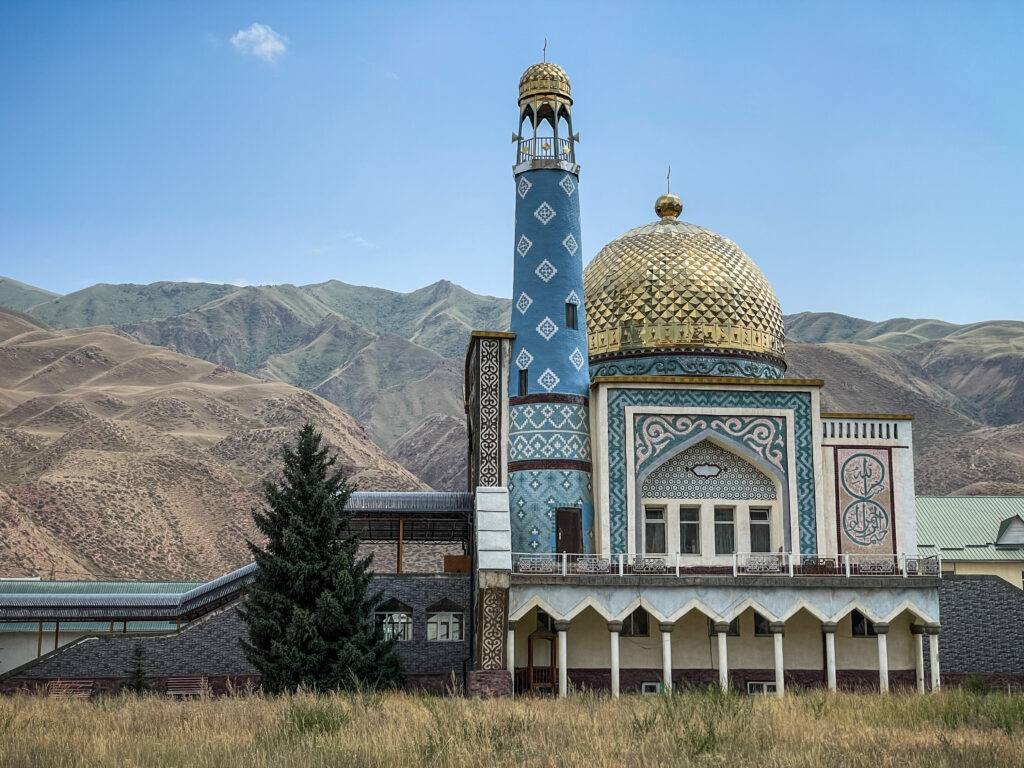
Naryn Central Mosque
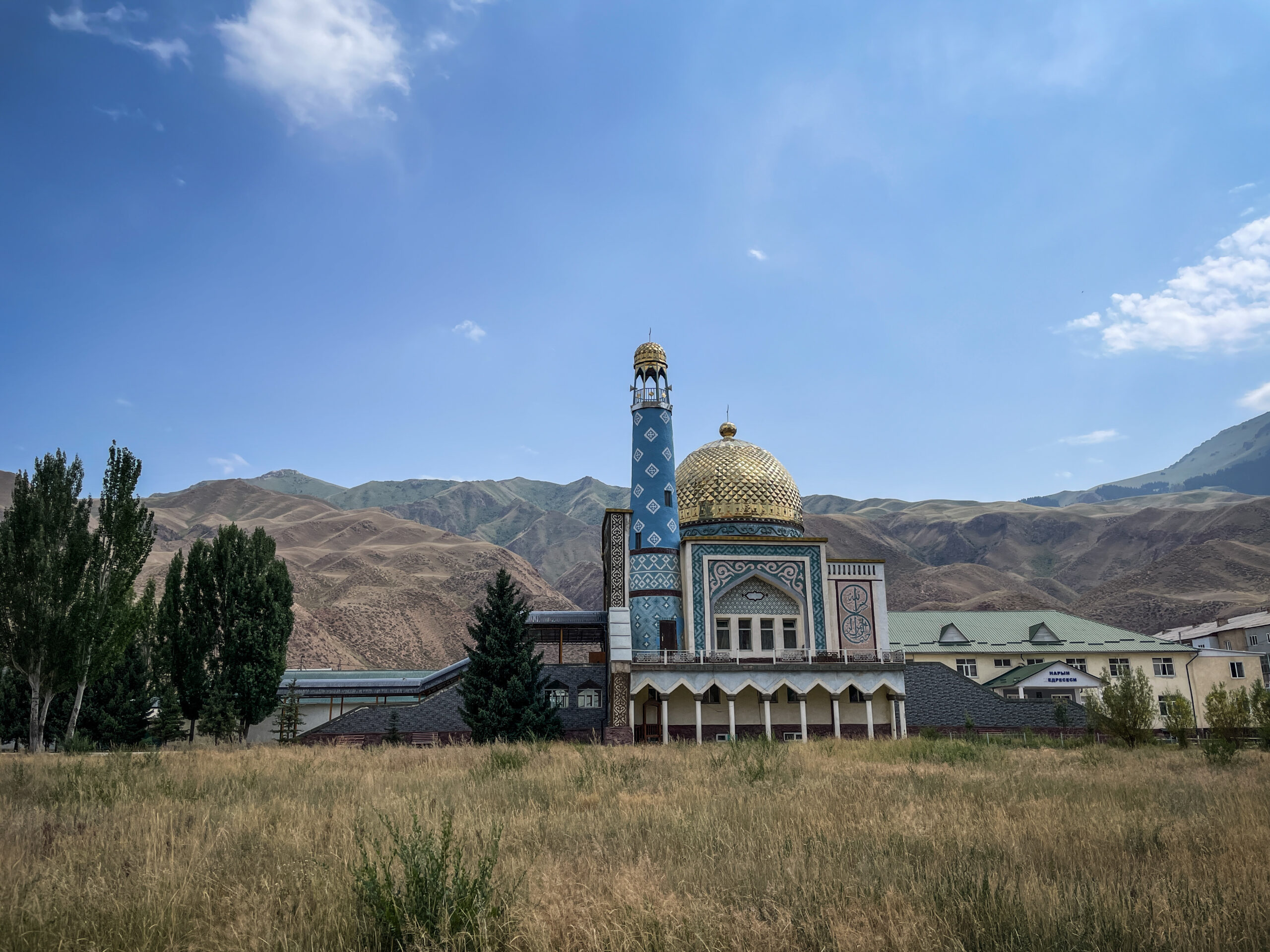
The Naryn Central Mosque is one of the town’s most recognisable landmarks. Its modern architecture, elegant domes, and tall minarets stand out against the surrounding mountain scenery, making it a popular place to stop while exploring the town centre.
Visitors are welcome to admire the mosque from the outside, while those wishing to enter should dress respectfully and avoid visiting during prayer times.
Tsentral’naya Ploshchad’ (Central Square)
The Central Square is the heart of Naryn and a good place to experience the town’s relaxed atmosphere. Locals gather here throughout the day, especially in the evenings, and you’ll often find families walking, children playing, and people meeting with friends.
Surrounded by government buildings, small cafés, and shops, the square is a convenient starting point for exploring the rest of the town. If you visit during a national holiday or local celebration, there’s a good chance you’ll find concerts, cultural performances, or community events taking place here.
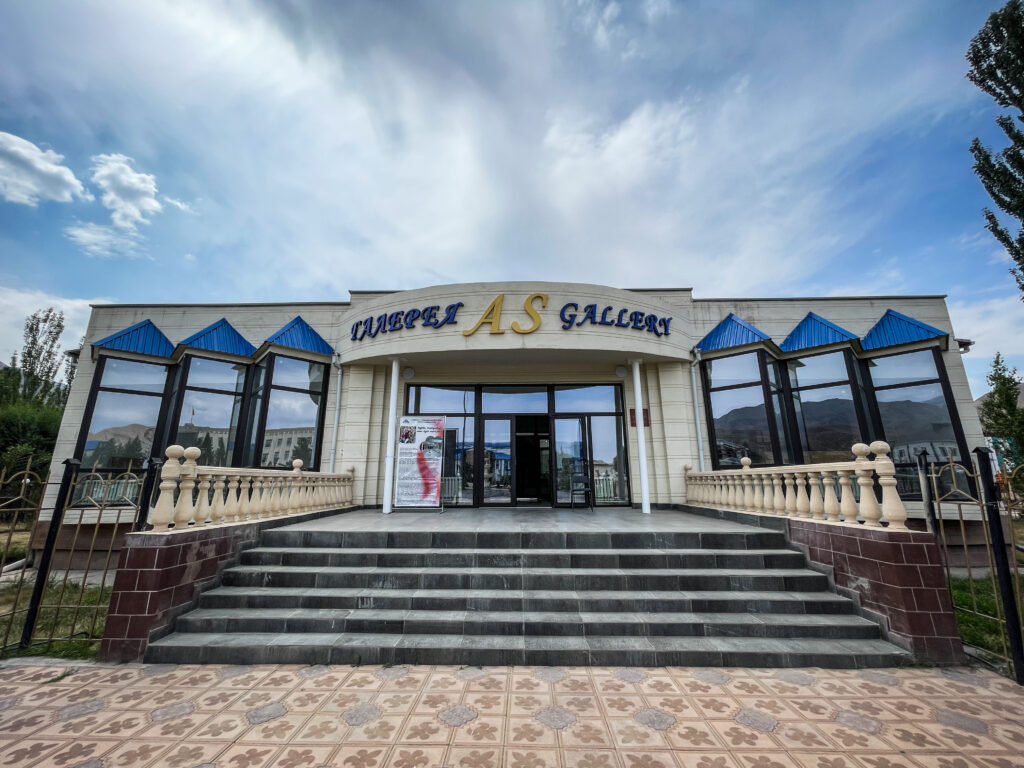
Naryn Art Gallery
If you’d like to learn more about Kyrgyz culture through art, the Naryn Art Gallery is worth a visit. The gallery showcases works by local artists, including paintings inspired by the region’s mountain landscapes, nomadic traditions, and everyday life in central Kyrgyzstan.
The exhibitions are relatively small, making it an easy stop that can be explored in less than an hour. It’s also a good opportunity to discover talented regional artists whose work is rarely displayed outside Kyrgyzstan.
Istoriko-Etnograficheskiy Muzey (Historical and Ethnographic Museum)
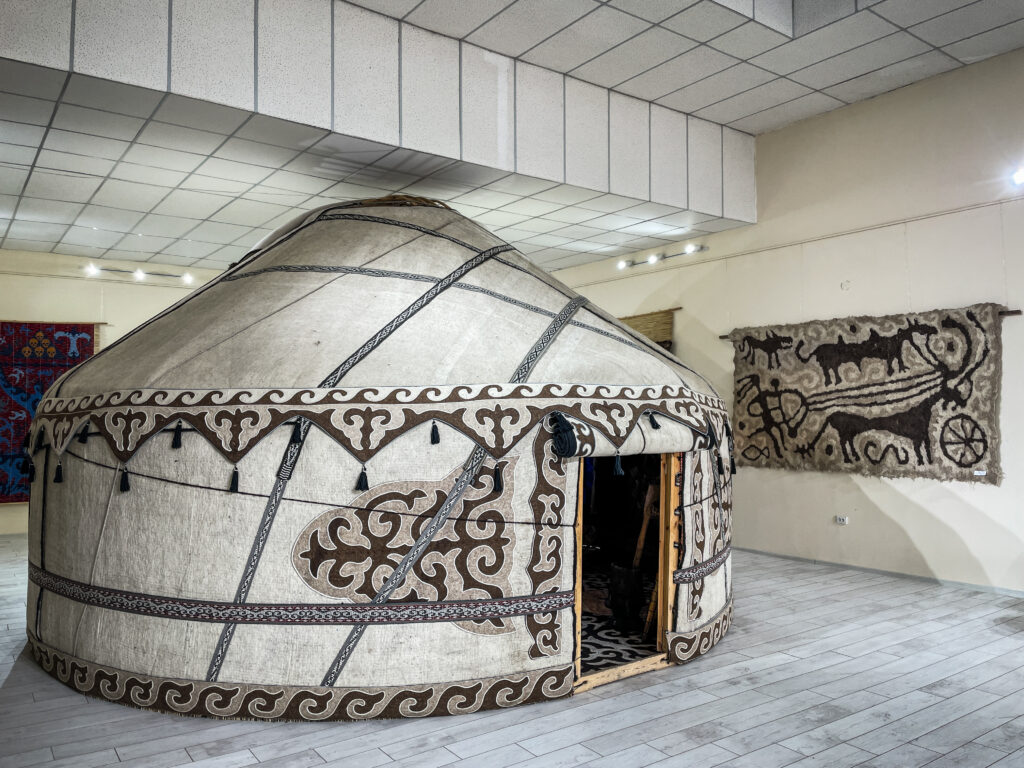
The Historical and Ethnographic Museum offers an introduction to the history and traditions of the Naryn region. Its collection includes archaeological finds, historical photographs, traditional clothing, household items, and exhibits explaining the nomadic lifestyle that has shaped the area for centuries.
Although the museum isn’t large, it provides useful background before visiting nearby attractions such as Tash Rabat or Song-Kul Lake. Spending an hour here will help you better understand the culture, history, and daily life of the people who call this remote part of Kyrgyzstan home.
What to see near Naryn?
Salkyn Tor National Park
Just a short drive from the city of Naryn, Salkyn-Tor National Park is one of those places that locals know well but many travellers overlook. The park offers a refreshing mix of forests, rivers, and mountain scenery that feels worlds away from city life.
Read more in a separate post HERE.
Eki Naryn
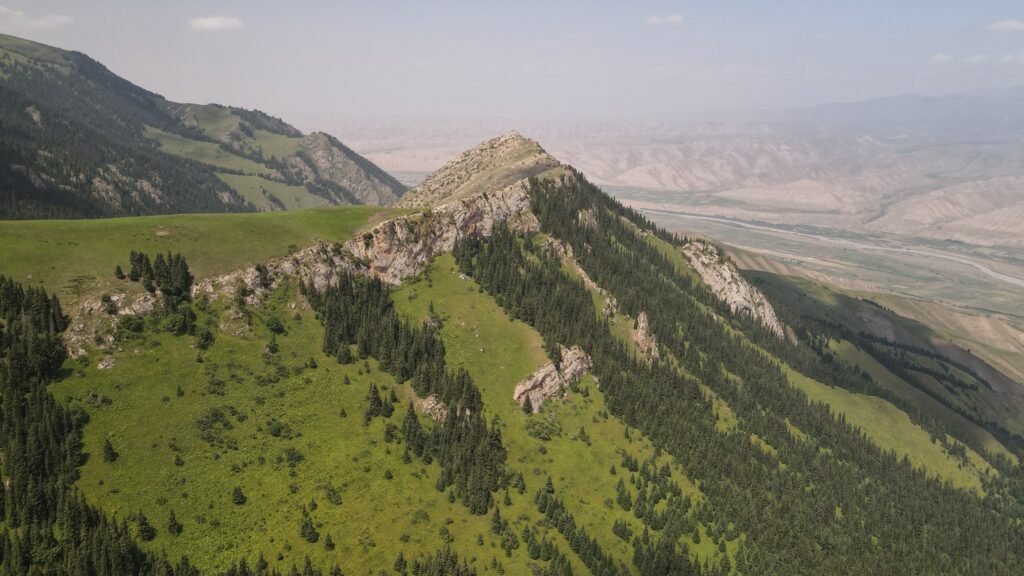
Eki-Naryn is a small high-mountain settlement in the Naryn region of central Kyrgyzstan, located in a broad valley shaped by the upper course of the Naryn River. The name of the place is closely tied to its geography: in Kyrgyz, eki means “two,” and Naryn refers to the river, pointing to the fact that this area lies near the meeting point of two headwater branches that together form the Naryn River. These branches descend from the surrounding Tien Shan mountains and converge in the valley, giving the location both its name and its physical character.
Read more in a separate post HERE.

Tash Rabat and Panda Pass
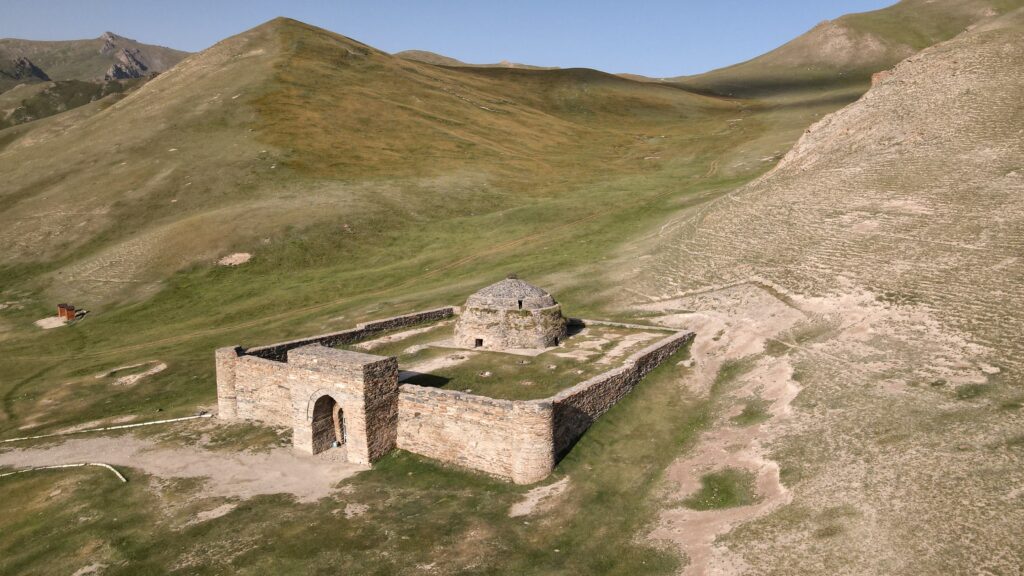
Hidden deep in the mountains of Kyrgyzstan, Tash Rabat feels like a place suspended between worlds. Once a resting point for traders moving along ancient Silk Road routes, today it marks the beginning of one of the most remote and rewarding treks in the region. Beyond its stone walls, the landscape quickly sheds any trace of civilisation, opening into vast valleys, high passes, and windswept plateaus.
Read more in a separate post HERE.
Kel Suu Lake
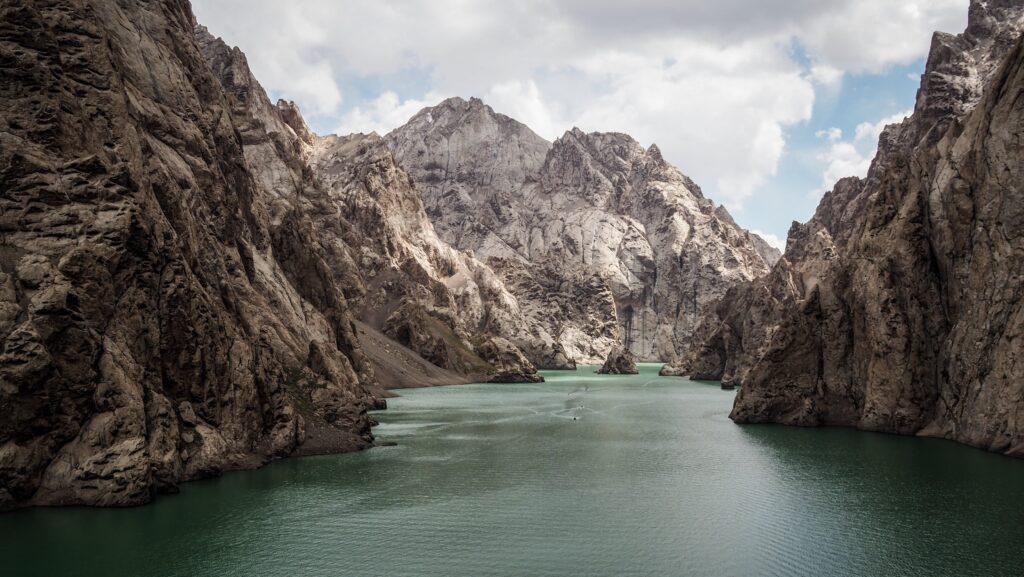
Kel-Suu is a remarkable high-mountain lake tucked into the rugged Naryn Region, very close to the border with China. It sits at a significant altitude of over 3,400 meters above sea level, surrounded by tall rocky ridges and dramatic alpine scenery that changes with the seasons.
The name comes from the Kyrgyz language and relates to the idea of “flowing” or transient water. This reflects one of the lake’s most unusual traits: its water level doesn’t always behave predictably. At times, much of the lake’s water can drain away through underground channels and caves, leaving behind stark stone landscapes; at other times, it fills up again with meltwater from nearby glaciers and snowfields.
Although it looks like a classic glacial lake, Kel-Suu was actually created in the 1980s when a massive landslide blocked a valley, and water began to accumulate behind the natural dam. Today, its waters stretch roughly 9 km in length and vary in width from several hundred meters to almost two kilometres in places, though it remains relatively shallow compared with some other alpine lakes.
One of the defining aspects of Kel-Suu is how isolated it is. The approach leads through wide valleys, marshy ground, rivers, and high-altitude pastures, and because it lies within a border security zone, visitors must obtain a special permit ahead of time to enter the area. There’s no paved road all the way to the lake, so most travellers continue on foot or horseback from a yurt settlement in the nearby Kok-Kiya valley.
Read more in a separate post HERE.