Introduction
Hidden deep in the mountains of Kyrgyzstan, Tash Rabat feels like a place suspended between worlds. Once a resting point for traders moving along ancient Silk Road routes, today it marks the beginning of one of the most remote and rewarding treks in the region. Beyond its stone walls, the landscape quickly sheds any trace of civilization, opening into vast valleys, high passes, and windswept plateaus.
The journey from Tash Rabat to Chatyr-Kul Lake is simply spectacular. Crossing Panda Pass, you leave behind the green valley and step into a stark, expansive world where the horizon stretches endlessly and the air grows thinner with every step. There are no crowds, no marked trails guiding your way, just the rhythm of walking, the sound of the wind, and the sense of moving through a landscape that has changed little for centuries.
What is Tash Rabat?
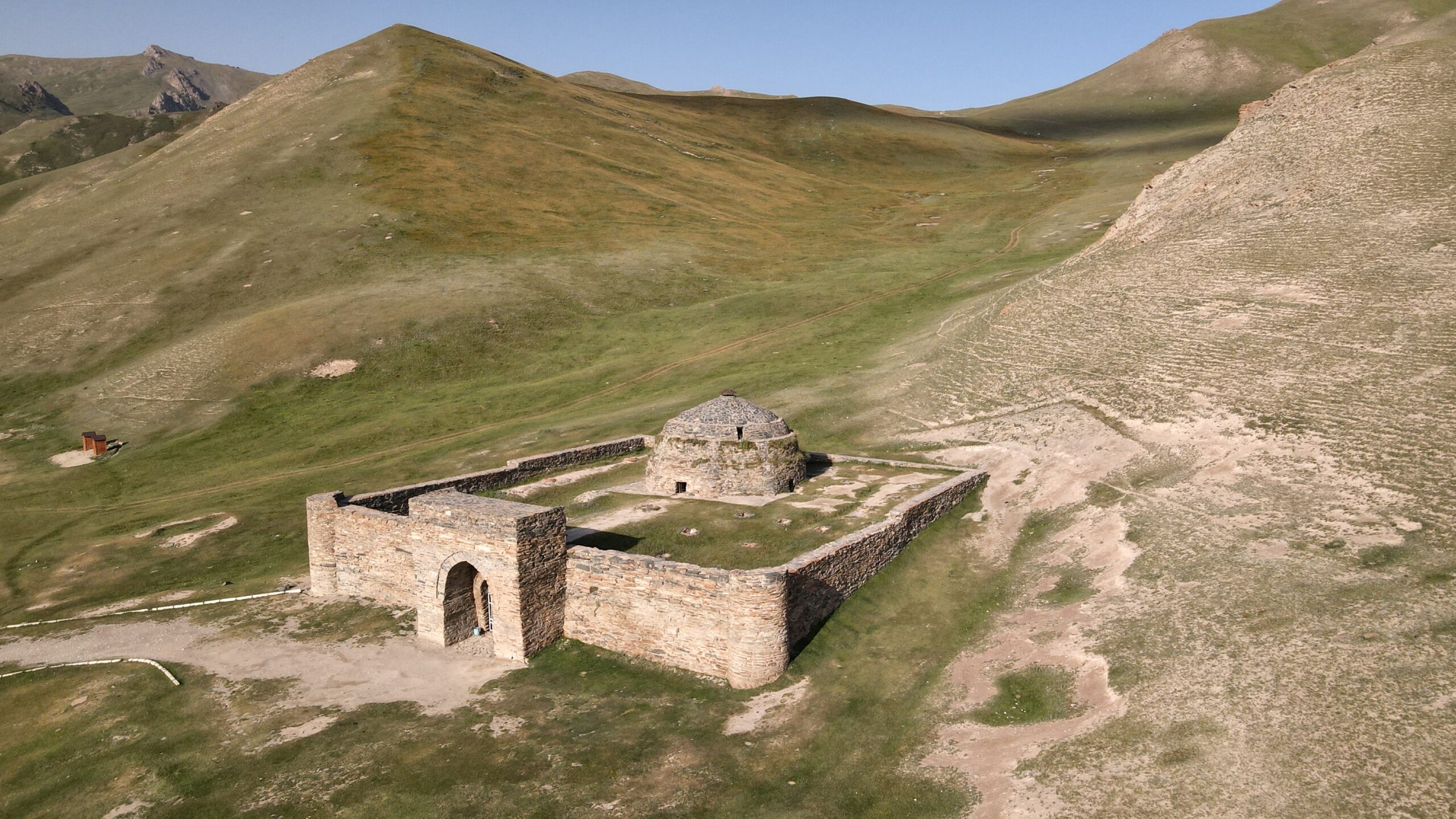
Tash Rabat is one of the most unusual historical sites in Kyrgyzstan, not only because of its remote setting but also because of its structure. Built almost entirely from stone, it sits at about 3,200 meters above sea level in a quiet valley surrounded by mountains. Its isolated position makes it feel far removed from the trade networks it once served, yet that was precisely its purpose.
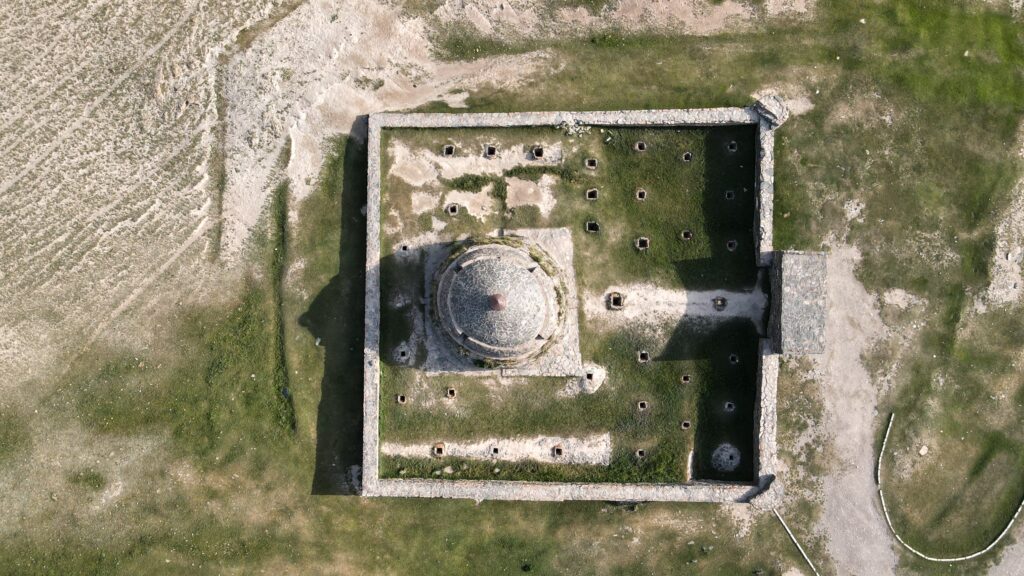
The building is believed to date back several centuries, most likely functioning as a caravanserai, a shelter for merchants and travelers moving along Silk Road routes. What makes it stand out is its design: instead of the typical open courtyard seen in many caravanserais, Tash Rabat is a compact, enclosed structure with thick walls and a series of small domed rooms connected by narrow passageways. In total, there are around 30 chambers, which were likely used for sleeping, storage, and possibly even animals.
Its fortress-like appearance has led to different theories about its original use. Some suggest it may have also served religious purposes, possibly as a monastery at some point, though its exact history isn’t fully documented. Inside, the atmosphere is dim and cool, even in summer, and walking through the stone corridors gives a sense of how travelers once took refuge here from harsh mountain conditions.
What is Chatyr Kul?
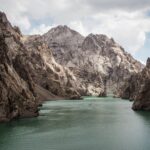
Chatyr-Kul Lake lies even deeper in the mountains, at an elevation of around 3,500 meters, close to the border with China. It is one of the highest large lakes in Kyrgyzstan and feels completely different from the green valley of Tash Rabat.
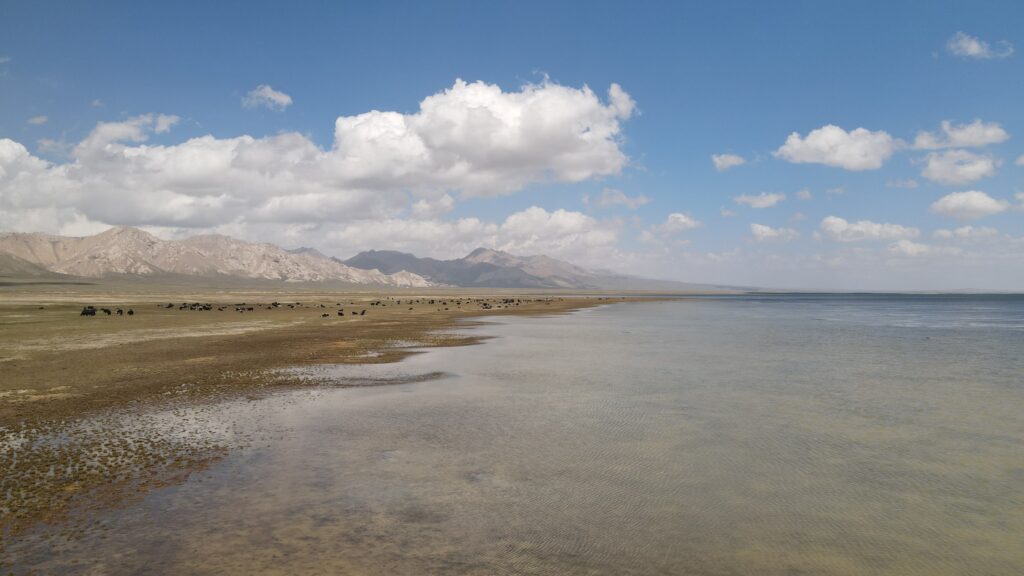
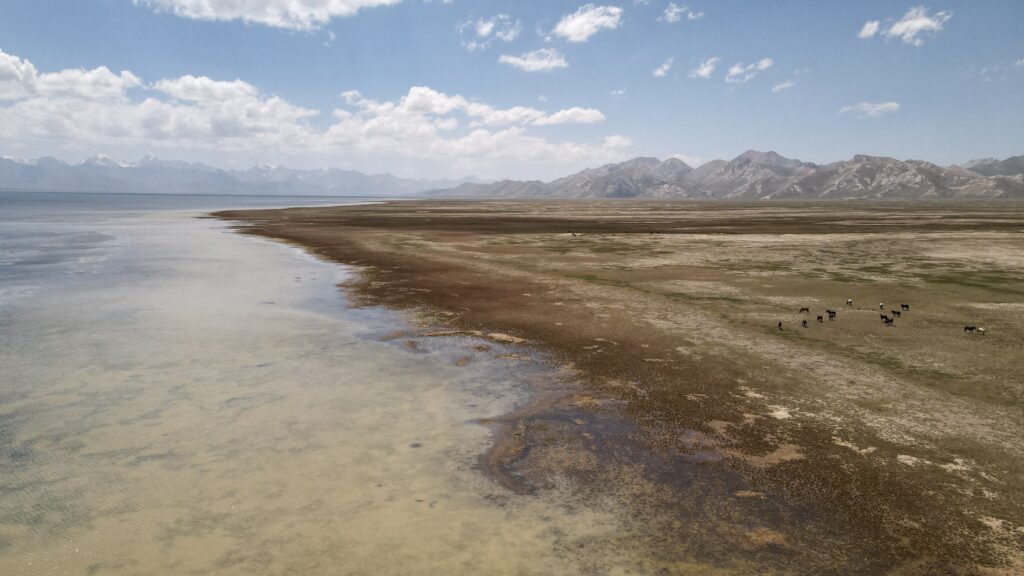
The lake stretches across a wide, open basin, surrounded by barren hills and distant mountain ridges. Unlike alpine lakes framed by forests, Chatyr-Kul has a stark, almost desert-like atmosphere. Vegetation is sparse, and the colors are dominated by shades of brown, grey, and pale blue. The water itself can appear calm and glassy one moment, then rough and wind-whipped the next.
An interesting feature of the lake is that it is slightly saline, which affects both its ecosystem and how it freezes in winter. The area is part of a protected reserve, and although it looks empty, it supports wildlife adapted to harsh conditions, including migratory birds that stop here during seasonal movements.
Because of its location in a border zone, access is controlled, which helps preserve its untouched character. There are no permanent settlements around the lake, and only occasional shepherd camps appear during warmer months. The sense of isolation is one of its defining features as you won’t find infrastructure, marked viewpoints, or tourist facilities here.
How to get to Tash Rabat?
From Naryn, the route goes south toward At-Bashi village. Then, continue about 100 km deeper into the mountains. The last stretch is on a dirt road, which is in very good condition, so perfectly doable in a normal car.
The easiest is to hire a private car / taxi in Naryn or At-Bashi. Many drivers are used to taking travelers there and you can find them hanging around the bus station. Just don’t forget to negotiate the price 🙂
My driver, Mars, turned out to be just as memorable as the journey itself. He had a great taste in music, which played constantly in the background as we drove through the mountains in his sturdy 4×4, adding a relaxed, almost cinematic feel to the ride. He dropped me off at Tash Rabat early in the morning, right as the valley was waking up, and then returned the following day in the early afternoon to pick me up – exactly as planned, reliable and easygoing the whole time. You may contact him if you need a transfer anywhere around Naryn. Phone number: +996 702 857 367.
Self-driving is another good and very straightforward option, if you have your own vehicle.
How to get to Chatyr Kul?
Starting from Tash Rabat, the route to Chatyr-Kul Lake via Panda Pass feels less like a marked trail and more like a gradual transition from a wide valley into high alpine wilderness.
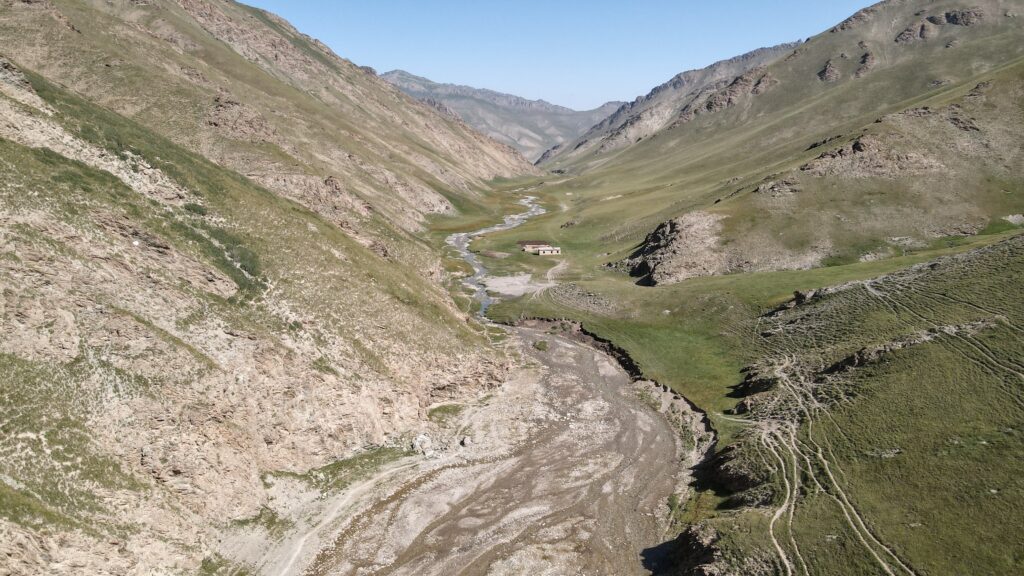
You begin by walking straight out of the Tash Rabat valley, heading upstream along the river that cuts through the grassy basin. At first the terrain is gentle and open, with a visible path used by shepherds and animals. The caravanserai quickly disappears behind you, and the valley slowly narrows as you move deeper into the mountains. Early on, you’ll need to cross a couple of streams. These are usually manageable in summer, but can be cold and fast depending on the time of day.
As you continue, the landscape becomes more rugged. The soft green slopes give way to rockier ground, and the trail starts climbing more noticeably. There isn’t a single obvious path the whole way, but the general direction is intuitive: you follow the valley upward toward the high ridge ahead. Occasionally you’ll pass small stone shelters or grazing animals, but otherwise it’s very isolated. Make sure you have Mapy.com installed on your phone to double check your position on a trail.
Higher up, the ascent becomes steeper and more demanding as you approach Panda Pass. The air gets thinner, and the final push to the ridge can feel slow and tiring, especially with a full pack. When you reach the top, at around 4,000 meters, the terrain suddenly opens on the other side. This is the moment where the landscape changes dramatically. Beyond the pass, the land drops into a vast, barren basin, and in the distance you can usually spot the pale blue strip of Chatyr-Kul.
From Panda Pass, the route down is quite well defined. You descend carefully along loose slopes into the broad valley below, aiming generally toward the lake. There’s no single official trail here, so navigation relies on keeping the lake in sight and choosing a safe line downward. Once you reach the basin, the walking becomes easier again, though distances can be deceptive as the lake looks close but still takes hours to reach across the open terrain.
Eventually, you arrive at the shoreline of Chatyr-Kul, which sits in a stark, windswept plateau near the border with China. The area feels remote and exposed, with very little infrastructure apart from occasional seasonal yurts. Because this is a restricted zone, you’re expected to have a border permit if you go beyond the pass and into the lake basin.
Most people take at least two days for this journey, camping somewhere either before or after crossing Panda Pass. However, if you trek light and start early, it is doable to cover the distance from Tash Rabat to Chatyr Kul and back in one day. Keep in mind that the combination of altitude, and weather makes it a serious but rewarding trek.
Border permit requirement
Chatyr Kul is located in a restricted border zone near China, so foreign visitors must obtain a special permit in advance. If you sign up for an organised tour, they will take care of your permit as well. If you decide to travel independently, visit CBT Naryn (+996559567685, info@cbt-naryn.com), and they will help you out. Remember to apply for a permit a few days before your planned visit. As of 2025, the permit for foreigners for Naryn region costs 30 EUR.
Even though I had the permit and hiked down from Panda Pass all the way to the bank of Chatyr Kul Lake, no one ever asked for the permit, but I do not know if it is normal or I was just lucky.
The best time to visit
The best time to visit Tash Rabat and trek onward to Chatyr-Kul Lake is during the short mountain summer, when the high-altitude landscapes are at their most accessible.
From June to September, the region is generally free of deep snow, making both the valley around Tash Rabat and the crossing over Panda Pass possible without specialized winter gear. During these months, the grasslands are green, rivers are flowing, and nomadic families often set up yurts in the area, adding a sense of life to an otherwise remote environment.
July and August are usually the most reliable months. Trails are clearer, temperatures are milder (though still cool at night), and the chances of successfully reaching Chatyr-Kul are highest. Even then, conditions can shift quickly, especially at elevations above 3,500–4,000 meters.
Early summer, particularly June, can still bring lingering snow on higher sections of the route, especially near the pass. This can make the ascent more difficult and navigation less straightforward. On the other end of the season, by late September, temperatures begin to drop sharply, and the first significant snowfalls can arrive, effectively closing the route for trekking.
Outside of this window, the area becomes extremely challenging. From autumn through spring, heavy snow, freezing temperatures, and limited access make travel to both Tash Rabat and Chatyr-Kul impractical for most visitors.
Where to spend a night?
You can sleep in one of the yurt camps located nearby Tash Rabat. In my case, I had dinner pitched my tent at Omurbek’s Yurt Camp, which I highly recommend.
Having your own tent, you can camp anywhere in the Tash Rabat Valley and before or after Panda Pass.
My experience
Day 1
I set off early, just after 6 AM, with my driver arriving right on time. Within an hour and a half, we reached Tash Rabat, the road unfolding alongside a long, dramatic mountain ridge that stayed with us the whole way. It was one of those quiet, beautiful drives where the landscape slowly wakes up with the morning light.
When I arrived, Tash Rabat was almost completely empty. The stillness made the place feel even more remote. A caretaker unlocked the gate, sold me a ticket, and I had the whole structure to myself. Inside, there isn’t a lot to “see” in the traditional sense, but the atmosphere is what makes it special. Thick stone walls, dim corridors, and a sense of history that’s hard to ignore. I took my time exploring and managed to capture some great drone shots before setting off on the real objective of the day.
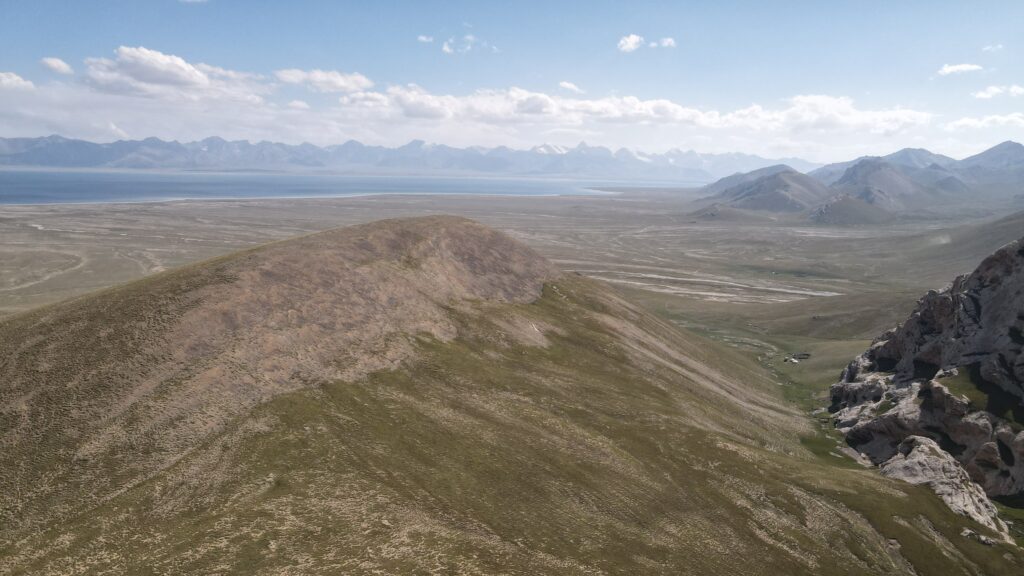
The trail toward Panda Pass began gently, almost deceptively easy. The valley stretched out wide and calm, and for a while it felt more like a walk than a climb. That changed once I turned into the side valley leading upward and the gradient picked up. The final push to the pass was properly steep. Every few minutes I had to stop, partly because of the incline, partly because I was now above 4,000 meters and the altitude was definitely making itself known.
At the top, the wind hit hard. There was no point lingering, so I pushed on, descending toward Chatyr-Kul Lake. Not long after, I spotted a cluster of yurts in the distance. Seeing them felt reassuring as it was a small sign of life in an otherwise vast and empty landscape. I headed toward them, only to find the place completely deserted. It turned out the shepherds were out with their animals, somewhere beyond sight.
From there, I decided to continue all the way to the lake. A sign suggested not to go further, but with livestock grazing freely and no one around to enforce anything, I kept going. What looked close turned out to be anything but. I walked and walked, the lake barely seeming to get any nearer. It took roughly an hour before I finally reached the shore.
The setting was stark and quiet, almost unreal. I spent some time flying the drone and taking it all in before noticing movement in the distance. More shepherds. That was my cue to start heading back. I hadn’t fully decided yet whether to stay overnight near the lake or return to Tash Rabat, but I was already leaning toward going back.
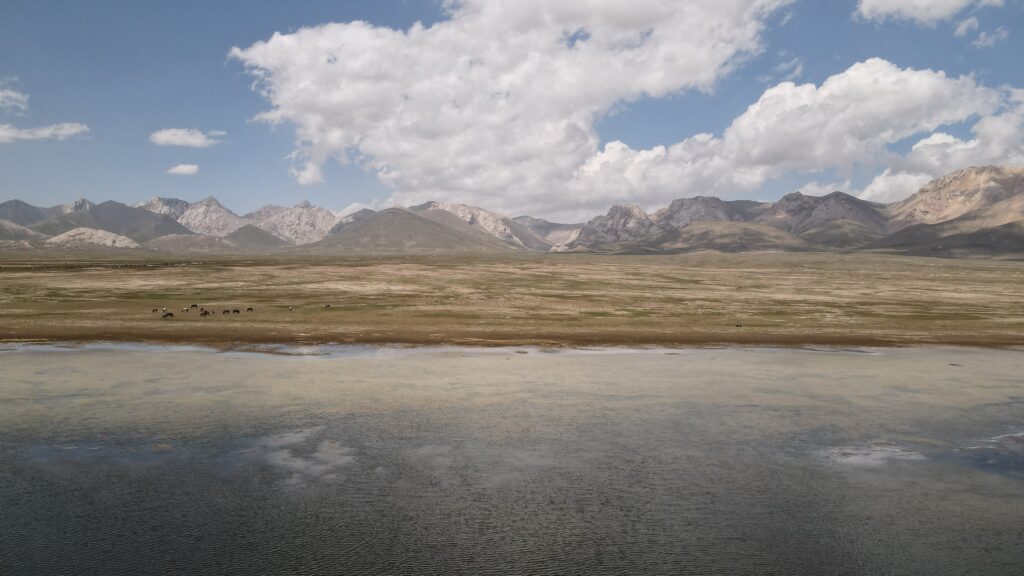
Closer to the yurts, I took a proper break, ate something, and tried to gather enough energy for the climb back up. That’s when I noticed something new – a tent pitched nearby that definitely hadn’t been there earlier. It was a small reminder that even in such remote places, you’re rarely completely alone.
The ascent back to the pass was slow and heavy. My legs were tired, and I had to stop often, more than on the way up the first time. Once I crossed back over, it was a long descent into the valley. The silence was almost complete but by then the fatigue had fully set in. My back ached, my legs felt drained, and all I could think about was getting back.
When I finally reached Tash Rabat, I treated myself to dinner in one of the yurts. The food was simple, nothing memorable, but the atmosphere made up for it. A large group, mostly from Spain, filled the space with energy and conversation, a sharp contrast to the solitude of the day. That night, I pitched my tent nearby.
Day 2
The night passed quietly, and I slept surprisingly well despite the altitude. By early morning, though, the mood shifted. Strong gusts of wind swept through the valley, and dark clouds gathered along the horizon, hinting at a storm rolling in. Not wanting to get caught in bad weather, I packed up my tent in a hurry. But just as quickly as it had turned, the sky began to clear. With the tension gone, it felt pointless to crawl back inside, so I wandered up the hill behind Tash Rabat and sat there for a while, watching the light return to the valley.
Later, I spent some time near the yurts, drifting between sun and shade as the temperature kept shifting. One moment it felt warm and calm, the next a cold breeze would sweep through, reminding me how unpredictable the mountains can be. When Mars showed up earlier than planned, it was a welcome sight. I was more than ready to leave after the long trek.
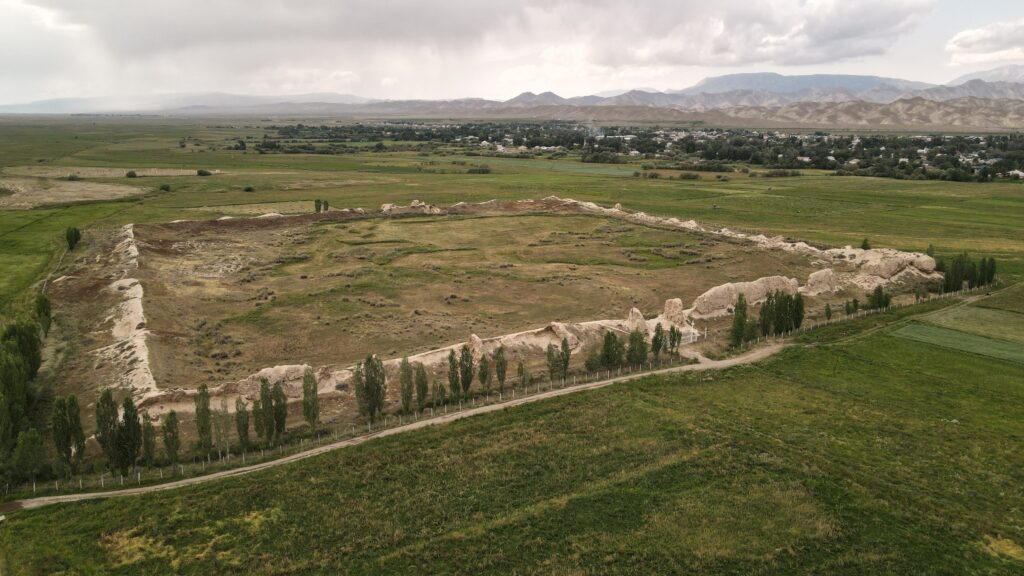
On the way back, we made a stop at Koshoy Korgon. At first glance, it didn’t look like much. Just a set of ancient earthen walls rising from the flat landscape. But in the small museum I learnt that Koshoy Korgon is believed to be the remains of an old fortified settlement, possibly dating back many centuries. Like Tash Rabat, it likely played a role along regional trade routes, offering protection and rest for passing caravans. Even in its current, weathered state, you can still imagine it as a once-busy stop in an otherwise vast and empty landscape.