Tag

volcano

Browsing

Introduction

Faial Island has 21 km in length and 14 km at the maximum width and is the third most populous island of the Azores Archipelago with about 15.000 inhabitants. The island is part of the Central Group and also the so-called “Triangle” including two other islands: São Jorge and Pico. The power of nature reminded of itself on the 27th of September 1957, when a volcanic eruption in the Capelinhos kicked off and lasted for 13 months. As of today, it is the last event of this kind in the Azores.

I visited Faial Island on my 4 months trip in pandemic times, when I took the advantage of remote work, spending 2 months in Madeira and 2 months in the Azores. Graciosa is the only island I haven’t visited yet, but isn’t it a good reason to be back one day?

How long to stay?

I would say that 3 full days should be enough to visit all the interesting places on the island and do a couple of hikes. Remember that the weather in the Azores can be unpredictable and if you are unlucky, Caldeira may be covered by clouds for the entire duration of your stay. Check the weather frequently and time your visit there in the best moment. If this is the case, try to stay close to the coast where it’s usually less cloudy.

The mobile app SpotAzores is a great tool for monitoring weather situation in the Azores islands. I used it every day when I was there and I seriously can’t imagine travelling without it!

Where to stay?

Due to my remote work, I always look for a private room with a fast internet connection. The best quality to price ratio offered Banana Manor located in the centre of Horta. It’s a really big house with a huge living room and kitchen available for all guests. There is also a garden with chickens walking around which is a great place for breakfast or evening chill. The room was nice and spacious with two shared bathrooms at the end of a hallway. Parking is available on the streets nearby. Fully recommended!

Getting around Faial

As on all the other Azores islands, renting a car is essential to reach all places. I used the services of Autatlantis several times and I can fully recommend that company. The price was always around 16-20 EUR per day (without any extra insurance) and the cars I had were Toyota Yaris, Citroen C1 or Smart. Bigger ones are available too, of course for the higher price. Pick up and return were smooth and quite fast.

Another popular rental company in the Azores region is Ilha Verde, however, customers’ opinions are mixed and I have never used them.

If you don’t have a driving licence, you can try hitchhiking but you need to be patient and quite lucky. Alternatively, there are public buses but these are infrequent.

Tips

  • The weather is unpredictable and you have to be prepared for anything. Always have with you a waterproof jacket and umbrella. Install mobile app SpotAzores and don’t go to places that are totally covered in clouds. You will lose time and won’t see anything anyway.
  • Book your car in advance in the high season. I was travelling in the Azores between April – May so it wasn’t a problem to get a car from one day to another, however, I can imagine that in high season it could be a problem, especially on the smaller islands.
  • Drive carefully, especially in the fog. It’s pretty normal that cows, sheep or goats stand very close to the road or simply walk on it.
  • If you go hiking, download GPS files and maps from the official website Visit Azores and have them on your phone just in case. In general, trails are well marked but in a dense fog, it’s not that difficult to get lost.
  • Don’t be afraid of hitchhiking. Many trails are linear, which means that you need to get back to the starting point. You can walk the same way or try to save your legs. On some islands, the traffic is minimal but once the car comes, it is almost certain that the driver will stop and help you out.

Horta

Horta is the biggest city on Faial Island and a regular meeting point for yachts and other vessels crossing the Atlantic Ocean. The buildings are full of charm, there are plenty of restaurants and bars but also great nature is accessible within walking distance. It’s my second favourite town in the Azores, just after Angra do Heroismo on Terceira Island. Here are a couple of places worth seeing:

Igreja da Nossa Senhora das Angústias (church) – it dates back to a hermitage founded by the island’s first settler, Joss van Hurtere and his wife, Beatriz de Macedo.

Convento de São Francisco & Horta Museum – housed in the old Jesuitical College, an imposing big-dimensioned building that remained unfinished, because the Jesuits were expelled from Portugal in 1760. There are several collections related to Faial history. Igreja de Nossa Senhora do Rosário (church) is next door and can be visited as well.

Horta on Faial Island, the Azores
Convento de São Francisco & Horta Museum

Casa Memória Manuel de Arriaga – former residence of the 1st President of the Portuguese Republic, elected on August 24, 1911. Today, the place hosts the exhibition of photographs, documents and objects as well as the projection of films which give an insight into the history of the country.

Torre do Relógio – this clock tower was built between 1700 and 1720 together with the original Igreja Matriz, later destroyed by lightning. The initial mechanism of this only public clock dates from 1747.

Horta on Faial Island, the Azores
Aerial view to Torre do Relogio

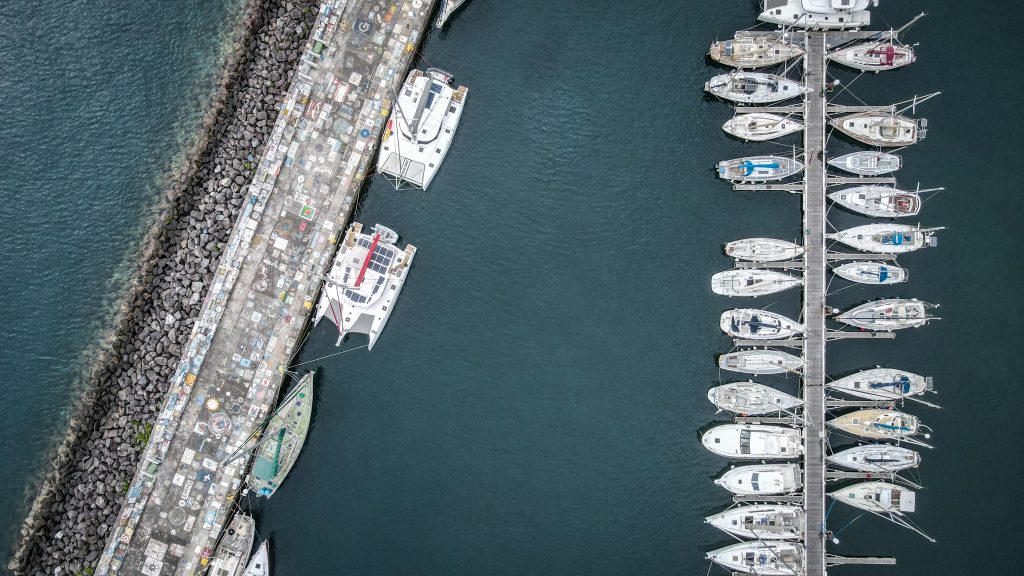
Horta Harbour – important stop for yachts crossing the Atlantic Ocean. The walls and pavements are covered with colourful paintings created by visitors including the names of their vessels, crew members, nationality and the years they visited.
Horta on Faial Island, the Azores
Horta Marina

Other sights

Capelinhos – the volcanic eruption between 1957 and 1958 began in the sea and as a result, a small island was created that is now connected to Faial Island. In fact, as a result of the eruption, the total area of the island increased by about 2.4 km2. Many houses were buried under ashes and more than half of Faial’s population emigrated to USA and Canada to escape the catastrophe. To learn more about the volcanic activity in the Azores, visit Capelinhos Volcano Interpretation Centre (entrance fee: 9 EUR). I recommend you to climb the ridge on the right side of the lighthouse for an amazing panoramic view.

Morro de Castelo Branco – is a 10,000-year-old rock formation, and a protected area due to the number of bird species that use it as a rookery. The PRC05 hiking trail passes by that area but you can also drive down and park very close to the rock.

Praia da Faja – Small village located on a fajã, which is the term used to define a small extension of land, located along the ocean, formed from rock debris or a volcanic delta from lava meeting the ocean. There is a small beach with dark sand and stones, quite popular with surfers. It can be reached with a car or following hiking trail PRC02.

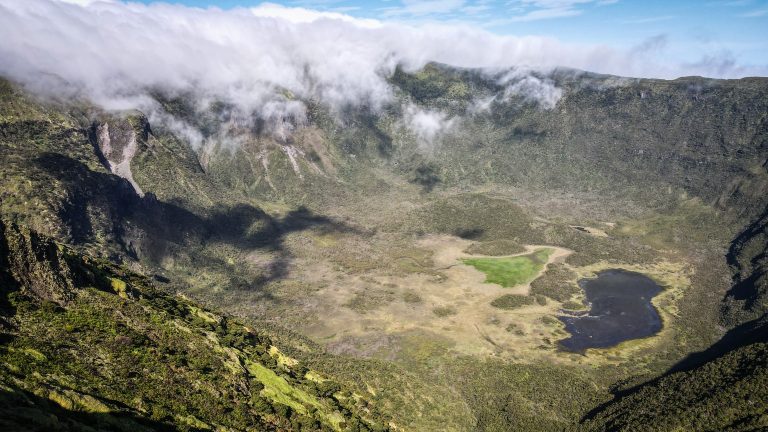
Caldeira – this natural feature is definitely the highlight of Faial Island. It has a diameter of 1450 meters and a depth of 400 meters. The PRC04 hiking trail starts at the parking and goes around it. Highly recommended in good weather!

Praia Do Almoxarife –  long stretch of black sand with bathing area, only 5km from the city of Horta. Great views over Pico Island guaranteed!

Ribeirinha – the name comes from the small river and valley that was occupied during the period of settlement. in Portuguese, Riberinha means small “ribeira”, or small river. A popular landmark is a lighthouse, which following the earthquake of 1998, was left in ruins. PRC09 is a great hike in the area, passing by the village, coast, lighthouse and several viewpoints. It is 8.3 km long and takes 2.5 hours to complete.

Viewpoints (Miradouro)

As on every island in the Azores archipelago, there are plenty of viewpoints and usually, they are easily accessible by car. Just look for the sign ‘Miradouro’ which in the Portuguese language means viewpoint. Here is the list of the most popular ones but of course nice views are nearly everywhere and it’s easy to find a stunning ‘no-name’ spot.

  • Miradouro do Cabeço das Pedras Negras
  • Miradouro da Ribeira Funda
  • Miradouro da Ribeira das Cabras
  • Miradouro de Nossa Senhora da Conceição
  • Miradouro Ponta Furada
  • Miradouro do Monte Carneiro

Hiking trails on Faial

PRC01 FAI – Cabeco do Canto

Short route with the start point on the road leading to Cabeco Verde. I left my car next to the information board and shortly I reached a lava cave which is apparently 55 meters deep, but views are quite limited due to trees. After passing on the left side of Algar do Caldeirao, soon I started climbing the stairs towards Cabeco do Canto. Quite a steep one! Once on top, I went around the volcanic cone (no big views here) and then went back following the same way.

Faial, the Azores
Aerial view to Algar do Caldeirao
Faial, the Azores
Aerial view to Cabeco do Canto

PRC02 FAI – Rocha da Faja

The best is to park the car on the main road near the church and from there descent through the fields and forest towards Praia do Norte beach, checking out a very nice viewpoint on the way. The beach itself is a great place for a break to chill and watch the waves. The trail continues through the centre of the village on the asphalt road before it starts to climb up first following a dirt road and then through the forest, back to the starting point.

Faial Island, the Azores
Praia do Norte seen from the viewpoint
Faial Island, the Azores
Beach in Praia do Norte

PRC04 FAI – Caldeira

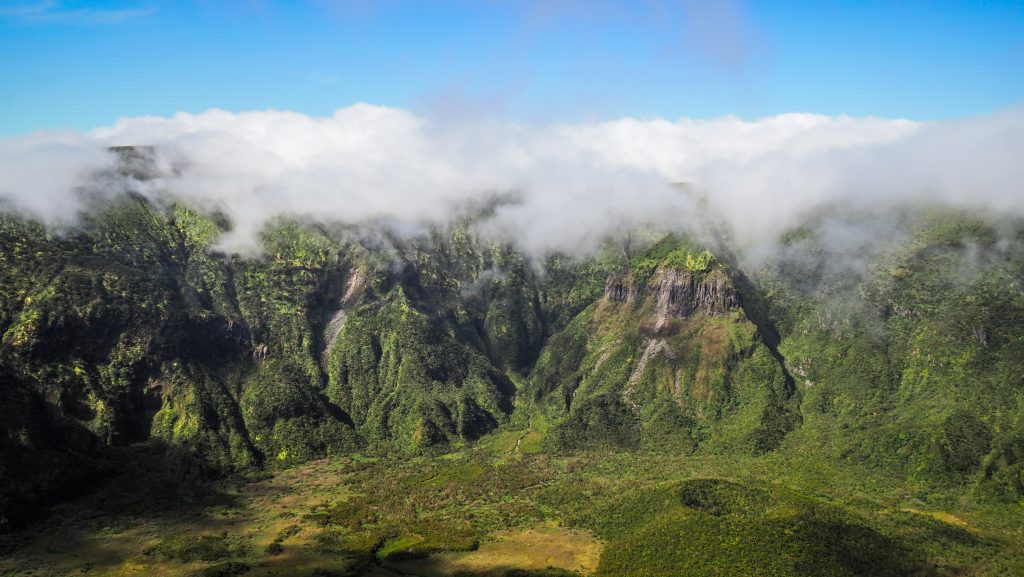
The best and the most popular trail, going around the highlight of the island – Caldeira. From the parking, it’s just a few minutes to get the first glimpse of its interior. Caldeira is located in the central part of the island, therefore to fully enjoy the hike, make sure you go there in good weather. Otherwise, when the clouds roll in, there won’t be any views whatsoever.

Faial Island, the Azores
Interior of the Caldeira
Faial Island, the Azores
Caldeira is often covered by clouds, check the weather before you go!
Faial Island, the Azores
The summit of Pico seen from the Caldeira viewpoint

PRC05 FAI – Rumo ao Morro de Castelo Branco

The natural reserve and geosite of Morro do Castelo Branco is a highlight of this short hike and at the same moment, one of the most beautiful places on the island. It is an effect of the volcanic eruption that happened thousands of years ago. Due to the number of bird species nesting there, climbing is forbidden. The rest of the trail is rather average and follows partly asphalt road and partly pastures.

Faial, the Azores
Aerial view of Castelo Branco

PR03 FAI – Levada

After spending 2 months on Madeira Island, I knew very well what levada was. The memories of endless trails following water channels that transport water from one side of the island to the other was back immediately 🙂

If you start near Cabeco dos Trinta, there is an option for a short detour to its interior, which I highly recommend. Come back the same way and turn right. After a few minutes, you will see the levada. Its construction was finished in 1964 with the main purpose of supplying water for the production of hydroelectric energy. The end of the trail is at Alto do Chao and you would rather need to come back the same way to reach your car.
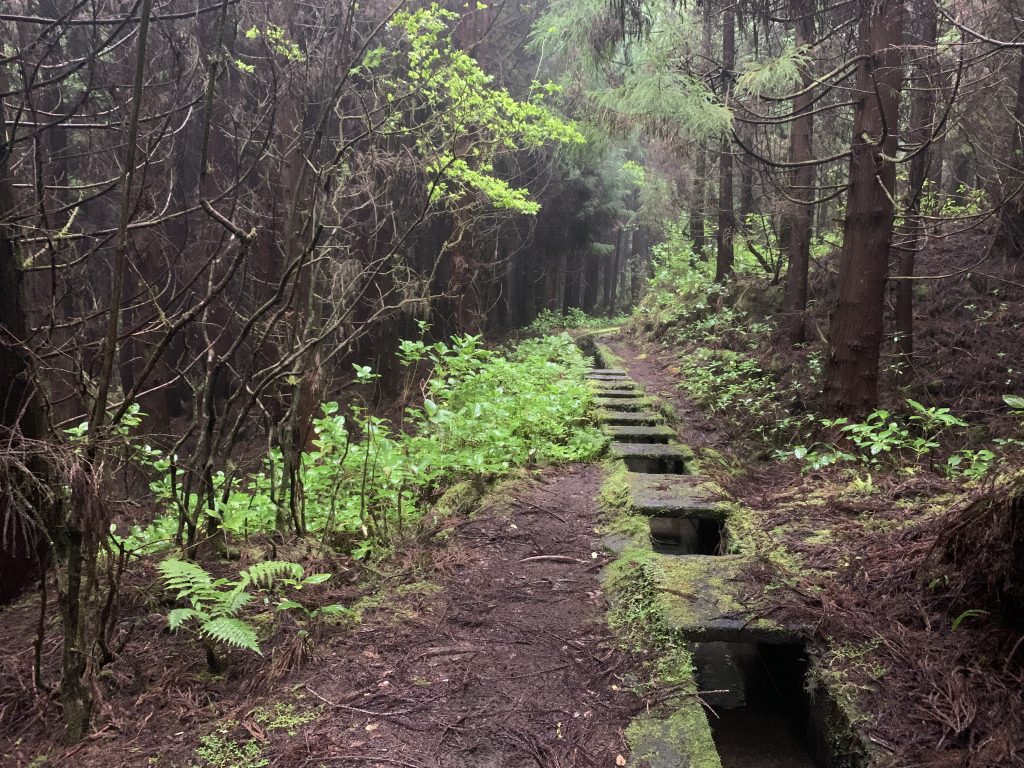
Faial Island, the Azores
Levada – water channel running in the middle of the forest
Faial Island, the Azores
The trail passes through short tunnel

PR06 FAI – Dez Vulcoes

Long and demanding hike starting at the viewpoint of Caldeira. It follows PRC04 for around half of its distance when you need to turn right and head towards PR03 Levada and Cabeco dos Trinta. Further spots of the way are Cabeco do Fogo, Algar do Caldeirao and Cabeco do Canto. Finally, after crossing the road, there is a grand finale walking through the landscape formed by the volcanic ashes of Capelinhos. The eruption took place in 1957/1958. Close to the parking, there is the underground Interpretative Centre of the Vulcao dos Capelinhos, where you can learn about the volcanic nature of all the Azores islands as well as get to where the other famous volcanoes in the world are located. Entrance fee: 9 EUR.

Faial Island, the Azores
The lighthouse around Capelinhos area

PR07 FAI – Caminhos Velhos

Similar to PR06, it starts (or ends) at the parking next to Caldeira viewpoint. I would recommend starting here because then most of the walk will be downhill. Cross the tunnel, have a look at the interior of Caldeira and then continue on the zig-zag dirt road. When it merges with asphalt road, on the left side there will be Old Cabouco the Recreational Forest Reserve, a great place for a short break. Next, the trail goes towards Miradouro do Cabeço das Pedras Negras from where it joins PRC09 until arrival to Ribeirinha. Check out the ruing of the church of Sao Mateus and the ruins of the Lighthouse of Ribeirinha. Both places were destroyed by the earthquake that hit the area in 1998.

Faial Island, the Azores
The ruins of the Lighthouse of Ribeirinha

PRC08 FAI – Entre Montes

Easy circular hike close to Horta, with historical importance. The first underwater telegraphic cable was installed here in 1893 which played an important role during the war. The whole route provides great views all around the city as well as the fortress of Sao Sebastiao. At the top of Monte da Guia, there is a viewpoint and the chapel of Nossa Senhora da Guia. On the way back, you may want to visit the informative Museum of Whaling Industry (Museo da Baleia) or make a short detour to the remains of Forte da Greta. Finish the hike at Praia do Porto Pim.

Faial Island, the Azores
Aerial view over Horta

PRC09 FAI – Ribeirinha

Start the trail in the centre of Ribeirinha village and then head towards the coast. Follow it until Porto da Boca da Ribeira and then start the ascent through the forest to the ruins of the Lighthouse of Ribeirinha. Continue through the forest to the viewpoint of Ribeirinha. When you reach an asphalt road, turn left and make a short detour to the ruins of the church of Sao Mateus. Both places, the church and the lighthouse were destroyed in the earthquake of 1998. From there, it’s time for a tiring ascent to Miradouro do Cabeço das Pedras Negras. Make a short break there and then start the descent back to Ribeirinha. The trail is highly overgrown in some parts but no worries, it’s still doable.

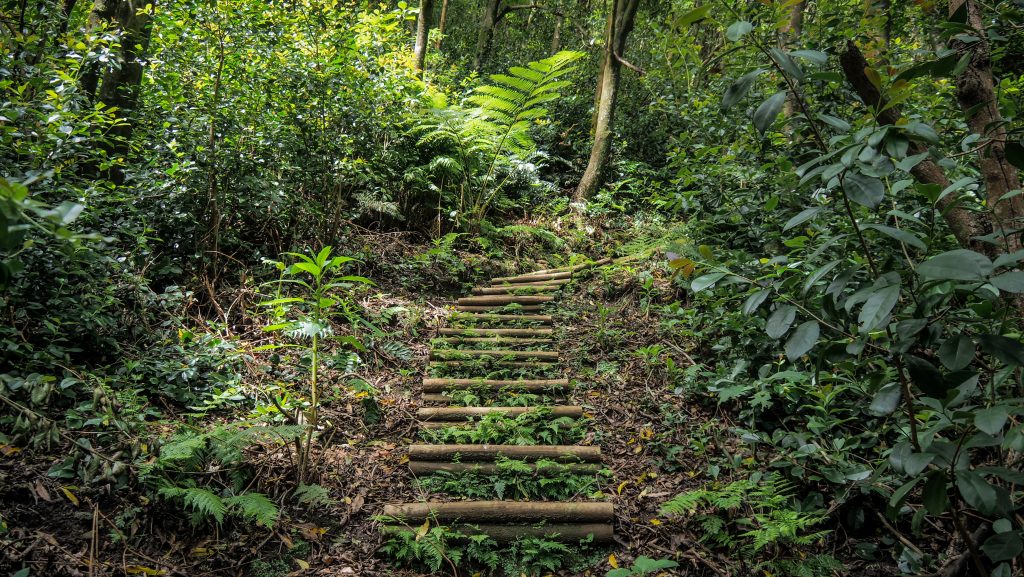
Faial Island, the Azores
The ruins of the Lighthouse of Ribeirinha
Faial Island, the Azores
The trail through the forest

Coast to Coast

The ultimate hike through the island, starting at Ribeirinha and finishing in Capelinhos (or the other way around). It’s the combination of PR06 and PR07 and most probably the distance needs to be split into 2 days unless you are very fit and don’t mind taking a challenge to complete it in one very long day.


Introduction

Probably I wouldn’t come to Tauranga if it wasn’t the place where I had to pick up my campervan. I was super excited because it was supposed to be my vehicle and home for the next several weeks. The plan was simple. Finish all formalities quickly and spend the rest of the day exploring the town!

How did I find a car in Tauranga? Well, it was before I even departed to New Zealand. At my boring job, I had enough time for browsing websites of rental companies, reading blogs and articles from other travellers. This is how I came across Kiwi Road Trips and checked their offer of self-contained vans.

After another week of thinking about all pros and cons, I made my mind that it’s the most convenient and affordable way to have my own 4 wheels for a longer period of time. It comes with guaranteed buy-back so I didn’t have to worry about looking for buying in April, which is already after peak season. Karen and Pete explained to me all formalities and we set the date for pick up.

Don’t you worry – there will be a separate article describing all the options that travellers have for renting or buying a car in New Zealand. Stay tuned. Meanwhile, let’s focus on Tauranga.

How to get to Tauranga?

Intercity has a bus network all over the country and they have good deals too. You can buy hours-based travel passes and that should be fine to visit the most popular travel destinations. Needless to say, places that are off-the-beaten-track will be difficult to reach and very often it’s possible only with your own vehicle.

Nearby airport isn’t too busy but there are daily flights to and from Auckland, Wellington or Christchurch.

I will describe the bus trip a bit more because I must say, it was quite entertaining. I boarded the bus in Auckland and everything was fine until on one of the turns it hit the wall of rocks with its left side. Not very hard, but everyone could feel a bump and small pieces of glass were all over the floor. A window was broken. The driver stopped, checked the damage and called the company. The window was still there, just a bit broken. Unfortunately, it could fell apart anytime creating the risk for passengers and other drivers. The solution to the problem was very practical and kiwi style. The driver took a broom, smashed remaining parts of the window, told everyone to move to the front of the vehicle and that was it. We continued the journey to Tauranga, just without 2 windows on the side of the bus. At least we couldn’t complain there wasn’t enough fresh air. Such situations certainly don’t happen too often to stay chilled!

I was picked by Karen from Kiwi Road Trips at the bus station and after signing documents, it was time to drive out on kiwi roads.

1-day itinerary

Tauranga is the largest city in the Bay of Plenty and one the biggest in the country. Location is very convenient for further exploration of North Island, with Rotorua, Taupo and Tongariro National Park being a short drive away. The city centre isn’t as popular as beachside suburbs – Mount Maunganui or Papamoa. But you know me guys, I always want to see everything so here is where I started.

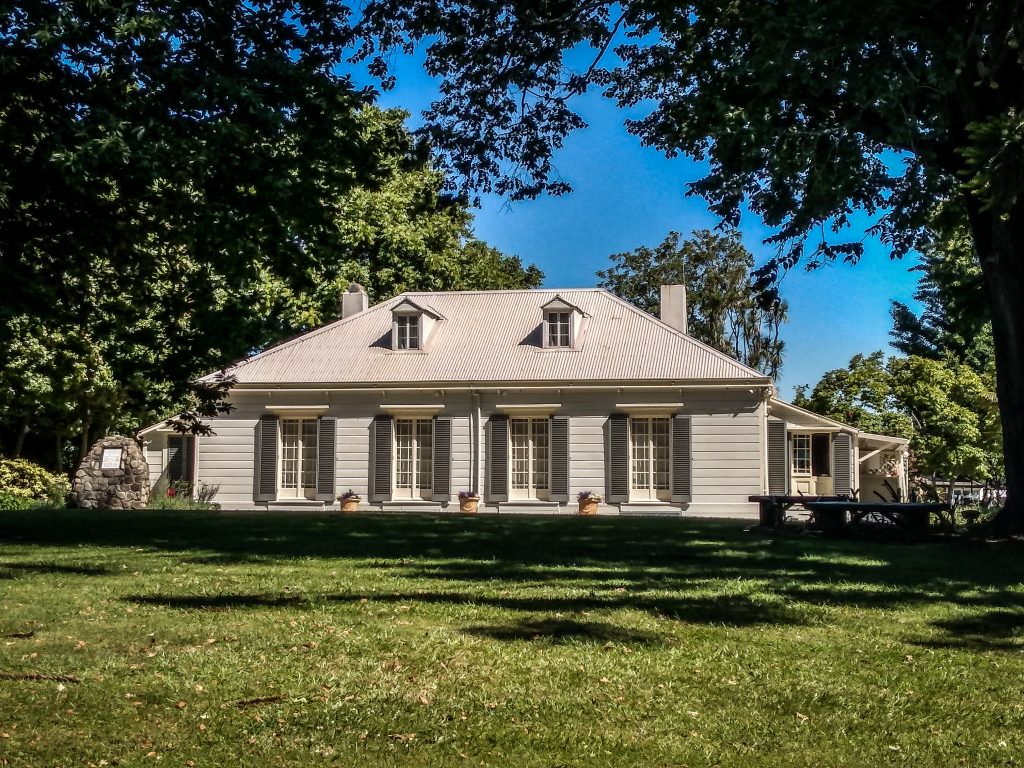
The Elms – Anglican mission was established here in 1838 by priest Alfred Nesbit Brown and the first buildings in the Bay of Plenty were constructed, initiating regular contact between Maori and Pakeha (white people). Brown worked hard, preaching even in the most remote settlements. Unfortunately, after the war, soldiers settled on the land previously occupied by Māori and the mission declined.

The guide was an absolute highlight of the place. So passionate and dedicated! Even though the entrance ticket isn’t cheap (15 NZD for international guests), it’s a solid part of New Zealand history and shouldn’t be missed.

Mission Cemetery – Visiting the memorials commemorating battles between Maori and British government forces is a great continuation to the visit at the Elms mission house.

Tauranga, New Zealand
Mission house in Tauranga
Tauranga, New Zealand
Inside the mission house – guided tour is great!

Monmouth Redoubt – Another memorial place. Maori fortified village (called pa) Taumatakahawai, used to stand here until it was taken over by British forces during the wars to stop the flow of warriors and support for Maori chiefs.

Tauranga Art Gallery – exhibitions of contemporary works. I’m not a fan of such, so gave it a miss but it does have good reviews so you may want to consider it in your itinerary.

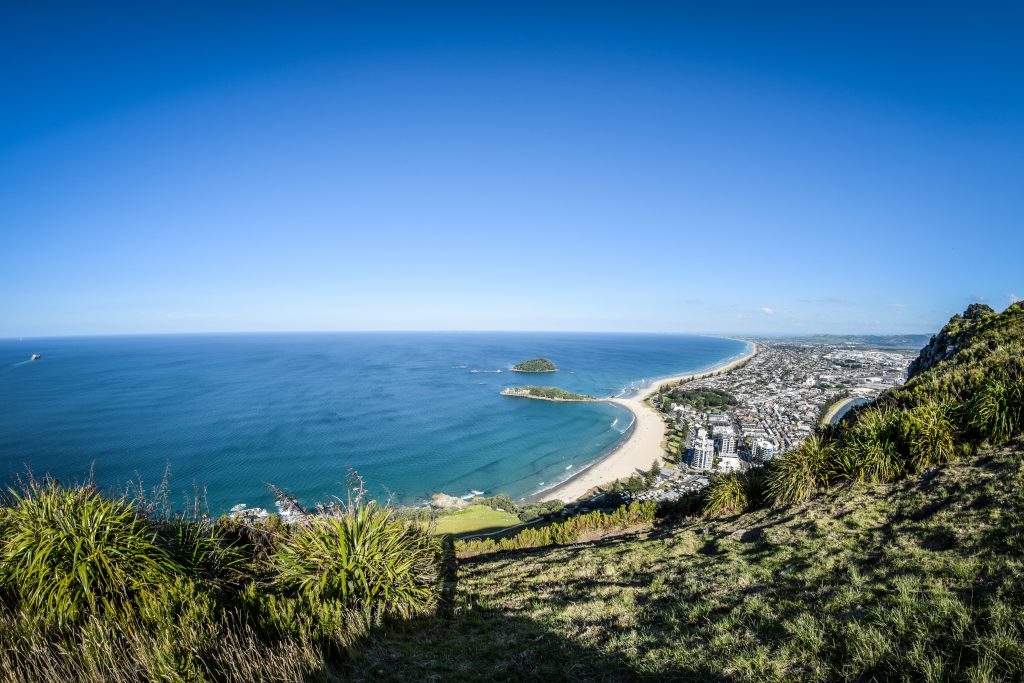
After seeing the most interesting sights in Tauranga, I got into my car and drove to the nearby beachside suburb of Mount Maunganui. It’s hard to miss an extinct volcanic cone at the end of peninsula seen from the distance and that was exactly where I was heading. Maunganui means big mountain but let’s say that with the elevation of 232 m a.s.l. the name is rather overexaggerated.

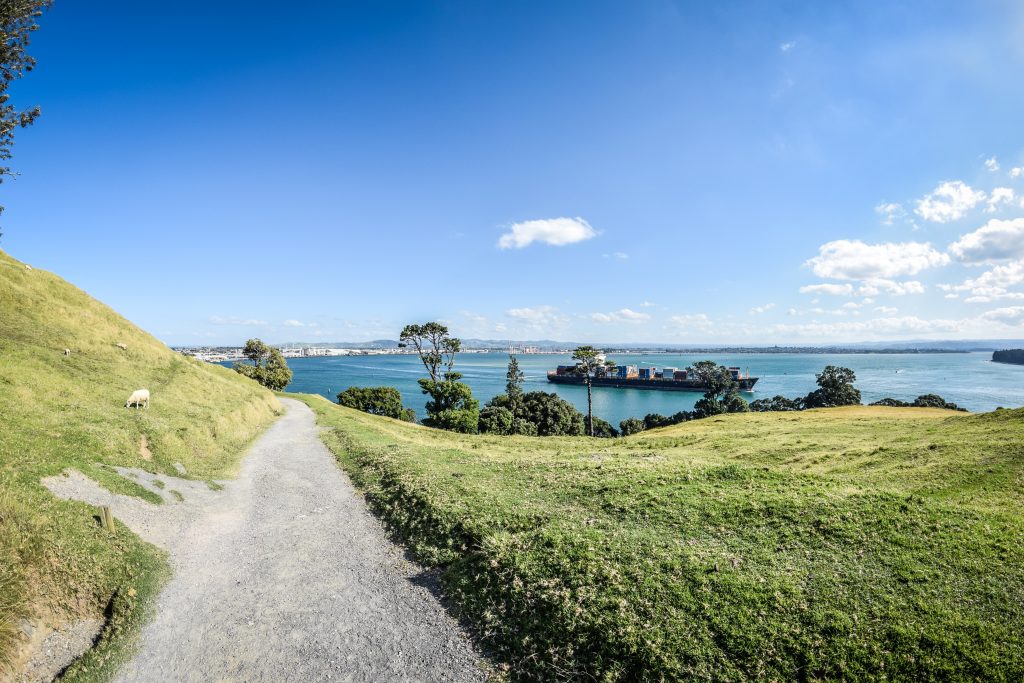
Mauao Reserve – There has been evidence of three fortified villages (pa) on top of and around Mauao making it an important and sacred site for Maori. Several walking paths run in the area, the most popular being the summit walk. You would need about 35-50 minutes to get to the top and it can be done following Oruahine Track, Waikorire Track or 4WD Track. Check the map here. It’s quite steep and more tiring than it looks like but the views are nice, especially in the direction of the ocean. The base track around the mountain is popular as well and it’s 3.4 km long, taking about 45 minutes to complete.

Tauranga, New Zealand
Views nearby the summit of Mount Maunganui
Path to the summit in Mauao Reserve

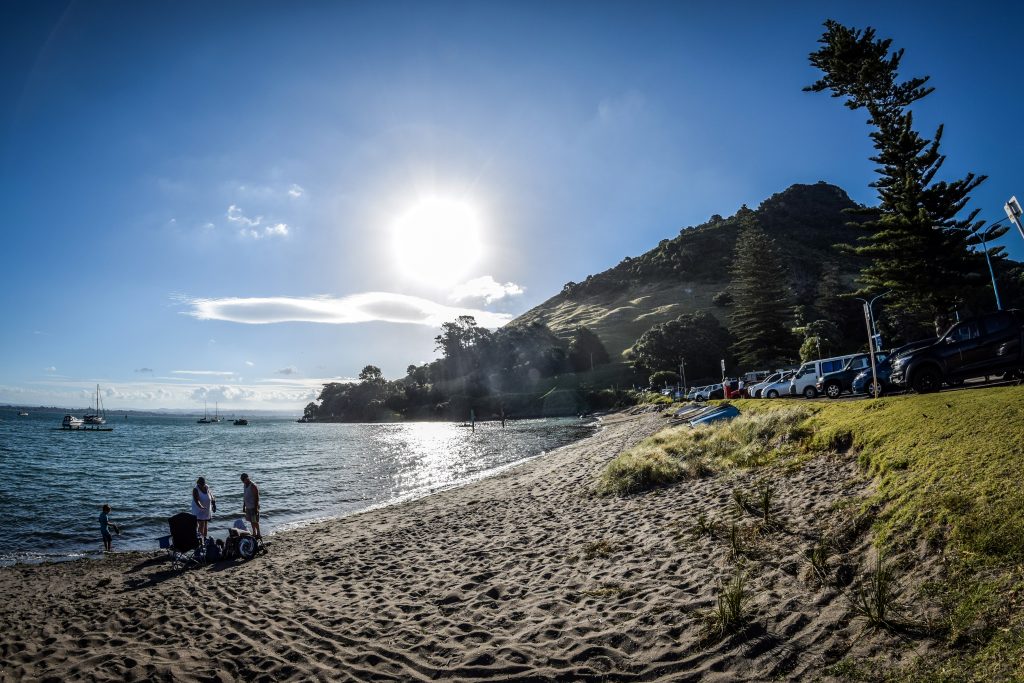
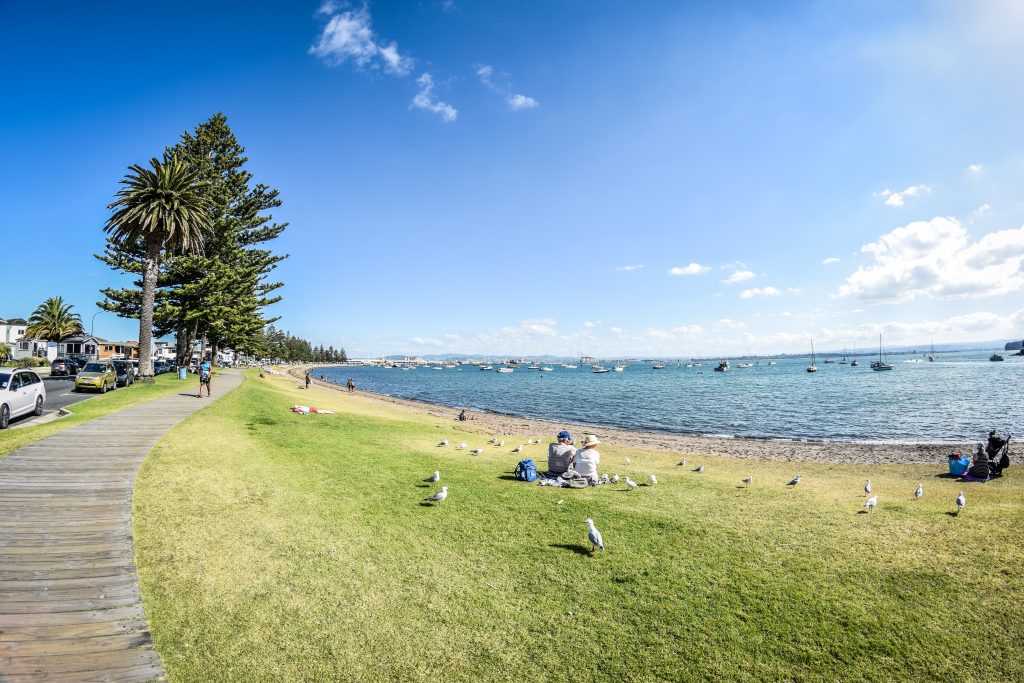
Main Beach and Pilot Bay Beach – The first one is on the side of the ocean, which makes it very popular among those looking for bigger waves. There is also Moturiki Island easily accessible from the beach. The second one is located on the side of the bay and is usually much calmer and better for kids.

Tauranga, New Zealand
Pilot Bay Beach
Tauranga, New Zealand
Pilot Bay Beach

Mount Hot Pools (optional) – Located just at the feet of Maunganui. The bath in hot saltwater doesn’t sound bad and certainly will help you to recover energy after a full day of sightseeing.

Minden Lookout – Being located about 13 kilometres from the city centre, it was my last stop for that day. The easiest is to follow State Highway 2 and then turn left into Minden Road in Te Puna. Wide panorama of the Bay of Plenty is certainly worth extra kilometres.

Tauranga, New Zealand
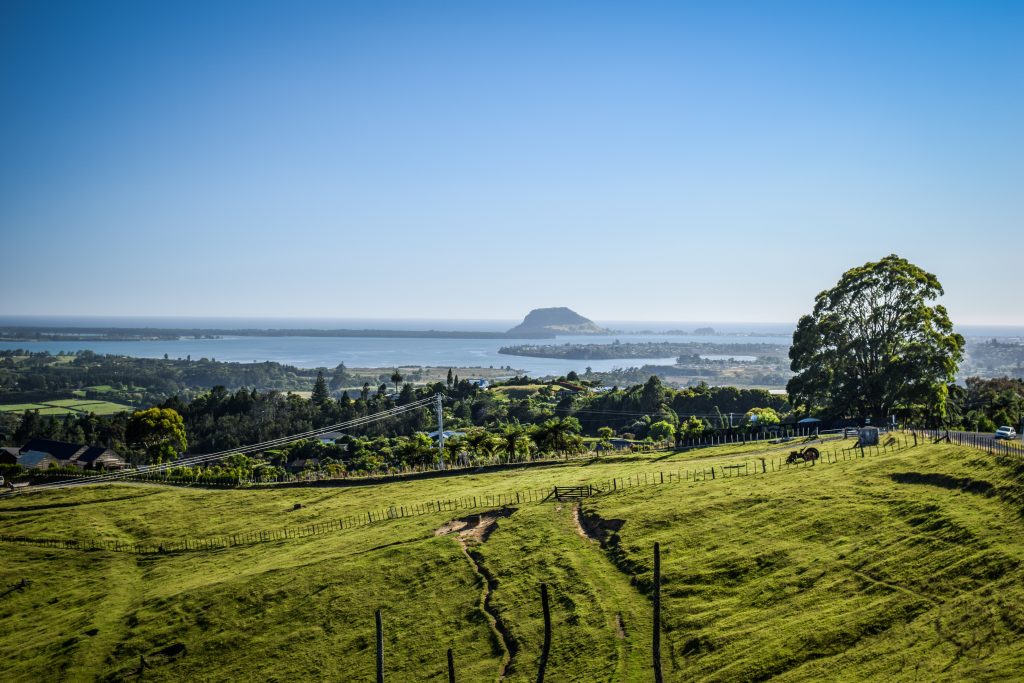
View to Mount Maunganui from Minden Lookout

From there, it was time to stock up with groceries so I made my way to Pack’n’Save. It has the opinion of being the cheapest supermarket in New Zealand and they also have discounts for fuel which is another benefit for road trips.

Karen and Pete recommended me to stay the first night in the campervan at McLaren Falls, 190 hectares of parkland set alongside Lake McLaren. Parking for campervans costs 10 NZD and it was indeed a very nice place in nature with clean toilets, sink and electric grills.

Introduction

Mt Taranaki or Mt Egmont, is a volcano in the center of one of the most popular wilderness areas in New Zealand – Egmont National Park. Standing 2.518m above the sea level gives it a status of the second-highest volcano in the country, just after Mt Ruapehu (2.797m).

Taranaki is a Maori name consisting of two parts: tara means “mountain peak”, and naki (coming from ngaki) means “shining”. The shiny mountain peak clearly relates to the snow covering its upper sloper all year long.

The second name was given by James Cook on 11 January 1770. Yes, this guy is really all over New Zealand and this time the name was given in the honor of John Perceval, 2nd Earl of Egmont, who was one of the supporters of search expeditions for the new continent – Terra Australis Incognita.

Track details

The way to the summit is challenging 12.6 km hike (there and back) with 1.6 km of vertical climb. However, it doesn’t discourage adventure seekers.

Distance: 12.6 km return

Time: 7-10 hr

Best time to go & safety

The best chance for good weather and higher temperatures is from December to April. In other months, the mountain will most likely be covered in snow and ice. Therefore, tourists without experience and proper equipment should not try their luck there.

The last major eruption occurred around 1655, meaning there is an extremely low risk of any volcanic activity going on in the area. However, it doesn’t mean that you should underestimate the mountain. More than 80 people have died since 1891 when records began. Weather can change quickly at any time of the year and even though it’s not a very high or difficult mountain, pay attention and make smart decisions on the way.

Check weather conditions on MetService prior to your summit climb.

How to get there?

North Egmont National Park Visitor Centre is only about 30 min (29 km) drive from New Plymouth. Take a turn off at Egmont Village and continue straight until you reach the parking. When driving from the south, it takes about 2 hours (160 km) from Whanganui.

Where to stay overnight?

Climbing Taranaki Summit is a full day hike so if you stay overnight in New Plymouth, I recommend departing early in the morning.

If you have a self-contained vehicle, there is awesome parking just in front of the visitor centre. In the high season, it gets full pretty quickly so try to arrive in the early afternoon. By doing so, you will secure your place, have time for a nice dinner in the shadow of the mountain and even the chance to tackle some easy and short hikes around the area as a warm-up.

Other than that, there are couple of camping sites or lodges along the way from New Plymouth.

What I did was to stay a night prior to the hike in a self-contained vehicle just next to the visitor center and after the hike, I drove to Ariki Hostel in New Plymouth to take advantage of a hot shower. After a tough hike, it always brings me back to life 🙂 Such a plan was really optimal for me, as I had the chance to enjoy the evening and morning right at the foot of the mountain and then relax in a warm and cozy place.

Interesting facts

The legend has it…

There is a legend that connects all the volcanic summits in the central area of North Island, which adds an extra flavor to the experience. Apparently both Mount Taranaki and Mount Tongariro were in love with Mount Pihanga and the fierce fight between them started. Tongariro won and Taranaki escaped to the west coast where he was trapped by Pouakai Ranges in the place he stands now. It’s often covered in clouds, hiding the tears shed after his lost love. Therefore, be gentle and show compassion when walking on Taranaki’s slopes 🙂

Mt Taranaki, New Zealand
Mt Taranaki covered in clouds

Filming location

Did you know that Mount Taranaki is an actor too? Due to its similarity to Mount Fuji in Japan, it played in the movie The Last Samurai. Reason? Much more space for filming crew than around actual location in the Land of the Rising Sun.

Itinierary

Day 1 – Dawson Falls and Kapuni Loop Track, North Egmont Visitor Centre

As I was approaching Egmont National Park driving along West Coast, the second-highest volcano of New Zealand’s North Island was hidden in thick clouds and I just trusted my map that it’s really there. The road was gaining altitude and after a while, I was in the clouds as well. It was still early afternoon so I took a detour to visit Dawson Falls and make a warm-up on a short Kapuni Loop Track (45-60 min round trip).

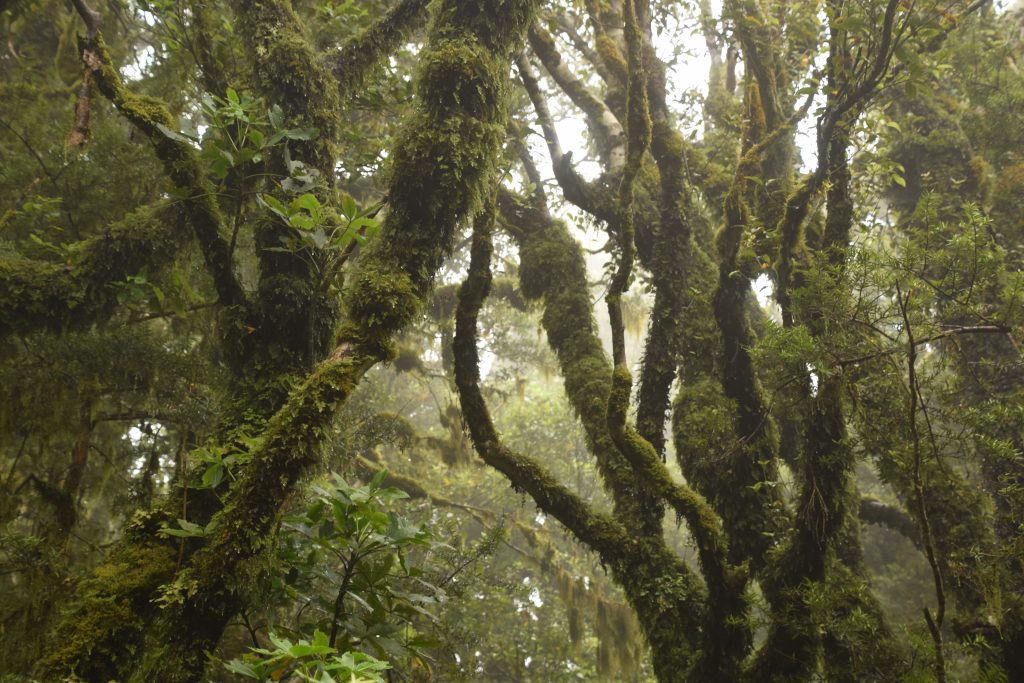
The path leads through the so-called ‘goblin forest’, which indeed looked like a separate fairy tale world, especially in misty weather conditions. I didn’t spot any actual goblins, but twisted trees that grow over the remains of the previous forest destroyed by the volcanic eruption made create the atmosphere of mystery.

Mt Taranaki, New Zealand
Goblin Forest, Egmont National Park
Dawson Falls, New Zealand
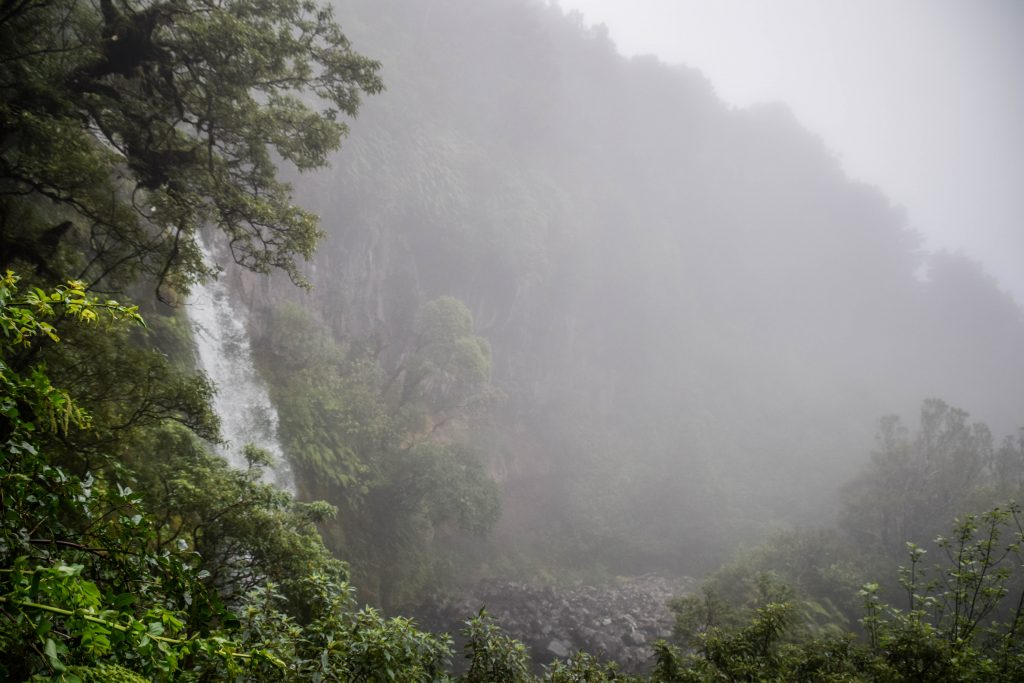
Dawson Falls

Turn off from the main track takes you down to 18 m high Dawson Falls. Like many places in New Zealand, they were named after the first European explorer that reached them in 1885 – Thomas Dawson.

Moving to the other side of the mountain brought significant weather improvement. Strong winds chased the clouds away and once I parked my van next to North Egmont Visitor Centre, the first rays of the sun timidly broke through. Or was it Taranaki itself that stopped hiding his bad mood and decided to present its beauty? I used the remaining time of the afternoon to explore short walks around the place and admire the sunset with a perfectly blue sky. It filled me with confidence that tomorrow I will be lucky enough to go up the summit and enjoy spectacular cloud-free views over North Island.

Day 2 – Taranaki Summit Track, New Plymouth

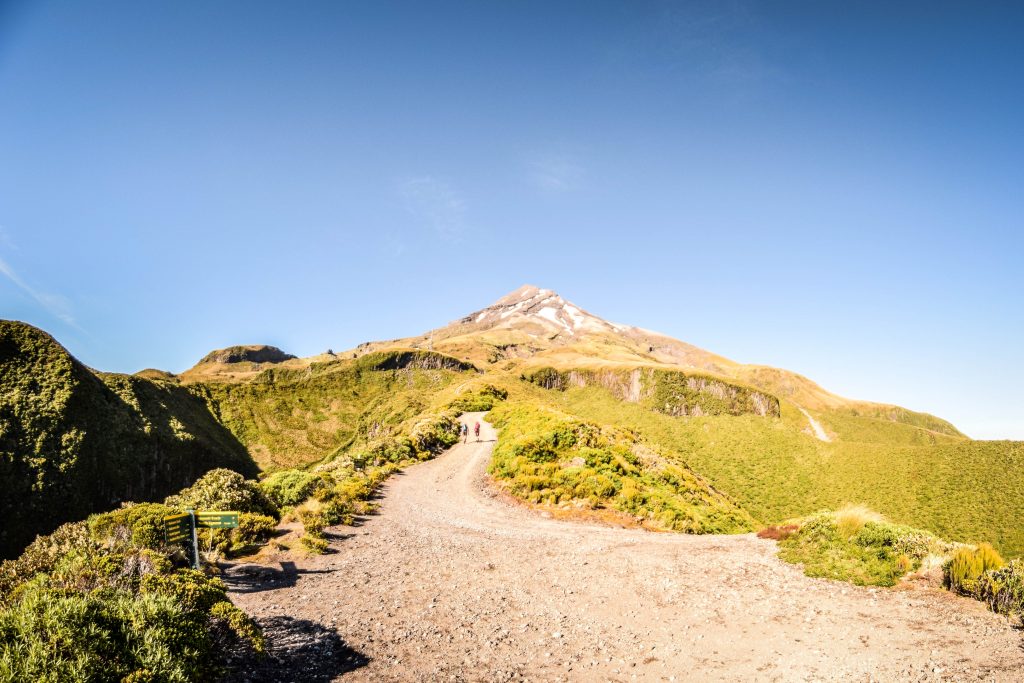
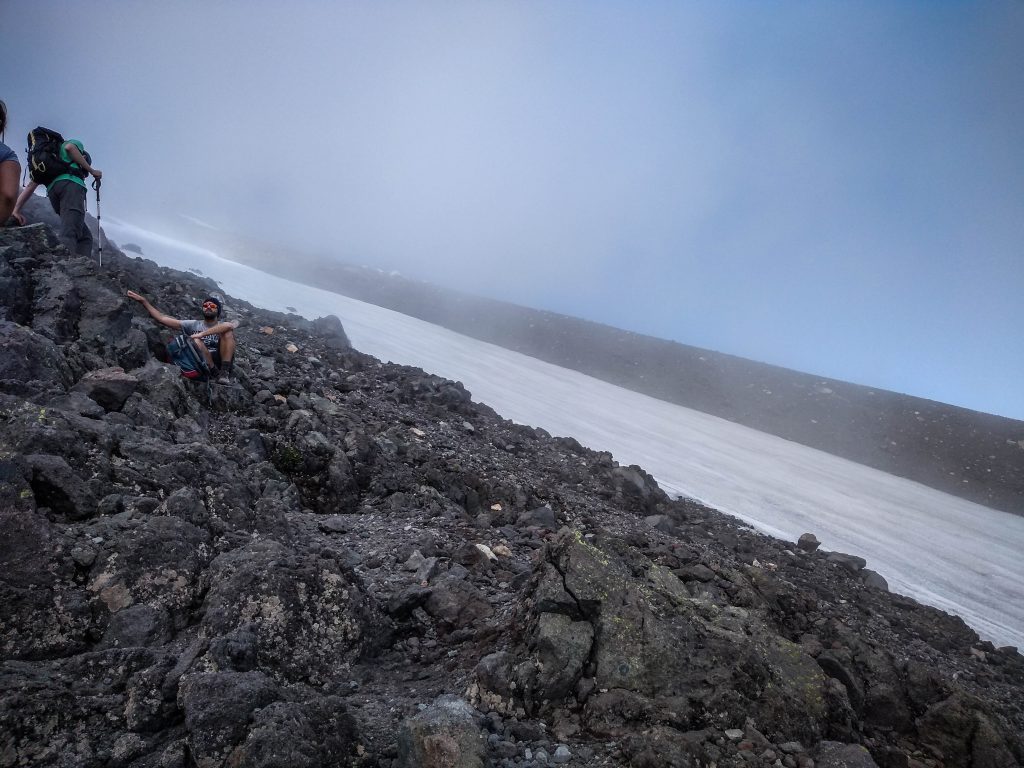
I departed 8 am sharp and the track was rather empty. Though, it didn’t take longer than 1 hour when I stopped for the first time and saw lots of people down there following my steps. The weather was horrible last days and it seems that everyone was waiting for this perfect sunny window which happened on that day. The way up is definitely a challenging one. It has nothing to do with the zig-zag style that gains altitude in a moderate way. Instead, it’s a straightforward climb first along the wide gravel road and then up the steep slope of the mountain. Tahurangi Lodge was a perfect spot to boost my energy and get rid of the second breakfast. As I pushed forward to the summit, there was more and more snow lying around, the wind blew stronger in my face and the temperature dropped down.

Taranaki Summit Track
The first stage of Taranaki Summit Track
Mt Taranaki, New Zealand
Stairs on the way up to Taranaki Summit
Mt Taranaki, New Zealand
More and more snow on both sides of the track
Mt Taranaki, New Zealand
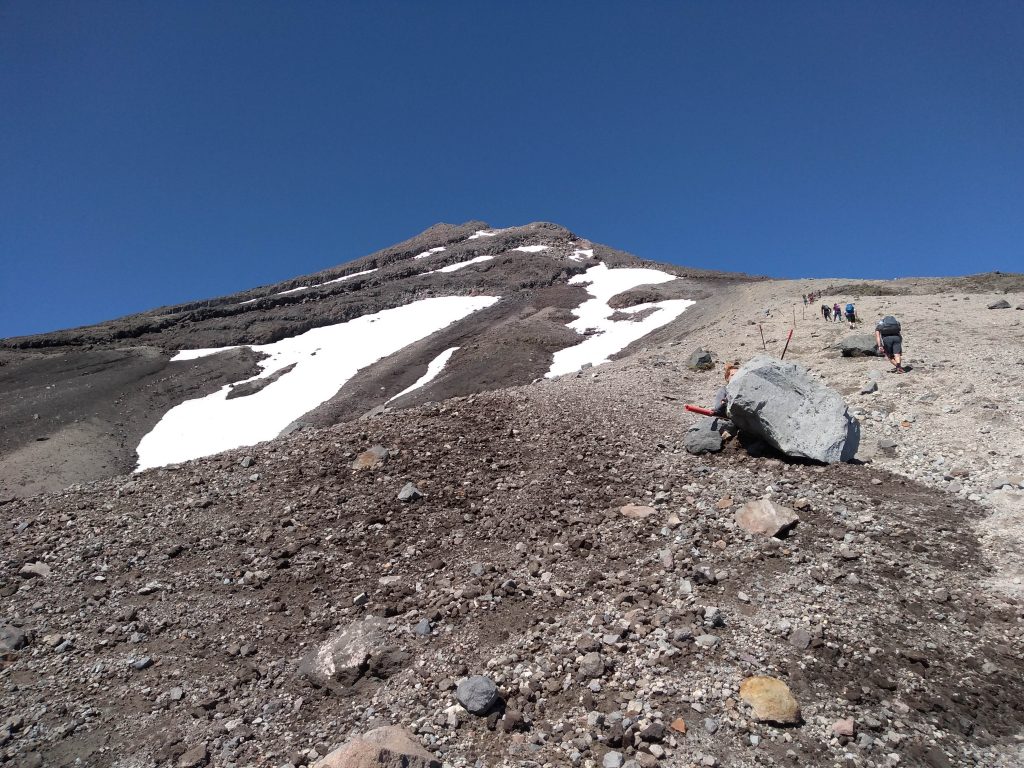
Loose stones on the way up to Taranaki Summit

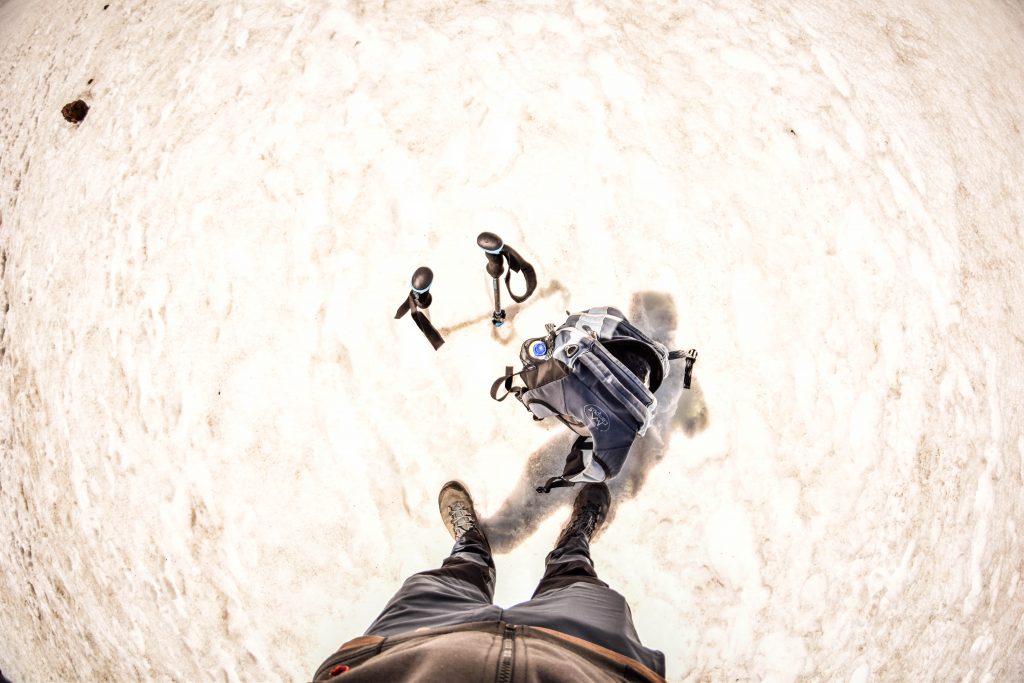
Orange poles, the same as on many other tracks in New Zealand, guided me towards the destination. It was extremely helpful to support myself with hiking poles, especially on the snow around the crater and when going down the mountain. I recommend taking at least one with you to keep the balance. Otherwise, you have a high chance to slip and land on your ass. Not a big deal, but could be painful on some bigger stones 🙂

Mt Taranaki, New Zealand
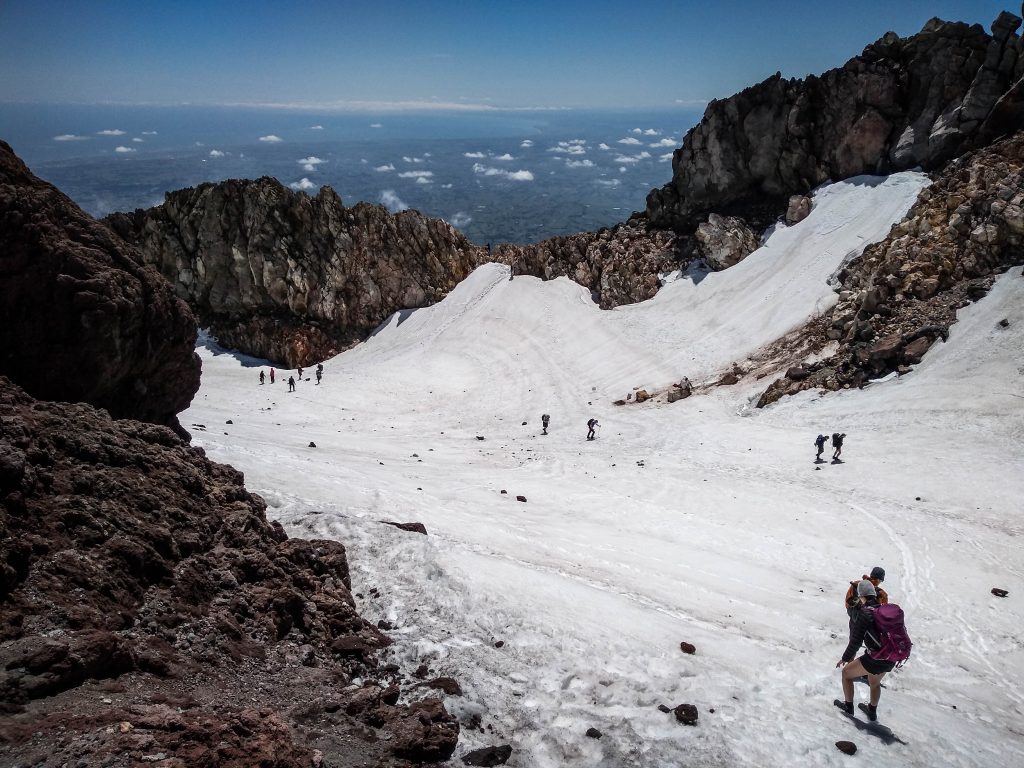
Mt Taranaki crater
Mt Taranaki, New Zealand
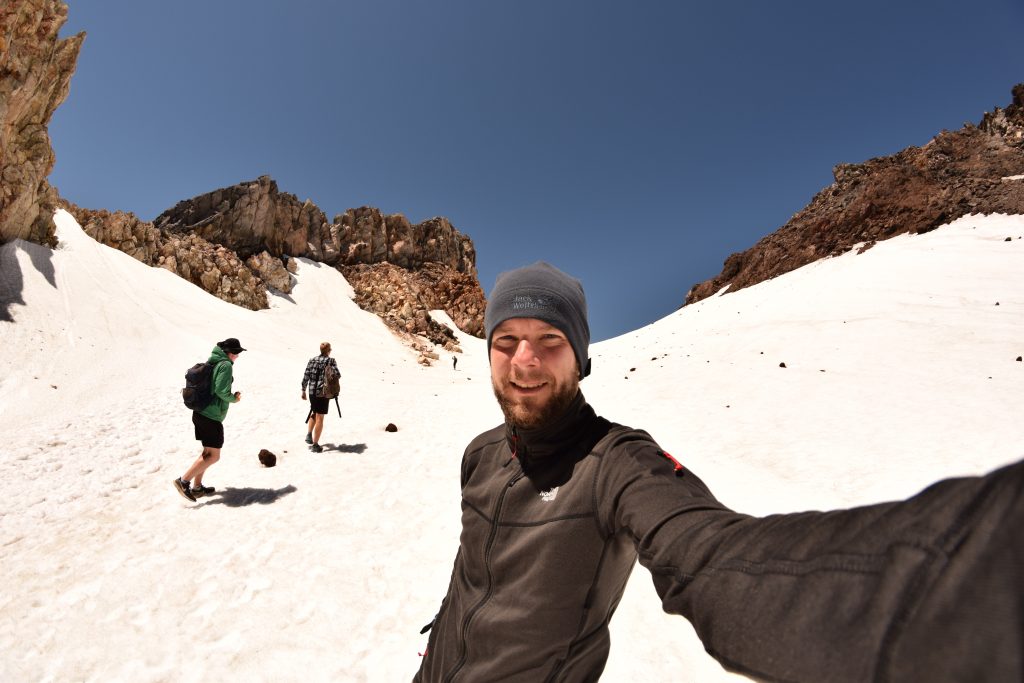
Hikers sliding down in Taranaki crater
Taranaki Summit
Hiking poles were extremely useful when walking on the snow and loose rocks

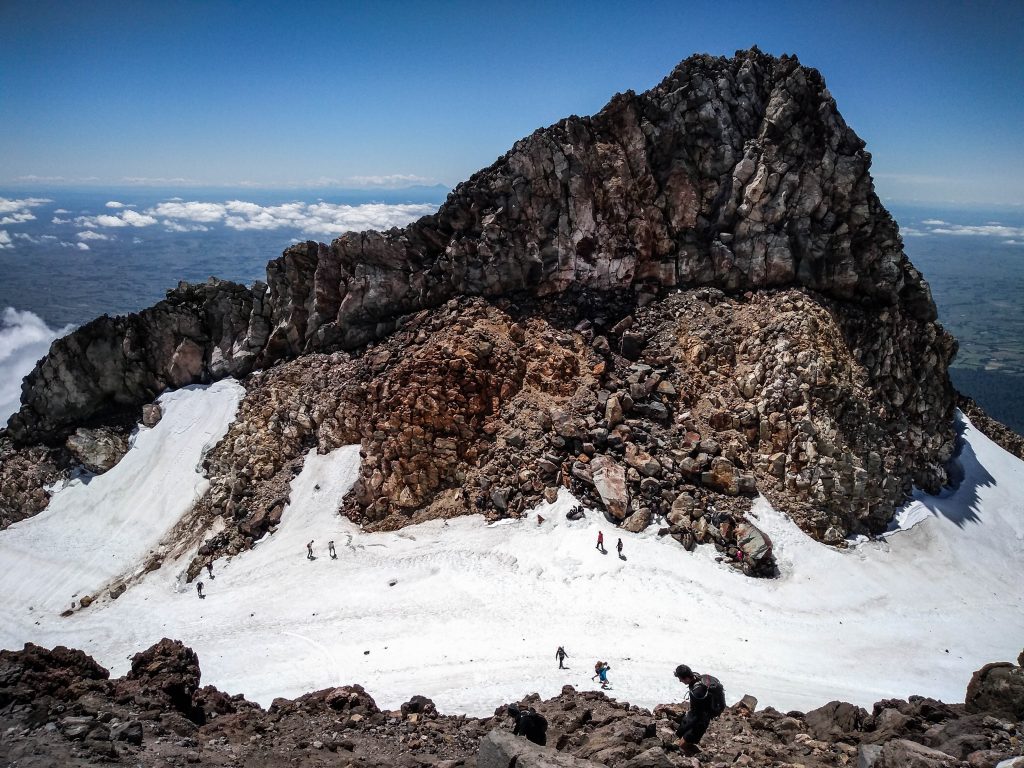
Finally, I put my feet in the crater. There are ice and snow all year round which makes tourists very happy when they play around and slide down on their shoes or ass down the path. But the crater is not the end. From there, it’s another final short climb up to the summit rock. 

Mt Taranaki, New Zealand
Final push to the summit rock

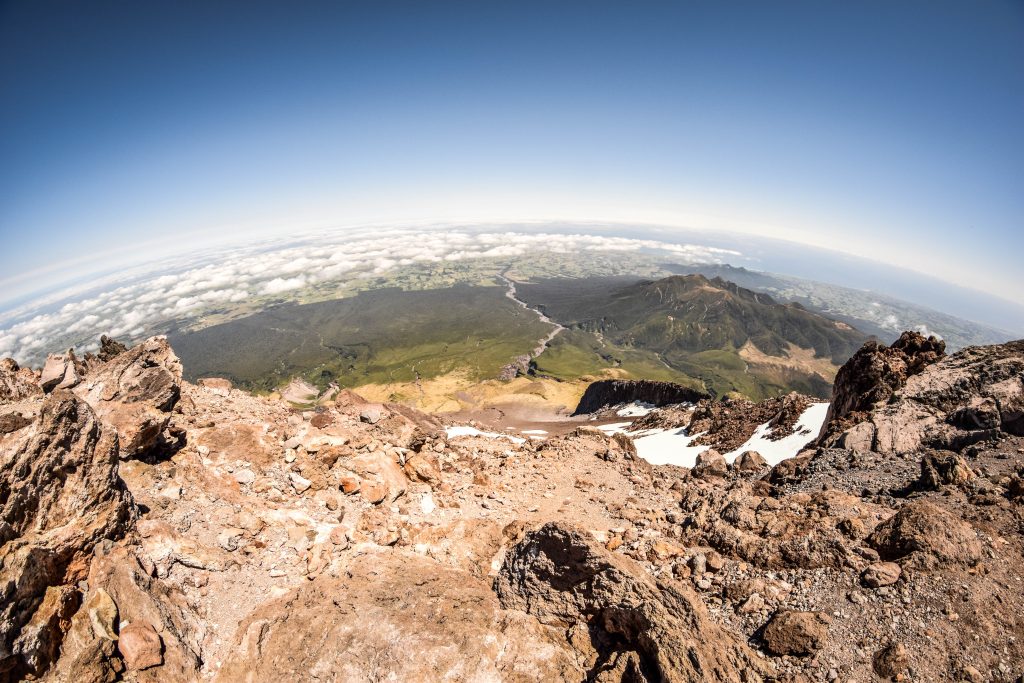
I got two things as a reward for reaching the summit. The first one was the chance to admire 360 degrees panorama across the south-west area of North Island. With good visibility, it was possible to see as far as volcanic summits in Tongariro National Park one side and the Tasman Sea on the other.

The second one was the ultimate satisfaction that I conquered the second highest volcano in New Zealand. Believe me, that was a great feeling. Moreover, Taranaki is one of these places that I’m already dying to visit again as soon as I’m back to the kiwi country.

Taranaki Summit
Panorama from the summit

The way down was significantly easier than the way up. It took me only 2.5-3h to reach the parking lot, comparing to 4-5h that I spent pushing to the summit. Why is it like that? I was basically sliding down on loose stones, very often simply running all the way down as it was the easiest way to keep the balance. I saw many hikers struggling and falling down. I landed on my ass twice, even though I had my hiking poles for support. It was a really fun experience though 🙂 In the afternoon, more and more clouds started to cover the mountain and when I was halfway down and turned around, I couldn’t see the summit anymore. Taranaki started crying after his lost love once again.

Final thoughts

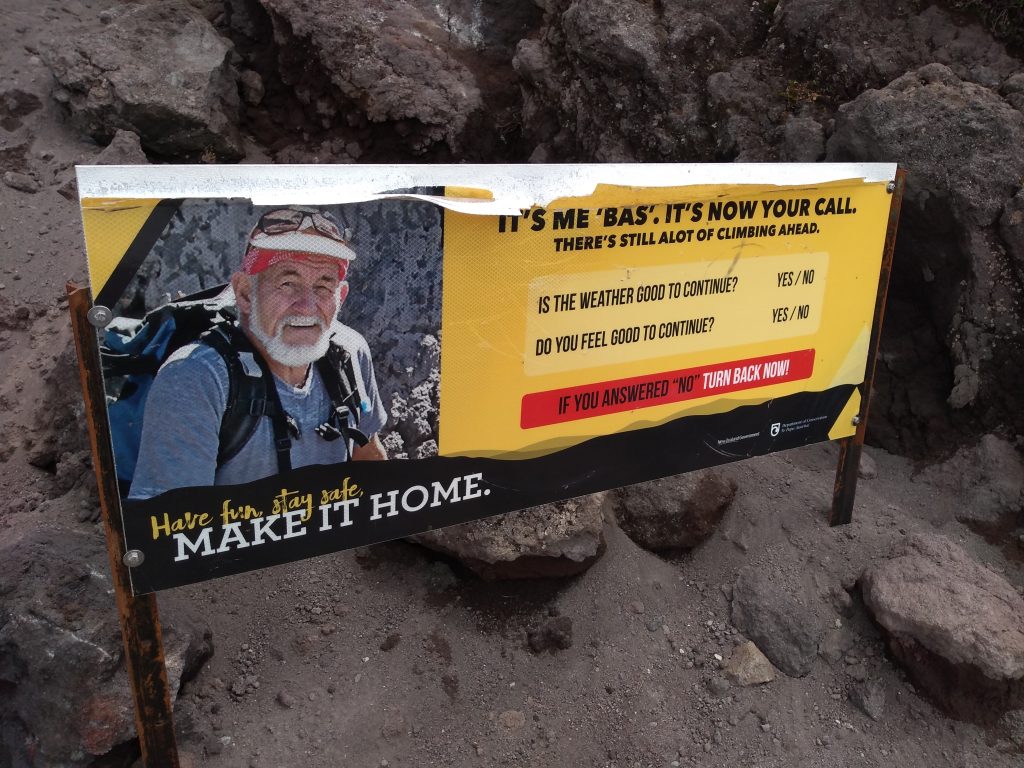
Climbing Mt Taranaki was certainly one of the most memorable hikes on North Island. Be patient and attempt it when the conditions are good. In the end, it’s not only about reaching the summit, but also about enjoying panoramic views. And if the conditions change or you don’t feel well, just listen to Bas and make it back home. The mountain will be always there. Have fun and stay safe!

Taranaki Summit Track

Other tracks in the area

If the weather is not on your side or you just think that tackling Taranaki Summit Track is too much, don’t let it discourage you! There are several other options in Egmont National Park ranging from the very short and pleasant ones to more challenging multiple days hikes such as Around the Mountain Track. Check the website of the Department of Conservation and select the one that fits you best.